























If you’re curious about the Wim Hof Breathing Method, you’re not alone—millions have tried its distinctive cycles of deep breathing, breath-holds, and a focused mindset to feel calmer, clearer, and more resilient. This guide distills the essentials and the evidence so you can practice confidently and safely. Brief medical note: breathwork can affect blood gases, heart rate, and consciousness; if you have a medical condition or are pregnant, consult a clinician first and follow the safety rules below. The Wim Hof Breathing Method is a cyclic protocol of ~30 deep breaths, an exhale-hold, then a recovery inhalation hold, typically repeated for 3–4 rounds and often paired with gradual cold exposure and mindset training.
Quick how-to snapshot (for context):
- 30 deep, relaxed breaths (in through nose or mouth; let the exhale go without force).
- After the last exhale, hold as long as comfortable; then inhale fully and hold ~15 seconds.
- Repeat 3–4 rounds seated or lying down—never in/near water, and never while driving.
1. What the Wim Hof Breathing Method Is—and Isn’t
At its core, the Wim Hof Breathing Method (WHM) is a structured way to deliberately shift your physiology for short periods—first by lowering carbon dioxide (via rhythmic deep breathing), and then by briefly lowering oxygen (during the exhale-hold). It’s one pillar of a three-part system alongside cold exposure and mindset training. It is not a cure-all, and it is not simply “hyperventilating for as long as possible.” The goal is controlled cycles that create a predictable stress-then-recovery arc, done in a safe position and environment.
1.1 Why it matters
These cycles can acutely alter blood pH (more alkaline during the breathing) and oxygen saturation (lower during the hold), nudging the autonomic nervous system and stress hormones. Early controlled research shows practitioners can voluntarily activate sympathetic activity and shift inflammatory responses in standardized lab challenges—an unusual finding that sparked much of the interest in WHM.
1.2 How it differs from slow breathing
Slow, coherent breathing emphasizes steady CO₂ tolerance and vagal tone. WHM, by contrast, uses high-ventilation phases followed by holds to induce alternating respiratory alkalosis and intermittent hypoxia. Both can be useful in different contexts; WHM sits on the “stimulate then settle” side of the spectrum.
1.3 Mini-checklist
- Treat it as a technique, not a test.
- Stay seated or lying; practice away from water.
- Stop if you feel unwell; resume normal breathing.
Bottom line: WHM is a specific, trainable protocol to briefly and safely stress your system, then recover—useful when you want a noticeable shift fast.
2. The Core Technique: Step-by-Step Routine You Can Practice Safely
The standard WHM breathing cycle is straightforward: ~30 deep breaths, an exhale-hold, then a short recovery hold after a full inhale. You repeat this for 3–4 rounds, ideally on an empty stomach and never in hazardous settings. The sequence is less about hitting a number than maintaining smooth, deep breaths and relaxed attention. The exhale-hold usually grows longer across rounds; that’s normal, but retention length is not the goal—comfort and control are.
2.1 How to do it (canonical sequence)
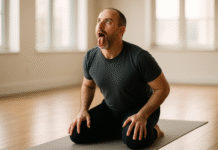
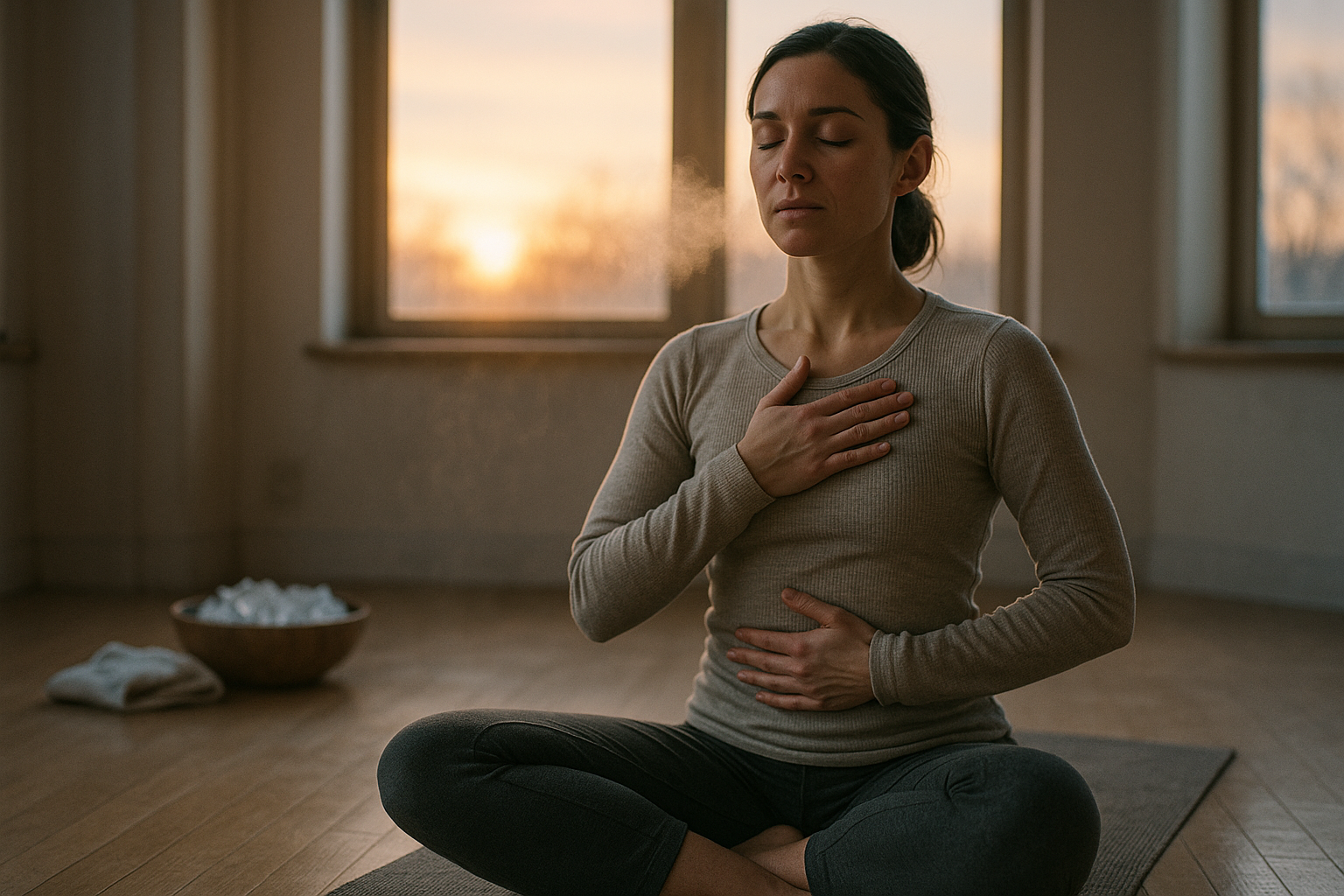
- Get comfortable: Sit or lie down so you won’t fall.
- 30 deep breaths: Inhale deeply (belly expands), exhale without force—find a steady rhythm.
- Exhale-hold: After the 30th exhale, hold without strain until you feel a clear urge to breathe.
- Recovery breath: Inhale fully, hold ~15 seconds, then release.
- Repeat 3–4 rounds.
2.2 Numbers & guardrails (as of Aug 2025)
- Many beginners settle into 3–4 rounds; advanced users may vary.
- Typical sessions last 10–20 minutes; more isn’t necessarily better.
- Practice seated/lying, ideally after waking or before meals.
- Expect tingling or lightheadedness; these usually pass after normal breathing resumes.
- Never in/near water; never while driving or standing on edges/ladders.
2.3 Common mistakes
- Forcing the exhale (keep it relaxed).
- Chasing breath-hold times (prioritize ease).
- Practicing in unsafe places (water, traffic, heights).
Bottom line: Follow the official sequence closely and respect the safety notes; consistency beats intensity.
3. What Happens in Your Body: CO₂, O₂, Epinephrine & Inflammation
WHM’s deep-breathing phase lowers CO₂ (hypocapnia), raising blood pH (respiratory alkalosis). The subsequent exhale-hold can drop oxygen saturation for a short window (intermittent hypoxia). Together, these swings can markedly activate the sympathetic nervous system and catecholamines—especially epinephrine—and, in controlled experiments, influence inflammatory signaling.
3.1 Mechanism snapshot
- Breath cycles: Rhythmic deep breathing → lower CO₂ / higher pH; exhale-hold → lower O₂.
- Hormonal surge: Practicing the technique elevated plasma epinephrine in trained participants, with higher IL-10 (anti-inflammatory) and lower TNF-α, IL-6, IL-8 during an experimental endotoxin challenge compared with controls.
- Perception shifts: Many feel warmth and analgesia; neuroimaging in an expert practitioner showed activation of pain-modulatory regions (periaqueductal gray) and higher-order interoceptive areas during cold exposure.
3.2 Why it matters
Short, deliberate bouts of intermittent hypoxia and sympathetic activation may build stress tolerance and alter immune responses—promising mechanisms, but the dose, frequency, and who benefits most are still being clarified. Intermittent hypoxia, beyond WHM specifically, has documented effects on respiratory plasticity and adaptation, which helps frame what practitioners report.
3.3 Mini-example
During round 2–3, many notice a longer, easier exhale-hold and a calm, warm sensation. That subjective shift aligns with the physiology above: lower CO₂, then a brief, tolerable hypoxia, followed by a return to baseline.
Bottom line: WHM creates controlled swings in blood gases that can spike epinephrine and modulate inflammatory signals—useful, but use with care.
4. Immune & Inflammation: What the Studies Actually Show
The most cited evidence comes from a randomized, controlled endotoxemia experiment: participants trained in the WHM (breathing, mindset, cold) showed a marked epinephrine rise, earlier/higher IL-10, and lower pro-inflammatory cytokines after receiving bacterial endotoxin—alongside fewer flu-like symptoms—versus untrained controls. This demonstrated voluntary influence over the sympathetic and innate immune systems.
4.1 Beyond healthy volunteers
A proof-of-concept clinical trial in axial spondyloarthritis (a chronic inflammatory disease) tested a WHM-style add-on program. Results suggested reduced ESR and improved disease activity metrics without safety signals during the intervention, warranting larger RCTs. While preliminary, this points to possible adjunct use for inflammation management—not a replacement for standard care.
4.2 What syntheses say (as of 2024–2025)
A 2024 systematic review concluded WHM may reduce inflammation markers in healthy and non-healthy participants, likely via epinephrine-linked anti-inflammatory effects, but emphasized the need for more rigorous, long-term trials to define durability, dosing, and patient selection. That mirrors the broader intermittent-hypoxia literature: promising mechanisms with context-dependent benefits.
4.3 Practical takeaways
- Expect acute immune and symptom shifts in lab settings; long-term clinical impact remains under study.
- Treat WHM as complementary, especially if you have an inflammatory condition—coordinate with your clinician.
Bottom line: Evidence supports short-term immunomodulation; clinical applications are emerging but not settled.
5. Stress, Mood & Focus: What You Can Expect Day to Day
Many people use WHM to feel calmer and more focused quickly. In research, a 2024 randomized controlled trial in women with high depressive symptoms compared a WHM-based hormetic protocol (breathing + cold showers) to an active control (slow breathing + warm showers). Both groups saw comparable reductions in depression, anxiety, perceived stress, and cortisol reactivity, with the WHM group showing greater reductions in rumination after daily stressors—a promising but specific edge that needs replication.
5.1 Why it might help
- The cycle of arousal → recovery can sharpen interoceptive awareness and create a sense of control.
- Catecholamine spikes and rapid downshifts may rehearse stress resilience.
- Brief, noticeable state changes can reinforce daily adherence—useful for habit formation.
5.2 How to use it for focus
- Use 1–2 rounds before cognitively demanding tasks to clear fog.
- Pair a short session with a walk or stretch to ease any post-session lightheadedness.
- Log a quick 1–10 mood/focus rating pre- and post-session for two weeks to see patterns.
5.3 Mini-checklist
- Prefer mornings or pre-work breaks.
- Keep sessions brief on intense workdays.
- If anxiety spikes, switch to slow nasal breathing instead.
Bottom line: WHM can acutely improve mood and perceived stress; for clinical depression/anxiety, it may perform similarly to well-structured slow breathing, with some signs of reduced rumination.
6. Energy, Exercise & Performance: Hype vs. Evidence
A frequent claim is that WHM boosts athletic output. The best controlled evidence so far shows no acute improvement in anaerobic repeated-sprint performance after a single WHM session, despite large physiological shifts (e.g., blood gas changes). That means you shouldn’t expect an instant PR just from one breathing block. Training effects from intermittent hypoxia more broadly—outside of WHM—can exist in specific athletic protocols, but those are not the same as a standard WHM session. Frontiers
6.1 Where it may still help
- Warm-up focus: A round or two can enhance perceived readiness.
- Between sets: Brief cycles may feel energizing, but avoid over-breathing that leaves you dizzy before heavy lifts.
- Recovery days: Use full sessions for stress relief and sleep support.
6.2 Where evidence is limited
- Endurance economy/VO₂ kinetics: Findings are mixed and often small-sample.
- Strength/anaerobic power: Acute WHM hasn’t shown clear benefits; train the sport-specific qualities directly.
6.3 Mini-case
If you like the “push-up challenge” effect after a few rounds, remember it reflects tolerance and arousal shifts more than true strength gains. Keep the main work the main work.
Bottom line: Treat WHM as a readiness and recovery tool, not a replacement for training. Expect subjective boosts; don’t count on measurable performance gains from a single session.
7. Safety, Risks & Contraindications: How to Practice Responsibly
Safety is non-negotiable: WHM’s high-ventilation and breath-hold phases can cause lightheadedness or even brief loss of consciousness; practiced irresponsibly—especially in water—that can be deadly. Official guidance is to always practice seated or lying down, away from hazards, and never in or near water. National orgs warn that pre-swim hyperventilation and prolonged breath-holds in water dramatically increase risk of hypoxic blackout (sometimes misnamed “shallow water blackout”).
7.1 Who should avoid or get medical clearance
- Pregnant individuals and people with epilepsy: avoid WHM breathing; seek medical advice.
- People with significant cardiovascular, cerebrovascular, or pulmonary disease (e.g., recent MI, arrhythmias, aneurysm, severe lung disease), sickle cell disease/trait, or recent stroke: get medical clearance first; hyperventilation and hypoxia may pose risks. wimhofmethod.com
7.2 Safety checklist (print this)
- Practice seated/lying, on an empty stomach, in a safe room.
- Never in/near water; never while driving, in a bath, or before swimming.
- Stop if you feel chest pain, severe dizziness, or prolonged tingling.
- Resume normal breathing; when in doubt, don’t continue.
- Beginners: limit to 3–4 rounds; add cold exposure gradually (e.g., 15–60 s cool shower finishes).
7.3 Region-specific note
Aquatic safety bodies in the U.S. explicitly caution against pre-swim hyperventilation and extended underwater breath-holds due to hypoxic blackout risk—depth doesn’t protect you. Lifeguards are trained to intervene when they see this behavior.
Bottom line: The method is simple but potent. Respect the environment and your health status, and you’ll minimize risk while maximizing benefits.
FAQs
1) What is the Wim Hof Breathing Method in one sentence?
A cyclic breathing protocol—~30 deep breaths, an exhale-hold, then a short recovery hold—performed for 3–4 rounds, usually alongside mindset work and gradual cold exposure. It’s designed to create a short, controlled stress-then-recovery response.
2) How quickly should I feel effects?
Most people notice sensations (tingling, warmth, calm) in the first session and a longer, easier breath-hold by rounds 2–3. These reflect blood-gas shifts and nervous system arousal followed by recovery; they’re typically transient. If you feel unwell, stop and breathe normally.
3) Is there real science behind it—or is it just hype?
There’s solid early evidence. In a controlled endotoxemia model, trained participants showed higher epinephrine, higher IL-10, and lower pro-inflammatory cytokines than controls—evidence of voluntary influence over the sympathetic and innate immune systems. Clinical trials are emerging but not definitive.
4) Can it replace my medication for inflammation or mood?
No. Think “adjunct,” not “replacement.” A proof-of-concept trial in axial spondyloarthritis suggested anti-inflammatory effects, and a 2024 RCT found WHM and slow breathing produced similar improvements in stress and mood, with WHM lowering rumination more. Decisions about medication belong with your clinician.
5) Will it boost my athletic performance?
A single WHM session did not improve repeated-sprint performance in a controlled study, despite measurable physiological changes. Use it for arousal management and recovery; do your sport-specific training for performance gains.
6) Is cold exposure required?
No. Breathing is its own pillar. Many combine it with gradual cold showers or ice baths, but you can practice breathing alone and still get mood and stress benefits. If you add cold, do so gradually and safely.
7) How often should I practice?
Common patterns: 1 session most mornings, or shorter 1–2 round “resets” before focus blocks. Total time often ranges 10–20 minutes. More isn’t always better; quality and consistency matter most.
8) Is it safe for beginners?
Yes—if you follow the rules: seated/lying; never in/near water; stop if unwell. People who are pregnant, have epilepsy, or significant cardiac/lung/vascular conditions should avoid WHM or get medical clearance first. PMC
9) Why do I feel tingly or lightheaded?
That’s the CO₂ drop (respiratory alkalosis) changing how nerves and blood vessels behave. It’s expected in high-ventilation practices; it should pass when you resume normal breathing. If symptoms persist or worsen, stop and consult a clinician.
10) What about practicing in water or before swimming?
Don’t. Pre-swim hyperventilation and extended breath-holds are linked to hypoxic blackout, which can cause sudden unconsciousness and drowning. Practice on land only, in a safe position.
Conclusion
The Wim Hof Breathing Method is a deceptively simple practice with outsized short-term effects: you breathe deeply, hold, recover—and in minutes, your physiology and state shift noticeably. The research to date supports meaningful acute changes in sympathetic activity and inflammatory signaling, and real-world users report mood and focus benefits. At the same time, clinical endpoints (long-term disease control, athletic performance) remain an open field: early trials are encouraging but not conclusive, and some performance claims don’t replicate under controlled testing. The smart approach is pragmatic: use WHM as a fast, structured way to reset your mind and body, respect the non-negotiable safety rules (especially around water and medical conditions), and pair it with proven training and clinical care when relevant. Start small, stay consistent, and measure how you feel and function over weeks—not just moments.
Ready to begin? Sit or lie down, set a timer for 10 minutes, follow the 30-breaths → exhale-hold → recovery-hold cycle for 3–4 rounds, and log your mood before and after. Practice safely, track your results, and iterate.
References
- Kox M. et al., “Voluntary activation of the sympathetic nervous system and attenuation of the innate immune response in humans,” PNAS, 2014. PMC
- Buijze G.A. et al., “An add-on training program involving breathing exercises, cold exposure, and meditation attenuates inflammation and disease activity in axial spondyloarthritis – A proof of concept trial,” PLOS ONE, 2019. PMC
- Almahayni O., Hammond L., “Does the Wim Hof Method have a beneficial impact on physiological and psychological outcomes in healthy and non-healthy participants? A systematic review,” PLOS ONE, 2024. PMC
- Citherlet T. et al., “Acute Effects of the Wim Hof Breathing Method on Repeated Sprint Ability: A Pilot Study,” Frontiers in Sports and Active Living, 2021. PMC
- Muzik O., Reilly K.T., Diwadkar V.A., “‘Brain over body’—Willful regulation of autonomic function during cold exposure,” NeuroImage, 2018. PubMed
- Wim Hof Method—“Breathing Exercises: How to do Wim Hof Method Breathing” (official guide with safety notes), WHM website, accessed 2025. wimhofmethod.com
- American Red Cross, USA Swimming, YMCA of the USA, “Joint Statement on Hypoxic Blackout,” Nov 2022. Red Cross
- Mitchell G.S., “Intermittent hypoxia and respiratory plasticity,” J. Appl. Physiol., 2001. Physiology Journals
- Rybnikova E.A., Samoilov M.O., “Intermittent Hypoxic Training as an Effective Tool for Increasing the Brain’s Resistance,” Frontiers in Neuroscience, 2022. Frontiers
- Blades R. et al., “A randomized controlled clinical trial of a Wim Hof Method intervention in women with high depressive symptoms,” Compr. Psychoneuroendocrinol., 2024. PubMed
- Fincham G. et al., “High ventilation breathwork practices: An overview of their psychophysiological effects,” Neuroscience & Biobehavioral Reviews, 2023. ScienceDirect
- ANS/BSCN, “Guidelines for Hyperventilation During EEG Recordings,” 2020. bscn.org.uk