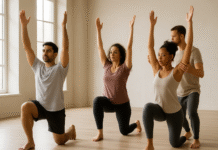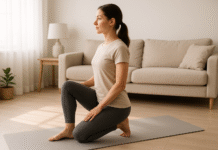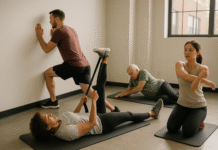






















If you lift, run, cycle, or simply want to feel and move better, adding yoga can be the missing piece that ties your fitness together. The benefits of incorporating yoga into your fitness routine aren’t just about touching your toes; they show up as stronger lifts, smoother runs, calmer nerves, deeper sleep, fewer aches, and better body awareness. Below you’ll learn exactly what yoga contributes, how to integrate it with what you already do, how to progress safely from beginner to confident practitioner, and how to measure real results over the next four weeks.
Medical disclaimer: The guidance below is educational and general. If you have a medical condition, are pregnant, or have concerns (e.g., glaucoma, uncontrolled blood pressure, recent injury), talk with a qualified health professional before starting or changing your exercise routine.
Key takeaways
- Yoga fills common gaps in typical training plans: mobility, balance, breathing, recovery, and mental focus.
- **It complements—not replaces—**strength training and cardio; think of it as a performance and recovery amplifier.
- You don’t need to be flexible to start. Begin with 10–20 minutes, 2–4 times per week, and progress gradually.
- Breath-led movement is the secret sauce: it downshifts stress, improves sleep quality, and enhances body control.
- Simple metrics (pose holds, breath cadence, balance time, sleep scores) make progress visible in weeks, not months.
- Safety is straightforward: avoid pain, respect limits, scale poses, and skip heated classes during pregnancy.
Why add yoga: what it brings that other training often misses
What it is & core benefits
Yoga is a collection of practices that combine movement, breath, and attention. Classes vary—slow and stretchy (restorative or yin), steady and strengthful (hatha), or rhythmic and sweatier (vinyasa/power). Across styles, yoga improves joint range, balance, postural control, and neuromuscular coordination. It also trains your parasympathetic “brakes” through breathing and mindful pacing, helping you recover faster from hard sessions and manage stress more effectively.
Requirements & low-cost alternatives
- A non-slip mat (or a towel on carpet to start), comfortable clothing, and floor space.
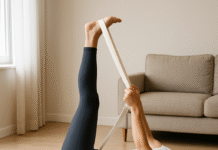
- Two yoga blocks and a strap are useful; books and a belt work as substitutes.
Beginner-friendly implementation (first week)
- Pick two short sessions (10–15 minutes): one mobility-focused, one breath + balance.
- Match breath to movement: inhale into spine-lengthening moves, exhale into folds or effort.
- Finish with one minute of stillness (legs up a wall or savasana) and nasal breathing.
Modifications & progressions
- Tight hamstrings? Bend knees in all forward folds.
- Wrist sensitivity? Make fists or use forearms in plank-like poses.
- Ready to progress? Increase holds to 30–60 seconds, add flowing transitions (e.g., low lunge → half split → low lunge), or step up to a 20–30-minute beginner class.
Recommended frequency & metrics
- 2–4 sessions/week. Track:
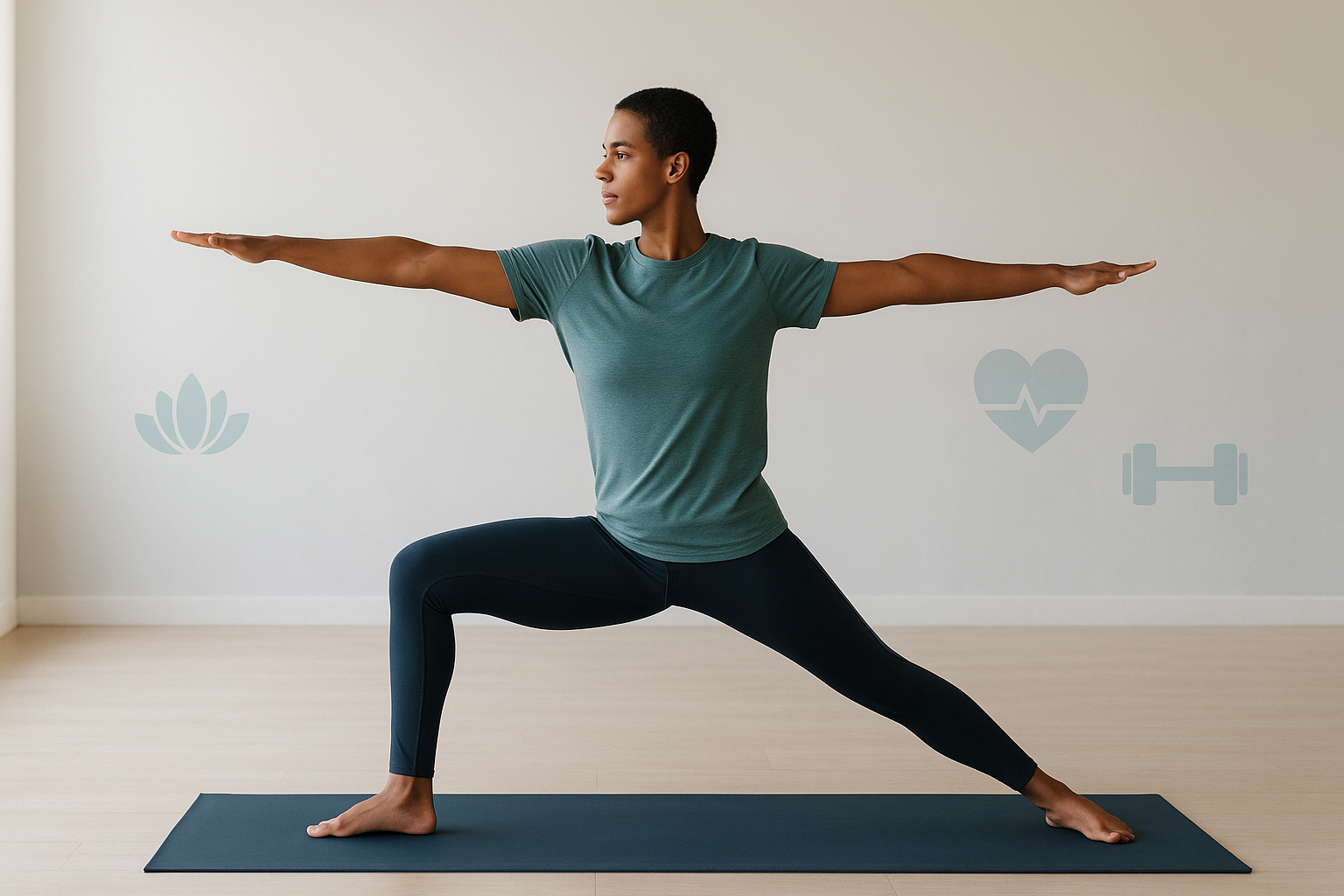
- Pose hold times (e.g., 20–45 seconds in Warrior II).
- Balance time (Tree Pose without tapping down).
- Breath cadence (4–6-second inhale/exhale feels comfortable).
- Sleep quality or HRV if you use a wearable.
Safety & common mistakes
- Forcing range or “chasing stretch” sensations; aim for a gentle, sustainable intensity.
- Holding breath during effort; keep your breathing smooth and quiet.
- Skipping props; they’re accelerators, not crutches.
Mini-plan example
- Day 1 (12 minutes): Cat-Cow x 60s → Low Lunge (R/L) x 3 breaths each → Half Split (R/L) x 3 breaths → Down Dog x 30s → Child’s Pose x 60s.
- Day 3 (12 minutes): Mountain → Chair x 3 breaths → Warrior II (R/L) 20s → Triangle (R/L) 20s → Tree (R/L) 20s → Seated breathing (box breath 4-4-4-4) x 2 minutes.
Mobility & flexibility: move joints through full, usable ranges
What it is & benefits
Mobility work emphasizes controlled motion at the hips, spine, shoulders, and ankles. Consistent practice promotes smoother mechanics (think: deeper squats, easier overhead reach), eases daily stiffness, and reduces the need for long, pre-workout warmups.
Requirements & alternatives
- Mat, blocks (or books), strap (or belt).
- A wall or chair for support during standing poses.
Step-by-step for a mobility-focused flow (10–15 minutes)
- Breath primer (60–90 seconds): sit tall; nasal inhale for 4, exhale for 6.
- Spine sequence: Cat-Cow x 6 → Thread the Needle (R/L) x 3 breaths → Sphinx x 30s.
- Hips & hamstrings: Low Lunge (R/L) x 4 breaths → Half Split (R/L) x 4 → Figure-Four on back (R/L) x 30s.
- Shoulders & thoracic: Puppy Pose x 45s → Open Book (R/L) x 3 breaths.
- Reset: Easy Seated Twist (R/L) x 2 breaths → Savasana x 60s.
Beginner modifications & progressions
- Pad sensitive knees with a folded towel.
- Keep a micro-bend in knees during folds.
- Progress by increasing hold times to 45–60 seconds and integrating active end-range work (e.g., press heel into the ground lightly in Half Split to engage hamstrings).
Frequency & metrics
- 3–5 short sessions/week or 10 minutes after training.
- Track: range landmarks (e.g., fingers reach mid-shin → ankles over 4 weeks), ease of depth in key lifts, and perceived stiffness (0–10 scale) in the morning.
Safety & mistakes
- Avoid pain; slight discomfort is fine, sharp or tingling is not.
- Don’t bounce into end range; move slowly and own the position with breath.
Mini-plan
- Before lower body day (8 minutes): 90/90 Hips (R/L) x 45s → World’s Greatest Lunge (R/L) x 2 reps → Half Squat Prayers x 5 breaths.
- Evening release (8 minutes): Seated Forward Fold x 60s → Supine Twist (R/L) x 60s → Legs Up the Wall x 2 minutes.
Strength & muscular endurance: isometric power without a barbell
What it is & benefits
Yoga builds joint-friendly strength and endurance via prolonged holds (isometrics), controlled eccentrics, and closed-chain positions. Expect improved core stiffness, scapular control, and hip stability—all of which carry into lifts and sport.
Requirements & alternatives
- Mat; blocks amplify leverage.
- A strap helps in hamstring and shoulder work.
Beginner strength sequence (12–15 minutes)
- Plank (knees or toes) x 20–30s → Side Plank (R/L) x 15–20s.
- Chair Pose x 20–30s → Standing Forward Fold x 20s.
- Warrior II (R/L) x 20–30s → Reverse Warrior (R/L) x 20s.
- Bridge x 30–45s → Dead Bug x 6 slow reps side-to-side.
Modifications & progressions
- Modify planks on knees; reduce stance width for more challenge later.
- Shorten stance in Warriors initially; lengthen and sink deeper over time.
- Progress to Chaturanga (knees down at first) and Boat Pose holds.
Frequency & metrics
- 2–3 sessions/week, alternate with strength days.
- Track: total hold time per pose, smoothness of breath under tension, and RPE (rate of perceived exertion) after each circuit.
Safety & mistakes
- Don’t let breath get choppy—if it does, shorten hold or elevate hands.
- Keep knees aligned over toes in lunges/Warriors; keep rib cage stacked over pelvis.
Mini-plan
- Post-run (10 minutes): Chair x 30s → Warrior II (R/L) x 25s → Triangle (R/L) x 20s → Bridge x 45s.
Balance & proprioception: reduce falls, sharpen reflexes
What it is & benefits
Balancing challenges your vestibular system, ankles, hips, and core to coordinate under subtle instability—transferable to trail running, field sports, heavy carries, and daily life.
Requirements & alternatives
- Barefoot on a firm surface; a wall or chair nearby for touch support.
- Folded towel under one foot to add instability when ready.
Beginner balance set (8–10 minutes)
- Mountain Pose → Heel-to-Toe Rocking x 30s.
- Tree Pose (R/L): hands at hips, 10–20s without tapping down.
- Warrior III prep (R/L): hands on wall, hinge to a “T” x 10s holds x 2.
- Single-leg Calf Raise (R/L) x 8 slow reps.
Modifications & progressions
- Start with big toe touching the floor in Tree.
- Progress by closing eyes for 5–10 seconds or turning head side to side.
- Advance to Eagle Pose or Half Moon as control improves.
Frequency & metrics
- Daily 5 minutes or add to warmups.
- Track: longest unbroken Tree hold, number of taps, ability to tie shoes standing on one leg.
Safety & mistakes
- Train near a wall if you wobble.
- Keep a soft knee; locked joints reduce your corrective control.
Mini-plan
- Morning micro-dose (5 minutes): Tree (R/L) x 20s → Warrior III prep (R/L) x 2 × 10s → Heel-to-Toe slow walk x 6 steps.
Recovery, breathing, and nervous system balance
What it is & benefits
Breath-focused yoga downshifts the stress response, improves between-session recovery, and can help sleep quality. Slow, nasal, diaphragmatic breathing paired with gentle movement increases vagal tone and fosters a relaxed yet alert state that complements hard training.
Requirements & alternatives
- Quiet space, timer, and optional folded blanket.
Breath-led recovery practice (8–12 minutes)
- Crocodile breathing: prone, forehead on hands, 2 minutes of 4-second inhales / 6-second exhales through the nose.
- Supine twist (R/L): 6 breaths each, soften shoulders.
- Legs up the wall: 3 minutes, eyes closed, effortless breathing.
Modifications & progressions
- If nasal breathing is difficult, purse-lip exhale (still longer than inhale).
- Progress by extending to 4-7-8 breathing or box breath 4-4-4-4 comfortably.
Frequency & metrics
- Most days, especially after intense training or at bedtime.
- Track: evening calmness (0–10), time-to-sleep, and perceived recovery the next morning.
Safety & mistakes
- Dizziness signals you’re forcing the breath; reduce counts or rest between sets.
- Avoid elaborate techniques if you feel anxious—simple nasal breathing is plenty.
Mini-plan
- Post-lift (8 minutes): Crocodile 2 min → Supine Twist (R/L) → Savasana 2 min with 4-6 breathing.
Mental health and focus: calmer baseline, clearer training
What it is & benefits
Consistent yoga supports reductions in depressive and anxiety symptoms for many people, and it’s often well-accepted as an adjunct to usual care. Even brief, regular practices create a “calmer default,” improving adherence to training and nutrition with fewer “all-or-nothing” swings.
Requirements & alternatives
- Any quiet corner works. For the mind-heavy days, restorative poses (supported Child’s Pose, legs up the wall) are enough.
Beginner de-stress practice (10 minutes)
- Seated or lying breath scan (2 minutes).
- Supported Child’s Pose with a cushion under chest (3 minutes).
- Box breathing 4-4-4-4 (3 minutes).
- Brief reflection (2 minutes): note one thing to let go, one next action.
Modifications & progressions
- If focusing is hard, count breaths up to 10 and restart.
- Progress to alternate-nostril breathing or add 5–10 mindful sun salutations on higher-energy days.
Frequency & metrics
- 3–5×/week. Track: mood check-in (0–10), stress reactivity (journal one line), and training focus (did you follow your plan? yes/no).
Safety & mistakes
- Yoga complements—not replaces—professional care. If low mood or anxiety interferes with daily life, seek qualified help promptly.
Mini-plan
- Lunch reset (9 minutes): 2 minutes breath scan → 5 sun salutations at easy pace → 2 minutes quiet sit.
Cardiovascular and metabolic health: complementary conditioning
What it is & benefits
Flow-based classes (vinyasa/power) can reach a moderate effort for many, while gentler styles help with blood pressure control, glucose handling, and overall lifestyle adherence. Don’t expect yoga alone to match vigorous cardio or heavy resistance training; do expect better recovery, consistency, and metabolic “tilt” in your favor when paired together.
Requirements & alternatives
- Mat, water, and space to move; beginners can skip jump-backs and step through transitions.
Starter conditioning flow (15 minutes)
- Sun Salutation A x 3 at talking pace.
- Lunge Flow: Low Lunge → Half Split → Low Lunge (R/L) x 2 rounds.
- Standing sequence: Chair → Forward Fold → Half Lift → Step back to Plank → Knees-Chest-Chin → Cobra → Down Dog. Repeat twice at steady tempo.
Modifications & progressions
- Drop to knees for push-ups; step rather than jump.
- Progress by adding Sun Salutation B, increasing rounds, or shortening rest between flows.
Frequency & metrics
- 1–3 sessions/week alongside your regular cardio.
- Track: Rate of Perceived Exertion (RPE 1–10), total rounds completed, and breath control (can you maintain nasal breathing at easy/moderate effort?).
Safety & mistakes
- Respect hot environments; hydrate and stop if lightheaded.
- Keep shoulders away from ears in push-up positions; elbows at ~45°.
Mini-plan
- Active recovery (12 minutes): 2 Sun A rounds → Low Lunge/ Half Split (R/L) → 60s Down Dog → Savasana 2 minutes.
Pain management and posture: your structured movement multivitamin
What it is & benefits
For chronic, nonspecific low back pain, yoga programs can offer small improvements in pain and function versus doing nothing, and results often resemble other back-focused exercise. Neck discomfort and desk-bound stiffness respond well to gentle sequencing, postural awareness, and core-hip integration.
Requirements & alternatives
- Mat, blocks, chair; wall for support.
- Keep a journal of symptoms (0–10), triggers, and helpful poses.
Low back-friendly set (10–12 minutes)
- Pelvic Tilts x 10 slow reps.
- Sphinx Pose x 45s (or prone press-ups if comfortable).
- Cat-Cow x 8 reps.
- Figure-Four (R/L) x 30–45s.
- Bird-Dog x 6 reps/side (slow).
Modifications & progressions
- If extension hurts, focus on neutral spine and hip mobility (90/90 hips, hamstring flossing).
- Progress volume slowly; change only one variable at a time (hold length, reps, or frequency).
Frequency & metrics
- Daily 8–12 minutes during flare-ups; otherwise 3–4×/week.
- Track: symptom average (0–10), tolerated positions, and activities regained.
Safety & mistakes
- Avoid painful end-ranges; “no pain, no gain” doesn’t apply here.
- For existing eye conditions (e.g., glaucoma), avoid or modify head-down inversions and consult an eye-care professional.
Mini-plan
- Desk break (8 minutes): Seated Cat-Cow x 8 → Seated Twist (R/L) x 3 breaths → Standing Hip Hinge x 8 → Wall Pec Stretch x 30s.
Weight management & body composition: behavior change and sustainability
What it is & benefits
Yoga can be a behavioral keystone. By improving sleep, stress regulation, and interoceptive awareness (recognizing true hunger/fullness), it indirectly supports weight management. While yoga can burn calories, its biggest contribution is consistency—it makes the rest of your plan easier to execute.
Requirements & alternatives
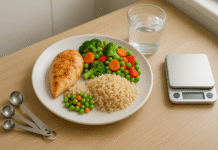
- Pair with a basic nutrition structure (regular mealtimes, protein/veg anchor) and your existing training.
Beginner steps
- Two 15-minute sessions/week on higher-stress days.
- One restorative session/week to improve sleep.
- Mindful minute before meals: 3 slow breaths, check hunger/fullness.
Progressions
- Add a 10-minute flow on rest days to increase total activity without fatigue.
- Track sleep and step count alongside body-composition goals.
Metrics
- Weekly averages: steps, sleep duration, and a simple appetite score (0–10).
- Progress photos or how clothes fit beat daily scale swings.
Safety & mistakes
- Don’t rely on yoga alone for fat loss; it supports the plan you follow consistently.
Mini-plan
- Evening wind-down (10 minutes): Child’s Pose 2 minutes → Seated Fold 60s → Supine Twist (R/L) 60s → Legs Up the Wall 3 minutes → 1 minute quiet breathing.
How to integrate yoga into your existing plan
For lifters (3–5 days/week strength)
- On training days: 8–12 minutes post-lift (hips, T-spine, hamstrings, breath).
- On rest days: 20–30-minute flow + 5 minutes of quiet breathing.
- Focus: hip extension, shoulder external rotation, core anti-extension.
For runners/cyclists
- After key sessions: 10 minutes (calves, hip flexors, spinal mobility).
- Pre-long run/ride: 5-minute balance primer and light dynamic mobility.
- Focus: single-leg control, ankle mobility, hip stability, thoracic rotation.
For team/field athletes or HIIT fans
- Post-high intensity: breath-led down-regulation (nasal breathing, supine twist, legs up the wall).
- Weekly: one 20–30-minute session targeting hips, hamstrings, and spine.
For desk-bound or beginners
- Daily micro-breaks (5 minutes): neck/shoulders, cat-cow, hip openers, 1-minute breath.
Quick-start checklist
- Choose 2 days this week for 10–15-minute sessions.
- Set a timer and place your mat in a visible spot.
- Pick one mobility sequence and one breath/balance sequence from above.
- Keep breath nasal and even; stop if breath becomes strained.
- Note one metric to track (balance time, pose hold, or sleep quality).
- Schedule one recovery session the evening before your hardest training day.
Warm-up primer (3 minutes before any session)
- Nasal breathing: 4 in / 4 out x 5 cycles.
- Spinal wave: Cat-Cow x 5 slow reps.
- Ankles & hips: heel raises x 10; hip circles x 5 each direction.
- Shoulders: scapular squeezes x 10, arm circles x 5 each.
Troubleshooting & common pitfalls
- “I’m too stiff to do yoga.” Perfect—start seated or on the floor, bend knees freely, and use props.
- Sore wrists. Elevate hands on blocks, make fists, or drop to forearms; build tolerance slowly.
- Neck/shoulder tension. Keep shoulders down and wide; in planks/push-ups, elbows at ~45°, ribs stacked over pelvis.
- Breath feels forced. Shorten the count; never “chase” a longer exhale. Comfort first, then progress.
- No time. Do 5-minute micro-doses (Tree + Cat-Cow + Legs Up the Wall). Something beats nothing.
- Hot environments. Hydrate, exit if dizzy or overheated, and avoid heated classes during pregnancy.
- Eye pressure concerns. Skip sustained head-down inversions if you have glaucoma or are at risk; practice upright variations.
How to measure progress
Performance metrics
- Mobility: can you reach the bar comfortably for back squats or lock out overhead without compensations?
- Balance: Tree Pose unbroken time (target 30–45s).
- Strength-endurance: pose hold totals (e.g., 2 minutes combined Warrior holds).
- Breath control: maintain 4- to 6-second inhale/exhale comfortably during holds and flows.
Recovery & wellness
- Sleep: time to fall asleep and wake refreshment (0–10).
- Perceived stress: one-line journal entry or 0–10 rating.
- Training adherence: % of planned workouts completed.
Health markers (with your clinician as needed)
- Blood pressure, fasting glucose/HbA1c if relevant, morning resting heart rate or HRV (if you use a device).
A simple 4-week starter plan
Goal: build a reliable habit, improve mobility/balance, and learn breath-led pacing without derailing your current training.
Structure: 3 short sessions/week + 1 optional longer session. Keep intensity easy-moderate, always breathing smoothly.
Week 1 — Establish the base (Total time ≈ 60–75 minutes)
- Session A (12 min): Cat-Cow → Low Lunge (R/L) → Half Split (R/L) → Down Dog → Child’s Pose.
- Session B (12 min): Chair → Warrior II (R/L) → Triangle (R/L) → Bridge.
- Session C (10 min): Tree (R/L) → Warrior III prep (R/L) → Seated breathing (4-4).
- Optional (20–30 min): Gentle flow + Legs Up the Wall 3 min.
- Metrics: note Tree hold time and any lift/run that felt easier.
Week 2 — Add breath-focus and longer holds (Total time ≈ 75–90 minutes)
- Session A (15 min): Add 10–15s to each mobility hold; end with 2-minute nasal breathing.
- Session B (15 min): Chair 30–40s → Warrior II 30s (R/L) → Reverse Warrior 20s (R/L) → Bridge 45–60s.
- Session C (12 min): Balance primer + 5 Sun Salutation A at an easy pace.
- Optional (20–30 min): Recovery session (Crocodile breathing, twists, savasana).
- Metrics: aim for +10s Tree hold, smoother nasal breathing during flows.
Week 3 — Build endurance and control (Total time ≈ 90–105 minutes)
- Session A (18 min): Mobility flow + active end-range (light isometrics at end of stretch).
- Session B (18 min): Plank 30–45s → Side Plank (R/L) 20–30s → Boat 20s → repeat.
- Session C (12 min): Balance + add eyes-closed 5–10s in Tree if safe.
- Optional (25–30 min): Moderate vinyasa flow; keep breath smooth.
- Metrics: +15–30s total hold time across the session; check squat or overhead comfort.
Week 4 — Consolidate & personalize (Total time ≈ 90–120 minutes)
- Session A (20 min): Choose your favorite mobility elements; hold 45–60s.
- Session B (20 min): Strength-endurance circuit (Chair, Warriors, Bridge, Plank) with calm breathing.
- Session C (15 min): Breath-led recovery and reflection; note wins and next steps.
- Optional (30 min): Flow of choice or restorative session.
- Metrics: Tree 30–45s, smoother sleep, lower stiffness scores, and better posture awareness.
After Week 4: Decide what you enjoyed most. Keep two short “maintenance” sessions during heavy training cycles and one longer session on easier weeks.
FAQs
1) Do I need to be flexible before I start yoga?
No. Yoga helps you become flexible. Start with bent-knee folds, use blocks, and let consistent, gentle practice do the work.
2) Can yoga replace my strength and cardio training?
Treat yoga as a complement. Keep lifting and cardio for maximal health/fitness benefits; let yoga improve your mobility, control, and recovery.
3) How many times per week should I practice?
Most people feel benefits with 2–4 short sessions weekly. Even 10 minutes counts.
4) Will yoga help back or neck discomfort?
For many, yes—especially gentle, consistent programs. Keep intensity modest, avoid painful end-ranges, and progress slowly. If symptoms persist or worsen, consult a clinician.
5) Is heated yoga safe?
Some enjoy it, but heat increases strain. Hydrate well, exit if dizzy, and avoid heated classes during pregnancy. Newer practitioners can stick to non-heated sessions first.
6) I have glaucoma—can I still practice?
Yes, but avoid or modify head-down inversions (e.g., Down Dog held for long periods, headstands). Upright or supported options are safer; consult your eye-care professional.
7) What if my wrists hurt in planks and Down Dog?
Elevate hands on blocks, make fists, or practice forearm versions. Gradually load the wrists as tolerance improves.
8) Will yoga help my sleep?
Many people sleep better with regular, breath-led sessions (especially in the evening). Keep your last practice of the day gentle and calming.
9) Can yoga help with blood pressure or blood sugar?
Gentle, consistent practice can contribute to modest improvements for some people, particularly when paired with other healthy habits. Continue any prescribed medications and follow your clinician’s advice.
10) How fast will I see results?
Often within 2–4 weeks: smoother movement, easier posture, steadier mood, better sleep, and increased control in lifts.
11) Which style should I choose as a beginner?
Start with beginner hatha or slow vinyasa. If you want recovery and calm, try restorative or yin. Sample instructors until you find a voice and pacing that suits you.
12) What if I can’t make a class?
Use short, at-home sequences (5–15 minutes). Consistency beats perfection.
Conclusion
Yoga is the quiet multiplier in a modern fitness plan. It gives you the mobility to get into strong positions, the balance to hold them, the breath to recover, and the mental steadiness to keep showing up. Start small, keep it gentle, and let the benefits stack.
CTA: Roll out a mat tonight, set a 12-minute timer, and try the mobility flow—future you will thank you.
References
- Yoga: Effectiveness and Safety, National Center for Complementary and Integrative Health (NCCIH), n.d. https://www.nccih.nih.gov/health/yoga-effectiveness-and-safety
- WHO Guidelines on Physical Activity and Sedentary Behaviour, World Health Organization, November 25, 2020. https://www.who.int/publications/i/item/9789240015128
- Bull FC et al., World Health Organization 2020 guidelines on physical activity and sedentary behaviour, British Journal of Sports Medicine, 2020. https://pmc.ncbi.nlm.nih.gov/articles/PMC7719906/
- Wang W-L et al., The effect of yoga on sleep quality and insomnia in women with sleep problems: a systematic review and meta-analysis, BMC Psychiatry, 2020. https://bmcpsychiatry.biomedcentral.com/articles/10.1186/s12888-020-02566-4
- Wu Y et al., Effectiveness of yoga for major depressive disorder: A systematic review and meta-analysis, Frontiers in Psychiatry, 2023. https://www.frontiersin.org/journals/psychiatry/articles/10.3389/fpsyt.2023.1138205/full
- Nyer MB et al., A Randomized Controlled Trial of Community-Delivered Heated Yoga for Adults with Depression, PubMed record, 2023. https://pubmed.ncbi.nlm.nih.gov/37883245/
- Geiger C et al., A systematic review and meta-analysis of yoga for arterial hypertension, PLOS ONE, May 14, 2025. https://journals.plos.org/plosone/article
- Jasien JV et al., Intraocular Pressure Rise in Subjects with and without Glaucoma during Four Common Yoga Positions, PLOS ONE, 2015. https://pmc.ncbi.nlm.nih.gov/articles/PMC4689525/
- Exercise During Pregnancy (FAQ119), American College of Obstetricians and Gynecologists, last updated September 2024. https://www.acog.org/womens-health/faqs/exercise-during-pregnancy
- Yoga for better mental health, Harvard Health Publishing, April 29, 2024. https://www.health.harvard.edu/staying-healthy/yoga-for-better-mental-health
- The physical benefits of yoga, Harvard Health Publishing, December 11, 2019. https://www.health.harvard.edu/staying-healthy/the-physical-benefits-of-yoga
- Yoga – Benefits Beyond the Mat, Harvard Health Publishing, 2015. https://www.health.harvard.edu/staying-healthy/yoga-benefits-beyond-the-mat
- Kumari S et al., Link between Yoga and Heart Rate Variability, Cureus (PMC), 2024. https://pmc.ncbi.nlm.nih.gov/articles/PMC11495300/