





















If you’re always hunting for something quick, satisfying, and actually good for you, plant-based protein snacks are the upgrade your routine has been waiting for. In the first 100 words you’re reading right now, here’s the promise: this guide delivers five delicious, protein-packed plant-based snacks you can prep fast, take anywhere, and scale to your goals—whether that’s steady afternoon energy, post-workout recovery, or simply eating more plants without feeling hungry an hour later. You’ll get clear steps, ingredient swaps, and exact ways to track progress so you know your snacking strategy works in real life.
Disclaimer: Nutrition needs vary. This guide is educational and not a substitute for personalized advice. If you have food allergies, chronic conditions, or specific goals, consult a qualified healthcare professional or registered dietitian.
Key takeaways
- Protein target per snack: Aim for ~12–20 g from plants; spacing protein across the day is helpful.
- Whole-food first: Edamame, legumes, tofu/tempeh, nuts, and seeds deliver protein plus fiber and micronutrients.
- Prep once, snack all week: Roast, air-fry, blend, or chill; batch in 10–20 minute windows.
- Scale to your needs: Simple tweaks push a snack from 12 g to 20+ g protein without excess sugar or sodium.
- Track what matters: Protein grams, fullness (1–10 scale), energy stability, and convenience.
- Smart safety: Ramp up fiber gradually, hydrate, and watch common allergens (soy, sesame, peanuts).
How this guide is organized (and how to use it)
- You’ll find five H2 snack playbooks. Each one covers: what it is, benefits, what you’ll need, beginner-friendly steps, ways to simplify or level up, frequency/metrics, safety notes, and a mini-plan example.
- After the recipes, use the Quick-Start Checklist, Troubleshooting, How to Measure Progress, and a 4-Week Starter Plan to turn great ideas into repeatable habits.
- Finish with FAQs and References.
1) Chili–Lime Edamame with Hemp Seed Sprinkle
What it is & why it works
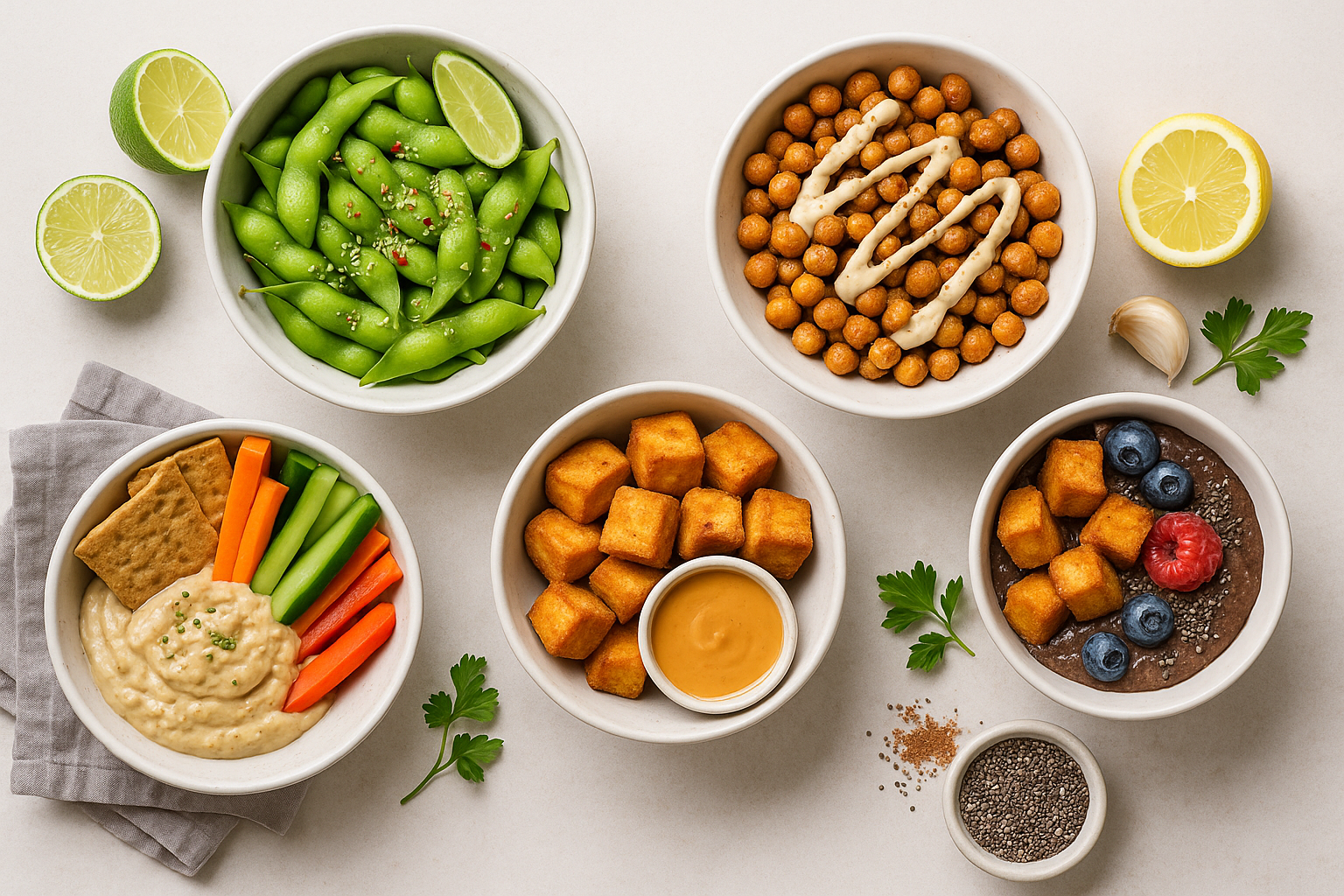
This is a bright, zesty, 5-minute snack built on shelled edamame (young soybeans) with a squeeze of lime, a pinch of chili, and a hemp seed finish. Edamame brings robust protein; hemp adds more protein plus pleasant nuttiness. It’s portable, budget-friendly, and satisfying.
- Typical protein per serving:
- 1 cup shelled edamame ≈ ~18–19 g.
- 1 tablespoon hulled hemp seeds ≈ ~3 g.
- Total: about 21–22 g per bowl (brand/measurement dependent).
What you need (and low-cost swaps)
- 1 cup frozen shelled edamame, thawed (or microwave-steamed).
- 1 fresh lime or 2 tsp bottled lime juice.
- Chili flakes, chili powder, or a mild chili-lime seasoning.
- 1 tbsp hulled hemp seeds.
- Low-cost swaps: If hemp seeds are pricey, use crushed pumpkin seeds or toasted sesame seeds—slightly lower protein, still great crunch.
Step-by-step (beginner-friendly; 5 minutes)
- Steam/heat edamame: microwave 1–2 minutes or boil 3–4 minutes; drain well.
- Season: Toss with lime juice, a pinch of salt, and chili.
- Finish: Sprinkle with hemp seeds. Eat warm or chilled.
Make it easier / make it stronger
- Easier: Use a pre-seasoned edamame steamer bag; add hemp at the end.
- Stronger: Add 1–2 tsp tahini (adds a couple more grams of protein) and extra lime for a creamy, tangy coating.
Recommended frequency, duration & metrics
- Frequency: 3–4 times/week as a midafternoon anchor.
- Duration: 5–10 minutes to prep; eats in 5.
- Metrics: Track protein grams (aim ≥18 g), fullness 1–10 (target ≥7 within 20 minutes), and whether you skip vending-machine trips afterward.
Safety, caveats & common mistakes
- Increase fiber gradually and hydrate.
- If you’re new to soy, start with ½ cup to see how you tolerate it.
- Mistake to avoid: Over-salting packaged edamame—taste before salting; some frozen packs come seasoned.
Mini-plan example (2–3 steps)
- Monday & Wednesday: Prep 2 cups edamame at once; portion into two containers.
- Add hemp seeds right before eating so they stay crunchy.
2) Smoky Roasted Chickpeas with Lemon–Tahini Drizzle
What it is & why it works
Crunchy roasted chickpeas coated in smoked paprika and a pinch of garlic, finished with a light lemon–tahini drizzle. Chickpeas supply the protein-and-fiber double hit; tahini layers in more protein plus rich sesame flavor.
- Typical protein per serving:
- 1 cup cooked chickpeas ≈ ~14–15 g.
- 1 tbsp tahini ≈ ~2.5–3 g.
- Total: ~17–18 g.
What you need (and low-cost swaps)
- 2 cups cooked chickpeas (drained/rinsed if canned), thoroughly dried.
- 1–2 tsp olive oil (optional; air-fryer version can reduce).
- 1 tsp smoked paprika, ½ tsp garlic powder, salt to taste.
- 2 tbsp tahini + juice from ½ lemon + warm water to thin.
- Low-cost swaps: Use dry chickpeas cooked in batches (cheapest). If tahini isn’t available, whisk 1 tbsp peanut butter with lemon and warm water (flavor differs; protein still decent).
Step-by-step (roast or air-fry; 20–30 minutes hands-off)
- Dry well: Spread chickpeas on a towel; removing surface moisture = crisp.
- Season: Toss with oil (optional), paprika, garlic, and salt.
- Roast: Oven at 205°C (400°F) for 20–30 minutes, shaking pan halfway; or air-fry at 190°C (375°F) for ~12–15 minutes.
- Drizzle: Whisk tahini, lemon juice, pinch of salt, and warm water until pourable. Drizzle just before eating.
Make it easier / make it stronger
- Easier: Buy pre-roasted chickpeas; just add lemon–tahini (watch sodium).
- Stronger: Add 1 tsp hemp seeds over the top; or serve with whole-grain crackers to add complex carbs for workouts.
Recommended frequency, duration & metrics
- Frequency: 1–3 times/week.
- Duration: 5 minutes active work; roasting is hands-off.
- Metrics: Check crunch (texture), protein per portion (≥15 g), and satiety (≥7/10).
Safety, caveats & common mistakes
- Rinse canned chickpeas to reduce sodium.
- Add tahini in moderation if watching calories.
- Mistake to avoid: Not drying chickpeas thoroughly—steam = soggy.
Mini-plan example (2–3 steps)
- Sunday batch: Roast 3 cups and store in paper-towel-lined container (lid ajar).
- Weekdays: Portion 1 cup + tahini drizzle in a small jar for grab-and-go.
3) Crispy Air-Fried Tofu Nuggets with Quick Peanut Sauce
What it is & why it works
Bite-size firm tofu cubes marinated in tamari, garlic, and a touch of starch, then air-fried until crisp outside, tender inside. A minimal peanut dipping sauce adds flavor and a few more grams of protein. Protein, iron, and calcium (if calcium-set tofu) in a snack you can eat hot or cold.
- Typical protein per serving:
- ~¾ cup firm tofu (scaled from ½ cup) ≈ ~17 g (varies by brand).
- 1 tbsp peanut sauce adds a few grams.
- Total: commonly ~18–21 g per snack.
What you need (and low-cost swaps)
- 400 g block firm tofu, pressed 10–15 minutes.
- 1 tbsp tamari or soy sauce, ½ tsp garlic powder, 1 tsp cornstarch.
- Peanut sauce: 1 tbsp peanut butter, splash warm water, 1 tsp tamari, a squeeze of lime.
- Low-cost swaps: If peanut butter is expensive or an allergen, use tahini or sunflower seed butter.
Step-by-step (20 minutes)
- Press tofu: Wrap in towels; add a weight.
- Cube & season: Toss with tamari, garlic, and cornstarch.
- Air-fry: 200°C (392°F) for 12–15 minutes, shake once. Oven option: 220°C (425°F) ~20 minutes.
- Sauce: Whisk peanut butter, tamari, warm water, and lime.
Make it easier / make it stronger
- Easier: Buy pre-pressed, pre-cubed tofu; go straight to seasoning.
- Stronger: Coat with nutritional yeast before air-frying for extra savory flavor and a small protein bump; or serve with a side of edamame to push the protein toward the high end of the range.
Recommended frequency, duration & metrics
- Frequency: 2–4 times/week if you enjoy tofu; rotate with other snacks.
- Duration: ~20 minutes total, active time ~8 minutes.
- Metrics: Protein ≥18 g, crispness (rate texture 1–10), and energy stability (note afternoon productivity vs. pre-snack).
Safety, caveats & common mistakes
- Allergens: Soy and peanuts are common. Use seed butter if needed.
- Choose minimally processed tofu and moderate sodium marinades.
- Mistake to avoid: Skipping the press—excess moisture prevents crisping.
Mini-plan example (2–3 steps)
- Press & marinate tofu the night before.
- Air-fry half the block in the morning; pack sauce in a leakproof cup.
4) Creamy Lentil–Tahini Dip with Veggie Sticks & Whole-Grain Crackers
What it is & why it works
Think “hummus” but with cooked lentils as the base plus tahini and lemon. The texture is silky, the flavor is bright, and the protein is sneaky-high for something that takes 10 minutes and a blender. Pair with carrot sticks, cucumber, bell pepper, or whole-grain crackers.
- Typical protein per serving:
- ¾ cup cooked lentils ≈ ~13–14 g.
- 1 tbsp tahini ≈ ~2.5–3 g.
- Total: ~15–17 g; whole-grain crackers add a bit more.
What you need (and low-cost swaps)
- 1½ cups cooked brown or green lentils (canned is fine; rinse).
- 2 tbsp tahini, juice of ½ lemon, 1 small garlic clove, salt, pepper.
- 1–2 tbsp water or aquafaba to thin.
- Raw veggies + whole-grain crackers for dipping.
- Low-cost swaps: Use home-cooked lentils (cheapest); swap tahini for 1 tbsp olive oil + 1 tsp sesame seeds for flavor (slightly less protein).
Step-by-step (10 minutes)
- Blend: Lentils, tahini, lemon, garlic, salt, pepper.
- Thin: Add water 1 tbsp at a time to reach scoopable consistency.
- Serve: With veggie sticks and crackers; drizzle a little olive oil if desired.
Make it easier / make it stronger
- Easier: Use a mini food processor or even mash by hand for a rustic texture.
- Stronger: Stir in 1 tbsp hemp seeds or nutritional yeast for extra protein and depth.
Recommended frequency, duration & metrics
- Frequency: 2–3 times/week as a prepared tub in your fridge.
- Duration: 10 minutes.
- Metrics: Protein ≥15 g per heaped bowl, veggie volume (at least 1 cup raw veg), and post-snack cravings (target fewer sweet cravings afterward).
Safety, caveats & common mistakes
- Rinse canned lentils to reduce sodium.
- Increase fiber gradually; sip water alongside.
- Mistake to avoid: Over-garlicking; raw garlic intensifies in the fridge—start small.
Mini-plan example (2–3 steps)
- Sunday: Blend a double batch; portion into 3–4 containers.
- Weekdays: Grab 1 container + pre-cut veg; add 6–8 crackers.
5) Chocolate Chia–Pea Protein Pudding (No-Bake)
What it is & why it works
A dessert-leaning, spoonable chia pudding boosted with pea protein for a serious protein payload without baking or fancy equipment. Plant milk, cocoa powder, chia, and a scoop of pea protein set into a creamy cup you can prep in under 5 minutes.
- Typical protein per serving:
- Most pea protein powders deliver ~20–23 g per ~30 g scoop (varies by brand).
- 2 tablespoons chia add a few additional grams and fiber.
- Total commonly ~22–28 g depending on milk choice and brand; check your label.
What you need (and low-cost swaps)
- 1 cup unsweetened plant milk (choose a higher-protein option).
- 2 tbsp chia seeds.
- 1 scoop pea protein (unflavored or chocolate).
- 1 tbsp cocoa powder, 1–2 tsp maple or dates to taste, pinch of salt.
- Low-cost swaps: If protein powder isn’t in budget, skip it and add 2 tbsp peanut or almond butter; total protein will be lower but snack still satisfying.
Step-by-step (5 minutes + chill)
- Whisk milk, protein powder, cocoa, sweetener, and salt until smooth.
- Stir in chia.
- Chill 1–2 hours (or overnight) until thick. Stir before eating.
Make it easier / make it stronger
- Easier: Shake everything in a mason jar; no whisk required.
- Stronger: Top with hemp seeds or a small handful of high-fiber granola.
Recommended frequency, duration & metrics
- Frequency: 2–5 times/week if you want a dessert-style snack that hits protein goals.
- Duration: 5 minutes active; ~1–2 hours passive chill.
- Metrics: Protein ≥20 g, sweet-tooth satisfaction (rate 1–10), and whether it replaces a lower-protein dessert.
Safety, caveats & common mistakes
- Add liquid first so powder doesn’t clump; whisk well.
- Increase fiber slowly; chia is very high in fiber—sip water.
- Mistake to avoid: Using a thin, low-protein milk and skipping the scoop—your protein may undershoot the target.
Mini-plan example (2–3 steps)
- Night before: Make two jars.
- Next day: One for mid-morning, one for afternoon; top with a few berries.
Quick-Start Checklist
- Choose your rhythm: Pick two of the five snacks to start (e.g., edamame + tofu).
- Pin a protein range: 12–20 g per snack; if you’re active, bias toward the higher end.
- Shop once: Frozen edamame, canned beans/lentils, firm tofu, tahini, hemp seeds, chia, cocoa, plant milk, limes, spices.
- Batch prep: Roast chickpeas and air-fry tofu on Sunday; blend lentil dip and chill chia pudding.
- Containers matter: Use 250–350 ml cups for puddings/dips; vented containers for crispy snacks.
- Label & track: Painter’s tape + marker: date, snack, protein grams.
- Hydrate: Keep a water bottle nearby—fiber needs fluid.
Troubleshooting & Common Pitfalls
“I’m still hungry.”
- Increase portion size by ~25%, or add a 5–7 g protein topper (hemp/nutritional yeast).
- Add bulk with raw veggies (200–300 g) and a glass of water.
“Texture is off (soggy chickpeas, chewy tofu).”
- Dry beans thoroughly before roasting.
- Press tofu 10–15 minutes and don’t overcrowd the air-fryer.
- Eat crispy items the same day; store with a paper towel and keep lids slightly ajar.
“Too much sodium.”
- Rinse canned legumes.
- Season with acid (lemon/lime) and spices instead of salt-only.
“Digestive upset.”
- Ramp fiber gradually over 7–10 days; reduce portion temporarily.
- Spread snacks earlier in the day; sip water with high-fiber items.
“Protein target missed.”
- Add 1 tbsp hemp seeds (+~3 g) or an extra ¼ cup legumes (+~3–4 g).
- For pudding, choose a higher-protein plant milk and a full scoop of powder.
“Boredom.”
- Rotate spices: chili–lime, za’atar, curry, everything bagel, lemon–pepper.
- Swap dips: tahini–lemon, harissa–tahini, miso–ginger, smoky salsa.
How to Measure Progress (So You Know It’s Working)
1) Protein accounting
- Keep a tiny log: snack name, protein grams, and portion size.
- Weekly goal: >80–120 g total snack protein (depends on your target and schedule).
2) Fullness & cravings
- After each snack, rate fullness 1–10 at 20 minutes and again at 2 hours.
- Note whether you avoided impulse snacks (yes/no).
3) Energy curve
- Quick note in your calendar: “post-snack energy stable?” (green/yellow/red).
- If afternoons are still rough, shift protein earlier.
4) Convenience index
- Time each snack once. If it’s >15 minutes, streamline with pre-prepped components.
5) Budget check
- Track cost per serving once. Frozen edamame, canned legumes, and bulk seeds keep costs low.
A Simple 4-Week Starter Plan
Week 1 – Foundations
- Make edamame and lentil–tahini dip twice.
- Track protein and fullness for 4 snacks total.
- Identify any digestive issues; increase water and go slower if needed.
Week 2 – Crisp & Crunch
- Add roasted chickpeas (one big batch) and repeat lentil dip.
- Try two seasoning blends (e.g., chili–lime and curry).
- Goal: 6 snacks this week; hit ≥12 g protein each.
Week 3 – High-Protein Push
- Introduce crispy tofu nuggets twice and chia–pea protein pudding twice.
- Nudge the target to ≥18 g per snack for at least four snacks.
- Reassess energy curves and vending-machine visits.
Week 4 – Personalization
- Keep the three best snacks on rotation; retire one you didn’t love.
- Batch-cook once; stock backup shelf-stable options (roasted chickpeas, seeds).
- Evaluate: Compare Week 1 vs. Week 4 on protein totals, cravings, and energy stability.
FAQs
1) How much protein should a snack have?
For most people, ~12–20 g per snack works well and helps distribute protein across the day. Spacing protein across meals and snacks is a practical strategy.
2) Do I need complete proteins at every snack?
No. If you eat a variety of plant foods over the day, you’ll cover essential amino acids without consciously “combining” at each sitting.
3) I’m sensitive to soy—what can I use instead of edamame or tofu?
Lean on lentils, chickpeas, peas, and seeds (hemp, pumpkin, sunflower). Aim for the higher end of the portion ranges to match protein.
4) Is soy safe?
For most people, whole soy foods like edamame and tofu can be part of a healthy pattern. If you have a medical condition or are taking specific medications, speak with your clinician for individualized guidance.
5) Can I hit 20 g protein without powders?
Yes—combine 1 cup edamame (~18–19 g) with a tablespoon hemp (~3 g) or pair crispy tofu (~17 g) with a side of edamame. Powders are optional convenience tools.
6) I’m trying to manage weight. Which snack is best?
Choose options that pair protein + fiber (e.g., lentil dip with veggies, roasted chickpeas) and keep portions consistent. Track fullness and adjust.
7) What if I’m very active?
Bias toward higher-protein options (edamame + hemp; tofu + peanut sauce; chia–pea pudding). Time a snack 60–90 minutes pre- or post-workout based on comfort.
8) How do I keep crispy snacks crunchy for days?
Cool completely, store with a paper towel to absorb moisture, and keep the lid slightly ajar. Re-crisp in the air-fryer for 2–3 minutes if needed.
9) Are these snacks kid-friendly?
Yes—dial down chili, cut tofu into fun shapes, and offer dips. Watch for allergens (soy, sesame, peanuts).
10) Can I meal-prep all five?
Absolutely. Prioritize food safety: store dips/puddings chilled (≤4°C), and keep crispy items dry. Label with dates and eat within 3–4 days.
11) I’m on a tight budget. What should I buy first?
Start with frozen edamame, dry or canned lentils/chickpeas, and a small jar of tahini. Add hemp seeds and protein powder later if desired.
12) How do I raise protein without adding much cost or time?
+1 tbsp hemp seeds, +¼ cup legumes, or +1–2 tbsp nutritional yeast per snack are low-effort upgrades.
Wrap-Up
Protein-rich plant snacks aren’t just “healthy”—they’re strategic. With a few core ingredients and 10–20 minute prep windows, you can hit your protein target, tame cravings, and cruise through busy days without the sugar crash. Start with two snacks this week, track your numbers, and tune the flavors to your taste.
CTA: Pick one snack above and make it tonight—tomorrow’s energy will thank you.
References
- How much protein do you need every day? Harvard Health Publishing. June 22, 2023. https://www.health.harvard.edu/blog/how-much-protein-do-you-need-every-day-201506188096
- Should I be eating more fiber? Harvard Health Publishing. February 27, 2019. https://www.health.harvard.edu/blog/should-i-be-eating-more-fiber-2019022115927
- Chart of high-fiber foods. Mayo Clinic. November 23, 2023. https://www.mayoclinic.org/healthy-lifestyle/nutrition-and-healthy-eating/in-depth/high-fiber-foods/art-20050948
- Straight Talk About Soy. The Nutrition Source, Harvard T.H. Chan School of Public Health. (n.d.). https://nutritionsource.hsph.harvard.edu/soy/
- Pea Protein vs. Whey Protein: Which Is Better? Healthline. March 16, 2021. https://www.healthline.com/nutrition/pea-protein-vs-whey
- Edamame (Green Soybeans) Nutrition Facts. MyFoodData (USDA FoodData Central analysis). (n.d.). https://tools.myfooddata.com/nutrition-facts/176112/wt1
- Cooked Lentils (Boiled) Nutrition Facts. MyFoodData (USDA FoodData Central analysis). (n.d.). https://tools.myfooddata.com/nutrition-facts/172421/wt1
- Cooked Chickpeas (Garbanzo Beans) Nutrition Facts. MyFoodData (USDA FoodData Central analysis). (n.d.). https://tools.myfooddata.com/nutrition-facts/171719/wt1
- Firm Tofu (with Calcium and Magnesium) Nutrition Facts. MyFoodData (USDA FoodData Central analysis). (n.d.). https://tools.myfooddata.com/nutrition-facts/172448/wt1
- Sesame Butter (Tahini), 1 tbsp, Nutrition Facts. MyFoodData (USDA FoodData Central analysis). (n.d.). https://tools.myfooddata.com/nutrition-facts/169406/wt1
- Health benefits of hemp seeds (Nutrition profile). Medical News Today. Updated January 25, 2024. https://www.medicalnewstoday.com/articles/323037