




















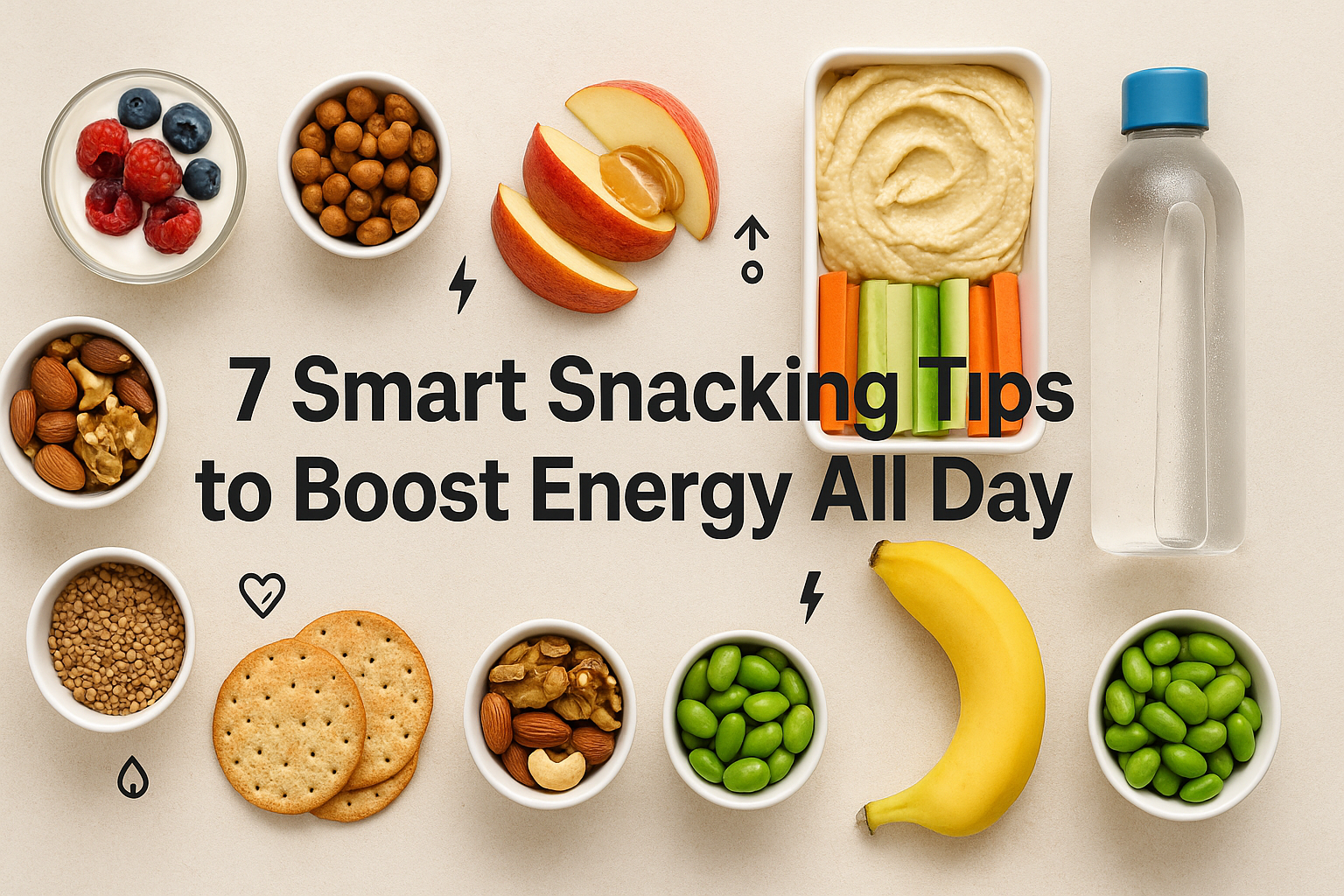
If your energy dips are running the show—mid-morning fuzziness, post-lunch yawns, late-afternoon “why is my brain made of cotton?”—smart snacking can change the script. This guide breaks down 7 smart snacking tips to boost energy throughout the day, with step-by-step instructions, beginner-friendly modifications, safety notes, and mini-plans you can use immediately. You’ll learn how to build snacks that deliver steady fuel (not sugar spikes), time them to your body’s rhythm, stay hydrated without overdoing it, and set up a low-friction prep routine that keeps you energized on busy days.
Disclaimer: The guidance below is educational and general. For personal advice—especially if you have a medical condition, are pregnant, or take medications—consult a qualified health professional.
Key takeaways
- Plan your snack windows around natural dips in alertness and your schedule so you eat before you crash.
- Balance every snack with protein + fiber + healthy fats for longer-lasting energy and better appetite control.
- Favor slow-burn carbs (fruit, legumes, whole grains) and keep added sugars in check by reading labels.
- Hydrate strategically—mild dehydration dents energy and focus; keep fluids flowing throughout the day.
- Right-size portions (often ~150–250 calories per snack) and pre-portion to avoid “bottomless bag” syndrome.
- Time caffeine wisely and pair it with food to smooth out jitters and protect sleep.
- Systematize prep once or twice a week so better snacks are the easy default.
1) Schedule Your Snack Windows (Beat Energy Dips Before They Start)
What it is & why it helps
Smart snacking isn’t random grazing—it’s planned fuel. Most people feel their alertness dip mid-morning and/or mid-afternoon. There’s also a well-documented post-lunch dip in performance for many people, which can happen even without eating lunch due to circadian rhythms. Planning a small, balanced snack ahead of those windows prevents the crash, keeps your brain online, and reduces “panic eating” later.
Requirements & low-cost alternatives
- Requirements: A daily planner or phone calendar; basic groceries; portable containers.
- Low-cost alternatives: Paper sticky notes; zip bags; reuse small jars.
Step-by-step
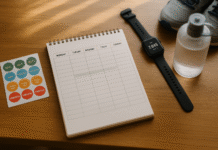
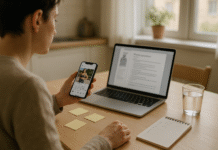
- Map your day: Note your typical meal times and when energy usually slumps (e.g., 11:00, 15:00).
- Pre-decide 1–2 snack windows: Aim for ~2–4 hours after meals or before long meetings/commutes.
- Pre-pack snacks: Pair a protein with a fiber-rich carb (see Tip 2) and keep them visible and reachable.
Beginner modifications & progressions
- New to planning? Start with one predictable window (e.g., 3:00 p.m.).
- Progression: Add a second window or tailor specific snacks for task demands (e.g., fruit + nuts before creative work; yogurt + granola before a workout).
Recommended frequency & metrics
- Frequency: 1–2 snacks most days (adjust for your meal size and activity).
- Metrics: Rate energy on a 1–10 scale hourly for a week; look for fewer dips below 6 after implementing.
Safety & common mistakes
- Mistake: Grazing all day. Planned windows work better than constant nibbling.
- Mistake: Skipping meals and trying to “snack your way” through the day. Keep meals as anchors.
Mini-plan example
- 11:00 a.m.: Whole-grain crackers (or apple) + cheese stick.
- 3:00 p.m.: Roasted chickpeas + orange.
2) Use the P-F-F Formula (Protein + Fiber + Healthy Fats)
What it is & why it helps
The P-F-F formula balances macronutrients to slow digestion and provide steady energy, not whiplash spikes. Protein helps with satiety and focus; fiber slows glucose rise and supports gut health; healthy fats add staying power. Snacks built this way are far more satisfying than carb-only choices.
Requirements & low-cost alternatives
- Requirements: A protein source (yogurt, eggs, tuna, cottage cheese, edamame, nuts/seeds), a fiber-rich carb (fruit, veg, beans, whole grains), and a healthy fat (nuts, seeds, avocado, olive-based dips).
- Low-cost alternatives: Canned beans, store-brand yogurt, bulk oats and peanuts, frozen fruit.
Step-by-step
- Pick a protein (P): Greek yogurt, cottage cheese, hard-boiled egg, edamame, tuna pouch.
- Add fiber (F): Fruit, veg sticks, bean dip, whole-grain crackers, oatmeal cup.
- Layer healthy fat (F): Nuts/seeds, nut butter, avocado, olive-oil hummus (if not already included).
- Portion for your goal: See Tip 5 for calorie and portion guidance.
Beginner modifications & progressions
- Beginner: Use “2-item P-F” snacks (protein + fiber) at first.
- Progression: Advance to full P-F-F combos and rotate 3–4 favorite pairings each week.
Recommended frequency & metrics
- Frequency: Build every snack with at least two of the three (P-F-F); include all three when you need longer fuel.
- Metrics: Track time-to-hunger after snacks; aim for 2–3 hours of steady energy.
Safety & common mistakes
- Mistake: Choosing “fat-free” + “low-fiber” carbs; you’ll be hungry again fast.
- Mistake: Forgetting fluids; dehydration can masquerade as hunger (see Tip 4).
Mini-plan example
- Protein + fiber: Cottage cheese + pineapple + chia.
- Protein + fat + fiber: Whole-grain toast + peanut butter + banana slices.
3) Favor Slow-Burn Carbs (Leverage Glycemic Steadiness)
What it is & why it helps
Slow-burn carbohydrates—fruit, legumes, intact or minimally processed whole grains—tend to produce a slower rise in blood sugar compared to refined snacks. Processing usually raises glycemic response, while fiber and fat generally lower it. Choosing slow carbs helps keep energy and mood steadier between meals.
Requirements & low-cost alternatives
- Requirements: Fruit, veg, legumes, oats, popcorn kernels, whole-grain crackers, unsweetened dairy or soy yogurt.
- Budget picks: Bananas, apples, carrots, air-popped popcorn, store-brand oats and beans.
Step-by-step
- Scan for fiber: Choose snacks with real fiber from foods (fruit/veg/whole grains/legumes).
- Pair wisely: Combine the slow carb with protein/fat (Tip 2) to further smooth out the curve.
- Check processing: “Puffed,” ultra-fine, or sugar-coated foods are often faster-burning.
Beginner modifications & progressions
- Beginner: Swap one refined snack daily (e.g., cookies) for fruit + nuts.
- Progression: Batch-cook slow carbs (e.g., oat cups, bean salad) to make them the easy choice.
Recommended frequency & metrics
- Frequency: Aim for slow-burn carbs in most snacks.
- Metrics: Subjective energy and post-snack cravings (should decrease with slow-burn choices).
Safety & common mistakes
- Mistake: Assuming “brown-colored” equals whole grain—verify on the label (“whole” as first ingredient).
- Mistake: Over-relying on fruit juice; whole fruit provides fiber and better hunger control.
Mini-plan example
- On the go: Apple + almonds; roasted chickpeas + cherry tomatoes.
- Desk drawer: Plain oatmeal cup + scoop of protein powder + cinnamon, microwaved with water.
4) Hydrate Strategically (Fluids Are Energy’s Quiet Partner)
What it is & why it helps
Even mild dehydration (around a 1–2% loss of body mass) can impair mood and aspects of cognition—exactly what many people describe as an afternoon slump. A steady trickle of fluids supports focus, stamina, and better choices (thirst often looks like hunger).
Requirements & low-cost alternatives
- Requirements: Reusable bottle, access to water; optional: tea/coffee, seltzer, broth, or electrolytes for heavy sweaters or hot days.
- Low-cost alternatives: Tap water, homemade iced tea, a pinch of salt + citrus in water after sweaty exercise.
Step-by-step
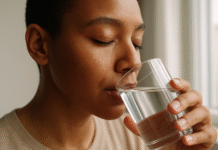
- Front-load morning fluids: Start the day with a glass of water.
- Keep a bottle visible: Sip consistently; refill at lunch.
- Match fluids to output: On hot days or after sweaty workouts, include electrolytes and a salty food (e.g., whole-grain crackers + cheese).
Beginner modifications & progressions
- Beginner: Add one 250–300 ml glass at each meal and one between meals.
- Progression: Calibrate intake to your body size and climate; many adults thrive around 2.7–3.7 L/day from all beverages and foods, adjusting for heat and activity.
Recommended frequency & metrics
- Frequency: Drink regularly across the day rather than “catching up” at night.
- Metrics: Urine color (pale straw), fewer mid-afternoon headaches, steadier focus.
Safety & common mistakes
- Mistake: Over-chugging plain water during long, sweaty sessions—replace sodium and fluids together.
- Mistake: Relying on sugary drinks for hydration; they can spike/crash energy.
Mini-plan example
- Hydration cadence: 300–400 ml at breakfast; 400–600 ml mid-morning; 400–600 ml at lunch; 400–600 ml mid-afternoon; more around workouts.
5) Right-Size Portions and Calories (Make Enough… Not Too Much)
What it is & why it helps
Snacks are mini-meals—enough to bridge the gap, not so big they crowd out meals. A practical rule for many adults is ~150–250 calories per snack, though needs vary with body size, appetite, and activity.
Requirements & low-cost alternatives
- Requirements: Basic label reading; small containers; kitchen scale or measuring cups (optional).
- Budget alternatives: Pre-portion into zip bags; use a tablespoon to measure nut butter; learn one or two visual cues (e.g., about 1 ounce of nuts ≈ small handful).
Step-by-step
- Pick a calorie target: Start with 150–250 calories and adjust based on hunger and goals.
- Read the label: Serving size can hide in plain sight; many “single-serve” packages contain 2–3 servings.
- Pre-portion “easy-to-overeat” foods: Nuts, trail mix, chips, granola.
Beginner modifications & progressions
- Beginner: Use single-serve yogurts, cheese sticks, fruit, and pre-portioned nut packs.
- Progression: Batch-portion bulk buys on Sunday nights (10–12 snack packs).
Recommended frequency & metrics
- Frequency: 1–2 snacks/day for most; more around long training or heavy labor.
- Metrics: Post-snack satiety (aim 2–3 hours), weight stability (if desired), and even energy scores.
Safety & common mistakes
- Mistake: “Health halo” overeating (e.g., finishing half a bag of nuts because they’re “healthy”).
- Mistake: Building a 400-calorie “snack” that’s really a small meal—unless you intentionally plan it.
Mini-plan example
- Examples ~150–250 calories:
- Greek yogurt + berries + 1 tsp honey
- 1 small apple + 1 tbsp peanut butter
- Hummus (3 tbsp) + carrots + whole-grain crackers
- Cottage cheese (½ cup) + pineapple + chia (1 tsp)
6) Time Caffeine & Sugar Wisely (Boost Without the Backfire)
What it is & why it helps
Caffeine can sharpen focus and reduce perceived effort during work and workouts, but its half-life is typically ~3–7 hours, so late-day caffeine can boomerang into poor sleep—leading to next-day fatigue and more cravings. Meanwhile, snacks high in added sugars can cause big peaks and dips in energy. Smart timing and label reading reduce the roller coaster.
Requirements & low-cost alternatives
- Requirements: Coffee/tea timing plan; ability to read the Added Sugars line and % Daily Value on labels.
- Budget alternatives: Brew at home; choose unsweetened tea or coffee and add milk/cinnamon instead of sugar.
Step-by-step
- Set a caffeine cutoff: Many people feel best stopping 6–8 hours before bedtime.
- Pair caffeine with food: A small P-F-F snack with your coffee/tea smooths the effect.
- Scan Added Sugars: On the Nutrition Facts label, “Includes X g Added Sugars” shows how much is added; the Daily Value for added sugars is 50 g on a 2,000-calorie diet.
Beginner modifications & progressions
- Beginner: Keep caffeine to morning only for a week and judge sleep/energy.
- Progression: If you need an afternoon lift, try a small tea with a protein-rich snack before 2–3 p.m., or swap in a brisk 7-minute walk and water.
Recommended frequency & metrics
- Frequency: 1–2 caffeinated servings/day for many adults; consider decaf or herbal later.
- Metrics: Sleep quality (time to fall asleep, nighttime awakenings), afternoon energy scores.
Safety & common mistakes
- Mistake: Using sweet drinks for “hydration.” They often exceed added sugar guidance.
- Mistake: Afternoon energy slumps + late caffeine + short sleep = vicious cycle.
Mini-plan example
- Morning: Coffee + banana + peanut butter toast.
- Afternoon (if needed): Black or green tea + yogurt and nuts, finished by 2:30 p.m.
7) Prep, Portion, and Pack (Make the Better Choice the Easy Choice)
What it is & why it helps
Energy-friendly snacks appear when you engineer your environment: prep once, portion once, and pack once so future-you can just grab and go.
Requirements & low-cost alternatives
- Requirements: Reusable containers or bags, a cooler bag or lunchbox, a standard grocery list.
- Budget alternatives: Washed jam jars; DIY trail mix from bulk bins; boil eggs at home.
Step-by-step
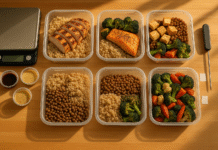
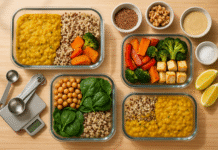
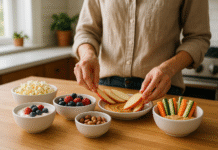
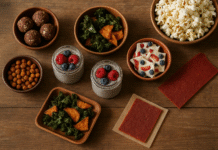
- Pick 3–4 core snacks/week: Rotate proteins, slow carbs, and fats (e.g., yogurt parfaits, hummus boxes, fruit-and-nut packs, roasted chickpeas).
- Batch on one day: Boil eggs; roast chickpeas; portion nuts; wash/chop veg; assemble oat cups.
- Stage your “snack stations”: Fridge bin (perishables), desk drawer box (shelf-stable), gym bag pouch.
Beginner modifications & progressions
- Beginner: Prep two snack types on Sunday; repeat Thursday.
- Progression: Build a 4-week rotation (see plan below) to avoid boredom.
Recommended frequency & metrics
- Frequency: 1 prep block/week (60–90 minutes) or two shorter blocks (30–40 minutes).
- Metrics: % of workdays you ate your prepped snack instead of buying something last-minute.
Safety & common mistakes
- Mistake: Forgetting food safety—store perishables cold and follow use-by dates.
- Mistake: Repeating the same snack daily until you burn out—rotate flavors and textures.
Mini-plan example
- Sunday: Portion 10 nut packs (1 oz each); boil 8 eggs; prep veg sticks; cook a pot of oats for cups.
- Weekdays: Pack tomorrow’s 2 snacks before bed.
Quick-Start Checklist
- Choose two predictable snack windows (e.g., 11:00 & 15:00).
- Stock P-F-F building blocks: a protein, a slow carb, a healthy fat.
- Pre-portion “easy-to-overeat” foods (nuts, granola, chips) into single servings.
- Fill a reusable bottle and set refill times on your calendar.
- Set a caffeine cutoff (6–8 hours before bedtime).
- Build a two-snack rotation for this week (one fridge, one drawer).
- Start a 3-minute snack log (what/when/energy before & after).
Troubleshooting & Common Pitfalls
- “I’m still crashing at 3 pm.” Add a protein anchor to your afternoon snack and review hydration for the previous 2–3 hours.
- “I snack nonstop.” Return to planned windows and use pre-portioned snacks; sip water or tea between windows.
- “Healthy snacks make me hungrier.” Increase protein or fat in the snack, or choose a chewier option (apple over applesauce; nuts over nut bars).
- “I eat the whole nut bag.” Pre-portion to 1 ounce servings and keep the rest out of sight.
- “Labels confuse me.” Start with serving size and Added Sugars; keep added sugars low and fiber naturally present.
- “Caffeine wrecks my sleep.” Move all caffeine to morning for 1–2 weeks and reassess.
How to Measure Progress
- Energy log: 1–10 energy rating before and 60–90 minutes after each snack.
- Time-to-hunger: Minutes until you feel comfortably ready for the next meal (target: 120–180 minutes).
- Snack replacement rate: % of days you ate prepped snacks instead of “emergency” purchases.
- Hydration markers: Pale-straw urine color most of the day; fewer thirst pangs.
- Sleep quality: Faster sleep onset and fewer wake-ups when caffeine is timed earlier.
- Consistency score: Number of days/week you followed your planned snack windows.
A Simple 4-Week Starter Plan
Week 1 – Build the base
- Choose two snack windows (late morning, mid-afternoon).
- Stock P-F-F basics: Greek or plain yogurt, cottage cheese or eggs; fruit; veg sticks; hummus; oats; nuts/seeds; whole-grain crackers.
- Pre-portion nuts (1 oz) and prep veg.
- Track energy before/after snacks.
Week 2 – Upgrade balance
- Make all snacks P-F-F (at least two of the three).
- Add slow carbs: overnight oats, bean salad, air-popped popcorn.
- Set a caffeine cutoff 6–8 hours before bedtime.
- Adjust snack calories toward the 150–250 range if you’re too full or still hungry.
Week 3 – Personalize timing
- Nudge snack windows earlier or later based on your energy log.
- If you train, add a protein-rich snack within a couple of hours after workouts.
- Test a hydration routine (morning glass + refills at lunch and mid-afternoon).
Week 4 – Systemize & rotate
- Create a 4-snack rotation (two fridge, two shelf-stable).
- Batch-prep once; pack each night.
- Keep experimenting: new fruit/veg weekly, spice mixes for roasted chickpeas, different nut/seed combos.
- Review metrics; celebrate wins and refine weak spots.
FAQs (Quick, Practical Answers)
1) How many snacks should I eat per day?
Most people do well with 1–2 snacks depending on meal timing and activity. If your meals are small or far apart, two snacks can keep energy steadier; if meals are larger or closer together, one may suffice.
2) What’s a good calorie target per snack?
A practical starting point for many adults is ~150–250 calories. Adjust up or down based on your size, goals, and how long you need that snack to last.
3) How much protein should a snack have?
If you want a lasting lift, include a meaningful protein portion—often 10–20+ grams in everyday snacks. After hard training, many active adults benefit from ~20–40 g in a meal or snack across the day, adjusted for body size and goals.
4) Are “energy bars” smart snacks?
Sometimes. Look for protein + fiber and lower added sugars. Bars shine in a pinch, but whole-food combos (yogurt + fruit, nuts + fruit, hummus + veg) usually keep you satisfied longer.
5) What’s the best pre-workout snack?
A small carb + protein snack 30–90 minutes before exercise—e.g., banana + yogurt or toast + peanut butter—supports energy without heaviness.
6) Is fruit “too sugary” for a snack?
Whole fruit comes with fiber, water, and micronutrients that make it a steady-energy choice—especially when paired with protein or fat (apple + cheese; berries + yogurt).
7) How do I stop mindless snacking?
Use planned windows, keep snacks out of reach when you’re not hungry, and pre-portion. Drinking water or tea between windows helps.
8) What about late-night snacks?
If you’re truly hungry, choose a small P-F-F snack (e.g., yogurt + walnuts) and keep caffeine away from late afternoon/evening to protect sleep.
9) How can I snack on a tight budget?
Lean on eggs, beans, oats, carrots, cabbage, apples, bananas, store-brand yogurt, bulk nuts/seeds. DIY roasted chickpeas and overnight oats cost pennies per serving.
10) How do I read labels fast?
Check serving size, protein, fiber, and Added Sugars (and their % Daily Value). Choose snacks with real fiber, decent protein, and lower added sugars. If you need steady energy, avoid ultra-processed sweets as your default.
Sample Snack Blueprints (Plug-and-Play)
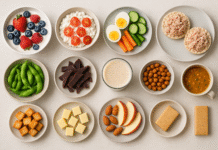
- Quick Protein Parfait: Plain Greek yogurt + frozen berries + 1 tsp honey + 1 tbsp chopped nuts.
- Crunch & Cream: Veg sticks + hummus + whole-grain crackers.
- Fruit & Fat: Orange + 1 oz mixed nuts.
- Savory Satisfier: Tuna pouch + whole-grain crackers + cucumber slices.
- Desk Drawer Rescue: Shelf-stable milk protein shake + apple + peanut butter packet.
- Warm & Cozy: Oatmeal cup made with milk + cinnamon + chia seeds.
Put It All Together (1-Day Example)
- Breakfast (8:00): Veg omelet + toast + fruit.
- Snack 1 (11:00): Cottage cheese (½ cup) + peach + pumpkin seeds.
- Lunch (1:00): Lentil soup + side salad + olive-oil vinaigrette.
- Snack 2 (3:30): Roasted chickpeas + orange; water refill.
- Dinner (7:30): Salmon, brown rice, roasted broccoli.
- Caffeine: Coffee at 8:30 only; herbal tea at 4:00.
- Hydration: Morning glass, lunch refill, mid-afternoon refill; pale-straw goal.
Conclusion
Smart snacking isn’t about eating more—it’s about eating with purpose between meals so your energy stays steady, your brain stays sharp, and your decisions stay easy. Plan your windows, build P-F-F snacks, favor slow carbs, keep fluids flowing, right-size portions, time caffeine, and prep once so better choices meet you halfway. Give it four weeks and measure how much smoother your days feel.
Call to action: Pick two P-F-F snacks you’ll prep tonight—and set tomorrow’s snack windows on your calendar.
References
- The Science of Snacking, Harvard T.H. Chan School of Public Health, Last reviewed February 2021. https://nutritionsource.hsph.harvard.edu/snacking/
- Glycemic index and glycemic load for foods, Harvard Health Publishing, November 2020. https://www.health.harvard.edu/diseases-and-conditions/glycemic-index-and-glycemic-load-for-100-foods
- Water: How much should you drink every day?, Mayo Clinic, March 16, 2022. https://www.mayoclinic.org/healthy-lifestyle/nutrition-and-healthy-eating/in-depth/water/art-20044256
- Minor degree of hypohydration adversely influences cognition: a randomized trial, American Journal of Clinical Nutrition, 2016. https://ajcn.nutrition.org/article/S0002-9165(22)04582-8/fulltext
- Effects of Dehydration on Brain Functioning: A Life-Span Perspective, Annals of Nutrition & Metabolism, 2017. https://karger.com/anm/article/70/Suppl.%201/30/42512/Effects-of-Dehydration-on-Brain-Functioning-A-Life
- The post-lunch dip in performance, Chronobiology International (PubMed record), 2005. https://pubmed.ncbi.nlm.nih.gov/15892914/
- Circadian determinants of the postlunch dip in performance, Chronobiology International (PubMed record), 1996. https://pubmed.ncbi.nlm.nih.gov/8877121/
- Dietary Guidelines for Americans, 2020–2025, U.S. Departments of Agriculture & Health and Human Services, December 2020. https://www.dietaryguidelines.gov/sites/default/files/2020-12/Dietary_Guidelines_for_Americans_2020-2025.pdf
- The New Nutrition Facts Label: Added Sugars, U.S. Food & Drug Administration, February 12, 2024. https://www.fda.gov/food/nutrition-facts-label/new-nutrition-facts-label
- Daily Value for Added Sugars on the Nutrition Facts Label: 50 grams per day, U.S. Food & Drug Administration (Fact Sheet), 2018. https://www.fda.gov/media/99251/download
- Scientific Opinion on Caffeine, European Food Safety Authority, 2015. https://www.efsa.europa.eu/en/efsajournal/pub/4102