


















If you’re trying to lose weight, water is one of the simplest tools you can use—no calories, widely available, and surprisingly effective when you apply it with a plan. This guide shows how to use hydration for weight loss through ten proven strategies: from pre-meal water timing to smart drink swaps, energy-dense meal tweaks, workout support, and safety guardrails. In brief, “hydration for weight loss” means using water (and water-rich foods) to reduce calorie intake, improve satiety, support exercise, and avoid empty liquid calories. A quick way to start today: drink 500 mL of water 30 minutes before meals, swap sugary drinks for water, include a water-rich starter like soup or salad, and monitor hydration using pale-yellow urine as a cue.
Medical note: This article is informational and not a substitute for personalized medical advice. If you have kidney, heart, or endocrine conditions—or take diuretics—talk to your clinician about fluid goals.
1. Drink 500 mL of Water 30 Minutes Before Meals (The “Preload”)
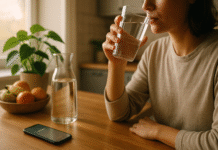
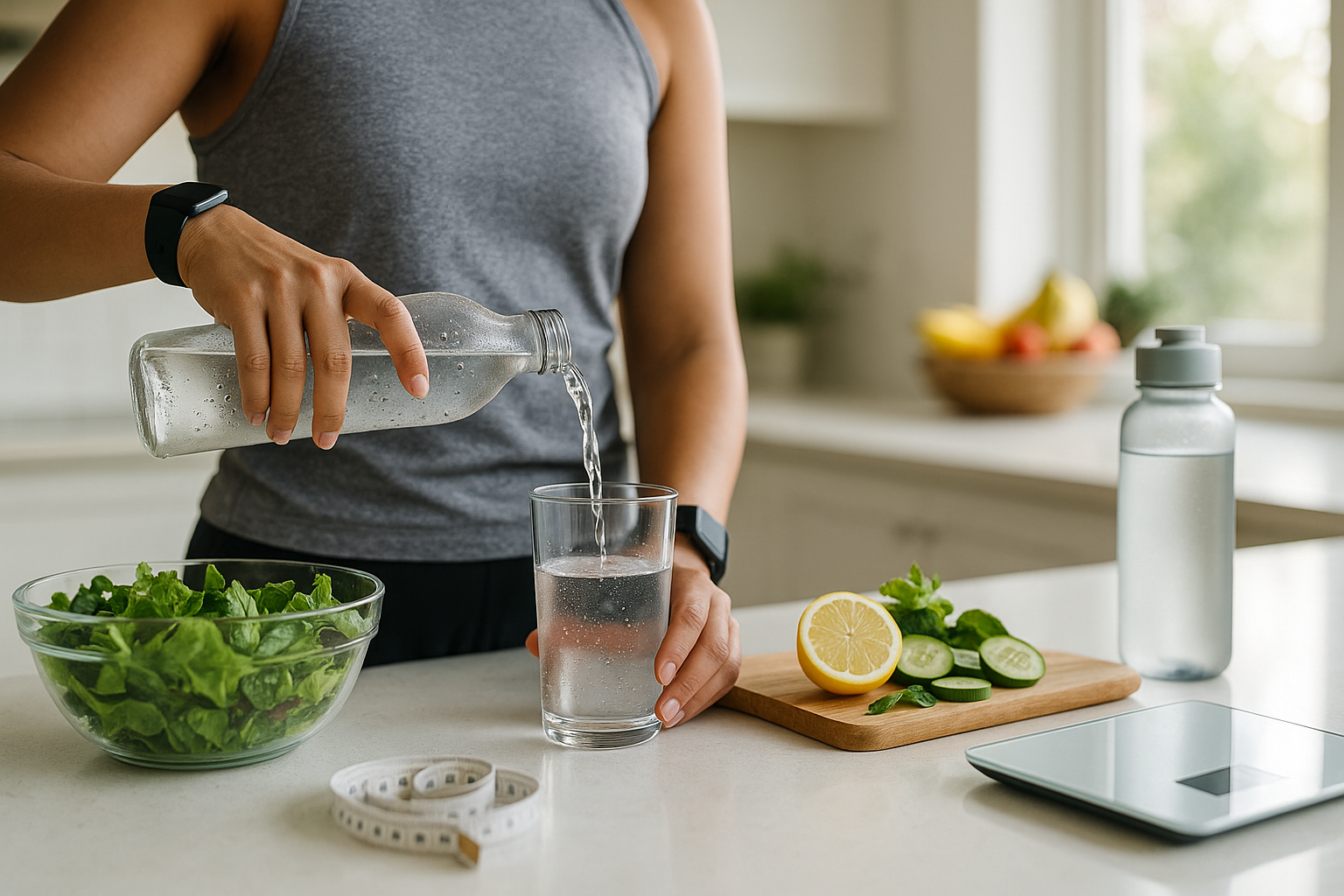
Pre-meal water is a small, controllable action that can lead to meaningful weight loss. The idea is simple: water takes up stomach volume, promoting fullness so you eat fewer calories without feeling deprived. Randomized trials have shown that adults who drank ~500 mL (16 oz) of water 30 minutes before main meals lost more weight than those who didn’t, when both groups followed the same calorie-reduced plan. In one 12-week trial, participants “water-preloading” before meals lost about 3 additional pounds, and those most consistent with the preload lost ~4.3 kg (9 lb). Another study in middle-aged and older adults found greater weight loss over 12 weeks when 500 mL of water was consumed before meals as part of a hypocaloric diet. The mechanism is straightforward: acute increases in fullness and lower energy intake at meals.
1.1 Why it works
- Water adds volume without calories, lowering the energy density of the upcoming meal. PMC
- Gastric stretch and orosensory cues help you feel satisfied sooner, reducing plate intake.
- It’s habit-friendly: three defined times per day (before meals) are easy to remember.
1.2 How to do it
- Dose & timing: 500 mL (about 2 cups) 20–30 minutes before breakfast, lunch, and dinner.
- Temperature: any—choose what you’ll actually drink.
- Consistency: aim for 2–3 preloads/day at least 5 days/week for 8–12 weeks.
1.3 Numbers & guardrails
- If you typically eat 600–800 kcal per meal, a modest 10–15% reduction via preload-driven fullness can trim 180–360 kcal/day—over weeks, that adds up.
- Skip preloading if you have fluid restrictions (e.g., advanced CKD, heart failure); ask your doctor first.
Bottom line: A 500 mL water preload is a low-effort, high-yield tactic that can help you eat less—especially when paired with a calorie-aware meal. PMC
2. Replace Sugary Drinks with Water (and Use Diet Drinks Strategically)
Sugary drinks (soda, sweet tea, juice drinks, energy drinks) are a major source of added sugars and liquid calories that don’t fill you up. Replacing them with water is one of the highest-ROI swaps for weight loss. In the CHOICE randomized clinical trial, substituting caloric beverages with water or noncaloric diet drinks led to ~2–2.5% weight loss over 6 months—without changing foods. That’s thousands of calories saved simply by changing what’s in your glass. Additional RCTs show both water and non-nutritive sweetened (NNS) beverages can aid weight loss in structured programs; some trials find NNS perform similarly or slightly better than water for regular NNS users, though long-term health discussions continue.
2.1 Why it matters
- A 12-oz soda typically has ~150–180 kcal (≈10 tsp sugar). Swapping even two/day can cut ~2,100 kcal/week. MedlinePlus
- Large observational and meta-analytic datasets link higher SSB intake to weight gain and higher type 2 diabetes risk; replacing SSBs with water, coffee, or tea lowers risk. PubMed
2.2 How to do it
- Identify your highest-calorie beverage (e.g., soda, blended coffee) and replace it with water first.
- If you’re a habitual diet-soda drinker, use NNS as a bridge while you transition toward water or unsweetened tea. PMC
- Keep flavored seltzer or citrus-infused water handy for fizz or flavor without calories.
2.3 Mini case
- Person drinks 2 sodas/day (~320 kcal) → switch to water: ~2,240 kcal/week saved; at ~3,500 kcal per pound, that’s ~0.6 lb/week potential, before any food changes.
Bottom line: Liquid calories add up fast; swapping to water (and optionally NNS as a stepping stone) is a simple, evidence-based win.
3. Lower Meal Energy Density with Water-Rich Foods (Soups, Salads, Fruit)
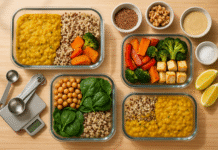
Water not only fills your glass—it can fill your plate. Diets lower in energy density (kcal per gram), often achieved by adding water-rich foods (brothy soups, vegetables, fruit), let you eat larger, more satisfying portions for the same or fewer calories. Controlled studies from Dr. Barbara Rolls’ group show that a low-calorie soup before meals reduces subsequent intake by about 20%, and year-long trials report better weight outcomes when people emphasize water-rich foods. Practically, this means leading meals with vegetable soup or salad with light dressing, serving stews instead of creamy casseroles, and loading dishes with veg and legumes.
3.1 How to apply it
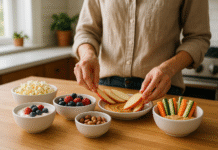
- Start with a starter: 1–2 cups of broth-based soup or a hefty salad (greens + crunchy veg) before the entrée.
- Bulk your entrée: Add 300–400 g of vegetables to pasta, stir-fries, curries, and rice.
- Fruit for dessert: End meals with water-rich fruits (citrus, melon, berries).
3.2 Numbers & guardrails
- In lab settings, a soup preload cut lunch calories by ~20% (soup + entrée). Over a week, that could remove ~1,000+ kcal for many people.
- Watch added fats (cream, cheese, oil) that raise energy density; keep soups brothy and salads light.
Bottom line: Use water to lower calorie density—with soups, salads, and produce—so you feel full on fewer calories without meticulous counting.
4. Set a Daily Fluid Target and Monitor It the Smart Way
How much should you drink? There’s no single magic number, but credible guidelines help. The U.S. National Academies suggest ~3.7 L/day for men and ~2.7 L/day for women of total water (all beverages + food moisture) as adequate intakes—actual needs vary by body size, climate, activity, and diet. (European guidance is 2.5 L men, 2.0 L women.) A practical, individualized approach is to spread fluids across the day and monitor hydration with simple cues like urine color: aim for pale yellow. Urine color correlates reasonably well with hydration status in healthy adults and is easy to self-check. National Academies
4.1 How to do it
- Set a baseline: If you rarely drink water, target 6–8 cups (1.5–2.0 L) fluids/day from water, tea, and water-rich foods, then adjust.
- Check your color: Pale-yellow urine = likely well-hydrated; darker = drink more (unless due to food/meds).
- Use anchors: Drink with meals, mid-morning, mid-afternoon, and during workouts.
4.2 Region & climate note
- In hot, humid conditions (e.g., Karachi summers), sweat losses rise; you’ll likely need more than baseline. Increase intake and use the urine-color check frequently.
Bottom line: Start with established intake ranges, then let routine + urine color fine-tune your personal hydration sweet spot.
5. Hydrate to Support Exercise (and Avoid Overdoing It)
Hydration doesn’t directly burn fat, but it supports workouts by preventing performance-sapping dehydration. As little as ~2% body mass loss from dehydration can impair endurance—especially in heat—raising perceived exertion and reducing output. During exercise lasting under ~2 hours, sipping ~0.4–0.8 L/hour often suffices; for several-hour, sweaty sessions, include electrolytes. Just as important: don’t overdrink—excess water can dilute blood sodium (hyponatremia). Workplace and heat-stress guidance advises that, generally, fluid intake should not exceed ~6 cups (≈1.4 L) per hour.
5.1 Mini checklist
- Before: arrive euhydrated (pale urine), drink with your pre-workout snack. PubMed
- During: for most workouts, 0.4–0.8 L/hour; in long/hot sessions, add sodium (sports drink/tablets).
- After: drink to thirst + light urine, rehydrate with a meal containing salt.
5.2 Common mistakes
- Only water for multi-hour, salty sweaters → risk of hyponatremia.
- Chugging liters quickly → stomach slosh, potential sodium dilution. Follow the ≤1.4 L/hour general cap.
Bottom line: Smart hydration keeps your training productive and safer—hydration enables the calorie burn that drives fat loss.
6. Pair Water with Fiber (and Protein) for Lasting Fullness
Fiber and protein help you stay full longer, and both work better with adequate fluids. Insoluble fiber adds bulk; soluble fibers (like psyllium) form gels that slow digestion—but only if you drink enough water. Without sufficient fluid, high-fiber diets can cause constipation and discomfort, making weight-loss adherence harder. A straightforward approach: include vegetables, beans, intact grains, fruit, and lean protein at meals—and sip water alongside. When using fiber supplements, follow the label and chase each dose with at least 8 oz (240 mL) water.
6.1 How to do it
- Aim for 25–38 g/day of fiber from foods; add psyllium (e.g., 5–10 g/day) if your intake is low—with water.
- Protein timing: 20–30 g protein per meal (eggs, fish, poultry, tofu, Greek yogurt) plus water increases fullness.
6.2 Quick guardrails
- Introduce fiber gradually to avoid GI upset.
- If you have GI disease (IBD strictures) or take meds affected by fiber, discuss with your clinician.
Bottom line: Water helps fiber do its job—when you combine them (plus protein), meals are more satisfying at lower calories. PMC
7. Coffee and Tea Count (But Watch the Add-Ins)
Good news: if you like coffee or tea, they count toward your daily fluid intake. Research shows moderate coffee intake hydrates about as well as water in habitual drinkers, and the Beverage Hydration Index suggests several drinks (like milk) can be as hydrating or more than water over a few hours. The catch is the extras—cream, syrups, sugar—that can turn a drink into a dessert. Keep your caffeinated beverages lightly sweetened or plain. Stay within ≤400 mg caffeine/day (about 3–5 small cups), especially if caffeine makes you jittery or disrupts sleep (which can influence appetite).
7.1 Practical swaps
- Latte → Americano (splash of milk); sweet tea → unsweet iced tea with lemon; frappé → cold brew + dash of milk.
- Consider herbal teas at night to support hydration without caffeine.
7.2 Mini example
- Daily 16-oz sweet latte (
250–300 kcal) → Americano (<20 kcal): >1,600 kcal/week saved, while still hydrating.
Bottom line: Coffee and tea can help hydration—keep them simple to avoid stealth calories.
8. Understand “Water Weight” vs. Fat Loss (So You Don’t Get Discouraged)
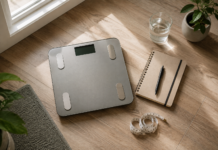
Early weight changes often reflect water shifts, not fat loss—especially if you adjust carbohydrates. Each gram of stored glycogen binds ~3 g of water, so cutting carbs or after a few active days you may drop several pounds quickly; add carbs back and you’ll regain water. This isn’t failure—it’s physiology. Knowing the difference helps you stay the course: focus on weekly trends, body measurements, clothing fit, and how you feel, not just the daily scale. Hydration still matters here: adequate fluids help with performance, digestion, and consistency.
8.1 Numbers & expectations
- A typical adult stores 300–600 g glycogen → ~0.9–1.8 kg (2–4 lb) of associated water can fluctuate with diet and activity.
- Big first-week losses on low-carb diets are often mostly water.
8.2 How to use this insight
- Track 7-day rolling averages for weight.
- Pair a stable hydration routine with consistent meals; don’t chase daily scale blips.
Bottom line: Scale swings often reflect water, not fat—understanding this keeps you motivated and consistent.
9. Make Hydration Stick with Simple Systems (Bottles, Timing, Cues)
Hydration habits succeed when the environment makes the default choice easy. Choose a reusable bottle you like (750 mL–1 L works well), and set time anchors: with each meal, mid-morning, mid-afternoon, and around workouts. Use phone reminders or hydration apps if helpful, but don’t overcomplicate it—consistency beats perfection. Keep water visible: on your desk, in the car, by the sofa. Flavor plain water with citrus slices, cucumber, mint, or a splash of unsweetened concentrate if that increases your intake. For travel, pack a collapsible bottle and refill after security.
9.1 Mini checklist
- Visible bottle within arm’s reach.
- Anchor drinks to routine moments (meals, breaks).
- Flavor without calories to reduce boredom.
- Urine color check 1–2x/day to calibrate (aim pale yellow).
Bottom line: Systems, not willpower, drive hydration; set your environment so water is the easy choice.
10. Stay Safe: Electrolytes When Needed, Avoid Overhydration
Daily life usually calls for water. Use electrolyte drinks for prolonged, heavy sweating (long runs, outdoor labor in heat)—not as an all-day beverage. In hot conditions, credible guidance suggests 1 cup (≈240 mL) every 15–20 minutes for moderate activity, and if sweating lasts several hours, use balanced electrolytes. Also, avoid overdrinking: as a general guardrail, don’t exceed ~6 cups (≈1.4 L) per hour, which helps prevent dilutional hyponatremia. People with fluid restrictions or kidney/heart disease should follow medical guidance on fluids and electrolytes.
10.1 How to choose an electrolyte drink
- Look for sodium 300–700 mg/L for endurance events; avoid high-sugar “sports” drinks unless you need fuel as well.
- For shorter sessions, salted meals and water often suffice.
10.2 Red flags—seek care
- Persistent nausea, confusion, headache, or swelling during/after heavy drinking and sweating can signal hyponatremia—stop intake and seek medical help.
Bottom line: Match electrolytes to sweat losses during long, hot efforts—and respect hourly intake caps to stay safe.
FAQs
1) How much water should I drink per day to lose weight?
There’s no one-size-fits-all number for fat loss. The U.S. National Academies suggest ~3.7 L/day (men) and ~2.7 L/day (women) of total water (all beverages + foods) as adequate intakes, but your needs vary by climate, body size, diet, and activity. For weight loss, focus on using water strategically (pre-meal preload, swapping sugary drinks, water-rich starters), while letting pale-yellow urine guide daily hydration.
2) Does cold water burn extra calories?
Heating cold water does expend a little energy, but it’s small (think tens of calories per large glass), not a fat-loss strategy. Any temperature you enjoy—and will drink consistently—is fine. Prioritize tactics with bigger impact: drink before meals, replace sugary drinks, and lower energy density of meals. (Physics-based calculations show the calorie burn is minor compared with dietary changes.)
3) Are diet sodas OK for weight loss?
In randomized trials, replacing sugary drinks with noncaloric beverages (water or diet drinks) leads to modest weight loss. Some trials show NNS beverages can match or sometimes outperform water within structured programs, especially for habitual diet-soda users. If you prefer, use diet drinks as a bridge while moving toward water and unsweetened tea. PMC
4) How do I know if I’m hydrated?
Two easy checks: thirst and urine color. Aim for pale yellow most of the day. Urine color correlates reasonably with hydration in healthy adults and is practical for self-monitoring. Certain foods and vitamins can change color, so use context.
5) Will coffee dehydrate me?
Not in moderation. In habitual coffee drinkers, moderate intake hydrates similarly to water over 24 hours. Keep an eye on caffeine dose (≤400 mg/day for most adults) and added sugars. If caffeine affects your sleep or anxiety, taper and bias toward water or herbal teas. PMC
6) What’s the fastest hydration “hack” before a big meal out?
Use the preload: drink 500 mL of water 20–30 minutes before you arrive, then order a brothy soup or salad as a first course. Both lower meal energy density and help you feel comfortably full at fewer calories. ScienceDaily
7) Do I need electrolytes every day?
No. For typical desk days and light exercise, water is enough. Add electrolytes when sweating heavily for several hours (endurance events, outdoor labor in heat). Follow the general ≤1.4 L/hour intake guardrail to avoid overhydration.
8) Can hydration help late-night snacking?
Sometimes. Many people snack when thirsty, bored, or tired. Try a glass of water or herbal tea first, then reassess hunger. Even if thirst wasn’t the driver, you’ll avoid impulsive, calorie-dense choices—and if you’re truly hungry, opt for a protein + fiber snack with water (e.g., Greek yogurt + berries).
9) Is sparkling water as good as still water?
Yes for hydration, as long as it’s unsweetened. Carbonation can feel more filling to some people, which may help adherence. Watch flavored options for added sugars or artificial sweeteners if you’re limiting them.
10) I started low-carb and lost 4–6 lb in a week—what happened?
Much of that is water due to glycogen depletion (each gram of glycogen binds ~3 g of water). Expect some regain when you reintroduce carbs. Keep your focus on sustainable habits: calorie balance, protein, produce, and consistent hydration to support workouts and digestion. PMC
11) Should I count water from food?
Yes—fruits, vegetables, soups, stews, yogurt contribute substantially. Total water intake guidelines include all beverages and food moisture, which is one reason many people meet needs without chugging gallons.
12) What’s a simple daily plan I can follow?
Morning: 500 mL with breakfast. Late morning: 250–500 mL. Lunch preload: 500 mL. Mid-afternoon: 250–500 mL. Dinner preload: 500 mL. Exercise: 0.4–0.8 L/hour as needed. Adjust by urine color and thirst, and increase in hot weather. SEMS-journal
Conclusion
Water isn’t a magic fat burner—but it multiplies the impact of everything else you do. The best results come from pairing hydration with deliberate strategies: drink 500 mL before meals, swap sugary drinks for water, lower energy density with soups and produce, support workouts with smart fluids, and keep your routine safe with basic electrolyte and hourly-intake guardrails. Build simple systems—visible bottles, time anchors, light flavoring—that make water your default choice all day. Expect early “water weight” swings and stay focused on weekly trends, steadier energy, and improved workout quality. Put two or three strategies into action today and expand over the next two weeks. Start now: fill a 1-liter bottle and drink half before your next meal.
CTA: Ready to put this into practice? Pick your favorite water bottle, set three pre-meal reminders, and make your first swap—today.
References
- Water Consumption Increases Weight Loss During a Hypocaloric Diet Intervention in Middle-Aged and Older Adults, Obesity, 2010. VTechWorks
- Effects of pre-meal water consumption on energy intake and satiety during a meal in older and younger adults, Nutrition Research, 2008. https://www.sciencedirect.com/science/article/pii/S0271531708000499 (see abstract summary) PMC
- Water preloading before main meals as a strategy to treat adult patients with overweight or obesity, Endocrinology & Metabolism International Journal, 2020. MedCrave Online
- Replacing caloric beverages with water or diet beverages for weight loss in adults: main results of the CHOICE randomized clinical trial, American Journal of Clinical Nutrition, 2012. American Journal of Clinical Nutrition
- The effects of water and non-nutritive sweetened beverages on weight loss and maintenance: randomized trials, Obesity, 2016 & 2023. and https://onlinelibrary.wiley.com/doi/full/10.1002/oby.23796 Wiley Online Library
- Sugary Drinks—The Nutrition Source, Harvard T.H. Chan School of Public Health (accessed 2025). The Nutrition Source
- Rethink Your Drink, CDC (updated Aug 2024). CDC
- Soup preloads in a variety of forms reduce meal energy intake, Appetite, 2007. PMC
- A year-long trial comparing low-energy-density diet approaches, American Journal of Clinical Nutrition, 2007. American Journal of Clinical Nutrition
- Water: How much should you drink every day? Mayo Clinic (accessed 2025) — summarizing U.S. National Academies AIs. Mayo Clinic
- The Effect of Hydration on Urine Color Objectively Measured by a CIE Lab*-Based Algorithm, Nutrients, 2020. PMC
- Does hypohydration really impair endurance performance? Sports Medicine, 2019. SpringerLink
- Hydration recommendations for heat stress, NIOSH/CDC (updated Aug 12, 2024). CDC
- No Evidence of Dehydration with Moderate Daily Coffee Intake, PLOS ONE, 2014. PLOS
- Development of a Beverage Hydration Index, American Journal of Clinical Nutrition, 2016. PubMed
- Eating Soup Will Help Cut Calories At Meals (Penn State news summary of Appetite study), 2007. Penn State