










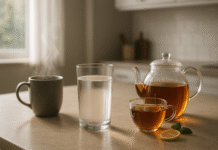














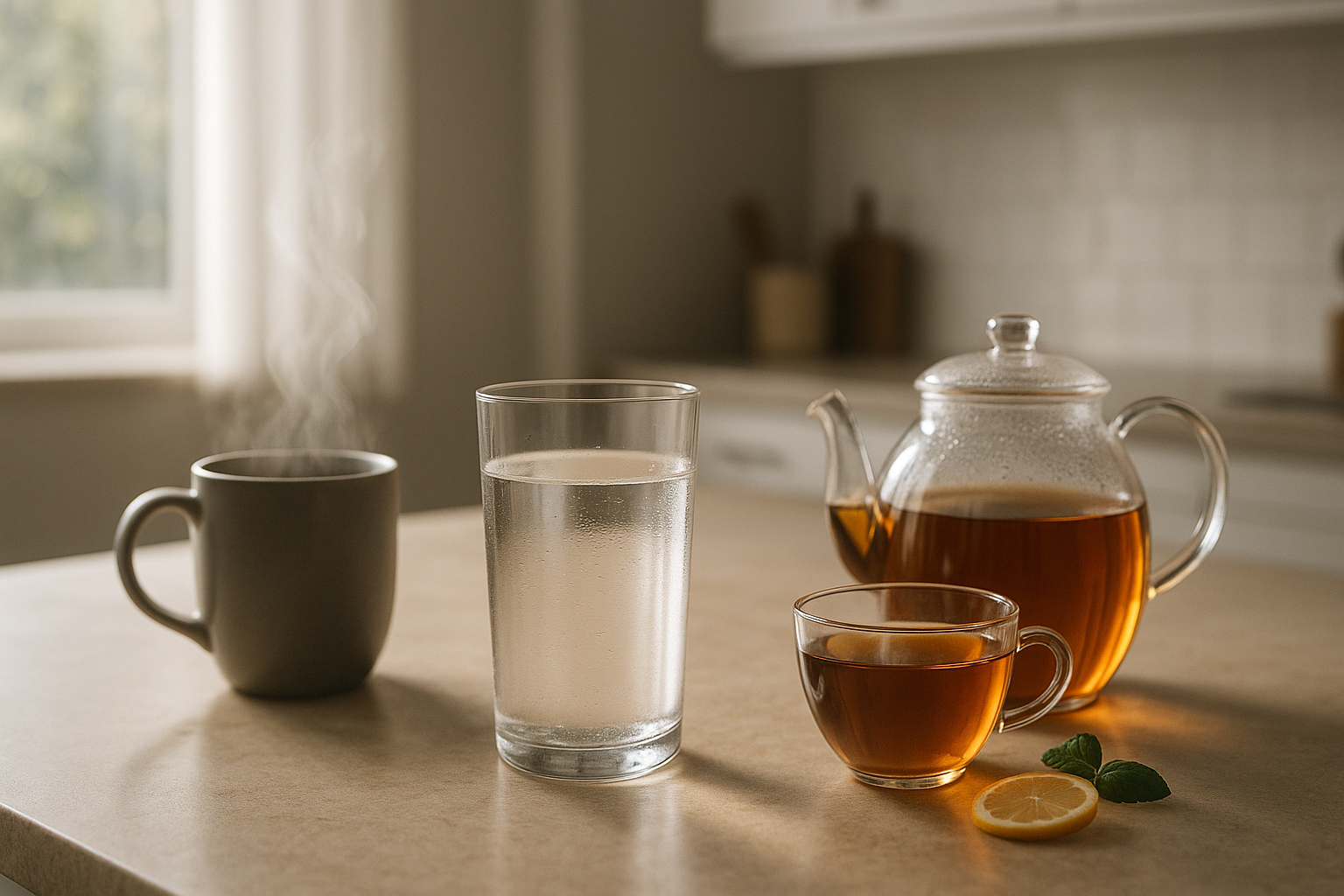
Coffee and tea have long been accused of “drying you out,” but what does the evidence actually say? Short answer: for most healthy adults, moderate coffee and tea do not dehydrate you and do count toward your daily fluid intake. Only at higher caffeine doses—or in people who aren’t used to caffeine—does a mild, short-term diuretic effect show up, and even then it rarely offsets the fluid you just drank. This guide breaks down the science so you can sip confidently, set sensible limits, and build a hydration plan that works in real life. (General info only—this isn’t personal medical advice.)
1. Coffee and Tea Count Toward Your Daily Fluids
Coffee and tea provide water, and the water you drink from beverages is part of total hydration. Authoritative guidelines on water intake explicitly include all beverages—not just plain water—plus the water naturally present in food. Practically, that means your morning mug helps, not hinders, your daily fluid goals. Large public-health references emphasize that most people get the majority of their fluid from drinks, and caffeinated beverages are not automatically excluded. In fact, major nutrition resources now state that caffeinated coffee and tea can contribute to your total daily fluid intake, even though caffeine may make you urinate slightly more in the short term.
Why it matters
If you’ve been avoiding coffee or tea out of fear of dehydration, you can stop. Counting them toward your intake makes daily hydration easier and more realistic—especially if you prefer warm beverages or don’t love the taste of plain water.
Numbers & guardrails
- Typical fluid targets (from all sources) are individualized; many adults land around 2–3+ liters/day depending on body size, climate, and activity. Food contributes ~20–30% of water intake; beverages ~70–80%. PMC
- Urine color (aim for light yellow) is a quick self-check of hydration.
Bottom line: Coffee and tea help you hydrate; they’re not automatically disqualified just because they contain caffeine.
2. Caffeine’s Diuretic Effect Is Real—but Small, Dose-Dependent, and Blunted by Habit
Caffeine can increase urine output by blocking adenosine receptors and nudging kidneys to excrete more fluid—but in typical amounts this effect is modest and often offset by the fluid you drink with it. Meta-analyses and controlled trials show that at rest, moderate caffeine can raise urine volume a bit; during exercise, the body prioritizes thermal regulation and the diuretic effect essentially disappears. Crucially, people who regularly consume caffeine develop tolerance, so the same dose produces less diuresis than in non-users.
Numbers & guardrails
- Dose matters: ~3 mg/kg (≈200 mg for a 70-kg adult) typically does not disturb fluid balance; 6 mg/kg (≈420 mg) can acutely increase urine output at rest.
- Tolerance matters: Habitual consumers show smaller diuretic responses than non-habitual consumers.
- Harvard (Feb 2025) notes >~180 mg/day may increase urination for some people, but not cause dehydration.
Mini-checklist
- Track your total daily fluids, not just urine frequency.
- If you’re sensitive, spread caffeine through the day rather than all at once.
- Pair higher-caffeine drinks with a glass of water if you notice thirst.
Bottom line: Dose and habituation determine the diuretic “signal.” In everyday amounts for regular drinkers, the effect is small and rarely meaningful.
3. Tea Hydrates as Well as Water in Controlled Studies
Randomized trials comparing black tea with water found no significant differences in hydration markers (body mass, blood and urine measures) across conditions—even when participants drank four to six cups of black tea per day. Another study at high altitude—a stressor for fluid balance—also found no evidence that tea acts as a diuretic in regular tea drinkers. Together, these results point to tea being just as hydrating as water when consumed in typical amounts.
Why it matters
Tea spans a wide caffeine range (generally lower than coffee), from green and oolong to black and white. For many, it’s a flavorful, lower-caffeine way to meet fluid needs, hot or iced. Herbal tisanes are usually caffeine-free and fully hydrating.
Numbers & guardrails
- Typical 8-oz caffeinated tea: ~20–60 mg caffeine; herbal teas: usually 0 mg.
- In the Ruxton study, 6 cups/day of black tea matched water for hydration outcomes.
Bottom line: From black tea to green, research shows tea hydrates like water in healthy adults.
4. Coffee Hydrates as Well as Water in Habitual Drinkers
A rigorously designed, counterbalanced cross-over trial put the coffee myth to the test: fifty male coffee drinkers (3–6 cups/day habitually) completed two 3-day trials—one with coffee, one with water. Across body mass, total body water, plasma and urinary markers, there were no significant differences between conditions. The authors concluded that, in habituated men, moderate coffee provides similar hydrating qualities to water.
Why it matters
This trial reflects real-world patterns—people who already drink coffee—rather than short, lab-only exposures in caffeine-naïve participants, making the findings highly applicable to daily life.
Numbers & guardrails
- The study used moderate intake over several days; results don’t endorse extreme doses.
- FDA and other authorities consider up to ~400 mg/day caffeine safe for most healthy adults (≈2–3 twelve-ounce coffees), but sensitivity varies.
Bottom line: In people who regularly drink it, moderate coffee hydrates as effectively as water.
5. The Beverage Hydration Index: Where Coffee and Tea Fit
The Beverage Hydration Index (BHI) ranks drinks by how well they keep you hydrated compared with water over several hours. In a randomized trial of 72 adults testing 13 beverages, oral rehydration solution and milk retained more fluid than water, while cola, diet cola, hot tea, iced tea, coffee, orange juice, sports drink, lager, and sparkling water were not different from water over four hours. Translation: coffee and tea perform about the same as water for short-term hydration.
Tools/Examples
- Best for retention: ORS, milk (higher electrolytes/protein).
- As good as water (4-h window): coffee, hot/iced tea, cola, sports drink.
- Strategy: For long meetings, travel, or times you can’t pee often, consider milk or ORS; otherwise, coffee/tea are fine day-to-day.
Mini case
If you need to stay seated for a 3-hour exam, a 250–500 ml milk or ORS can reduce subsequent urine output versus the same volume of water. For your normal workday, your coffee or tea hydrates comparably to water.
Bottom line: BHI data place coffee and tea on par with water for short-term fluid retention; ORS and milk outperform both.
6. Exercise and Heat: Caffeine Doesn’t Meaningfully Dehydrate You
During exercise—especially in heat—the body conserves water for sweating and cooling. Meta-analyses and reviews show that caffeine’s diuretic effect is blunted or absent during exercise, with no detrimental changes in hydration, temperature regulation, or performance at moderate doses. Practically, a pre-workout coffee or tea won’t sabotage your hydration status. That said, extreme heat and prolonged exertion increase sweat losses, so your total fluid and electrolyte plan still matters.
Numbers & guardrails
- Moderate intake (~3 mg/kg) before exercise doesn’t impair fluid balance; 6 mg/kg at rest can increase urine output. During exercise, diuresis is largely negated.
- In hot weather (e.g., South Asian summers), monitor urine color and thirst; aim for light yellow.
Mini-checklist for training days
- Pre-session: 300–600 ml fluid 2 hours prior; coffee or tea can be included.
- During: 0.4–0.8 L/hour based on sweat rate; include electrolytes for long/hot sessions.
- After: Replace ~125–150% of lost body mass within 2–4 hours.
Bottom line: With sensible volumes, caffeine before or during exercise doesn’t worsen dehydration; focus on overall fluid and electrolyte replacement.
7. Individual Differences: Tolerance, Genetics, and Sensitivity
Not everyone responds to caffeine the same way. Genetics (e.g., CYP1A2, ADORA2A) affect how quickly you metabolize caffeine and how strongly you feel it. Some people experience jitteriness, elevated heart rate, or sleep disruption at doses others tolerate well. Hydration-wise, non-habitual users may notice slightly more urination after caffeine, while habitual drinkers see blunted effects. The key is to watch your signs—thirst, urine color, energy, and sleep. Verywell Health
Numbers & guardrails
- General ceiling: Up to ~400 mg/day appears safe for most healthy adults, but individual sensitivity varies.
- If you’re highly sensitive, use lower-caffeine options (lightly brewed tea, half-caf, or decaf) to preserve hydration without side effects.
Common mistakes
- Chasing caffeine with no food/electrolytes during long hot days.
- Ignoring sleep—poor rest worsens perceived dehydration symptoms (headache, fatigue).
- Assuming more caffeine = better; higher doses can be counterproductive.
Bottom line: Calibrate caffeine to your biology and routine; the hydration impact is small, but side effects can be real if you overshoot.
8. Special Populations: Pregnancy, Adolescents, and Certain Medical Conditions
Hydration guidance for caffeinated drinks changes during pregnancy and for some health conditions. Multiple authorities advise limiting caffeine to ≤200 mg/day during pregnancy (about one 12-oz coffee or 2 cups of instant), in part because caffeine crosses the placenta and fetal metabolism is limited. This is about health risk, not dehydration—but the practical takeaway is to choose smaller cups, decaf, or herbal teas while still meeting your fluid goals. Adolescents should generally avoid high-caffeine energy drinks. People with certain cardiac issues, reflux, anxiety disorders, or sleep problems may also benefit from lower caffeine.
Region-specific note
In hotter climates (e.g., Karachi summers), pregnancy and heat can compound fluid needs. Prioritize water, milk, and caffeine-free options; reserve caffeinated drinks for earlier in the day.
Mini-checklist
- Pregnancy: ≤200 mg/day; check all sources (tea, soda, chocolate, meds).
- Adolescents: minimize caffeine; avoid energy drinks.
- Medical concerns: ask your clinician for personalized limits.
Bottom line: In pregnancy and certain conditions, caffeine limits are about safety, not hydration per se; choose lower- or no-caffeine beverages to meet fluid targets.
9. A Practical Hydration Blueprint That Includes Coffee and Tea
Putting it all together: plan hydration around total fluids, using water as your anchor and coffee/tea as enjoyable contributors. Start your day with a glass of water; add your preferred caffeinated beverage; keep sipping throughout the day based on thirst, activity, and climate. Use urine color as an at-a-glance gauge (aim for pale yellow). If you tend to front-load caffeine, balance with water or a low-sugar electrolyte drink—especially on hot days or before long meetings where bathroom breaks are tough.
How to do it (simple steps)
- Morning: 300–500 ml water on waking; then your coffee or tea.
- Workday: Keep a bottle nearby; sip 150–250 ml every hour you’re at your desk.
- Training/heat: Add electrolytes and increase volume per sweat rate.
- Evening: Switch to lower-caffeine tea or herbal infusions to protect sleep.
Quick swaps
- Want the ritual without the buzz? Try decaf (≈2–15 mg caffeine/cup) or herbal teas.
- Need more retention for long stints? Consider milk or ORS instead of water.
Bottom line: Hydration is about total intake and context. Keep water as your baseline, and fit coffee and tea into the plan—confidently and deliberately.
FAQs
1) So…does coffee or tea dehydrate you?
Not in typical amounts for most healthy adults. Studies show moderate coffee and tea hydrate as well as water in habitual consumers, and meta-analyses find caffeine’s diuretic effect is modest and often negated during exercise. The fluid you drink usually offsets any uptick in urine.
2) How much caffeine is “moderate”?
Regulators and medical groups commonly cite up to ~400 mg/day for most healthy adults (roughly 2–3 twelve-ounce coffees), with sensitivity varying by person. If you feel jittery or sleep poorly, scale back. Pregnant individuals should stay ≤200 mg/day. Mayo Clinic
3) Is tea more hydrating than coffee?
Hydration outcomes are broadly similar at typical volumes, though tea generally has less caffeine per cup, which some people find gentler. Black tea matched water for hydration in trials; herbal teas (caffeine-free) are fully hydrating. Cambridge University Press & AssessmentVerywell Health
4) What about decaf coffee?
Decaf still has a small amount of caffeine (≈2–15 mg/cup), but far less than regular coffee. Hydration-wise, it counts fully toward daily fluids and avoids most caffeine-related side effects.
5) Do energy drinks dehydrate you more than coffee or tea?
Hydration depends on total fluid and formulation. Some energy drinks have high caffeine and sugar, which may cause GI upset or rapid sips without sustained retention. For routine hydration, prioritize water, tea/coffee, milk, or ORS depending on needs; limit high-caffeine energy drinks, especially for teens. Cleveland Clinic
6) Will caffeine before a workout dehydrate me?
Evidence shows no meaningful dehydration from moderate caffeine before or during exercise; the diuretic signal is blunted while you’re active. Focus on your overall fluid/electrolyte plan based on sweat rate and heat. PMC
7) Does high heat change the advice?
In extreme heat, your total fluid and electrolyte needs rise, regardless of caffeine. Health agencies suggest emphasizing water and monitoring urine color (light yellow). If you drink caffeinated beverages, balance them with extra water/electrolytes.
8) How can I tell if I’m hydrated without overthinking it?
Use simple cues: thirst, urine color (aim for pale yellow), and how you feel (energy, headaches). Several public-health resources endorse urine color as a practical field check, though meds and vitamins can alter it. Healthdirect Australia
9) What about very high doses of caffeine?
At 6 mg/kg (~420 mg for 70 kg) in one study, coffee produced an acute diuretic effect at rest, whereas 3 mg/kg did not. That’s another reason to stay within sensible daily limits and distribute intake.
10) Can I replace all my water with coffee or tea?
You could meet fluid needs that way, but it’s not ideal. Variety helps you hit electrolytes and avoid over-caffeination. Keep water as your baseline, and use coffee/tea to complement—not replace—other hydrating beverages and water-rich foods.
Conclusion
The myth that coffee and tea inherently dehydrate you doesn’t hold up under scrutiny. Across randomized trials, observational data, and mechanistic reviews, caffeinated coffee and tea count toward your fluid intake and generally hydrate as well as water, especially if you’re a regular drinker. Caffeine’s diuretic effect exists, but it’s small, dose-dependent, and typically blunted during exercise and in habituated users. Your smartest move is to manage total fluids, keep caffeine within sensible limits (≈≤400 mg/day for most adults, ≤200 mg during pregnancy), and monitor urine color and thirst—especially in hot weather or long training sessions. Build your day around water, fit coffee and tea where they make you feel and perform your best, and lean on milk or ORS when you need longer retention. Hydration is a daily practice, not a perfect formula.
CTA: Start tomorrow with a glass of water, then enjoy your coffee or tea—confident it can be part of a solid hydration plan.
References
- Killer SC, Blannin AK, Jeukendrup AE. No Evidence of Dehydration with Moderate Daily Coffee Intake: A Counterbalanced Cross-Over Study in a Free-Living Population. PLOS ONE. 2014. PMC
- Maughan RJ et al. A randomized trial to assess the potential of different beverages to affect hydration status: development of a beverage hydration index. Am J Clin Nutr. 2016;103(3):717–723. PubMed. PubMed
- Scott D et al. The effect of drinking tea at high altitude on hydration status and mood. Br J Nutr. 2004. PubMed. PubMed
- Zhang Y et al. Caffeine and diuresis during rest and exercise: a meta-analysis. J Sci Med Sport. 2015. ScienceDirect. ScienceDirect
- Armstrong LE. Caffeine, fluid-electrolyte balance, temperature regulation, and exercise-heat tolerance. Int J Sport Nutr Exerc Metab. 2007. PubMed. PubMed
- Seal AD et al. Coffee with High but Not Low Caffeine Content Augments Fluid Loss in Healthy Adults. Frontiers in Nutrition. 2017. Frontiers
- Scientific Opinion on the safety of caffeine. European Food Safety Authority (EFSA). 2015. European Food Safety Authority
- Spilling the Beans: How Much Caffeine is Too Much? U.S. Food & Drug Administration. Aug 28, 2024. U.S. Food and Drug Administration
- Water: How Much Should You Drink Every Day? Harvard T.H. Chan School of Public Health – The Nutrition Source. Feb 26, 2025. The Nutrition Source
- Dietary Reference Intakes for Water, Potassium, Sodium, Chloride, and Sulfate – Chapter 4: Water. National Academies Press. 2005. National Academies Press
- About Heat and Your Health – Stay Hydrated. U.S. CDC. July 25, 2025. CDC
- How much coffee can I drink while I’m pregnant? American College of Obstetricians and Gynecologists. Accessed 2025. ACOG
- Foods to avoid in pregnancy – Caffeine. NHS. Accessed 2025. nhs.uk
- Caffeine content for coffee, tea, soda and more. Mayo Clinic. Feb 6, 2025. Mayo Clinic