




















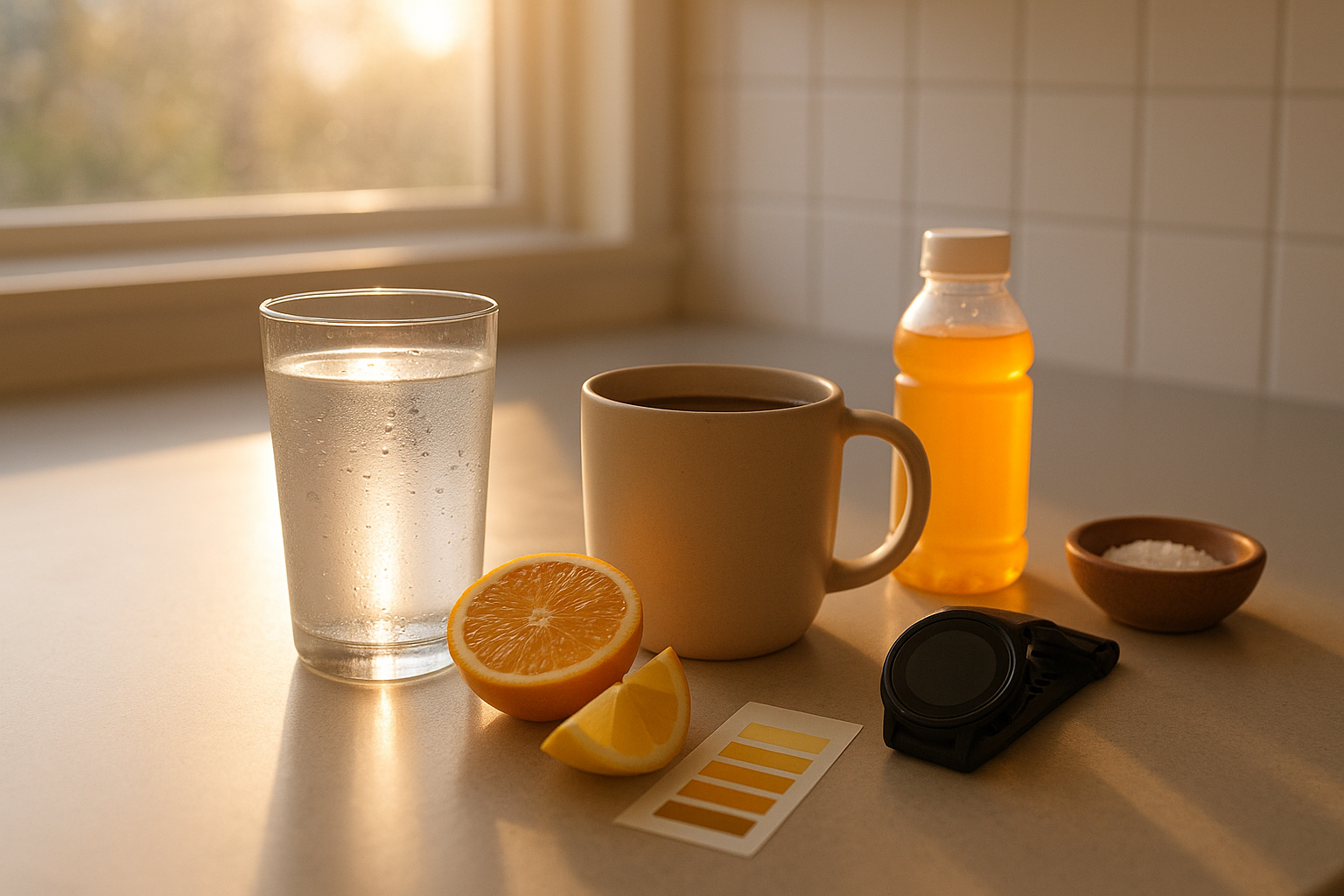
If you’ve ever been told to chug eight glasses a day, avoid coffee because it “dehydrates,” or buy special waters to “detox,” you’re not alone. This guide cuts through the noise with research-anchored facts you can use today—whether you’re desk-bound, training for a marathon, or working outdoors in the heat. In short: there’s no single number that fits everyone; most beverages (and many foods) count toward hydration; and electrolytes are situational, not mandatory for all. Hydration myths debunked means aligning everyday advice with what high-quality evidence actually shows. For most healthy adults, thirst and routine meals/beverages keep you in balance; for athletes, hot climates, or illness, targeted strategies help. As of August 2025, the fundamentals below reflect current guidance and data.
Quick definition (for snippet): Hydration myths are popular claims about drinking water that conflict with scientific guidance; debunking them means using reputable sources (e.g., National Academies, ACSM, CDC) to set practical, individualized guardrails. PubMed
At-a-glance: how to vet a hydration claim
- Check the source: look for consensus statements or government/academic pages.
- Ask “for whom?”—rest day vs. endurance event, cool room vs. humid heat.
- Remember foods and all beverages contribute; water isn’t the only hydrator.
- Beware absolutes (“always,” “never”)—hydration is context-dependent.
- Prioritize safety: both dehydration and overhydration have risks.
Medical note: This article is educational, not medical advice. If you have kidney, heart, or endocrine conditions—or take medicines affecting fluid balance—follow your clinician’s guidance.
1. The “8×8 Rule” Fits Everyone
Short answer: It doesn’t. The “eight 8-ounce glasses” rule is a catchy slogan, not a universal prescription. Actual needs vary with body size, activity, diet, climate, altitude, and health status. Authoritative targets are framed as Adequate Intake (AI) for total daily fluids (from drinks and foods), not a rigid daily quota. For healthy adults in temperate conditions, typical reference points are ~3.7 L/day for men and ~2.7 L/day for women—again, including beverages and water in foods. Practically, most people hit their needs by drinking when thirsty and having fluids with meals and snacks.
1.1 Why it matters
Fixating on “8×8” can lead to needless stress for some and under- or over-drinking for others. The National Academies emphasize that daily fluid intake is usually driven by thirst plus mealtime beverages, and that foods contribute meaningfully. They also note there’s no upper limit (UL) for water for the general population—but overconsumption in short bursts can exceed kidney excretion capacity and cause hyponatremia.
1.2 Numbers & guardrails
- Typical reference AIs (adults): 3.7 L (men), 2.7 L (women) total fluids/day.
- Kidneys excrete about 0.7–1.0 L/hour at most; rapid intake beyond that can be risky.
- Foods often supply ~20% of daily fluid; the rest is from beverages.
Bottom line: Treat 8×8 as a starting idea, not a mandate. Adjust for your context and let thirst plus meals guide most days.
2. Only Plain Water “Counts” Toward Hydration
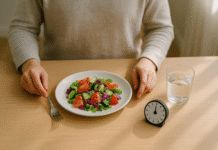
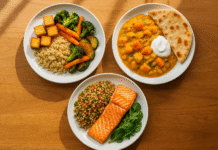
Short answer: False. All beverages (including tea and coffee) and many water-rich foods (fruits, vegetables, soups, yogurt) contribute to fluid intake. For many people, roughly a fifth of daily fluids comes from food, and the remainder from beverages. This matters if you enjoy variety or struggle to drink plain water; changing what’s in your glass or on your plate can meet the same goal.
2.1 Tools & examples
- Water-rich foods: cucumbers, tomatoes, lettuce, melons, citrus, soups, stews, yogurt.
- Beverage choices: plain or sparkling water, unsweetened tea, coffee, milk/fortified plant milks, broths.
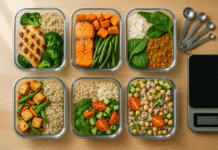
- Pro tip: Build a “fluid pattern”—a glass at each meal, a hot beverage mid-morning, water during activity.
2.2 Mini-checklist
- Aim for a mix you enjoy (prevents under-drinking).
- Watch added sugars and alcohol; they bring other trade-offs.
- If you have specific medical needs (e.g., fluid restriction), defer to your care team.
Bottom line: You don’t get extra credit for “only water.” Use a mix that fits your diet and day.
3. “Crystal-Clear Urine” Is the Gold Standard
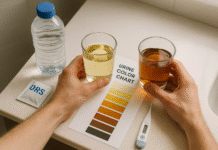
Short answer: Not exactly. Pale straw to light yellow is a good day-to-day target; persistently water-clear urine may indicate over-hydration (especially if paired with very frequent urination), while darker yellow usually means “drink more soon.” Urine color is a rough gauge, not a lab test—it varies with vitamins, foods, and medicines. Use it alongside how you feel and how often you’re going. Cleveland Clinic
3.1 Common mistakes
- Chasing perfectly clear urine all day.
- Ignoring context: a B-vitamin supplement can brighten color; morning urine is darker.
- Overcorrecting with excessive chugging (risking dilution and disrupted sleep).
3.2 Mini-checklist
- Aim for pale straw most of the day.
- Note frequency (e.g., ~every 2–4 hours in daylight for many adults).
- Recheck after a glass of water and a short break.
Bottom line: Color helps, but don’t obsess; the “ideal” is light, not invisible.
4. Caffeine “Dehydrates” You
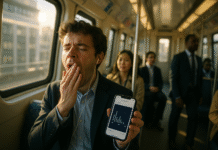
Short answer: In moderation, coffee and tea hydrate similarly to water in habitual caffeine users. Caffeine has a mild, transient diuretic effect in people who aren’t used to it or at higher doses—but your body adapts. In controlled trials, daily coffee intake did not produce dehydration compared with water, across multiple hydration markers. So your morning brew does count toward fluids. PMC
4.1 Numbers & nuances
- Moderate intake: ~3–4 cups/day coffee for many adults (watch total caffeine).
- First-time or high-dose caffeine can increase urination—don’t generalize that to everyday habits.
- Sugars/creamers change the health profile; the hydration math remains.
4.2 Mini-checklist
- If caffeine makes you jittery, alternate with decaf or herbal tea.
- Avoid “energy drinks” as a primary hydrator; consider their caffeine/sugar load.
- For late workouts, caffeine timing may affect sleep—plan fluids accordingly.
Bottom line: Caffeinated beverages contribute to hydration for most regular consumers; focus more on total fluid pattern and less on old myths. Mayo Clinic
5. Thirst Is a “Bad” Guide—You Must Drink Before You’re Thirsty
Short answer: For most healthy adults in everyday conditions, thirst is a reliable signal to maintain hydration. During prolonged endurance exercise or work in heat, thirst can lag—so planned drinking (guided by sweat rate, weather, and duration) becomes important. The key is context: “drink to thirst” works well at rest and for many workouts; planned strategies help in long/hot events to balance dehydration and avoid overdrinking.
5.1 How to do it (everyday)
- Keep water visible at your workstation.
- Have fluids with each meal/snack.
- Use urine color and how you feel (headache, fatigue) as backup cues.
5.2 How to do it (sport/heat)
- Before: Arrive euhydrated; consider ~500 mL ~2 hours pre-exercise. ResearchGate
- During: Trial your needs; many endurance athletes fall around 400–800 mL/hour depending on body size, pace, and heat. khsaa.org
- After: Replace ~150% of lost mass over several hours (e.g., 0.5 kg lost ≈ 750 mL fluid). (Guidance varies; individualize.)
Bottom line: Thirst is a fine daily compass; in sustained heat or long events, supplement with a plan.
6. Sports Drinks Beat Water for Any Workout
Short answer: Not for short, easy sessions. For workouts under about an hour, water is generally sufficient. For longer or more intense efforts (especially in heat), carbohydrate-electrolyte drinks can maintain blood glucose, replace sodium, and support performance. The distinction saves money, calories, and GI comfort on easy days while protecting you on big days.
6.1 Numbers & guardrails
- Carbs in sport drinks: commonly 4–8% (4–8 g/100 mL).
- Sodium: often ~300–700 mg/L (check labels; salty sweaters may need more). German Journal of Sports MedicineResearchGate
- Under an hour at light-moderate intensity: choose water; consider a small salty snack if you’re a heavy sweater later.
6.2 Common mistakes
- Using sports drinks as all-day beverages.
- “Stacking” gels + sports drink + chews (too many carbs → GI distress).
- Ignoring weather: humid heat drives higher needs.
Bottom line: Match the drink to the duration and intensity—water for short efforts, carbs/sodium for the long stuff.
7. Everyone Needs Electrolyte Water Daily
Short answer: No. Most people eating a varied diet get enough electrolytes without special drinks. Electrolyte solutions are useful when you sweat heavily, exercise >60–90 minutes, or during vomiting/diarrhea per medical guidance. Otherwise, plain water + meals work well. Over-doing electrolyte products can add unnecessary sugar/sodium and cost.
7.1 When to consider them
- Endurance sessions or tournaments in heat.
- You’re a “salty sweater” (notice salt stains on clothes/skin).
- GI illness, as guided by your clinician.
7.2 Mini-checklist
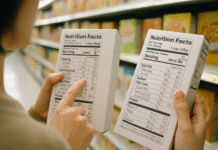
- Read labels for sodium (mg/L) and carb concentration (%).
- Try products in training, not race day.
- Don’t double-up (gels + high-carb sports drink) without a plan.
Bottom line: Electrolytes are situational tools, not daily must-haves.
8. Overhydration Can’t Happen
Short answer: It can—and it can be dangerous. Exercise-associated hyponatremia (blood sodium diluted by excess fluid) has been documented in endurance events, with a small but real risk of severe outcomes. Outside of sport, rapidly drinking fluids far above kidney excretion limits can also cause problems. Prevention is about not drinking beyond thirst and matching intake to sweat and time.
8.1 Numbers & guardrails
- Boston Marathon data: ~13% of tested finishers had hyponatremia; ~0.6% had critical levels. New England Journal of Medicine
- Kidneys can clear ~0.7–1.0 L/hour; rapid intake beyond this can overwhelm balance.
8.2 Mini-checklist
- Don’t force fluids “just in case.”
- Use body-mass change (before/after) in training to learn your sweat rate.
- Seek medical help if confusion, vomiting, or swelling occur during/after long events.
Bottom line: Hydration isn’t “more is always better.” Balance intake with loss. PMC
9. Alkaline Water Hydrates Better and “Detoxes”
Short answer: There’s no compelling evidence that alkaline water beats safe plain water for health or hydration in the general population. The body tightly regulates blood pH; stomach acid quickly neutralizes beverages. Some small studies explore niche effects, but major medical centers conclude alkaline water isn’t superior. Spend your money on consistent hydration and a nutrient-dense diet instead. MD Anderson Cancer Center
9.1 Why the myth persists
- Marketing narratives conflate pH with disease risk.
- Lab phenomena are misapplied to whole-body physiology.
- Occasional small trials (often with specific mineral contents or athletic contexts) get over-generalized. PMC
9.2 Mini-checklist
- Use trusted sources (cancer centers, universities) for claims about pH.
- If you like the taste, it’s fine; it’s not necessary for hydration.
- Prioritize safe water per local quality standards.
Bottom line: Preference is fine; superiority isn’t supported.
10. Ice-Cold Water Burns Meaningful Calories
Short answer: The calorie burn is tiny. Physically, warming 500 mL of 3–10 °C water to body temperature (~37 °C) uses on the order of 5–17 kilocalories, depending on temperature—hardly a weight-loss strategy. Some studies note transient thermogenesis after drinking water, but the effect is modest and inconsistent. Hydration supports performance and appetite regulation, but temperature tweaks won’t move the scale. Nature
10.1 Numeric example
- Heating 500 mL by 15 °C needs ~7.5 kcal (0.5 kg × 1 kcal/kg/°C × 15 °C).
- At eight 500 mL bottles/day (which you shouldn’t force), that’s ~60 kcal, not counting normal metabolism—small in context.
10.2 Mini-checklist
- Choose the water temp you’ll actually drink consistently.
- For weight goals, focus on total diet quality, activity, and sleep.
Bottom line: Drink the temperature you enjoy; the hydration habit matters more than a negligible calorie trick. UAMS Health
11. “Detox Water” Flushes Toxins
Short answer: Your kidneys and liver do the detoxing. Infusions with lemon, cucumber, or herbs can make water more appealing (great!), but they don’t bind or remove toxins in a clinically meaningful way. National health organizations emphasize there’s no strong evidence that “detox” diets or products eliminate toxins; extreme cleanses can even be risky. Hydration supports kidney function—so does a balanced diet and limiting alcohol. MD Anderson Cancer Center
11.1 How to support natural detox systems
- Stay within normal daily fluids for you.
- Eat fiber-rich plants; limit excess alcohol.
- Manage chronic conditions (blood pressure, diabetes) with your care team.
11.2 Mini-checklist
- Enjoy fruit-infused water for flavor.
- Skip unregulated “detox” supplements.
- See a clinician for persistent bloat, fatigue, or urinary changes.
Bottom line: Flavor your water if it helps you drink; leave “detoxing” to your organs. NCCIH
12. Salt Always Dehydrates—Avoid It Completely When You Sweat
Short answer: Blanket “avoid salt” advice is misleading for athletes and heavy sweaters. During prolonged exercise, replacing some sodium helps retain fluids and reduces the risk of hyponatremia when paired with sensible drinking. That said, most people still exceed sodium recommendations in daily life—so context is king: use sodium strategically for long/hot sessions, not as an all-day free pass.
12.1 Numbers & guardrails
- Many sport guidelines suggest ~300–600 mg sodium/hour during prolonged activity; adjust to sweat rate and taste. MDPI
- For typical diets off the field, prioritize minimally processed foods and culinary salts in moderation.
12.2 Mini-checklist
- Identify if you’re a “salty sweater” (salt stains on clothes/skin).
- Trial sodium dose and form (drink, chew, capsule) in training.
- If you have hypertension or are salt-sensitive, coordinate with your clinician.
Bottom line: Sodium can help in the right athletic context; everyday excess isn’t healthy.
13. Drinking Water With Meals “Dilutes” Stomach Acid and Hurts Digestion
Short answer: Not true for most people. Medical sources report that drinking water doesn’t impair digestion or “thin” digestive fluids. In fact, fluids can help food move and may reduce constipation. If you have GERD, large volumes during meals may worsen symptoms—so adjust portions and timing—but the idea that water blocks nutrient absorption is a myth.
13.1 How to do it
- Sip water with meals; drink more between meals if you get uncomfortably full.
- Combine fluids with fiber-rich meals to support regularity. Harvard Health
- If reflux is an issue, smaller, more frequent sips may feel better.
13.2 Mini-checklist
- Watch your body’s signals—bloating or reflux? tweak timing/amount.
- Avoid chugging large volumes immediately before vigorous activity.
- Discuss persistent symptoms with a clinician.
Bottom line: For most, water with meals is helpful, not harmful; tailor to symptoms if you have reflux.
FAQs
1) Do I really need 3.7 L (men) or 2.7 L (women) every day?
Those are reference AIs for total fluids (from all drinks and foods). Many people need more or less depending on body size, activity, climate, and diet. Let thirst, meal-time drinking, and urine color guide most days; increase fluids when it’s hot or you’re more active.
2) Do coffee and tea “count,” or do they dehydrate me?
They count for habitual users. Moderate coffee or tea provides hydrating fluid overall, despite caffeine’s mild, transient diuretic effect. If caffeine bothers your sleep or jitters, mix in decaf or herbal options.
3) Should I drink before I’m thirsty during workouts?
For long, intense, or hot workouts, planned drinking helps; otherwise, drinking to thirst is reasonable and can reduce overdrinking risk. Test your sweat rate in training to personalize.
4) When do I need electrolytes?
During prolonged exercise (often >60–90 min) or heavy sweating—especially in heat. Everyday routines usually don’t require special electrolyte drinks if you’re eating balanced meals.
5) Does alcohol dehydrate me?
Alcohol suppresses antidiuretic hormone, increasing urine output and can contribute to dehydration—especially with multiple drinks or on an empty stomach. Pair alcohol with food and sips of water.
6) Is very clear urine always ideal?
Not necessarily. Pale straw is a good target; persistently water-clear urine may reflect over-drinking for your needs. Factor in supplements and timing (morning urine is darker).
7) Is alkaline water worth it?
There’s no evidence it hydrates better or prevents/cures disease for the general public. Choose it if you like the taste; otherwise, safe tap or bottled water is fine.
8) Can I overdo water?
Yes. Drinking far beyond thirst—especially rapidly during endurance events—can dilute blood sodium (hyponatremia). Sip steadily, not excessively; match intake to losses.
9) Do water-rich foods really help?
Absolutely. Fruits, vegetables, soups, and yogurts contribute meaningfully to total fluids and can make staying hydrated easier (and tastier). The Nutrition Source
10) What’s a simple daily hydration routine?
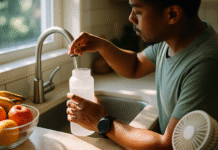
Keep a bottle handy; have a glass at each meal; add a mid-morning and mid-afternoon beverage you enjoy; drink extra around workouts and hot days. Use urine color and how you feel as quick checks.
Conclusion
Popular hydration advice often swings between oversimplified rules and marketing hype. The evidence paints a calmer picture: you don’t need a one-size-fits-all quota, and you certainly don’t need special waters to “detox.” Most days, a mix of beverages you enjoy—plus water-rich foods—will meet your needs when guided by thirst, meals, and simple checks like urine color and energy levels. When conditions change (heat, altitude, hard training, illness), adapt with planned drinking, and add electrolytes for long or sweaty efforts. The rare but serious risk of overhydration reminds us that more isn’t always better; balance is.
Take a practical next step: pick one habit that fits your routine—a glass with every meal, a midday tea, or a post-work walk with a water bottle—and build from there. You’ll hydrate better without obsessing. Cheers to smarter sips.
References
- Dietary Reference Intakes: The Essential Guide to Nutrient Requirements – Chapter: Water, National Academies of Sciences, Engineering, and Medicine, 2006 (updated 2025 site). National Academies Press
- Water: How much should you drink every day?, Mayo Clinic, updated 2024–2025. Mayo Clinic
- Sawka MN et al., ACSM Position Stand: Exercise and Fluid Replacement, American College of Sports Medicine, 2007. khsaa.org
- Almond CSD et al., Hyponatremia among Runners in the Boston Marathon, New England Journal of Medicine, 2005. New England Journal of Medicine
- Killer SC et al., No Evidence of Dehydration with Moderate Daily Coffee Intake, PLOS ONE, 2014. PLOS
- Water, drinks and hydration, NHS (UK), 2022. nhs.uk
- About Water and Healthier Drinks, CDC, 2024. CDC
- Kenefick RW, Planned Drinking Versus Drinking to Thirst, Sports Medicine, 2018 (review). PMC
- Heat Stress: Hydration, CDC/NIOSH, 2017. CDC
- Is alkaline water better?, Harvard Health, 2024. Harvard Health
- Urine colour chart, NSW Health (Beat the Heat), 2024. NSW Health
- Water doesn’t harm digestion (FAQ), Mayo Clinic, 2024. Mayo Clinic