





















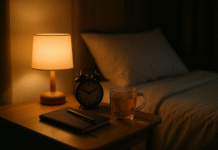


Sometimes the fastest way to feel better isn’t another app—it’s a deliberate pause from them. Intentional digital breaks are planned, time-boxed pauses from screens and notifications designed to reset attention, reduce arousal, and restore mood. In practice, that looks like 2–60 minutes away from devices, paired with a simple restorative activity (breathing, moving, daylight, or a chat). Done consistently, these breaks act like mini “nervous-system pit stops” that blunt stress, improve sleep, and lower rumination. Evidence from randomized and quasi-experimental studies shows that cutting back recreational screen use can meaningfully improve well-being and mood—especially when breaks are structured and protected.
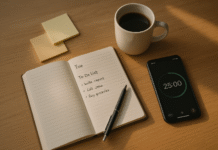
Quick start (60 seconds):
• Choose a break length (3, 10, or 25 minutes).
• Put the phone face-down; turn on Focus/Downtime.
• Do one: step outside, slow breathe, stretch, or chat with someone.
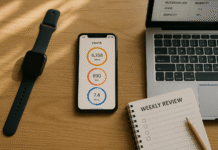
• Log how you feel (−2 to +2 mood scale). Repeat daily.
Educational use only: This guide is not medical advice. If anxiety or low mood persists or worsens, consult a qualified clinician.
1. Use Microbreaks (3–10 Minutes) to Reset Energy and Stop the Stress Spiral
Short, intentional breaks reduce mental fatigue, lift vigor, and help you re-enter tasks with steadier attention. The key is frequency and fit: 3–10 minutes every 45–90 minutes, matched to how taxing your work is. A 2022 meta-analysis found microbreaks (≤10 minutes) reliably boosted well-being (higher vigor, lower fatigue) with small but meaningful effects; performance benefits tended to require the longer end of “micro.” That’s perfect for mood regulation: a few minutes to walk, breathe, or look at the sky calms overarousal without derailing the day. Think of microbreaks as the emotional equivalent of blinking—too few, and strain accumulates; enough, and your system self-corrects.
1.1 How to do it
- Set a gentle timer for every 50 minutes; take 5 off (the 50/5).
- Leave the desk: walk a hallway, do calf raises, grab water.
- Change visual input: look 20 feet away for 20 seconds (20-20-20).
- Add one breath pattern (see Item 7) for 60–120 seconds.
- End by writing the next action you’ll take—re-entry feels easier.
1.2 Numbers & guardrails
- Start with 5 breaks/day (≈25–30 minutes total “off-screen”).
- Raise break length to 8–10 minutes when doing repetitive work.
- Keep at least one longer 15–20 minute break mid-afternoon.
Mini case: After adding a 5-minute corridor walk every hour, a project manager reported post-lunch mood improving from −1 to +1 on a 5-point scale within one week. Bottom line: small, scheduled pauses are a reliable mood stabilizer.
2. Run a One-Week Social Media Break to Cut Anxiety Fast
If your anxiety spikes with feeds and notifications, a 7-day social media break is a high-leverage reset. A randomized controlled trial showed that asking adults to stop social media for one week led to significant improvements in well-being, depression, and anxiety versus usual use. The mechanism is straightforward: reduced social comparison, fewer intermittent rewards, and less late-night scrolling combine to relieve cognitive load and sleep disruption. For many, one week is long enough to feel better, short enough to be achievable, and specific enough to learn what you actually miss (or don’t).
2.1 Checklist
- Delete just the apps (not accounts) for 7 days; log in via desktop if truly needed.
- Tell two friends so they know to text or call.
- Replace the time: 10 minutes of walking + 5 minutes of journaling daily.
2.2 Mini case & guardrails
- Example: Baseline anxiety 6/10 → 4/10 after 7 days; sleep onset improved by ~15 minutes.
- If social media is essential for work, keep one 15-minute window at a set time with a timer and a written task list.
Takeaway: a one-week break is a practical experiment with fast, measurable mood benefits.
3. Try a 2-Week Leisure-Screen Cutback to <3 Hours/Week (Family or Personal Pilot)
Two weeks of sharply reduced recreational screen time can lift adult mood and improve children’s prosocial behavior. In adults, a cluster-randomized trial (SCREENS) instructing families to limit leisure screen use to <3 hours/week/person for two weeks improved self-reported well-being and mood versus controls, though stress biomarkers didn’t change. In youth, a related trial found that a two-week reduction improved psychological difficulties and peer relations. Structure helps: a clear target (<3 hours) and a finite window (14 days) turns vague “less screen” intentions into a real intervention with observable outcomes.
3.1 How to do it (home or team)
- Define “leisure screens” (TV, scrolling, gaming) vs. work/school.
- Use one shared timer (big visible countdown) for TV and games.
- Replace with analog fun: cards, cooking, or a 20-minute neighborhood walk.
- Review wins and misses every third day; adjust.
3.2 Numbers & watch-outs
- Adults: aim for ≤180 minutes/week leisure screens; track in notes.
- Kids: pair limits with pro-social alternatives (board games, outdoor play).
- Expect withdrawal urges days 2–4; symptoms usually lessen by day 5.
Synthesis: two weeks is long enough to feel and measure changes—without committing forever. Medscape
4. Automate Breaks with Focus/Downtime on Your Phone
The best digital breaks are protected by software, not willpower. iOS Screen Time (Downtime, App Limits) and Android Digital Wellbeing (Focus mode, Bedtime mode) can schedule device-wide pauses, dim distracting apps, and silence notifications across all devices. This adds “friction” exactly when you’re most vulnerable to habit pulls, and it removes the need to decide every time. Turn these modes on before breaks and in the evening wind-down; the effect is like closing a door—quiet is the default.
4.1 Setup in 3 minutes
- iPhone/iPad: Settings → Screen Time → Downtime → schedule; add App Limits for social apps.
- Android: Settings → Digital Wellbeing → Focus mode (pause apps) + Bedtime mode (grayscale, dim, DND).
- Add a Home-screen widget showing today’s use (Android) for awareness.
4.2 Mini case & tips
- A freelancer scheduled Downtime 12:30–13:00 and 17:30–19:00 daily; average daily pickups dropped from 110 to 78 after two weeks, and evening irritability fell noticeably (self-report).
- Use “Always Allowed” for maps and calls so breaks remain practical.
Bottom line: automate the boundary; your future self will thank you.
5. Pair Breaks with Daylight or Nature for a Bigger Mood Lift
A few minutes outdoors magnify the benefits of going off-screen. Exposure to bright natural light is linked with fewer depressive symptoms, partly through better sleep regularity; even a 15–20 minute nature walk can immediately reduce anxiety compared to urban settings. Think balcony sunlight, courtyard greenery, or a tree-lined block—no wilderness required. Combining light, mild movement, and social contact (a short walk with a colleague) is a simple “stack” that consistently improves affect. ScienceDirect
5.1 How to do it
- Schedule one outdoor break before noon and one near sunset.
- Choose routes with trees/water views when possible.
- If outdoors isn’t feasible, sit by a bright window for 10 minutes.
5.2 Numbers & guardrails
- Target 1,000–2,000 lux daylight (typical shade outdoors) for 10–20 minutes.
- In hot climates, use early mornings/evenings; hydrate and wear sun protection.
- In dense cities, pocket parks and rooftops count.
Synthesis: daylight + movement turns a digital break into a natural antidepressant—fast, free, and scalable.
6. Protect Sleep with a Nightly Screen-Free Wind-Down
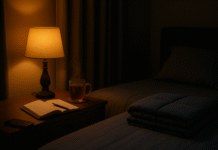
Anxiety worsens with poor sleep, and night-time screens don’t help. Light-emitting devices in the evening can delay melatonin, shift the circadian clock, and reduce next-morning alertness; blue-enriched light is especially potent. The fix is a screen-free buffer—30–90 minutes before bed dedicated to analog wind-down (paper book, stretch, journaling). If you must use devices, use Bedtime/Dark modes and lower brightness; but the strongest option, backed by lab evidence, is to swap the glowing rectangle for a lamp and paper.
6.1 How to do it
- Set Bedtime mode nightly; enable grayscale and DND.
- Keep your phone outside the bedroom or across the room.
- Replace with a 15-minute paper read + 5-minute breathwork (see Item 7).
6.2 Mini numbers
- In controlled settings, evening e-readers delayed circadian timing and reduced melatonin vs. print—translating to longer sleep latency and lower next-morning alertness.
Takeaway: a protected, analog wind-down is one of the most mood-positive breaks you can take daily.
7. Add 3–5 Minutes of Slow-Paced Breathing to Calm the Nervous System
Coupling digital breaks with slow breathing (≈4.5–6 breaths/min) helps downshift arousal and reduce anxiety. Meta-analyses and trials show that paced breathwork improves stress and modestly lowers anxiety and depressive symptoms, often via increased vagally mediated HRV. It’s portable, quiet, and pairs perfectly with any break: sit upright, exhale longer than you inhale, and keep it light and slow. Think of it as a built-in “regulator” you can engage anywhere—no mat or app required.
7.1 How to do it (box-plus)
- 4-6 breathing: inhale 4s, exhale 6s, 3–5 minutes.
- Add a 3-second pause at the top for extra control.
- Keep intensity low; aim for “light air hunger,” not big gulps.
7.2 Mini case
- After two weeks of 5 minutes post-lunch breathing, a student’s average afternoon stress rating dropped from 7/10 to 5/10; HRV increased 8–12 ms on wearable.
Synthesis: when time is tight, breathwork makes even a 3-minute break physiologically meaningful.
8. Use “Friction” Apps to Interrupt Impulses (Self-Nudging)
Self-nudging tools add a tiny pause between the urge to open an app and the app itself. The research-backed app one sec inserts a reflective screen and short delay when you tap addictive apps; field data show it led users to dismiss 36% of opening attempts and reduced overall attempts by 37%, translating to meaningful time reclaimed. This micro-friction supports intentionality: you can still choose to proceed—but you’re more likely to catch yourself and pivot to your planned break.
8.1 How to deploy
- Install on your top 3 “pull” apps (e.g., Instagram, TikTok, YouTube).
- Customize the prompt to match break intentions (“Walk for 3 minutes?”).
- Pair with Downtime/Focus for higher-risk windows (evenings, lunch slump).
8.2 Mini numbers
- Users dismissed one in three opening attempts; attempts themselves fell by about one in three—compound savings over a day.
Bottom line: friction turns mindless taps into mindful choices—exactly what an intentional break needs.
9. Run a 21-Day Track-and-Tweak to Lock in Benefits
Digital breaks work best when you measure what matters (mood, anxiety, sleep) and adjust. Over 21 days, combine microbreaks, one daylight break, a nightly wind-down, and friction tools. Track a simple daily trio: mood (−2 to +2), sleep quality (1–5), and leisure screen minutes. Evidence indicates that structured cutbacks and scheduled breaks improve well-being and mood; making this a 3-week “program” gives enough data to see trends and decide what to keep. Treat it like a personal trial—because it is.
9.1 Template
- Morning: 10-minute outdoor break after breakfast.
- Work blocks: 50/5 microbreaks x 6; breathe on two of them.
- Evening: Downtime + wind-down 60 minutes before bed.
- Friction: one sec on your top 3 apps.
9.2 Review cadence
- Every 7 days, compare averages; keep what moves mood up ≥1 point and sleep up ≥0.5 points.
- If nothing changes, extend break lengths, add a second outdoor break, or widen Downtime.
Conclusion of the section: consistent, measured practice turns one-off breaks into a lasting, lower-anxiety routine.
FAQs
1) What exactly counts as an “intentional digital break”?
A planned, time-boxed pause from screens and notifications with a clear restorative activity (e.g., walking, breathing, stretching, calling a friend). The point is to reduce sensory load and shift state, not just swap apps. It can be as short as 2–3 minutes or as long as 60, provided you protect it with Focus or Downtime so interruptions don’t leak in.
2) Do short breaks really change mood, or is that placebo?
Short breaks have measurable effects. A meta-analysis found microbreaks increased vigor and reduced fatigue, with larger task-performance gains when breaks were closer to 10 minutes. These are small-to-moderate, reliable effects that add up across a day—especially when combined with light and movement.
3) How quickly could I expect anxiety to improve?
Some trials report improvements within one to two weeks of structured reduction in recreational screen time or stopping social media. Many people notice sleep and irritability improve within days once evening screen exposure drops and wind-down is protected.
4) Are blue-light filters or glasses enough at night?
Filters help a bit, but device light—especially blue-enriched—can still delay melatonin and circadian timing. The most reliable approach is a screen-free buffer plus Bedtime mode and dim lighting. If you do read, use paper or a non-emissive device. Harvard Health
5) What if my job requires constant connectivity?
Protect micro windows: five minutes every hour and a 20-minute mid-afternoon break. Use Focus modes that allow only mission-critical contacts. Even small, predictable breaks reduce arousal and improve re-entry into deep work.
6) Do I have to go outside for breaks to work?
No, but daylight and greenery amplify benefits. Even window light helps, but getting outdoors for 10–20 minutes—especially in the morning—supports better mood and sleep regularity.
7) Is breathwork during breaks actually evidence-based?
Yes. Reviews and trials show slow-paced breathing improves stress and modestly reduces anxiety/depressive symptoms, likely via vagal pathways and HRV changes. It’s low-risk, free, and easy to pair with any break. SpringerLink
8) Are “friction” apps like one sec just gimmicks?
Field data and controlled experiments show these self-nudges reduce attempts to open target apps and increase the chance you’ll back out after a pause. They’re not magic, but they reliably support intentional choices—especially when combined with scheduled breaks.
9) What if I try a week off social media and feel worse?
That happens for some people, especially if social channels are a primary social outlet. Use a modified plan: one 15-minute, scheduled window plus active substitution (text a friend, join a club, go for a walk). Re-evaluate after two weeks with mood/sleep logs.
10) How do I maintain gains after the initial 21-day program?
Keep the core trio: daily daylight break, hourly microbreaks, and a screen-free wind-down. Automate with Focus/Downtime, keep friction apps on the highest-pull platforms, and review metrics weekly. Expect small adjustments each season as schedules change.
Conclusion
Intentional digital breaks work because they’re small, repeatable decisions that restore your system to a calmer baseline. The data show that short, structured reductions in recreational screens and social feeds can improve well-being within days to weeks, and that pairing breaks with light, movement, and breath adds reliable lift. Tools like Screen Time, Digital Wellbeing, and self-nudges remove the need for willpower in the moment, while a 21-day track-and-tweak locks in what helps you most. Start with one 5-minute break each hour, one 10-minute daylight walk, and a 60-minute wind-down tonight. Protect them with Focus or Downtime, and note your mood before and after. Do this for seven days and review the trend—you’ll have your own proof. Call to action: Pick your first break, set Downtime, and step outside for ten minutes today.
References
- Pedersen J, et al. Effects of limiting digital screen use on well-being, mood, and biomarkers of stress in adults. npj Mental Health Research (2022). Nature
- Albulescu P, et al. “Give me a break!” A systematic review and meta-analysis on the efficacy of micro-breaks for increasing well-being and performance. PLOS ONE (Aug 31, 2022). PLOS Journals
- Schmidt-Persson J, et al. Screen Media Use and Mental Health of Children and Adolescents: Randomized Clinical Trial (SCREENS). JAMA Network Open (2024). JAMA Network
- Wallace DA, et al. Bright Light Exposure, Depression Symptoms, and Sleep Regularity in Adults. JAMA Network Open (2024). JAMA Network
- Chang AM, et al. Evening use of light-emitting eReaders negatively affects sleep, circadian timing, and next-morning alertness. PNAS (2015). PubMed
- Ramadhan RN, et al. Impacts of digital social media detox for mental health: A systematic review and meta-analysis. PMC/NARRAJ (2024). PMC
- Williams S, et al. Taking a One-Week Break from Social Media Improves Well-Being, Depression, and Anxiety: A Randomized Controlled Trial. Cyberpsychology, Behavior, and Social Networking (2022). Liebert Publications
- Grüning DJ, et al. Directing smartphone use through the self-nudge app “one sec”. PLOS ONE/PMC (2023). PMC
- Apple Support. Use Screen Time on your iPhone or iPad (May 13, 2025). Apple Support
- Google Support. Manage how you spend time on your Android phone with Digital Wellbeing (Accessed Aug 2025). Google Help
- Fincham GW, et al. Effect of breathwork on stress and mental health: A meta-analysis. Scientific Reports (2023). Nature
- Grassini S, et al. Nature walk and mental health: A systematic review and meta-analysis. Frontiers/PMC (2022). PMC