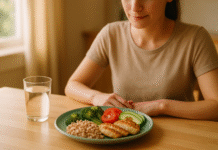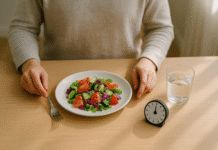






















Keto meal prep means planning, cooking, and portioning low-carb meals in batches so you can stick to your macros all week with minimal effort. In practice, it’s choosing proteins, low-carb vegetables, and fats you enjoy, then cooking once or twice to cover breakfast, lunch, dinner, and snacks. The goal is to keep daily net carbs low enough to support ketosis while keeping protein moderate and fats satisfying. Most keto approaches target fewer than 50 grams of carbs per day—often 20–50 g—adjusted to your context and medical guidance.
Quick definition: Keto meal prep is a make-ahead system of low-carb recipes and storage routines designed to keep you in ketosis with minimal daily cooking.
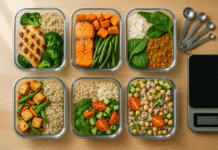
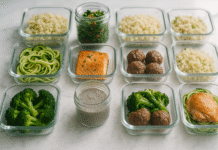
Fast start steps: determine macros; sketch a 7-day menu; batch-cook proteins and two veggie sides; portion into labeled containers; refrigerate for 3–4 days and freeze the rest (reheat safely to 165°F).
Friendly disclaimer: Nutrition is personal. If you have diabetes, use insulin or SGLT-2 medications, are pregnant, have kidney disease, or any medical concerns, talk to a healthcare professional before changing your diet. See professional guidance summarized in the ADA’s annual Standards of Care (2024). American Diabetes Association
1. Lock Your Keto Macros Before You Cook
Your first priority is to lock macros for the week so every meal you prep supports ketosis. The simple answer: keep carbs low (commonly 20–50 g net per day), protein moderate, and fill remaining calories with fats you tolerate well. This gives you a clear shopping list and prevents “macro drift” from random snacks or oversized portions. There’s no single standard keto ratio, but popular frameworks land around 70–80% fat, 5–10% carbs, and 10–20% protein by calories; adjust to your health needs and satiety. If you measure ketones, nutritional ketosis is often defined around 0.5–3.0 mmol/L—useful if you like numbers, optional if you don’t.
1.1 How to do it
- Choose a daily net-carb cap (e.g., 25–30 g) and stick to it Monday–Sunday.
- Set a protein target you can hit consistently (e.g., ~1.2–1.7 g/kg in therapeutic programs; tailor with your clinician).
- Fill the rest with fats from olive oil, butter/ghee, avocado, nuts, mayonnaise, or cream-based sauces—based on preference and tolerance. Harvard Health
1.2 Numbers & guardrails
- Carbs: <50 g/day total (often 20–50 g) is typical in keto frameworks.
- Protein: Aim for “moderate” rather than ultra-high; excessive protein may hinder ketosis for some.
- Ketones (optional): Many programs consider 0.5–3.0 mmol/L a nutritional range.
Bottom line: Pick a macro plan you can repeat for seven days—then buy and cook to those numbers.
2. Build a 7-Day Template You’ll Actually Follow
The fastest way to stay on track is a repeatable 7-day template. The direct answer: decide two breakfasts, two lunches, three dinners, and two snack options; batch-cook twice (e.g., Sunday and Wednesday) to cover the week while keeping food safe and fresh. Sketching your menu in this structure limits decision fatigue and cuts waste. You’ll balance variety with simplicity—enough rotation to keep meals interesting but tight enough to streamline prep. If you plan to refrigerate, remember most leftovers are best eaten within 3–4 days; freeze anything beyond that on day one.
2.1 A sample weekly skeleton
- Breakfasts: egg muffin cups; chia-yogurt pots
- Lunches: salmon & broccoli bowls; chicken Caesar salad jars
- Dinners: sheet-pan chicken thighs; skillet beef & zucchini; butter-garlic shrimp w/ cauliflower rice
- Snacks: cheese & olives; celery with herbed mayo
2.2 Mini checklist
- Batch on Sunday (Days 1–3 in fridge), Wednesday (Days 4–6), and freeze Day 7 portions up front.
- Label containers with dish, date, and reheating notes (165°F).
- Keep a running list of what you loved and what dragged.
Bottom line: A light structure—rather than daily improvisation—keeps keto convenient and safe for a full week.
3. Shop with a Low-Carb List and Read Labels the Smart Way
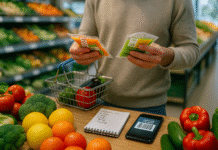
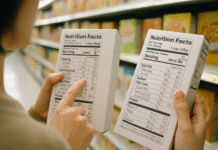
Answer first: build a grocery list around proteins, non-starchy vegetables, full-fat dairy (if tolerated), fats/sauces, and freezer staples; verify carbs on labels using “Total Carbohydrate” and fiber lines. The Nutrition Facts label regulates total carbohydrate and fiber; “net carbs” is a consumer shortcut (total carbs minus fiber and certain sugar alcohols) but isn’t an FDA term and can be imprecise—so use it thoughtfully. This helps you avoid surprise carbs in sauces, marinades, and processed meats.
3.1 Core keto cart
- Proteins: chicken thighs, salmon, beef mince, eggs, tofu/paneer
- Veg: broccoli, zucchini, spinach, kale, mushrooms, peppers
- Fats & sauces: olive oil, butter/ghee, mayo, pesto, tahini
- Flavor: garlic, herbs, curry powder, paprika, chili flakes
3.2 Label tactics (and “net carbs” reality)
- Prioritize the Total Carbohydrate line; fiber is already included there.
- “Net carbs” subtract fiber/some polyols, but absorption varies—don’t assume zero impact.
- Check serving sizes; tiny servings can hide big totals.
Bottom line: Shop by category, then double-check labels—especially sauces and “low-carb” snacks.
4. Prep Protein Bases Safely (3–4 Days Fridge, Freeze the Rest)
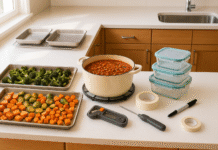
The direct answer: batch-cook 2–3 protein bases (e.g., chicken thighs, beef meatballs, salmon) and store 3–4 days’ worth in the fridge; freeze anything you won’t eat by then. Refrigerate at 40°F (4°C) or below, and reheat leftovers to 165°F. This keeps your week covered while minimizing risk and waste. Choose seasoning profiles that remix well—e.g., garlic-herb chicken becomes Caesar salad one day and butter-chili chicken bowls the next.
4.1 Tools & timing
- Instant-read thermometer (for doneness and reheats to 165°F).
- Rimmed sheet pans and wire racks for hands-off roasting.
- Airtight, labeled containers.
4.2 Mini case: chicken
- Roast 3 lbs (1.4 kg) bone-in chicken thighs Sunday.
- Portion 6–8 servings; refrigerate 3–4 days’ worth, freeze the rest day one.
- Pull freezer portions midweek to thaw overnight in the fridge. Ask USDA
Bottom line: Cook big once, chill fast, eat fridge portions by day 3–4, and let the freezer handle overflow.
5. Batch-Cook Keto Veggies and Sides You’ll Actually Eat
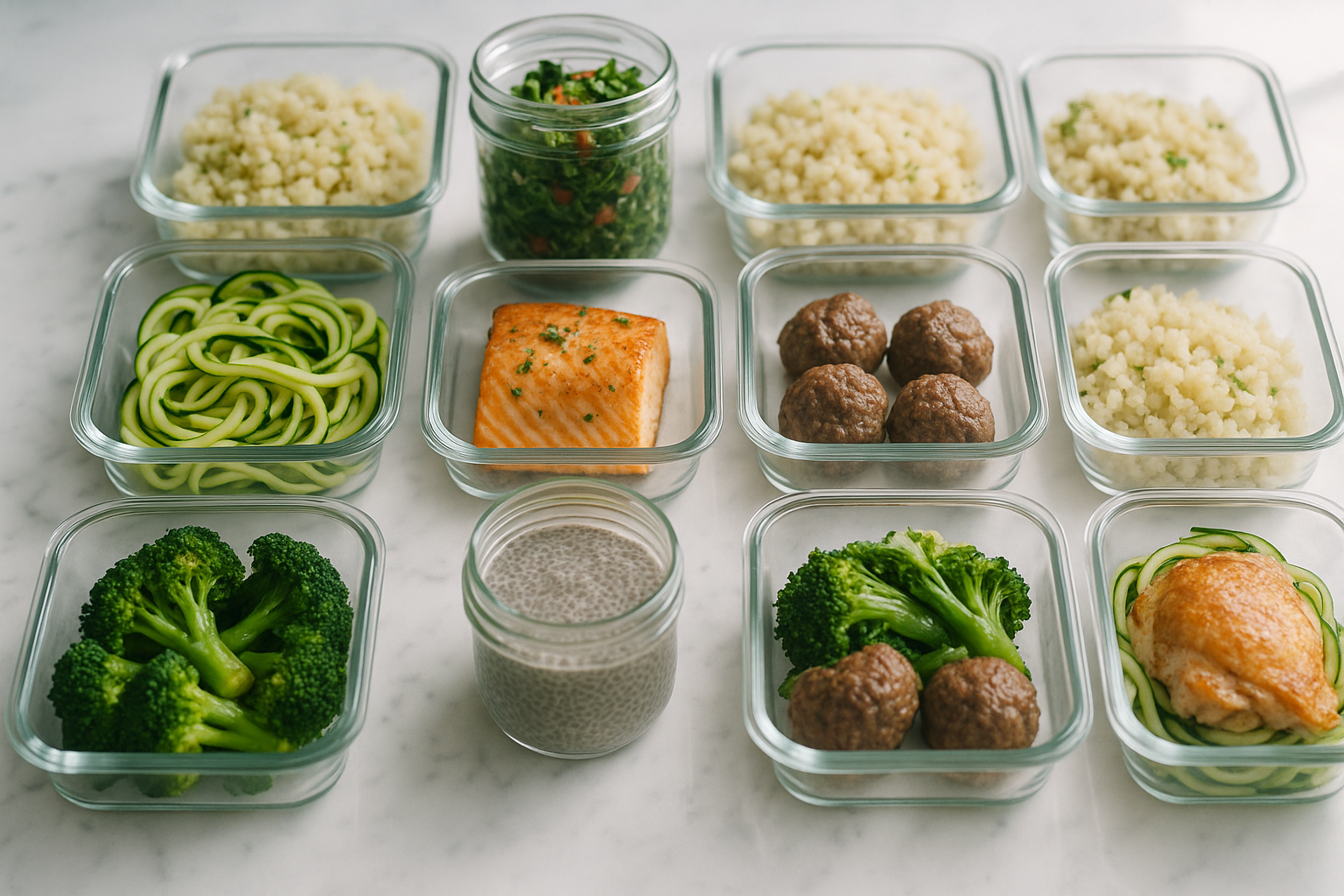
Answer up front: roast or sauté low-carb vegetables in bulk (broccoli, zucchini, mushrooms, peppers, green beans) and prep quick sides (cauliflower rice, zucchini noodles) that reheat well and pair with any protein. This ensures fiber, micronutrients, and variety without spiking carbs. Sheet-pan roasting concentrates flavor and keeps textures appealing over several days. Keep a few raw options (spinach, romaine) for salads and last-minute scrambles.
5.1 How to do it
- Sheet-pan roast: toss veg with olive oil, salt, pepper; roast 18–25 minutes at 400–425°F (205–220°C).
- Cauli rice: pulse florets or use pre-riced; sauté 5–7 minutes in butter/ghee; season.
- Zoodles: salt 5 minutes, pat dry, quick sauté 1–2 minutes to keep bite.
- Steam & shock: for green beans/asparagus you’ll reheat later.
5.2 Common mistakes
- Overcooking zucchini and mushrooms (go al dente to survive reheats).
- Saucing everything now—keep sauces separate to prevent sogginess.
- Forgetting salt/fat: vegetables need seasoning and fat to satisfy on keto.
Bottom line: Make vegetables non-negotiable and delicious; prep them so tomorrow’s you actually wants to eat them.
6. Make-Ahead Keto Breakfasts: Egg Muffins, Chia Pots, and Yogurt Cups
The direct recommendation: prepare two breakfast options in batches so mornings are grab-and-go. Egg muffin cups cover savory cravings; chia-yogurt or chia-coconut cups handle sweet; both are low-carb when portioned. Breakfasts are where many slip on carbs (granola, toast, fruit juice), so setting these up saves willpower. Keep 3–4 days’ worth in the fridge; freeze egg cups for later and rotate flavors.
6.1 Recipes (serves 6 each)
- Egg muffin cups: whisk 10 eggs + ½ cup cream, salt/pepper; fold in 1½ cups chopped roasted veg and ¾ cup cheese; bake in greased muffin tin 18–22 minutes at 350°F (175°C).
- Chia pots: ¼ cup chia + 1 cup unsweetened almond milk; add ¼ tsp vanilla; chill overnight; top with 2–3 tbsp Greek yogurt and a few berries.
- Savory yogurt bowl: ¾ cup full-fat Greek yogurt + olive oil, lemon, dill; top with cucumber and olives.
6.2 Mini-checklist
- Portion into lidded jars; label dates; eat within 3–4 days or freeze egg cups.
- Keep toppings separate to hold texture.
- Add salt or a bouillon mug in the morning if you’re prone to “keto flu” during week one.
Bottom line: Two prepped breakfasts keep you on macro target and out of the bakery line.
7. Packable Lunches: Salad Jars and Bowl Kits That Stay Crisp
Here’s the move: layer dressings and heavier ingredients at the bottom of jars or containers, keep greens on top, and add protein day-of or day-before. Well-built salads and bowl kits stay crisp for 3–4 days and prevent mid-day vending-machine detours. Pair a salty snack (olives, cheese) to keep electrolytes up and cravings down, especially early in keto.
7.1 Two lunch templates
- Chicken Caesar jars: bottom layer Caesar dressing, then shaved parmesan and roasted chicken, then chopped romaine; shake before eating.
- Salmon & broccoli bowls: cauliflower rice + roasted broccoli; add flaked roasted salmon; lemon-dill mayo sauce.
7.2 Safety & assembly tips
- Keep cold foods at 40°F (4°C) or below; pack with an ice block if commuting.
- Egg or chicken salads: 3–4 days refrigerated; freeze isn’t ideal for mayo-based salads. FoodSafety.gov
- Store dressings separately when possible to avoid sogginess.
Bottom line: Smart layering and cold-chain diligence make desk lunches cold, crisp, and keto.
8. One-Pan Dinners & Reheat Strategy (Hit 165°F)
To keep weeknights painless, batch two one-pan dinners and plan a fast skillet meal for midweek. The direct advice: cook once, portion hot into containers, chill promptly, and reheat each serving to 165°F. This keeps flavor high and food safe. One-pan dinners like sheet-pan chicken with peppers or roasted salmon with asparagus reheat beautifully; finish with a fresh sauce (garlic-lemon butter or herb mayonnaise) to revive moisture and taste.
8.1 Two crowd-pleasers
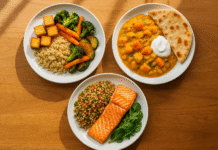
- Sheet-pan chicken & peppers: thighs + peppers + onions; roast 30–40 minutes at 425°F (220°C); finish with olive oil, lemon, oregano.
- Salmon & asparagus: roast 12–15 minutes at 400°F (205°C); finish with garlic-lemon butter.
8.2 Reheat like a pro
- Microwave: cover loosely, stir/flip halfway, check 165°F internal.
- Oven: 300–325°F (150–160°C), add a spoon of broth or butter; heat to 165°F.
- Skillet: reheat with a splash of water or stock, lid on; finish with fat for gloss.
Bottom line: Pre-portioned dinners + safe reheating = fast evenings without carb creep.
9. Freezer-Friendly Keto Staples (Batch Now, Eat Later)
The straightforward answer: freeze quality-neutral dishes on day one—meatballs, chili, soups, cooked chicken, riced cauliflower—and rotate them into the back half of the week. Most leftovers stay top-quality in the freezer for roughly 2–4 months; label, cool quickly, and use flat freezer bags to save space. Thaw overnight in the refrigerator and reheat to 165°F.
9.1 What freezes best
- Great: beef meatballs, pulled chicken, marinara, pesto cubes, spinach-feta muffin cups
- Good: cauliflower rice, stewed greens, butter chicken (sauce separate)
- Skip/freezer-meh: mayo-heavy salads; delicate greens
9.2 Freezer mini-playbook
- Chill fast in shallow containers before freezing.
- Label dish + date + “reheat to 165°F.”
- Use FIFO: oldest meals forward.
Bottom line: Your freezer is a second pantry—batch now, eat later, and skip Thursday takeout.
10. Sauces, Fats, and Electrolytes: Flavor + How You Feel
Direct answer: keep sauces and fats ready (mayo, aioli, pesto, tahini, herb butter) and pay attention to electrolytes—especially sodium—because keto can increase sodium loss. Many clinical keto programs recommend higher sodium intake than standard diets (often ~4–5 g/day, individualized), along with potassium-rich vegetables and adequate magnesium; follow personal medical guidance, especially if you take blood pressure meds. Salting food to taste, sipping broth, and eating non-starchy veg help many people avoid “keto flu” symptoms during the first week.
10.1 Easy sauce roster
- Lemon-garlic mayo, herb butter coins, pesto, chili-oil yogurt, tahini-lemon dressing
- Store sauces separately; portion 1–2 tbsp per meal
10.2 Numbers & notes
- Sodium: many keto programs target ~4–5 g/day unless contraindicated; broth can help early on.
- Potassium & magnesium: emphasize leafy greens, avocado; consider supplements with clinician input.
Bottom line: Flavor plus electrolytes = staying on plan and feeling good, especially in week one. virtahealth.com
11. Track, Test, and Adjust with Simple Tools
The direct advice: track your meals for 1–2 weeks to calibrate, then loosen the reins once you know your patterns. Use a food database to estimate carbs and fiber, and optionally measure ketones to confirm your approach. FoodData Central is the U.S. reference database embedded in many apps, and fingerstick blood meters remain the most accurate home method for ketones if you choose to measure. None of this is mandatory, but it helps troubleshoot plateaus.
11.1 Practical toolkit
- Food database/app that cites USDA FoodData Central
- Digital kitchen scale (for a few days to learn portions)
- Optional: blood ketone meter (target ranges vary by program).
11.2 Mini example
- You set 30 g net carbs/day; tracking shows you average 38 g because of sauces.
- You swap store-bought dressing for homemade and hit 28–32 g; energy and satiety improve.
Bottom line: Measure enough to learn, then rely on routines that keep carbs low with less effort.
12. Region-Savvy and Budget-Savvy Keto Swaps (Desi-Friendly Ideas)
Answer first: adapt familiar dishes with low-carb swaps so the plan fits your culture and budget. Replace naan/roti with lettuce wraps or bowl formats; serve karahi, kebabs, tikka, or qorma over cauliflower rice; lean on eggs, paneer, and seasonal vegetables; use ghee, mustard oil, or olive oil per taste and availability. Buying proteins in family packs for batch cooking, then freezing, keeps costs down and meals consistent with your macros.
12.1 Desi-friendly swaps
- Biryani-style bowl: spiced cauliflower rice + chicken or beef + raita made with Greek yogurt
- Kebab boxes: seekh/shami kebabs + cucumber-tomato salad + mint chutney (no sugar)
- Karahi bowls: chicken karahi (minimal tomato) over sautéed spinach or cabbage
12.2 Budget checklist
- Buy whole chickens or large trays of thighs; roast, portion, freeze.
- Choose seasonal veg (cabbage, spinach, okra) and roast or sauté in bulk.
- Make spice blends in batches (garam masala, chaat masala without sugar).
Bottom line: Keep the flavors you love—just change the base and garnish—and your keto plan becomes sustainable.
FAQs
1) What exactly counts as “net carbs,” and should I use them?
“Net carbs” typically means total carbohydrates minus dietary fiber and certain sugar alcohols. It’s a popular heuristic, but it’s not an FDA-defined term, and different fibers/sugar alcohols are absorbed differently. Use it as a guide, not a law, and pair it with how your body responds.
2) How many carbs per day is “keto”?
Most keto frameworks aim for fewer than 50 grams of carbs per day, with many people choosing 20–50 g. The exact number depends on your physiology, activity, and goals. Start with a conservative cap and adjust.
3) Do I have to measure ketones? What numbers matter?
No—you can run keto by food choices alone. If you like data, many programs consider 0.5–3.0 mmol/L a common range for “nutritional ketosis.” Use it to learn, not obsess, and discuss targets with your clinician if you’re managing a condition.
4) Is keto safe for people with diabetes?
Low-carb patterns can be an option for diabetes management under medical supervision, but medications (especially insulin and SGLT-2 inhibitors) may require adjustment. The ADA’s 2024 Standards of Care emphasize individualized meal patterns—work with your healthcare team.
5) How long can I keep meal-prepped foods in the fridge, and at what temperature?
Generally, eat most leftovers within 3–4 days and keep your refrigerator at 40°F (4°C) or below. Reheat leftovers to 165°F to reduce risk. Freeze extras on day one if you won’t eat them in time.
6) What about fiber on keto?
Fiber sits under “Total Carbohydrate” on the label and doesn’t raise blood sugar the same way starches do. Many people subtract fiber to estimate “net carbs,” but remember that fiber types differ; emphasize non-starchy vegetables to maintain gut health.
7) How do I avoid “keto flu” during the first week?
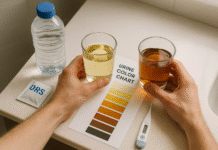
Stay hydrated, salt your food, consider a mug of broth, eat potassium-rich greens and avocado, and avoid undereating. Some clinical programs suggest higher sodium intake during keto adaptation—work within your medical guidance.
8) Can I meal prep dairy-free or vegetarian keto?
Yes. Use eggs, tofu/paneer, tempeh, nuts/seeds, and plant-based fats, and build meals around low-carb vegetables. The same meal-prep logic applies: batch cook proteins, roast veg, portion, and freeze extras.
9) What apps or tools help with keto meal prep?
Any food-tracking app that draws from USDA FoodData Central helps with estimates; a kitchen scale and a simple blood ketone meter (optional) round out the toolkit if you want data.
10) How do I handle social meals or takeout on keto?
Scan menus for protein-plus-veg plates, ask for extra butter/olive oil, swap rice/naan/fries for salad or extra veg, and keep your daily carb cap in mind. Having freezer backups at home reduces pressure to “just make do.”
Conclusion
Keto meal prep works because it turns intentions into a plan: you set macros, pick a simple weekly template, and batch-cook proteins and vegetables you enjoy eating. Then you portion, label, and treat your fridge and freezer like teammates, not afterthoughts. The approach isn’t about perfection or exotic recipes—it’s about repeating small, reliable moves that keep carbs low, protein steady, and flavor high. With two make-ahead breakfasts, two packable lunches, and three one-pan dinners, you’ll cover almost every meal with minimal weekday cooking. Add a few sauces and an eye on electrolytes, and you’ll feel better while you adapt. Finally, make it yours: use spices and dishes from your own food culture and keep a short “favorites” list to rotate. Do this for one week, tidy your notes, and repeat with small improvements.
Ready to go? Pick your macro cap, roast two proteins and two veggies today, portion four lunches, and set one freezer dinner—your future self will say thanks.
References
- Diet Review: Ketogenic Diet for Weight Loss — Harvard T.H. Chan School of Public Health, updated 2024. The Nutrition Source
- Should you try the keto diet? — Harvard Health Publishing, March 28, 2024. Harvard Health
- Leftovers and Food Safety — USDA Food Safety and Inspection Service (FSIS), July 31, 2020. Food Safety and Inspection Service
- Refrigerator Thermometers: Cold Facts about Food Safety — U.S. FDA, March 5, 2024. U.S. Food and Drug Administration
- How to Understand and Use the Nutrition Facts Label — U.S. FDA, March 5, 2024. U.S. Food and Drug Administration
- Get to Know Carbs — American Diabetes Association (ADA), n.d., accessed 2025. American Diabetes Association
- Standards of Care in Diabetes—2024 — Diabetes Care (ADA Supplement), 2024. Diabetes Journals
- Ketosis: Definition, Benefits & Side Effects — Cleveland Clinic, Aug 8, 2023. Cleveland Clinic
- Ketogenic diets in the management of type 1 diabetes — Cleveland Clinic Journal of Medicine, 2021 (quotes nutritional ketosis range). Clinical Chemistry Journal
- USDA FoodData Central — USDA Agricultural Research Service/NAL, ongoing database, accessed 2025. FoodData Central
- How much sodium, potassium and magnesium should I consume on a ketogenic diet? — Virta Health FAQ, 2019–2025 updates. virtahealth.com
- Should I take vitamins or supplements on a ketogenic diet? — Virta Health FAQ, 2023. virtahealth.com