






















If you’re curious about eating more plants but don’t want a total lifestyle overhaul on day one, this guide is for you. You’ll learn exactly how to get started, what to eat to feel satisfied, how to stock your pantry on a budget, and how to navigate restaurants without stress. “Plant-based” simply means your meals center on whole plant foods—vegetables, fruits, legumes, whole grains, nuts, and seeds—while animal foods are optional and ultra-processed items are limited. Research consistently associates plant-forward patterns with better heart and metabolic health, provided they’re well planned.
Quick-start steps: Audit one day of your meals, stock two plant proteins (e.g., lentils and tofu), follow a simple plate method at each meal, and batch-cook two recipes you actually want to eat this week.
Medical note (not a diagnosis): If you have a medical condition, take medications (e.g., blood thinners, diabetes meds), are pregnant, or have food allergies, discuss dietary changes with your clinician or a registered dietitian first.
1. Choose Your Plant-Based Starting Point and Goal
The fastest way to succeed is to pick a realistic starting line and a clear goal. “Plant-based” sits on a spectrum—from flexitarian (mostly plants, some animal foods) to vegetarian (no meat/fish) to vegan (no animal products). Decide where you are today and where you want to be in 30–90 days. A well-planned diet at any point on this spectrum can support health across life stages; what matters is diet quality and meeting nutrient needs. Start by framing a goal (e.g., “3 plant dinners per week”) and a metric (e.g., “25–30 g protein at lunch”). Then outline two easy wins this week, like replacing one processed snack with fruit and nuts, and learning a 20-minute bean-based dinner. This approach reduces friction, keeps meals familiar, and builds confidence as you add more plants.
1.1 Why it matters
Authoritative guidance confirms that vegetarian and vegan patterns can be healthy and nutritionally adequate when planned well, including for adults, older adults, and athletes. Plant-forward patterns are linked with better cardiometabolic outcomes, but quality matters—whole foods outperform ultra-processed “plant-based” junk foods.
1.2 How to do it
- Pick a lane for now: flexitarian, vegetarian, or vegan.
- Set a 30-day target (e.g., “10 plant-based dinners”).
- Choose 2 anchor recipes you’ll repeat weekly.
- Define nutrient guardrails (protein per meal, fiber/day).
- Schedule one shop–prep block (60–90 minutes) each week.
Mini-checklist: Name your pattern → set a numeric goal → choose two repeatable recipes → add to calendar. A precise starting point and clear metric make the rest of the steps easier and measurable.
2. Build a Balanced Plate You Can Repeat
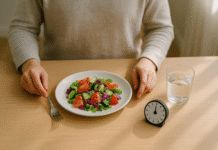
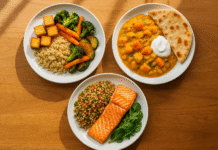
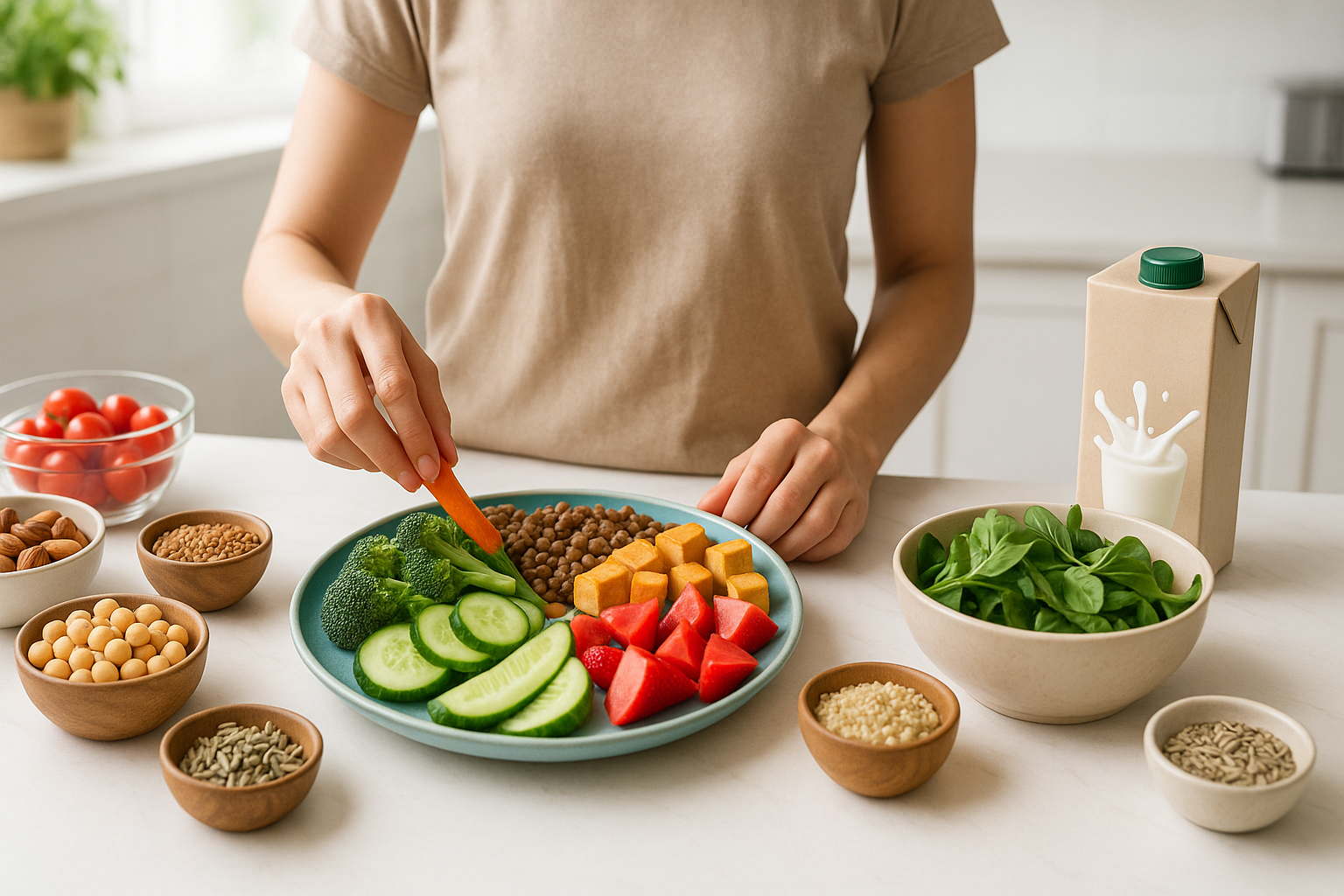
A balanced plant-based plate keeps you full and energized: ½ non-starchy vegetables and fruit, ¼ whole grains or starchy veg, ¼ protein-rich foods (beans, lentils, tofu/tempeh, edamame, seitan), plus a thumb of healthy fats (nuts, seeds, olive oil) and flavor (herbs, spices, citrus). Aim for 20–30 g protein per meal and at least 25–38 g fiber/day (about 14 g per 1,000 kcal). Drink water with meals and increase fiber gradually to reduce bloating. This structure works at home and when eating out—it’s simple, scalable, and flexible across cuisines.
2.1 Numbers & guardrails
- Protein: ~0.8 g/kg/day minimum for adults; distribute across meals (e.g., 60 g/day for a 75-kg person).
- Fiber: 25 g/day (women) to 38 g/day (men), or ~14 g/1,000 kcal.
- Sodium: Prefer recipes that keep daily intake <2,300 mg (or <2,000 mg per WHO).
2.2 How to build it (any cuisine)
- Start with 2 cups mixed vegetables (raw or cooked).
- Add ½–1 cup cooked whole grains/starchy veg (brown rice, quinoa, potatoes).
- Add ¾–1 cup beans/lentils or 100–150 g tofu/tempeh (25–30 g protein).
- Finish with 1–2 tbsp seeds or nuts, and acid (lemon/lime) + herbs.
Example plate: 1 cup roasted broccoli + 1 cup chopped salad; ¾ cup quinoa; 120 g baked tofu; 1 tbsp tahini + lemon. Balanced, high fiber, and satisfying—exactly what beginners need.
3. Stock a Smart Plant-Based Pantry and Fridge
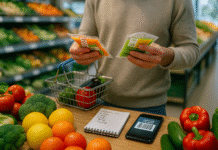
Success starts at the store. Keep budget-friendly plant proteins, whole grains, and flavor builders on hand so weeknights are frictionless. Think beans and lentils (canned and dry), tofu/tempeh, whole grains (brown rice, oats, bulgur, whole-wheat pasta), nuts/seeds (peanut/almond butter, chia, flax), and spices/aromatics (cumin, paprika, turmeric, garlic, onions). In the fridge, reserve space for leafy greens, crucifers (broccoli/cauliflower), colorful veg (peppers, carrots), and fortified soy or pea milk (for B12, calcium, vitamin D). In many South Asian households, daal (lentils), chana (chickpeas), atta (whole-wheat flour), and spices like garam masala already provide a strong base—use them.
3.1 Starter list (mix & match)
- Proteins: Lentils, chickpeas, black beans, tofu, tempeh, edamame.
- Carbs: Oats, brown rice, quinoa, whole-wheat pasta, sweet potatoes.
- Fats & crunch: Olive oil, tahini, peanut butter, walnuts, pumpkin seeds.
- Flavor: Soy sauce/tamari, canned tomatoes, tomato paste, miso, chilies.
- Breakfast helpers: Frozen berries, bananas, cinnamon, ground flax/chia.
- Fortified basics: Unsweetened soy milk, whole-grain bread (≥3 g fiber/slice).
3.2 Mini-checklist
Label the top pantry shelf “Dinner in 20”: display beans, grains, sauces, and spices. Keep one defrostable meal kit (cooked beans + cooked grain + sauce) ready each Sunday. When the pantry is wired for speed, you’ll cook more and rely less on takeout.
4. Plan One Week at a Time and Meal-Prep Lightly
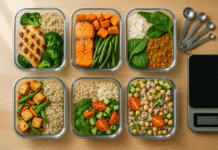
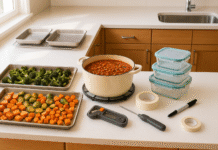
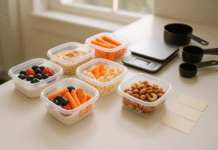
Plan 7 dinners, prep 2–3 base components, and cook 2 repeatable mains you’ll happily reheat. You don’t need a weekend marathon; 60–90 minutes is enough for beginners. Decide where leftovers will carry you and which nights need a 10-minute skillet meal. Use a template: Bowl night (grain + bean + veg + sauce), Soup/stew night, Stir-fry night, Pasta night, Taco/wrap night, Roast-tray night, Freezer or dine-out night. As your confidence grows, double batches and freeze.
4.1 A simple weekly flow
- Sat/Sun: Shop. Cook 1 pot lentils/beans + 1 grain; wash/chop veg.
- Mon: Tofu stir-fry with frozen veg, rice.
- Tue: Chickpea pasta + tomato–spinach sauce.
- Wed: Leftovers + big salad.
- Thu: Dal, rice, quick sautéed okra or cabbage.
- Fri: Tray-bake veg + tempeh; lemon tahini drizzle.
- Sat: Tacos/wraps with black beans, salsa, avocado; fruit.
4.2 Mini-checklist
Batch 2 proteins (beans + tofu), 1 grain (rice/quinoa), 1 sauce (tahini or peanut). Portion leftovers into lunch bowls. Planning in light lifts keeps variety high and food waste low.
Synthesis: Weekly planning removes decision fatigue, turning “what’s for dinner?” into “which of my two prepped options sounds better tonight?”
5. Hit the Big Nutrients: Protein, Iron, Calcium, Iodine, and Omega-3s
Meeting key nutrients is simple with a little intention. Protein targets (0.8 g/kg/day minimum) are easy to reach with legumes, soy, seitan, and nuts/seeds; distribute 20–30 g per meal. Iron is abundant in lentils, beans, soy, and leafy greens; pair with vitamin C-rich foods to improve non-heme absorption. Calcium comes from tofu set with calcium sulfate, leafy greens, tahini, and fortified plant milks. Iodine can be low if you avoid dairy/eggs and don’t use iodized salt; consider a small supplement if advised. Omega-3s: include ALA sources (flax, chia, walnuts) and optionally add an algae-based DHA/EPA supplement if you rarely eat fish.
5.1 Numbers & food examples
- Protein: 0.8 g/kg/day minimum; athletes/older adults may aim higher—distribute protein evenly. Sample meal: 1 cup cooked lentils (18 g) + 120 g tofu (15–20 g) ≈ 33–38 g.
- Iron: Enhance non-heme iron absorption with vitamin C and by soaking/sprouting some legumes/grains. Tea/coffee with meals can reduce absorption.
- Calcium: Adults generally need ~1,000–1,200 mg/day; check labels on fortified milks and tofu.
- Iodine: Adults need ~150 mcg/day; use iodized salt or consider low-dose supplementation if recommended.
- Omega-3: ALA conversion to EPA/DHA is limited (<15%); include ALA foods and consider algae DHA/EPA if needed.
5.2 Practical mini-checklist
- Add 1 tbsp ground flax or 2 tsp chia daily.
- Choose fortified soy/pea milk (look for calcium + B12 + vitamin D).
- Pair iron foods with citrus, tomatoes, bell peppers; keep coffee/tea between meals.
Synthesis: A bit of planning covers every base—no complicated combining required; variety across the day supplies all essential amino acids.
6. Learn 10-Minute Breakfasts and 20-Minute Dinners
Speed is a beginner’s superpower. Build a tiny repertoire of template meals you can make on autopilot. For breakfast, rotate overnight oats, tofu scramble, and smoothies with greens and fortified soy milk. For dinner, master bean-and-veg stir-fries, pasta with chickpeas and spinach, and dal with rice. Use frozen veg, canned beans, pre-washed greens, and jarred sauces to cut prep. Keep the plate method in mind (Step 2) so every quick meal still feels balanced and satisfying.
6.1 Breakfast templates
- Overnight oats (protein boost): ½ cup oats + 1 cup fortified soy milk + 2 tsp chia + fruit; add peanut butter for extra calories.
- Tofu scramble: Crumble 150 g firm tofu; sauté with onions, peppers, spinach, turmeric, black salt; serve on whole-grain toast.
- Smoothie: Fortified soy milk + banana + spinach + 2 tbsp oats + 1 tbsp flax; blend.
6.2 20-minute dinners
- Chickpea pasta: Whole-grain or legume pasta; simmer garlic, chili, canned tomatoes; add spinach + canned chickpeas; finish with olives.
- Stir-fry bowl: Sauté frozen mixed veg + tofu; add soy sauce, ginger, sesame; serve over microwaved brown rice.
- Dal + rice: Pressure-cook red lentils with turmeric, cumin, garlic; temper with mustard seeds and chilies; serve with cucumber salad.
Synthesis: Templates beat recipes when you’re busy—once you taste one good version, you’ll riff confidently with whatever’s in the fridge.
7. Navigate Restaurants, Social Events, and Travel Without Stress
You can eat plant-based anywhere with a few habits. Scan menus for bowls, salads, rice/noodle dishes, or build-your-own options; ask for extra veg and a bean/tofu add-on. Keep a snack kit (nuts, fruit, roasted chickpeas) for travel days. For social events, bring a shareable dish so you’re guaranteed a satisfying option. Don’t stress perfection—aim for the plate method and basic nutrient guardrails (protein, fiber, sodium). If you’re new, tell the server you’re eating “mostly plants” and request swaps without over-explaining.
7.1 Practical moves
- Menu code words: “grilled,” “roasted,” “steamed,” “bean,” “tofu,” “whole-grain.”
- Two-question rule: “Where’s my protein?” “Where’s my fiber?”
- Travel kit: Nuts, dried fruit, oats packets, instant miso, collapsible bowl.
7.2 Mini-checklist
Check menus in advance; pre-eat a small snack if needed; bring a dish to share. These simple moves keep meals enjoyable and social friction low.
8. Read Labels and Limit Ultra-Processed “Plant-Based” Traps
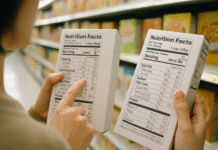
“Plant-based” on a package doesn’t guarantee health. Read the Nutrition Facts and ingredients: prioritize fiber (≥3 g/serving), protein (≥10 g where relevant), lower sodium, and minimal added sugars. Many meat-free nuggets, desserts, and sauces are high in sodium, refined starches, and additives. For everyday staples, choose whole-food ingredients you recognize. Aim to keep added sugars <10% of calories and keep sodium in check; many beginners feel dramatically better just by swapping a couple of high-sodium items for lower-salt versions.
8.1 Label checklist
- Short ingredient list with familiar foods.
- Fiber ≥3 g (breads/cereals) and added sugar low (ideally ≤5–8 g/serving).
- Sodium: choose items with ≤140 mg/serving where possible; keep daily total under 2,300 mg (or 2,000 mg per WHO). U.S. Food and Drug Administration
- Prefer fortified plant milks (calcium, vitamin D, B12).
Synthesis: The smartest “plant-based” choice is often the least flashy—simple, minimally processed foods with good fiber, adequate protein, and reasonable sodium.
9. Supplement Wisely: B12 (Plus Iodine, Vitamin D, DHA/EPA as Needed)
A mostly or fully plant-based pattern can meet your needs with food first, but vitamin B12 is the key exception for vegans and many vegetarians who rarely eat fortified foods. Practical, evidence-based options include 50–100 mcg daily or 2,000 mcg weekly, or eating fortified foods 2–3 times daily. Consider iodine (150 mcg/day) if you don’t use iodized salt; vitamin D depends on sun exposure and local guidance; and algae-based DHA/EPA if you rarely eat fish. Always check with your clinician if you have thyroid issues or take medications. PMC
9.1 Practical dosing notes (general, not personal medical advice)
- B12: Cyanocobalamin is widely used and stable; adherence matters more than timing. Fortified milks/cereals help but are inconsistent—supplementing is simpler for vegans.
- Iodine: Adults need ~150 mcg/day; excess iodine can also be harmful, so don’t megadose.
- Vitamin D: Follow local guidance and test-and-treat if deficient.
- Omega-3s: Because ALA→EPA/DHA conversion is limited, an algae DHA/EPA supplement is a reasonable add-on for some.
Synthesis: Food first, targeted supplements second—B12 is non-negotiable for strict vegans; others are case-by-case.
10. Build Habits, Track Progress, and Iterate
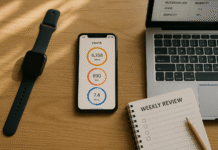
Habits make this stick. Start with a 30-day plant challenge and track just a few markers: energy, digestion, sleep, mood, and 3–5 objective metrics (e.g., servings of veg/day, fiber grams, water, steps). Plan a weekly retrospective: what worked, what dragged, what to swap next week. Use simple tools (notes app, calendar reminders, a whiteboard) and reward consistency over perfection. If you’re working on health markers like cholesterol or HbA1c, sync with your clinician and consider dietitian support. The goal is a tasty, repeatable routine that fits your culture, budget, and schedule—not an all-or-nothing sprint.
10.1 Mini-checklist
- Track 3 food behaviors (veg servings, protein at meals, added sugar).
- Track 2 wellbeing markers (energy 1–10, digestion).
- Schedule one new recipe each week and one batch-cook slot.
Synthesis: Plant-based eating becomes effortless when you measure what matters, celebrate small wins, and keep iterating on a handful of dependable meals.
FAQs
1) What’s the difference between “plant-based,” vegetarian, and vegan?
“Plant-based” means meals center on plants but don’t have to exclude animal products. Vegetarian patterns exclude meat and fish but may include dairy/eggs. Vegan patterns avoid all animal products. Health benefits show up across the spectrum when diets emphasize whole foods and meet nutrient needs; the best choice is the one you can sustain.
2) How do I get enough protein without meat?
Legumes (lentils, beans, chickpeas), soy foods (tofu, tempeh, edamame), seitan, nuts, and seeds deliver ample protein. Aim for 20–30 g per meal and distribute intake across the day. For example, 1 cup lentils (~18 g) plus 120 g tofu (~15–20 g) already hits the target; adding seeds or whole grains easily fills the gap.
3) Won’t more fiber upset my stomach at first?
It can—if you jump too fast. Increase fiber gradually, drink water, and space out high-fiber foods until your gut adapts. Most people feel better (and more regular) within a couple of weeks when they ramp up slowly and hydrate. NIH News in HealthThe Nutrition Source
4) Do I need to “combine” proteins to get complete amino acids?
No special combining at each meal is required. Eating a variety of plant proteins over the day provides all essential amino acids. Focus on overall diet quality and meeting protein totals rather than obsessing over combinations.
5) What about iron—aren’t plant sources poorly absorbed?
Plant (non-heme) iron is absorbed less efficiently, but pairing iron-rich foods with vitamin C (citrus, tomatoes, peppers) improves absorption. Soaking/sprouting some legumes and grains can also lower phytates that inhibit absorption. If you have a history of iron-deficiency anemia, discuss labs and a plan with your clinician. The Nutrition Source
6) Is soy safe?
For most people, whole soy foods (tofu, tempeh, edamame, soy milk) are safe and nutritious; large organizations report neutral or beneficial associations with major health outcomes. If you’re a breast cancer survivor, current evidence supports soy foods as safe; soy supplements are a different story and aren’t universally advised—ask your care team.
7) Do I need supplements on a plant-based diet?
B12 is the key supplement for strict vegans and many low-animal-product vegetarians; practical regimens include 50–100 mcg daily or 2,000 mcg weekly. Consider iodine if you don’t use iodized salt, vitamin D based on sun status, and algae DHA/EPA if you want direct omega-3s. Personalized advice is best. Office of Dietary Supplements
8) Can I do this on a tight budget?
Yes. Base meals on dry beans/lentils, oats, rice, seasonal produce, and frozen veg. Buy in bulk, cook once–eat twice, and flavor with pantry items (onions, garlic, spices). Home-cooked plant meals are typically cheaper per serving than meat-centric options, especially when legumes are the protein anchor.
9) Will I lose weight if I go plant-based?
Possibly—if you emphasize whole foods and manage portions. High-fiber, minimally processed meals tend to be more filling per calorie, which can help with weight management. Swap refined snacks for fruit/nuts, watch liquid calories, and aim for the plate method. Results vary; health markers matter more than the scale.
10) How do I handle eating out with friends or family who aren’t plant-based?
Preview the menu, pick a dish you can tweak (add beans/tofu, extra veg), and offer to share a plant-friendly appetizer or side. Keep the conversation about taste—“Let’s split the roasted veg and hummus”—not labels. Bringing a delicious dish to gatherings is the most persuasive “argument” for eating more plants.
Conclusion
You don’t need to overhaul your life to enjoy the benefits of plant-based eating. Start where you are, pick a realistic 30-day goal, and repeat a small set of tasty, balanced meals. The plate method keeps you full; a smart pantry makes cooking automatic; and a short weekly prep blocks out decision fatigue. As you iterate, you’ll naturally discover your go-to breakfasts, 20-minute dinners, and restaurant orders that meet your protein and fiber guardrails without overthinking it. Keep nutrient “watch-outs” simple—B12 for vegans, iodine if you skip iodized salt, omega-3 ALA daily, and DHA/EPA if needed. The reward isn’t just better numbers—it’s an easier, more delicious routine that fits your culture, budget, and schedule.
Ready to start? Pick two recipes from this guide, shop once, and cook tonight—your first plant-powered week begins now.
References
- What is a plant-based diet and why should you try it? — Harvard Health Publishing (updated Mar 28, 2024). https://www.health.harvard.edu/blog/what-is-a-plant-based-diet-and-why-should-you-try-it-2018092614760
- 2021 Dietary Guidance to Improve Cardiovascular Health (Scientific Statement) — American Heart Association, Circulation (2021). https://pubmed.ncbi.nlm.nih.gov/34724806/
- Vegetarian Dietary Patterns for Adults: A Position of the Academy of Nutrition and Dietetics — Journal of the Academy of Nutrition and Dietetics (2025). https://www.jandonline.org/article/S2212-2672%2825%2900042-5/fulltext
- Position of the Academy of Nutrition and Dietetics: Vegetarian Diets — Journal of the Academy of Nutrition and Dietetics (2016). https://pubmed.ncbi.nlm.nih.gov/27886704/
- How much protein do you need every day? — Harvard Health Publishing (updated Jun 22, 2023). https://www.health.harvard.edu/blog/how-much-protein-do-you-need-every-day-201506188096
- Dietary Reference Intakes: Dietary, Functional, and Total Fiber — National Academies (DRI; chapter citing AI 14 g/1,000 kcal). https://nap.nationalacademies.org/read/10490/chapter/9
- How to Understand and Use the Nutrition Facts Label — U.S. FDA (updated Mar 5, 2024). https://www.fda.gov/food/nutrition-facts-label/how-understand-and-use-nutrition-facts-label
- Added Sugars on the Nutrition Facts Label — U.S. FDA (updated Mar 5, 2024). https://www.fda.gov/food/nutrition-facts-label/added-sugars-nutrition-facts-label
- Sodium reduction — Fact sheet — World Health Organization (Feb 7, 2025). https://www.who.int/news-room/fact-sheets/detail/sodium-reduction
- Vitamin B12 — What every vegan should know — The Vegan Society (accessed 2025). https://www.vegansociety.com/resources/nutrition-and-health/nutrients/vitamin-b12/what-every-vegan-should-know-about-vitamin-b12
- Vitamin B12 — Health Professional Fact Sheet — NIH Office of Dietary Supplements (updated Dec 15, 2023). https://ods.od.nih.gov/factsheets/VitaminB12-HealthProfessional/
- Omega-3 Fatty Acids — Health Professional Fact Sheet — NIH Office of Dietary Supplements (accessed 2025). https://ods.od.nih.gov/factsheets/Omega3FattyAcids-HealthProfessional/
- Calcium — Health Professional Fact Sheet — NIH Office of Dietary Supplements (updated Jul 11, 2025). https://ods.od.nih.gov/factsheets/Calcium-HealthProfessional/
- Iron — Health Professional Fact Sheet — NIH Office of Dietary Supplements (updated Oct 9, 2024). https://ods.od.nih.gov/factsheets/Iron-HealthProfessional/
- Straight Talk About Soy — Harvard T.H. Chan School of Public Health (accessed 2025). https://nutritionsource.hsph.harvard.edu/soy/
- Nutrition and Physical Activity During and After Cancer Treatment — American Cancer Society (updated May 5, 2025). https://www.cancer.org/cancer/survivorship/be-healthy-after-treatment/nutrition-and-physical-activity-during-and-after-cancer-treatment.html