



















Good health isn’t only about what you eat—it’s also about how much. Portion control basics help you match the amount on your plate to your body’s needs so you feel satisfied, manage calories, and still enjoy food. In this guide, you’ll learn practical rules that work at home, work, and restaurants, plus tools to turn “serving sizes” from confusing label jargon into everyday decisions. Quick answer: Portion control is the practice of choosing food amounts that align with your goals and activity so you can eat a variety of foods without overeating.
Note: This article offers general nutrition information and is not a substitute for personalized medical advice. If you have a condition that affects your nutritional needs (e.g., diabetes, kidney disease, GI disorders), consult a qualified professional.
1. Use the Plate Method to Size Meals Automatically
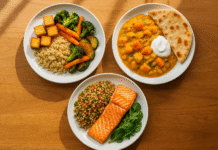
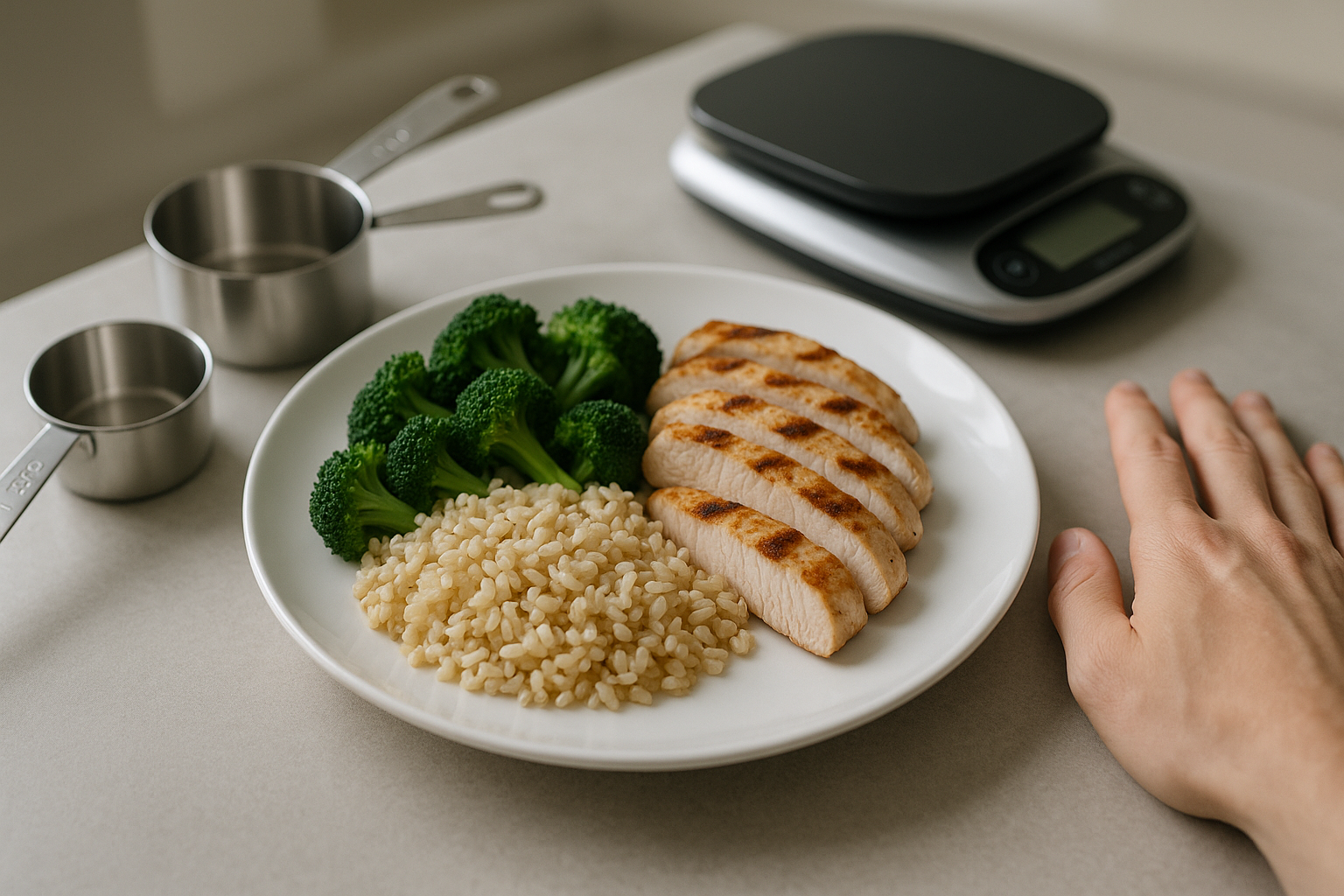
The simplest way to control portions is to let your plate do the math. The plate method divides a standard dinner plate into specific sections so you get more volume from vegetables, enough protein for fullness, and a reasonable serving of carbohydrates for energy. Start by filling ½ the plate with non-starchy vegetables (think broccoli, peppers, zucchini, leafy salads), ¼ with lean protein (beans, tofu, fish, eggs, chicken), and ¼ with whole grains or starchy foods (brown rice, quinoa, whole-grain pasta, potatoes). This visual template reduces guesswork, increases fiber and micronutrients, and naturally lowers calorie density without counting. It also scales up or down easily: larger plates for athletes, smaller plates for quiet days. Because it emphasizes food groups rather than exact grams, it’s practical across cuisines and budget levels, and it works whether you cook from scratch or assemble quick meals.
1.1 Why it matters
- Vegetables add volume and fiber for fullness at relatively low energy cost.
- A palm-sized protein portion helps regulate hunger hormones and supports muscle.
- Whole grains/starches provide steady energy and satisfying texture.
- Visual structure reduces choice overload, which often leads to stacked portions.
1.2 How to do it
- Use a plate about 9–10 in (23–25 cm) across for most adults; smaller for snacks.
- If a dish is mixed (e.g., chili, stir-fry), estimate: does half the bowl look veggie-heavy? Is there a palm of protein?
- Add a thumb-sized portion of fats (e.g., olive oil drizzle, nuts) for flavor and satiety.
Synthesis: The plate method is a durable default that organizes portions without measuring cups and keeps meals balanced and satisfying.
2. Read the Label’s Serving Size—Then Compare It to Your Real Portion
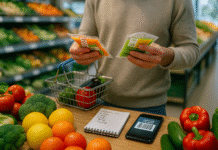
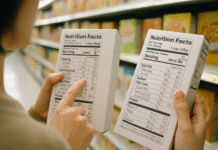
Nutrition labels list a “serving size” for the facts panel, but that number describes the amount typically eaten at one time, not a recommended amount for you. Portion control basics require comparing the label’s serving size to what actually ends up on your plate. If the label says ⅔ cup (55 g) cereal per serving and you pour 1⅓ cups, you’ve eaten two servings—so calories, sugars, and sodium all double. The same logic applies to beverages, snack packs, and multi-serving pouches that look deceptively “single-serve.” For condiments and oils, serving sizes are tiny (often 1 tbsp / 15 mL), and they add up fast. Training yourself to pause for ten seconds before eating—“How many label servings is this?”—builds awareness that lasts.
2.1 Tools & steps
- Scan the serving size first. Cups, grams, or pieces—know the unit.
- Weigh or measure once. Use a scale or measuring cup a few times to calibrate your eye.
- Do the math. Portion ÷ serving = multiplier for calories and nutrients.
- Watch liquids. Juices, coffee creamers, and smoothies often hide multiple servings.
2.2 Mini example
- Chips: Label = 28 g (about 15 chips). If your bowl is 56 g, that’s 2 servings.
- Salad dressing: Label = 2 tbsp (30 mL). If you drizzle for a full circle around the plate, you may be at 3–4 tbsp.
Synthesis: Labels are data, not advice—use the serving size as a ruler and scale it to your actual portion.
3. Lean on Calorie Density: Eat More Volume, Not More Calories
Calorie density (energy per gram of food) explains why you can eat a big salad and still stay within targets, yet exceed them with a small handful of candy. Foods high in water and fiber—vegetables, fruits, broth-based soups, legumes—provide bulk and chewing time at a lower calorie cost. By centering meals on these foods, you can increase volume (so you feel physically full) while keeping total energy in check. This strategy doesn’t ban higher-density foods like nuts, cheese, or chocolate; it simply encourages smaller portions of them, paired with larger portions of low-density foods, so satisfaction remains high.
3.1 Numbers & guardrails
- Most non-starchy vegetables: ~10–40 kcal per 100 g.
- Fruits & legumes: ~50–120 kcal per 100 g (varies by type).
- Nuts, seeds, oils: ~550–900 kcal per 100 g—nutritious but easy to overshoot.
3.2 Practical swaps
- Choose broth-based soup instead of cream soup for a starter.
- Add two cups of leafy greens under pasta rather than adding more pasta.
- Mix chopped vegetables into grain bowls at a 1:1 volume ratio.
Synthesis: Shift plate space toward low-density foods so fullness rises before calories do.
4. Measure Once, Eyeball Forever: Build Reliable Visual Cues
Constant measuring is tedious; skillful portion control relies on memory and visuals. Spend two weeks measuring common foods you eat—breakfast cereal, rice, pasta, peanut butter, salad dressing, cooked chicken or tofu—then memorize what those amounts look like in your bowls, plates, and spoons. Pair these visuals with a quick hand-portion guide: palm for protein (≈85–100 g cooked / 3–3.5 oz), cupped hand for carbs (≈½ cup cooked grains or a small fruit), fist for vegetables (≈1 cup chopped), and thumb for fats (≈1 tbsp/15 mL). These are approximations, not rules—but they reduce mental friction so you can stay consistent in varied settings.
4.1 Tools to speed learning
- A digital kitchen scale for two weeks of “training.”
- Transparent containers with volume marks for leftovers.
- Photo log: snap a picture of correctly measured portions to create your own visual deck.
4.2 Mini-checklist
- Calibrate each dish you use often (your favorite bowl might be 2 cups, not 1).
- Note food “fluffiness” (e.g., cooked pasta shapes pack differently).
- Re-check every few months to fight portion creep.
Synthesis: Short-term measuring builds long-term intuition, letting you eyeball portions accurately without micromanaging.
5. Eat to Comfortable 7/10 Fullness and Pace Your Meals
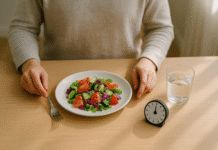
Portion control isn’t only about what’s on the plate—it’s about how you pace eating and when you decide you’ve had enough. A useful target is “7 out of 10 fullness”: satisfied, not stuffed; you could eat more but don’t need to. Because satiety cues lag behind intake by roughly 10–20 minutes, slowing down helps your brain register fullness before you overshoot. Put utensils down between bites, take sips of water, and include crunchy, fibrous foods that require more chewing. This approach layers nicely with the plate method, because fiber-rich vegetables and adequate protein slow digestion and stabilize hunger.
5.1 How to do it
- Start meals with a glass of water or a light salad/soup.
- Set a minimum meal time (e.g., 15–20 minutes).
- Pause halfway: ask, “Am I at 7/10?” Save the rest if yes.
- Avoid distracted eating (TV/scrolling), which masks fullness cues.
5.2 Mini example
- You plate a sandwich with chips. After half the sandwich and a few chips, pause. If you’re satisfied, box the remainder; if not, finish the sandwich and keep chips to one label serving.
Synthesis: A 7/10 target and slower pace transform the same portion into greater satisfaction with fewer calories.
6. Pre-Portion Snacks and Leftovers Before Hunger Hits
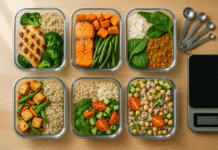
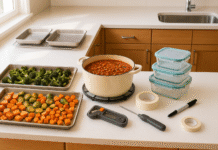
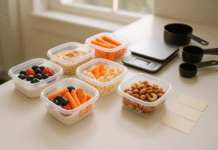
Hunger and convenience determine portions more than willpower. If the only option is an open family-size bag, you’ll probably pour a family-size bowl. Solve this in advance by pre-portioning: divide bulk snacks into single-serve containers or small baggies, and pack leftovers into meal-sized containers as soon as dinner ends. Store more “everyday” foods at eye level (fruit, yogurt cups, pre-cut veg), and less-frequent treats in harder-to-reach spots. This simple environment design removes dozens of micro-decisions that lead to oversized snacks and second helpings.
6.1 Steps
- Buy bulk, portion small: nuts in ¼-cup (30 g) containers; crackers in 1–2 serving baggies.
- Label containers with serving counts (e.g., “2 label servings”).
- Freeze extra portions of calorie-dense items (e.g., banana bread slices).
- Keep a “ready bowl” of cut veggies for easy volume add-ons.
6.2 Tools & examples
- Use bento-style lunch boxes to see compartments filled.
- Batch-cook grains and proteins; portion into ¾–1 cup grains and palm-sized protein per container.
- For desserts, bake in ramekins for automatic single-serves.
Synthesis: Portioning when you aren’t hungry turns good intentions into default behavior at snack time.
7. Outsmart Restaurant Portions Without Feeling Deprived
Restaurant and takeaway portions are often 2–3 times what you’d serve at home. Rather than avoiding dining out, adopt strategies that preserve enjoyment while aligning with your goals. Preview menus to plan a balanced choice, and ask for sauces and dressings on the side to control concentrated calories. Share mains, order a half-portion if available, or box half before you start eating. Favor items with vegetables, lean proteins, and whole grains; treat sides like fries as one shareable item at the table instead of one per person. Drinks count too—sweet beverages can quietly add hundreds of calories.
7.1 Tactics that work
- Ask for a to-go box with the meal; save half for lunch tomorrow.
- Choose grilled, baked, or steamed preparations over fried/creamy.
- Swap fries for a salad or vegetables; add a small starter soup for volume.
- Share dessert or order fruit-based options.
7.2 Numeric example
- A typical restaurant pasta can be 600–1,000 kcal per plate. Halving and adding a side salad often brings the meal to ~400–600 kcal while boosting fullness.
Synthesis: Plan, customize, and split—small moves that let you enjoy dining out without accidental double portions.
8. Anchor Portions with Protein, Fiber, and Smart Fats
Satiety is biochemical, not just psychological. Meals that include adequate protein and fiber (with a modest amount of fat) help portions feel satisfying at reasonable calorie levels. As a starting point for many adults, aim for 20–40 g protein per main meal, 8–12 g fiber across the meal (and ~25–38 g per day from all sources), and a thumb or two of healthy fats (e.g., olive oil, nuts, avocado) depending on calorie needs. Protein slows gastric emptying and preserves lean mass, fiber adds bulk and steadies blood glucose, and fat carries flavor so smaller portions still feel indulgent.
8.1 Numbers & food ideas
- Protein: palm-sized tofu/tempeh, 2 eggs plus beans, ¾–1 cup Greek yogurt, a can of tuna/salmon, or a palm of chicken/fish (≈85–120 g cooked).
- Fiber: at least 1 cup non-starchy veg, ½–1 cup beans or lentils, ½ cup oats or barley, or a piece of fruit.
- Fats: 1–2 tbsp olive oil, a small handful (15–30 g) of nuts/seeds, or ¼ avocado.
8.2 Common mistakes
- Skipping protein at breakfast, then overeating later.
- Treating cheese and nuts as “unlimited” because they’re “healthy.”
- Under-serving vegetables, reducing meal volume and fullness.
Synthesis: Build each meal around protein, fiber, and a measured fat so a moderate portion delivers long-lasting satisfaction.
9. Scale Portions to Your Body, Activity, and Goals
There is no one “correct” portion for everyone. A taller, more muscular, or very active person will require larger portions than a smaller, sedentary person. Start with a template (like the plate method) and adjust based on hunger, energy, performance, and body-composition goals. On training days or high-activity periods, increase carbohydrates (e.g., add an extra cupped-hand of grains or fruit). On lighter days, lean more on vegetables and protein while keeping carbs closer to baseline. If weight loss is a goal, reduce overall portions gradually, focusing first on calorie-dense additions (oils, sweets, alcohol), not vegetables and lean proteins.
9.1 How to scale
- Activity up: add ½–1 cup cooked grains or starchy veg; include a fruit snack.
- Activity down: keep carbs at one cupped hand; fill plate space with extra veg.
- Body size: larger bodies often start with larger palms/cups; smaller bodies with smaller ones.
- Feedback loop: adjust weekly, not daily, to avoid overreacting to normal fluctuations.
9.2 Mini cases
- Desk-job week: keep dinner to ¼ plate grains, ¼ protein, ½ veg; skip second helpings.
- Marathon training: increase grains to ⅓–½ plate at meals surrounding long runs.
Synthesis: Begin with a balanced pattern, then let your body and routine guide portion increases or decreases.
10. Track Trends (Not Every Bite) to Calibrate Portions Over Time
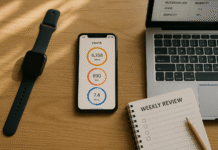
All or nothing tracking backfires. Instead, use lightweight feedback to keep portions aligned over months: a weekly body-weight average, a few plate photos per day for a week, or a short “hunger & fullness” note after meals (e.g., 4/10 before, 7/10 after). This information exposes portion creep, shows which meals keep you satisfied, and highlights where small changes (extra veg, measured dressing, more protein) pay off. If progress stalls for 2–3 weeks, adjust one lever at a time: slightly smaller starch portions, more vegetables, or swapping a calorie-dense snack for a fruit-and-yogurt option.
10.1 Tools & options
- Photo journaling on your phone (album per week).
- Habit trackers: check off “plate method,” “veg at lunch,” or “no second helpings.”
- Smart scale: look at weekly trends, not daily noise.
- Timer: enforce 15–20 minutes per meal.
10.2 Quick experiments
- For seven days, serve dressings/oils with a measuring spoon.
- Replace one snack with a high-volume option (popcorn, fruit + yogurt).
- Add 10–15 g more protein at breakfast and observe afternoon hunger.
Synthesis: Gentle tracking keeps portions honest and progress steady without turning eating into a spreadsheet.
FAQs
What’s the difference between a “serving size” and a “portion”?
A serving size is a standardized amount used on nutrition labels to display calories and nutrients; a portion is the amount you actually choose to eat. Your portion may equal one serving, multiple servings, or a fraction of a serving. Using the label as a ruler helps you translate servings into your real-world portion.
Do I have to weigh all my food to control portions?
No. Weighing or measuring for a brief period is a training tool to calibrate your eyes. After a couple of weeks, most people can rely on visual cues, the plate method, and hand guides to stay consistent. Re-measure occasionally to fight portion creep, but daily weighing isn’t required for long-term success.
How can I control portions when cooking for a family with different appetites?
Serve meals family-style but pre-portion plates using the ½ veg, ¼ protein, ¼ starch layout. Offer extra vegetables and salad for seconds, and keep calorie-dense add-ons (cheese, sauces) in separate bowls so each person can customize. This lets bigger appetites add volume without pushing everyone’s calories up.
Are “100-calorie packs” good for portion control?
They can be, because the pack creates a natural stopping point. However, they’re often more expensive and sometimes less satisfying than a balanced snack like yogurt and fruit or nuts with carrot sticks. If you use them, pair with a protein or fiber source to improve fullness and avoid eating multiple packs.
What about alcohol—how does it affect portion control?
Alcohol delivers calories with little satiety and can disinhibit appetite, making oversized portions more likely. A standard drink is small (e.g., 150 mL wine), and restaurant pours may be larger. If you drink, set a limit ahead of time, alternate with water, and pair drinks with high-volume, veggie-rich meals.
Is it better to eat three big meals or several small ones?
Both patterns can work. Choose the rhythm that helps you control portions without feeling deprived. Some people do better with three balanced meals and minimal snacks; others prefer three smaller meals plus two planned snacks. The key is consistency and the quality/portion of what you eat at each occasion.
How do athletes or very active people adapt these rules?
Keep the plate method but expand the carbohydrate portion around training sessions and ensure adequate protein across the day. Portable higher-carb snacks (bananas, granola bars, chocolate milk) can be helpful. On rest days, slide back toward more vegetables and standard portions to match lower energy needs.
Can I eat dessert and still practice portion control?
Yes. Treat dessert as an intentional portion, not a mindless extra. Share a dessert, choose fruit-forward options, or serve sweets in small ramekins to create a natural limit. Savor slowly, and balance the rest of the meal with vegetables and lean protein to keep overall calories reasonable.
How do I handle buffets, potlucks, or holidays?
Use a small plate, do one pass to scout options, and build your plate with the usual ½ veg, ¼ protein, ¼ starch pattern. Choose two favorite treats and skip the rest. Eat slowly, set a single plate rule for mains, and make water your default beverage. Enjoy the occasion without treating it like a free-for-all.
What if I’m trying to gain weight or build muscle?
Portion control still applies—you’ll simply scale portions up, especially protein and carbohydrates. Add an extra cupped-hand of grains or a smoothie with yogurt and fruit, and increase healthy fats slightly. Track weekly weight and performance; if progress stalls, add small, consistent increases rather than massive swings.
Conclusion
Portion control basics are less about restriction and more about structure and awareness. When you anchor meals with the plate method, compare real portions to label servings, and favor low-calorie-density foods, you build meals that look generous yet fit your needs. Short bursts of measuring build lasting visual skills, while 7/10 fullness and slower pacing make the same plate more satisfying. Planning portions before hunger, adapting at restaurants, and using protein, fiber, and smart fats keep you full and energized. Finally, gentle tracking provides the feedback you need to prevent portion creep and adjust with confidence. Start with one rule this week—perhaps pre-portioning snacks or adding an extra cup of vegetables—and layer in the rest as habits. Ready to begin? Choose one dinner today and build it with the plate method.
References
- Nutrition Facts Label – Serving Size & Servings Per Container, U.S. Food & Drug Administration (FDA), updated 2024. https://www.fda.gov/food/food-labeling-nutrition/how-understand-and-use-nutrition-facts-label
- Reference Amounts Customarily Consumed (RACCs), Electronic Code of Federal Regulations (21 CFR 101.12), current as of 2025. https://www.ecfr.gov/current/title-21/part-101/section-101.12
- Healthy Eating Plate, Harvard T.H. Chan School of Public Health, accessed August 2025. https://www.hsph.harvard.edu/nutritionsource/healthy-eating-plate/
- Dietary Guidelines for Americans, 2020–2025, U.S. Departments of Agriculture and Health & Human Services, 2020. https://www.dietaryguidelines.gov
- Low-Energy-Dense Foods and Weight Management, Centers for Disease Control and Prevention (CDC), reviewed 2023. https://www.cdc.gov/healthyweight/healthy_eating/energy_density.html
- Mindful Eating: Tips to Savor Food and Improve Health, American Heart Association, 2023. https://www.heart.org/en/healthy-living/healthy-eating/eat-smart/nutrition-basics/mindful-eating
- The Eatwell Guide, National Health Service (NHS, UK), updated 2024. https://www.nhs.uk/live-well/eat-well/food-guidelines-and-food-labels/the-eatwell-guide/
- Protein Intake and Muscle Health: Guidance for Adults, National Institutes of Health – Office of Dietary Supplements, updated 2024. https://ods.od.nih.gov
- Healthy Diet Factsheet, World Health Organization (WHO), 2024. https://www.who.int/news-room/fact-sheets/detail/healthy-diet
- Volumetrics: Eating for Satiety, Penn State / Research from B.J. Rolls, accessed August 2025. https://nutrition.psu.edu/volumetrics/