
























Losing weight doesn’t mean white-knuckling hunger or cutting out snacks you love. Done right, healthy snack ideas for weight loss can keep you satisfied between meals, curb cravings, and make a calorie deficit easier to maintain over time. Below you’ll find five dietitian-style snack blueprints—with portions, how-to steps, beginner tweaks, and safety notes—plus a quick-start checklist, troubleshooting guide, ways to measure progress, and a simple 4-week plan you can start today. (General advice only. If you have a medical condition, take medications, or follow a therapeutic diet, consult a qualified healthcare professional or registered dietitian for personalized guidance.)
Key takeaways
- Snacks help compliance. Smart snacks reduce overeating later by improving fullness and appetite control. Favor options with protein, fiber, or both.
- Portion + pattern beats perfection. Aim for roughly 150–250 calories for most snacks, earlier in the day if possible. Pre-portion to prevent mindless eating.
- Whole foods > ultra-processed. Choose whole fruit over juice, and low energy-density foods (like produce and air-popped popcorn) for volume without many calories.
- Protein pulls double duty. Protein helps with satiety and supports lean mass during weight loss—great reasons to include dairy, eggs, legumes, or nuts in snacks.
- Measure what matters. Track simple metrics—hunger, portions, weekly weight trend, and waist—to see what’s working for you.
Greek Yogurt Parfait with Berries & Crunch
What it is & why it works
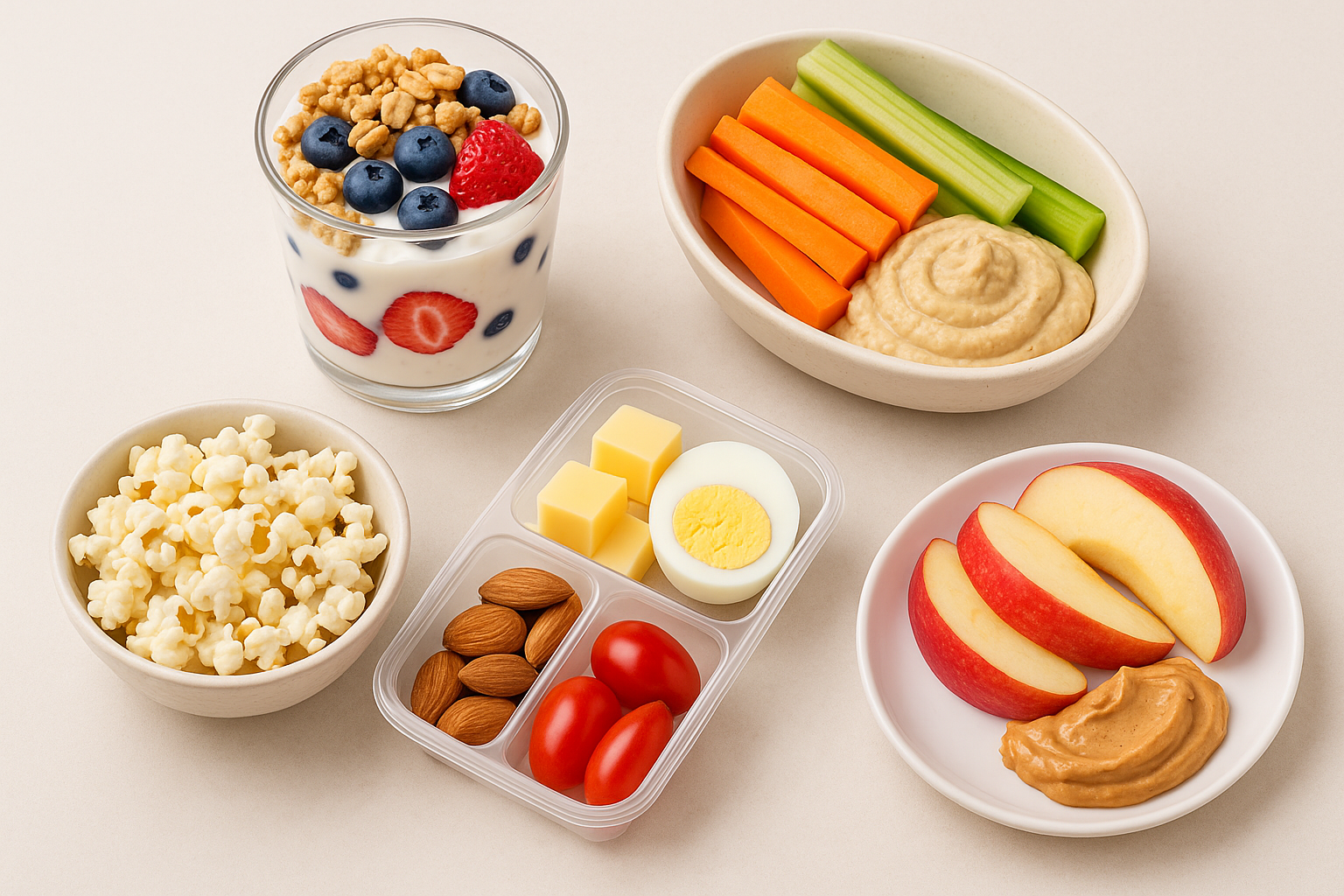
A cup of plain, nonfat Greek yogurt topped with berries and a sprinkle of nuts or seeds. The yogurt supplies high-quality protein for fullness; berries add fiber and natural sweetness; nuts or seeds bring texture and a bit of healthy fat for staying power. A typical 6-ounce (170 g) serving of plain nonfat Greek yogurt provides roughly 17 g protein for about 100 calories.
Requirements & low-cost swaps
- Ingredients: Plain nonfat Greek yogurt; fresh or frozen berries; 1–2 tsp chopped nuts/seeds (walnuts, almonds, chia).
- Tools: Bowl or jar, spoon.
- Budget swaps: Buy store brand yogurt in larger tubs; choose frozen mixed berries; use sunflower seeds if nuts are pricey.
Step-by-step (2 minutes)
- Scoop 170 g (6 oz) plain Greek yogurt into a bowl.
- Add ½–1 cup berries (fresh or thawed).
- Sprinkle 1–2 teaspoons nuts or seeds. Stir, or layer parfait-style.
Beginner modifications & progressions
- Simplify: Use just yogurt + berries.
- Boost protein: Stir in 2 Tbsp powdered milk or a scoop (½) of unflavored whey.
- Boost fiber: Add 1 Tbsp chia and let it sit 5–10 minutes to thicken.
Recommended frequency & metrics
Enjoy 1× per day or 3–5× per week. Note time to next hunger (e.g., “kept me full 3 hours”) and evening craving intensity. High-protein yogurt snacks have been shown to reduce hunger and delay subsequent eating versus lower-protein snacks.
Safety, caveats & common mistakes
- Sweetened yogurts can add 15–25 g sugar—stick to plain and sweeten with fruit.
- If you’re lactose intolerant, try lactose-free Greek yogurt or soy skyr-style alternatives.
- Watch the nut topping—it’s healthy but calorie dense; measure 1–2 tsp.
Mini-plan example
- Mon–Fri: Parfait at 11:00 a.m.
- Goal: Hold you until a 1:30 p.m. lunch without grazing.
Veggies & Hummus Power Plate
What it is & why it works
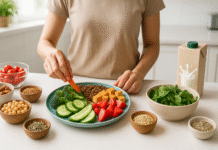
Crunchy raw vegetables (carrots, cucumbers, bell peppers) paired with hummus. You get fiber + water volume from veggies and protein + fat from hummus for steady fullness. Commercial hummus typically provides about 50–80 calories per 2 Tbsp depending on brand and oil content. My Food Data
Emerging evidence suggests hummus and its ingredients (chickpeas, tahini) can support appetite control and diet quality when used in place of more processed spreads or dips. PMC
Requirements & low-cost swaps
- Ingredients: 1–1½ cups raw veggies; 2–3 Tbsp hummus.
- Tools: Knife, cutting board, small container.
- Budget swaps: Buy whole carrots/cucumbers (cheaper than mini packs). Make homemade hummus to control oil and sodium.
Step-by-step (5 minutes)
- Slice 1 cup carrots and 1 cup cucumbers/bell peppers.
- Portion 2–3 Tbsp hummus into a small cup.
- Plate together; add a squeeze of lemon or smoked paprika on hummus.
Beginner modifications & progressions
- Simplify: Use pre-cut veggie trays.
- Boost protein: Stir plain Greek yogurt into hummus (50/50) for a higher-protein dip.
- Boost fiber: Add ½ cup grape tomatoes or snap peas.
Recommended frequency & metrics
Great for daily snacking or meal-prep (pack 3–4 portions). Track portion size of hummus (tablespoons) and ease of sticking to the plan.
Safety, caveats & common mistakes
- Portion creep: Hummus can add up if you dip straight from the tub—use a ramekin.
- Sodium: Select lower-sodium brands; brighten with lemon, garlic, or spices.
- Allergies: Sesame (tahini) is a common allergen—swap white-bean dip if needed.
Mini-plan example
- Workday snack box: 2 Tbsp hummus + 1 cup carrots + 1 cup cucumber + lemon wedge at 4:00 p.m.
Apple & Peanut Butter (a High-Satiety Classic)
What it is & why it works
A crisp whole apple paired with peanut butter delivers fiber, crunch, and a little fat and protein—an easy combo that’s far more satisfying than juice or a plain cookie. One medium apple has about 95 calories and ~4 g fiber; peanut butter offers about 190–200 calories and ~7 g protein per 2 Tbsp (so you’ll likely use 1 Tbsp for a snack). Whole fruits are more satiating than juices because they retain fiber and water.
Requirements & low-cost swaps
- Ingredients: 1 medium apple; 1 Tbsp peanut butter.
- Tools: Knife (optional), small container for PB.
- Budget swaps: Use seasonal apples; swap PB for powdered peanut butter mixed with water to reduce calories.
Step-by-step (1 minute)
- Wash and slice apple (or eat whole).
- Measure 1 Tbsp peanut butter into a cup for dipping.
- Optional: Dust with cinnamon or add a pinch of salt.
Beginner modifications & progressions
- Simplify: Pre-portion 1 Tbsp PB single-serve cups.
- Lower-calorie: Use powdered PB (prepared) for ~60–70 calories per 2 Tbsp prepared.
- Higher-protein: Add string cheese or Greek-yogurt dip on the side.
Recommended frequency & metrics
Enjoy 3–6× per week. Track hunger 30 and 120 minutes after; note whether the 1 Tbsp PB is enough or if you need 1½ Tbsp on training days.
Safety, caveats & common mistakes
- Nut butters are calorie dense—measure, don’t eyeball.
- For peanut allergies, swap almond butter, tahini-yogurt dip, or cottage cheese.
- Whole fruit beats juice for fullness and blood sugar control patterns; limit routine juice. Harvard HealthPMC
Mini-plan example
- Evening craving fix: Apple + 1 Tbsp PB at 8:00 p.m. when you want dessert.
High-Protein Snack Box: Eggs, Tomatoes & Whole-Grain Crackers
What it is & why it works
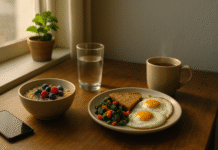
A mini “bento”: 1 hard-boiled egg, 1 cup cherry tomatoes, and 4–6 whole-grain crackers. The egg provides ~6 g protein for roughly 78 calories, tomatoes give volume and fiber for minimal calories, and crackers add crunchy carbs to round it out.
Requirements & low-cost swaps
- Ingredients: 1–2 hard-boiled eggs; 1 cup cherry tomatoes; 4–6 whole-grain crackers.
- Tools: Pot for boiling (or buy ready-to-eat eggs), lunchbox.
- Budget swaps: Buy eggs in bulk; use sliced cucumbers or carrots instead of cherry tomatoes; swap crackers for air-popped popcorn (see next snack).
Step-by-step (10 minutes for batch)
- Boil a half-dozen eggs (cover with water; boil 10–12 min; cool; peel).
- Pack 1 egg, 1 cup tomatoes, 4–6 crackers per container.
- Add a small pinch of salt/pepper or a squeeze of lemon over tomatoes.
Beginner modifications & progressions
- Simplify: Use pre-boiled eggs from the store.
- Boost protein: Pack 2 eggs or add 30 g reduced-fat cheese.
- Lower-calorie: Use thin rye crisps or reduce crackers to 3–4.
Recommended frequency & metrics
Ideal pre- or post-workout, 3–5× per week. Track satiety (how many hours it keeps you full) and evening snacking (should decrease).
Safety, caveats & common mistakes
- Don’t over-salt.
- If you have specific cholesterol concerns, discuss egg frequency with your clinician; for most people, eggs can fit into healthy patterns.
Mini-plan example
- On-the-go day: Eat one box at 10:30 a.m., another at 3:30 p.m. to sidestep vending machines.
Air-Popped Popcorn Bowl (Savory or Sweet)
What it is & why it works
Popcorn is a whole grain with very low energy density, meaning you can eat a large volume for relatively few calories—great for appetite control. 1 cup air-popped has about 31 calories; 3 cups (a common bowl) are about ~100 calories before toppings. Popcorn has been shown to be more satiating than potato chips in short-term studies. ARS
Requirements & low-cost swaps
- Ingredients: Popcorn kernels; optional seasonings (garlic powder, smoked paprika, cinnamon).
- Tools: Air popper (best), stovetop pot with lid, or some microwave poppers.
- Budget swaps: Stove-top popping with 1 tsp oil per big batch.
Step-by-step (5 minutes)
- Air-pop 3 cups popcorn.
- Toss with seasonings: try garlic + black pepper, or cinnamon + a dash of cocoa.
- Optional: Mist lightly with water or a tiny spritz of oil so spices stick.
Beginner modifications & progressions
- Simplify: Buy plain, pre-popped popcorn (check label for oil/sugar).
- Boost protein: Add 2 Tbsp nutritional yeast for flavor and a bit of protein.
- Lower sodium: Use herbs and acid (vinegar powder, lemon zest) instead of salt.
Recommended frequency & metrics
Perfect for evening snack without blowing calories. Track “crunch cravings” satisfaction and topping calories.
Safety, caveats & common mistakes
- Butter + sugar can negate the benefits; keep toppings light.
- Avoid movie-theater style versions saturated with oils.
- Brush teeth if you’re prone to snacking mindlessly while streaming.
Mini-plan example
- Movie night: 3 cups air-popped + garlic/pepper + 1 tsp grated Parmesan.
Quick-Start Checklist
- Stock the basics: Greek yogurt, berries (frozen OK), apples, peanut butter, eggs, tomatoes, carrots, cucumbers, hummus, whole-grain crackers, popcorn kernels.
- Pre-portion everything: Use small containers or baggies: 1 Tbsp nut butter, 2 Tbsp hummus, 3 cups popcorn.
- Set snack anchors: Pick two daily snack times (e.g., 11:00 a.m. and 4:00 p.m.) to prevent grazing.
- Pair protein + fiber: Most of your snacks should include at least one protein source and one fiber source.
- Keep juice rare: Prefer whole fruit for satiety and calorie control.
Troubleshooting & Common Pitfalls
“My snacks keep turning into full meals.”
Pre-portion; aim for 150–250 calories and put leftovers away before you eat.
“I’m still hungry an hour later.”
Add another 5–10 g protein (½ cup high-protein yogurt, second egg) or more fiber (extra cup of veggies). Protein and fiber increase satiety signals. PubMed
“Evening snacking derails me.”
Schedule a higher-volume snack (e.g., popcorn + apples) and close the kitchen by a set time. Low energy-density foods help you feel full on fewer calories.
“I crave sweets.”
Try yogurt + berries with cinnamon or apple + PB. A little protein/fat with fruit blunts rapid hunger return. PMC
“I travel a lot.”
Pack shelf-stable options: single-serve nut butter, whole apples, whole-grain crackers, pre-popped popcorn.
“Scale won’t budge.”
Snacks help with compliance, but fat loss still requires a calorie deficit—review total intake and activity.
How to Measure Progress (Without Obsessing)
- Hunger & fullness log: Before/after each snack, rate hunger 1–10. Look for lower peaks and fewer binge episodes over 1–2 weeks.
- Weekly weight trend: Weigh 3–7×/week, same time, and watch the 7-day average trend—ignore day-to-day noise. Healthy loss usually averages ~0.5–1.0 lb/week for many adults if a modest deficit is present.
- Waist measurement: Once weekly at the navel on exhale.
- Adherence score: How many days this week did snacks match plan? (0–7).
- Energy & cravings: Quick note each evening; aim for fewer late-night raids by week 2–3.
A Simple 4-Week Starter Plan
Goal: Build a repeatable, low-effort snack routine that supports a calorie deficit while keeping you satisfied.
Week 1 — Set the Structure
- Shop once; prep twice. Boil eggs; chop veggies; portion PB and hummus; buy yogurt & frozen berries.
- Snack anchors: 11:00 a.m. and 4:00 p.m.
- Menu:
- Mon/Wed/Fri: Yogurt parfait (AM); veggies + hummus (PM)
- Tue/Thu: Apple + 1 Tbsp PB (AM); eggs + tomatoes + crackers (PM)
- Weekend: Popcorn bowl one evening
- Track: Hunger ratings + nightly cravings.
Week 2 — Adjust Portions for Satiety
- If AM hunger returns <2 hours, add protein (e.g., ½ cup extra yogurt).
- If PM snack pushes dinner too late, shrink portions by ~25%.
- Menu twist: Add cinnamon to yogurt; lemon-garlic to hummus; popcorn two nights.
- Focus: Replace one ultra-processed snack with whole fruit.
Week 3 — Add Variety & Volume
- Introduce cottage cheese + pineapple or berries + skyr on one day (still fits the yogurt blueprint).
- Double your veggie volume one afternoon using carrots + snap peas with the same hummus portion.
- Focus: Choose low energy-density add-ons (extra veg, broth-based soup with lunch) to tame appetite. PMC
Week 4 — Fine-Tune & Maintain
- Identify your top two satisfying snacks and make them your defaults.
- Keep one “fun” popcorn night with creative spices.
- Review your 7-day weight average and waist. If progress stalled, trim ~50–100 calories from one daily snack or add a 10-minute walk. NHLBI, NIH
Safety & Smart Practices
- Medical conditions & meds: Work with a clinician or RD if you manage diabetes, kidney disease, GI disorders, or have food allergies/intolerances.
- Food safety: Refrigerate perishable snacks (yogurt, eggs) within 2 hours; use insulated bags if commuting.
- Sodium & added sugars: Check labels, especially flavored yogurts, popcorn seasonings, and crackers—favor plain and unsweetened options aligned with healthy eating patterns. dietaryguidelines.gov
- Juice caution: Regular large servings of juice may promote weight gain over time compared with whole fruit.
FAQs
1) How many snacks should I eat per day to lose weight?
Most people do well with 1–2 planned snacks. Enough to prevent overeating at meals, not so many that calories creep up. Anchor times (like 11:00 and 4:00) help. EatingWell
2) What calorie range should I aim for per snack?
A practical window is ~150–250 calories, depending on your size, activity, and meal schedule. Adjust by satiety and weekly trends. Verywell Health
3) Is Greek yogurt really more filling than other snacks?
High-protein yogurt snacks have been shown to reduce hunger and delay subsequent eating compared to lower-protein snacks or high-fat snacks. PubMedBioMed Central
4) Are eggs okay if I’m watching cholesterol?
For most people, eggs can fit in a heart-healthy pattern. If you have high cholesterol or cardiovascular risk, discuss egg frequency with your clinician. Verywell Health
5) Why do you recommend whole fruit instead of juice?
Whole fruit retains fiber and water, increasing satiety and moderating sugar impact; frequent juice intake is linked with weight gain risk. Harvard HealthHarvard Chan School
6) I crave salty crunch at night—what’s my best option?
Try air-popped popcorn. It’s low in energy density and more satiating than chips in short-term tests. Season creatively without loads of butter. PubMed
7) Do I need to count snack calories?
Not strictly, but pre-portioning and picking snacks with protein + fiber works for many. If progress stalls, a short period of tracking can help recalibrate.
8) What’s a good pre-workout snack?
The egg + tomatoes + crackers box or yogurt + fruit 60–90 minutes pre-workout delivers protein and some carbs without heaviness. Nutrition Value
9) Can I snack late at night?
You can, but late snacking is often less mindful and higher in calories. If nights are hard, plan a higher-volume snack like popcorn or yogurt + berries and set a kitchen cutoff time. The Wall Street Journal
10) How do these snacks fit into an overall weight-loss plan?
They’re tools to help you stick to a modest calorie deficit while keeping hunger in check. Combine them with balanced meals and regular activity for sustainable results. NHLBI, NIHWebMD
Conclusion
Weight loss is easier—and far more enjoyable—when your snacks work with you. Choose protein- and fiber-forward options, keep portions intentional, and lean on low energy-density foods for satisfying volume. Build a simple routine, iterate by appetite and progress, and let consistency do the heavy lifting.
CTA: Ready to start? Pick two snacks from this list, set your daily snack times, and prep tomorrow’s portions tonight.
References
- Yogurt, Greek, plain, nonfat — 6 oz; Nutritionix (USDA database entry); 2016; https://www.nutritionix.com/i/usda/yogurt-greek-plain-nonfat-6-oz/571fb5d5ab5e18a9270bf87c
- Low, moderate, or high protein yogurt snacks on appetite and eating in healthy women; PubMed; 2013; https://pubmed.ncbi.nlm.nih.gov/23022602/
- The effects of increased dietary protein yogurt snack in healthy women; Nutrition Journal (BioMed Central); 2013; https://nutritionj.biomedcentral.com/articles/10.1186/1475-2891-12-71
- Clinical Evidence and Mechanisms of High-Protein Diet in Obesity; Journal of Obesity & Metabolic Syndrome; 2020; https://www.jomes.org/journal/view.html
- Dietary fiber influence on overall health, with an emphasis on weight management; Nutrients (PMC); 2024; https://pmc.ncbi.nlm.nih.gov/articles/PMC11671356/
- Hard-Boiled Eggs — Nutrition Facts; MyFoodData; 2024; https://tools.myfooddata.com/nutrition-facts/173424/wt3
- Apples — Seasonal Produce Guide; SNAP-Ed (USDA); 2023; https://snaped.fns.usda.gov/resources/nutrition-education-materials/seasonal-produce-guide/apples
- Peanut Butter, Smooth — Nutrition Facts (USDA Foods); USDA FNS PDF; 2021; https://fns-prod.azureedge.us/sites/default/files/resource-files/100396.pdf
- Snacks, popcorn, air-popped — 1 cup; MyFoodData; 2024; https://tools.myfooddata.com/nutrition-facts/167959/wt1
- Popcorn: A Healthy, Whole Grain Snack; USDA ARS; 2021; https://www.ars.usda.gov/plains-area/gfnd/gfhnrc/docs/news-articles/2021/popcorn-a-healthy-whole-grain-snack/
- Popcorn is more satiating than potato chips in normal-weight adults; Nutrition Journal; 2012; https://nutritionj.biomedcentral.com/articles/10.1186/1475-2891-11-71
- Dietary energy density: Applying behavioural science to weight management; Nutrition Bulletin (PMC); 2017; https://pmc.ncbi.nlm.nih.gov/articles/PMC5687574/