





















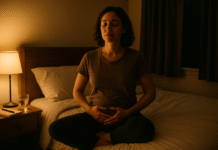



Trauma reshapes how the body and brain predict safety. Visualization for emotional healing uses guided mental imagery to restore a sense of control, soothe the nervous system, and revise meaning in ways that support recovery. If you’ve felt stuck in loops of worry, flashbacks, or numbing, imagery offers a gentle bridge: you can engage with difficult material at your own pace while building inner resources. This guide walks you through nine evidence-informed strategies, complete with step-by-step scripts, guardrails, and ways to personalize them. It’s designed for people healing from stressful or traumatic experiences as well as caregivers and clinicians seeking practical tools.
Quick definition: Visualization for emotional healing is the purposeful use of mental images, sensations, and narratives to reduce distress, increase safety, and update how traumatic memories are stored and recalled.
Important note: This article offers education, not medical advice. If you’re experiencing severe symptoms (e.g., active self-harm thoughts, uncontrolled substance use, severe dissociation), connect with a licensed professional and local emergency supports.
Starter steps (at a glance):
- Set a 3–10 minute timer, choose a quiet space, and adopt a comfortable posture you can sustain.
- Decide your aim (soothing, sleep, working with a memory, or building self-compassion).
- Use slow nasal breathing (about 4–6 breaths per minute) to settle.
- Practice one visualization below, keeping arousal in your “workable zone” (neither shut down nor overwhelmed).
- Close with grounding (name five things you see, feel your feet, sip water) and a brief journal note.
1. Safe Place Visualization (Build a Reliable Inner Anchor)
A Safe Place (or “calm place”) visualization is the foundation for all trauma-focused imagery: it creates a dependable internal refuge you can return to whenever emotions spike. In practice, you imagine a location—real or invented—where your body naturally loosens and your breath slows. This isn’t escapism; it’s a deliberate nervous-system intervention that teaches your body the felt sense of safety on demand. Over time, pairing the image with a word (“Home,” “Harbor,” “Quiet”) becomes an anchor you can cue in seconds at work, on a commute, or before sleep. Expect your first few sessions to feel awkward; that’s normal. The key is sensory detail—sight, sound, touch, smell, even temperature—so your brain treats the scene as “real enough” to shift physiology.
1.1 Why it matters
- Consistently practicing a Safe Place reduces baseline arousal and improves the “off-ramp” from triggers.
- It provides a staging area for deeper work like imagery rescripting, so you can step in and out without flooding.
- It increases a sense of control—you decide the scene, pace, and exit.
1.2 How to do it (5 minutes)
- Choose the setting: beach at dawn, a mountain hut, a grandmother’s kitchen—anywhere you associate with ease.
- Layer senses: color of the sky, texture underfoot, distant ambient sounds, a familiar scent, air temperature.
- Add protection: a door, guardian animal, or invisible boundary that lets only invited elements enter.
- Install the anchor: pick a single word or gesture (press thumb to forefinger) to “save” the state.
- Rehearse exits: visualize leaving and returning so you trust you can disengage quickly.
Mini-checklist: 3–10 minutes, 1–2 times/day for two weeks; keep it consistent; if the place becomes “contaminated” by a memory, pick a brand-new setting.
Bottom line: A strong Safe Place makes every other strategy safer and more effective.
2. Sensory Grounding Imagery (Stabilize in the Present)
Sensory grounding imagery blends the classic 5–4–3–2–1 method with imagination to stabilize attention when you can’t physically change the environment. The first step is orientation: look around and name where you are and what day it is. Next, “seed” your mind with vivid, neutral-to-positive images (e.g., a cool stream over pebbles) and connect each sense to the scene. You can run it silently on a bus, during a meeting, or when a notification stirs up a surge of anxiety. The goal isn’t to banish thoughts but to reduce the intensity enough (often by 20–40%) to choose your next move deliberately. If you’re prone to dissociation or blankness, keep the imagery simple, concrete, and brief.
2.1 Quick sequence (3–7 breaths per step)
- See: trace three shapes or colors in your imagined scene.
- Touch: feel texture—smooth stone, worn wood, warm mug.
- Hear: steady, predictable sounds (waves, rain on leaves).
- Smell/Taste: a faint, pleasant note (citrus, chai).
- Name & count: label each sense (“I see the shore, 1…2…3”).
2.2 Common mistakes
- Going for “epic” visuals rather than steady, familiar cues.
- Staying too long; aim for short sets you can repeat.
- Skipping orientation (“It’s Thursday, I’m in my room, I’m safe enough now”).
Mini case: After a sudden honk, Amna’s heart pounds. She silently imagines rinsing a cool apple in the sink, notes the water’s sound, the crisp bite, and the tart taste. Her shoulders drop; she decides to continue walking.
Bottom line: Grounding imagery turns down the volume on distress so your prefrontal “steering wheel” can engage.
3. Imagery Rescripting (Gently Update the Meaning of a Memory)
Imagery rescripting (IR) is a cognitive-behavioral method that changes the meaning of a painful memory by altering its imagery—especially the ending or power dynamics. You first evoke a tolerable slice of the memory (never your worst moment), then introduce a new element that meets the unmet need: protection, protest, comfort, justice. This might be your current adult self entering the scene, a trusted mentor calling for help, or a boundary appearing at the moment you needed it. IR does not change what happened; it changes how your brain files the event, reducing shame and helplessness that keep symptoms alive. If your arousal spikes, pause, return to the Safe Place, and resume later.
3.1 How to do it (10–15 minutes)
- Prepare: rate your distress (0–10). Begin only if ≤5–6.
- Select a slice: a brief, representative moment—not the most overwhelming one.
- Enter as helper: your present self steps in with exactly the support needed (firm voice, protective stance, calling others).
- Change the ending: the scene resolves with safety, dignity, and care.
- Rehearse: replay the new version 2–3 times, then journal the shift in emotion and meaning.
3.2 Guardrails
- Avoid graphic details; keep images symbolic if direct contact is too much.
- If you experience severe dissociation, collaborate with a therapist trained in CBT for trauma.
- Expect mixed emotions; relief can coexist with sadness. That’s normal.
Synthesis: Rescripting helps your nervous system learn, “I have protection and voice now,” loosening the grip of the past.
4. Imagery Rehearsal Therapy for Nightmares (Reclaim Your Nights)
Frequent nightmares are common after trauma and can entrench daytime symptoms. Imagery Rehearsal Therapy (IRT) is a well-studied method where you rewrite a distressing dream while awake and rehearse the new script daily so your brain “prefers” it. You don’t need to decode symbols; you simply design a safer, more empowered outcome and practice it until it feels familiar. Many people report fewer nightmares and less fear of sleep within weeks. If your dreams involve themes you’re not ready to modify, start with a milder dream to build confidence.
4.1 The IRT routine (about 10 minutes/day)
- Record: write a short version of the nightmare (1–2 paragraphs).
- Revise: choose a new direction—escape route appears, allies arrive, you wake yourself safely.
- Rehearse: close your eyes and vividly run the new dream 2–3 times.
- Cue sleep: at bedtime, revisit a calming image (Safe Place) to reduce pre-sleep arousal.
- Track: note frequency/intensity changes weekly.
4.2 Tips & cautions
- Start small; success with one nightmare builds momentum.
- If new nightmares spike, pause and focus on general soothing for a few days.
- Combine with sleep hygiene (regular schedule, dark cool room) for best effect.
Synthesis: IRT puts you back in the author’s seat at night, which often carries over into calmer days.
5. Compassionate-Other Imagery (Replace Inner Critic with Inner Care)
Trauma can seed harsh self-talk—blame, contempt, “shoulds.” Compassionate-Other Imagery, drawn from Compassion Focused Therapy, builds an internal figure who is wise, strong, and caring toward you. The figure can be real, imagined, human, animal, or spiritual—what matters is the qualities: warmth in voice tone, grounded posture, protective presence, unconditional regard. Rehearsing brief dialogues with this figure strengthens self-soothing and reduces shame, which often blocks progress. Over time, the “compassionate voice” becomes your own.
5.1 Build the figure (7–12 minutes)
- Qualities first: calm eyes, steady breath, gentle humor, clear boundaries.
- Form later: elder, friend, therapist, future you, a protective animal—choose what feels safest.
- Scene: meet in a consistent place (park bench, sunlit room).
- Message: let them address your current struggle with validation and practical guidance.
- Install a cue: a phrase like “I’m with you” paired with hand to heart.
5.2 Using it during triggers
- Ask three questions: What do I need? What would they say? What’s the smallest next step?
- Keep exchanges short (2–3 minutes) to avoid spiraling into debate.
- If the critic intrudes, imagine the figure setting a firm, kind boundary.
Synthesis: Practiced regularly, compassionate imagery reshapes inner dialogue from attack to alliance.
6. Future-Self Visualization (Aim Beyond Survival)
When trauma narrows life to mere coping, Future-Self Visualization widens the horizon. The exercise connects you to a version of yourself living by your values—not because everything is perfect, but because you’re resourced, supported, and oriented to what matters. This is not toxic positivity; it’s a practical antidote to hopelessness and avoidance. By sketching concrete scenes—morning routines, friendships, purposeful work—you give your brain targets to move toward. The images then inform small, trackable behaviors this week.
6.1 Script it (12 minutes, once a week)
- Time jump: imagine a day 6–12 months from now that feels steady and meaningful.
- Detail 3 scenes: morning (energy, habits), midday (work or study flow), evening (rest, connection).
- Values check: identify 2–3 values visible in the scenes (e.g., courage, care, creativity).
- Backcast: list 3 tiny steps that make those scenes more likely in the next 7 days.
- Commit: schedule the first step (calendar or reminder) and visualize doing it.
6.2 Guardrails
- Keep it realistic; small, repeatable actions beat grand fantasies.
- If grief arises about what was lost, allow it—your future self welcomes tears too.
- Pair with accountability (text a friend, therapist, or peer group).
Synthesis: Future-facing images convert “someday” into today’s doable next step, fueling post-traumatic growth.
7. The Container Technique (Titrate, Don’t Flood)
Healing requires contact with hard material, but dose matters. The Container Technique lets you postpone or portion distress safely. You imagine a secure vessel—a locked chest, vault, data drive—where intrusive images, sounds, or phrases can be stored until your system is ready. This is not avoidance; it’s pacing. With practice, you’ll feel less hijacked and more able to choose when and how to engage. It’s particularly helpful before work, bedtime, or important conversations.
7.1 How to do it (3–5 minutes)
- Name what’s overwhelming: a scene, phrase, body sensation.
- Visualize the container: heavy, sealed, only you have access.
- Place and seal: watch the material move inside; hear the latch click.
- Set terms: decide when you’ll revisit (e.g., in therapy Thursday 3 p.m.).
- Return to anchor: Safe Place or grounding to close.
7.2 Mistakes to avoid
- Using it to never revisit—set a real date/time.
- Vague containers; detail increases trust.
- Forgetting to reopen with support, which can undermine confidence.
Synthesis: Containment builds trust in your ability to modulate intensity, a core capacity for trauma recovery.
8. Body-Focused Visualization (Color, Light, and Temperature Flow)
Trauma often disconnects us from interoception—accurately sensing internal states. Body-focused visualization uses simple images (warm light, cooling stream, gentle color) to re-map bodily sensations as tolerable and manageable. Start with neutral or pleasant areas, then approach tense zones in short, compassionate passes. Pairing breath with imagery nudges the autonomic nervous system toward balance. This is excellent before sleep, after tough conversations, or when pain flares.
8.1 Practice (8–10 minutes)
- Scan: from crown to toes, notice neutral spots before tense ones.
- Choose a medium: warm sunlight, soothing color, or cool breeze.
- Flow: on each exhale, let the medium pass through a 5–10 cm “band” of your body.
- Release image: picture tension leaving as mist or haze.
- Seal: imagine a light protective layer over the area you worked on.
8.2 Mini-checklist & notes
- Keep language nonjudgmental (“tight,” “buzzing,” “dull”), not moral (“bad,” “weak”).
- If pain spikes, switch to distant areas and return later.
- Pair with gentle stretching or progressive muscle relaxation if helpful.
Synthesis: By making body sensations visual and workable, you rebuild trust in your felt experience.
9. Observer-Camera Techniques (Create Distance, Keep Choice)
When a trigger pulls you straight into a memory, switching perspective can reduce emotional intensity without suppressing the memory. Observer-camera techniques ask you to view the scene as if on a small screen, in black-and-white, or from a balcony seat—then control the playback (pause, slow motion, fast-forward, mute). This creates just enough distance to remember that something happened rather than feeling as if it’s happening now. Use these tools briefly and deliberately, then return to the present with grounding.
9.1 How to do it (5 minutes)
- Shrink the frame: the scene plays on a phone-size screen across the room.
- Desaturate: imagine it in grayscale; add low volume.
- Remote control: press pause at will; fast-forward past the most intense moments.
- Caption it: add a neutral subtitle like “A memory from age 12.”
- Return: set the remote down, look around, and name three safe objects.
9.2 When to choose this
- Early in healing, when direct exposure overwhelms.
- During public situations (work, transport) when you need to stay functional.
- As a prelude to deeper work with a therapist.
Synthesis: Perspective-taking turns an overwhelming recollection into a manageable experience you can navigate.
FAQs
1) Can visualization replace therapy for trauma?
No. Visualization is a powerful adjunct that can soothe arousal, build skills, and support memory processing, but complex trauma and PTSD often respond best to trauma-focused therapies (like CBT-T or EMDR) guided by trained clinicians. Use these tools to stabilize, to practice between sessions, or to maintain gains after formal treatment. If symptoms persist or worsen, seek professional care.
2) How often should I practice to see results?
Consistency beats intensity. Many people notice small shifts (e.g., falling asleep faster, fewer spikes) with 5–10 minutes a day, 4–6 days a week, within 2–4 weeks. Pick one or two exercises—such as Safe Place plus IRT or grounding imagery—and schedule them like medication. Track mood, sleep, and triggers once a week to see trends and adjust.
3) What if I can’t visualize clearly or “see” images?
Perfect pictures aren’t required. Use any sensory channel that’s easiest—sounds, touch, temperature, posture, even inner words. Some people visualize as felt sense rather than cinema. Keep scenes simple and repeatable; over time, your brain fills in details. You can also use photos, soundscapes, or scents to jump-start the process.
4) Could visualization make my symptoms worse?
It can feel more intense briefly, especially early on. Protect yourself with pacing: set time limits, keep a distress rating, and always finish with grounding. If an exercise consistently spikes you above a 7/10, pause that method and consult a clinician. Start with resourcing (Safe Place, Compassionate-Other) before memory-focused work.
5) Is Imagery Rehearsal Therapy safe to try on my own?
For many people with recurrent nightmares, yes—especially if you start with milder dreams and keep daily practice short (about 10 minutes). If your nightmares involve severe trauma or self-harm content, consider collaborating with a therapist for additional support and stabilization strategies.
6) How does visualization interact with EMDR or trauma-focused CBT?
Beautifully. Safe Place, grounding imagery, and compassionate imagery are commonly used as preparation phases in EMDR and CBT. IRT complements sleep work between sessions. Share your at-home visualization scripts with your therapist so you can align pacing, targets, and coping plans.
7) What if my Safe Place becomes “contaminated”?
That happens. Retire it without debate and create a new one in a totally different context (e.g., from beach to snowy cabin, from outdoors to an art studio). Add stronger boundaries—solid doors, guardian figures, or clear “rules of entry.” Your sense of agency—not the specific place—is the therapeutic ingredient.
8) Are there cultural or spiritual considerations?
Yes. Choose imagery aligned with your values and traditions. Some people prefer places of worship, family kitchens, or nature scenes from their homeland; others avoid spiritual images altogether. If certain symbols are triggering or forbidden in your tradition, skip them. Healing respects culture—there’s no one “right” picture.
9) Can I do visualization if I dissociate?
Yes, but keep exercises brief, concrete, and present-focused (sensory grounding, body-focused imagery) and avoid deep memory work alone. In sessions, a therapist can pace exposure and help link body sensations to imagery safely. Always open and close with orientation to time, place, and identity.
10) Which apps or tools help?
Look for evidence-informed tools featuring grounding, breathing, and guided imagery tracks, optional timers, and journaling. Favor apps from reputable health organizations and those that let you customize session length and intensity. Even a simple notes app and a phone timer can support consistent practice.
Conclusion
Healing from trauma is less about forcing the past to vanish and more about re-teaching your body and mind that you have options now. Visualization offers a uniquely flexible toolkit: you can build safety (Safe Place), stabilize (Sensory Grounding), revise meaning (Rescripting), sleep more peacefully (IRT), soften self-criticism (Compassionate-Other), aim forward (Future-Self), titrate intensity (Container), reconnect with your body (Color/Light Flow), and create distance when needed (Observer-Camera). None of these is a magic fix; together, practiced consistently and compassionately, they reorganize experience toward agency and connection. Start small. Choose one exercise, schedule it for five minutes a day, and track how your nervous system responds. Layer a second tool in two weeks. Share your plan with a trusted person or clinician. Healing is iterative, and every skill you build is a vote for your future.
CTA: Choose one strategy above, set a five-minute timer today, and take your next calm step.
References
- Post-Traumatic Stress Disorder (PTSD). National Institute of Mental Health (NIMH). 2024. https://www.nimh.nih.gov/health/topics/post-traumatic-stress-disorder-ptsd
- Post-traumatic stress disorder. NICE Guideline NG116. National Institute for Health and Care Excellence. 2018 (updated). https://www.nice.org.uk/guidance/ng116
- Guided Imagery: What It Is and How It Helps. Cleveland Clinic. 2022. https://my.clevelandclinic.org/health/treatments/22626-guided-imagery
- Imagery Rehearsal Therapy for Nightmares. U.S. Department of Veterans Affairs – National Center for PTSD. 2021. https://www.ptsd.va.gov/understand/related/irt.asp
- Grounding Techniques. U.S. Department of Veterans Affairs – National Center for PTSD. 2022. https://www.ptsd.va.gov/understand/cope/grounding.asp
- Arntz A. Imagery Rescripting as a Therapeutic Technique: Review of Clinical Trials. Journal of Behavior Therapy and Experimental Psychiatry. 2012. https://doi.org/10.1016/j.jbtep.2012.04.003
- Kunze AE, Arntz A, Morina N. Imagery Rescripting for Post-traumatic Stress Disorder: A Systematic Review. European Journal of Psychotraumatology. 2019. https://www.tandfonline.com/doi/full/10.1080/20008198.2019.1556557
- Casement MD, Swanson LM. A Meta-Analysis of Imagery Rehearsal for Post-trauma Nightmares. Behavior Research and Therapy. 2012. https://doi.org/10.1016/j.brat.2012.07.001
- Gilbert P. The Compassionate Mind and Compassion-Focused Therapy. The Compassionate Mind Foundation / Overview Resource. 2014. https://www.compassionatemind.co.uk/about-cft/the-compassionate-mind
- Holmes EA, Mathews A. Mental Imagery in Emotion and Emotional Disorders. Clinical Psychology Review. 2010. https://doi.org/10.1016/j.cpr.2010.07.003