










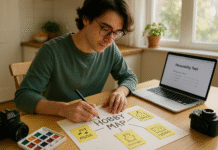




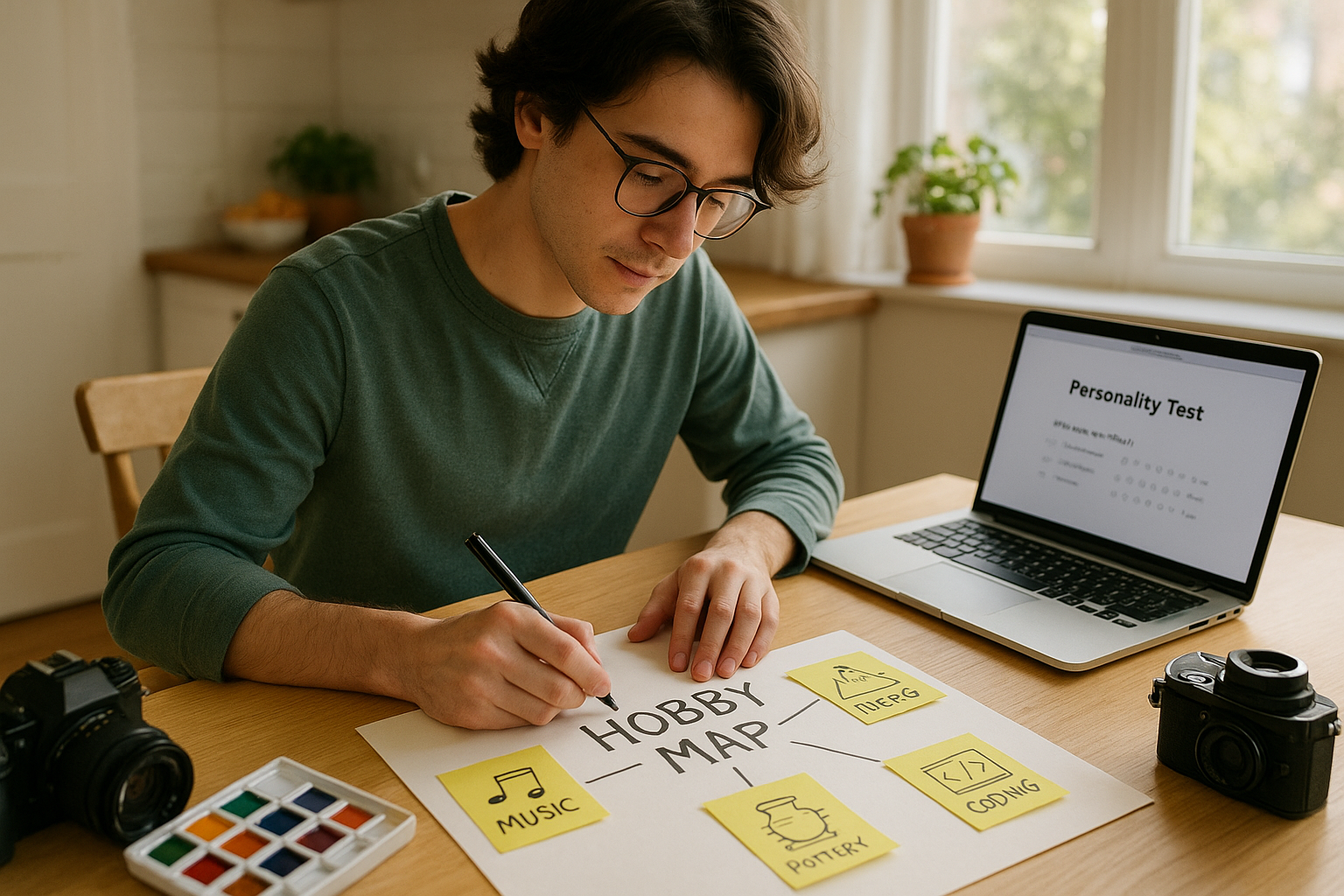
Finding a passion isn’t about waiting for lightning to strike; it’s a practical process of experimenting, observing your energy, and committing to what sticks. In this guide, you’ll learn how to choose hobbies that fit your personality, schedule, and budget—with concrete tools, tests, and 30-day trials. Whether you’ve never had a hobby or you’re juggling too many, the steps below help you go from vague curiosity to a short list of activities you genuinely look forward to. In short: finding a passion = identifying activities that align with your values, strengths, and preferred challenge level, then validating them through small, low-risk experiments. If you want a fast start, skim the step list below, then dive into the sections that match where you’re stuck.
Quick steps: 1) clarify values and energy, 2) profile your personality and strengths, 3) define constraints (time, budget, access), 4) build a “hobby funnel,” 5) run 30-day micro-experiments, 6) calibrate for flow (challenge vs. skill), 7) practice with people, 8) design friction-free habits, 9) buy slow—rent first, 10) expect the beginner dip, 11) review, double down, or quit kindly.
Friendly note: This article offers educational guidance for personal development. If you’re dealing with clinical anxiety, depression, or other health concerns, consult a qualified professional.
1. Start With Values and Energy (What Actually Matters to You)
The fastest way to avoid hobby FOMO is to anchor your search in what you value and when you naturally have energy. If you care about creativity, service, or movement, your best hobby will echo those values; if you peak at 7 a.m., morning-friendly pursuits will beat late-night classes. Begin by writing the top five values you want more of this year (e.g., learning, community, calm, challenge, impact). Then note your weekly energy map: when you feel mentally sharp vs. physically restless or socially open. This gives you two guardrails—meaning and moment—so you don’t pick a hobby that looks good on paper but drains you in real life.
1.1 Why it matters
- Values filter out trendy activities that won’t sustain motivation.
- Energy mapping prevents scheduling hobbies at biologically bad times.
- When value fit and timing fit align, habit consistency jumps dramatically.
1.2 How to do it
- Values flash test: Circle 5 words from a list (creativity, curiosity, mastery, adventure, calm, health, generosity, beauty, independence, community). Rank them 1–5.
- Energy audit (one week): Mark each hour: High focus (H), Social (S), Physical (P), Low (L). Look for patterns.
- Alignment check: For any candidate hobby, ask: Does it express my top value? Can I put it in a high-energy slot?
Mini checklist
- Five ranked values
- Weekly energy map completed
- At least three hobbies that match both
Synthesis: When you pick hobbies that align with both what you care about and when you’re at your best, momentum becomes natural instead of forced.
2. Profile Your Personality and Strengths (So Hobbies Fit You, Not the Other Way Around)
Selecting hobbies that “click” is easier when you know your trait profile and strengths. Broad models like the Big Five (openness, conscientiousness, extraversion, agreeableness, neuroticism), RIASEC interests (Realistic, Investigative, Artistic, Social, Enterprising, Conventional), and VIA strengths give language to your preferences. High openness? Try improv, ceramics, birding, or creative coding. High conscientiousness? Woodworking plans, chess study, bonsai cultivation. Social types thrive in leagues and clubs; investigative types may prefer solo learning loops like electronics, data projects, or genealogy. Strengths (e.g., “curiosity,” “love of learning,” “persistence”) point to hobbies with long feedback arcs you’ll actually enjoy.
2.1 Tools/Examples
- Big Five short forms help gauge trait tendencies you can translate into hobby environments.
- O*NET Interest Profiler (RIASEC) maps interests to activity families (e.g., “Investigative → astronomy club”).
- VIA Character Strengths highlights energizing behaviors to build into hobby practice.
2.2 Numbers & guardrails
- Aim for 2–3 assessments max to avoid analysis paralysis.
- Translate each result into 2 concrete hobby ideas, yielding a shortlist of 6–9 candidates.
Pitfalls to avoid
- Chasing types as destiny (“I’m introverted, so no team sports”). Start small but try at least one counter-type experiment.
- Over-weighting any single test. Use them as starting hypotheses, not final verdicts.
Synthesis: A light personality/strengths pass makes your experiments smarter and kinder, because you’re testing good-fit ideas first.
3. Set Constraints Early—Time, Budget, and Access
Most people skip constraints and later “fail” due to logistics, not interest. Decide upfront how much time you can give weekly (e.g., 2×60-minute sessions), your budget (e.g., $30/month), and your access realities (transportation, nearby facilities, weather). Constraints aren’t limitations; they’re design inputs that help you pick options you can repeat.
3.1 How to do it
- Time box: Choose a repeatable slot (Tue/Thu 7–8 a.m.). Protect it like a meeting.
- Budget guardrails: Start with $0–$50 for trials. Rent/borrow gear; use libraries, parks, and community classes.
- Access map: List 5 places you can reach in ≤30 minutes (community center, pool, makerspace, park loop, studio).
3.2 Mini case
A beginner wants photography but fears cost. Constraint plan: Weekend sunrise walks (time), borrow a friend’s spare camera for 4 weeks (budget), shoot within a 2-km park loop (access). Result: 12 dawn shoots, basic composition learned, confidence up—total spend $0.
Checklist
- Two fixed weekly windows
- Trial budget set
- 3 nearby venues listed
Synthesis: Constraints make your plan sustainable and signal to your future self that this hobby fits your life, not just your wish list.
4. Build a “Hobby Funnel” (From Many Ideas to a Testable Shortlist)
Treat your search like a product funnel: Top of funnel (20–30 sparks), middle (10 short reads/videos and a one-hour taste), bottom (3–5 ideas that get a 30-day trial). The goal is not to be exhaustive; it’s to quickly separate “interesting” from “try now.”
4.1 Steps
- Collect sparks (45 minutes): Ask three people what hobby they’d start if time/money were no object. Browse a library shelf or a local class listing. Jot 20–30 ideas.
- One-hour taste tests: For each top candidate, spend one hour on a low-commitment sample: a beginner YouTube lesson, a free online module, or shadowing a friend.
- Score with a simple rubric (1–5): Anticipation (before), Absorption (during), Afterglow (after), Practicality (logistics).
4.2 Tools
- Meetup/Eventbrite for local tasters
- Class Central to find free online intros
- Library/Makerspace calendars for no-cost workshops
Mini example
After tasting ceramics, salsa, and trail running, your scores average: Ceramics 4.5, Salsa 3.2, Trail running 4.0. Ceramics and trail running advance to 30-day trials; salsa becomes a “maybe later.”
Synthesis: The hobby funnel turns vague curiosity into a short, testable list—reducing second-guessing and speeding up real-world action.
5. Run 30-Day Micro-Experiments (Test Before You Invest)
Committing to a passion is easier after 30 days of small practice than after buying gear. Design a month where you perform the hobby at least 10 sessions (20–40 minutes each) with a clear mini-goal (e.g., “throw three small bowls,” “jog 3 km without stopping,” “play two songs smoothly”). Track your feelings and progress after each session (“enjoyment 1–5,” “effort 1–5,” “notes”). By the end, you’ll have data to decide: double down, pivot, or quit with thanks.
5.1 How to structure it
- Define a mini-goal and two metrics (e.g., distance, pace; number of pieces completed; chord changes per minute).
- Plan 10 sessions in your calendar; treat them like appointments.
- Reflect in 2 minutes post-session (one line each: enjoyment, effort, surprise).
5.2 Guardrails & numbers
- Keep each session ≤45 minutes to avoid burnout.
- If you miss two in a row, do a “reset” micro-session (10 minutes, no pressure) to regain momentum.
Synthesis: A 30-day trial gives you a reliable feel for the hobby’s rhythm and rewards—evidence you can trust more than impulse or marketing.
6. Calibrate for Flow—Match Challenge to Skill
A passion often feels like flow: intense focus, loss of time, clear goals, immediate feedback. To get there, the hobby must sit in the Goldilocks zone—not too easy, not too hard. Adjust difficulty deliberately: easier drills when you feel overwhelmed; slightly harder drills when boredom creeps in. Use micro-goals so each session has a winnable target.
6.1 How to do it
- Skill–challenge check: Rate both 1–10 before each session. If challenge > skill by ≥3 points, reduce difficulty (simpler route, slower tempo, smaller kiln piece). If challenge < skill by ≥3, increase difficulty (add elevation, higher BPM, advanced pattern).
- Tight feedback loops: Record yourself, use trackers (Strava, Metronome apps, Anki for theory).
6.2 Common mistakes
- Jumping to advanced gear too soon (e.g., racing shoes before running consistently).
- Confusing novelty with progress; switch drills, not hobbies, when bored.
Mini case
A beginner guitarist rates skill 3, challenge 7—too steep. They drop to slower songs (challenge 5), practice 20 minutes daily, and hit a flow state by week two.
Synthesis: Flow calibration keeps you in the sweet spot where practice feels rewarding—fueling the consistency that turns hobbies into passions.
7. Practice With People—Clubs, Leagues, and Mentors
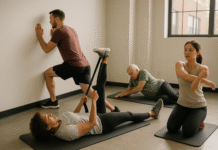
Even “solo” passions stick better with community. A local club, casual league, or mentor compresses learning time, adds accountability, and makes the hobby social without turning it into performance pressure. Choose groups with beginner-friendly norms, clear calendars, and a “bring a friend” culture.
7.1 How to find your people
- Search locally: community centers, recreation leagues, park runs, maker nights, book clubs.
- Look online → offline: subreddits, Discords, or Facebook groups that host real-world meetups.
- Ask for mentors: One coffee with a hobby veteran can save you months of trial and error.
7.2 What to look for
- On-ramp events (intro nights, beginner ladders, “no-drop” rides)
- Shared artifacts (set lists, drills, routes) so you can practice solo between meetups
- Kind rules (safety briefings, code of conduct, inclusive language)
Mini checklist
- Two groups bookmarked
- First event RSVP’d
- One mentor conversation scheduled
Synthesis: People make the practice fun and repeatable—and passions that include friendships tend to last.
8. Design Friction-Free Habits (So You Actually Show Up)
Motivation fluctuates; environment beats willpower. Reduce friction by staging your gear, bundling your hobby with an existing routine, and celebrating tiny wins. Think systems: a prep ritual, a standard session outline, and a “good enough” exit.
8.1 How to do it
- Habit stacking: “After I make morning coffee, I do 15 minutes of scales,” or “After school drop-off, I run the park loop.”
- Two-bin setup: Keep essentials pre-packed (e.g., running kit by the door; sketch kit in a sling bag).
- Session script: 2-minute warm-up, 12–20 minutes focused drill, 3 minutes cool-down review.
8.2 Tools
- Reminders/Calendars for protected time blocks
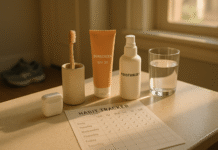
- Habit trackers (paper grid or apps) for visibility
- Public commitments (low-stakes: text a friend after each session)
Pitfalls
- Relying on motivation bursts instead of calendar routines
- All-or-nothing thinking (“missed Tuesday, week is ruined”)
Synthesis: Make the default easy and visible; when your setup does the nudging, a hobby becomes a lifestyle with far less struggle.
9. Spend Smart—Rent, Borrow, Buy Slowly
Gear doesn’t create passion; practice does. Keep costs low until you have at least 10–12 sessions under your belt and clear reasons to upgrade. Use the cost-per-joy filter: price divided by the number of high-enjoyment sessions you realistically expect in the first 90 days.
9.1 Steps
- Phase 1 (free/cheap): Borrow or rent. Use community resources (libraries with instruments/tools, makerspaces, gyms with day passes).
- Phase 2 (starter kit): Buy solid beginner gear with strong resale value.
- Phase 3 (upgrade): After consistent use, upgrade the single item that removes the biggest friction.
9.2 Mini example
Ceramics: Rent studio time for a month ($40), use shared tools, track joy. After 12 sessions and three finished pieces, buy your own basic toolkit ($25). Only consider a wheel or kiln after 3+ months consistent practice.
Checklist
- Trial period completed
- One-item upgrade identified
- Resale value checked
Synthesis: Spending slowly protects your wallet and keeps attention on the experience, not the accessories.
10. Expect the Beginner Dip—Adopt a Learning Mindset
Every worthwhile hobby includes a beginner dip where skills lag behind taste. Anticipate it. Define what “good for a beginner” means, track small gains, and normalize being bad at new things. A learning mindset (“skills are developed through practice”) turns frustration into curiosity.
10.1 How to ride the dip
- Set tiny benchmarks: First 1 km without walking; first simple riff; first photo you’d print.
- Use deliberate practice: Isolate sub-skills (rhythm, footwork, glazing) and drill them.
- Reflect weekly: Note one improvement, one obstacle, one tweak.
10.2 Common mental traps
- Comparing your week-two output to someone’s year-five showcase
- Mistaking slow progress for no progress
- Quitting right before competence starts to compound
Mini case
A new runner plateaus at 2 km. They add walk-run intervals, a cadence drill, and a Saturday group jog. Three weeks later, they run 3 km continuously—confidence unlocked.
Synthesis: Understanding the dip removes the sting. When you expect it, you can plan through it and keep moving until momentum kicks in.
11. Review, Double Down, or Quit Kindly (Build a Portfolio of Passions)
At month’s end, run a retro: review your enjoyment/effort notes, results, and logistics. If a hobby scores high on enjoyment and practicality, double down with a 90-day plan. If it’s low on either, quit kindly and move the energy to your next candidate. Over time, aim for a portfolio: one active passion, one seasonal hobby, and one low-maintenance activity for recovery days.
11.1 How to do it
- Scorecard (1–5 each): Anticipation, Absorption, Afterglow, Practicality, Progress. Average them.
- Decision rule: ≥4.0 → double down; 3.0–3.9 → tweak + try another 30 days; <3.0 → archive and move on.
- 90-day plan: A measurable goal (e.g., “perform at open mic,” “finish 10-km race,” “complete 6 watercolor studies”), weekly schedule, and one community anchor.
11.2 Quit kindly
- Write a short “thank you and pause” note to yourself. Return borrowed gear. Keep one photo or artifact.
- Capture lessons learned to reuse in your next experiment.
Synthesis: Decisions create momentum. A simple review turns scattershot trying into a focused, evolving practice that reveals what you genuinely love.
FAQs
1) What if I don’t have any free time?
Start with micro-hobbies—10–15 minutes, three times a week—stacked onto an existing routine (after coffee, post-commute). Choose activities with low setup/teardown (journaling, sketching, bodyweight circuits, language drills). When micro-sessions feel automatic, protect a single 60-minute weekend block for deeper work. You can build a meaningful hobby on <2 hours/week if the setup is tight and consistent.
2) How do I choose between two hobbies I like equally?
Run parallel 14-day trials with identical schedules and simple metrics (e.g., attendance, enjoyment, mini-milestones). After two weeks, compare your notes on anticipation and afterglow; the one you’re excited to return to usually wins. If it’s still tied, pick the one with better access (closer venue, lower cost) to maximize sustainability.
3) I’m introverted—are group hobbies necessary?
No, but light community helps most learners. Pick low-pressure formats like silent reading groups, “no-drop” rides, or online forums that occasionally meet offline. You’ll still benefit from shared resources and accountability without the social drain of constant group interaction. Try one event per month; keep the rest solo.
4) How much should I spend on beginner gear?
Keep early spend to $0–$50 if possible. Borrow, rent, or buy used until you’ve logged 10–12 sessions and can name one specific limitation gear would solve. Use the cost-per-joy filter: a $40 upgrade that improves 20 sessions costs $2/session, which is easier to justify than a $300 purchase used twice.
5) What if I quit—does that mean I failed?
Quitting a trial is a successful discovery. End each experiment with a retro, record what you liked, and archive it. Many people cycle through 3–5 trials before a passion sticks. The only “failure” is refusing to test hypotheses because you fear being a beginner.
6) Can a passion be seasonal?
Absolutely. Many people maintain a seasonal rotation: climbing or gardening in warm months, ceramics or music in cooler months. Seasonal hobbies reduce burnout, keep novelty high, and respect weather/access. Plan a handoff ritual so one hobby “puts away” neatly when the season changes, and another takes its slot.
7) How do I stay motivated after the initial excitement fades?
Use systems over feelings: a fixed schedule, tiny goals, and a progress log. Pair this with social commitment (message a friend when you’re done) and periodic flow calibration (tweak difficulty). Motivation returns when results and rituals groove together; don’t wait to “feel like it.”
8) What if I like too many things?
Build a portfolio with caps: one primary passion (2–3 sessions/week), one secondary or seasonal (1 session/week), and one micro-hobby (10 minutes/day). Everything else lives in a “parking lot” list you revisit quarterly. This prevents dilution while preserving curiosity.
9) Can I turn my hobby into a side hustle?
Maybe—but only after you’ve established intrinsic joy. Monetization adds deadlines, clients, and quality demands that can erode play. If you do try it, protect one “pure play” session weekly and validate demand with three paying customers before investing heavily.
10) How long does it take to know if something is a passion?
Expect at least 30 days of consistent practice to form a reliable opinion, and 90 days to see deeper skill and community roots. Some people feel the click sooner, but a quarter is a fair window to test routines, plateaus, and real-life fit.
Conclusion
Finding a passion isn’t mystical—it’s methodical. You begin with values and energy, profile your personality and strengths, add practical constraints, and turn curiosity into a shortlist via a hobby funnel. Then you run small, honest experiments: 30-day trials with clear mini-goals, flow calibration, and a simple tracking sheet. Community turns practice into something social; smart spending keeps attention on doing, not buying. Expect the beginner dip, and normalize quitting kindly when a fit isn’t there. With monthly reviews and a portfolio approach, you’ll gradually assemble a life rich in activities you anticipate, enjoy, and grow through. The next step is simple: pick one idea from your shortlist, schedule your first two sessions, and start your 30-day test this week. Ready to begin? Block your first session now and text a friend to join you.
References
- Overview of Self-Determination Theory, Center for Self-Determination Theory (CSDT). 2023. https://selfdeterminationtheory.org/the-theory/
- Csikszentmihalyi, M. Flow: The Psychology of Optimal Experience, Harper Perennial. 1990. https://harpercollins.com/products/flow-mihaly-csikszentmihalyi
- ONET Interest Profiler (RIASEC)*, U.S. Department of Labor. 2024. https://www.mynextmove.org/explore/ip
- VIA Character Strengths Survey, VIA Institute on Character. 2024. https://www.viacharacter.org/character-strengths
- John, O. P., Naumann, L. P., & Soto, C. J. Paradigm Shift to the Big Five Trait Taxonomy, in Handbook of Personality, 3rd ed., Guilford Press. 2008. https://www.ocf.berkeley.edu/~johnlab/bfi.htm
- Ericsson, K. A., Krampe, R. T., & Tesch-Römer, C. The Role of Deliberate Practice in the Acquisition of Expert Performance, Psychological Review. 1993. https://doi.org/10.1037/0033-295X.100.3.363
- Kaufman, J. The First 20 Hours: How to Learn Anything… Fast, Portfolio. 2013. https://first20hours.com/
- Dweck, C. Mindset: The New Psychology of Success, Random House. 2006. https://carolDweckmindset.com/
- Fogg, B. J. Fogg Behavior Model, Stanford Behavior Design Lab. 2020. https://behaviormodel.org/
- Public Libraries as Community Hubs for Learning, American Library Association. 2022. https://www.ala.org/advocacy/advleg/advocacy-university/community-hub