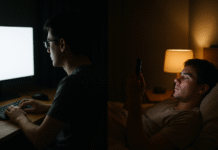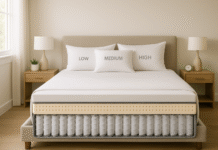




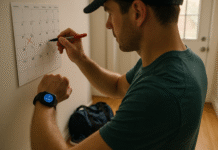




















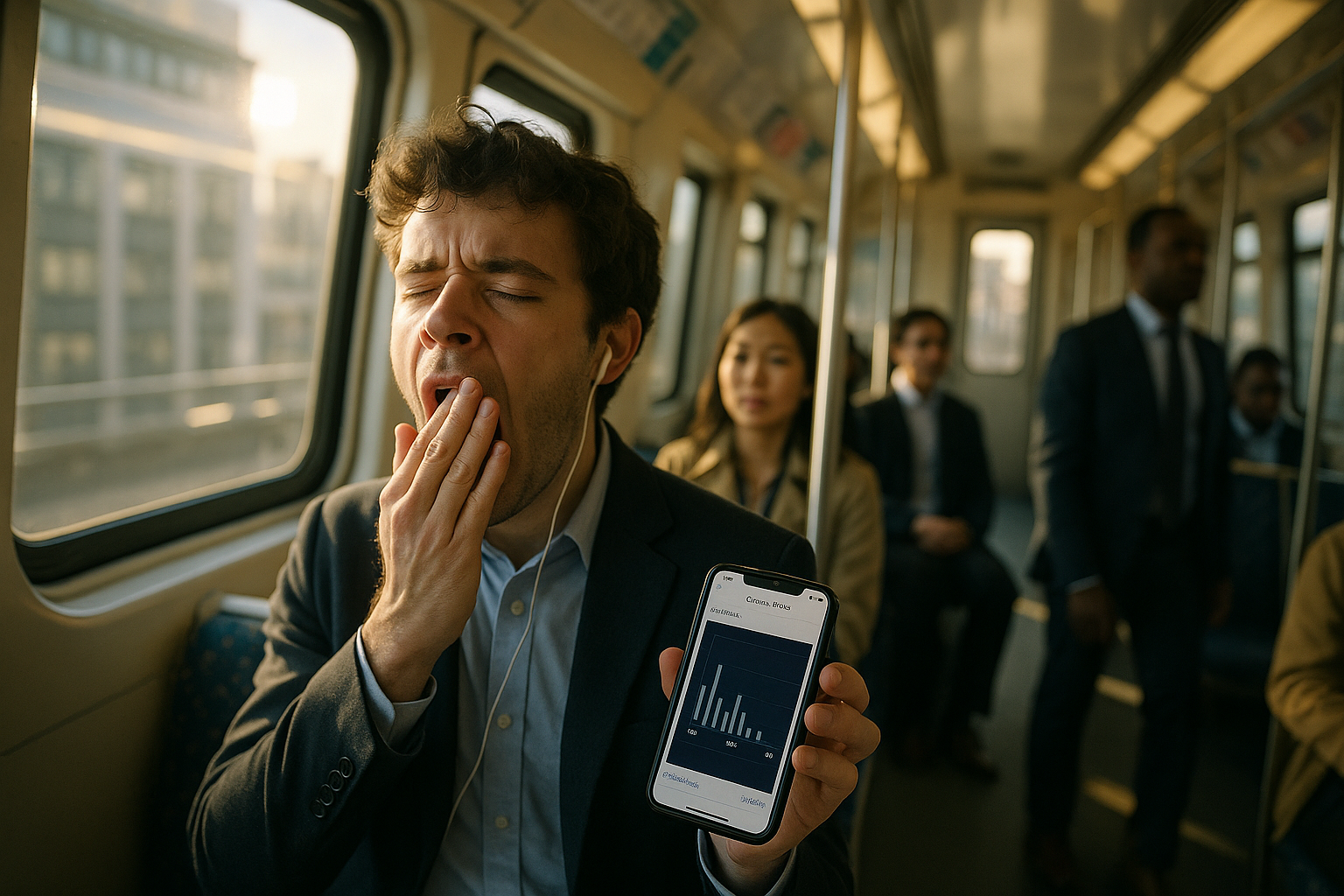
When your lifestyle runs on one clock and your biology runs on another, fatigue, fogginess, and cranky mornings become the norm. This chronic mismatch is called social jet lag—the weekly shift between when your body wants to sleep and when work, school, or social plans force you to. In plain terms, it’s the gap between your mid-sleep on workdays and your mid-sleep on free days. A small gap (≤1 hour) is common; bigger gaps (≥2 hours) correlate with worse mood, focus, and metabolic markers. This guide explains exactly how to measure it and offers 10 proven fixes to realign your schedule without wrecking your life. (Informational only, not medical advice.)
Definition for quick reference: Social jet lag is the weekly misalignment between your internal circadian clock and external obligations, typically calculated as the absolute difference between midsleep on free days and midsleep on workdays.
1. Measure Your Baseline (Chronotype + Social Jet Lag)
Start by quantifying the problem; you can’t fix what you don’t measure. Your chronotype is where your internal day naturally sits—earlier, intermediate, or later—and it predicts how likely you are to struggle with social jet lag. Use the Munich ChronoType Questionnaire (MCTQ) to estimate your midsleep (the midpoint between sleep onset and wake time) on workdays and free days. Social jet lag (SJL) is the absolute difference between those two midsleep times (often using a corrected free-day midsleep to remove catch-up oversleep). Record one to two typical weeks, then average the values. If your SJL is ≥1 hour, it’s worth addressing; ≥2 hours usually signals a meaningful mismatch. Recheck monthly to see if your changes are working.
1.1 How to do it
- Log sleep for 7–14 days: bedtimes, wake times, alarm use, naps, caffeine, alcohol.
- Compute midsleep: midpoint between sleep onset and wake time for workdays and free days.
- Calculate SJL: |midsleep (free, corrected) − midsleep (work)| in hours.
- Note chronotype: later chronotypes (night owls) often show larger SJL.
- Track symptoms: morning sleepiness, mood dips, performance lapses.
1.2 Mini example
If you sleep 12:30–07:00 on weekdays (midsleep 03:45) and 02:00–10:00 on weekends (midsleep 06:00), your SJL ≈ 2.25 h—enough to feel “Monday jet lag.”
Synthesis: Measuring SJL and chronotype creates a personalized baseline, guiding which fixes (light timing, sleep anchoring, meal shifts) will matter most. Cancer Control
2. Lock an Anchor Sleep Window (7 Days a Week)
The fastest lever is regularity. Choose a consistent wake time that you can honor all week, including weekends, and back-calculate a target bedtime that secures adequate sleep. For most adults, plan 7–9 hours nightly; teens need 8–10. Consistency trims the weekday–weekend gap, shrinking SJL and stabilizing daytime energy. If you love weekend sleep-ins, keep them to no more than 60–90 minutes; beyond that, Monday will feel like a time-zone jump. This “anchor” approach is realistic: life still happens, but your body learns when to expect sleep and wake, smoothing the transition between social and biological time.
2.1 Numbers & guardrails
- Adults: aim for ≥7 hours (as of 2015 consensus).
- Teens: 8–10 hours; school start time policies matter.
- Weekend drift: cap at 60–90 minutes to avoid Monday jet lag.
- Recheck SJL monthly; aim for ≤1 hour.
- Use alarms for bedtime and wake time when building the habit.
2.2 Mini-checklist
- Pick a wake time you can keep 7 days.
- Plan bedtime to protect your target sleep length.
- Set a bedtime alarm 60 minutes before lights out.
- Keep weekend sleep-ins modest.
Synthesis: An anchored wake time is the keystone habit; it compresses SJL without requiring perfection.
3. Use Morning Light and Movement to Nudge Your Clock Earlier
Light is your strongest circadian signal. Bright outdoor light within an hour of waking sends a “daytime now” message, advancing a late body clock and reducing evening alertness that delays bedtime. Pair 10–30 minutes of outdoor light with gentle movement (walk, stretch, commute on foot) to amplify the effect. Conversely, dim light at night—especially during the last 2 hours before bed—helps melatonin rise. If you can’t get morning sun (bad weather, winter), use indoor bright light near your workstation and keep nights cozy and dim. Over days to weeks, this light choreography narrows the gap between social and biological time.
3.1 How to do it
- Morning: 10–30 minutes outside within 60 minutes of waking; repeat later if needed.
- Workday hack: sit near a window; raise blinds early; step out during calls.
- Evening: dim overheads 2 hours before bed; use warm lamps; reduce screen glare.
- Lights-off rituals: hot shower, reading, breathwork, or journaling to cue wind-down.
3.2 Common mistakes
- Relying on a dim office instead of outdoor light.
- Doing intense late-evening workouts under stadium-bright LEDs.
- Dimming all day and blasting light at night—exactly backward.
Synthesis: Strategic light and movement advance a late clock, naturally shrinking SJL without willpower fatigue. (General circadian principles; see references for consensus overviews.)
4. Time Caffeine and Alcohol So They Don’t Push Bedtime Later
Caffeine’s half-life (about 5–6 hours on average) means a 4 p.m. latte can still be stimulating at 10 p.m., delaying sleep onset and widening SJL. Alcohol is tricky: although it may hasten sleep onset, it fragments sleep, suppresses REM, and can shift timing, leaving you groggier and more likely to sleep in on free days. Adopt guardrails: keep caffeine to the first 8 hours after waking (earlier for sensitive folks) and leave at least 3–4 hours between your last drink and bedtime. If nightlife is non-negotiable, plan a Sunday reset (see item 6) to prevent the late night from cascading into Monday misery.
4.1 Mini checklist
- Front-load caffeine; switch to decaf/herbal after mid-afternoon.
- Avoid energy drinks in the evening (even “sugar-free” ones).
- Cap alcohol intake and finish it ≥3–4 hours before bed.
- Hydrate and pair alcohol with food to blunt sleep fragmentation.
4.2 Example
If you wake at 07:00, target your last coffee by ~15:00. If social plans include a 21:00 dinner with wine, pace intake and switch to water by 22:00, lights down by 23:30, and use your Sunday reset.
Synthesis: Timing stimulants and sedatives wisely stabilizes bedtime, lowering SJL creep across the week.
5. Shift Your Meals Earlier and Steadier (Chrononutrition)
Your body has clocks in metabolic tissues that sync with eating time. Erratic, late-night meals confuse those clocks, making it harder to sleep on time and easier to oversleep on weekends. Favor an earlier, consistent eating window, align your largest meal earlier in the day, and avoid heavy late-night snacking. Research on “eating jet lag” shows that irregular meal timing, like irregular sleep timing, links to worse cardiometabolic markers. A practical target is to finish dinner 2–3 hours before bed and keep your meal schedule stable across weekdays and weekends. If you use time-restricted eating, bias the window earlier rather than later.
5.1 Tools/Examples
- Set recurring calendar nudges for meals (e.g., lunch by 13:00, dinner by 19:00).
- Batch-cook or pre-order earlier to avoid 22:00 takeout.
- For gatherings, eat a proper earlier meal so late “second dinners” are small.
5.2 Numbers & guardrails
- Keep weekday vs weekend meal times within ±60–90 minutes.
- Avoid large meals ≤2 hours before bedtime to protect sleep quality.
- If fasting, prefer early TRE (e.g., 08:00–18:00) over late windows.
Synthesis: Regular, earlier meals reinforce an earlier sleep window, helping your social and biological clocks shake hands.
6. Build a Weekend Strategy That Doesn’t Break Monday
Weekends often inflate SJL: staying up later, sleeping in, eating and drinking later. Instead of enforcing monk-like discipline, design a two-part weekend that preserves fun without tossing your clock. Saturday: allow a modest delay (≤60–90 minutes) on sleep and meals. Sunday: pivot to phase-advance mode—earlier dinner, evening wind-down, and extra morning light + movement. If you had a very late Saturday, set a Sunday cap on sleep-in (noon is not your friend), take a brief early-afternoon nap if needed, and dim lights earlier. This prevents the dreaded “Monday time-zone hop.”
6.1 Mini-checklist
- Saturday drift: ≤90 minutes for sleep and meals.
- Sunday reset: morning light, light workout, earlier dinner, dim lights.
- Nap rules: 10–20 minutes before 15:00 if you’re dragging.
- Prep Monday: lay out clothes, plan breakfast, set a bedtime alarm.
6.2 Case example
You party late Saturday and sleep 03:00–10:30. On Sunday, cap sleep-in at 09:00, get bright light at 09:30, eat a solid lunch at 13:00, dinner at 19:00, screens dim at 21:00, in bed by 22:30—Monday feels like Monday, not a red-eye.
Synthesis: A predictable Sunday reset trims SJL drift, making Monday wake-ups humane.
7. Align Work/School Where Possible (Use the Evidence)
Not everyone can change start times—but when you can, ask. For teens, later school starts (≥08:30) align with biology and improve outcomes; for adults, even a 30–60 minute flex can meaningfully reduce SJL. When negotiating, present a brief note linking later adolescent start times to safety and performance and emphasizing your chronotype’s misfit with an ultra-early start. For shift workers, lobby for forward-rotating schedules (morning → evening → night) and adequate rest between shifts. Where policy change is possible, cite mainstream positions from sleep medicine organizations to support the request. CDC
7.1 Practical script
- “My productivity and meetings would benefit from a 09:30–18:00 schedule; I’ll match team needs and keep coverage with earlier starts on key days.”
7.2 Region notes
- If public transit or heat dictates schedules, consider earlier work-from-home starts with earlier stop times, or vice versa; keep one stable anchor.
Synthesis: A small degree of social-clock flexibility can translate into a large biological win—especially for late chronotypes and adolescents.
8. Master Evening Wind-Down and Light Hygiene
Evenings set the stage for sleep timing. To avoid drifting later, create a 90-minute wind-down that’s the same most nights. Dim lights, reduce overhead glare, switch screens to warm tone, and front-load stimulating tasks earlier. Replace doomscrolling with low-stimulation rituals—stretching, reading, or a hot shower. Keep the bedroom cool (about 18–20°C / 65–68°F), dark, and quiet. If streetlight glare or roommates complicate this, use eye masks, blackout curtains, or white noise. The goal is predictable cues that teach your body when to power down, protecting bedtime and shrinking SJL.
8.1 Mini-checklist
- “Lights low” 90 minutes before bed; lamps > overheads.
- Phone to Do Not Disturb; warm-tone filter on.
- Prep clothes/coffee to reduce late-night tasks.
- Bedroom: cool, dark, quiet; reserve for sleep and intimacy.
8.2 Common pitfalls
- Intense debates or work emails at 23:00.
- Bright kitchen lighting during late-night snacks.
- “Just one more episode” autoplay traps.
Synthesis: A repeatable evening routine sets biological expectations, keeping your sleep window from drifting later across the week.
9. Use Naps and Melatonin Carefully (If Needed)
Naps are powerful when used strategically. Short 10–20 minute “boost naps” before mid-afternoon can restore alertness without sabotaging bedtime; longer ~90 minute cycles can help after rare short nights but risk pushing sleep later. As for melatonin, treat it like a clock signal, not a sedative. For schedule shifts, very low doses (often 0.3–1 mg, timing depends on your goal) may help advance or delay your clock, but timing mistakes can backfire. Because dosing and interactions vary, talk with a clinician—especially if you’re on other medications or have mood/sleep disorders. Always start with light timing and regularity before pills.
9.1 How to use (general guidance)
- Naps: 10–20 minutes, finish before 15:00–16:00.
- Rare recovery: one 90-minute nap early afternoon if you’re wrecked.
- Melatonin advance: small dose several hours before current bedtime; clinician guidance recommended.
9.2 Guardrails
- Avoid daily long naps; they erode sleep drive.
- Skip melatonin if you can’t time it precisely; focus on light, meals, and regularity first.
- If you suspect insomnia, apnea, depression, or ADHD, get evaluated—these change the plan.
Synthesis: Smart naps and clinician-guided melatonin can fine-tune timing, but routine and light are the heavy lifters.
10. Troubleshoot Underlying Issues and Track Progress
If your SJL stays ≥2 hours after four to six weeks of effort—or if you have loud snoring, unrefreshing sleep, persistent low mood, or daytime sleep attacks—consider a professional assessment. Conditions like sleep apnea, delayed sleep–wake phase disorder, insomnia, or depression/anxiety can magnify misalignment. Bring your sleep logs and SJL calculations; ask about CBT-I, light therapy, or schedule adjustments. Keep tracking with a simple spreadsheet or a wearable; watch for improvements in SJL, sleep regularity, and daytime alertness. Expect gradual progress—15–30 minutes of shift per week is a realistic win. Meta-analyses suggest that high SJL relates to higher BMI and cardiometabolic risk, so reducing it is a meaningful health investment. Lippincott Journals
10.1 Mini-checklist
- Four-week checkpoint: is SJL trending ≤1 hour?
- Screen for apnea, insomnia, mood concerns if fatigue persists.
- Consider CBT-I or a sleep-medicine referral.
- Keep doing the basics: anchor wake time, morning light, earlier meals.
Synthesis: Persistent SJL warrants a deeper look; treating root causes makes every other strategy work better.
FAQs
1) What’s a “good” social jet lag number?
Aim for ≤1 hour most weeks. Many people hover around 30–60 minutes; it’s when gaps regularly exceed 2 hours that mood, focus, and metabolic markers tend to look worse. Reducing SJL is about trend, not perfection—tightening to ≤1 hour most weeks is a practical target.
2) How do I calculate social jet lag accurately?
Log at least a week of real bed/wake times, compute midsleep for workdays and free days, and take the absolute difference. If you sleep much longer on free days, use the corrected free-day midsleep formula from MCTQ to account for catch-up sleep. Recalculate after schedule changes to see improvements.
3) Is social jet lag the same as travel jet lag?
No. Travel jet lag is a temporary time-zone mismatch that resolves as you adapt. Social jet lag is chronic: a weekly shift imposed by schedules that don’t match your clock (e.g., early school/work times). The symptoms can feel similar on Mondays, but the cause is different.
4) Do later school start times really help?
Yes. Medical organizations recommend 08:30 or later for middle/high schools to align with adolescent biology, improving sleep duration, alertness, safety, and academic outcomes. Where districts have delayed starts, teens gain sleep and show better daytime functioning. Logistics can be challenging, but the health case is strong. PMC
5) Can I “catch up” on sleep on weekends without making Monday worse?
Yes—a little. Keep weekend drift to ≤60–90 minutes and use a Sunday reset (morning light, earlier dinner, low-light evening). Overshooting into multi-hour sleep-ins will likely make Monday feel like flying east three time zones. (General guidance; individualize to your context.)
6) Will exercise timing help?
Morning and afternoon activity generally supports an earlier bedtime, especially light outdoor movement soon after waking. Very late-night high-intensity sessions under bright light can push your clock later. If nights are your only option, finish early enough to cool down and dim lights afterward.
7) Is melatonin safe to use for social jet lag?
It can help when precisely timed at low doses, but timing mistakes can worsen misalignment. Because it interacts with other conditions and medications, discuss with a clinician—especially if you have mood or sleep disorders. Start with light and regularity before supplements.
8) Do wearables help or hurt?
They help if you use them as trend tools—not to obsess over nightly scores. Track sleep timing, regularity, and SJL, then judge strategies by weekly averages. Turn off unnecessary alerts that ramp up bedtime anxiety.
9) What if I work rotating shifts?
Advocate for forward rotation and cluster similar shifts together. Protect a core sleep anchor even if it shifts week-to-week, use strategic light/dark (bright on duty, dark goggles on commute), and keep meals aligned with your active phase. A clinician can tailor light/melatonin timing to your exact roster.
10) Does social jet lag affect weight or metabolic health?
Observational research and meta-analyses link higher SJL with higher BMI and components of metabolic syndrome. While causality is still being studied, lowering SJL is a reasonable target alongside nutrition and activity changes, especially if you’re managing weight or blood sugars.
11) How long will it take to fix?
Expect gradual shifts: 15–30 minutes earlier per week is a realistic pace. Most people feel daytime improvements within 2–4 weeks of consistent light, regular sleep, and earlier meals. Keep going for 8–12 weeks to lock in new rhythms.
12) What if my family’s schedule is the problem?
Negotiate where you can: staggered morning duties, alternate late-night caregiving, or shared weekend routines that keep Sunday predictable. Small changes that protect your anchor wake time pay large dividends for everyone’s mood and mornings.
Conclusion
You can’t change your biology—but you can change the signals you send it. Social jet lag is a tug-of-war between your body clock and your calendar, and the solution isn’t perfection; it’s pattern. Measure your baseline, anchor a realistic wake time, seek morning light, shift meals earlier, and design a Sunday reset that saves Monday. Use naps and melatonin carefully, and advocate for flexible starts when possible—especially for teens and late chronotypes. If progress stalls or symptoms persist, get evaluated; treating apnea, insomnia, or mood issues often cuts SJL dramatically. Over the next month, aim to trim your weekly gap toward ≤1 hour. You’ll feel it first in your mornings—clearer head, steadier mood, better focus—and see it next in your evenings as bedtime starts to feel “natural” again.
Your one-line next step: Pick a 7-day wake time you can keep this week, and get 10–30 minutes of outdoor light within an hour of waking every day.
References
- Social Jetlag and Obesity — Current Biology (Cell Press), 2012. https://www.cell.com/current-biology/fulltext/S0960-9822%2812%2900325-9
- Chronotype and Social Jetlag: A (Self-) Critical Review — Clocks & Sleep (PMC), 2019. https://pmc.ncbi.nlm.nih.gov/articles/PMC6784249/
- How can social jetlag affect health? — Journal of Internal Medicine (PMC), 2023. https://pmc.ncbi.nlm.nih.gov/articles/PMC10204006/
- Recommended Amount of Sleep for a Healthy Adult: Consensus Statement — American Academy of Sleep Medicine (PMC), 2015. https://pmc.ncbi.nlm.nih.gov/articles/PMC4434546/
- National Sleep Foundation’s Sleep Time Duration Recommendations — Sleep Health (Elsevier), 2015. https://www.sleephealthjournal.org/article/s2352-7218%2815%2900015-7/fulltext
- Delaying Middle School and High School Start Times Promotes Student Health and Performance (Position Statement) — American Academy of Sleep Medicine, 2017. https://jcsm.aasm.org/doi/10.5664/jcsm.6558
- School Start Times — American Academy of Sleep Medicine (resource hub), 2024. https://aasm.org/advocacy/initiatives/school-start-times/
- School Start Times for Adolescents (MMWR analysis) — CDC, 2015. https://www.cdc.gov/mmwr/preview/mmwrhtml/mm6430a1.htm
- Social Jetlag and Related Risks for Human Health — Nutrients (PMC), 2021. https://pmc.ncbi.nlm.nih.gov/articles/PMC8707256/
- Social jetlag and obesity: A systematic review and meta-analysis — Obesity Reviews (Wiley), 2024. https://onlinelibrary.wiley.com/doi/10.1111/obr.13664
- The association between social jetlag and parameters of metabolic syndrome and type 2 diabetes — Journal of Sleep Research (Wiley), 2023. https://onlinelibrary.wiley.com/doi/10.1111/jsr.13770
- Variability in Daily Eating Patterns and Eating Jetlag Are Associated With Cardiometabolic Risk — Journal of the American Heart Association, 2021. https://www.ahajournals.org/doi/10.1161/JAHA.121.022024