
























Your rest day isn’t a luxury—it’s the maintenance window that keeps your mind, body, and relationships running well. In this guide you’ll find nine practical, human ways to practice self-care on rest days, centered on three pillars: journaling, hobbies, and family connection. You’ll get concrete steps, realistic time ranges, and simple tools you can use today. In one line: self-care on rest days means choosing low-pressure practices—like a short journal session, an unrushed hobby block, and device-free family time—that measurably reduce stress and strengthen relationships. For quick wins, try a 15-minute journal, a 45-minute hobby sprint, and a phone-free meal with someone you love. (This article is educational and not a substitute for professional medical advice.)
1. Journal With Structure (15–20 Minutes Unlocks Clarity)
Start with a short, structured journal session to process emotions and set your day’s intent. The simplest protocol is expressive writing: 15–20 minutes, 3–4 days across two weeks, about what’s stressful or important right now. Many people notice fewer ruminations and clearer thinking after a single session, and the benefits often compound across a few weeks. You can also rotate formats—gratitude notes, positive-affect journaling, or a “logbook” of tiny wins—to keep it fresh. If you’re new, write privately and without editing; if you’re seasoned, consider prompts that tie directly to your rest day (e.g., “What would make today restorative?”). Research spanning hundreds of studies links expressive and positive-affect journaling with small-to-moderate improvements in mood, stress, and overall functioning.
1.1 Why it matters
Expressive writing has been associated with outcomes like fewer stress-related doctor visits and improved markers such as blood pressure and immune function in some populations, while positive-affect journaling can improve well-being in people managing medical conditions. Effects are not universal or huge, but they’re meaningful, low-cost, and compoundable.
1.2 How to do it (mini-checklist)
- Block 15–20 minutes, pen and paper, door closed.
- Pick one prompt: “What’s weighing on me?” or “Three good things this week.”
- Write continuously; don’t edit for grammar or style.
- End with one actionable next step for the rest of the day.
- Repeat 3–4 times over two weeks; review notes once.
Wrap your session by circling a sentence that feels true. That line often becomes your compass for the rest of the day.
2. Deep-Dive a Hobby for Flow (45–90 Minutes of Intentional Play)
A hobby block adds “good stress” (challenge) without pressure (stakes), which is ideal for recovery. Pick something tactile or creative—cooking, painting, knitting, woodworking, music practice, gardening—or a curiosity sprint (e.g., restoring a bike). Aim for 45–90 minutes with a tiny goal you can finish today (finish one sketch, master 8 bars, plant 3 herbs). Large cohort studies and syntheses suggest hobby engagement correlates with lower depressive symptoms and higher life satisfaction, especially in later life, and that arts participation can support mental and even physical health. While causality varies by context, the consistent signal is that regular, self-chosen leisure supports well-being. PMCNCBI
2.1 Tools & examples
- Cooking: Choose a one-pot recipe; double it for leftovers.
- Music: 15-minute slow practice + 10 minutes play-through.
- Craft: “One square” rule—finish one block, not the blanket.
- Garden: 30 minutes weeding + one new planting.
- Woodwork: One joinery practice board; no production goals.
2.2 Guardrails
- Keep goals process-focused (learn a technique) vs outcome-focused (finish a perfect piece).
- Cap complexity; if it needs more than 3 steps today, split it.
- End with a visible artifact (a loaf, a sketch, a riff) to boost next-day motivation.
Finish by noting one thing you learned; this builds a satisfying feedback loop that makes hobby time easier to repeat. GOV.UK
3. Move Gently—Preferably With Someone (30–60 Minutes)
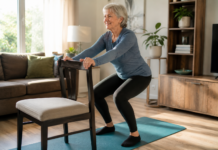
Gentle movement accelerates recovery and doubles as social time. On a rest day, swap high intensity for low-impact walking, mobility, or light cycling—ideally 30–60 minutes at a conversational pace. Walking with a friend or family member adds accountability and connection; socializing during activity is linked to lower loneliness and stress and may support cardiometabolic health. Sports medicine guidance also endorses 1–2 rest days per week during high training loads, and “active recovery” sessions can keep you feeling good without overreaching.
3.1 How to do it
- Choose a flat route; keep pace at 2–3 on a 10-effort scale (easy).
- Add 5–10 minutes mobility (hips/ankles/shoulders) afterward.
- Invite someone: set one question each to discuss on the walk.
- Hydrate; if it’s hot, go early or late and seek shade.
3.2 Numbers & guardrails
- Target 3–4K steps above your weekday baseline on rest days.
- If sore, do 10 minutes of range-of-motion work instead.
- Pull back if heart rate stays elevated the next morning.
End with a two-minute check-in: “Body feels ____; mood is ____.” The self-scan reinforces your recovery intuition over time.
4. Share a Device-Free Meal or Tea Ritual (Connection Over Perfection)
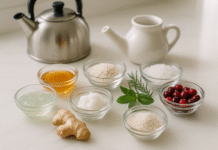
A slow meal with people you care about turns food into a relationship practice. Evidence suggests that regular shared meals are associated with better nutrition and mental health, not only for kids but adults too, largely via improved family functioning and supportive conversation. Make it realistic: a simple dal, omelet paratha, or one-pot pasta; or host a 30-minute chai/tea ritual in the afternoon. Crucially, choose no-phone rules for the table—emerging research on “technoference” links visible devices with lower conversation quality and relationship satisfaction. The goal isn’t gourmet; it’s presence.
4.1 Starter script & roles
- Host: sets time, cues “phones away,” opens with a light prompt.
- Cook: picks a 5-ingredient recipe; others chop/clear.
- Connector: brings 3 questions (see below).
4.2 Conversation prompts
- “High/Low/Help” (one highlight, one challenge, one ask).
- “Rose/Thorn/Bud” (win, friction, what you’re excited about).
- “What did you learn this week that surprised you?”
When devices are out of sight, people report higher empathy and more fulfilling conversations; a meal is the easiest place to try that norm. Virginia Tech News
5. Get a Dose of Nature (Aim for 120 Minutes per Week)
Nature time is a proven stress down-regulator. A widely cited study suggests ~120 minutes per week in green spaces is associated with better health and well-being, with many benefits visible from even short 10–50 minute exposures. On a rest day, stack the dose with a park walk, balcony plant care, or a picnic. If you live in a hot climate, go early, seek shade, and combine this with your gentle movement or family hangout. Build a habit by scheduling two 30-minute nature blocks and a longer weekend green outing. EatingWell
5.1 Mini-itinerary (urban-friendly)
- 20 minutes: sit under a tree and people-watch; breathe 4-6 cadence.
- 30 minutes: slow loop in your nearest park; notice five colors.
- 60 minutes: simple picnic + conversation deck (from Section 4).
5.2 Guardrails
- Sunscreen, hat, water; avoid midday extremes.
- If air quality is poor, choose indoor plants/window views + gentle stretching.
Treat nature time as a standing appointment; over weeks, the rhythmic exposure matters more than the one-off “epic” hike. NCBI
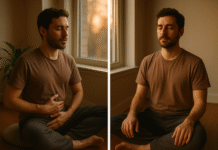
6. Practice Mindfulness or Breathwork (10–20 Minutes, Low Friction)
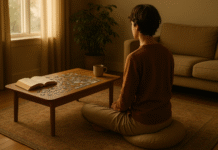
Mindfulness—paying attention on purpose, without judgment—can reduce stress and improve mood for many people, though it’s not a silver bullet. 10–20 minutes of breath-anchored practice or a guided body scan is enough on a rest day. Meta-analyses show small-to-moderate improvements in depression, PTSD symptoms, and perceived stress in various populations, with variability by person and context. If sitting still is hard, try mindful walking in a park or box breathing (4-4-4-4) for five minutes.
6.1 How to start
- Choose a free 10-minute guided track; sit or lie comfortably.
- Use a timer and a simple anchor (breath or sounds).
- When distracted, note it gently (“thinking”) and return to the anchor.
- Close by labeling your state in three words (e.g., “calmer, lighter, hungry”).
6.2 Numbers & guardrails
- Expect a practice effect after 4–8 sessions.
- If you notice increased distress, stop and switch to grounding (cold water rinse, name five things you see), or talk to a clinician.
Mindfulness pairs well with journaling: write two lines after practice to lock in insights without over-analyzing. American Psychological Association
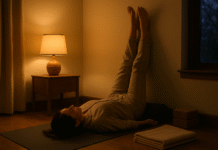
7. Reset Sleep and Wind-Down (Protect 7–8+ Hours Tonight)
Sleep is the master recovery tool. Most healthy adults do best with at least 7 hours of quality sleep per night; chronic short sleep is linked to higher cardiometabolic and mental health risks. Use your rest day to realign: avoid very late lie-ins, anchor your bedtime within a 60-minute window, and build a 30–45 minute wind-down (shower, dim lights, paper book). If you napped, keep it <30 minutes before 3 p.m. to protect night sleep.
7.1 Evening routine template
- T-60: screens off or to warm/dim; tea, stretch, or light tidy.
- T-30: hygiene routine; note three “wins” from the day.
- T-10: breathing 4-6 cadence; lights out; room ~18–20°C if possible.
7.2 Troubleshooting
- Wide-awake at 2 a.m.? Get up; read or journal until sleepy.
- Jet lag? Anchor to local sunlight; short morning walk accelerates shift.
- Snoring or gasping? Talk to a clinician; screen for sleep apnea.
Treat tonight as a “pilot” for a healthier week; one good sleep can reset your mood and self-control tomorrow.
8. Set Digital Boundaries (Protect Presence With Simple Rules)
Your rest day is the perfect laboratory for phone-light hours. Evidence around “technoference” shows that devices intruding on in-person time correlate with lower couple satisfaction, more conflict over tech, and less fulfilling conversations. You don’t need a total detox; small rules—**no phones at meals, a 2-hour afternoon app-free block, ringer off during a family walk—**deliver most of the benefit. Make it social: announce the boundary, then stack an enjoyable alternative (board game, recipe, shared playlist) so your attention has somewhere better to go.
8.1 Mini-checklist
- Mute: set Focus mode to allow only VIP calls.
- Move: park the phone in another room during meals.
- Mark: add a sticky note prompt on the TV/charging station (“Present?”).
- Model: if you’re the host, go first; others will follow.
8.2 Numbers & guardrails
- Start with 2 x 60-minute phone-free windows.
- If anxiety spikes, shrink to 20 minutes and add a calming behavior (tea, short walk).
When presence becomes the norm at home, family time feels richer without adding “more” to anyone’s schedule. PMC
9. Reconnect Intentionally (Plan One Quality Touchpoint)
Social connection is a health behavior. On a rest day, plan one intentional touchpoint: a long voice note to a parent, a tea with a sibling, or a board game with your kids. Large epidemiologic work links stronger social connection with lower risks of depression, heart disease, stroke, and even premature mortality. You don’t have to host a party; one meaningful interaction (20–60 minutes) counts. If loved ones are far, schedule a video call with simple “no multitasking” rules so everyone feels seen.
9.1 Conversation scaffolds
- “Catch-up ladder”: 2 minutes headlines → 5 minutes story → 10 minutes feelings.
- “Memory lane”: “What’s a small win from this month?”
- “Future peek”: “What are you looking forward to next week?”
9.2 Pairing ideas
- Walk-and-talk: call while you stroll a quiet loop.
- Cook-together-apart: same simple recipe, eat on video.
- Shared media: watch a short documentary and debrief for 10 minutes.
Close by penciling your next touchpoint; consistency, not intensity, is what keeps relationships strong.
FAQs
1) What exactly counts as “self-care” on a rest day?
Any low-pressure activity that reliably restores your energy, attention, and mood—often journaling, gentle movement, hobbies, nature time, and quality connection. The best signal is how you feel afterward: calmer, clearer, and more willing to engage with life’s demands. Keep it simple and repeatable so it becomes a rhythm, not a project.
2) I’m bad at journaling. Can I do voice notes instead?
Yes. The mechanism—organizing and labeling emotions—can happen via writing, voice notes, or an unsent email. If typing or speaking is more comfortable, do that for 10–15 minutes and end with one sentence that captures your key insight. Research has focused on writing, but the principle is expressive, structured reflection.
3) How long should my hobby block be?
Aim for 45–90 minutes. Long enough to enter flow, short enough to avoid pressure. Set one tiny, finishable goal (one sketch, one recipe, one square). Over weeks, hobby engagement is associated with better mood and life satisfaction, particularly in older adults.
4) Is walking really “enough” exercise on rest days?
Yes. On recovery days, easy movement helps circulation and mood without stressing your system. A 30–60 minute walk at a chatty pace is perfect. As a bonus, walking with friends boosts social connection and motivation.
5) Do I need a full “digital detox”?
Not necessarily. Targeted boundaries—no phones at meals, one or two 60-minute phone-free windows—deliver most benefits. Studies link device intrusion during in-person time with lower relationship satisfaction and conversation quality. Start small and stack an enjoyable alternative so the boundary sticks. ScienceDirect
6) How much sleep should I aim for on a rest day?
Most adults need at least 7 hours of quality sleep nightly. Use rest days to protect a steady bedtime, build a calming wind-down, and avoid late, long naps. If sleep issues persist, speak with a professional.
7) What if mindfulness makes me feel edgy?
That happens for some people. Switch to grounding (naming five sights, cold water on wrists), nature time, or an easy walk with a friend. Mindfulness shows average benefits across populations but isn’t the right tool for everyone or every season. PMCNature
8) I live in a hot, crowded city. How do I get nature time?
Use micro-doses: courtyard plants, shaded streets, balcony gardening, or a quick park bench sit. Research suggests benefits from short exposures and a weekly total around 120 minutes—break that into small, achievable bits. Go early or late to avoid heat.
9) How can I make family meals less stressful?
Lower the bar: repeat simple recipes, assign roles, and keep conversation prompts handy. The goal is connection, not culinary excellence; shared meals are associated with better family functioning and mental health. Phones off helps everyone feel present. PMC
10) What’s a good bare-minimum rest-day plan?
Try this three-block template: 15 minutes journaling, 45 minutes a hobby, and a device-free meal with someone you love. Add 30 minutes of easy walking outdoors if possible. It’s simple, repeatable, and covers mind, body, and relationships in under three hours.
Conclusion
Rest days work when they’re intentional, light, and human. The nine practices here—structured journaling, a focused hobby block, gentle social movement, a device-free meal, nature time, mindfulness, sleep care, phone boundaries, and one planned reconnection—cover the core systems that drive your well-being: emotion regulation, motivation, physical recovery, and social support. They’re designed to be low-friction: most need only 10–90 minutes and tools you already have. Treat today like a systems check: pick two or three items, schedule them like appointments, and protect them the way you would any commitment. Keep notes in your journal on what felt restorative and what didn’t; within two or three rest days, you’ll have a personalized playbook you can trust.
Ready to reset next weekend? Block your three non-negotiables now: 15 minutes to write, 45 minutes to make, and one device-free meal together.
References
- Baikie, K.A., & Wilhelm, K. “Emotional and physical health benefits of expressive writing.” Advances in Psychiatric Treatment, 2005. SPARQ
- Niles, A.N., et al. “Effects of Expressive Writing on Psychological and Physical Health.” Frontiers in Psychology, 2013. PMC
- Smyth, J.M., et al. “Online Positive Affect Journaling.” JMIR Mental Health, 2018. PMC
- American College of Sports Medicine. “Recovery That Keeps You in the Game.” June 26, 2025. ACSM
- Harvard Health Publishing. “Better together: The many benefits of walking with friends.” June 1, 2023. Harvard Health
- White, M.P., et al. “Spending at least 120 minutes a week in nature is associated with good health and wellbeing.” Scientific Reports, 2019. Nature
- Centers for Disease Control and Prevention. “About Sleep and Your Heart Health.” May 15, 2024. CDC
- Centers for Disease Control and Prevention. “Social Connection.” May 15, 2024. CDC
- Harvard T.H. Chan School of Public Health. “The importance of connections: Ways to live a longer, healthier life.” December 8, 2024. Harvard Public Health
- Johns Hopkins Medicine. “Family Meals: Can They Make You Healthier?” n.d. Hopkins Medicine
- McDaniel, B.T., & Coyne, S.M. “Technoference and family relationships.” Psychology of Popular Media, 2017. PMC
- Mak, H.W., et al. “Hobby engagement and mental wellbeing among people in later life.” Nature Medicine, 2023. Nature