



























Big goals—like lowering blood pressure, improving fitness, or losing weight—are exciting, but they can also be paralyzing when you’re staring at the entire mountain. The fastest way to make progress is to shrink the mountain into a staircase of clear, doable actions. This article shows you exactly how to do that by breaking big health goals into manageable steps you can sustain. You’ll learn how to translate outcomes into behaviors, map milestone ladders, use short “sprints,” track the right metrics, and adapt with confidence. Quick safety note: this is educational information, not medical advice; check with a qualified clinician if you have health conditions or take medications.
Quick definition: Breaking big health goals into manageable steps means turning a large outcome (e.g., “improve cardiovascular fitness”) into small, specific behaviors with time-bound milestones and feedback loops you can track and adjust.
At-a-glance process you’ll apply below:
- Clarify the outcome and translate it into daily/weekly behaviors.
- Measure your baseline and set a milestone ladder.
- Work in 2–4 week sprints with simple reviews.
- Track leading indicators (the behaviors) and watch lagging indicators (results).
- Adjust using if–then plans, celebrate small wins, and iterate.
1. Turn Outcome Goals Into Behavior Goals (So You Always Know What to Do Next)
The first step is to convert a big outcome into concrete behaviors you can do today and this week. An outcome like “get healthier” or “lose 10 kg” lacks an action pathway; a behavior plan like “walk 30 minutes five days a week and cook protein-forward dinners on weekdays” tells you exactly what to do. Start with one to three keystone behaviors that directly drive your outcome, then express them as SMART actions (specific, measurable, achievable, relevant, time-bound). Add an “if–then” execution cue—an implementation intention—so the behavior has a clear trigger in your day (“If it’s 7:30 a.m., then I put on shoes and walk the block.”). The key is to reduce cognitive load: when the moment arrives, you should already know what to do and when.
1.1 Why it matters
Turning outcomes into behaviors prevents decision paralysis, increases adherence, and accelerates learning. You can’t “do” a 10 kg loss directly, but you can reliably “do” tonight’s meal prep or today’s walk. Implementation intentions have repeatedly been shown to improve goal attainment by linking a cue to a specific action, making follow-through more automatic.
1.2 How to do it
- Identify the single most influential behavior for your goal (e.g., minutes of moderate activity, daily step count, or home-cooked meals).
- Rewrite it as a SMART action (e.g., “30 minutes brisk walking, Mon–Fri, after breakfast”).
- Add an “if–then” cue (“If it’s after breakfast, then I start my 30-minute walk.”).
- State a minimum viable version (e.g., “If pressed for time, at least 10 minutes.”).
- Put it on your calendar with a reminder.
1.3 Mini example
Outcome: Improve cardiovascular fitness.
Behavior: “Brisk walk 30 minutes, 5 days/week, after breakfast; if it rains, do a 20-minute home cardio video.”
Bottom line: Behavior goals convert big ambitions into daily motions you can actually perform, making progress far more likely.
2. Build a Milestone Ladder From Your Baseline (So Progress Feels Attainable)
After you choose behaviors, measure where you’re starting, then set a milestone ladder—small, escalating targets that bridge the gap from baseline to your big goal. Baseline could be your average weekly steps, cardio minutes, blood pressure readings, resting heart rate, clothes fit, or meals cooked at home. Decide the first rung that feels both meaningful and doable for the next 2–4 weeks, then add subsequent rungs that gradually raise complexity or volume. This structure produces frequent wins, and each win fuels motivation for the next rung. It also exposes bottlenecks early so you can solve them while stakes are small. Keep rungs close enough that you can reach the next one without strain, but far enough to notice progress.
2.1 Numbers & guardrails
- For general fitness, a common first rung is 150 minutes/week of moderate-intensity activity spread over 3–5 days (e.g., five 30-minute walks).
- If you’re largely inactive, start with shorter, more frequent bouts (e.g., 10–15 minutes) and accumulate time across the week.
- For weight loss, aim for process rungs like home-cooked dinners 5 nights/week or tracking meals 5 days/week, rather than fixating on the scale alone.
2.2 Mini-checklist
- Measure a simple baseline for 7 days (steps, minutes, meals, sleep).
- Pick the next rung you’re 80% sure you can hit.
- Confirm logistics (time, place, equipment).
- Schedule it; add reminders.
- Review in two weeks and elevate by a small, sensible increment.
Bottom line: Milestone ladders turn a long road into visible stepping stones; you’ll know exactly what “better” looks like every two weeks.
3. Work in 2–4 Week Sprints With Simple Reviews (So You Improve on a Schedule)
Short sprints give your plan a heartbeat. Commit to a 2–4 week cycle where you hold behaviors steady, evaluate performance, and then upgrade or adjust. This rhythm avoids the “every day is a new plan” chaos and the “set and forget” trap. In each sprint, keep your focus narrow: one to three behaviors and one or two metrics. At the end of the sprint, do a quick review: What worked? What dragged? What will you change next? Sprints also pair well with natural life cycles (travel, holidays, work projects), letting you scale efforts up or down without losing momentum.
3.1 How to do it
- Plan (10 minutes): Choose behaviors, schedule them, define success (e.g., 4/5 walks per week).
- Do (2–4 weeks): Execute; log behaviors; don’t change the plan mid-sprint unless safety is an issue.
- Review (10 minutes): Note adherence %, obstacles, energy levels, and any changes in lagging metrics (e.g., clothes fit, BP trend).
- Adjust (5 minutes): Keep, kill, or tweak one behavior; set the next rung.
3.2 Tools/Examples
- Calendar blocks with recurring reminders.
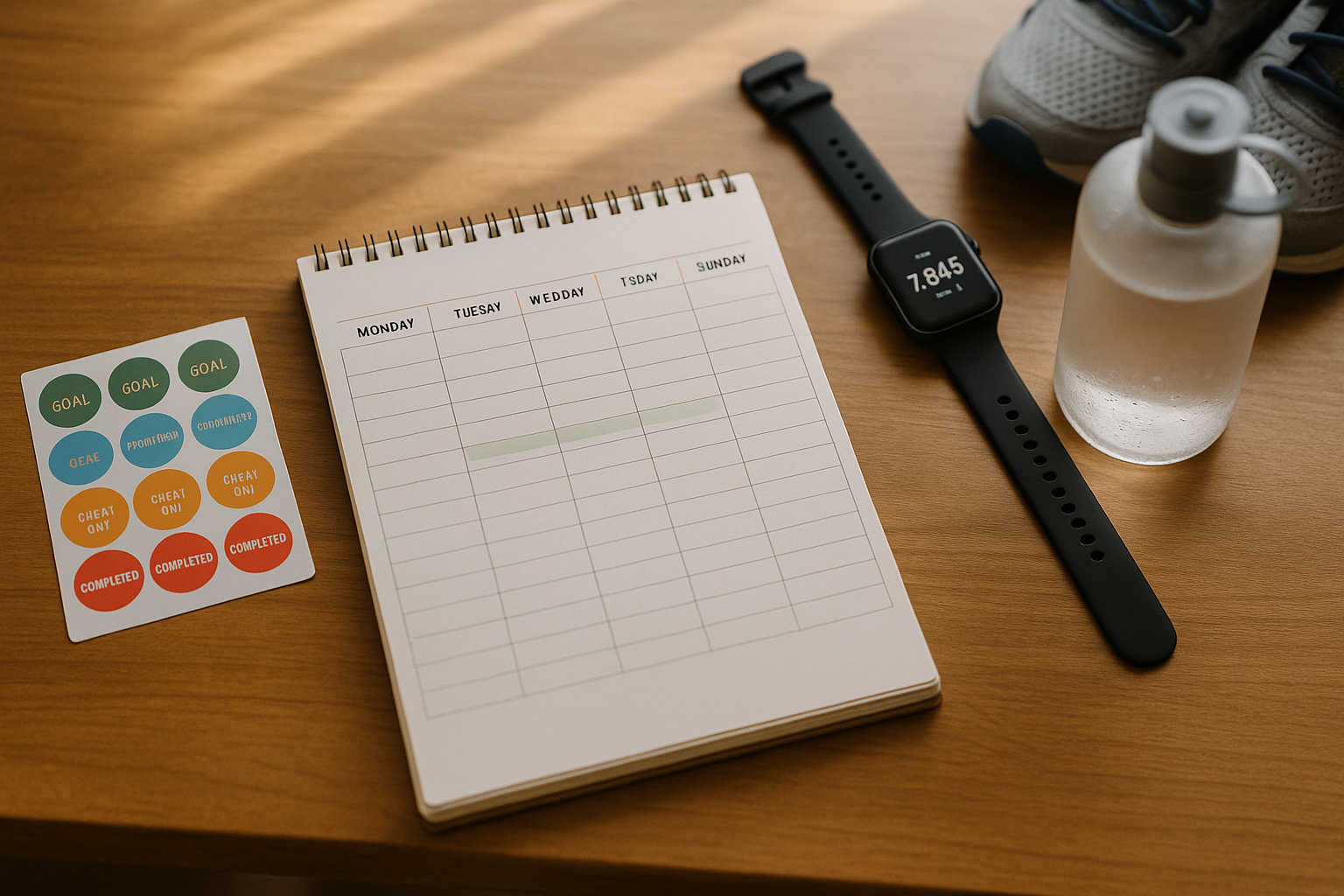
- Habit trackers (Streaks, Habitica, Productive), or spreadsheets/notes.
- A 2-minute end-of-week reflection: “What made success easier? What will I automate?”
Bottom line: Sprints channel attention, create natural feedback points, and make improvement routine instead of random.
4. Stack Tiny Habits to Reduce Friction (So Consistency Feels Effortless)
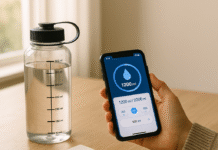
Even the best plan dies if it’s too hard to start. Habit stacking and environment design shrink the “activation energy” so behaviors happen with less willpower. Start microscopic: attach a tiny version of the behavior to an existing daily anchor (“After I brush my teeth at night, I’ll fill my water bottle for tomorrow”). Then, gradually scale the habit once it’s stable. Arrange your surroundings to make the “good” path the easy path: put walking shoes by the door, pre-log meals, or set a home screen widget with your step count. When cues and environments are aligned, you act without debate—and that steadiness compounds.
4.1 How to do it
- Choose an anchor: A reliable event (wake-up, lunch, commute end).
- Define a tiny habit: The 30–60 second version (e.g., “Put on shoes”).
- Add a celebration: A small “good job” moment to reinforce the loop.
- Scale: When the tiny habit is effortless for 1–2 weeks, extend duration or intensity.
- Engineer the environment: Remove friction (healthy snacks visible; kettlebell near desk; gym bag packed).
4.2 Common mistakes
- Starting too big; relying on motivation rather than architecture.
- Switching anchors frequently; keep the cue constant.
- Punishing lapses; instead, reset to the tiny version and rebuild.
Bottom line: Stacked, tiny habits plus friendly environments remove friction, turning action into your default.
5. Set Minimums and Ceilings (So You Don’t Overdo It—or Underdo It)
A powerful way to sustain momentum is to define both a minimum (the “floor” you’ll do even on hard days) and a ceiling (the “cap” that stops you from overreaching and crashing). Minimums protect streaks; ceilings protect recovery. For example, you might commit to “at least 10 minutes of movement daily” as a floor, and “no more than 60 minutes of moderate/vigorous cardio per day, 5 days a week” as a ceiling while you build capacity. On nutrition, you might set “at least two cups of vegetables per day” as a floor and avoid extreme restriction as a ceiling. Floors and ceilings make effort consistent and sustainable.
5.1 Numbers & guardrails
- Movement floor: 10–15 minutes daily (walk, mobility, light cardio).
- Weekly target: Work toward 150–300 minutes of moderate activity across the week.
- Strength training cap to start: 2–3 sessions/week with at least 48 hours between similar muscle groups for recovery.
- Nutrition floor: One specific, positive action (e.g., breakfast protein or hydration target).
- Sleep floor: Aim for sufficient nightly sleep (commonly 7 or more hours for most adults).
5.2 Mini-checklist
- Declare a daily floor and a weekly cap for movement.
- Name one positive nutrition floor you’ll hit daily.
- Protect recovery: set a bedtime alarm and a wind-down routine.
- Review floors/ceilings each sprint and raise cautiously as capacity improves.
Bottom line: Floors keep you showing up; ceilings keep you from overshooting the runway and stalling out.
6. Design Your Environment and Schedule (Make the Right Choice the Easy Choice)
Your surroundings and calendar often determine your behavior before willpower shows up. Put simply: make the “healthy” choice frictionless and the “less helpful” choice slightly inconvenient. Batch grocery shopping and meal prep at the same time each week; keep healthy staples visible and ready-to-eat; schedule workouts as immovable appointments; and create “default” menus for busy days. Use placement, prep, and pre-commitments to shape the path of least resistance. When your space and schedule are aligned, you’ll make better choices with fewer decisions.
6.1 How to do it
- Placement: Keep water on your desk, fruit in sight, and equipment within arm’s reach.
- Prep: Chop vegetables, portion proteins, and pre-cook grains on a set day.
- Pre-commit: Book classes with cancellation fees or arrange to meet a friend.
- Buffer: Leave 10–15 minutes before/after workouts for transitions and warm-down.
- Default choices: A short list of go-to breakfasts/lunches and 20–30 minute workouts.
6.2 Examples
- Desk setup: Standing reminder every hour; resistance band nearby.
- Kitchen setup: Clear counter “prep zone,” sharp knife, air-tight containers; ready-to-heat legumes and whole grains.
- Car/gym bag: Spare shoes, socks, and a small towel always packed.
Bottom line: The best willpower strategy is not needing much willpower. Build the path that “nudges” you into the right move.
7. Track Leading and Lagging Indicators (Measure What You Control and What You Care About)
To stay motivated and objective, track leading indicators (behaviors you control) and lagging indicators (outcomes that respond more slowly). Leading indicators include minutes walked, workouts completed, steps, home-cooked meals, bedtime consistency, or hydration. Lagging indicators include body weight trend, waist measurement, blood pressure average, resting heart rate, clothes fit, and performance benchmarks. By prioritizing behavior metrics, you avoid overreacting to short-term noise in outcomes while still keeping an eye on long-term changes. Use simple logs and weekly reviews to connect the dots.
7.1 What to track weekly
- Leading: Workouts done / planned, total active minutes, steps, meals cooked, bedtime adherence.
- Lagging: 7-day moving average for weight (if relevant), weekly waist measure, BP averaged from multiple readings, RHR upon waking.
7.2 Tools/Examples
- Apps/platforms: Apple Health/Google Fit for steps and minutes; Cronometer/MyFitnessPal for nutrition; a notes app or spreadsheet for weekly summaries.
- Simple dashboard: One page with checkboxes for behaviors and a small section for outcomes.
Bottom line: Track the work (leading indicators) and watch the results (lagging indicators). The work drives the results—keep your eyes on both.
8. Use If–Then Plans and Feedback Loops (So Setbacks Don’t Derail You)
Setbacks happen to every human. You can immunize your plan by deciding in advance what you’ll do when things go wrong. If–then plans specify the trigger and the recovery action: “If I miss a workout, then I’ll do the minimum version tomorrow at 6 p.m.” Feedback loops close the learning cycle: you log what happened, reflect briefly, adjust one variable, and try again next sprint. This prevents all-or-nothing thinking and keeps momentum through busy seasons, travel, or illness. The goal is not perfection; it’s resilient consistency.
8.1 Templates you can copy
- Missed session: “If I miss today, then tomorrow I do the 15-minute minimum after work.”
- Weather issue: “If it rains, then I do a 20-minute indoor cardio video.”
- Eating out: “If I’m at a restaurant, then I’ll order a protein + vegetable main and share a side.”
- Travel: “If I’m at an airport, then I’ll walk the concourse for 15 minutes before boarding.”
8.2 Mini-checklist
- Write three if–then plans for your most likely obstacles.
- Add the minimum version for each.
- Review whether they worked at the end of the sprint; update as needed.
Bottom line: Pre-decisions plus honest reviews turn stumbles into data. You’ll keep going, which is what actually compounds.
9. Celebrate, Recalibrate, and Periodically Re-Scope the Big Goal (So Motivation Stays High)
Motivation follows progress and recognition. Mark each milestone with a small celebration and a brief review: What did you learn? What will you keep? Then, recalibrate plans based on data—raise rungs if behaviors feel easy, or simplify if adherence dips. As your life changes (new job, travel, caregiving), re-scope the big goal to match reality: sometimes you maintain, sometimes you push, sometimes you rebuild. Periodic re-scoping keeps your plan aligned with your capacity and prevents the “I failed” narrative when, in fact, the context simply changed.
9.1 How to do it
- Celebrate: Low-cost rewards that reinforce identity (new playlist, fresh workout socks, a scenic walk).
- Recalibrate: If adherence <70% this sprint, simplify; if >90% and energy is good, gently progress.
- Re-scope: Twice per quarter, revisit the big outcome and timeline; adjust without shame.
9.2 Mini example
You aimed for five 30-minute walks. After two sprints, you averaged four. Win: consistency. Adjustment: keep four as your floor, add one optional bonus walk, and introduce a 20-minute strength session once weekly.
Bottom line: Recognition fuels identity (“I’m someone who shows up”), and planned recalibration keeps your staircase matched to real life.
FAQs
1) What does “breaking big health goals into manageable steps” actually mean?
It means translating a large outcome—like lowering blood pressure or improving fitness—into small, scheduled behaviors with clear milestones and feedback. Instead of “be healthier,” you plan actions such as walking 30 minutes five days per week, cooking at home on weekdays, or going to bed at a set time. Tracking those behaviors (leading indicators) alongside outcomes (lagging indicators) lets you adjust early and keep momentum.
2) How many habits should I start with at once?
Begin with one to three behaviors per sprint. This keeps focus high and complexity low. If adherence stays above ~80% for 2–4 weeks and energy is good, you can carefully add or advance a behavior. If adherence slips, shrink the goal—return to a minimum version and rebuild. Depth beats breadth in habit formation.
3) What weekly activity target should I aim for?
A widely recommended range for adults is 150–300 minutes of moderate-intensity aerobic activity weekly, plus muscle-strengthening activities on 2 or more days. If you’re new or returning, start toward the lower end with shorter bouts and accumulate time over the week. Build gradually and prioritize how your body feels and recovers.
4) Is it okay if the scale doesn’t move right away?
Yes. Short-term weight fluctuations often reflect hydration, glycogen, and meal timing. Focus on behavior adherence and look at weekly averages and waist measurements for trend signals. If behaviors are consistent but outcomes don’t budge over several sprints, review intake, activity minutes, sleep, and stress, then adjust one variable at a time.
5) How do I recover from missed workouts without losing momentum?
Use pre-written if–then plans, do the minimum version the very next day, and log what happened. Avoid compensating with “punishment” sessions—those often backfire. Instead, return to your routine and protect your next scheduled block. Momentum is the product of swift, kind resets, not perfection.
6) What’s the best way to track progress without getting obsessed?
Keep a one-page dashboard: checkboxes for the week’s behaviors (leading indicators) and a small space for outcomes (lagging indicators). Review once weekly for 5 minutes. This cadence keeps you informed without micromanaging data. If tracking feels heavy, simplify to a single key habit and a single trend outcome.
7) How important is sleep to reaching health goals?
Very. Sleep underpins recovery, appetite regulation, cognition, and training adaptation. Adults generally need around 7 or more hours per night. Establish a wind-down routine, dim lights, limit late caffeine, and keep a consistent schedule. If sleep is consistently short or poor, make it a top-tier behavior in your next sprint.
8) What should I adjust first if I plateau?
Check adherence and recovery. If adherence is low, simplify. If adherence is high but energy is poor, add recovery (sleep, deload week, lighter sessions). If both are solid, consider nudging activity minutes within recommended ranges or refining nutrition (e.g., more home-cooked meals or consistent meal timing). Change one variable per sprint so you can see what worked.
9) I travel or get sick often—how can I maintain progress?
Plan maintenance sprints with lower floors: 10–15 minutes of movement, a hydration goal, and a simple breakfast template. Use hotel-room routines or walking meetings. When you’re sick, prioritize rest and gradual return-to-activity after symptoms remit, per medical guidance. Maintenance is still progress—it protects your base so you can build again.
10) Do I need gadgets or apps for this to work?
No. A paper calendar and a pen are enough. That said, apps can reduce friction: your phone’s health app for steps and minutes, a reminders app for cues, and a basic habit tracker to visualize streaks. Choose tools that you’ll actually use and that simplify, not complicate, your routine.
11) How do I choose milestones for specific outcomes like blood pressure or endurance?
Tie milestones to behaviors known to influence the outcome. For blood pressure, that might be moderate-intensity aerobic minutes, sodium awareness, and consistent medication (as prescribed). For endurance, minutes of cardio and progressive duration. Use weekly averages and review trends monthly, adjusting behaviors in 2–4 week increments.
12) What if my life circumstances change dramatically?
Re-scope your goal immediately. Shift to a maintenance sprint with lower floors, reduce complexity, and protect core habits (movement, meal structure, sleep). When stability returns, rebuild one rung at a time. Changing the plan to fit your reality isn’t failure; it’s good strategy.
Conclusion
Big health outcomes become achievable when you dismantle them into clear behaviors, structure them into milestone ladders, and advance them in short, reviewable sprints. Floors and ceilings keep effort sustainable; habit stacking and environment design remove friction; and if–then plans paired with a simple weekly dashboard give you resilience and clarity. By prioritizing leading indicators and monitoring lagging indicators over time, you’ll learn what works in your real life—not in theory. Most importantly, you’ll feel progress, because you’ll be collecting small wins every week. Start with one to three behaviors, set your first rung for the next two weeks, schedule it, and celebrate your first checkmarks. Your staircase is ready—take the first step today.
Call to action: Choose one behavior, schedule it for tomorrow, and write a single if–then plan—you’ll be in motion in under five minutes.
References
- WHO Guidelines on Physical Activity and Sedentary Behaviour, World Health Organization, 2020. https://www.who.int/publications/i/item/9789240015128
- Physical Activity Guidelines for Adults, Centers for Disease Control and Prevention (CDC), updated 2024. https://www.cdc.gov/physicalactivity/basics/adults/index.htm
- Healthy Weight: Losing Weight, Centers for Disease Control and Prevention (CDC), updated 2024. https://www.cdc.gov/healthyweight/losing_weight/index.html
- ACSM’s Guidelines for Exercise Testing and Prescription (10th ed. overview), American College of Sports Medicine/ACSM Resources, 2021. https://www.acsm.org/education-resources/books/guidelines-for-exercise-testing-and-prescription
- Gollwitzer, P. M., & Sheeran, P. “Implementation Intentions and Goal Achievement: A Meta‐analysis of Effects and Processes,” Advances in Experimental Social Psychology, 2006. https://doi.org/10.1016/S0065-2601(06)38002-1
- Lally, P., et al. “How are habits formed: Modelling habit formation in the real world,” European Journal of Social Psychology, 2009. https://onlinelibrary.wiley.com/doi/10.1002/ejsp.674
- How Much Sleep Do I Need?, Centers for Disease Control and Prevention (CDC), reviewed 2024. https://www.cdc.gov/sleep/about_sleep/how_much_sleep.html
- Eating & Physical Activity for a Healthy Weight, National Institute of Diabetes and Digestive and Kidney Diseases (NIDDK), updated 2024. https://www.niddk.nih.gov/health-information/weight-management/eating-physical-activity-for-healthy-weight
- Blood Pressure Measurement at Home: Best Practices, American Heart Association, 2024. https://www.heart.org/en/health-topics/high-blood-pressure/understanding-blood-pressure-readings/monitoring-your-blood-pressure-at-home
- Strength Training Basics and Progression, Harvard Health Publishing, 2023. https://www.health.harvard.edu/fitness/strength-training-moving-beyond-the-basics