









Wellness content is everywhere, but only a handful of films and series truly teach you how to change your daily habits. This curated guide spotlights 12 educational videos and documentaries on wellness that combine credible science, practical takeaways, and engaging storytelling. You’ll learn what each title covers, why it matters, how to use it, and where to watch it (availability may vary by region as of August 2025). Quick definition: Educational videos and documentaries on wellness are evidence-informed films or series that explain health topics clearly and offer actionable steps across nutrition, sleep, movement, mental health, and public health. Below, you’ll find 12 vetted picks with concise summaries, caveats, and next steps so you can watch smarter—not just longer.
Friendly note: This guide is informational and not medical advice. Always consult a qualified professional for personal medical, nutrition, or mental health decisions.
Fast way to use this list:
- Pick 1–2 titles aligned to your immediate goal (better sleep, cooking more, moving consistently).
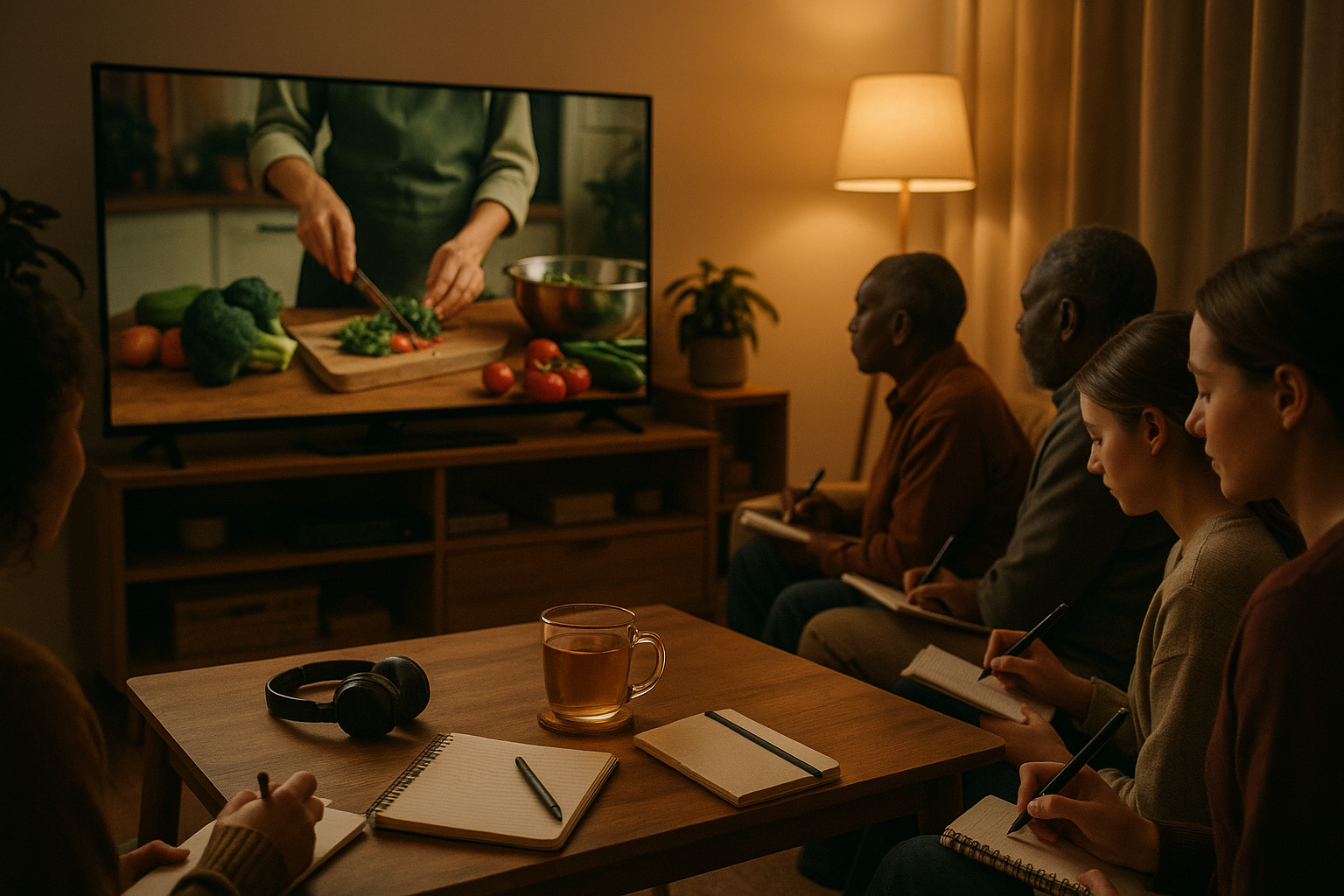
- Watch with a notebook and write 3 specific actions you’ll test this week.
- Re-watch key chapters with a friend or family member to build accountability.
- Cross-check any controversial claims with reputable sources (e.g., WHO, CDC, academic reviews).
1. In Defense of Food (PBS) — A Clear Primer on What to Eat and Why
If you’re overwhelmed by nutrition headlines, In Defense of Food is a grounded starting point. The film distills food confusion into a simple, memorable rule—“Eat food. Not too much. Mostly plants.”—and shows how to make it real in modern life. It balances cultural context with dietary science and offers practical cooking and shopping cues for busy households. The core value here is clarity: you’ll walk away with a framework to evaluate products and fads, not just a list of “good” and “bad” foods. As of August 2025, the PBS page provides context, recipes, and companion materials that expand beyond the film, making it especially useful for learners who want to translate ideas into weeknight meals.
1.1 Why it matters
Modern food marketing can drown out simple patterns that improve health (more whole foods, fewer ultra-processed staples). A clean, principle-based lens helps you plan menus, read labels, and ignore hype.
1.2 Tools/Examples
- Build plates around plants: legumes, vegetables, whole grains, nuts, seeds.
- Shop the perimeter first: fresh produce and minimally processed staples.
- Anchor meals with repeatable templates (e.g., grain + bean + veg + sauce).
1.3 Where to watch (as of Aug 2025)
- See the official PBS page for show info and learning resources.
Synthesis: Choose this film if you want a calm, evidence-aligned antidote to nutrition confusion that translates to your grocery cart.
2. The Weight of the Nation (HBO) — Public Health, Policy, and Personal Choices
This four-part series explores America’s obesity epidemic from multiple angles: biology, environment, industry, and policy. It’s a masterclass in systems thinking, connecting individual behaviors to broader social determinants like access, affordability, and neighborhood design. You’ll hear from researchers and community leaders and see how prevention and policy interact with clinical care. Expect a sobering but constructive view—practical ideas appear alongside the realities of food deserts, marketing, and healthcare costs. Official materials from NIH and partners underscore the series’ scientific backbone, and HBO continues to host the title.
2.1 Numbers & guardrails
- Use the series to spot environment-level barriers before blaming willpower.
- Decide on two policy-aware actions (e.g., workplace wellness proposals, school lunches, civic planning input).
2.2 Where to watch (as of Aug 2025)
- See NIH’s overview and HBO’s title page for availability.
Synthesis: Watch this when you need the bigger picture—how personal habits interact with systems, incentives, and policy.
3. Fed Up (2014) — Understanding Sugar, Marketing, and Metabolism
Fed Up focuses on the role of added sugars in diets and how industry practices and school policies can shape what families eat. Narrated by Katie Couric, it’s a gateway into label literacy, serving sizes, and the difference between “natural” marketing and meaningful nutrition. Use the film to start conversations at home about breakfast cereals, sweetened yogurts, and snack swaps that actually stick. The official site provides film context and talking points.
3.1 How to do it
- Audit your added sugars for a week; highlight top three contributors (e.g., beverages).
- Swap sweetened beverages with water, unsweetened tea, or diluted juice.
- Learn label math: 4 g sugar ≈ 1 teaspoon; set daily upper bounds that fit your goals.
3.2 Common pitfalls
Don’t swing to extremes. Replacing all sugar with ultra-processed “sugar-free” products can add other issues; prioritize whole foods first.
3.3 Where to watch (as of Aug 2025)
- See the official film page for distribution details and resources.
Synthesis: If sugar confuses you, this film can kickstart practical changes and label-literacy habits.
4. The Mind, Explained (Vox/Netflix) — Brain Science Made Simple
This docuseries translates neuroscience topics—memory, dreams, anxiety, mindfulness, psychedelics—into short, highly visual chapters narrated by A-list voices. The format is perfect for busy learners: each episode targets one domain and finishes with crisp takeaways you can apply to sleep routines, stress management, or focus. As of August 2025, Netflix lists two seasons; it’s ideal for learners who prefer 20–25 minute bursts. Wikipedia
4.1 Tools/Examples
- Try the “worry scheduling” technique for anxiety after the related episode.
- Test a dream journal for one week to improve recall and identify patterns.
- Use mindfulness micro-breaks (60–120 seconds) between meetings.
4.2 Where to watch (as of Aug 2025)
- Netflix official series page.
Synthesis: Pick this when you want fast, digestible science that upgrades everyday mental hygiene.
5. Headspace Guide to Sleep (Netflix) — Sleep Skills with Guided Wind-Downs
Sleep is a cornerstone habit, and this series pairs myth-busting with practical wind-downs at the end of each episode. You’ll learn about caffeine timing, blue light, routines, and environmental tweaks—and then practice a short exercise immediately. It’s particularly useful for beginners who want a simple, structured pathway to better nights. As of August 2025, it remains listed on Netflix in multiple regions.
5.1 Mini-checklist
- Fixed wake time (±30 minutes).
- 90-minute pre-sleep wind-down (screen dimming, warm shower).
- Bedroom audit: cool (16–19°C / 60–67°F), dark, quiet.
5.2 Where to watch (as of Aug 2025)
- Netflix official page for Headspace Guide to Sleep.
Synthesis: Use this if you need sleep basics plus a built-in nightly practice.
6. Headspace Guide to Meditation (Netflix) — An On-Ramp to Mindfulness
For meditation newcomers, this animated series explains the “why” and “how” of mindfulness while offering short guided practices. Episodes cover attention, stress, and compassion, with friendly instruction by Andy Puddicombe. It’s approachable for teens and adults alike, and you can repeat episodes to reinforce the techniques. As of August 2025, Netflix lists one season with eight episodes.
6.1 How to do it
- Start with 5 minutes daily for seven days; journal a one-line “state check” afterward.
- Experiment with placement: morning vs. lunch vs. pre-bed.
- Stack with existing routines (e.g., after brushing teeth).
6.2 Where to watch (as of Aug 2025)
- Netflix official page for Headspace Guide to Meditation.
Synthesis: Choose this if you want a low-friction, visual introduction that gets you sitting—today.
7. Live to 100: Secrets of the Blue Zones (Netflix) — Longevity Lessons, Context Required
Host Dan Buettner visits communities with high concentrations of people living into their 90s and beyond, exploring diet, movement, social ties, and purpose. The cinematography is gorgeous, and the lifestyle patterns are concrete—walkable living, plant-forward diets, time with friends. View with a critical eye: the series inspires, but translating geography and culture into your setting requires adaptation. As of August 2025, it’s available on Netflix and summarized on Blue Zones’ site.
7.1 Common mistakes
Copy-pasting “Blue Zones” without considering your environment (transport, budget, family structure) can lead to frustration. Adapt the principles, not every practice.
7.2 Where to watch (as of Aug 2025)
- Netflix series page; supplemental overview on the Blue Zones site. Blue Zones
Synthesis: Watch this for inspiration, then design small, local changes (walking groups, shared meals) that mirror the underlying behaviors.
8. Rotten (Netflix) — Food Systems, Fraud, and What It Means for Your Plate
Rotten investigates the food supply chain, revealing fraud, regulation gaps, and global interdependencies. While not a “how-to cook” show, it’s vital wellness education: understanding where food comes from shapes better purchasing, storage, and cooking decisions. Episodes on honey, garlic, avocados, and bottled water encourage critical thinking about labels and sourcing. As of August 2025, Netflix lists two seasons; multiple reviews highlight its investigative approach. Wikipedia
8.1 Action list
- Identify one product to source more transparently (e.g., honey, olive oil).
- Learn a single farmer’s market question you’ll always ask producers.
- Create a personal “buy less processed” rule for three pantry items.
8.2 Where to watch (as of Aug 2025)
- Netflix official page for Rotten.
Synthesis: Choose this if you want to pair household food choices with systems-level awareness.
9. Cooked (Netflix) — Reclaiming Skills that Make Healthy Eating Easier
Based on Michael Pollan’s book, Cooked uses the elements—Fire, Water, Air, Earth—to explore how cooking techniques shape nutrition, culture, and connection. The practical wellness angle: cooking skills reduce reliance on ultra-processed foods and increase control over ingredients, sodium, and added sugar. It’s a beautifully shot argument for home cooking as a health strategy, not just a hobby. Netflix and Pollan’s site host details and episode synopses.
9.1 Tools/Examples
- Batch-cook beans (Water) for quick bowls and soups.
- Learn one bread recipe (Air) and one fermentation (Earth) for gut-friendly staples.
- Master a “sheet-pan” fire technique for weekday vegetables.
9.2 Where to watch (as of Aug 2025)
- Netflix official page; Pollan’s film page for context.
Synthesis: Watch this to build skills that make nutritious eating automatic and affordable.
10. Pandemic: How to Prevent an Outbreak (Netflix) — Preparedness and Public Health Literacy
Released pre-COVID in January 2020, this series follows scientists and clinicians working to prevent influenza pandemics and develop universal vaccines. It’s not a “wellness hack” show, but it dramatically improves public-health literacy—vaccination, surveillance, misinformation, and the realities of outbreak response. For families and classrooms, the series opens conversations about individual vs. collective actions during respiratory seasons. Netflix hosts the series page, with additional context on release timing and reception across reliable outlets. WikipediaRotten Tomatoes
10.1 Mini-checklist
- Revisit your vaccine schedule each season.
- Build a home “sick kit” (thermometer, fluids, masks) before you need it.
- Follow your local public health channels for timely alerts.
10.2 Where to watch (as of Aug 2025)
- Netflix official series page.
Synthesis: If you want better judgment during flu and cold surges, this is essential viewing.
11. That Sugar Film (2014/2015) — A Personal Experiment with Clear Visuals
Damon Gameau’s self-experiment—adding “hidden” sugars from processed foods—turns label reading into a compelling story. While single-subject experiments have limits, the film excels at visualizing how added sugars can quietly accumulate and affect energy and mood. Use it as a catalyst to examine breakfast, snacks, and drinks in your household. The distributor’s official page outlines the premise and distribution.
11.1 How to use it
- Do a 7-day “sugar log” and identify stealth sources (sweetened yogurts, sauces).
- Replace two packaged snacks with fruit + nuts or yogurt + seeds.
- Create one “sweet treat window” per week to avoid daily mindless sugar.
11.2 Where to watch (as of Aug 2025)
- Samuel Goldwyn Films’ official film page (regional platforms vary).
Synthesis: Watch this to make hidden sugars obvious—and easier to manage—without demonizing whole foods like fruit.
12. The Truth About Exercise (BBC Horizon) — HIIT Claims, Measured Takeaways
This BBC Horizon episode, fronted by Michael Mosley, popularized the idea that very short bursts of high-intensity training can improve certain cardiometabolic markers. It’s valuable for time-pressed viewers because it explores exercise dose and the role of incidental movement vs. structured workouts. Approach the bold “minutes-per-week” claims with nuance: short, intense protocols help some markers, but overall activity (walks, strength work, sleep, and diet) still matters. Availability fluctuates by region; official clips and episodes appear across BBC channels and educational archives. IMDbYouTube
12.1 Practical guardrails
- If you’re new, clear any intense protocol with a clinician.
- Start with brisk 10-minute walks after meals and 1–2 beginner strength sessions.
- Layer in short intervals once you’ve built a base.
12.2 Where to watch (as of Aug 2025)
- See BBC resources and official clip channels (e.g., BBC Earth Lab playlist); regional iPlayer windows may vary. YouTube
Synthesis: Use this episode to rethink “no time to exercise”—then blend intensity with sustainable daily movement.
FAQs
1) What makes a wellness documentary educational rather than just inspirational?
Educational films explain mechanisms (how sleep pressure works, how sugar is metabolized), present evidence clearly, and offer repeatable actions. Inspiration helps you start, but education helps you sustain. Prefer titles with expert input, transparent sourcing, and practical next steps; many of the picks above have official pages with added learning materials.
2) How should I vet health claims I see in these films?
Cross-check with authoritative sources (WHO, national public-health agencies) and look for recent systematic reviews when possible. Be wary of universal cures, dramatic before/after montages, and single-person experiments used as proof for everyone. A 2024 meta-analysis supports video-based health education as a tool to improve knowledge—use films as a starting point, then read deeper. World Health Organization
3) I have limited time. Which single title should I watch first?
Match format to your goal. For sleep hygiene, choose Headspace Guide to Sleep (short episodes plus wind-downs). For nutrition clarity, In Defense of Food. For big-picture context (policy, environment), The Weight of the Nation. Short episodic formats are easier to finish during a busy week.
4) Are these suitable for teens or classrooms?
Most are accessible for older teens; check each platform’s rating. For schools, In Defense of Food, Headspace Guide to Meditation/Sleep, and Pandemic offer straightforward concepts for discussion and projects (e.g., label audits, sleep diaries, outbreak simulations).
5) How do I turn watching into real habit change?
Use an “apply-as-you-watch” approach: pause to list one experiment, run it for 1–2 weeks, and track two metrics (e.g., bedtime consistency, number of home-cooked meals). Share your plan with a friend for accountability. Re-watch key chapters with them and compare results.
6) What about controversial nutrition docs?
Some films make strong claims or present limited viewpoints. Treat them as conversation starters, not commandments. Compare with balanced sources and consider your own context (medical history, culture, budget). When in doubt, favor diverse whole foods, cooking skills, and moderation.
7) Is Netflix required for most of these?
Several picks are Netflix Originals, but not all. HBO hosts The Weight of the Nation; PBS covers In Defense of Food; Fed Up and That Sugar Film have their own official sites and varied distribution. Check regional availability before planning a group screening. HBO Max
8) How does video-based learning compare to reading?
Video excels at demonstrations (breathing drills, cooking, sleep routines) and can improve knowledge retention for many learners. Systematic reviews suggest video interventions can boost comprehension and engagement—especially when paired with simple practice tasks and follow-up. Combine both: watch for technique, read for deeper context.
9) What if a title I want isn’t available in my country?
Look for official clips, trailers, or companion pages that summarize key ideas. Many producers maintain sites with resources or book tie-ins that cover the same principles. Availability windows change—recheck platform pages periodically. Michael Pollan
10) How can families use these together without lecturing kids?
Pick one 30–60 minute block per week. Watch a single episode, then let everyone choose one small change (e.g., swap a drink, add a veggie, set a common bedtime). Celebrate attempts, not perfection. Revisit progress the following week and choose a new micro-experiment.
Conclusion
The right wellness film doesn’t just entertain—it teaches. The titles above span the full stack of health: daily behaviors (sleep routines, home cooking, mindfulness), environmental realities (food systems, policy), and global context (pandemic preparedness). Watch with a learner’s mindset: pause to write down experiments, schedule your first trial, and keep results visible. Pair short episodes (Headspace, The Mind, Explained) with deeper dives (Rotten, The Weight of the Nation, Cooked) to balance quick wins and durable understanding. Most importantly, adapt insights to your reality—budget, culture, schedule, and health status. If you turn each viewing into one small, trackable action, these documentaries become more than screen time; they become a steady engine for change.
Your next step: Pick one title from this list, set a watch date on your calendar, and write three tiny actions you’ll test this week.
References
- Explore Recipes & More from In Defense of Food, PBS, 2015–present. PBS
- NIH Obesity Research Featured in HBO’s “The Weight of the Nation”, Eunice Kennedy Shriver National Institute of Child Health and Human Development (NIH), May 11, 2012. NICHD
- Fed Up – Exposing the Truth Behind the Obesity Epidemic, Official Site, 2014. fedupmovie.com
- Watch The Mind, Explained | Netflix Official Site, Netflix, 2019–2021. Netflix
- Watch Headspace Guide to Sleep | Netflix Official Site, Netflix, 2021. Netflix
- Watch Headspace Guide to Meditation | Netflix Official Site, Netflix, 2021. Netflix
- Watch Live to 100: Secrets of the Blue Zones | Netflix Official Site, Netflix, 2023. Netflix
- Watch Rotten | Netflix Official Site, Netflix, 2018–2019. Netflix
- Watch Cooked | Netflix Official Site, Netflix, 2016. Netflix
- Watch Pandemic: How to Prevent an Outbreak | Netflix Official Site, Netflix, 2020. Netflix
- Morgado M., et al. Video-based approaches in health education: a systematic review and meta-analysis, Scientific Reports, 2024. PMC
- That Sugar Film – Samuel Goldwyn Films, 2015. samuelgoldwynfilms.com