
























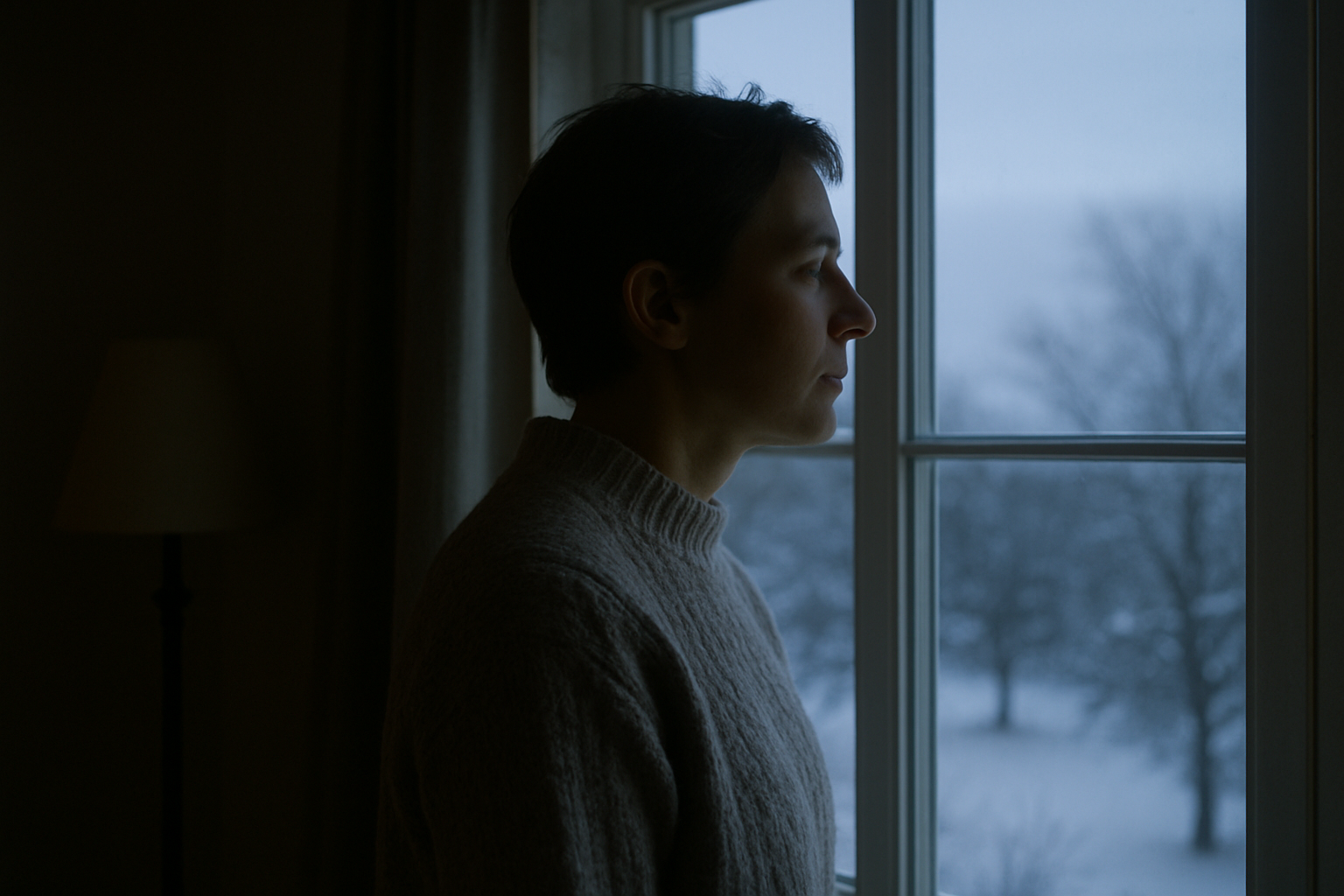
Season doesn’t just change the weather—it shifts your biology. Your circadian rhythm (the ~24-hour timing system that coordinates sleep, hormones, metabolism, cognition, and mood) responds to daylight length, light intensity and spectrum, temperature cycles, and even social schedules that vary across the year. That’s why you may fall asleep later in summer, struggle to wake on dark winter mornings, or feel your energy and mood wobble as the calendar turns. This guide explains the nine biggest seasonal levers that move your internal clock—and how to nudge them back into alignment with practical, evidence-based steps.
Quick answer: Seasonal changes alter the strength and timing of the environmental time cues (light, temperature, activity) that set your circadian rhythm; the most powerful is morning bright light, which typically advances (earlier) your clock, while evening light delays it. Keeping robust daytime light and dim evenings—especially around daylight saving time shifts, at higher latitudes, and during overcast winters—helps you stay aligned.
Fast-start steps (summary):
- Get 30–60 minutes of outdoor morning light year-round; add a clinical light box in dark months if needed.
- Keep nights dim: shift to warm, low-lux lighting 2–3 hours before bed; use blue-light–reduction only as a supplement.
- Anchor meal, exercise, and wake times; move them gradually (15–30 minutes/day) before seasonal or clock changes.
- Aim for a cool bedroom (≈17–19 °C / 63–66 °F) and steady sleep window that fits your chronotype.
- During DST shifts and travel, pre-adjust by small increments across 3–5 days; prioritize morning light exposure.
Brief health disclaimer: The guidance below is general education, not medical advice. If you have a sleep disorder, mood changes, or health condition, talk to your clinician before making changes.
1. Photoperiod (day length) stretches or compresses your biological night
Short winter days and long summer days change when your body expects darkness and light, shifting the phase of melatonin secretion and sleep timing. In natural settings without electrical light, humans’ melatonin and sleep adapt to seasonal light-dark cycles—later in summer, earlier in winter—demonstrating that the clock tracks photoperiod directly. In modern life, indoor lighting mutes but does not erase this effect; many people still feel more “night-owl” in summer and more “morning-type” in winter, particularly at higher latitudes where photoperiod is extreme. Practically, this shows up as drifting bed/wake times and subtle changes in alertness and appetite across the year. Recognizing photoperiod as the master seasonal driver helps you decide when to emphasize morning light versus evening dimness.
1.1 Why it matters
- Melatonin window: Darkness lengthens the melatonin interval; longer winter nights can extend secretion and push wakefulness later. JAMA Network
- Phase shifts: In natural winter conditions, melatonin onset can occur ~2–3 hours earlier relative to indoor-light routines—evidence your clock is photoperiod-sensitive.
- Latitude multiplier: The farther from the equator, the bigger the seasonal swing in daylight and clock phase.
1.2 How to work with it
- Winter: Amplify morning light (outdoors if possible) within 60 minutes of waking; keep nights dim.
- Summer: Guard evenings—reduce bright/blue light 2–3 hours pre-bed to avoid accumulating delays.
- All year: Keep a stable wake time; treat it as your “anchor” that drags the rest of the day into place.
Mini-example: After a week of winter camping with sunrise ~7:30 and sunset ~16:30, participants’ melatonin onset advanced by about 2–3 hours compared with their indoor-light schedules—proof that day length and bright natural days re-set the clock quickly.
Bottom line: Photoperiod is the seasonal steering wheel for your clock; use bright mornings and dim nights to keep it pointed where you want.
2. Light intensity and timing: winter gives you less morning lux and more evening light indoors
Circadian biology is exquisitely sensitive to light intensity and timing. Outdoor daylight can exceed 10,000–100,000 lux, while typical indoor lighting is often under 300 lux—especially in winter mornings. Studies of office workers show that morning illuminance in summer can be many times higher than in winter, and time spent above bright-light thresholds (>1,000 lux) collapses in the darker months. Meanwhile, evenings tend to be over-lit indoors year-round, which delays the clock by signaling “daytime” after sunset. The net winter effect is weaker morning advance signals and stronger evening delay signals—a recipe for later sleep, groggier mornings, and mood drag.
2.1 Numbers & guardrails
- In one field study, mean morning illuminance was ~466 lux in summer vs 65 lux in winter; time above 1,000 lux dropped sharply in winter.
- Rule of thumb: >1,000 lux in the morning advances most people; >100–200 lux in the evening can delay sensitive individuals.
2.2 Practical checklist
- Get 30–60 minutes of outdoor light within an hour of waking (cloudy days still help).
- Work near a window or use a 10,000-lux light box in winter (follow device instructions; place at a safe angle to eyes).
- Dim to <50–100 lux and shift to warmer light 2–3 hours before bed; avoid overhead lights.
- Use task lighting: bright where you need it by day, very low in the evening.
Synthesis: Build a high-contrast day–night light profile—bright mornings, dim evenings—to counter winter’s low-lux mornings and indoor over-lighting at night.
3. Seasonal changes in sunlight spectrum tweak melanopic stimulation (the “blue” signal your clock reads)
Your circadian system is most responsive to short-wavelength (blue-cyan) light that stimulates melanopsin in retinal ganglion cells. As the sun’s elevation and atmosphere change with season and time of day, the spectral composition of daylight shifts. Clear summer mornings often deliver strong blue-enriched light; winter sun at low angles and heavy cloud can change that balance—but cloud cover can also increase the relative blue fraction by scattering, meaning some overcast periods still provide potent melanopic cues despite lower lux. Translating this: spectrum matters alongside intensity, and seasonal atmosphere changes can either boost or blunt the circadian impact of outdoor light.
3.1 Why it matters
- Melanopic-weighted light is a better proxy for circadian potency than lux alone; spectrum and timing together determine phase-shifting.
- Low sun angles (winter mornings/evenings) alter spectral ratios; clouds can raise blue fraction even as overall illuminance falls.
3.2 Tools & tactics
- Prefer outdoor light for morning cues; even under clouds, melanopic stimulation can be substantial.
- Indoors, choose warmer CCT (≤2700–3000 K) in the evening and neutral–cool during the day if needed, but keep evenings low intensity first.
- Dawn simulators (gradually brightening bedside lights) can supply a blue-leaning morning ramp when sunrise is late.
Mini-example: Lab and field data show that two lighting conditions with equal lux can differ in circadian effect if one has a higher melanopic content—one reason a cloudy, “bluer” sky can still feel alerting.
Synthesis: Think “right light, right time”: seek blue-enriched morning light outdoors; keep evenings warm-dim so spectrum and intensity both say “night.”
4. Temperature cycles: not the main clock, but a useful seasonal nudge
The central clock in the suprachiasmatic nucleus is temperature-compensated, meaning its core period is stable across typical temperatures. Still, daily skin and environmental temperature cycles can act as secondary time cues for peripheral clocks and sleep propensity. Seasonally, hotter summer evenings slow heat loss and make sleep onset harder; cold winter mornings can increase sleep inertia. By engineering your environment—cooler bedrooms, warm pre-bed wind-down, timed showers—you can amplify the temperature signals that align with your desired schedule. Temperature won’t overcome mistimed light, but it reinforces it.
4.1 How to apply it
- Bedroom setpoint: Aim for ~17–19 °C (63–66 °F); use breathable bedding and reduce radiant heat sources near the bed.
- Warm then cool: Take a warm shower/bath 60–90 minutes before bed to trigger peripheral vasodilation and post-bath cooling that eases sleep onset.
- Morning activation: Brief cool exposure (open window, face wash) plus movement speeds re-warming and reduces grogginess.
4.2 Mini-checklist
- Summer: pre-cool room, close blinds before peak heat, avoid late workouts in hot environments.
- Winter: avoid overheating the bedroom; warm hands/feet pre-bed, but keep the room itself cool; get moving shortly after wake.
Synthesis: Light sets the clock; temperature helps the body follow it—use seasonal bedroom and pre-bed routines to make sleep onset more reliable.
5. Daylight Saving Time (DST) transitions cause acute misalignment—plan around them
Clock changes shift social time without moving the sun, creating circadian misalignment. The spring DST advance steals morning light and adds evening light, causing later sleep and shorter time in bed; many people need a week or more to re-align. Health and sleep societies recommend permanent standard time to minimize chronic misalignment. Meta-analytic and position-statement evidence links DST transitions with short-term spikes in safety and health risks, likely mediated by circadian disruption and sleep loss. The practical response is to pre-adjust the week before and prioritize morning light immediately after the change.
5.1 How to prepare (spring & fall)
- Shift your sleep-wake schedule by 15 minutes per day for 4 days prior.
- Front-load light: Extra outdoor light after the spring shift and before the fall shift (morning windows).
- Keep caffeine earlier in the day; reduce evening screen/overhead light.
5.2 Mini case
- In the spring advance, moving bedtime and wake time 15 minutes earlier each day from Wednesday helps you land on Sunday at the new clock with less sleep debt—especially if paired with morning outdoor light.
Synthesis: Treat DST like a short jet lag: pre-shift in small steps and flood mornings with light to protect sleep and alertness.
6. Latitude and geography amplify seasonal circadian swings
Where you live changes the size of seasonal effects. Sub-Arctic and Antarctic studies show larger winter delays and summer advances in melatonin timing and sleep schedules, with some individuals shifting by hours across seasons. Closer to the equator, seasons are milder and clocks are more stable. Urban canyons, cloud belts, and pollution also shape both intensity and spectrum of available light. If you’ve relocated poleward (or travel there for work/study), expect stronger seasonal pulls on your schedule—and plan more aggressive light management.
6.1 Regional notes
- High latitudes: Use light boxes/dawn simulators in winter; chase outdoor light at midday; protect summer evenings from late sun.
- Mid-latitudes: Expect moderate shifts; consistency and morning outdoor time usually suffice.
- Tropics: Smaller seasonal swings; daily weather (rain/cloud) and indoor lighting patterns matter more.
6.2 Numbers & examples
- In Antarctica, individuals showed 1.5–5.2-hour seasonal differences in melatonin timing—illustrating extreme photoperiod effects.
Synthesis: The farther from the equator, the stronger your seasonal circadian “tide”; match the strength of your light strategy to your latitude.
7. Seasonal mood (SAD) and circadian timing are intertwined—treat both the clock and the mood
For some, darker months bring Seasonal Affective Disorder (SAD)—a form of recurrent depression that tracks the calendar. Mechanistically, changes in serotonin and melatonin signaling appear to disrupt daily rhythms and mood regulation; circadian misalignment can worsen symptoms. First-line non-drug treatments include morning bright-light therapy and dawn simulation, both aimed at advancing circadian phase and improving daytime alertness. If you experience seasonal mood drops along with sleep phase drift, addressing both (timed light + behavioral regularity) is often more effective than tackling mood alone. Always coordinate with a clinician for diagnosis and treatment planning.
7.1 Tools/Examples
- 10,000-lux light box: Typically 20–30 minutes shortly after waking; benefits often appear within 1–2 weeks.
- Dawn simulation: Gradual pre-wake rise in bedside light (e.g., ~90 minutes peaking a few hundred lux) can improve winter mood and waking ease. ScienceDirect
- Clock hygiene: Fixed wake time, outdoor morning light, regular meals/exercise, dim evenings.
7.2 Common mistakes
- Using light too late in the morning (or at night), causing delays rather than advances.
- Skipping clinical evaluation when depression symptoms are significant or recurring.
Synthesis: SAD isn’t just “winter blues”—it’s often a clock problem plus a mood problem; light timed to advance mornings is a core part of care.
8. Social habits that change with seasons (meals, activity, screens) can drift your clock
Beyond light, behavior patterns shift seasonally: later dinners and social events in summer, heavier evening screens in winter, and changes in exercise timing. Food intake and activity act as secondary zeitgebers (“time-givers”) for peripheral clocks and can either reinforce or fight your desired schedule. Carefully timed exercise can advance circadian phase, especially in late chronotypes; morning sessions tend to produce larger advances than evening sessions, although both can help if consistently timed. Coordinating meal timing (earlier dinners, stable breakfast window) reduces “social jet lag”—the mismatch between biological time and social time that often grows with seasonal schedules.
8.1 How to do it
- Exercise: Aim for morning workouts on workdays if you’re trying to shift earlier; keep high-intensity sessions at least 3–4 hours before bed.
- Meals: Keep a 12–13-hour overnight fast, finish dinner 2–3 hours before bed, and eat breakfast within 1–2 hours of waking most days.
- Screens: Cap recreational screens in the last two hours pre-bed; if needed, enable blue-reduction and dim to the lowest comfortable level.
8.2 Mini case
- In free-living late chronotypes, morning exercise for several days produced measurable phase advances in melatonin timing, helping bedtimes drift earlier without medication.
Synthesis: Align your “non-light” cues with your target schedule: earlier exercise and dinners + dimmer evenings = a clock that runs on time even when seasons push back.
9. A season-by-season playbook to keep your rhythm on track
Putting it all together, here’s a practical framework you can apply every quarter. It centers on morning light, evening dimness, stable anchors (wake, meals, activity), and small, scheduled adjustments around predictable seasonal changes (short days, late sunsets, DST). It also builds in spectrum awareness (blue-enriched mornings, warm evenings) and environmental tweaks (temperature, window placement). Tailor the details to your latitude, work hours, and chronotype, but keep the structure constant: strong day, soft night.
9.1 Winter (short days)
- Morning: 30–60 minutes outdoors shortly after wake; if unavailable, use a light box (10,000 lux, 20–30 min) plus indoor task lighting at your workstation.
- Midday: Take your longest outdoor break when the sun is highest.
- Evening: Dim to <100 lux 2–3 hours pre-bed; switch to warm lamps; avoid overheads.
- Sleep: Keep a consistent wake time; target 7–9 hours time in bed; use a warm shower 60–90 minutes before bed to ease onset.
- Mood: If winter mood drops recur, discuss SAD options (light therapy, dawn simulation, CBT) with a clinician.
9.2 Spring (DST and increasing light)
- Pre-shift: Advance schedule by 15 minutes/day for 3–4 days before DST; front-load morning outdoor light.
- After shift: Keep morning light maximal for a week; defend bedtime from late-evening light as sunsets move later.
9.3 Summer (long days, late sunsets)
- Morning: Still get outdoor light early—even if sunrise is early, anchor your day.
- Evening: Block late sun in the 2–3 hours pre-bed (shades, warm lamps, screen dimming); schedule social events earlier when possible.
- Heat: Keep bedroom cool; avoid late workouts in hot environments.
9.4 Autumn (return to standard time, shortening days)
- Pre-shift: In the week before the clock change, delay bedtime/wake by 10–15 minutes/day to avoid overshooting earlier wake times.
- Light: Maximize midday outdoor time as days shorten; consider adding a dawn simulator if wake feels harsh in the dark.
Synthesis: Follow a repeating annual pattern: winter = amplify mornings, summer = protect evenings, and around clock changes = pre-adjust. The plan is simple, but the consistency is what keeps you aligned.
FAQs
1) What exactly is my “circadian rhythm,” and how do seasons change it?
Your circadian rhythm is a built-in timing system (centered in the brain’s suprachiasmatic nucleus) that organizes 24-hour patterns in sleep, hormones, body temperature, and metabolism. It relies on environmental cues—especially light—to stay aligned with the day. As seasons change, day length, light intensity, and spectrum shift, altering the signals that set your clock and nudging your sleep and energy earlier or later.
2) Why do dark winter mornings feel so brutal?
Winter often means far less morning light exposure and more time under dim indoor lighting. Low morning lux provides a weak advance signal, while bright indoor evenings delay the clock. The result is later internal time and heavier morning sleep inertia. Strengthening morning light (outdoors or with a light box) and dimming evenings typically helps within days.
3) Does the color of light matter, or just brightness?
Both matter. Your clock is most sensitive to short-wavelength (blue-cyan) light that stimulates melanopsin. Seasonal changes in solar angle and clouds alter spectral composition; some overcast conditions even increase the relative blue fraction. That’s why outdoor light is powerful even on cloudy days, and why warm, low-lux evenings help. MDPI
4) Is daylight saving time really bad for sleep and health?
The spring clock advance reduces sleep and increases evening light exposure, which can worsen circadian misalignment. Medical societies advocate permanent standard time based on circadian considerations, and analyses report short-term increases in risks like heart attacks around transitions—likely from sleep loss and misalignment. Preparing with gradual schedule shifts and morning light mitigates the impact.
5) I think I have winter-only depression. Is that SAD, and is light therapy safe?
SAD is a clinically recognized seasonal pattern of major depression. Morning bright-light therapy and dawn simulation are common non-drug treatments and are generally well tolerated when used as directed. Because depression is serious, talk to a clinician for diagnosis and to tailor light timing/dose and evaluate other options like CBT or medication.
6) Can exercise timing shift my clock if I can’t get outdoor light?
Exercise is a secondary zeitgeber. Consistently timed sessions—especially in the morning—can advance circadian phase and complement light exposure. It won’t fully replace morning light, but it helps when outdoor time is limited or weather is poor, and it works best combined with bright mornings and dim evenings.
7) Do higher latitudes make seasonal sleep problems worse?
Yes. The farther you are from the equator, the larger the photoperiod swing. Field studies in sub-Arctic and Antarctic settings show multi-hour seasonal shifts in melatonin timing and sleep patterns. If you live or travel at high latitudes, be proactive with light tools (light boxes, dawn simulators) and strict evening dimness in summer.
8) How long until I feel better after changing my light routine?
The circadian system adapts over days. Many people notice improvements in sleep onset and morning alertness within 3–7 days of regular morning outdoor light plus dimmer evenings. For mood (e.g., SAD), light therapy effects are often seen within 1–2 weeks. Sticking with the routine is key to durable benefits.
9) Do smart bulbs and blue-light filters solve the problem?
They can help, but intensity and timing are the big rocks. Blue-reduction is useful at night, yet if the room is still bright, your clock may still perceive “day.” Use warm, low-lux lighting in the evening, keep screens dim and distant, and prioritize real morning outdoor light whenever possible.
10) What if my work schedule changes each season?
Use fixed anchors: a consistent wake time on most days, a morning light routine (outdoors or light box), and stable meal/exercise windows. If your shift changes seasonally, pre-adjust by 15–30 minutes/day for several days, and marshal more morning light and stricter evening dimness during transitions. For complex schedules, consider a sleep specialist.
Conclusion
Season is a powerful sculptor of human time. As days lengthen and shorten, the environment subtly retunes your clock through photoperiod, light intensity and spectrum, temperature, and shifting social routines. The practical lesson is simple: maximize the difference between day and night in the right direction—brighter, earlier mornings and softer, earlier nights—especially when the calendar stacks the deck against you. Use outdoor light as your primary lever, reinforce it with behavior (earlier exercise, regular meals, screen discipline), and manage your environment (cool, dark bedrooms; warm-dim evenings; dawn aids in winter). Around daylight saving shifts and travel, steer proactively with small, planned schedule changes. If mood or sleep issues persist, treat the clock and the condition together, and partner with a clinician when needed.
Start today: tomorrow morning, step outside for a 20–30-minute light “dose,” plan a dimmer evening, and move your wake time toward the schedule you want—one small shift at a time.
References
- Effect of Light on Human Circadian Physiology, Harvard Medical School / JF Duffy, 2009 — https://pmc.ncbi.nlm.nih.gov/articles/PMC2717723/
- Circadian Entrainment to the Natural Light-Dark Cycle Across Seasons and in the Modern World, Current Biology, 2017 — https://www.sciencedirect.com/science/article/pii/S0960982216315226
- Seasonal Differences in Light Exposure and the Impact on Human Circadian Rhythms, International Journal of Environmental Research and Public Health, 2017 — https://pmc.ncbi.nlm.nih.gov/articles/PMC5656103/
- Ambient light level varies with different locations and environmental conditions, Scientific Reports, 2021 — https://pmc.ncbi.nlm.nih.gov/articles/PMC8263252/
- Patterns in the spectral composition of sunlight and implications for circadian biology, Agricultural and Forest Meteorology, 2020 — https://www.sciencedirect.com/science/article/pii/S016819232030143X
- Solar Blue Light Radiation Enhancement during Mid to Low Solar Elevations Under Cloudy Skies, Atmosphere, 2020 — https://pmc.ncbi.nlm.nih.gov/articles/PMC7436162/
- Circadian Entrainment to Temperature, But Not Light, in the SCN (animal work on temperature signaling), Journal of Neurophysiology, 2003 — https://journals.physiology.org/doi/abs/10.1152/jn.00129.2003
- Permanent standard time is the optimal choice for health and safety: AASM Position, Journal of Clinical Sleep Medicine, 2024 — https://jcsm.aasm.org/doi/10.5664/jcsm.10898
- Daylight Saving Time Transitions and Risk of Heart Attack: Updated Meta-analysis, Current Cardiology Reports, 2024 — https://pmc.ncbi.nlm.nih.gov/articles/PMC11526362/
- Sleep timing, chronotype, mood, and behavior at an Arctic latitude, Sleep Medicine, 2014 — https://www.sciencedirect.com/science/article/abs/pii/S1389945714001531
- Seasonal changes of human circadian rhythms in Antarctica, American Journal of Physiology, 1999 — https://journals.physiology.org/doi/full/10.1152/ajpregu.1999.277.4.R1091
- Seasonal Affective Disorder (overview for patients), National Institute of Mental Health, n.d. — https://www.nimh.nih.gov/health/publications/seasonal-affective-disorder
- Dawn simulation vs. lightbox treatment in winter depression, Acta Psychiatrica Scandinavica, 1998 — https://pubmed.ncbi.nlm.nih.gov/9696518/
- Circadian Phase-Shifting Effects of Bright Light, Exercise, and Their Combination, Journal of Circadian Rhythms, 2016 — https://jcircadianrhythms.com/articles/10.5334/jcr.137
- Circadian rhythm phase shifts caused by timed exercise, European Journal of Applied Physiology, 2020 — https://pmc.ncbi.nlm.nih.gov/articles/PMC7098792/