






















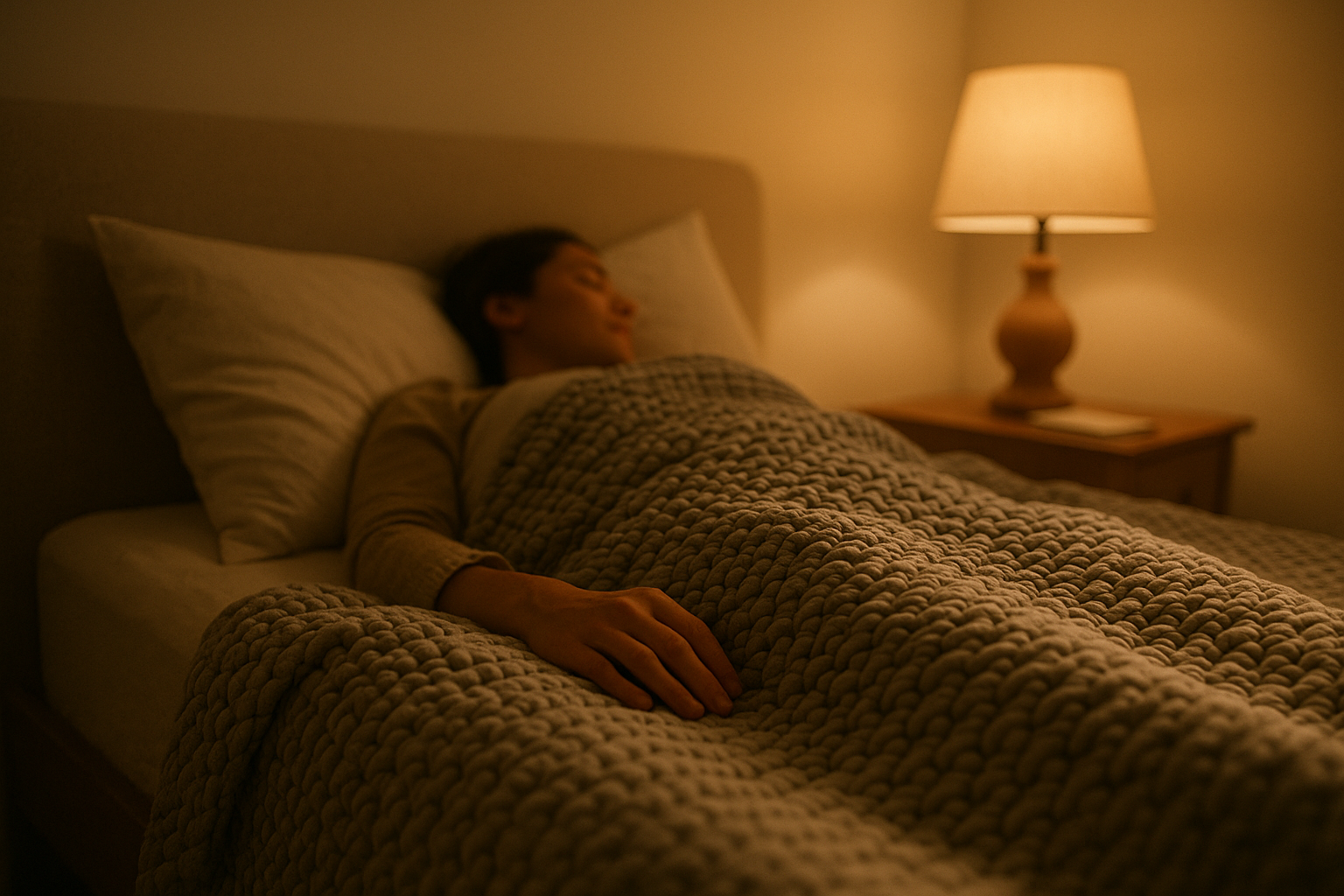
Weighted blankets are everywhere—from TikTok testimonials to hospital waiting rooms—but do they actually help you relax? Short answer: for many people, yes, especially those with insomnia tied to anxiety or chronic pain; for others, the effect may be modest or mainly comfort-based. Evidence shows benefits for some populations (and none for infants), with safety and fit playing a big role in outcomes. Below, you’ll get clear, research-aligned answers to the nine most common questions people ask before buying or trying.
Medical note: This article is informational and not a substitute for personal medical advice, especially if you have breathing, circulation, or mobility conditions, or you’re considering use for a child.
1. What does the best current evidence say overall?
The bottom line is that weighted blankets can aid relaxation and sleep for certain groups, but they’re not a one-size-fits-all cure. A randomized controlled trial (RCT) in adults with psychiatric disorders found clinically meaningful reductions in insomnia severity with weighted blankets, while recent reviews suggest benefits for sleep quality and anxiety across select populations. At the same time, guideline bodies caution against assuming universal benefits, highlighting small sample sizes and heterogeneous methods. This means your experience may vary: some people feel calmer right away; others notice little change beyond coziness. Interpreting the data correctly involves separating “comfort and preference” effects from objective improvements in sleep or anxiety outcomes.
Why it matters
Understanding the strength of evidence helps set realistic expectations. When studies show improvements, they often use validated scales (e.g., Insomnia Severity Index) or report functional gains like fewer awakenings. When results are mixed, it’s typically due to small trials, different blanket types (beads vs. chain), or varied patient groups (e.g., ADHD, generalized anxiety, chronic pain).
What the studies tend to agree on
- Relaxation/anxiety: Modest but meaningful reductions are common in clinical groups.
- Sleep: Improvements appear more consistently in people with insomnia and comorbid conditions than in good sleepers.
- Mechanism: Pressure input likely modulates arousal via the autonomic nervous system (see Item 2).
- Safety: Generally acceptable for healthy adults; not for infants, and children require additional guardrails (see Item 6).
Synthesis: Treat a weighted blanket as a targeted tool. It’s most promising if you struggle with anxiety-related arousal at night, have pain that eases with steady pressure, or carry a psychiatric diagnosis where hyperarousal is prominent.
2. How could deep pressure actually calm the body?
Deep pressure stimulation (sometimes called deep touch pressure) applies firm, even input across the body. The working hypothesis: that steady pressure helps shift the autonomic balance away from “fight or flight” (sympathetic) toward “rest and digest” (parasympathetic). Studies using physiological markers like heart rate variability (HRV) and patient-reported tension suggest that pressure can reduce arousal and promote a calmer state in some contexts. In practical terms, many users describe the sensation as “a sustained hug,” which can blunt racing thoughts and muscle tension.
2.1 The nervous-system pathway (in plain English)
- Arousal downshift: Gentle, distributed pressure can dampen sensory noise and reduce startle, helping your body settle.
- Parasympathetic nudge: Increased HRV or changes in autonomic markers have been observed in related pressure-input settings, consistent with a calmer state.
- Attention anchoring: The consistent tactile input gives your mind a neutral “anchor,” reducing rumination.
Mini-checklist: making the physiology work for you
- Choose a weight that feels grounding, not restrictive (see Item 7).
- Use it during wind-down (20–30 minutes) before sleep to allow arousal to drop.
- Pair with slow breathing (e.g., 4–7–8) to reinforce parasympathetic activation.
- Stop if you feel overheated, short of breath, or claustrophobic.
Synthesis: The physiology story is plausible and supported in specific contexts—enough to explain why many people feel calmer—yet still evolving. Expect “calmer, more settled” rather than a pharmacologic knockout.
3. Does it help with insomnia or just make you feel cozy?
Evidence suggests weighted blankets can reduce insomnia severity for certain adults—particularly those with comorbid psychiatric conditions—while results are mixed in the general population. In a notable RCT of adults with major depression, bipolar disorder, generalized anxiety disorder, or ADHD, participants assigned to a weighted chain blanket improved on insomnia scores and daytime functioning more than those with a lighter control. Systematic reviews since then generally echo a cautiously positive view: potential gains in sleep quality, especially where hyperarousal is front-and-center.
Numbers & guardrails
- Who saw benefits? Adults with insomnia plus psychiatric diagnoses showed clinically relevant improvements on validated scales.
- Who may not? Good sleepers or people with primarily circadian issues sometimes report little change.
- Time frame: Expect to try for 10–14 nights to judge consistency.
- Pairing: For chronic insomnia, combine with CBT-I strategies (stimulus control, consistent wake time).
How to test (short protocol)
- Track a 2-week sleep diary (sleep onset, number of awakenings, sleep quality 1–10).
- Use the blanket every night, same routine.
- Compare week 2 vs. week 1 averages; keep if gains are clear and repeatable (e.g., +1–2 points in sleep quality, fewer awakenings).
Synthesis: If sleeplessness is tied to a “wired and tired” feeling, a weighted blanket can be a useful add-on. If insomnia stems mainly from irregular schedules or light exposure, fix those first.
4. What about anxiety and stress relief during the day?
Daytime anxiety and pre-sleep worry are common reasons people try weighted blankets, and the research generally supports a calming effect in anxious populations. A 2020 systematic review concluded that weighted blankets may reduce anxiety, though more rigorous, larger trials are needed. Newer clinical and scoping reviews (as of 2024) report reductions in anxiety symptoms across psychiatric settings when blankets are used as an add-on to standard care.
4.1 When a weighted blanket helps most
- State anxiety spikes: Before a presentation, after a stressful commute, or in clinical waiting rooms.
- Transition times: Naps, post-shift decompression, or wind-down reading.
- Sensory overload: Noisy environments, travel days, or nights in unfamiliar places.
4.2 Quick-start day use
- 15–30 minutes on a couch or recliner while practicing diaphragmatic breathing.
- Pair with guided audio (body scan, progressive muscle relaxation).
- Follow with a brief walk/stretch to avoid grogginess.
Synthesis: Think of the blanket as a portable “calm button.” It won’t replace therapy, meds, or skills training, but it can cut peak anxiety and make psychological tools easier to use.
5. Can pressure relieve chronic pain—or is that a myth?
For chronic pain, widespread pressure can reduce perceived pain intensity in some people. An RCT in adults with chronic pain found that a 15-lb weighted blanket produced greater reductions in pain severity than a light control blanket, suggesting that pressure may dampen central pain processing or lower threat perception. Many patients also report improved rest positions because the extra drape prevents fidgeting and reduces “guarding.”
How to apply it for pain (without flaring symptoms)
- Start light (≈7–10% of body weight) and short sessions (20–30 minutes).
- Use during flare-prone periods (late afternoon, post-activity).
- Combine with heat on focal areas (if safe) and paced breathing.
- If pain worsens or you feel restricted, stop immediately and reassess weight.
Mini case (illustrative)
- A person with fibromyalgia starts with a 12-lb blanket, 25 minutes before bed, while doing slow breathing. Over two weeks, their self-rated pain at bedtime drops from 6/10 to 4/10 and sleep onset from 45 to 25 minutes on average. When they tried a 20-lb blanket, discomfort and overheating returned, reversing gains—so they reverted to 12 lb.
Synthesis: Pressure can reduce pain severity for some, likely by calming the nervous system and lowering hypervigilance. Individualize weight and timing; lighter and shorter often work better than heavier and longer.
6. Who should not use a weighted blanket—and what are the key safety rules?
Weighted blankets are not safe for infants and are not recommended for use near babies. Major pediatric groups advise against weighted sleep products for infants, and there have been recalls of children’s weighted items due to suffocation hazards. For older children, usage should be clinician-guided (typically an occupational therapist), with strict limits on weight and supervision. Adults with certain conditions should exercise caution or avoid use altogether.
6.1 Safety checklist (core rules)
- Infants: Do not use weighted blankets, swaddles, or sleep sacks on or near babies.
- Young children: Only with specialist guidance; ensure the child can independently remove the blanket.
- Medical cautions (adults): Avoid or seek medical advice if you have untreated sleep apnea, chronic respiratory disease (e.g., COPD, severe asthma), significant cardiovascular disease, low blood pressure with fainting, peripheral neuropathy, advanced frailty, limited mobility, or claustrophobia.
- Overheating risk: Choose breathable fabrics (cotton, bamboo) and avoid high room temps.
- Positioning: Keep the blanket below the neck; never cover the head/face.
6.2 Using with kids (OT-style guardrails)
- Weight generally ≤10% of body weight unless a clinician advises otherwise.
- Short, supervised sessions (often minutes, not all night).
- Avoid during illness, breathing issues, or when the child is unusually drowsy.
Synthesis: Safety depends on age, health, and the ability to remove the blanket. For babies, it’s a hard “no.” For adults, screen health risks and err on the light side.
7. How heavy should your blanket be—and what materials make it feel “calm, not cramped”?
Most people start with ~7–10% of body weight and then adjust for comfort, body size, and heat tolerance. This commonly cited range comes from clinical tradition and related deep-pressure tools rather than a definitive dosing study, so treat it as a starting point, not a rule. The goal is steady, even pressure that feels grounding when you exhale—not an object you have to fight.
7.1 Selection guide (practical)
- Weight: Start near 7–10% (e.g., 7–15 lb for many adults). If you’re uncertain, go lighter and evaluate.
- Fill: Glass beads = thinner profile, more drape; plastic pellets = bulkier; chain blankets = different pressure distribution.
- Shell: Cotton or bamboo for hot sleepers; minky or microfiber for plush feel.
- Size: Choose a throw or twin just for your body; queen/king sizes are heavier to move and trap more heat.
- Care: Check whether the cover is removable and machine-washable.
7.2 Mini-checklist: right-weight test
- Lie down, breathe slowly. Do you feel relaxed within 5 minutes?
- Can you turn and remove the blanket without effort?
- After 15–30 minutes, are you cool, not overheated?
- Over a week, is your sleep quality trend improving?
Synthesis: Choose the lightest blanket that reliably settles you. Comfort and breathability are as important as the number on the label.
8. What’s the best way to use it in a nightly wind-down or daytime reset?
Consistency beats intensity. Rather than jumping straight to overnight use, many people get better results using a weighted blanket as a structured wind-down tool and then carrying it into the first part of the night. This approach minimizes overheating, tests tolerance, and front-loads the calming effect where it matters most: the period when your mind races.
How to do it (repeatable routine)
- T-30 minutes: Dim lights, put phone away, light stretch.
- T-25 minutes: Sit or lie with the blanket (neck free) and breathe 4–7–8 or box breathing.
- T-10 minutes: Read something calming or do a guided body scan.
- Lights out: Either keep the blanket on (if comfortable) or swap to your regular duvet.
Options for daytime resets
- After work: 20 minutes under the blanket + 5 minutes of journaling.
- Midday stress: 10–15 minutes while listening to neutral sounds (rain, brown noise).
- Travel: Lap-size blankets or weighted wraps for planes/trains.
Synthesis: Use structured, time-boxed sessions to “teach” your nervous system how to downshift. Many notice the biggest gains from the pre-sleep window.
9. Should you try one—or save your money?
Here’s a practical decision framework: try a weighted blanket if your biggest issue is arousal (racing thoughts, muscle tension, sensory overload) with insomnia, anxiety, or chronic pain. Consider skipping—or de-prioritizing—if your core problem is schedule (irregular sleep/wake), light exposure, or untreated sleep disorders like sleep apnea. Since research is promising but not definitive, treat your first purchase like a trial.
Try-or-skip checklist
- Likely to help: Insomnia with anxiety, stress-reactive awakenings, chronic pain with hypervigilance.
- Neutral/unclear: Jet lag, shift work disorder, classic circadian issues (light and timing fix more).
- Don’t use: Infants; situations where you can’t remove the blanket; significant respiratory/circulatory risks without clinician input.
Buy smart
- Choose retailers with easy returns and 30-day trials.
- Start with a lighter weight and breathable cover.
- Measure success with a simple log (sleep quality, anxiety level, awakenings).
- If no clear benefit in 2 weeks, return or resell and invest in other tools (CBT-I, light timing, exercise).
Synthesis: For the right person, a weighted blanket is a low-risk, potentially high-comfort tool. Test it deliberately and keep what measurably helps.
FAQs
1) Are weighted blankets proven to work for everyone?
No. Evidence supports benefits for some groups—especially adults with insomnia linked to psychiatric conditions or those with chronic pain—while results in the general, healthy population are mixed. That’s why a two-week self-trial with simple tracking is the most practical way to decide.
2) How heavy should my weighted blanket be?
A common starting range is ~7–10% of body weight, but this is a pragmatic convention rather than a hard-and-fast rule. Pick the lightest weight that consistently calms you without overheating or restricting movement, then adjust if needed.
3) Is it safe to use a weighted blanket every night?
For most healthy adults who can move and remove the blanket independently, yes. Watch for overheating and avoid if you have untreated sleep apnea, severe cardiopulmonary disease, low blood pressure with fainting, significant neuropathy, or mobility limitations. Seek medical guidance if unsure.
4) Can children use weighted blankets?
Infants: absolutely not. For older children, use only with clinician guidance (often an occupational therapist). Keep weight within recommended limits (commonly ≤10% of body weight), ensure they can remove it themselves, and prefer short, supervised sessions rather than all-night use.
5) Do weighted blankets increase melatonin or lower cortisol?
Some articles speculate about hormone changes, but the strongest evidence focuses on autonomic calming (reduced arousal, HRV changes) and self-reported relaxation. Treat hormone claims cautiously unless tied to peer-reviewed human data.
6) Will a heavier blanket work better?
Not necessarily. Heavier can backfire by causing heat, discomfort, or a “pinned” feeling. Many users achieve optimal calm with lighter weights and breathable fabrics. Start low; increase only if comfort and results plateau.
7) What if I run hot or live in a warm climate?
Choose bamboo/cotton covers, glass bead fill, and smaller sizes (throw/twin). Use it for wind-down only if full-night use overheats you. Keep room temperature cool and consider a cooling mattress pad.
8) Are chain blankets different from bead-filled ones?
Chain blankets distribute weight through linked segments, creating a more “hug-like,” drapey pressure, while bead-filled versions can clump slightly. Some trials used chain blankets with positive insomnia outcomes; however, personal comfort drives most of the difference.
9) Can I use a weighted blanket with restless legs or periodic limb movements?
Some people report that steady pressure reduces fidgeting, but responses vary. If you have restless legs syndrome, address triggers (iron deficiency, medications) with your clinician first; a blanket can be tried as an adjunct if it feels soothing and doesn’t worsen symptoms.
10) Will a weighted blanket replace therapy or medication for anxiety?
No. Consider it a comfort and regulation tool. It can lower peak arousal so your therapy skills work better, but it’s not a substitute for evidence-based treatments like CBT or prescribed medications when indicated.
11) Is there a placebo effect?
Possibly—and that’s fine. If your data (sleep diary, anxiety ratings) show consistent gains, keep using it. If not, redirect your effort to interventions with a stronger effect size for your specific issue.
12) How fast should I expect results?
Many users notice a calmer feel on day one, but judge effectiveness over 10–14 nights. Keep an eye on sleep onset time, awakenings, and next-day alertness.
Conclusion
Weighted blankets can absolutely help many people feel calmer—and for specific groups, they can also sleep better with measurable improvements. The mechanism likely centers on reducing arousal through steady pressure that nudges the nervous system toward a rest-and-digest state. High-quality studies show benefits for insomnia in psychiatric populations and for chronic pain; broader “everyone sleeps better” claims are not yet supported. Safety is non-negotiable: never use weighted products with infants and be cautious with children and adults who have respiratory, circulatory, or mobility concerns. If you decide to try one, do it like a mini-experiment: pick a breathable, lighter blanket; use it during a structured wind-down; and track your own outcomes. Keep the tool if it reliably moves the needle; let it go if it doesn’t.
CTA: Ready to test it? Choose a breathable weighted blanket near 7–10% of your weight, run a 14-day wind-down trial, and keep only what measurably helps.
References
- Ekholm B, Spulber S. A randomized controlled study of weighted chain blankets for insomnia in psychiatric disorders. Journal of Clinical Sleep Medicine. 2020. https://jcsm.aasm.org/doi/10.5664/jcsm.8636
- Baumgartner JN, et al. Widespread Pressure Delivered by a Weighted Blanket Reduces Chronic Pain: A Randomized Controlled Trial. The Journal of Pain. 2022. https://www.sciencedirect.com/science/article/pii/S1526590021003138
- Eron K, et al. Weighted Blanket Use: A Systematic Review. American Journal of Occupational Therapy. 2020. https://pubmed.ncbi.nlm.nih.gov/32204779/
- Yu J, et al. The effect of weighted blankets on sleep and related symptoms: A systematic review. Frontiers in Psychiatry. 2024. https://www.frontiersin.org/articles/10.3389/fpsyt.2024.1333015/full
- Williams Buckley A, et al. Practice Guideline: Treatment for Insomnia and Disrupted Sleep Behavior in Children and Adolescents with Autism Spectrum Disorder. Neurology (American Academy of Neurology). 2020. https://www.neurology.org/doi/10.1212/WNL.0000000000009033
- American Academy of Pediatrics. Sleep-Related Infant Deaths: Updated 2022 Recommendations for a Safe Infant Sleeping Environment. Pediatrics. 2022. https://publications.aap.org/pediatrics/article/150/1/e2022057990/188304
- AAP News. AAP leaders call decision to pull harmful weighted sleep products from market a win. 2024. https://publications.aap.org/aapnews/news/28768
- Cleveland Clinic (Roth T.). Weighted Blanket Benefits: Do They Work? July 2025. https://health.clevelandclinic.org/weighted-blanket-benefits
- NHS Borders (Occupational Therapy). Weighted Blankets for Children and Young People: Guidance for Parents and Carers. 2021. https://www.nhsborders.scot.nhs.uk/media/1014142/CYP-OT-guidance-for-parents-and-carers-on-weighted-blankets-.pdf
- BC Children’s/Provincial Outreach Program. Guidelines for the Use of Weighted Blankets. May 2021. https://therapybc.ca/download/44/sensory-equipment-use-in-schools/50907/weighted-blanket-handout-bcch-may_2021_final.pdf
- Rosen CL, et al. Supporting AAN’s new clinical practice guideline on insomnia in children with autism. Journal of Clinical Sleep Medicine. 2020. https://jcsm.aasm.org/doi/10.5664/jcsm.8426
- Wong S, et al. The effect of weighted blankets on sleep quality and mental health: A systematic review. Journal of Psychiatric Research. 2024. https://pubmed.ncbi.nlm.nih.gov/39341068/