















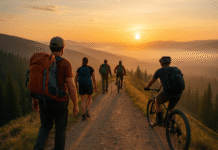





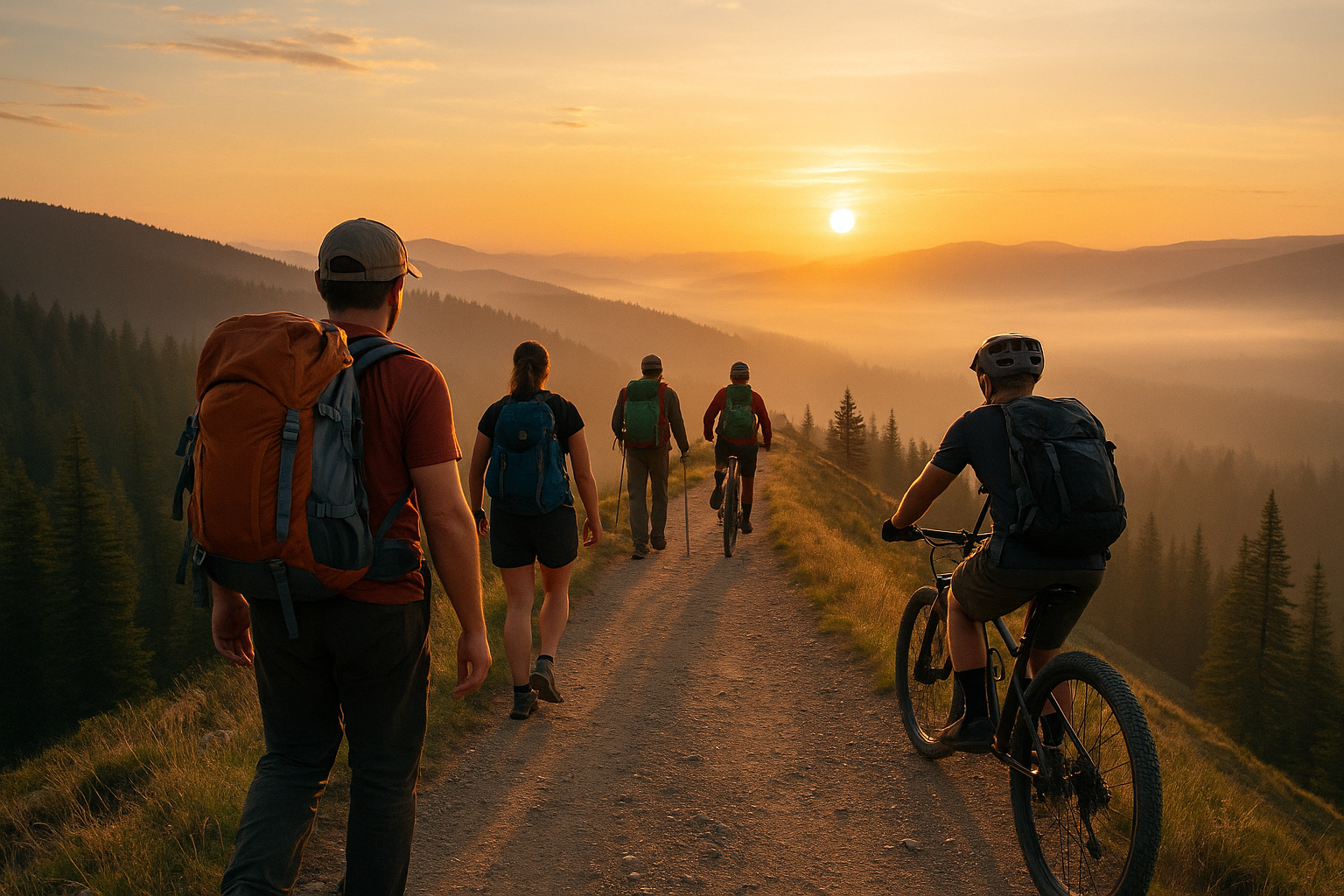
Outdoor adventures like hiking and biking are two of the simplest, most affordable ways to improve your physical and mental health. They count toward the 150–300 minutes of moderate activity (or 75–150 minutes vigorous) adults should aim for each week, and they deliver extra benefits from time in nature. In short: if you can walk a trail or pedal a bike, you can build a stronger heart, calmer mind, and better sleep—often within a few weeks. For readers who want quick traction, start with three 40-minute sessions this week—two easy rides or walks and one hillier route—and build up gradually. This article unpacks nine science-backed advantages you can expect, plus practical guardrails so you can get the upsides safely. (This is general information, not medical advice.)
Quick start (at a glance):
1) Pick a local loop or path you know; 2) Check weather, heat, and air quality; 3) Wear trail shoes/helmet; 4) Bring water and a snack; 5) Keep most outings conversational-pace; 6) Add one hill or interval day weekly; 7) Log minutes, not miles; 8) Recover well.
1. Stronger Heart & Longer Life Expectancy
Hiking and biking improve cardiovascular fitness and reduce long-term disease risk; cycling to work, for example, is linked with lower all-cause mortality and fewer cardiovascular events. The mechanism is straightforward: sustained rhythmic movement elevates heart rate, strengthens the heart muscle, improves vascular function, and helps regulate blood pressure and lipids. When you take those minutes outdoors, terrain variability—uphills, downhills, wind—adds natural interval work that further conditions your system. Aim for a mix of steady, moderate sessions and shorter vigorous efforts (like hill climbs); both “count” toward weekly targets in global guidelines. Consistency beats heroics: small bouts add up over months to measurable improvements in resting heart rate, blood pressure, and endurance.
- How to do it
- Target 150–300 minutes/week (moderate) or 75–150 (vigorous); combine hiking and biking as you like.
- Include one “effort” day: 6–8 hill repeats of 60–90 seconds with easy returns.
- Keep two easy, conversational-pace sessions for base building and recovery.
- Use a simple talk test: you should be able to speak in phrases on easy days; on hills, it’s normal to be limited to a few words.
1.1 Numbers & guardrails (as of August 2025)
- Commuter proof: In a UK Biobank cohort (~263,000 adults), cycle commuting was associated with lower risk of CVD, cancer, and all-cause mortality vs. non-active travel.
- Pacing tip: Keep “moderate” around 64–76% max HR; “vigorous” ~77–95%, or just use breath as your governor.
Bottom line: Bank minutes weekly and sprinkle in hills—your heart, arteries, and lifespan benefit in ways large studies continue to confirm.
2. Lower Stress, Better Mood & Mental Clarity From “Green Exercise”
Moving in natural settings reliably reduces stress, improves mood, and may sharpen attention compared with indoor environments. Large syntheses link greenspace exposure with lower salivary cortisol, reduced blood pressure, and better self-reported health. One practical benchmark: spending ~120 minutes per week in nature (all at once or spread out) is associated with better health and wellbeing compared with less or none. Hiking and biking make that “nature dose” easy—you’re outdoors by default, soaking in varied sounds, light, and views that help the brain disengage from rumination. When stress is high, even brief 20-minute park walks can help; when time allows, longer rides or hikes in wilder areas deepen the effect.
- Try this
- Schedule three 20- to 40-minute park sessions mid-week; add a longer weekend trail.
- Leave one earbud out or go without music to let natural soundscapes do their work.
- End each outing with a 2-minute “soft gaze” break: stand, breathe, and look toward the horizon.
2.1 Why it works
- Attention restoration: Nature’s “soft fascination” lets your directed attention recover, leaving you less mentally fatigued.
- Physiology: Lower cortisol and sympathetic arousal track with greenspace exposure across diverse populations.
- Dose heuristic: Use the “2-hour weekly” target as a planning anchor; it’s flexible but gives you something to aim at.
Bottom line: Lace your week with outside time—preferably on trails or quiet paths—and you’ll likely notice calmer mood and clearer thinking within days.
3. Metabolic Health, Weight Management & Energy You Can Feel
Outdoor hikes and rides burn meaningful energy and improve insulin sensitivity. Using standard MET values (metabolic equivalents), general mountain biking is ~8.5 METs, cycle commuting ~6.8 METs, and hiking with a daypack ranges ~7–8 METs, depending on grade and load. For a 75-kg person, 60 minutes at 6.8 METs approximates ~510 kcal; one 90-minute moderate session plus two 45-minute easy ones can create a weekly energy expenditure of ~1,500–2,000 kcal—useful for weight maintenance when paired with nutrition you can sustain. Beyond calories, regular activity improves blood glucose control and lipid profiles; many people report steadier daytime energy and fewer afternoon slumps.
- Mini-checklist
- Fuel smart: A banana or ~20–30 g carbs before longer efforts; sip water regularly.
- Pace to finish strong: Keep most climbing sub-threshold; save hard pushes for short segments.
- Log minutes, not mileage: Terrain and wind make “miles” misleading—time keeps you honest.
3.1 Numbers & guardrails
- Intensity bands: Moderate activity ranges 3.0–5.9 METs; vigorous ≥6.0.
- CDC snapshot: Activity improves blood pressure and sleep and reduces anxiety—even right after a single session.
Bottom line: Use time-based goals and MET-informed expectations to plan steady, sustainable progress that supports weight and metabolic health.
4. Bones, Joints & Moving Well Across Decades
Weight-bearing activity helps preserve bone, while non-impact exercise like road cycling may not stimulate bone as effectively on its own. Reviews note adult road cyclists can exhibit lower bone mineral density at lumbar spine vs. peers; pairing riding with impact or resistance work counters this. BioMed Central Regular walking/hiking can slow bone loss, and adding short bouts of higher-impact moves (stairs, gentle hops if appropriate) or strength training enhances the effect—especially important for women post-menopause and older adults. Good fit and technique on the bike also protect knees and hips; notably, saddle height influences knee joint loading and comfort.
- Bone-forward plan
- Keep hiking (weight-bearing); include hills or stairs 1–2×/week as tolerated.
- Add 2–3 short strength sessions (squats, step-ups, calf raises, hip hinges).
- If you mainly cycle, sprinkle in brief impact (e.g., 3 sets x 10 small hops) if your clinician clears it.
4.1 Bike fit essentials
- Saddle height: Too low increases patellofemoral stress; small changes (~5%) can notably alter knee moments and kinematics.
- Shoes & cleats: Align knees over mid-foot; avoid excessive toe-out or toe-in.
- Cadence: 80–95 rpm often reduces joint load vs. grinding a big gear.
Bottom line: Hike for bone, ride for cardio—and add a little strength and fit tuning so your joints feel good long term.
5. Better Sleep & Calmer Nervous System
Even a single moderate-to-vigorous session can reduce short-term anxiety, and regular activity improves sleep quality. Outdoor movement may compound the effect by exposing you to natural light, reinforcing circadian rhythms. Many people find that morning hikes or rides help them fall asleep faster and sleep more deeply; evening sessions can also work if you wrap them at least a couple of hours before bedtime. If stress keeps you up, finishing an easy spin or gentle trail walk with a few minutes of slow nasal breathing often settles the nervous system.
- Sleep-savvy routine
- Prefer daylight sessions when possible; if evenings are your only option, keep intensity moderate.
- Downshift the last 5–10 minutes: easy pace, longer exhales, and light stretching.
- Keep caffeine earlier in the day on your hard workout days.
5.1 What the evidence says
- CDC summary: Physical activity improves sleep quality and reduces anxiety in the short term; regular participation maintains sharper thinking with age.
Bottom line: Move most days and finish easy—the combination is a reliable nudge toward better, deeper sleep.
6. Sharper Thinking, Memory & Productivity
Outdoor hiking and biking sessions can double as “brain breaks” that leave you clearer for the rest of the day. Mechanistically, exercise boosts cerebral blood flow and, over time, supports neural plasticity; many notice easier problem-solving after a ride or walk. Greenspace may add an attentional lift on top of the physiological benefits—one reason creative workers schedule midday “thinking walks.” While lab measures vary, public-health summaries consistently list improved cognition among the benefits of regular activity, including immediate gains in adults after single sessions.
- Focus boosters
- Try a 20- to 30-minute “commute loop” before complex work.
- Leave your phone on do-not-disturb; use the trail to process difficult problems.
- Keep one weekly session device-free to let attention fully reset.
6.1 Micro-protocol
- Five-by-two: Insert 5 minutes of brisk walking twice a day (morning/afternoon) on busy days you can’t train; the mental lift still shows up for many.
Bottom line: Use short outdoor bouts strategically—you’ll often come back with clearer priorities and better working memory.
7. More People Moving: How E-Bikes Expand Access (Without Losing Intensity)
If hills, heat, or time have kept you off the bike, e-bikes can be a game-changer: users typically ride farther and more often, and their average intensity still meets or approaches moderate-to-vigorous thresholds. Comparative studies find e-bikers accumulate substantial physical activity, sometimes comparable weekly totals to conventional cyclists, even if per-minute exertion is a bit lower. That extra volume helps many riders hit guideline minutes without feeling “wrecked,” and pedal-assist lets mixed-ability friends or family stay together socially—another adherence win. If you’re returning from injury or building fitness, e-assist smooths spikes in workload while maintaining cardiovascular stimulus.
- Make it work
- Use eco mode on flats, tour or equivalent on hills; aim to keep breathing slightly elevated.
- Choose routes that would feel intimidating on a non-assist bike to reclaim adventure.
- Treat harder sections like “tempo” efforts; you’re still training, just with control.
7.1 Safety & etiquette
- Speed control: Heavier e-bikes demand longer braking distance—practice on gentle grades first.
- Battery planning: Cold and steep climbs drain faster; keep a buffer of 20–30% for the unexpected.
Bottom line: E-assist broadens who can ride and how often—while still delivering a meaningful workout.
8. Safer Adventures: Heat, Air Quality, Terrain & Injury Risk
Great days outside start with good conditions. In hot weather, plan earlier or shadier outings, hydrate, and watch for symptoms of heat illness; national public-health guidance stresses staying cool, staying hydrated, and knowing the warning signs. Check air quality too: when AQI reaches “Unhealthy for Sensitive Groups,” people with heart/lung disease, older adults, and children should reduce prolonged or heavy exertion; if AQI worsens, scale back further or move indoors. On trails, match difficulty to skills and gear—most mountain-bike injuries result from falls, with upper-limb trauma common; downhill settings report incidence around ~3.3 injuries per 100 rides. Finally, simple bike-fit changes matter: a too-low saddle increases patellofemoral stress and can aggravate knee pain.
- Risk-smart checklist
- Heat: Schedule hard work before 10 a.m.; drink to thirst plus a little; carry extra water in heat waves.
- Air: Check AQI the morning of your ride/hike; reduce intensity or reschedule when air is poor.
- Fit: Set saddle so heel on pedal at 6 o’clock yields a soft knee bend; fine-tune in 2–3 mm steps.
- Trails: Start on green/blue (easy/moderate) ratings; session features before linking them at speed.
8.1 Region notes (as of August 2025)
- Urban wildfire smoke and heat waves can shift quickly; always recheck conditions the day of your outing.
- Local parks often post trail status and difficulty—use them to choose safer routes when learning.
Bottom line: A 60-second check of heat, air, and fit transforms risk into a manageable variable—so you can focus on the fun.
9. A Simple 8-Week Plan to Build the Habit (Hikers & Bikers)
Benefits come from consistency. This plan starts modestly and scales by time, not pace, so it works across fitness levels. Keep most sessions at an easy, nose-breathing effort; sprinkle in short climbs or intervals once weekly. If life gets hectic, protect at least two sessions and a short weekend outing—progress resumes next week. Combine hiking and biking to taste; both count toward weekly totals endorsed by global guidelines.
- Weeks 1–2: 3×/week, 30–40 minutes easy (one with gentle hills).
- Weeks 3–4: 3×/week, 40–50 minutes; add 6×60-second hill repeats on one day.
- Weeks 5–6: 4×/week, two 40–50 easy, one 60 with terrain, one 45 with 8×60-second hills.
- Weeks 7–8: 4×/week, one 75-minute adventure, one 45-minute interval day (10×60-second climbs), two easy 40s.
9.1 Mini-log & cues
- Note minutes, perceived effort (1–10), weather/air, and how you slept.
- If knee or back grumbles, reduce volume 20% for a week, revisit fit/footwear, and rebuild.
Bottom line: Build minutes first, then sprinkle effort—eight weeks later you’ll have a durable habit and the confidence to keep exploring.
FAQs
1) How many minutes per week should I aim for?
Most adults benefit from 150–300 minutes of moderate activity or 75–150 minutes vigorous, in any mix—hiking and biking both qualify. If you’re starting from zero, begin with 2–3 short sessions and add 10–15 minutes weekly until you live in that range. PMC
2) Is hiking or biking “better” for health?
Both are excellent. Hiking is weight-bearing (good for bone), while biking is highly joint-friendly and easy to dose precisely with gears. If you ride a lot, add brief impact or strength work; if you hike exclusively, include some sustained uphill or brisk flats for heart benefits. PMCFrontiers
3) Do e-bikes count as real exercise?
Yes. E-bike riders typically achieve moderate intensities and often ride farther and more frequently, yielding meaningful weekly activity—especially for hills or longer commutes. Choose lower assist on flats and treat hills as steady “tempo” work.
4) What’s a safe way to add intensity if I’m new?
Use hills or short intervals once per week: 6–8 repeats of 60–90 seconds at a hard but controlled effort, with equal easy recovery. Keep the rest of the week easy. This adds fitness without overwhelming your system.
5) How do I estimate calories burned?
A rough guide uses METs: energy (kcal) ≈ MET × body weight (kg) × hours. For example, a 75-kg rider commuting for 60 minutes at ~6.8 METs expends ~510 kcal. Remember, these are estimates; terrain and wind alter cost. cdn-links.lww.com
6) How should I set my bike saddle height?
A seat that’s too low increases knee stress; too high can cause hip rocking and discomfort. Start with heel-on-pedal at 6 o’clock and a soft knee bend, then fine-tune in small increments (2–3 mm). If pain persists, see a fitter or clinician.
7) What if the air quality or heat is bad?
Check AQI and the forecast before you head out. When AQI is “Unhealthy for Sensitive Groups,” reduce long or intense efforts; at worse levels, reschedule or go indoors. In heat waves, go early, hydrate, and know the signs of heat illness.
8) Are trails risky for beginners?
Any activity carries risk, but you can stack the odds in your favor: pick easy grades, wear a helmet, mind trail conditions, and keep speeds you can see and stop within. Downhill MTB venues report injuries at ~3.3 per 100 rides; start conservatively and build skills.
9) How soon will I feel benefits?
Many notice calmer mood and better sleep within days; endurance and hill comfort improve over 2–6 weeks with consistent minutes. Short-term anxiety reductions can occur after a single moderate session.
10) Does time in nature really matter beyond the exercise?
Evidence suggests it does: greenspace exposure is associated with better health markers, and about 120 minutes/week outdoors is a practical target many studies point to. Treat it as a helpful, flexible benchmark.
Conclusion
Hiking and biking are a potent combination: joint-friendly, scalable, and enriched by the restorative qualities of nature. Across the nine areas above, a consistent routine strengthens your heart, steadies mood, supports metabolic health, and can help protect bone—especially when you add short strength or impact work. The outdoors adds variety that keeps training fresh: hills for intensity, flats for flow, and scenery that invites you back tomorrow. Most importantly, these adventures fit into real life: a pre-work park loop, a weekend trail, or a relaxed commute. Start with minutes you can repeat, check heat and air before you go, ride or walk mostly easy, and build one effort day per week. In eight weeks, you’ll have a resilient habit and a taste for the open air. Ready to roll? Block your next three outings on the calendar and step outside.
References
- World Health Organization 2020 Guidelines on Physical Activity and Sedentary Behaviour. British Journal of Sports Medicine/W.H.O., 2020. British Journal of Sports Medicine
- WHO Guidelines on Physical Activity and Sedentary Behaviour. World Health Organization, 2020 (accessed 2025). IRIS
- Health Benefits of Physical Activity for Adults. Centers for Disease Control and Prevention, Mar 25, 2024. CDC
- Benefits of Physical Activity (Brain & Sleep). Centers for Disease Control and Prevention, Apr 24, 2024. CDC
- Association Between Active Commuting and Incident CVD, Cancer, and Mortality (Prospective Cohort Study). BMJ, 2017. BMJ
- Spending at Least 120 Minutes a Week in Nature Linked to Better Health and Wellbeing. Scientific Reports (Nature), 2019. Nature
- The Health Benefits of the Great Outdoors: Systematic Review and Meta-analysis of Greenspace Exposure. Environmental Research, 2018. PMC
- 2024 Adult Compendium of Physical Activities: A Third Update of the Energy Costs of Human Activities. Medicine & Science in Sports & Exercise/NIH PMC, 2024. PMC
- Physical Activity of Electric Bicycle Users Compared to Conventional Cyclists. Transportation Research Interdisciplinary Perspectives (Elsevier), 2019. ScienceDirect
- Systematic Review & Meta-analysis: E-Cycling With Electrical Assistance. Sports Medicine – Open/NIH PMC, 2022. PMC
- Air Quality Guide for Particle Pollution (AQI Guidance). AirNow/EPA, 2023. AirNow
- About Heat and Your Health (Heat Safety). Centers for Disease Control and Prevention, Jul 25, 2025. CDC
- Effects of Bicycle Saddle Height on Knee Injury Risk & Kinematics (Review). PubMed (Sports Med), 2011. PubMed
- The Epidemiology of Injuries in Downhill Mountain Biking at Competition. BMJ Open Sport & Exercise Medicine/NIH PMC, 2024. PMC