




Stress piles up when your body’s alarm system stays switched on; creative making helps flip you back into rest-and-repair. In plain terms, creative outlets for stress relief are hands-on, absorbing hobbies that lower physiological arousal, redirect attention, and restore a sense of control. Painting, writing, music, and crafts work because they blend focus, micro-goals, and tactile feedback—the ingredients of a soothing “flow.” This guide shows you 12 evidence-informed options, each with step-by-step starters, tools, and guardrails so you can begin today. Quick note: this article is educational and not a substitute for professional care; if stress or anxiety is severe or persistent, seek help from a qualified clinician.
Fast start (5 steps): pick one outlet you’re curious about; set a 20–30 minute timer; clear tools within arm’s reach; silence notifications and breathe for 30 seconds; make without judging—then stop on time and note how you feel.
1. Painting (Watercolor or Acrylic)
Painting reduces stress by pairing rhythmic brushwork with visual focus, which can ease rumination and lower stress chemistry. Short sessions are effective: in a study of healthy adults, 45 minutes of art-making reduced salivary cortisol for most participants, suggesting a shift toward a calmer state. Watercolor is quick to set up and clean, while acrylic offers bold, forgiving layers; both reward process over perfection. Expect a few muddy mixes at first—that’s normal and part of learning how pigments and water interact. Start small (postcards or A5 paper), aim for simple shapes, and treat each pass of the brush as breath-like: load, sweep, pause. With time, you’ll build a visual vocabulary and a reliable decompressing ritual.
1.1 How to start (20-minute plan)
- Tape down small watercolor paper; set a 25-minute timer.
- Paint three loose gradient “washes” (light to dark), one color each.
- Add three large, simple shapes (circles/leaves/clouds) over dry washes.
- Finish with 6–8 thin lines for accents; sign and date the card.
- Snap a photo, log one sentence about mood shifts.
1.2 Tools & guardrails
- Tools: 12-pan watercolor set or basic acrylic primaries, round brush size 6–8, painter’s tape, 300 gsm paper or a small canvas.
- Guardrails: Limit your palette to 2–3 colors; avoid “overworking” wet areas; stop when the timer ends.
Synthesis: Keep the canvas small and your color choices limited—constraints create calm and quicker wins, which you can repeat whenever stress spikes.
2. Expressive Writing & Journaling
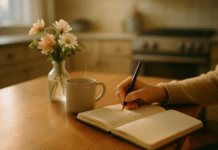
Expressive writing helps you organize difficult thoughts and lowers emotional load by putting experience into words. Classic protocols ask you to write about stressful events for 15–20 minutes on 3–4 consecutive days; evidence shows benefits for mood and, in some contexts, even clinical populations. You don’t need perfect grammar or a fancy notebook—just privacy and honesty. Free-writing can be cathartic; structured prompts (e.g., “What I’m avoiding is…”) can surface insights faster. Pairing writing with a brief breath practice can reduce physiological arousal before you begin. If revisiting trauma is destabilizing, keep content present-focused (what you feel now) and stop if distress climbs too high; you can also switch to gratitude or planning pages for a gentler session. PMC
2.1 Mini-protocol (try for 4 days)
- Set a 20-minute timer.
- Topic: “What’s weighing on me most this week.”
- Write continuously; don’t edit or reread.
- End with two lines: “What I can control is… / One next step is…”
- After day 4, reread and highlight themes or actionables.
2.2 Formats to experiment with
- Stream-of-consciousness (no rules, no brakes).
- Sentence stems: “I notice… I need… I will…”
- Gratitude triad: three specifics you’re thankful for, why they matter, and how to get more of them.
Synthesis: Consistency beats intensity—four honest pages across four days typically yields more relief than one marathon session.
3. Music: Listening and Instrument Practice
Music can nudge your autonomic nervous system toward recovery, especially when used before or after stressful events. In controlled research, listening to music prior to a standardized stressor improved autonomic recovery and modestly influenced endocrine and psychological responses. For many people, 20–30 minutes of music at 60–80 BPM (roughly resting heart rate) feels soothing; if you dislike slow tempos, try familiar playlists that evoke safety or nostalgia. Instrument play—guitar chords, piano patterns, handpan, kalimba—adds tactile focus. Keep volume comfortable; if using headphones for long stretches, observe safe listening ranges. Blend listening with breath pacing (inhale four beats, exhale six to eight) to deepen the effect.
3.1 Quick frameworks
- “Preload” playlist: 5 tracks you trust before tough meetings.
- “Downshift” set: 3 instrumental pieces for evenings.
- Loop-and-layer: record a 4-bar chord loop; improvise single-note lines over it for 10 minutes.
3.2 Micro-skills for beginners
- Learn I–V–vi–IV chord progression; strum for exactly 10 minutes.
- Tap 4-on-the-floor with a metronome; notice your breathing sync.
- Keep a feelings note beside your playlist to connect songs with states.
Synthesis: The right song at the right time functions like a switch—plan your playlists to make that switch easy to flip. PubMed
4. Knitting & Crochet (Textile Crafts)
Textile crafts combine repetitive, rhythmic motion with tactility and visible progress—an ideal recipe for easing anxiety. Survey data from thousands of adults link knitting frequency to greater calm and improved social connection, and many crafters use small, portable projects as “pocket meditation.” Start with bulky yarn and large needles or a beginner crochet hook; aim for short sessions so your hands and shoulders stay comfortable. The pattern doesn’t have to be complex—garter-stitch scarves or simple dishcloths deliver quick, satisfying finishes. Group crafting (in person or online) adds accountability and belonging, both potent buffers against stress. Simply Psychology
4.1 First project checklist
- Materials: bulky or worsted yarn, 6–8 mm needles or 5 mm hook, yarn needle, scissors.
- Pattern: 20 stitches × 40 rows garter-stitch rectangle; weave in ends; done.
- Session rule: 15–25 minutes; stretch wrists every 10.
4.2 Troubleshoot & thrive
- Too tight? Go up a needle size.
- Shoulder tension? Lower elbows, sit back, breathe out longer than in.
- Motivation dip? Join a “stitch-and-sip” or charity knit.
Synthesis: Let the yarn set the pace—consistent, small rows add up to a calm mind and useful objects.
5. Pottery & Clay Work
Clay invites grounded, sensory focus—cool texture, steady pressure, and slow shaping—which can be especially calming during anxious spells. Emerging research in art therapy suggests certain clay techniques (like rhythmic slapping on a clay board) can meaningfully reduce anxiety, likely via embodied regulation and bilateral stimulation. You don’t need a wheel or kiln to benefit: air-dry clay, pinch pots, and slab-built trays are accessible and mess-manageable. Respect safety basics (no dry sanding; avoid inhaling clay dust) and keep tools simple to avoid overwhelm. Choose projects that finish within one or two sessions to welcome quick wins.
5.1 Hand-building starter (40 minutes)
- Wedge a tennis-ball–sized lump to remove bubbles.
- Pinch pot: press thumb in center; rotate and pinch walls evenly.
- Refine: smooth with damp sponge; add a tiny foot ring.
- Initials & date; set to dry per package instructions.
5.2 Practical guardrails
- Cover surfaces; use a damp towel to catch dust.
- Keep a “slurry” cup to join seams; compress joins firmly.
- If you love it, seek community studios for kiln access.
Synthesis: Clay’s weight and responsiveness pull attention into your hands—use that pull to anchor the rest of you.
6. Adult Coloring & Pattern Drawing (e.g., Mandalas)
Coloring structured patterns can soothe state anxiety in brief sessions, likely by simplifying choice, constraining attention, and creating a gentle sense of order. Experimental studies show mandala coloring can reduce anxiety compared with free drawing or blank-page coloring, though findings are mixed across populations—so treat this as a low-risk, try-and-see option. Ten to twenty minutes is enough; choose designs with moderate complexity and limit colors to avoid decision fatigue. Pair with soft instrumental music and a warm drink for a reliable wind-down ritual. PMC
6.1 A simple protocol
- Pick one mandala; choose 3–5 colors only.
- Breathe in while outlining a segment; breathe out while filling.
- Stop when your timer rings—even if unfinished.
6.2 Supplies & tips
- Tools: fine-liner pens, colored pencils, printed mandalas.
- Tips: Work center-out; avoid chasing perfection; log a 1–10 calmness rating before/after.
Synthesis: Structure reduces mental noise—let pattern boundaries do the focusing so your nervous system can idle.
7. Dance & Movement (Guided or Improvised)
Dance blends aerobic movement, rhythmic breath, and embodied expression, which can reduce stress and lift mood in adults. Reviews of dance interventions suggest reductions in depression, anxiety, and stress, and dance/movement therapy is an established clinical modality in some settings. You don’t need choreography or mirrors; a private 10–20 minute session with lights low and eyes soft works well. Choose three songs: arrive (slow), expand (medium), release (upbeat). Focus on big joints—hips, shoulders, spine—and imagine drawing shapes in space. If jumping feels too intense, keep movement low and smooth; the aim is regulation, not performance.
7.1 Ten-minute flow
- 2 min sway and breathe; scan feet to head.
- 4 min circle hips and shoulders; add arm arcs.
- 4 min free movement; exhale through pursed lips to lengthen out-breath.
7.2 Micro-guardrails
- Clear floor hazards; soft shoes or barefoot.
- If dizzy, downshift to seated swaying.
- End with 60 seconds of stillness; hands on heart or belly.
Synthesis: When words jam, movement clears the lane—treat dance as moving meditation, not cardio class.
8. Photography Walks (Especially in Nature)
A camera (or phone) can turn a simple walk into a present-moment scavenger hunt. Nature boosts this effect: experimental work shows a 90-minute walk in natural settings reduced rumination and altered brain activity in areas linked with persistent negative thought. Everyday “photo-a-day” practices also correlate with improved wellbeing via self-care, community interaction, and reminiscence. You’re not chasing perfect shots—just collecting textures, light, and tiny stories your stress brain would otherwise miss. Keep your phone in airplane mode to prevent pings pulling you out of the moment.
8.1 30-minute prompt list
- Five greens: leaves, moss, paint, fabric, light.
- Three shadows: architecture, trees, your silhouette.
- One delight: something that makes you smile.
8.2 Simple compositional anchors
- Rule of thirds; fill the frame; shoot from low/high angles.
- Set exposure by tapping the brightest area; lock if your phone allows.
- End by deleting nothing; review later with kinder eyes.
Synthesis: Looking closely is a mood skill; the lens just reminds you to practice it.
9. Gardening & Plant Styling
Gardening offers sensory grounding, gentle exertion, and micro-goals (weed three squares, water five pots), which together promote recovery from acute stress. In a randomized field experiment, 30 minutes of gardening produced a stronger cortisol decrease than indoor reading after a stress task; broader reviews link greenspace exposure to better overall health outcomes. No yard? Try balcony planters, windowsill herbs, or styling houseplants with pebbles and moss. Combine watering with slow nasal breathing and a longer exhale; trim and tidy with deliberate, rhythmic motions.
9.1 Two simple modules
- Herb trio (60 minutes): basil, mint, parsley in a wide pot; water when top 2–3 cm of soil dries.
- Mood corner (30 minutes): group three plants by height; add one textured object and a small light.
9.2 Care & caution
- Use potting mix with drainage; avoid overwatering.
- If allergic/sensitive, wear gloves and rinse hands.
- Treat it as a living routine, not a décor project.
Synthesis: Plants make progress visible; tending them gently helps you tend your nervous system.
10. Collage & Visual Journaling
Collage is low-stakes creativity: you compose meaning from fragments without needing to draw from scratch. It’s ideal when verbal expression feels stuck—images often lead. Visual journaling can capture moods, values, and micro-milestones; with scissors and glue you can reframe stories, literally. Evidence for art therapy’s benefits across modalities is growing, and collage is a core technique in many programs. Keep spreads small to finish in one sitting, and limit your palette (e.g., only blues, circles, and maps) to reduce decision load. PMC
10.1 Starter spread (25 minutes)
- Theme: “What calm looks like today.”
- Rip 5–7 images and textures; arrange in three clusters.
- Add 10 words: verbs you want to feel (rest, soften, focus…).
- Glue, outline 2–3 edges, date the page.
10.2 Tips & tools
- Keep a zip pouch with glue stick, small scissors, a pen, index cards.
- Source scraps from mailers, old books, paint chips, washi tape.
- Snap your favorite spread for a phone wallpaper.
Synthesis: When the right words won’t come, let images carry meaning—the page will say enough.
11. Choir Singing & Group Music
Singing together combines breath regulation, social bonding, and rhythmic entrainment—an effective cocktail for stress relief. Research on community music-making, including group drumming and choir participation, reports improvements in anxiety, mood, and social resilience versus non-music controls, though designs vary and more rigorous trials are needed. The social container matters: showing up weekly and being heard (and hearing others) can cut loneliness and offer structured emotional release. If no choir is available, try a small “song circle” at home or online sing-alongs. Warm up gently and hydrate; if you’re shy, start with humming. Oxford Academic
11.1 How to begin (zero auditions)
- Search “community choir” or “song circle” near you; most are non-auditioned.
- Commit to four sessions before deciding.
- Log a pre/post mood score each time to notice trends.
11.2 Home version
- Three-song set: ground (hum), open (favorite chorus), release (up-tempo).
- Match breath to phrases; exhale fully to soften shoulders.
- Keep volume comfortable; aim for resonance, not force.
Synthesis: Your voice is built-in biofeedback—shared voices amplify the effect.
12. Creative Cooking & Baking
Cooking is hands-on, multi-sensory, and goal-oriented, which can calm the mind while boosting self-efficacy. Systematic reviews suggest cooking interventions may improve psychosocial outcomes (confidence, mood, social connection), though evidence quality is still developing; small studies in clinical settings show mood gains after brief culinary workshops. Treat weeknight cooking as a creative sketch: simple recipes, seasonal ingredients, and one new technique at a time. Keep the phone away; let sizzling and aromas be your soundtrack. If food or body-image issues are active triggers, choose other outlets or cook alongside a supportive person. PubMed
12.1 30-minute “creative sketch”
- Base: sauté onion/garlic (5 min).
- Color: add a chopped veg and a can of beans.
- Finish: herbs, lemon, olive oil; taste and tweak.
- Plate intentionally; note one thing you’d change next time.
12.2 Mindful mise en place
- Pre-measure; clean as you go; set a gentle playlist.
- Use a timer to prevent overcooking when you pause to breathe.
- Share a photo with a friend to add social uplift.
Synthesis: Kitchen wins stack up fast—each small, tasty success reinforces agency and steadies mood.
FAQs
1) What’s the fastest creative outlet for stress relief when I’m slammed for time?
Try mandala coloring or a two-chord guitar loop for 10–15 minutes; both are low setup and high focus. If you can step outside, a photo micro-walk (three shots of light/shadow) works in the same window. The key is a hard stop: use a timer and log a pre/post 1–10 stress rating to see what helps most. Semantic ScholarLancaster University
2) How often should I practice to notice benefits?
Aim for 3–5 short sessions per week (20–30 minutes). Many studies showing benefits used brief, consistent bouts—e.g., 45 minutes of art-making once, or 15–20 minutes of expressive writing over several days. Consistency helps your brain treat the activity as a reliable downshift.
3) I’m not “artistic.” Will these still work?
Yes. Most benefits come from process, not product—rhythm, focus, and completion micro-doses. Studies on music listening, coloring, and simple art-making didn’t require prior skill. Start with structured tasks (mandalas, guided playlists, simple knitting) and keep your canvas small.
4) Which outlet is best for anxiety versus low mood?
For racing thoughts, try textile rhythms (knitting), mandalas, or breath-synced music. For flat mood, dance, choir, or a photography walk add embodied energy and social lift. Your mileage will vary—track a simple 1–10 mood rating after each session for two weeks. PubMed
5) Can creativity really change my stress hormones?
Short answer: sometimes, yes. A lab study found cortisol reductions after 45 minutes of art-making among healthy adults. Nature exposure and music can also shift physiological markers and brain activity linked to stress and rumination. Treat these as adjuncts—not replacements—for medical care.
6) What if creative work triggers perfectionism?
Use constraints (two colors, one brush, one page, 20 minutes). Choose modalities that reward repetition (knitting rows, coloring segments). Finish intentionally—sign and date even messy pieces—then stop. Over time, you’ll build a body of work that proves progress beats perfection.
7) How do I set up a zero-friction creative corner at home?
Make a “grab-and-go” kit: small box with tools for one outlet, headphones, timer, and a calming playlist. Place it where you naturally pause (kitchen counter, nightstand). Keep surfaces clear; visual clutter competes with attention and raises friction.
8) Is group creativity better than solo?
It can be—choirs and group drumming often add social resilience and accountability. But solo practice can be just as regulating. Try both: a weekly group for connection, and 10-minute solo sessions for daily maintenance.
9) What’s a safe volume for music sessions with headphones?
As a general guide, keep volume comfortable enough to hear your own breath and avoid prolonged exposure at high levels. If you notice temporary ear ringing, lower volume and shorten sessions.
10) How do I keep creative rituals from becoming another chore?
Tie them to existing anchors (post-lunch, pre-shower), set small wins (finish one postcard, knit 10 rows), and log mood changes. If an outlet starts to feel heavy, rotate to a lighter one for a week and return later with fresh eyes.
Conclusion
Stress thrives on uncertainty and overload; creative practice answers with structure, sensation, and small completions. The 12 outlets above—painting, expressive writing, music, knitting, clay, coloring, dance, photography, gardening, collage, choir singing, and cooking—give you multiple doors back to calm. None requires talent, large budgets, or endless time. The trick is tight constraints and regular reps: set a 20–30 minute timer, contain your tools, and stop on time. Over a few weeks you’ll build a personal creative stack—two or three go-to activities you can count on to downshift your nervous system. Share the ritual with a friend or group to add social lift, and keep brief notes so you can see patterns and progress. Start today with the outlet that looks easiest, not the one that looks “right.” Your nervous system learns by doing—give it something kind to practice.
Call to action: Pick one outlet, set a 20-minute timer, and make something small tonight.
References
- Reduction of Cortisol Levels and Participants’ Responses Following Art Making, Art Therapy (Kaimal, Ray, Muniz), 2016. U.S. National Library of Medicine/PMC. https://pmc.ncbi.nlm.nih.gov/articles/PMC5004743/
- Emotional and Physical Health Benefits of Expressive Writing, Advances in Psychiatric Treatment (Baikie & Wilhelm), 2005. Stanford SPARQ (PDF). https://sparq.stanford.edu/sites/g/files/sbiybj19021/files/media/file/baikie_wilhelm_2005_-_emotional_and_physical_health_benefits_of_expressive_writing.pdf
- The Effect of Music on the Human Stress Response, PLOS ONE (Thoma et al.), 2013. https://pmc.ncbi.nlm.nih.gov/articles/PMC3734071/
- The Benefits of Knitting for Personal and Social Wellbeing in Adulthood, British Journal of Occupational Therapy (Riley, Corkhill, Morris), 2013. SAGE. https://journals.sagepub.com/doi/abs/10.4276/030802213X13603244419077
- Experiencing Art Creation as a Therapeutic Intervention to Alleviate Anxiety (includes clay techniques), Frontiers in Psychology (Zhang et al.), 2024. U.S. National Library of Medicine/PMC. https://pmc.ncbi.nlm.nih.gov/articles/PMC10954310/
- Can Coloring Mandalas Reduce Anxiety?, Art Therapy (Curry & Kasser), 2005. ERIC (PDF). https://files.eric.ed.gov/fulltext/EJ688443.pdf
- Can Coloring Mandalas Reduce Anxiety? A Replication Study, Art Therapy (van der Vennet & Serice), 2012. Taylor & Francis. https://www.tandfonline.com/doi/abs/10.1080/07421656.2012.680047
- Effectiveness of Dance Movement Therapy in the Treatment of Adults With Depression, Frontiers in Psychology (Karkou et al.), 2019. U.S. National Library of Medicine/PMC. https://pmc.ncbi.nlm.nih.gov/articles/PMC6509172/
- Nature Experience Reduces Rumination and Subgenual Prefrontal Cortex Activation, PNAS (Bratman et al.), 2015. https://www.pnas.org/doi/10.1073/pnas.1510459112
- Gardening Promotes Neuroendocrine and Affective Restoration from Stress, Journal of Health Psychology (van den Berg & Custers), 2011. PubMed. https://pubmed.ncbi.nlm.nih.gov/20522508/
- Effects of Group Drumming Interventions on Anxiety, Depression, Social Resilience and Inflammatory Immune Response, PLOS ONE (Fancourt et al.), 2016. https://pmc.ncbi.nlm.nih.gov/articles/PMC4790847/
- Psychosocial Benefits of Cooking Interventions: A Systematic Review, Health Education & Behavior (Farmer et al.), 2017; and Culinary Medicine Cooking Workshops as Add-On Therapy—Mood Effects, Nutrients (Mörkl et al.), 2024. https://pmc.ncbi.nlm.nih.gov/articles/PMC5862744/ ; https://pmc.ncbi.nlm.nih.gov/articles/PMC11597544/