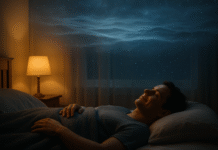













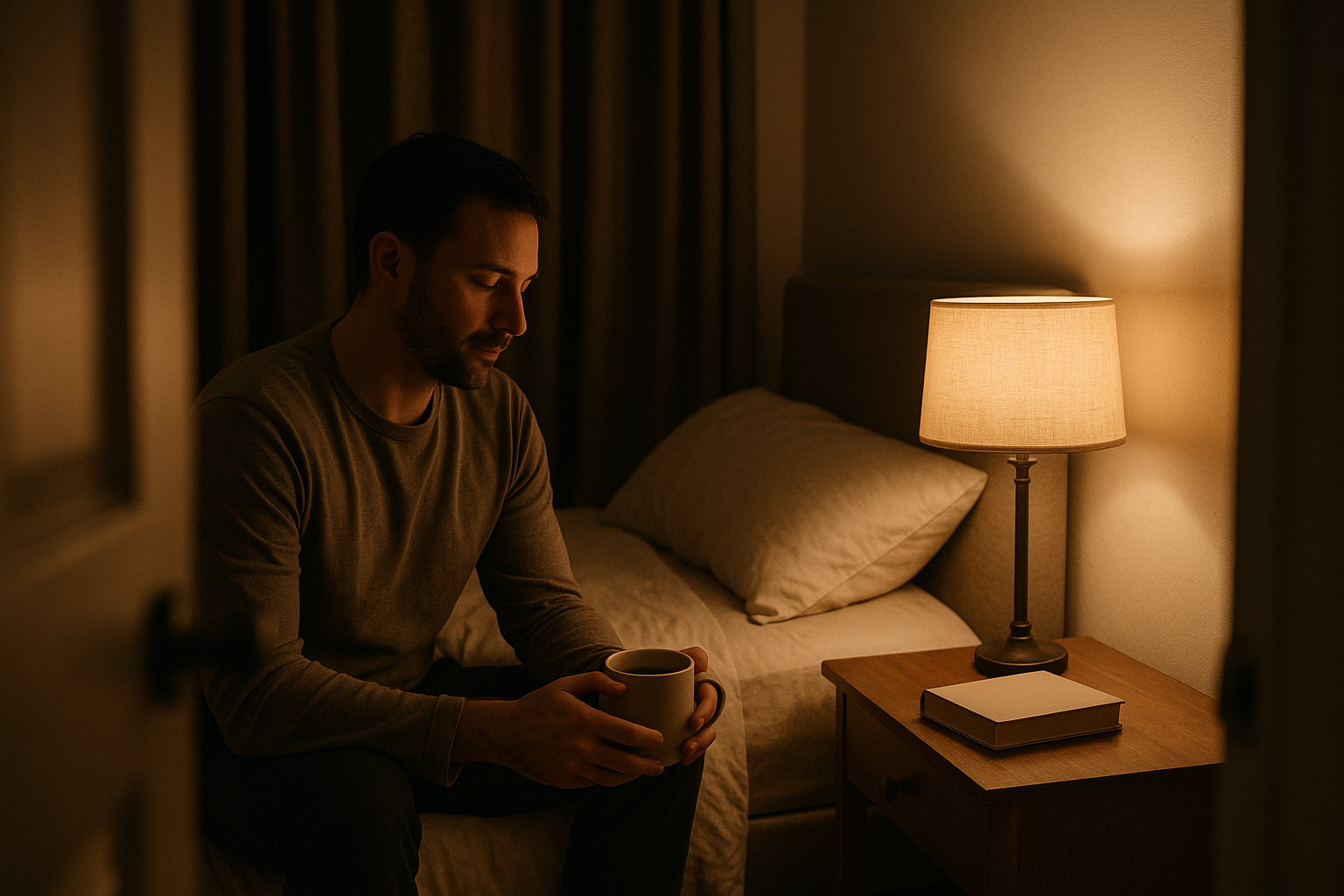
A relaxing bedtime routine is a consistent 30–90-minute wind-down that lowers mental arousal, aligns your body clock, and sets the stage for deeper sleep. Done well, it makes falling asleep feel natural instead of forced, and it helps you wake feeling restored. This guide gives you 12 practical, evidence-based steps, plus guardrails for caffeine, alcohol, light, temperature, and more. Quick definition: a “relaxing bedtime routine for adults” is a repeatable set of calming actions that reduce stimulation, dim light exposure, and strengthen cues for sleep. For fast wins, try this mini plan: dim lights, shut screens, take a warm shower, journal a to-do list, stretch slowly, and get in a cool, dark, quiet bed.
Skimmable setup:
- Pick a stable sleep window; 2) Power down screens and lights; 3) Set caffeine/alcohol cutoffs; 4) Do a calming ritual; 5) Consider a warm bath; 6) Cool your room; 7) Use morning light, dim evening light; 8) Offload worries to a list; 9) Gentle movement; 10) Smart evening nutrition; 11) Train your brain with stimulus control; 12) Use supplements sparingly and wisely. (As of August 2025, adults generally need 7+ hours/night, per U.S. public-health guidance. )
Brief health note: This article is educational, not medical advice. If you have persistent insomnia, significant snoring, or daytime sleepiness, speak with a clinician; CBT-I is first-line treatment for chronic insomnia.
1. Lock a Consistent Sleep Window (Anchor Your Wake Time)
The fastest way to make nights easier is to wake at the same time daily and keep your bedtime within a predictable window. Consistency trains your circadian rhythm, builds a reliable sleep drive, and reduces “Sunday night insomnia.” Start by picking a wake time you can maintain seven days a week, then back into bedtime based on the sleep you need (typically 7–9 hours for most adults). Even small weekend delays can ripple into Monday, so protect your anchor. Within two weeks, most people notice faster sleep onset and fewer mid-night awakenings.
1.1 Why it works
Your internal clock (the circadian system) coordinates hormones, temperature, and alertness. Stable sleep and wake times strengthen that rhythm, improving sleep efficiency. Morning light strengthens the signal; late light and social “jet lag” weaken it.
1.2 How to do it
- Choose a non-negotiable wake time; keep it on weekends.
- Set two alarms: one for wake-up, one bedtime reminder 60–90 minutes before lights-out.
- Get 10–30 minutes of outdoor light soon after waking (even on cloudy days).
- Keep naps brief (≤20–30 minutes) and before mid-afternoon.
- If you can’t sleep one night, still get up at your set time; your clock resets with light. Sleep Education
Bottom line: A consistent sleep window—anchored by your wake time—is the foundation that makes every other step below work better.
2. Create a 60–90 Minute “Digital Sunset” (Dim Lights & Power Down Screens)
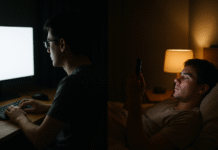
Start by saying: reducing bright and blue-enriched light in the last 1–2 hours before bed helps your brain release melatonin and feel sleepy. Blue-heavy light from LEDs and devices delays melatonin and shifts your clock later, making it harder to fall asleep. The fix isn’t just ditching phones; it’s dimming all evening lighting and switching to warmer, lower-intensity sources. Aim for calm activities—paper reading, light conversation, or gentle music. Sleep Foundation
2.1 Numbers & guardrails
- Start your digital sunset 60–90 minutes before bed.
- If you must use screens, enable night shift/blue-light filters and dim to the lowest comfortable level.
- Keep bedside lights dim and warm; avoid bright overheads after dinner.
- For sensitive sleepers, consider blue-blocking strategies, but prioritize dimming and distance first.
2.2 Mini-checklist
- Toggle “Night Mode” on all devices.
- Replace cool-white bulbs with warm (≤2700K).
- Move charging stations out of the bedroom.
- Keep TV out of the sleep space entirely.
Bottom line: Lights and screens are timing signals. Make evenings dim and mornings bright to help your routine feel relaxing—and effective.
3. Set Caffeine & Alcohol Cutoffs (Protect Your Sleep Architecture)
Rule of thumb: Avoid substantial caffeine within 6 hours of bedtime; even at six hours, sleep can measurably degrade. Alcohol may make you feel sleepy, but it fragments sleep and suppresses REM later in the night; aim to stop drinking at least 3 hours before bed. These guardrails preserve the slow-wave/REM balance that leaves you refreshed, not groggy.
3.1 Numbers & guardrails (as of Aug 2025)
- Caffeine half-life ≈ 5 hours; individual sensitivity varies—6+ hour cutoff is prudent.
- Alcohol: stop ≥3 hours before bed; heavy doses disrupt sleep architecture even more.
- Total sleep need stays ≈ 7+ hours/night for adults; don’t “borrow” with stimulants or nightcaps. PubMed
3.2 Common pitfalls
- Hidden caffeine (green/black tea, colas, pre-workouts, dark chocolate).
- “Just one glass”—still enough to fragment the second half of the night.
- Mixing caffeine late and alcohol at night—double trouble for sleep depth.
Bottom line: Time your pick-me-ups and nightcaps. You’ll fall asleep easier and wake with steadier energy.
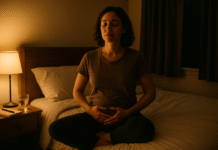
4. Build a Calming Ritual (Breathing, PMR, Mindfulness)
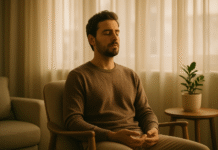
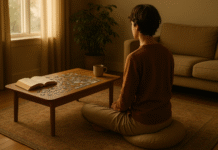
Start simple: a 10–20-minute wind-down that lowers heart rate and busy thoughts. Diaphragmatic breathing (e.g., 4-6 breaths/min), progressive muscle relaxation (PMR), or a brief mindfulness session are all evidence-supported ways to reduce pre-sleep arousal. Choose one or two and repeat nightly so your brain links them to sleep.
4.1 How to do it
- PMR (8–10 minutes): Tense and release major muscle groups from feet to face.
- Box or 4-7-8 breathing (5 minutes): Slow exhale emphasis to nudge the parasympathetic system.
- Mindfulness (5–10 minutes): Non-judgmental attention to breath or bodily sensations.
- Use an audio guide if helpful; keep lights low.
4.2 Evidence snapshot
Randomized and controlled studies across different populations show PMR can improve sleep quality scores and reduce anxiety—both direct enemies of easy sleep onset. PubMedNatureScienceDirect
Bottom line: A short, repeatable ritual is the emotional “off switch” that makes your routine truly relaxing.
5. Take a Warm Bath or Shower 1–2 Hours Before Bed
A warm bath or shower 60–120 minutes pre-bed helps you fall asleep faster by raising skin temperature and then promoting passive cooling—a strong sleepy signal. Meta-analytic work shows earlier sleep onset when bathing is timed in this window. If bathing isn’t practical, a warm foot soak can mimic the effect. NCBI
5.1 How to do it
- Water temp: comfortably warm (not scalding) for 10–20 minutes.
- Finish at least one hour before lights-out to allow cooling.
- Keep post-bath environment dim; avoid screens.
5.2 Mini case
Many adults report 5–15 minutes faster sleep onset with a well-timed bath—especially on stressful days—without needing supplements or sedatives. (Mechanism: skin vasodilation → core temp drop after.)
Bottom line: A warm rinse now means a cooler, sleep-ready body later.
6. Optimize Your Sleep Environment (Cool, Dark, Quiet, Comfy)
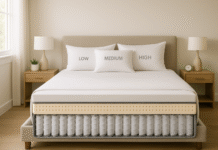
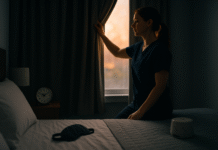
Your bedroom should quietly say, “It’s night.” Keep it cool (about 60–67°F / 15.6–19.4°C), dark (blackout curtains, eye mask), and quiet (mask sporadic noise with steady sound if needed). Choose breathable bedding and a supportive mattress/pillow. Small environmental tweaks often yield big improvements in sleep continuity.
6.1 Mini-checklist
- Thermostat: 60–67°F (adjust to comfort).
- Blackout curtains + door sweep to block hall light.
- Eye mask and, if needed, white/pink noise at safe volume.
- Washable, breathable sheets (cotton, linen, or performance fabrics).
- Clear clutter; bedside lighting soft and directional.
6.2 Numbers & options
Systematic and experimental studies suggest steady broadband sound can shorten sleep-onset latency in some people—especially in noisy environments—though results vary. Use continuous sound at a modest volume.
Bottom line: Make your room an ally: cooler, darker, quieter, and comfortably supportive.
7. Use Light Strategically: Bright Mornings, Dim Evenings
Think of light as a medication for your body clock. Morning outdoor light helps anchor earlier sleep times and boosts alertness; bright evening light delays melatonin and pushes sleep later. Aim for 10–30 minutes of bright morning light and keep home lighting dim and warm at night. If you’re shifting your schedule earlier, morning light is your friend. PMC
7.1 How to do it
- Go outside within an hour of waking; no sunglasses for the first few minutes if safe for your eyes.
- In the evening, switch to table/floor lamps and reduce overhead lighting.
- Consider light boxes only if recommended (for circadian issues).
7.2 Evidence notes
Consensus recommendations advise higher light exposure by day and reduced evening/nighttime light to support sleep physiology and circadian health. Morning bright light—sometimes paired with appropriately timed melatonin in clinical contexts—advances late circadian rhythms. PMC
Bottom line: Treat light like a lever—more in the morning, less at night—to make your wind-down naturally drowsy.
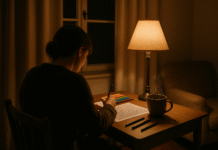
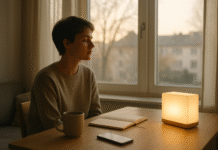
8. Offload Your Mind: Write a 5-Minute To-Do List
If your brain does math, meetings, and memories the moment your head hits the pillow, try a 5-minute to-do list. Research shows that writing upcoming tasks (not what you finished) before lights-out can reduce sleep-onset latency, likely by relieving cognitive load and worry. It’s quick, free, and works best when done nightly.
8.1 How to do it
- Set a timer for 5 minutes, write tomorrow’s tasks in bullet form.
- If a worry pops up, add one action next to it (“email HR at 10am”).
- Close the notebook; place it outside arm’s reach.
8.2 Numbers & nuance
In a controlled lab study of healthy adults, the to-do list group fell asleep faster than those who wrote about completed tasks; more detailed lists correlated with shorter sleep onset.
Bottom line: Put your tasks on paper so your brain doesn’t rehearse them in bed.
9. Add Gentle Evening Movement (Mind the Clock for Intense Workouts)
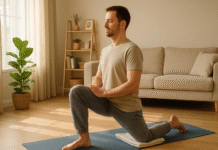
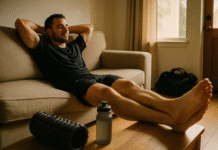
Movement improves sleep—but timing and intensity matter. Most evidence suggests evening exercise doesn’t harm sleep and may even help, unless it’s high-intensity within ~1 hour of bedtime. Favor light stretching, yoga, or a calm walk late; schedule vigorous training earlier, leaving a buffer.
9.1 How to do it
- Evening: choose yoga, stretching, or slow mobility flow.
- Vigorous sessions: finish ≥1–2 hours before bed; longer if you run hot.
- Pair post-workout with a warm shower and cool bedroom.
9.2 Evidence notes
Systematic reviews and guidance indicate minimal disruption from evening exercise overall, with potential issues when intensity is high and the finish time is too close to sleep. Buffering by 1–2 hours protects sleep onset and quality. Sleep FoundationNational Sleep Foundation
Bottom line: Move at night—just leave space between sweat and sleep.
10. Time Your Evening Nutrition (Light, Early, and Calm)
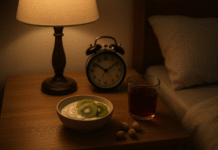
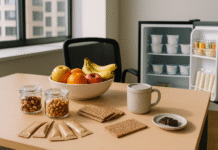
Sleep is smoother when your gut is calm. Finish dinner 2–3 hours before bed, keep late meals light, and skip heavy, spicy, or high-sugar foods close to lights-out. If you’re hungry, a small snack with complex carbs and protein (e.g., yogurt with oats) can prevent wake-ups from hunger. Avoid large fluid intakes late to minimize bathroom trips. These choices support stable blood sugar and reduce reflux—two common sleep disruptors.
10.1 Mini-checklist
- Dinner: plate with fiber + protein + healthy fat; finish 2–3 hours pre-bed.
- Late snack options (only if needed): small yogurt + oats; banana + peanut butter; handful of nuts.
- Cut fluids 1–2 hours before bed; sip water if thirsty.
- Avoid heavy alcohol and caffeine (see Step 3).
10.2 Regional note (hot climates)
In warmer months or in humid regions, earlier, lighter dinners plus a cool bedroom can meaningfully reduce nighttime awakenings.
Bottom line: Quiet digestion = quiet sleep. Keep late eating light and early.
11. Train Your Brain with Stimulus Control (CBT-I Basics)
If you can’t fall asleep after ~20 minutes, get out of bed and do something calm in low light, then return when sleepy. Use the bed only for sleep and sex. Wake at your set time no matter what. These simple rules—core pieces of CBT-I—break the learned association between bed and wakefulness and are strongly supported by clinical guidelines.
11.1 How to do it
- Go to bed only when sleepy, not just when the clock says.
- If awake and frustrated, get up; read paper pages in dim light.
- No news/social feeds in the night; keep lights low.
- Wake at the same time; use morning light to reset.
11.2 Why it matters
CBT-I consistently outperforms medications long-term for chronic insomnia and is recommended as the first-line treatment by major sleep organizations. Digital options exist when specialists are unavailable. AASM
Bottom line: Re-link bed with sleepiness, not scrolling or stress—and your routine will start working again.
12. Use Sleep Aids Sparingly—and Smartly (Supplements, Sound, Scents)
Behavior beats bottles. If you experiment with aids, do so cautiously. Melatonin can help with timing (jet lag or circadian shifts) but isn’t strongly supported for chronic insomnia in adults, and OTC content can vary widely. Magnesium has mixed evidence—possible benefit if you’re deficient, but results are inconsistent. Sound masking (white/pink noise) can help in noisy settings. Try one change at a time and consult a clinician if sleep issues persist.
12.1 Numbers & guardrails
- Melatonin: consider only for timing issues; check for third-party testing and start low; discuss with your clinician. Content in gummies has been found to deviate from labels.
- Magnesium: food-first approach; supplements may help some, particularly if intake is low; watch for GI side effects.
- Scents (e.g., lavender): generally safe but evidence is modest; treat as a nice-to-have. ODs
12.2 Mini-checklist
- Behavior first (Steps 1–11) for 2–4 weeks.
- If trying melatonin, use for travel/shift or with professional guidance.
- Prefer food sources of magnesium (legumes, nuts, greens) before pills.
- If using noise, set continuous sound at a safe, low volume.
Bottom line: Support your routine with careful, minimal aids—don’t let them replace the proven behaviors that truly move the needle.
FAQs
1) What’s the ideal length of a relaxing bedtime routine for adults?
Aim for 30–90 minutes. That’s long enough to dim light, finish screens, and perform a short ritual (breathing, PMR, journaling), but not so long it becomes a project. Keep the order consistent so your brain recognizes the sequence as a sleep cue.
2) How many hours of sleep do adults need?
Most adults do best with 7 or more hours nightly, according to public-health guidance. Some thrive at 7, others at 8–9. If you feel alert without caffeine and don’t doze unintentionally, you’re likely in your sweet spot.
3) Do I really have to stop caffeine 6 hours before bed?
If you’re sensitive or struggling with sleep, yes—6+ hours is a solid baseline. Lab data show measurable sleep disruption even at six hours pre-bed. If you go to bed at 11:00 p.m., plan your last coffee before ~5:00 p.m.—earlier is better. PMC
4) Is alcohol okay as part of my wind-down?
Alcohol can make you feel sleepy, but it fragments sleep and suppresses REM later in the night. If you drink, finish ≥3 hours before bedtime and hydrate. For many, skipping the nightcap noticeably improves sleep quality. PMC
5) What temperature should my bedroom be?
Most sleep experts suggest 60–67°F (15.6–19.4°C). In hot climates, combine a fan or AC with breathable bedding; in cold seasons, keep air cool and add blankets rather than overheating the room. National Sleep Foundation
6) How close to bed can I exercise?
Light stretching or yoga is fine. High-intensity workouts within ~1 hour of bedtime can delay sleep for some people. Try to finish vigorous sessions 1–2 hours before lights-out. PubMedHarvard Health
7) Do blue-light-blocking glasses work?
Evidence is mixed. What’s more reliable is reducing overall evening light and enabling device night modes. The most impactful change is dimming lights and avoiding bright screens in the hour before bed.
8) What if I wake in the night and can’t fall back asleep?
Use stimulus control: get out of bed, keep lights low, and do something calm (paper reading) until sleepy. Avoid clock-watching. Keep your set wake time in the morning and use bright light to reset.
9) Does a warm shower really help?
Yes—1–2 hours before bed. The warm water raises skin temperature; then as you cool, your body gets a stronger “time to sleep” signal, often shortening sleep-onset time.
10) Is white noise helpful or just hype?
Steady broadband sound can mask disruptive noises and, in some studies, shorten sleep-onset latency—especially in noisy settings. It’s not magic and doesn’t work for everyone; keep volume low and continuous all night if you use it. Journal of Clinical Sleep Medicine
11) I’ve tried everything—what next?
If sleep hasn’t improved after 2–4 weeks of consistent routines, talk with a clinician. CBT-I is the recommended first-line treatment for chronic insomnia and can be delivered in person or digitally.
12) Should I take melatonin or magnesium?
Melatonin is most useful for jet lag or circadian timing; it’s not a cure-all for insomnia, and OTC products can contain more or less than labeled. Magnesium may help if you’re low but evidence is mixed. Discuss any supplement with your clinician. PubMed
Conclusion
A relaxing bedtime routine isn’t a spa night—it’s a repeatable signal to your brain and body: “It’s time to power down.” Start by stabilizing your sleep window and dimming the evenings. Layer on a short ritual—breathing, PMR, or gentle stretching—and keep your room cool, dark, and quiet. Protect the second half of the night by respecting caffeine and alcohol cutoffs. Use morning light to anchor your clock and a simple to-do list to offload tomorrow’s tasks. The routine works because it combines timing (circadian cues), physiology (temperature and arousal), and environment (light, sound, comfort). Give yourself 2–3 weeks of consistent practice; most people notice faster sleep onset, fewer wake-ups, and steadier energy. When supplements or gadgets tempt you, remember: behavior first, aids second. If insomnia persists, CBT-I is the gold-standard roadmap. Start tonight: pick your wake time, plan your digital sunset, and choose one calming ritual. Your next great day starts this evening.
References
- FastStats: Sleep in Adults — Centers for Disease Control and Prevention (May 15, 2024). CDC
- About Sleep — Centers for Disease Control and Prevention (May 15, 2024). CDC
- Caffeine effects on sleep taken 0, 3, or 6 hours before going to bed — Journal of Clinical Sleep Medicine (2013). PubMed
- Alcohol and the Sleeping Brain — Alcohol Research: Current Reviews (2014). PMC
- Alcohol and Sleep — Sleep Foundation (July 16, 2025). Sleep Foundation
- Before-bedtime passive body heating by warm shower or bath — Sleep Medicine Reviews (2019). PubMed
- The Best Temperature for Sleep — Sleep Foundation (July 11, 2025). Sleep Foundation
- Recommendations for daytime, evening, and nighttime indoor light exposure — PLOS Biology (Mar 17, 2022). PLOS
- Blue light has a dark side — Harvard Health Publishing (updated July 24, 2024). Harvard Health
- Behavioral and psychological treatments for chronic insomnia disorders — Sleep Medicine Clinics review (2021). PMC
- New guideline supports behavioral, psychological treatments for insomnia — American Academy of Sleep Medicine (Dec 16, 2020). AASM
- Quantity of Melatonin and CBD in Melatonin Gummies Sold in the US — JAMA Research Letter (Apr 24, 2023). (open access summary: ) JAMA NetworkPMC
- Progressive muscle relaxation increases slow-wave sleep — Physiological Reports (2022). PMC
- Broadband Sound Administration Improves Sleep Onset — Frontiers in Human Neuroscience (2017). PMC
- The Effects of Bedtime Writing on Difficulty Falling Asleep — Journal of Experimental Psychology (2018). (open: ) PubMedPMC