









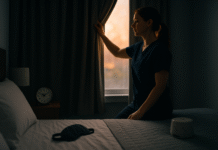
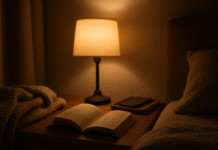
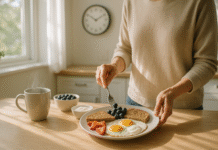
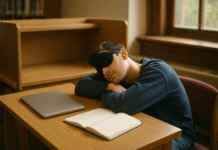

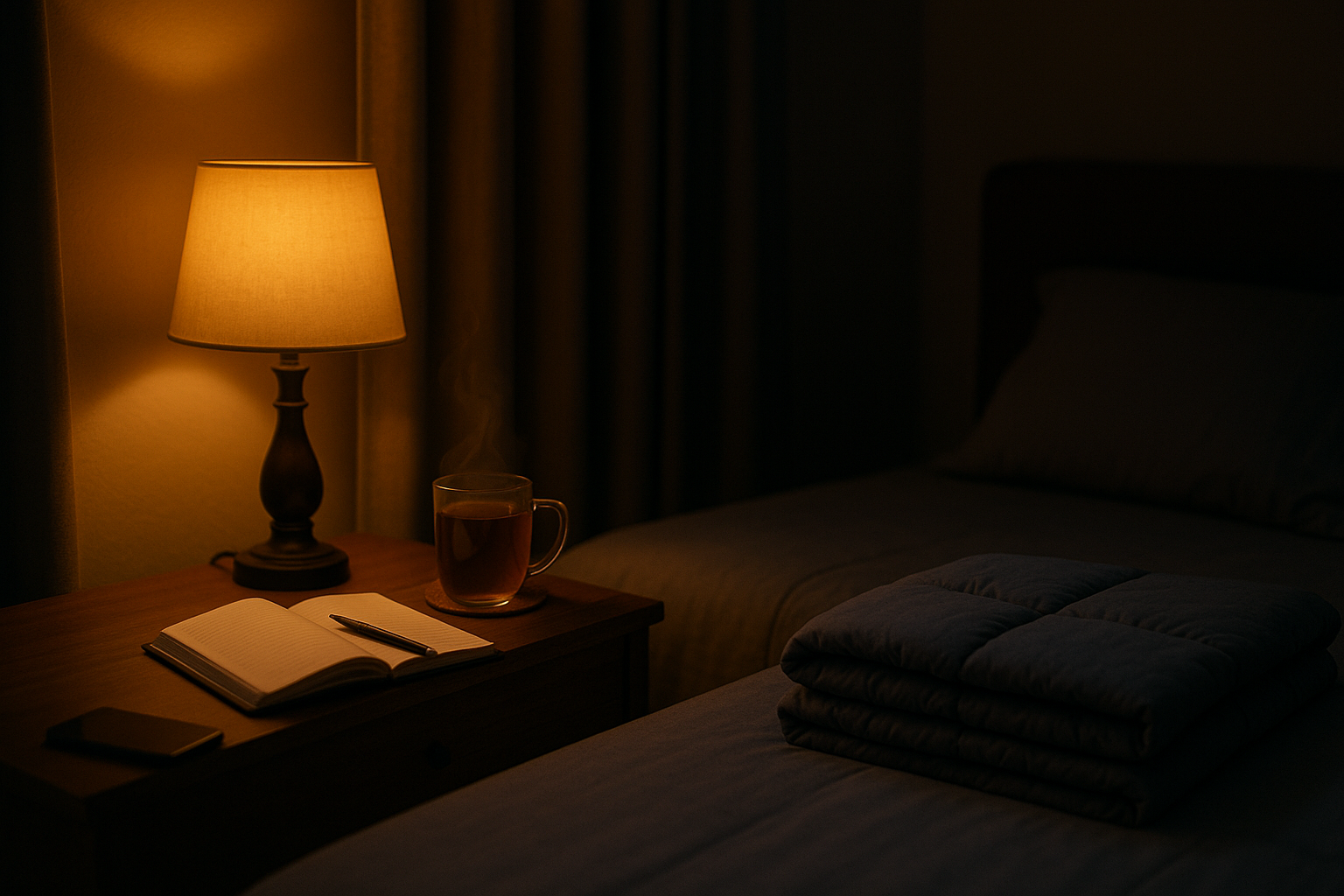
Nighttime anxiety is common—and solvable. This guide gives you nine simple bedtime rituals to reduce anxiety and help you fall asleep faster, stay asleep longer, and wake more restored. You’ll learn what to do (and when), why it works, and the practical guardrails that keep each habit effective. In brief: build a consistent wind-down window, dim the lights, breathe slowly, relax the body, offload worries to paper, bathe smart, time stimulants and meals, practice a few minutes of mindfulness, and keep your bedroom cool, dark, quiet, and reserved for sleep. Friendly disclaimer: this article is educational and not a substitute for personal medical advice; if you have severe or persistent sleep problems, speak with a qualified clinician.
Quick-start (15-minute version):
- Dim lights and silence notifications. 2) Five slow breaths: inhale through the nose, exhale longer than the inhale. 3) Two-minute muscle release (jaw, shoulders, hands). 4) Three-minute “worry download” plus a short to-do list for tomorrow. 5) Get in bed only when sleepy; keep the room cool and device-free.
1. Lock a Consistent Wind-Down Window and a Fixed Wake Time
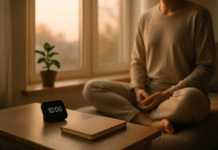
A predictable wind-down is the simplest way to tell your nervous system, “sleep is next.” Set a 30–60 minute window before lights-out to do only low-arousal activities—light reading, stretching, bathing, tidying, journaling—then aim for the same wake time daily, weekends included. This fixed anchor trains your circadian rhythm, reduces bedtime uncertainty (a fuel for anxiety), and makes sleep pressure arrive on schedule. In practice, many people find that a shorter wind-down they actually keep beats an aspirational 90-minute plan they rarely follow. Start small, protect the wake time, and your body will do more of the work for you within one to two weeks.
1.1 Why it matters
- Regular cues condition your brain to associate evening behaviors with sleep, reducing anticipatory worry.
- A stable wake time prevents “social jet lag,” which can heighten sleepiness variability and nighttime restlessness.
- Sleep organizations emphasize a consistent routine over sporadic catch-up sleep.
1.2 Mini-checklist
- Pick a wake time you can keep 6–7 days a week.
- Block 30–60 minutes for wind-down; set a repeating alarm.
- Put tomorrow-morning tasks (clothes, bag, breakfast) on “autopilot” to remove evening decision load.
Together, the routine and fixed wake anchor lower cognitive arousal at night and create predictability—an antidote to anxiety-driven sleep delays.
2. Create a “Digital Sunset” and Dim Evening Light
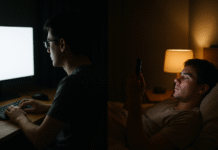
Dimming light in the last 1–2 hours before bed calms the brain’s clock. Even ordinary room light can suppress melatonin and push your “sleepiness curve” later, while bright, blue-weighted light does this more strongly. Build a digital sunset: dim lamps, use warmer color temperatures, and park screens well before bed. If you must use a device, enable night mode and keep it distant from your eyes. This isn’t about perfection; it’s about less light, later.
2.1 Numbers & guardrails (as of August 2025)
- Evening room light vs. dim light: melatonin duration shortened by ~90 minutes; onset delayed in ~99% of people.
- Around 30 lux (a dim living room) can suppress melatonin in many people; aim lower if you struggle with anxiety at bedtime.
- Blue-enriched light suppresses melatonin roughly twice as much as green light of similar brightness.
2.2 How to do it
- Two-stage lighting: switch overheads off after dinner; use one or two low, warm lamps.
- Screen curfew: stop non-essential screens 60 minutes before bed; if needed, use “night shift” and keep devices at arm’s length.
- Ambient habits: draw blackout curtains; keep bathroom lighting dim for teeth-brushing.
Lower, warmer evening light plus fewer screen-driven stimuli help your brain stop “chasing daylight,” easing you into sleep with less anxiety. PMC
3. Downshift with Slow, Nasal Breathing (e.g., 4-7-8 pattern)
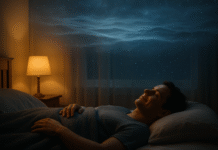
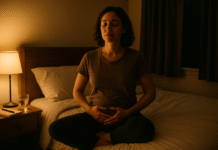
Slow, paced breathing is a reliable clutch for the nervous system. In the moment, it reduces sympathetic arousal (jitters, racing thoughts) by strengthening the parasympathetic “rest-and-digest” response. A simple pattern many people like is inhale 4, hold 7, exhale 8—but the exact counts matter less than slow, nasal inhales and longer, relaxed exhales. Two to five minutes can shift your physiology enough to make falling asleep feel possible instead of pressured.
3.1 Why it works
- Slow breathing increases vagal activity and heart-rate variability (HRV), markers of parasympathetic tone.
- Extended exhalations particularly bias the system toward calm.
- Effects accrue with practice but also work acutely during spikes of anxiety. ScienceDirect
3.2 Practice cues
- Posture: reclined or lying on your side; one hand on chest, one on belly (feel belly lead).
- Cadence: start ~6 breaths/minute; if you get air hunger, shorten the hold and keep exhale longer than inhale.
- Add-ons: pair with a mantra on exhale (“let go,” “safe now”), or with a body scan (next section).
When worry surges, breath pacing prevents runaway arousal and opens the door to sleep—without leaving bed. Frontiers
4. Release Tension with Progressive Muscle Relaxation (PMR) or a Body Scan
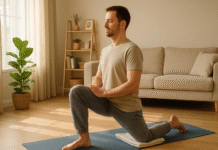
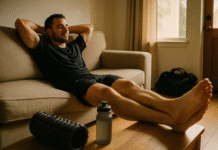
An anxious brain often rides on a tense body. PMR teaches you to notice and release micro-tensions you didn’t know were there—jaw, shoulders, fists, abdomen, calves—that keep the “threat” system idling. Tense a muscle group for ~5 seconds, then release and feel the contrast for ~10–15 seconds, moving head-to-toe. A gentler alternative is a body scan, sweeping attention slowly through the body without tensing. Both methods are portable, free, and effective in a few minutes.
4.1 Tools & examples
- Guided audio: search “progressive muscle relaxation sleep” in your favorite app; aim for 5–10 minutes.
- Sequence idea: brow → jaw → neck/shoulders → hands/forearms → chest → belly → glutes → thighs → calves → feet.
- If pain is present: skip tensing painful areas; visualize warmth and weight instead.
4.2 What the evidence suggests
Randomized and clinical studies associate PMR with reduced anxiety and better sleep quality across settings (post-operative recovery, medical conditions, pandemic-related stress), making it a practical bedtime skill. ScienceDirectNature
Done consistently, PMR/body scans weaken the link between “bedtime” and “tension,” so the mind can quiet down.
5. Offload Worries with a 5-Minute “Worry Download” and a Short To-Do List
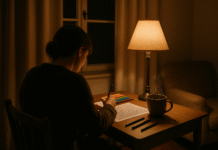
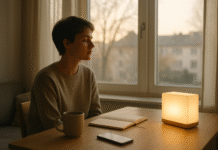
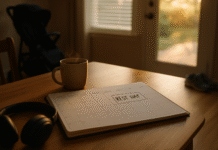
If your mind races at night, don’t wrestle it—park it. Spend five minutes writing two things: (1) a worry download (what’s on your mind), and (2) a short, specific to-do list for tomorrow. This externalizes tasks and reduces rumination. In a controlled sleep-lab study, people who wrote a to-do list at bedtime fell asleep faster than those who wrote about completed tasks; more detailed to-dos led to shorter sleep-onset latency. Gratitude journaling can also help by shifting pre-sleep thoughts toward positives. PubMed
5.1 How to do it
- Use a paper notebook to avoid screens.
- Keep the list short and actionable (3–6 bullets max).
- Add one line of “good enough” criteria (e.g., “Draft 3 slides, not perfect slides”).
- End with one gratitude or a small win from the day.
5.2 Common mistakes
- Writing an overlong list (can feel overwhelming).
- Keeping the notebook in bed (finish at the desk or chair, then get into bed).
- Re-reading the list after lights-out (close the loop and let the paper hold it).
By handing worries to paper, you tell your brain there’s a plan—so it doesn’t need to rehearse problems at 2 a.m. PMC
6. Take a Warm Shower or Bath 1–2 Hours Before Bed
Counterintuitive but proven: a 10–15 minute warm bath or shower one to two hours before bed helps you fall asleep faster. The warm water dilates skin blood vessels and, upon exit, your core temperature drops—a natural sleep cue. Time it too close to bedtime and you risk feeling hot; too early and the benefit fades. Many anxious sleepers find the ritual itself soothing, especially when paired with dim light and quiet music. ScienceDirectUT Austin News
6.1 Practical recipe
- Temperature: comfortably warm (about 40–42.5°C / 104–108°F if you track it).
- Duration: 10–15 minutes is enough.
- Timing: 60–120 minutes pre-bed.
- Aftercare: dry off, slip into breathable sleepwear, and keep lighting low.
6.2 Optional add-ons
- Aromatics: lavender or chamomile essential oil (diffused safely, not on skin if sensitive).
- Soft soundtrack: slow, instrumental music (60–80 BPM).
Used regularly, the heat-then-cool sequence becomes a reliable “sleep is coming” signal that takes the edge off evening anxiety.
7. Time Caffeine, Alcohol, Nicotine, and Meals Wisely
Even modest mistiming of stimulants and heavy meals can keep anxiety simmering and sleep shallow. Caffeine taken even 6 hours before bed measurably reduces sleep time and quality. Alcohol may feel relaxing but fragments sleep later in the night, and nicotine is a stimulant. Heavy or spicy meals close to bedtime can cause reflux or discomfort. A few simple cutoffs help most people.
7.1 Numbers & guardrails
- Caffeine: avoid within 6–8 hours of bedtime (earlier if you’re sensitive).
- Alcohol: stop 3–4 hours before lights-out; alternate with water.
- Nicotine: avoid in the evening; consider step-down plans with your clinician.
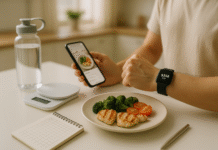
- Meals: last substantial meal 2–3 hours pre-bed; light snack if needed. CDC
7.2 Smart swaps
- Afternoon herbal teas (rooibos, peppermint).
- Decaf coffee (small amounts still contain caffeine, so test your response).
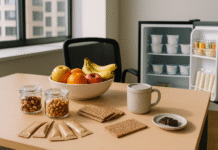
- Light snack ideas: yogurt, banana with peanut butter, oats.
These timing tweaks reduce physiological arousal and digestive discomfort so psychological anxiety doesn’t have a body to borrow.
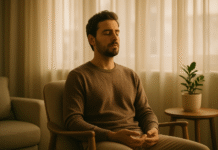
8. Add 10 Minutes of Mindfulness (or Compassion) Practice
Brief, structured mindfulness can quiet pre-sleep rumination and reduce anxiety. In a randomized trial, a short mindfulness program improved sleep quality in adults with sleep complaints versus a sleep-hygiene class. The point isn’t to “force sleep”—it’s to observe thoughts without chasing them, so arousal fades on its own. If standard focus-on-breath feels hard when anxious, try loving-kindness/compassion phrases, which many find less effortful at night.
8.1 How to do it
- Set 10 minutes in your wind-down window.
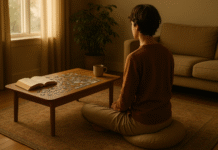
- Sit or lie down; close eyes.
- Anchor: breath, body sensations, or a compassion phrase (“May I be safe; may I rest”).
- When the mind wanders, label it (“planning,” “worry”) and return to the anchor.
8.2 Tips for anxious nights
- Use softer goals (“resting is enough”).
- Pair mindfulness with slow breathing (Section 3).
- End with one next step (“Lights off now”).
By practicing non-striving attention, you lower the pressure to sleep and the nervous system follows.
9. Make the Bedroom a Sleep Sanctuary (Cool, Dark, Quiet) + Stimulus Control
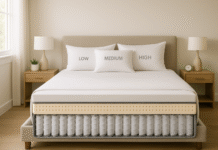
Treat your bedroom like a cue: cool, dark, quiet—and used only for sleep and sex. Keep the thermostat around 60–67°F (15–19°C), block stray light, and mask noise. If you can’t fall asleep or return to sleep in ~20 minutes, leave the bed for a quiet, dim-light activity and return only when sleepy. These are the core rules of stimulus control, a pillar of Cognitive Behavioral Therapy for Insomnia (CBT-I). They retrain the bed-sleep link and reduce anxiety fueled by “trying harder” in bed. AASM
9.1 Setup checklist
- Temperature: set to 60–67°F (15–19°C); use breathable bedding.
- Light: blackout curtains, eye mask; keep phone face-down in another room if possible.
- Sound: earplugs or a constant sound source (fan/white noise).
- Clutter: visible mess can cue “unfinished business”—tidy earlier in the evening.
9.2 Optional tools (use judiciously)
- Weighted blanket: some evidence for improved insomnia in specific clinical populations; test a ~10% body-weight option and avoid if you have respiratory or mobility issues—discuss with your clinician.
- Digital CBT-I programs: helpful if access to a therapist is limited and a gentle on-ramp to these techniques.
Consistently applying these environmental and behavioral rules lowers bedtime arousal and builds confidence: bed = sleepy, not stressed.
FAQs
1) What’s the single best ritual to start with if I’m overwhelmed?
Begin with a fixed wake time plus a 30-minute wind-down you’ll actually keep. Those two moves improve circadian timing and reduce decision load at night, which lowers anxiety without adding complexity. Once that sticks, layer on dimming lights and five minutes of slow breathing.
2) How long before I notice improvements?
Many people feel calmer in the first week from light management and worry offloading. More stable sleep usually emerges over 2–3 weeks as your body clocks to a steady schedule. If anxiety is severe or long-standing, working with a clinician or CBT-I provider can accelerate progress. PMC
3) Is it okay to read in bed?
If you fall asleep easily with a paper book and dim light, it can be fine. But if reading becomes a way to wait out anxiety or you regularly overshoot lights-out, read in a chair and get into bed only when sleepy to preserve stimulus control. Journal of Clinical Sleep Medicine
4) Do blue-light blocking glasses help?
Their benefits are mixed. Managing overall evening light (dimmer, warmer, fewer screens) is more consistently effective than relying on glasses alone. If you do use them, treat them as one part of your digital sunset, not a license for late-night scrolling. WIRED
5) I wake up at 3 a.m. anxious—what should I do?
Apply stimulus control: if you’re not sleepy after ~20 minutes, leave the bed. Sit somewhere dim and do a calm routine (slow breathing, one page of worry download, light reading). Return only when sleepiness returns. Keep wake time fixed. AASM
6) Are weighted blankets good for nighttime anxiety?
Some studies suggest improved insomnia symptoms in certain clinical populations (e.g., mood or anxiety disorders). If you try one, pick ~10% of body weight, monitor heat buildup, and avoid if you have respiratory, circulatory, or mobility issues. It’s an optional tool, not a must. PMC
7) What’s the ideal bedroom temperature for anxious sleepers?
Most sleep experts recommend 60–67°F (15–19°C). Cooler rooms support the body’s natural temperature drop at night. Adjust within that range for comfort and season.
8) Do evening showers really help, or is it placebo?
Meta-analysis suggests warm-water bathing (or shower) 1–2 hours before bed can shorten sleep-onset latency and improve sleep efficiency, via a post-bath core-temperature drop. Keep it short and not too close to lights-out.
9) How late can I drink coffee and still sleep well?
Evidence indicates caffeine consumed 6 hours before bedtime can still disrupt sleep. If you’re sensitive, set your personal cut-off earlier (e.g., before 2 p.m.) and switch to decaf or herbal options later in the day. PMC
10) Is mindfulness safe if I have trauma history?
Mindfulness is generally safe, but certain practices can surface distress. If you notice increased anxiety, choose external anchors (sounds, touch) or compassion practices, shorten sessions, and consider guidance from a trauma-informed clinician.
11) Should I nap if anxiety kept me up?
If you must, keep naps brief (10–20 minutes) and before mid-afternoon to protect night sleep pressure. Otherwise, stick to your wake time, get daylight exposure, and reset the following evening. (If chronic, explore CBT-I.)
12) What if these rituals don’t work?
Persistent insomnia and anxiety deserve a tailored plan. As of August 2025, major guidelines recommend CBT-I as first-line for chronic insomnia. A clinician can screen for sleep apnea, depression, medication effects, and offer CBT-I or referrals. PubMed
Conclusion
Anxiety at night thrives on uncertainty and over-activation. The nine rituals above target both. A fixed wake time and predictable wind-down create certainty; light management, slow breathing, and PMR calm the body; a worry download gives the mind a safe place to put tomorrow; a warm bath harnesses biology; smart timing of caffeine, alcohol, nicotine, and meals prevents avoidable spikes; mindfulness teaches non-striving awareness; and a cool, dark, quiet bedroom—used only for sleep and sex—keeps the bed a cue for rest, not rumination. You don’t need all nine at once. Pick two or three that feel doable this week, protect the wake time, and build from there. In a few weeks, you’ll have a compact, repeatable routine that meets anxiety at the door and ushers you into deeper sleep.
Ready to begin? Choose your wake time, set tonight’s digital sunset, and write tomorrow’s three-item to-do list.
References
- Healthy Sleep Habits, American Academy of Sleep Medicine (AASM), Apr 2, 2021, https://sleepeducation.org/healthy-sleep/healthy-sleep-habits/
- Exposure to Room Light before Bedtime Suppresses Melatonin Onset and Shortens Melatonin Duration in Humans, J Clin Endocrinol Metab, 2011, https://www.ncbi.nlm.nih.gov/pmc/articles/PMC3047226/
- High sensitivity and interindividual variability in the melatonin suppression response to evening light, PNAS, 2019, https://www.pnas.org/doi/10.1073/pnas.1901824116
- Blue light has a dark side, Harvard Health Publishing, Jul 24, 2024 (updated), https://www.health.harvard.edu/staying-healthy/blue-light-has-a-dark-side
- How Breath-Control Can Change Your Life: A Systematic Review, Frontiers in Human Neuroscience, 2018, https://www.frontiersin.org/articles/10.3389/fnhum.2018.00353/full
- The Effects of Progressive Muscle Relaxation on Anxiety and Sleep Quality (COVID-19 patients), Perspect Psychiatr Care, 2021, https://pubmed.ncbi.nlm.nih.gov/33651384/
- The Effects of Bedtime Writing on Difficulty Falling Asleep: A Polysomnographic Study, J Exp Psychol Appl, 2018, https://www.ncbi.nlm.nih.gov/pmc/articles/PMC5758411/
- Gratitude influences sleep through the mechanism of pre-sleep cognitions, J Res Pers, 2009, https://pubmed.ncbi.nlm.nih.gov/19073292/
- Before-bedtime passive body heating by warm shower or bath: systematic review and meta-analysis, Sleep Medicine Reviews, 2019, https://pubmed.ncbi.nlm.nih.gov/31102877/
- Caffeine effects on sleep taken 0, 3, or 6 hours before bedtime, J Clin Sleep Med, 2013, https://www.ncbi.nlm.nih.gov/pmc/articles/PMC3805807/
- Mindfulness Meditation and Improvement in Sleep Quality and Daytime Impairment, JAMA Internal Medicine, 2015, https://jamanetwork.com/journals/jamainternalmedicine/fullarticle/2110998
- Behavioral and psychological treatments for chronic insomnia disorder in adults: AASM clinical practice guideline, J Clin Sleep Med, 2021, https://www.ncbi.nlm.nih.gov/pmc/articles/PMC7853203/
- The Best Temperature for Sleep, Sleep Foundation, Jul 11, 2025, https://www.sleepfoundation.org/bedroom-environment/best-temperature-for-sleep
- A randomized controlled study of weighted chain blankets for insomnia, J Clin Sleep Med, 2020, https://www.ncbi.nlm.nih.gov/pmc/articles/PMC7970589/