











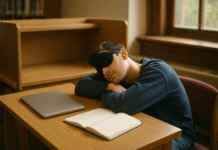

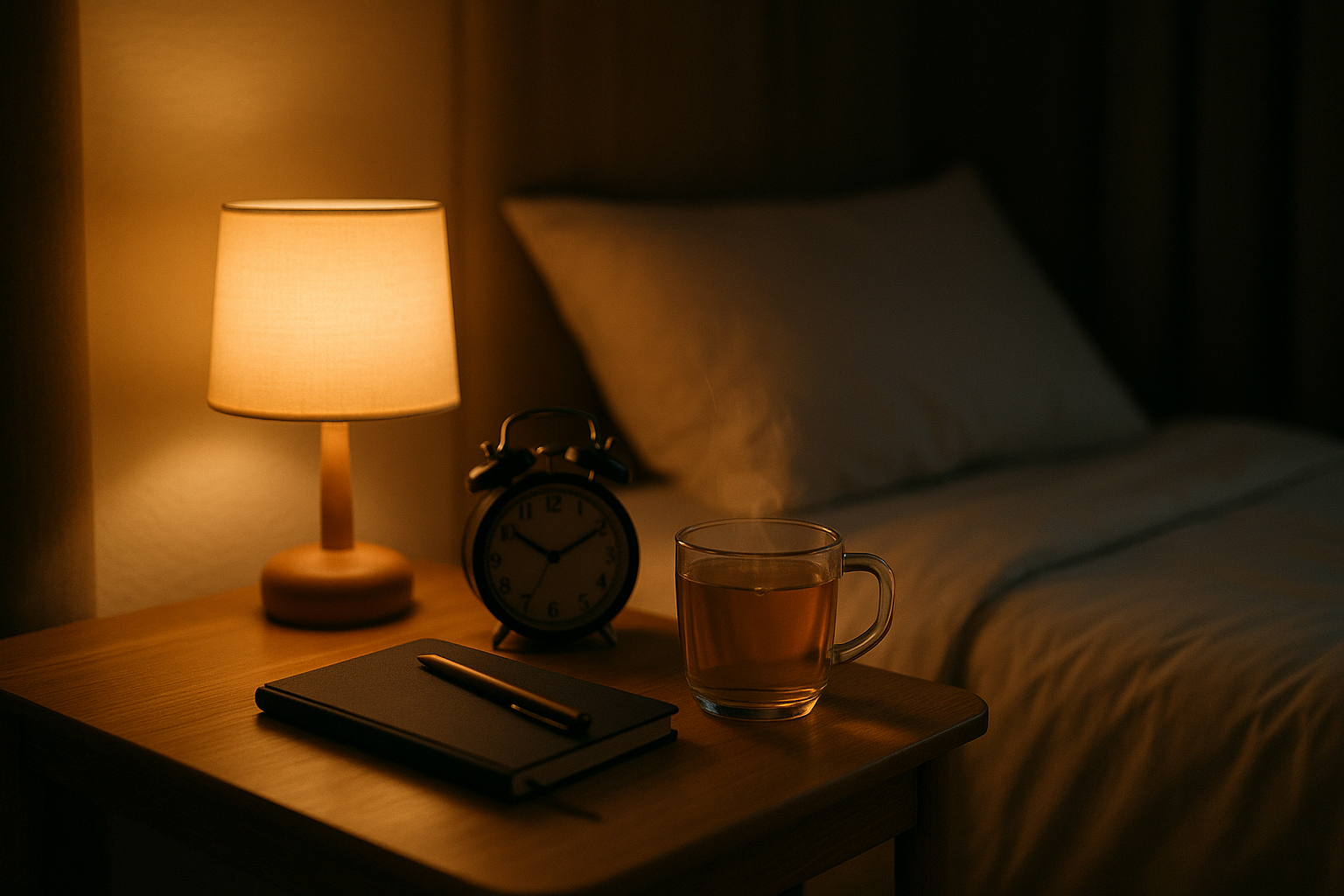
If your days run on meetings, messages, and mental gymnastics, your nights need structure—not more scrolling. Below you’ll find 12 practical, science-backed bedtime rituals tailored to busy professionals. Done consistently, they reduce cognitive load, calm the nervous system, and nudge your circadian rhythm so you fall asleep faster and stay asleep longer. Relaxing bedtime rituals are simple, repeatable actions in the last 30–60 minutes that lower physiological and mental arousal to prepare you for sleep. Think of them as a “closure routine” for your day.
Quick starter sequence (5–10 minutes) you can adopt tonight:
- Dim lights and set your phone to Do Not Disturb.
- Write a 3–5 item to-do list for tomorrow.
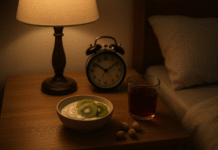
- Sip a caffeine-free herbal tea while you read a paper book.
- Do 6 slow breaths per minute for 2 minutes.
- Get into a cool, dark, quiet bedroom.
Friendly note: The guidance below is educational, not medical advice. If sleep problems persist, talk to a clinician or a licensed sleep specialist.
1. Institute a “Digital Sunset” 60–90 Minutes Before Bed
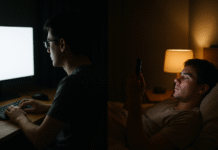
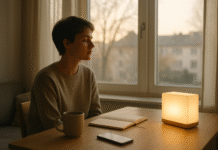
A digital sunset is a hard stop on stimulating tech and bright light before bed. Start by announcing it—out loud or on your calendar—as a meeting with yourself. Blue-enriched light in the late evening can suppress melatonin and delay your sleep timing, while notifications and novelty keep your brain in “work mode.” For most professionals, that means silence on Slack and email, screens set aside, and household lighting dialed down to warm, low levels about an hour before you plan to sleep. This single move reduces both physiological arousal and “mind-spinning,” making every other ritual easier.
Why it matters (the short version)
Evening exposure to bright, blue-heavy light delays melatonin and sleep onset, and light-emitting devices can push your internal clock later. That’s why dimmer, warmer light and screen limits in the last hour often translate to faster sleep onset.
How to do it
- Timebox it: Set Do Not Disturb and auto-send a “winding down, I’ll reply in the morning” message at a fixed time nightly.
- Shift the spectrum: Use built-in warm-tone modes (Night Shift/Bedtime Mode) and dim to the lowest comfortable level; better yet, switch to lamps with warm bulbs.
- Swap activities: Replace feeds with analog wind-downs—paper book, light journaling, gentle stretching, or a conversation under low light.
- Hard boundary: Park devices outside the bedroom or in a charging station across the room.
Numbers & guardrails
- Aim for 60–90 minutes of subdued, warm light before bed.
- If work demands late screen time, use largest font + lowest brightness and cap exposure to ≤20 minutes in the last hour.
- Keep the bedroom below ~30 lux (very dim) after lights out.
Bottom line: A predictable digital sunset turns “I should sleep” into “my body is ready to sleep.”
2. Build a 30–60 Minute Wind-Down You Can Actually Keep
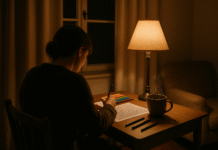
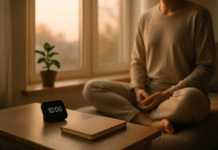
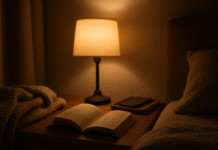
A wind-down routine is a short, repeatable “closing ceremony” that signals the day is done. It’s not about perfection; it’s about consistency. The best routines feel so easy you can do them after a brutal day: a warm light, a mug of caffeine-free tea, a page or two of a paper book, and a two-minute breathing set. When your brain encounters the same cues nightly, it anticipates sleep and starts to power down earlier.
Mini-checklist (pick 3–5 that fit your life)
- Turn on one warm lamp at the same time each night.
- Tidy for two minutes (just surfaces)—enough to reduce visual noise.
- Prepare tomorrow’s outfit or pack your work bag (micro-planning reduces rumination).
- Brew herbal tea, or simply drink a glass of room-temperature water.
- Read 5–10 pages of low-stakes, paper media (nothing work-related).
Tools & examples
- Automation: Schedule smart plugs to dim lamps at 10:00 p.m.
- Habit stacking: Tie your wind-down to a daily anchor (e.g., “When I load the dishwasher, I start the wind-down playlist.”)
- Failure-proof: On late nights, run a 2-minute “minimum viable” version: dim -> breathe -> bed.
Bottom line: Keep it short, scripted, and boring—in the best way.
3. Take a Warm Shower or Bath 1–2 Hours Before Bed
A brief warm shower or bath can help you fall asleep faster by triggering heat loss afterward. The mechanism is counterintuitive: you warm up your skin, then cool down your core as you dry off and move into a cooler room. That drop in core temperature is one of the brain’s “time to sleep” signals, so timing matters as much as temperature.
How to do it
- When: 60–120 minutes before lights out.
- Water temp: About 40–42.5°C (104–108.5°F) feels warm, not scalding.
- Duration: ~10 minutes is plenty; add a brief cool rinse on hands/face after if you run warm.
- After bathing, slip into a cooler room and breathable sleepwear to prolong that gentle cool-down.
Numbers & guardrails
- Keep the bedroom at ~16–19°C (60–67°F) (more on that below).
- Skip very hot soaks if you’re pregnant, have certain cardiovascular conditions, or heat intolerance.
- If you train in the evening, a short warm shower can double as your wind-down cue.
Bottom line: Time a short, warm rinse 1–2 hours pre-bed to ride the natural cool-down into sleep.
4. Engineer Your Bedroom: Dark, Quiet, and Cool
Your sleep environment is a performance variable—tune it like you would a workstation. Most adults sleep best in a cool, dark, quiet room with comfortable bedding. Darkness removes the “stay awake” signal, quiet flattens arousal spikes from noise, and cool air helps your core temperature drop.
Mini-checklist
- Temperature: Target 16–19°C (60–67°F); use a fan or AC as needed.
- Darkness: Blackout curtains or a contoured eye mask; cover LEDs with dimming stickers.
- Noise: Try white/pink noise or a simple fan; consider earplugs if your area is loud.
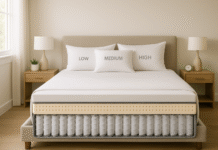
- Air & bedding: Breathable sheets (cotton/linen), supportive pillow, and a tidy, low-clutter layout.
Why it works
- Cooler air supports thermoregulation.
- Darkness supports melatonin rise.
- Steady sound masks sudden spikes (traffic, neighbors) that fragment sleep.
Bottom line: Treat your bedroom like mission-critical infrastructure; optimize once, benefit nightly.
5. Use Slow Breathing and Progressive Muscle Relaxation (PMR)
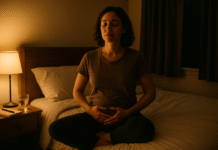
Your autonomic nervous system can be steered—gently—by your breath and muscles. Slow-paced breathing (about 6 breaths per minute) increases vagal tone and can reduce heart rate, while PMR cycles tension and release from head to toe to discharge residual stress. Together, they’re a portable, two-minute toolkit for any schedule.
2-minute wind-down protocol (bedside)
- 60 seconds: Inhale through the nose 4–5 seconds, exhale 5–6 seconds (no breath-hold).
- 60 seconds: PMR—tense each area for 5 seconds, release for 10 seconds (jaw, shoulders, hands, abdomen, calves, feet).
Pro tips
- If you like structure, try 4-7-8 gently for 4–6 cycles; if breath-holds feel uncomfortable, use continuous slow exhales instead.
- Pair with dim light and eyes closed for faster state change.
- Consistency beats duration; 2–5 minutes nightly is enough.
Bottom line: Two quiet minutes of breath + PMR is a fast “off switch” for body and mind.
6. Offload Your Brain: A 3–5 Item To-Do List (Not a Diary)
Cognitive load and “what if I forget…?” are classic sleep thieves. A short, forward-looking to-do list reduces pre-sleep rumination better than journaling about what you already did. The key is specificity: the more concrete your items, the less your brain keeps churning once the lights go out.
How to do it (3 minutes)
- Write 3–5 tasks for tomorrow with the first next action (“Email Sam—ask for Q3 KPIs”).
- Add 1 logistics note (meeting time, commute).
- Optional: one worry + plan (“If flight delays: join Zoom from phone”).
Guardrails
- Keep it on paper; phones reignite the feed loop.
- No planning rabbit holes—set a 3-minute timer.
- Park the notebook where you’ll see it in the morning (closure cue).
Bottom line: Precision on paper quiets the brain faster than ruminating in bed.
7. Set Cutoffs: Caffeine, Alcohol, Heavy Meals, and Hydration
Your evening inputs shape your night. Caffeine’s effects can persist for hours, alcohol fragments sleep (especially REM), and large late meals or very spicy foods can cause reflux and micro-arousals. Gentle evening hydration prevents cramping and thirst, but aim to reduce bathroom trips overnight.
Practical cutoffs
- Caffeine: Stop ≥6 hours before bed (earlier if you’re sensitive).
- Alcohol: Avoid in the last 3–4 hours pre-bed.
- Large meals/spicy foods: Finish 2–3 hours before bedtime; keep late snacks small and bland.
- Hydration: Front-load during the day; sip lightly after your wind-down starts.
Smart swaps
- Afternoon slump? Try a 10–20 minute walk instead of a late latte.
- Evening unwind? Replace a drink with sparkling water + citrus or a herbal tea.
- Hungry late? Choose yogurt, banana, or a small handful of nuts.
Bottom line: Time your stimulants, sedatives, and meals so your sleep architecture stays intact.
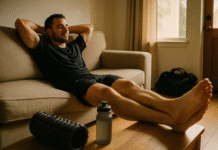
8. Time Your Movement: Gentle at Night, Vigorous Earlier
Exercise improves sleep quality, but timing and intensity matter for some people. Most adults tolerate—even benefit from—light to moderate evening activity. Very intense workouts ending right before bed can keep you keyed up. If evenings are your only window, you can still sleep well by adjusting the intensity and finishing with a proper cool-down.
Practical framework
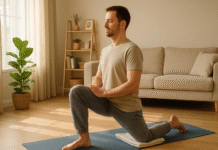
- Evening okay: Walking, mobility, yoga, light cycling, easy strength work.
- Finish line: Aim to end ≥1–2 hours before lights out; cool shower helps.
- If late HIIT is unavoidable: Keep sessions short, end >60 minutes pre-bed, and extend your wind-down.
Mini-checklist
- Plan a 5-minute down-shift: nasal breathing, gentle stretches, dim light.
- Fuel earlier; avoid heavy post-workout meals late at night.
- Keep screens off during the last 10 minutes of your workout to ease the transition.
Bottom line: Move most days; taper intensity and end times so your body has time to coast into sleep.
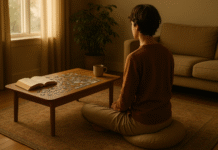
9. Try a 10–20 Minute Mindfulness, NSDR, or Body Scan
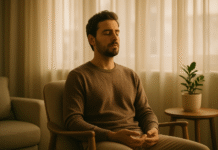
Guided relaxation helps many professionals trade racing thoughts for calm. Short mindfulness, body scans, or non-sleep deep rest (NSDR)/yoga nidra audios can reduce pre-sleep arousal without requiring expertise. Choose a simple script, lie down, and let your attention be guided away from work loops.
How to do it
- Pick a 10–20 minute track you like; save it offline.
- Listen eyes closed, volume low, lights dim.
- If thoughts intrude, label them “planning” or “worry”, and return to the voice or breath.
Pro tips
- Consistency > variety—use the same track for a week.
- If audio wakes partners, use a single earbud or a pillow speaker.
- Pair with white/pink noise afterward to stay asleep if your environment is noisy.
Bottom line: Guided stillness is a skill; even a few minutes nightly pays off.
10. Anchor Your Days to Sleep Better at Night
Counterintuitive but true: what you do after you wake affects how you sleep tonight. Morning light, regular mealtimes, and daytime movement strengthen your circadian rhythm so sleep arrives more predictably. A stronger “daytime signal” makes your nighttime wind-down twice as effective.
Anchors that help
- Morning light: Get 5–15 minutes of outdoor light within an hour of waking (even on cloudy days).
- Regular meals: Keep mealtimes consistent; avoid drifting dinner too late.
- Midday movement: A brisk 10–20 minute walk beats a double espresso for an afternoon reset.
Guardrails
- Avoid bright light in the hour before bed; keep home lighting warm and low.
- If you must use screens late, dim them and limit interactive tasks (messages, social).
Bottom line: Strengthen day signals (light, meals, movement) to make night sleep easier.
11. Business Travel Playbook: Light, Schedule, and (Sometimes) Melatonin
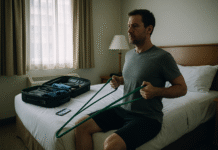
Traveling across time zones? A simple plan prevents days of grogginess. Shift your schedule toward the destination the 2–3 days before travel, time your light exposure carefully on arrival, and consider short-term, well-timed melatonin for eastbound trips crossing multiple zones. Keep your bedtime ritual portable: eye mask, earplugs, warm-light travel lamp, and a pocket-size journal.
How to do it
- Before you fly: Slide sleep/wake by ~30–60 minutes per day toward destination time.
- On arrival: Seek bright morning light for eastward travel; evening light for westward.
- Melatonin (optional): For jet lag, some adults use 0.5–3 mg near target local bedtime for a few nights; timing matters more than dose. Speak with your clinician if unsure.
- Hotel setup: Cool the room, use an eye mask/earplugs, and run steady sound to mask hallway noise.
Guardrails
- Don’t use melatonin as a nightly sleep aid for chronic insomnia without clinical advice.
- Avoid heavy meals and alcohol on late arrivals; hydrate and keep the first night simple.
- If it’s a short trip (≤2–3 days), consider staying on home time where feasible.
Bottom line: Plan light, timing, and environment; keep your ritual in your carry-on.
12. Know When to Escalate: CBT-I and Red Flags
If you’ve tried consistent rituals for a few weeks and still struggle, step up to cognitive behavioral therapy for insomnia (CBT-I)—the first-line treatment for chronic insomnia. CBT-I teaches you to rebuild a strong sleep drive, retrain your body clock, and defuse sleep anxiety. It’s skills-based and effective, including digital options if you can’t see a specialist immediately. Also, watch for medical red flags that need professional evaluation.
What to do next
- CBT-I: Ask your clinician for a CBT-I referral or consider reputable digital programs; commit for 6–8 weeks.
- Rule-outs: Snoring, witnessed apneas, gasping, restless legs, or frequent 3 a.m. awakenings with palpitations warrant evaluation.
- Medications & supplements: Review with a clinician (stimulants, decongestants, some antidepressants) and avoid self-titrating sleep meds.
Mini-checklist
- Track 2 weeks of sleep/wake times (pen or app) before your appointment.
- Bring your bedtime routine and cutoffs plan—providers can fine-tune it.
- If anxiety spikes in bed, try stimulus control: out of bed if not asleep in ~20 minutes, return when sleepy.
Bottom line: When rituals aren’t enough, structured therapy is—don’t white-knuckle chronic insomnia alone.
FAQs
1) How long should my bedtime routine be?
Most professionals do well with 30–45 minutes, but even 10–15 minutes helps when done consistently. Include dim light, one calming activity (reading, stretching, breathing), and a short to-do list. If you’re time-crunched, run a 2–5 minute MVP version (dim → breathe → bed) rather than skipping completely.
2) Is it okay to exercise in the evening?
Yes—light to moderate activity often improves sleep. If you prefer intense workouts, aim to finish ≥1–2 hours before bed and end with a slow cool-down. If late sessions leave you wired, move intensity earlier and keep nights for mobility, yoga, or walking.
3) What bedroom temperature is best?
Most adults sleep best between 16–19°C (60–67°F). If that feels chilly, use breathable bedding and warm your feet while keeping air cool. The goal is a cool core and warm extremities.
4) When should I stop caffeine?
A safe rule is ≥6 hours before bed; many do better with 8. Remember caffeine hides in tea, soda, “pre-workouts,” and chocolate. If you’re sensitive, shift your last dose to late morning.
5) Does alcohol help me sleep?
Alcohol can make you feel sleepy but disrupts sleep later—more awakenings and less REM. If you drink, do so earlier and give yourself 3–4 hours buffer before bed.
6) What if I wake at 3 a.m. and can’t get back to sleep?
Stay calm, keep lights low, and try slow breathing or a body scan. If you’re not sleepy after ~20 minutes, get out of bed and do a quiet, boring activity (paper book) until drowsy. This protects the bed-sleep association.
7) Should I use melatonin every night?
Melatonin can be useful short-term for jet lag or certain circadian issues. It’s not a cure for chronic insomnia, and timing matters. If you’re considering it regularly, talk with a clinician and prioritize CBT-I and routine first.
8) Do white-noise machines really work?
Steady sound (white/pink noise) can mask interruptions in noisy environments and help some sleepers. Try it if traffic, neighbors, or hotel hallways wake you; keep the volume comfortable and consistent.
9) Can a quick shower help if I don’t have time for a bath?
Yes—~10 minutes in a warm shower 1–2 hours pre-bed helps set up the cool-down you want. Step into a cooler bedroom afterward to extend the effect.
10) How do I stop thinking about work at night?
Use a 3–5 item to-do list, schedule tomorrow’s “worry time” on your calendar, and practice a 2-minute breath + PMR set. Over time, a predictable wind-down plus firm notification curfews trains your brain to detach.
11) I travel a lot—what’s the one thing to prioritize?
Light timing. Get the right light at the right time for your direction of travel (morning light when you fly east; evening light when you fly west), keep your bedroom cool/dark/quiet, and consider short-term melatonin only if well-timed.
12) When should I seek professional help?
If sleep troubles last ≥3 months, you have daytime impairment, loud snoring/gasping, restless legs, or you rely on sleep meds, see a clinician. CBT-I is highly effective and teaches durable skills.
Conclusion
Your workday already taxes your decision-making—your nights shouldn’t. The rituals above convert “sleeping well” from a vague hope into a set of controllable levers: light, timing, temperature, noise, breathing, and mental closure. Start with a digital sunset, a 3–5 item to-do list, and a two-minute breath + PMR—the smallest routine that moves the biggest needles. Then layer in environment (cool/dark/quiet), a warm shower 1–2 hours pre-bed, and daytime anchors (morning light, regular meals, movement). If business travel derails you, use the light + schedule playbook and keep a portable ritual kit (eye mask, earplugs, journal). And if insomnia persists, step up to CBT-I—the skills you learn will serve you for years.
Tonight’s next step: set your Do Not Disturb time, place a notebook by the bed, and choose one two-minute calming technique. Your future-you will thank you in the morning.
References
- ACP Recommends Cognitive Behavioral Therapy as Initial Treatment for Chronic Insomnia. American College of Physicians (May 3, 2016). American College of Physicians
- Spilling the Beans: How Much Caffeine is Too Much? U.S. Food & Drug Administration (Aug 28, 2024). https://www.fda.gov/consumers/consumer-updates/spilling-beans-how-much-caffeine-too-much Access Data
- The Best Temperature for Sleep. Sleep Foundation (updated “last month”). Sleep Foundation
- Chang A-M., et al. Evening use of light-emitting eReaders negatively affects sleep, circadian timing, and next-morning alertness. PNAS (2015). PNAS
- Haghayegh S., et al. Before-bedtime passive body heating by warm shower or bath to improve sleep: A systematic review and meta-analysis. Sleep Medicine Reviews (2019). PubMed
- Jet Lag Disorder. CDC Yellow Book (Apr 23, 2025). CDC
- Jet Lag Sleep Disorder. American Academy of Sleep Medicine – SleepEducation.org (May 6, 2021). Sleep Education
- Scullin M.K., et al. The Effects of Bedtime Writing on Difficulty Falling Asleep: A Polysomnographic Study Comparing To-Do Lists and Completed Activity Lists. Journal of Experimental Psychology: General (2018). PMC
- Stutz J., et al. Effects of Evening Exercise on Sleep in Healthy Participants: A Systematic Review and Meta-Analysis. Sleep Medicine Reviews (2019). PubMed
- 10 Sleep Tips for Miners (sleep hygiene guidance). CDC/NIOSH (PDF). CDC Stacks
- How Sleep Works – Your Sleep/Wake Cycle. NHLBI, National Institutes of Health (2022). NHLBI, NIH
- Capezuti E., et al. Systematic review: auditory stimulation and sleep. Geriatric Nursing / PMC (2022). PMC