




























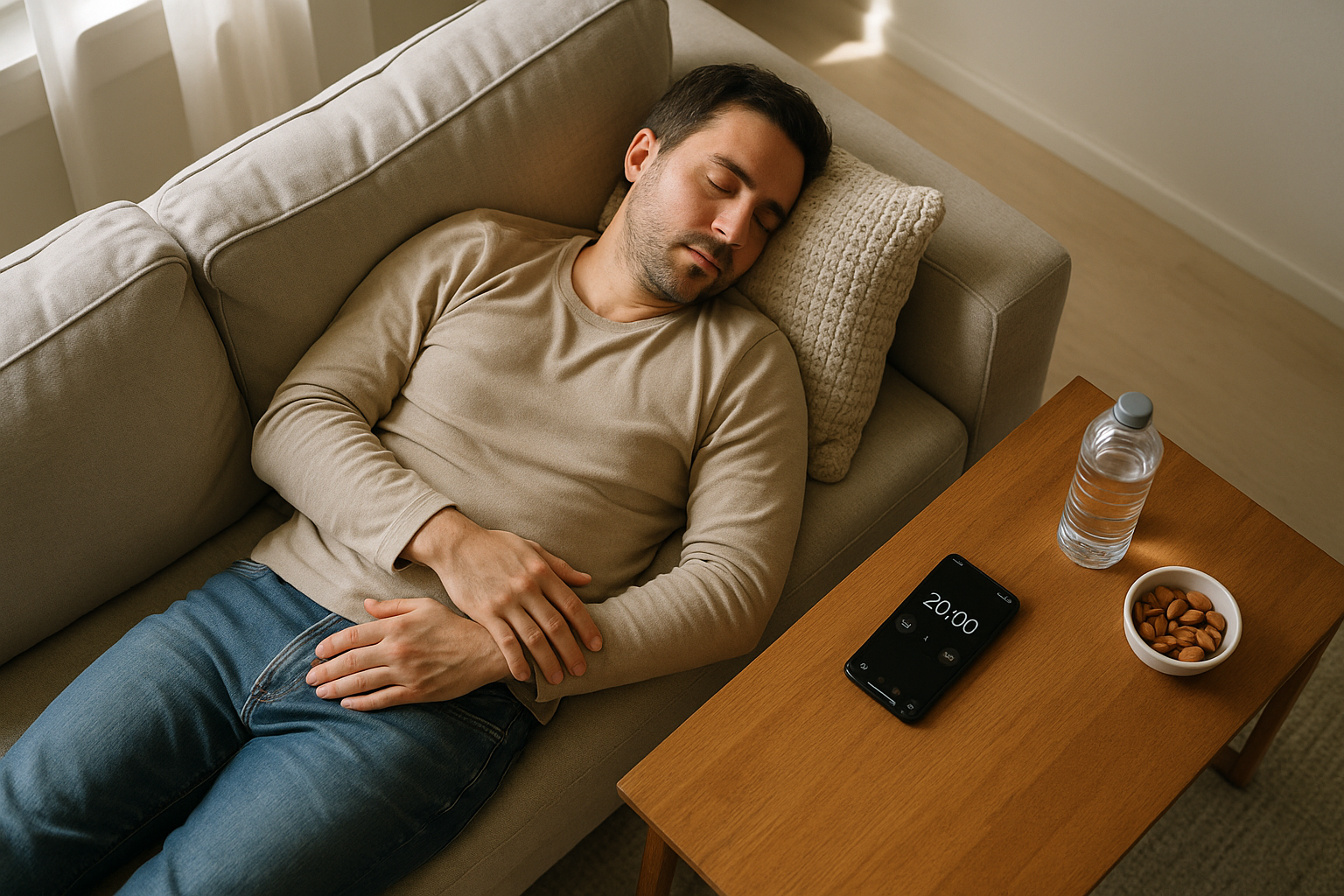
A good nap can do more than sharpen your focus—it can influence the behaviors and biology that make weight management easier or harder. This guide unpacks what the science says about the link between naps and weight control, and gives you practical, safe ways to use short daytime sleep without sabotaging your nighttime rest. As with any health topic, this article is educational and not a substitute for individual medical advice; if you have conditions like sleep apnea, diabetes, or uncontrolled hypertension, speak with your clinician about nap timing and duration.
Short answer: There is a link between naps and weight management, but it’s indirect. Strategic short naps can help offset sleep debt, stabilize appetite and energy choices, and support glucose control—while long or late naps are associated with higher cardiometabolic risk and disrupted nighttime sleep.
1. Naps, Appetite Hormones, and Cravings
Short, well-timed naps can indirectly curb overeating by easing sleep debt that drives appetite up. When you’re short on sleep, hunger-signaling hormones shift—ghrelin rises and leptin falls—making calorie-dense foods more tempting and portion control harder. Even single nights of curtailed sleep can trigger these changes and increase next-day energy intake. Napping doesn’t “erase” a bad night, but brief daytime sleep can reduce stress-related catecholamines and help you feel less driven to snack your way through fatigue. Over a week, the difference between regularly oversleeping your hunger signals versus stabilizing them can add hundreds of calories. The key is duration and timing; a compact early-afternoon nap supports appetite regulation without delaying bedtime.
1.1 Why it matters
- Sleep loss → appetite shift: Short sleep increases ghrelin and lowers leptin, amplifying hunger and preference for high-energy foods.
- Energy intake bump: Experimental sleep restriction commonly raises intake by ~200–500 kcal/day, enough to stall fat loss.
- Naps help with stress biology: After sleep loss, a brief nap can reduce stress hormones (e.g., catecholamines), indirectly supporting better food choices.
1.2 How to use it
- Cap naps at 10–30 minutes to wake before deep sleep (less grogginess, less bedtime disruption).
- Aim for 1–3 p.m. when circadian sleepiness peaks.
- Pair with protein or fiber pre-nap (e.g., yogurt + berries) to avoid waking ravenous.
- Avoid “compensation snacking”—drink water or tea before browsing the pantry.
- Keep consistent bedtime so naps support, not replace, nocturnal sleep.
Numeric example: If sleep restriction adds ~300 kcal/day and a strategic nap helps you avoid an afternoon pastry (≈250–400 kcal) plus a sugary drink (≈120 kcal), you’ve effectively neutralized most of the sleep-debt appetite penalty for that day.
Bottom line: Use short, early-afternoon naps to steady hunger cues after poor sleep; they’re a behavioral lever that makes healthy choices easier, not a standalone weight-loss tool.
2. Glucose Control and Insulin Sensitivity
Sleep and glucose metabolism are tightly coupled; inadequate or mistimed sleep impairs insulin sensitivity, making weight control and diabetes prevention tougher. Randomized crossover trials show that even a few nights of partial sleep restriction reduces insulin sensitivity on gold-standard clamps, with downstream effects on post-meal glucose. Observational data suggest long daytime naps may correlate with lower insulin sensitivity, whereas brief naps can be neutral or beneficial when they help maintain overall sleep sufficiency. Practically, this means short naps can be a metabolic “pressure release” after an underslept night, but prolonged or late naps that push bedtime later may worsen glycemic control over time.
2.1 Numbers & guardrails
- Sleep restriction → lower insulin sensitivity: Four nights at ~60% of habitual sleep reduced insulin sensitivity in a randomized crossover trial.
- Trials synthesis: Meta-analyses of RCTs find that sleep manipulation (restriction, fragmentation, circadian delay) adversely affects insulin sensitivity markers.
- Long naps caution: Cohort data link longer daytime naps with decreased insulin sensitivity and glucose intolerance signals.
2.2 How to do it
- Prioritize nocturnal sleep (7–9 hours for most adults), using naps as a short-term buffer, not a replacement.
- Keep naps ≤30 minutes; if you’re truly exhausted, a single 60–90-minute recovery nap is fine occasionally, but avoid doing this near dinner or late afternoon.
- Mind meal timing: Avoid napping immediately (within ~60–90 minutes) after a large, high-carb meal to reduce post-nap grogginess and glucose spikes.
- Track patterns: If you have prediabetes or diabetes, discuss nap timing with your clinician and monitor with CGM or glucose checks to see your personal response.
Mini case: A desk worker sleeping ~5.5 h on weekdays adds a 20-minute 1:30 p.m. nap and moves bedtime earlier by 30 minutes. Within two weeks, fasting glucose drops modestly, afternoon cravings ease, and step counts tick up—signals that overall sleep restoration, not the nap alone, is improving metabolic tone. (Pattern consistent with RCT and review data.)
Bottom line: Protect nocturnal sleep first; use brief naps to smooth the metabolic fallout of sleep debt, while avoiding long or late naps that may blunt insulin sensitivity.
3. Nap Duration, Obesity Risk, and What the Data Really Say
Observational studies consistently associate long daytime naps with higher odds of obesity and metabolic syndrome; short naps generally do not show this risk and can be neutral or helpful. A 2023 meta-analysis linked daytime napping with increased obesity risk, with stronger associations at stricter BMI thresholds, suggesting the relationship isn’t trivial. Mediterranean cohort data further indicate that siestas longer than ~30 minutes correlate with higher BMI and metabolic syndrome markers, while shorter siestas are less concerning. Still, these are associations, not causation; long naps may be a red flag for poor nighttime sleep, chronic illness, or medications rather than a direct cause of weight gain.
3.1 What the evidence shows
- Meta-analysis: Daytime napping associated with increased obesity risk; effect size was larger when obesity was defined as BMI ≥28–30.
- Siesta length matters: Long (>30 min) siestas linked to higher BMI and metabolic syndrome in a Spanish cohort; short siestas (≤30 min) showed fewer adverse links. EurekAlert!
- Cardiometabolic outcomes: Frequent napping associated with higher incident hypertension and stroke in large cohorts, again pointing to potential underlying sleep issues. American Heart Association
3.2 Practical takeaways
- Choose “power naps”: 10–30 minutes most days you need one.
- Avoid habitual long naps: If you regularly need >60 minutes, evaluate nighttime sleep, caffeine timing, pain, mood, and medications.
- Screen for sleep apnea: Snoring, witnessed apneas, or severe daytime sleepiness + long naps warrant medical evaluation.
Synthesis: Treat long, frequent naps as a signal to fix sleep at night; keep daytime rest short and earlier in the afternoon to gain benefits without the observational risks seen with longer siestas.
4. Circadian Timing: When You Nap Shapes Metabolism
The timing of your nap can help or harm weight regulation via circadian alignment. Naps taken in the early afternoon align with your natural dip in alertness and are less likely to delay bedtime, whereas late-day naps can shift your sleep window later, creating circadian misalignment. That misalignment—sleeping and eating at the “wrong” internal time—provokes higher hunger, worsens glucose handling, and alters energy expenditure. In short: nap with your clock, not against it to support weight management.
4.1 Why timing matters
- Circadian misalignment → metabolic strain: Experimental protocols show that eating/sleeping out of sync impairs glucose tolerance and shifts hormones that govern appetite and energy use.
- Time-of-day effects: Glucose metabolism and insulin action vary by clock time; late-day sleep/eating stacks the deck toward higher post-meal glucose. Wiley Online Library
4.2 Region-specific notes
- Hot climates & siesta culture: In Mediterranean and South Asian summers, a short early-afternoon nap (≤30 minutes) can be adaptive for heat and safety. Keep it early to avoid pushing dinner and bedtime later.
- Shift workers: Use carefully timed anchor sleep and pre-shift naps; avoid long, morning-after naps that cannibalize core sleep.
4.3 Mini-checklist
- Nap between 1–3 p.m. when possible.
- Set a 20–30-minute timer; sit slightly reclined if you tend to overshoot.
- If you must nap after 4 p.m., cap at 10–15 minutes and dim evening light to protect bedtime.
Bottom line: Early, brief naps harmonize with your circadian biology and protect nighttime sleep—key allies for weight control—while late, long naps risk misalignment that works against you. Annual Reviews
5. Energy Balance: Using Naps to Reduce Calorie Intake (Not Willpower)
Weight regulation hinges on energy balance, and sleep strongly influences the “intake” side. A randomized clinical trial extending sleep in short sleepers reduced ad libitum daily calorie intake in free-living adults with overweight—no diet rules required. The implication for naps: they’re a tactical tool to help you sustain adequate 24-hour sleep, which stabilizes appetite, tames hedonic eating, and preserves the self-control needed for movement and meal prep. Naps also reduce the fatigue that drives mindless snacking and skipped workouts, both of which can nudge intake up and expenditure down.
5.1 What to copy from the evidence
- Sleep more, eat less (naturally): Sleep extension lowered energy intake and produced a negative energy balance in adults with overweight.
- Sleep debt fuels regain: Short sleep and poor sleep quality predict weight regain after loss, making maintenance harder.
5.2 Implementation tips
- Build a “sleep floor”: First, standardize bedtime/wake time; then use a 20–30-minute nap on high-sleepiness days to keep total 24-hour sleep ≥7 hours.
- Caffeine-nap on crunch days: Sip a small coffee/tea, then nap 15–20 minutes; caffeine peaks as you wake, boosting alertness without extra calories.
- Swap a snack for a nap: If afternoon cravings hit after a short night, try a 20-minute nap before reaching for sweets.
- Move after napping: A brisk 10-minute walk post-nap helps clear grogginess and supports calorie expenditure.
Synthesis: Use naps to protect total sleep time; the downstream appetite and energy-intake benefits are well-documented and compound over weeks. PMC
6. Blood Pressure, Stress, and the Weight Connection
Stress and blood pressure affect weight through biology and behavior: elevated cortisol, fatigue, and emotional eating. Short naps can reduce stress load and, in some contexts, lower blood pressure, while frequent or long daytime naps are epidemiologically linked to higher incident hypertension. After a night of sleep loss, a 30–120-minute daytime sleep opportunity can blunt cortisol elevations and improve alertness. The lesson for weight management is not that naps medicate hypertension, but that strategically reducing stress and restoring alertness makes it easier to follow diet and activity plans.
6.1 What studies report
- Acute benefits: A mid-afternoon nap after sleep loss improved alertness and partially reversed cortisol changes.
- BP signals: Some studies report stress and blood-pressure reductions with naps; cohort data also suggest higher hypertension risk in frequent nappers (likely confounded by poor night sleep).
6.2 Put it into practice
- Use short naps to reduce stress-eating: Pair a 20-minute nap with a brief outdoor walk and water when cravings spike.
- Avoid masking issues: If you rely on long daytime sleep to function, check for insomnia, sleep apnea, restless legs, or shift-work disorder.
- Keep BP meds and lifestyle steady: Naps complement, not replace, blood-pressure management.
Bottom line: Short naps can ease stress physiology that otherwise nudges weight up, but frequent long naps correlate with higher BP risk—another reason to keep them brief and early. Physiology Journals
7. Protocols That Work: Exactly How to Nap for Weight Management
To make naps help—not hurt—your weight goals, follow a protocol that respects duration, timing, and your underlying sleep health. The goal isn’t to “burn fat while you nap,” but to use short daytime sleep to stabilize appetite, energy, and decision-making while protecting your core sleep at night. If you’re dieting aggressively, training hard, or working shifts, this structure makes adherence easier and safer.
7.1 The 20–30 Rule (Most Days)
- When: Start between 1:00–3:00 p.m.
- How long: 20–30 minutes; set an alarm and nap in a slightly reclined position to avoid slipping into deep sleep.
- Environment: Cool, quiet, eye mask if needed; phone in airplane mode with a single alarm.
- After: Hydrate, get light exposure, and walk 5–10 minutes.
7.2 When a Longer Nap Is Acceptable
- Occasional 60–90 minutes after severe sleep loss (e.g., travel, new parent night). Use sparingly, end by ~3:30–4:00 p.m., and protect bedtime.
- Shift work: Strategic pre-shift 20–30 minutes; post-shift, prioritize a consolidated main sleep before considering an additional short nap. (Long off-schedule naps can disturb the anchor sleep that supports metabolic health.)
7.3 Special flags (see a clinician)
- Loud snoring, witnessed apneas, morning headaches, or extreme daytime sleepiness—consider evaluation for sleep apnea.
- Frequent long naps (>60 min) most days—often a sign of poor nighttime sleep or medical issues; fix root causes. Observational studies link longer siestas with obesity and metabolic syndrome.
Synthesis: Keep naps short and earlier, reserve long ones for rare recovery, and treat habitual long napping as a cue to fix core sleep—this protocol aligns with evidence and supports sustainable weight control.
FAQs
1) Are naps good or bad for weight loss?
They’re neither magic nor harmful by default. Short, early-afternoon naps can help you manage weight indirectly by stabilizing appetite, improving alertness, and supporting consistent exercise and meal prep. Long or late naps, however, are linked in studies to higher cardiometabolic risk and can push bedtime later, undermining sleep quality. The sweet spot is 10–30 minutes, started between 1–3 p.m.
2) How long should a nap be if I’m trying to lose fat?
Aim for 10–30 minutes. You’ll wake during lighter sleep, feel refreshed, and avoid sleep inertia. Reserve 60–90 minutes for rare recovery after major sleep loss—and still keep it early. Routine long naps are associated with higher BMI and metabolic syndrome in observational data, so don’t make them a daily habit.
3) Do naps slow metabolism?
No evidence shows that a brief, early-afternoon nap “slows metabolism” in a way that blocks fat loss. What matters is your 24-hour sleep pattern and circadian alignment. Sleep restriction and circadian misalignment can impair insulin sensitivity and increase appetite, which is what derails weight goals.
4) Can naps help control blood sugar?
Indirectly, yes—by helping you maintain adequate total sleep and reduce stress after a short night. Trials show sleep restriction reduces insulin sensitivity; restoring sleep helps. But long daytime naps can correlate with poorer insulin sensitivity in some cohorts. Keep naps brief and discuss timing with your clinician if you have diabetes.
5) I crave sweets after lunch. Nap or snack?
If you slept poorly, try a 20-minute nap first—sleep restriction increases cravings and daily calorie intake, and a short nap can improve alertness without adding calories. Then have a balanced snack (protein + fiber) if still hungry. Over time, protecting sleep reduces hedonic snacking.
6) What about “caffeine naps”?
They can work: drink a small coffee or tea, then nap 15–20 minutes so caffeine peaks as you wake. This is a behavioral tactic, not a clinical treatment, and it’s most useful on rare high-fatigue days. If you notice bedtime drifting later, skip the caffeine and keep the nap shorter.
7) Do naps help with workout performance and fat loss?
They can, indirectly. If a brief nap means you stick to your planned training instead of skipping it, you’ll protect energy expenditure and adherence. The biggest intake benefit is from adequate sleep overall; a trial of sleep extension reduced free-living calorie intake without a diet prescription.
8) Are naps safe if I have high blood pressure?
Short, early naps are generally safe and may reduce stress, but frequent or long naps are associated with higher incident hypertension in cohorts—often a marker of poor nighttime sleep or underlying illness. Talk to your clinician if you rely on long naps or feel excessively sleepy.
9) Is there a “best” nap time for weight management?
Yes: early afternoon (1–3 p.m.) aligns with your circadian dip and is least likely to delay bedtime. Late-day naps are more likely to disrupt nocturnal sleep and misalign the circadian system that governs glucose and appetite.
10) I’m a shift worker. Should I nap?
Yes, but strategically: a 20–30-minute pre-shift nap can boost alertness; after the shift, prioritize a consolidated main sleep before any additional short nap. Avoid long, irregular daytime naps that fragment your anchor sleep and worsen circadian misalignment. PubMed
Conclusion
Naps and weight management are linked through the everyday mechanics of appetite, glucose control, stress, and behavior. The strongest, most actionable pattern is consistent: sleep restriction pushes intake up and insulin sensitivity down; short, early-afternoon naps can help you maintain a healthy 24-hour sleep budget, making it easier to choose and prepare nutritious foods, move your body, and stick to routines. Long or late naps, by contrast, are often signals of underlying sleep problems and correlate with less favorable cardiometabolic outcomes. The winning protocol is simple: protect sufficient nighttime sleep, and when you need a boost, take a brief nap between 1–3 p.m., keep it under 30 minutes, and step into light and movement afterward. That’s how you get the alertness benefits without the weight-management downsides.
Take the next step today: set a 20-minute early-afternoon alarm, prepare a calm nap space, and treat short naps as a tool to protect your bigger goal—steady, sustainable weight control.
References
- Cai Z, Lou J, Xu Q, et al. The relationship between daytime napping and obesity: A meta-analysis. Scientific Reports (Nature), 2023. Nature
- Spiegel K, Tasali E, Penev P, Van Cauter E. Sleep curtailment in healthy young men is associated with decreased leptin levels, increased ghrelin levels, and increased hunger and appetite. Annals of Internal Medicine, 2004. PubMed
- Schmid SM, Hallschmid M, Jauch-Chara K, et al. A single night of sleep deprivation increases ghrelin levels and feelings of hunger in normal-weight healthy men. Journal of Sleep Research, 2008. PubMed
- Papatriantafyllou E, et al. Sleep Deprivation: Effects on Weight Loss and Obesity. Nutrients, 2022. PMC
- Tasali E, Chapotot F, Wroblewski K, et al. Effect of Sleep Extension on Objectively Assessed Energy Intake Among Adults with Overweight in Real-life Settings: A Randomized Clinical Trial. JAMA Internal Medicine, 2022. JAMA Network
- Singh P, Zuraikat FM, Redline S, et al. Effect of sleep restriction on insulin sensitivity and energy metabolism in women: randomized crossover trial. Journal of Clinical Investigation (Insight), 2023. PMC
- Sondrup N, et al. Effects of sleep manipulation on markers of insulin sensitivity: A systematic review and meta-analysis of randomized controlled trials. Sleep Medicine Reviews, 2022. ScienceDirect
- Vizmanos B, et al. Lifestyle mediators of associations among siestas, obesity, and metabolic syndrome. Obesity (Silver Spring), 2023. Wiley Online Library
- Yang M, et al. Association of Nap Frequency With Hypertension or Stroke. Hypertension (AHA), 2022. AHA Journals
- Wright KP Jr., et al. Influence of Sleep Deprivation and Circadian Misalignment on Metabolic Function. Proceedings of the National Academy of Sciences / Reviews in Endocrine & Metabolic Disorders (reviewed evidence), 2015. PMC
- Xie X, et al. Regulation of metabolism by circadian rhythms. Life Sciences, 2024. ScienceDirect
- Faraut B, et al. Napping reverses the salivary interleukin-6 and urinary norepinephrine changes induced by sleep restriction. Journal of Clinical Endocrinology & Metabolism, 2015. Oxford Academic
- Yamada T, et al. Daytime Napping and the Risk of Cardiovascular Disease and All-Cause Mortality: A Meta-analysis. Sleep, 2015. PMC
- Kakutani-Hatayama M, et al. Long daytime nap duration may be a potential risk factor for decreased insulin sensitivity: Hyogo Sleep Cohort. Sleep and Biological Rhythms, 2023. PMC
- Cai Z, Lou J, Xu Q, et al. The relationship between daytime napping and obesity (meta-analysis). PubMed record for Scientific Reports, 2023. PubMed