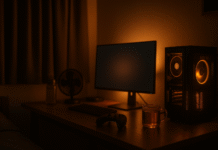








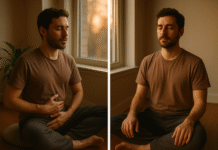












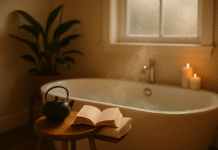




Aromatherapy routines are structured evening habits that use essential oils—primarily by inhalation and properly diluted topical application—to cue relaxation and prepare your body for sleep. Most evidence for sleep benefits centers on lavender, with growing but mixed research for other calming scents; safety and dosing matter just as much as the aroma itself.
Quick start tonight: choose a single method (e.g., diffuser or pillow spray), start with lavender alone, ventilate your room, and keep sessions intermittent—then track how you feel for a week.
Important: This guide is informational. If you’re pregnant, nursing, have asthma or chronic lung disease, or are using aromatherapy for a child or around pets, read the safety notes in each routine and consult a clinician before use.
1. Intermittent Diffuser Routine (Lavender-First)
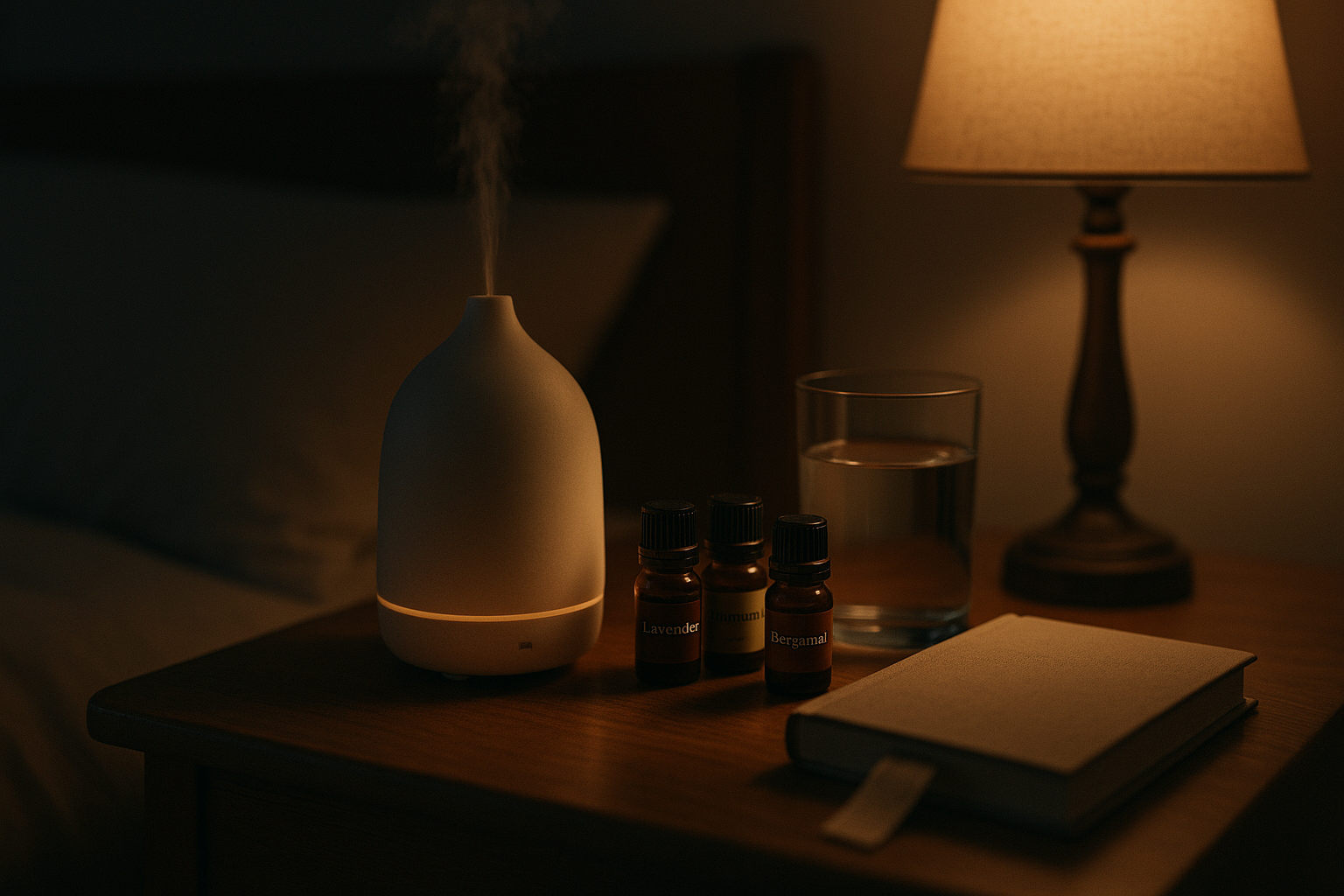
Start by using an ultrasonic or nebulizing diffuser for short, timed sessions in the evening; this gives you an easy, low-effort way to bring a relaxing scent into your wind-down. The most studied starting point is Lavandula angustifolia (true lavender), which has evidence of modest sleep and anxiety benefits for some people. Keep diffusion intermittent—30–60 minutes on, then 30–60 minutes off—to prevent nose fatigue and overexposure, and run it in a well-ventilated room. Avoid diffusing all night; instead, time a session during your pre-bed routine or as you read. People with fragrance sensitivities or asthma should either skip diffusers or test very briefly at low intensity, because strong odors can irritate airways.
1.1 How to do it
- Fill the diffuser per the device manual and start with lavender only.
- Position it 2–3 meters from your pillow; avoid pointing the mist toward your face.
- Run intermittently (e.g., 30 minutes during wind-down), then switch off.
- Keep a window cracked or ensure gentle airflow (not a blast aimed at you).
- Track next-morning notes: time to fall asleep, night wakings, and grogginess.
1.2 Numbers & guardrails
- Intermittent timing: 30–60 min on / 30–60 min off is a widely cited safety guideline.
- Ventilation is recommended by respiratory health organizations; follow your device’s instructions.
- Skip or reduce diffusion if anyone in your home has asthma or fragrance sensitivity.
Bottom line: Diffuse briefly, not continuously; prioritize lavender first, fresh air, and your body’s feedback.
2. Pillow Spray & Linen Mist (Hydrosol-Forward)
If you prefer a lighter scent, a pillow spray based on lavender hydrosol (floral water) can add a soft, close-to-face aroma without running a device. Commercial pillow mists and hydrosols are formulated to disperse water-based fragrance safely; DIY sprays can be tricky because oil and water don’t mix without a solubilizer, which raises the risk of undiluted droplets contacting skin or eyes. A hydrosol-forward approach keeps things simple: spritz 1–2 pumps over your pillowcase from 20–30 cm away and allow 1–2 minutes to dry before lying down. People with sensitive skin or eczema should test on a cloth swatch first.
2.1 Mini-checklist
- Prefer ready-made pillow sprays or pure hydrosols from reputable brands.
- If DIY, learn proper solubilizers (e.g., polysorbate 20/80) rather than “oil + water.”
- Spray lightly and let dry; avoid contact with eyes and mucous membranes.
- Launder bedding regularly to prevent buildup of residues.
2.2 Numbers & guardrails
- A couple of light sprays are sufficient for most users; more isn’t better.
- Avoid citrus oils in DIY sprays if the linens might contact sun-exposed skin the next morning (phototoxicity risk if used topically).
Bottom line: Hydrosol-based pillow sprays offer gentle scent with fewer formulation pitfalls than DIY oil-in-water mixes.
3. Aromatherapy Bath or Foot Soak (Disperse—Don’t Drip)
An evening bath (or foot soak) pairs warmth with scent to downshift body tension. The key is to disperse essential oils properly: never drip undiluted oils straight into bathwater, because they float and can contact skin at full strength. For adults, blend essential oils into a carrier (like jojoba) or a bath dispersant/solubilizer before adding to the tub. A foot soak offers a shorter, lower-exposure alternative with many of the same relaxation cues. Choose lavender alone, or layer with Roman chamomile for a soft, apple-like accent. Rinse the tub after to avoid slick residue.
3.1 Numbers & guardrails
- Typical bath blend: 5–20 drops essential oil per 1 Tbsp (15 mL) of bath base; add to a full tub and agitate. Start low.
- For a foot soak: halve those amounts in ~3–4 liters of warm water.
- Do not use phototoxic citrus oils on skin before next-day sun exposure; bergamot requires special care (see Routine 7).
3.2 Common mistakes
- Adding neat oil to water (risk of skin irritation).
- Skipping a carrier or solubilizer.
- Using too many drops “because it smells nice.” Tisserand Institute
Bottom line: Proper dispersion turns a scented bath from risky to relaxing; start low and keep it simple with lavender.
4. Topical Wind-Down Massage (Dilution Done Right)
A short self-massage of shoulders, neck, or feet can pair touch with scent to mark “bedtime mode.” Always follow dilution guidelines: for most adults, 1–2% dilution (that’s 6–12 drops per 30 mL of carrier oil) is a common range for leave-on blends. Lavender is a classic base; you can add a drop or two of cedarwood or sandalwood for a woodsy anchor. Patch-test first, and stop if redness or itching occurs. People on blood thinners, with skin conditions, or who are pregnant should consult a clinician and use extra caution with strong or unfamiliar oils.
4.1 How to mix 30 mL (1 oz)
- Add 6–12 drops total essential oil to a 30 mL bottle of jojoba or sweet almond.
- Label with date and contents; store away from light/heat.
- Use 1–2 pumps for a brief massage; avoid eyes and mucous membranes. Tisserand Institute
4.2 Numbers & guardrails
- Start at 1% for facial or sensitive areas; up to 2% for body use in healthy adults.
- Some oils have maximum topical limits; always check safety data if you deviate from lavender (e.g., clove ≤0.5%).
Bottom line: Massage works best with conservative dilutions and a short, repeatable routine—lavender-led, with clear labeling and storage.
5. Handheld Inhaler or Tissue Method (Fast, Focused, Device-Free)
When you want scent without scenting the whole room, a personal inhaler (or a single drop on a tissue held several inches from the nose) is ideal. This method is targeted, brief, and portable—useful for shared spaces or travel. Add lavender to a cotton wick in a simple inhaler, or pair it with Roman chamomile (gentle) or sandalwood (earthy). Inhale for a few slow breaths during your wind-down, then cap the inhaler and stow it. This is also the least intrusive option if you live with someone sensitive to fragrances. Tisserand Institute
5.1 Mini-checklist
- Keep the tip 2–3 cm from your nostril; avoid touching skin with neat oil.
- Use briefly (e.g., 2–3 cycles of 5 slow breaths) rather than repeatedly.
- Replace wicks monthly or when the aroma fades.
5.2 Guardrails
- People with asthma or reactive airways may still react to inhaled terpenes; test cautiously or skip.
Bottom line: Inhalers deliver calm on demand with minimal household exposure—perfect for scent-sensitive homes.
6. Warm Shower Steam Cue (Scent + Heat, Minus the Humidifier)
A warm shower before bed can be a gentle cue for sleep, and you can add aromatherapy without risking your humidifier. Place 1–2 drops of lavender on a washcloth at the far end of the shower floor so steam passes over it indirectly, or use a pre-made shower steamer puck. Avoid dripping oils where you step. Do not add essential oils to a standard humidifier or CPAP water tank—manufacturers and health orgs warn this can damage devices and aerosolize irritants. Keep the bathroom fan running during and after to clear the air. Crane USA
6.1 Steps
- Start hot water briefly to build light steam, then lower to warm.
- Set the scented cloth on a safe, non-slip ledge away from feet.
- Breathe normally for 2–3 minutes; finish with a cool rinse if you tend to overheat.
6.2 Numbers & guardrails
- Limit total neat drops to ≤2 per shower; consider a ready-made steamer instead.
- Ventilate during/after to reduce lingering VOCs; skip if you notice coughing or tightness.
Bottom line: Enjoy steam-supported scent safely—use the shower, not a humidifier, and keep amounts tiny.
7. Citrus-Bright Calm (Bergamot Carefully, or Go FCF)
Citrus notes can feel uplifting yet soothing in the evening, with bergamot favored for its mellow, tea-like profile. If you apply citrus oils to skin, remember phototoxicity: cold-pressed bergamot contains bergapten, and leave-on products must stay below tight maximums (around 0.4% for bergamot) to avoid sun reactions; or choose bergamot FCF (furanocoumarin-free) or rely on inhalation only. If you want a gentle citrus-lavender linen scent without topical risk, keep it to pillow sprays that do not contact sun-exposed skin the next day or use hydrosols.
7.1 Blend ideas (inhalation)
- Lavender + bergamot (or bergamot FCF) for “calm-bright.”
- Lavender + sweet orange for a softer citrus bloom.
- Lavender + neroli hydrosol for linens.
7.2 Guardrails
- Avoid topical citrus on areas that may see sun within 12–24 hours unless using FCF/steam-distilled versions and within limits.
- Sensitive skin? Prefer inhalation over leave-on.
Bottom line: Citrus + lavender can lift mood without bedtime buzz—just respect phototoxicity and lean on inhalation or FCF.
8. Woodsy Grounding (Cedarwood, Sandalwood, Vetiver)
Heavier base notes—cedarwood, sandalwood, vetiver—can feel steadying at night. Evidence for direct sleep effects in humans is limited; small studies and animal research suggest santalol (from sandalwood) may increase non-REM sleep, and ylang-ylang (a floral that often pairs well with woods) can lower heart rate and blood pressure in small human trials. Start with one drop in a personal inhaler or highly diluted body oil blended with lavender. These oils are potent; a little goes a long way.
8.1 How to use
- Add 1 drop sandalwood (or cedarwood) to 5–10 mL of lavender body oil (see Routine 4) for a pulse-point dab.
- For inhalation, 1–2 drops of vetiver or sandalwood on a tissue held at a distance can be sufficient.
- Reserve ylang-ylang for inhalation or very low dilutions (it can be strong and skin-reactive for some).
8.2 Guardrails
- Some sandalwood studies show arousal changes depending on odor quality; individual responses vary—test before bed.
- Keep dilutions conservative; patch-test. Thieme
Bottom line: Woods can “ground” a lavender base—use sparingly and personalize based on how your body responds.
9. Family-Friendly Adjustments (Kids, Teens, Pregnancy)
For children and teens, keep scents lighter, briefer, and farther from faces; favor hydrosols and environmental diffusion over topical application. Never let kids ingest oils; keep bottles locked away. During pregnancy, many people become smell-sensitive—use smaller amounts or skip altogether during nausea phases, and avoid hot baths that overheat you. Always clear aromatherapy for babies and during pregnancy with your clinician, and avoid undiluted skin contact and DIY oil-in-water sprays.
9.1 Mini-checklist
- Prefer pillow-distance diffusion or a hydrosol on linens.
- No undiluted skin contact; avoid ingestion at all ages.
- Store bottles out of sight and reach; label clearly.
9.2 Numbers & guardrails
- If topical use is approved by your clinician, keep to ≤1% dilution for teens; skip for young children unless guided by a professional.
- Discontinue and ventilate if anyone complains of headaches, coughing, or nausea.
Bottom line: With kids and pregnancy, less is more—favor hydrosols, space, and professional guidance.
10. Pet-Safe Evenings (Protect Dogs, Cats & Birds)
Pets metabolize aromatic compounds differently; cats and birds are especially sensitive. Keep diffusers out of pet spaces, ensure good ventilation, and provide an exit path so animals can leave the room. Never apply essential oils to pet fur/skin unless specifically directed by a veterinarian. Store reeds, oils, and diffuser liquids securely; ingestion can be dangerous. If a pet shows drooling, wobbliness, vomiting, or lethargy after exposure, ventilate and call a vet or poison control.
10.1 Mini-checklist
- Diffuse in pet-free rooms only; close doors and allow full air exchange before pets re-enter.
- Keep bottles and reeds out of reach; reed liquids can contain high isopropyl alcohol.
- Skip aerosolized “vape-style” aromatherapy devices altogether. American Lung Association
10.2 Guardrails
- Watch for behavior changes (hiding, pacing); stop aroma and ventilate immediately.
- Ask your vet before any pet-adjacent aromatherapy.
Bottom line: Protect animals with distance, ventilation, and vigilance—your calm night shouldn’t cost your pet’s comfort or safety.
11. Weekly Reset: Clean Gear, Rotate Scents, Review Sleep
Aromatherapy works best as a consistent, low-dose habit—and that means maintaining your tools and reflecting on results. Once a week, deep-clean diffusers per the manual to prevent biofilm and mineral buildup, and replace personal inhaler wicks as needed. Review your notes: did lavender alone help, or did adding a secondary note like chamomile work better? Rotate scents to prevent olfactory fatigue and to keep your routine enjoyable. Finally, remember that aromatherapy complements, not replaces, evidence-based sleep hygiene (regular schedule, light control) and care for insomnia.
11.1 Cleaning & rotation checklist
- Clean diffusers weekly; rinse and dry completely before storage.
- Replace inhaler wicks monthly or when scent fades.
- Rotate blends every 1–2 weeks to avoid habituation.
- Review sleep logs; adjust timing/dose or try a different routine.
11.2 Guardrails
- If sleep remains poor after several weeks, speak with a clinician—CBT-I and medical evaluation may be warranted.
Bottom line: Keep your tools clean, your scents fresh, and your expectations realistic—pair aroma with core sleep habits for the best results.
FAQs
1) Does lavender really help you sleep?
Lavender shows modest benefits for sleep quality and anxiety in some studies, but effects vary and are often small. Think of it as a supportive cue rather than a sedative drug. Using it within a broader, consistent bedtime routine likely matters more than the specific delivery method.
2) Which calming scents pair well with lavender at night?
Common evening pairings include Roman chamomile (soft, apple-like), bergamot (use FCF or inhalation to reduce phototoxicity risk), cedarwood, sandalwood, and vetiver. Test one pairing at a time and track how you feel; individual responses and preferences dominate.
3) Is it safe to diffuse essential oils while I sleep all night?
It’s better to avoid all-night diffusion. Intermittent sessions (30–60 minutes on, then off) reduce exposure and help prevent irritation or nose fatigue. People with asthma or chronic lung disease should be especially cautious or avoid diffusers altogether.
4) Can I put essential oils in my humidifier?
No—most humidifiers aren’t designed for oils. Oils can damage tanks, clog parts, and aerosolize irritants. If you want fragrance, use devices designed for essential oils and follow the manual. Never add oils to CPAP water. AIRCARE
5) What’s a safe topical dilution for bedtime blends?
For healthy adults, 1–2% dilution (about 6–12 drops per 30 mL carrier) is a common range for leave-on use. Some oils have lower maxima (e.g., clove ≤0.5%). Always patch-test and discontinue if irritation occurs.
6) Are citrus oils risky on skin?
Certain cold-pressed citrus oils can be phototoxic, especially bergamot. If used topically, adhere to low maximums or choose bergamot FCF (furanocoumarin-free). Otherwise, prefer inhalation for nighttime citrus.
7) Is aromatherapy safe during pregnancy?
Smell sensitivity can increase during pregnancy. Use smaller amounts, prefer diffusion at a distance, and avoid undiluted skin contact and hot baths that overheat you. Always discuss aromatherapy with your prenatal clinician; safety varies by oil and trimester. Hopkins Medicine
8) Can kids use aromatherapy?
Use scent sparingly for older kids/teens, favor hydrosols and short, distant diffusion, and never let children ingest oils. Keep all bottles out of reach. For young children, consult a pediatric clinician before any use. Children's Hospital of Philadelphia
9) What about pets?
Diffuse away from pets, ventilate well, and let animals leave the room. Never apply oils to fur/skin without a vet’s instruction. If a pet shows wobbliness, vomiting, or lethargy after exposure, ventilate and call a vet or poison control.
10) I heard lavender might affect hormones—true?
Case reports and lab studies suggest possible endocrine activity with lavender and tea tree oils, especially with repeated topical exposure in children, but evidence in humans is limited and debated. If concerned, favor brief inhalation, avoid routine topical use in kids, and consult your clinician.
11) Are reed diffusers safe to keep in bedrooms?
Keep them out of reach: some liquids are high in alcohol and can be dangerous if swallowed by children or pets. For sleep, many people prefer intermittent diffusers or personal inhalers to reduce constant exposure. poison.org
12) What should I do if essential oil gets in my eye or someone swallows it?
Do not induce vomiting. For eyes, rinse gently with clean water for 15 minutes and seek medical advice. Call your local Poison Control service immediately for tailored guidance (in the U.S., 1-800-222-1222 or webPOISONCONTROL).
Conclusion
A calmer night doesn’t require complicated blends—just a consistent, low-dose routine that your senses learn to associate with sleep. Start with lavender alone in a short, intermittent diffuser session or a hydrosol pillow spray, and add a single secondary note (chamomile, bergamot FCF, cedarwood, sandalwood, or vetiver) only after you’ve tested lavender by itself for several nights. Keep exposure brief and well-ventilated, skip all-night diffusion, and avoid DIY shortcuts like dripping neat oil into bathwater or humidifiers. If you share your home with kids, pets, or anyone with lung conditions, choose the gentlest methods—distance, hydrosols, or personal inhalers—and always listen to your body’s feedback. Pair these aromas with the fundamentals of sleep hygiene (light control, regular timing), and you’ll give your brain multiple, reinforcing cues that it’s safe to let go. Ready to try? Pick one routine above, set a simple timer, and breathe.
CTA: Tonight, choose one lavender-led routine, set it for 30 minutes, and note how you feel in the morning.
References
- Lavender: Usefulness and Safety — NCCIH (U.S. NIH), updated 2024. NCCIH
- Sleep Disorders and Complementary Health Approaches — NCCIH, fact sheet, updated 2024. NCCIH
- Effects of Aromatherapy on Sleep Quality in Patients: Systematic Review & Meta-analysis — PLOS ONE, 2025. https://journals.plos.org/plosone/article PLOS
- Aromatherapy and Sleep Quality in Older Adults: Meta-analysis — Frontiers (PMC), 2024. PMC
- Diffusion Guidelines (Intermittent 30–60 min) — Tisserand Institute, 2021. Tisserand Institute
- Essential Oil Dilution Chart & Guidance — Tisserand Institute, 2023. and https://tisserandinstitute.org/dilution-essential-oils/ Tisserand Institute
- Bath Safety: Disperse Essential Oils (Do Not Add Neat to Water) — Tisserand Institute, 2020–2022. Tisserand Institute
- Phototoxicity & Bergamot Limits — Tisserand Institute, 2023. Tisserand Institute
- Essential Oil Diffusers and Asthma (Expert Commentary) — AAAAI, 2015. AAAAI
- Essential Oils Around Pets (Risks & Signs) — ASPCA, 2022. ASPCA
- Aromatherapy (Regulatory Overview) — U.S. FDA, 2023. U.S. Food and Drug Administration
- All-Night Device Hygiene & Cleaning Frequency — Southern Living expert roundup (maintenance best practices), 2025. Southern Living
- Clinical Practice Guidelines for Insomnia (Context for When to Seek Care) — American Academy of Sleep Medicine, 2017/2021. and https://jcsm.aasm.org/doi/10.5664/jcsm.9476 Journal of Clinical Sleep Medicine
- Ylang-ylang Aroma Lowers BP/HR (Small Study) — Evidence-Based Complementary and Alternative Medicine (PMC), 2013. PMC
- Santalol & Sleep (Animal/Review Data) — PubMed & Review, 2007/2017. and PubMedPMC
- Prepubertal Gynecomastia Linked to Lavender/Tea Tree (Case Series) — New England Journal of Medicine, 2007; and Endocrine Society press summary, 2018. and New England Journal of MedicineEndocrine Society
- Poison Control: Essential Oils (Ingestion & Eye Exposure Guidance) — U.S. Poison Control, 2023–2025. and https://www.poison.org/ poison.org
- American Lung Association: Diffuser Safety & Ventilation — 2024. American Lung Association