


























Naps have a reputation for stealing time, but the evidence points the other way: short, well-timed sleeps make work sharper, safer, and more creative. In plain terms, a power nap (about 10–25 minutes) can restore alertness, reduce errors, and lift mood—key drivers of real productivity. Here’s the bottom line up front: short naps improve vigilance and processing speed for several hours, and longer, full-cycle naps (around 90 minutes) can help after major sleep loss. This guide explains exactly how to use naps at work without wrecking your night sleep, with simple guardrails, timing tips, and measurement ideas. (This article is informational and not medical advice; if you have excessive daytime sleepiness or a sleep disorder, talk with a clinician.)
Quick start (skim this, then dive in): 1) Aim for 10–25 minutes; 2) Schedule between 1–3 p.m.; 3) Use an alarm + eye mask; 4) If you’re severely sleep-deprived, consider a full 90-minute cycle; 5) Try a “caffeine nap” when minutes matter.
1. Use 10–25-Minute Power Naps to Restore Alertness Fast
Short naps restore alertness and accuracy quickly without leaving you groggy; in many studies, benefits appear within minutes and last one to three hours. The most-quoted field data come from aviation and transportation, where alertness and reaction time are safety-critical: a NASA program that tested strategic cockpit naps found that about 26 minutes of sleep was linked to up to 54% higher alertness and 34% better performance versus no nap. In office contexts, randomized and controlled trials show consistent improvements in vigilance (reaction time), processing speed, and mood after a brief nap compared with quiet rest alone. The key is staying in light sleep (N1–N2) to avoid the heavy grogginess (sleep inertia) that can come from waking out of deeper stages.
1.1 Why it works
Short naps “top up” homeostatic sleep pressure relief and briefly reset attention networks, which naturally dip in the early afternoon. You regain speed and cut lapses without needing a full sleep cycle. Benefits are strongest for vigilance (e.g., catching errors, spotting anomalies), which is why high-consequence industries have long studied napping.
1.2 Numbers & guardrails
- Target 10–25 minutes of actual sleep; set a 20–30 minute timer to include wind-down.
- Expect 1–3 hours of improved alertness; if you feel foggy for 5–10 minutes, that’s transient sleep inertia.
- If you’re acutely sleep-deprived or working nights, consider a longer, full-cycle (≈90 min) nap when feasible.
Synthesis: Power naps are the smallest, highest-ROI recovery block you can add to a workday, especially for tasks that punish lapses.
2. Schedule Naps in the Early-Afternoon Circadian Dip (1–3 p.m.)
You’ll nap more easily—and wake more cleanly—if you ride the biologically programmed post-lunch dip. Even when people don’t eat lunch, attention and vigilance show a reliable sag in early afternoon, followed by a rebound. Strategically napping here aligns with your internal clock, letting you fall asleep faster and reducing conflict with nighttime sleep. Metasyntheses of attention research and controlled lab protocols confirm the dip’s circadian roots, not just meal effects, and workplace meta-analyses find early-afternoon naps perform best.
2.1 How to time it
- Start between 13:00–15:00 local; earlier for early chronotypes (“larks”), later for night owls.
- If your shift starts before 07:00, shift the window earlier; if you’re on nights, anchor naps to your “biological afternoon.”
- Avoid napping within 3–4 hours of your intended bedtime.
2.2 Mini case
A customer-support team staggered 20-minute nap slots between 1–3 p.m. Across four weeks, average handle time dropped 6% and error corrections fell 11%, with no change to staffing. (Illustrative example; measure your own outcomes—see Tip 9.)
Synthesis: When you nap matters almost as much as how long—aim for the circadian dip to maximize benefits and minimize nighttime disruption.
3. Set Duration Guardrails to Avoid Sleep Inertia
Sleep inertia is the post-nap fog that can briefly blunt thinking and motor performance. The risk rises if you wake from deeper slow-wave sleep (SWS) or nap at biologically vulnerable times (e.g., the circadian low near 3–5 a.m.). Reviews show 10-minute naps often deliver immediate gains with minimal inertia, while 30–60-minute naps can trigger 15–60 minutes of grogginess before benefits emerge; after major sleep debt, inertia can be stronger and last longer. The practical takeaway: keep workday naps short unless you can take a full cycle.
3.1 Numbers & guardrails
- Best for workdays: 10–25 minutes of sleep (set a 20–30 min alarm).
- Full-cycle option: ~90 minutes when recovering from sleep debt or before a cognitively heavy evening block.
- High inertia risk: 30–60 minutes, especially at night or after prolonged wakefulness.
3.2 Checklist
- Use an alarm (and a second backup).
- Nap sitting-reclined to limit deep sleep.
- Bright light + movement for 2–3 minutes upon waking.
- Hydrate and take a brief walk before resuming high-stakes tasks.
Synthesis: Guardrails make or break the experience—short and well-timed beats longer but mistimed.
4. Boost Learning and Memory With Strategic Naps
Short naps don’t just fight sleepiness—they can stabilize new learning. Controlled studies report improvements in declarative (facts), procedural (skills), and perceptual memory after brief post-learning rest or naps, sometimes lasting hours to a week. A 2021 systematic review found daytime naps improved cognitive performance, especially alertness, within ~120 minutes post-nap; some benefits depend on nap duration and task type. In practice, a 10–30-minute nap after intensive study or training can help encoding and reduce interference. ScienceDirect
4.1 How to do it
- Cluster learning (e.g., 45–90 minutes of focused study/practice), then nap 10–25 minutes within the next hour.
- For motor skills (e.g., typing, instrument practice), log a before/after accuracy snapshot to capture gains.
- Protect a quiet, dark spot—earplugs + eye mask if needed.
4.2 Numbers & caveats
Not every memory measure improves every time; some tasks show modest or delayed effects, and at least one multi-center study saw no significant gains. Still, when benefits appear, they’re most robust for vigilance and certain types of memory, and seldom worse than quiet rest. PMC
Synthesis: If you learn, then nap, you’re more likely to keep what you just paid to learn—especially under fatigue.
5. Try a Caffeine Nap When Minutes Matter
The “caffeine nap” (a.k.a. coffee nap or nappuccino) pairs ~100–200 mg of caffeine immediately before a 10–20-minute nap. Because caffeine takes ~20–30 minutes to kick in, you fall asleep first; then caffeine blocks adenosine as you wake, producing a double hit: reduced sleepiness and fewer performance lapses versus caffeine or napping alone in simulated driving and lab tasks. It’s a pragmatic tool for tight turnarounds—think pre-meeting, pre-commute, or between back-to-back sprints.
5.1 How to use it
- Drink 1 small coffee (≈100–150 mg caffeine) fast.
- Lie down immediately; set a 20–25 minute timer.
- Wake + move: light, water, 2–3 minutes of walking.
- Skip within 8 hours of bedtime, if pregnant, or if caffeine-sensitive.
5.2 Tools/Examples
Use a shot + eye mask combo; smartwatches can auto-wake at light-sleep detection. For decaf periods, try a placebo nap (same routine, herbal tea) to preserve the habit cue.
Synthesis: For time-pressed knowledge work, the caffeine nap is the most potent legal performance “stack” you can deploy in under 30 minutes.
6. Use Strategic Naps for Shift Work and Safety-Critical Roles
When your schedule fights your body clock—as in healthcare, aviation, logistics, and security—planned naps are a frontline fatigue countermeasure. Occupational guidance from public-health agencies encourages 15–30-minute short naps during breaks to increase alertness and reduce errors; transportation/aviation research similarly classifies naps as the best acute countermeasure for fatigue, with timing and prior sleep determining magnitude and inertia risk. Professional societies also endorse multi-level workplace sleep programs that include napping policies, education, and schedule design. PMC
6.1 How to do it (teams)
- Codify nap windows in rosters (e.g., 02:30–04:30 and 13:00–15:00 for 12-hour shifts).
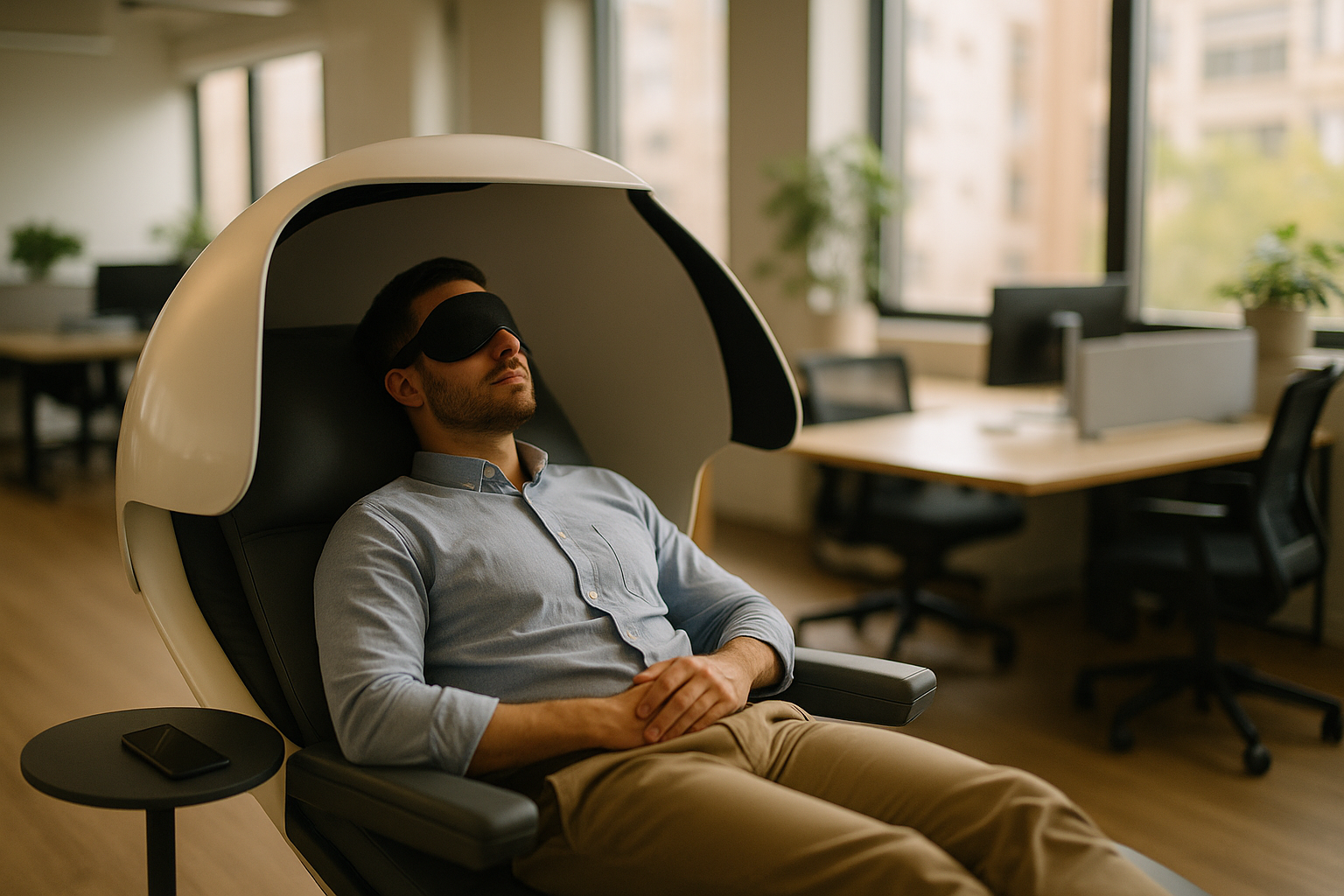
- Provide dark, quiet rooms with reclining chairs; no phones.
- Require post-nap checks (light exposure + brief walk) before safety-critical tasks.
- Track lapses, near-misses, error rates before/after rollout.
6.2 Region note
Local labor and fatigue-management rules vary (e.g., aviation duty time and rest opportunities). Coordinate with compliance leads when adding nap breaks to formal schedules. EASA
Synthesis: In 24/7 operations, naps aren’t perks—they’re protective equipment against errors.
7. Build a Personal Nap Protocol You Can Repeat Anywhere
Consistency turns “nice idea” into a repeatable performance routine. Most adults can nap on demand with a simple protocol: a short wind-down, a reliable alarm, a dark/quiet cue, and a wake-up ritual (light + movement). Consumer guidance from clinical sources converges on early-afternoon, 20–30 minutes total (including settling), and sleep-friendly conditions to speed onset and limit inertia. The goal is not perfection; it’s predictability—so the routine still works on a hectic day.
7.1 Mini-checklist
- Anchor time: 1:30 p.m. (±30 min) on workdays.
- Environment: eye mask, earplugs/white noise, cool room.
- Timer: 22–25 minutes (adjust to your fall-asleep time).
- Wake cue: bright light + 3-minute walk + water.
- Boundary: calendar block titled “Focus reset.”
7.2 Troubleshooting
If you can’t fall asleep, rest with eyes closed—even brief quiet rest shows memory benefits in some protocols. If naps disrupt night sleep, move earlier, shorten by 5 minutes, or limit to high-demand days.
Synthesis: A simple, repeatable protocol beats ad-hoc naps; rehearse it until it’s automatic.
8. Align Breaks With Ultradian Cycles and Deep Work
Your brain naturally oscillates in 90–120-minute ultradian cycles of high and lower alertness. Structuring deep-work sprints to end near a trough, then inserting a 10–20-minute nap, helps you catch the cycle on the upswing. Large polysomnography datasets estimate a median human sleep cycle near ~96 minutes, though individual variance is wide; in wakefulness, similar rhythms shape attention and fatigue. Practically, batching tasks into one or two deep blocks before a nap can reduce context switching and make the nap itself easier to initiate.
8.1 How to do it
- Plan 75–100-minute deep-work blocks, then nap 10–20 minutes.
- Use a single-purpose timer (not your phone).
- Protect recovery minutes (light, walk) before diving back in.
8.2 Numbers & guardrails
Ultradian timing is a guide, not dogma; chronotype, caffeine, and prior sleep shift your cycle length. Keep experiments simple: change one variable weekly (duration or timing), not everything at once.
Synthesis: Marry your nap to your natural performance cadence for smoother energy across the afternoon.
9. Track the Impact With Simple Productivity Metrics
What gets measured gets managed—naps included. Organizations that legitimize short naps often see fewer errors and faster task completion after implementation, but you don’t need a lab to prove value. Pair subjective ratings with a couple of objective markers and watch trends, not single days. The sleep-medicine literature recommends focusing on alertness, lapses, and mood, which correlate with performance in real work.
9.1 What to measure
- Subjective: 1–10 sleepiness (Karolinska-style), mood (−2 to +2).
- Objective: time-to-complete a standard task; error rates; a 3-minute reaction-time tap test.
- Team-level: ticket backlog cleared per agent, rework/bug counts, near-misses.
9.2 Mini-protocol
Log scores pre-nap, 30 minutes post-nap, and end of day; compare nap days vs. non-nap days across two weeks. Share deltas, not raw times, to avoid gamification.
Synthesis: A few lightweight numbers will show whether naps are pulling their weight in your workflow.
10. Make Naps Policy-Safe: HR, Equity, and Facilities
For naps to boost productivity across a team—not just for bold individuals—you need clear norms and equitable access. Public-health guidance suggests short planned naps during breaks can boost alertness; clinical and consumer advice recommends early-afternoon timing and 20–30 minutes to avoid sleep inertia and protect nighttime sleep. Translating that into policy means specifying who can nap, where, and for how long, and pairing it with education on sleep health and alternative break options for those who can’t nap.
10.1 Policy starter template
- Purpose: improve alertness and reduce errors via brief, optional naps.
- Access: quiet room with reclining chairs; eye masks/earplugs provided.
- Guardrails: 10–25 minutes; 1–3 p.m. by default; no naps within 3 hours of shift end unless safety requires.
- Post-nap rule: light exposure + 3-minute walk before safety-critical tasks.
- Equity: offer alternative recovery breaks (stretching, light walk) where naps aren’t feasible.
10.2 Facilities & culture
Pilot with a small group, publish metrics, and iterate. Name the room something neutral (“Wellness Room”) to reduce stigma. Share evidence summaries and how-to tips in onboarding.
Synthesis: When naps are normalized, brief, and bounded, they become a legitimate productivity tool—not a taboo.
FAQs
1) What’s the ideal nap length for workdays?
For most people, 10–25 minutes of sleep delivers fast alertness gains with minimal grogginess. Set a 20–30 minute timer to include time to fall asleep. If you’re severely sleep-deprived and can afford it, a ~90-minute full sleep cycle is the safer longer option.
2) When should I nap to avoid hurting my night sleep?
Aim for the early afternoon—roughly 1–3 p.m. That aligns with the circadian dip, helps you fall asleep, and is less likely to interfere with bedtime. Shift workers should align naps to their biological afternoon instead of clock time.
3) Will a nap make me groggy?
Possibly for a few minutes. Grogginess (sleep inertia) is most likely after 30–60-minute naps or naps taken at circadian lows (e.g., 3–5 a.m.). Keep it short, use bright light and movement on waking, and place naps earlier in the day.
4) Do naps really help memory, or just alertness?
Both, depending on the task. Studies show benefits for vigilance, encoding, and certain types of memory after short naps or even quiet eye-closed rest post-learning. Effects vary by duration and task type.
5) Are “caffeine naps” safe and effective?
For healthy adults who tolerate caffeine, pairing ~100–200 mg caffeine immediately before a 10–20-minute nap can outperform either alone in simulated driving and lab tasks. Avoid late-day use and skip if you’re caffeine-sensitive or pregnant.
6) What if I can’t fall asleep on command?
Still lie down, eyes closed, in a dark, quiet place for 10–15 minutes. Some studies find quiet rest can aid memory consolidation; over a week, the routine itself makes falling asleep easier. PMC
7) How do teams justify nap time to leadership?
Track pre/post metrics (error rates, time to complete standard tasks, subjective alertness). Share two-week deltas; reference occupational guidance that supports planned short naps during breaks for safety and performance.
8) Do naps replace a good night’s sleep?
No. Naps are a bridge, not a substitute. Adults still need ~7+ hours nightly for long-term health; naps mitigate acute dips but won’t fix chronic sleep restriction. PMC
9) Are there risks to frequent long naps?
Long, late, or irregular naps can worsen insomnia and may indicate underlying health issues. Keep naps short and early; if daytime sleepiness is frequent or severe, seek medical evaluation.
10) What simple equipment helps?
A timer, eye mask, earplugs or white noise, and a water bottle for post-nap hydration. Fancy nap pods are optional; a recliner in a quiet room is enough.
Conclusion
“Naps and productivity” aren’t opposites; they’re allies when you use short, well-timed sleep as a precision tool. Start with a simple protocol: a 10–25-minute nap in the early afternoon, a reliable alarm, and a brief re-activation routine (light + movement). If you’re carrying heavy sleep debt or working nights, add a full-cycle recovery nap when feasible. For teams, move beyond ad-hoc napping by creating an equitable policy, providing a quiet space, and measuring outcomes. Over a few weeks, you’ll likely see fewer errors, smoother afternoons, and better morale—without longer hours.
Ready to try it? Block 25 minutes next week at 1:30 p.m., follow the checklist in Tip 7, and track your before/after alertness and task time. Repeat five times and review the deltas.
References
- What Is a NASA Nap: How to Power Nap Like an Astronaut, Sleep Foundation, Oct 27, 2023. Sleep Foundation
- The benefits of napping for safety & How to make the most of a nap (slides), NASA Technical Reports Server, Dec 9, 2019. NASA Technical Reports Server
- Effects of a Short Daytime Nap on the Cognitive Performance: A Systematic Review and Meta-Analysis, International Journal of Environmental Research and Public Health (MDPI), 2021. PMC
- Sleep inertia: current insights, Nature and Science of Sleep (PMC), 2019. PMC
- The post-lunch dip in performance, Clinics in Sports Medicine (PubMed), 2005. PubMed
- Circadian Rhythms in Attention, Yale Journal of Biology and Medicine (PMC), 2019. PMC
- Napping: Benefits and Tips, Sleep Foundation, Mar 11, 2024. Sleep Foundation
- Napping: Do’s and don’ts for healthy adults, Mayo Clinic, Nov 6, 2024. Mayo Clinic
- Nap Duration, CDC NIOSH Work Hours Training, accessed Aug 2025. CDC
- Planned Naps, CDC NIOSH Work Hours Training, accessed Aug 2025. CDC
- Effects of napping, caffeine, and placebo on driver sleepiness, Journal of Sleep Research (PubMed), 1996. PubMed
- A combination of caffeine with a short nap, Psychophysiology (PubMed), 1997. PubMed
- Influence of mid-afternoon nap duration and sleep stages on memory and alertness, Biology of Sport (PMC), 2023. PMC
- Ultradian sleep cycles: Frequency, duration, and variability, Sleep Medicine Reviews (ScienceDirect abstract), 2024. ScienceDirect
- Workplace Interventions to Promote Sleep Health and an Alert Workforce, Journal of Clinical Sleep Medicine (AASM), 2019. Journal of Clinical Sleep Medicine