
























When you’re trying to get healthier with a full schedule, the question isn’t “multitask or single-task?”—it’s when to do each without compromising results. This guide shows you how to decide, moment by moment, so your workouts, nutrition, and recovery all move forward. You’ll learn where multitasking shines (like walk-and-talk meetings) and where it sabotages progress (like heavy lifts or complex cooking), plus practical tools to protect focus.
Quick answer: Single-task whenever the cognitive load or physical intensity is high (e.g., strength work, skill drills, sharp-knife prep). Multitask only by pairing low-intensity movement with low-cognitive tasks (e.g., walking meetings, audio learning) to add steps and NEAT without hurting performance. As of June 2024, global guidelines still recommend at least 150 minutes/week of moderate activity; smart multitasking can help you reach that safely.
Friendly disclaimer: This article is educational, not medical advice. If you have a health condition, consult a qualified professional before making changes.
1. Use a “Load × Intensity” Matrix to Decide in Seconds
The fastest way to choose between multitasking and single-tasking is to map the task’s mental load (low ↔ high) against its physical intensity (low ↔ high). If either axis is high, default to single-tasking. This rule protects form, safety, and results while still letting you reclaim time from low-stakes moments. Research on task switching shows that swapping attention carries real costs; even brief shifts can slow performance and increase errors. Meanwhile, walking can boost creative ideation—great for meetings—so not all “doing two things” is bad. The trick is pairing the right kinds of tasks.
Load × Intensity Matrix (use it quickly):
| Physical Intensity: Low | Physical Intensity: High | |
|---|---|---|
| Mental Load: Low | OK to Multitask: walking meetings, easy tidy-up while on calls | Single-Task: warm-ups before max efforts |
| Mental Load: High | Single-Task: meal-planning macros, complex recipes | Single-Task: heavy sets, complex drills |
1.1 Why it matters
- Task switching costs: Switching rules or goals adds measurable time and errors.
- Creativity bump while moving: Walking often increases idea generation; use it for brainstorming.
1.2 Mini-checklist
- If either intensity or cognitive load is high → single-task.
- If both are low → pair tasks to reclaim time.
- If unsure, run a 10-minute test and review output quality.
Bottom line: Let the matrix make the call—fast, repeatable, and grounded in how attention and effort really work.
2. Single-Task All High-Skill or High-Risk Training (Strength, Power, Technique)
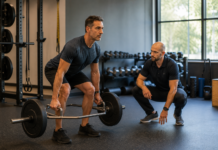
Heavy squats, Olympic lifts, sprint starts, and technical drills demand full focus. The first sentence rule applies: Single-task here, no exceptions. Cognitive research shows that changing mental sets (e.g., glancing at messages between sets) imposes a switching cost that degrades performance. In the gym, that can mean lost tightness, poor bar path, or missed cues—each with injury implications. Keep your mind on set-up, breathing, and tempo; if you want to “do two things,” log the set or check notes—after the set and within your rest timer.
2.1 How to do it
- Phone on Do Not Disturb during work sets; alarms allowed for rest intervals.
- Script your cues (e.g., “brace—over toes—drive”) and review them between sets.
- Use a training timer (e.g., 2–3 min for compound lifts) and keep eyes off apps until the next rest.
2.2 Common mistakes
- Messaging between sets: attention residue lingers into the next set.
- Filming every rep for socials: externalizing performance shifts focus away from form.
- Listening to spoken content: language processing can interfere with motor planning.
Synthesis: Treat high-skill or high-risk sessions as sacred focus blocks; every distraction taxes output more than you think.
3. Turn Meetings Into Steps (and Ideas) With Walk-and-Talks
For status updates, 1:1s, or light brainstorming, multitask safely by walking while you talk. Studies show walking boosts creative ideation and that structured walking-meeting protocols are feasible at work. Done right, this stacks NEAT (non-exercise activity thermogenesis) with real collaboration, helping you inch toward the 150-minute weekly target. Start with short loops (15–30 minutes) at a conversational pace; voice-record decisions so no one has to type while walking.
3.1 Numbers & guardrails
- Pace: easy conversational—aim for 3–4.5 km/h (2–3 mph) so speech stays clear.
- Duration: 20–30 minutes for check-ins; cap at 45 for focus.
- Group size: best with 2–3 people per research and practice notes.
3.2 Tools/Examples
- Voice notes (phone) for decisions;
- Shared agendas before the walk;
- Auto-transcription after (e.g., phone-native, meeting tools).
Synthesis: Walking meetings are a win when the agenda is light and decisions are simple—more steps, better ideas, same meeting time.
4. Stack Low-Brain Tasks With Light Movement to Boost NEAT
If a task requires little thought—listening to updates, folding laundry, skimming non-critical emails—pair it with light movement to raise daily energy burn without wrecking focus. NEAT can vary widely among people and is a meaningful slice of total expenditure; adding even modest movement during mundane tasks compounds over time. Examples: pacing during phone calls, calf raises while the kettle boils, or stationary cycling on easy resistance during webinars. Mayo Clinic
4.1 Mini-checklist
- Choose light-load movement: walking, gentle cycling, mobility.
- Prefer audio-first consumption; avoid reading while moving unless safety is clear.
- Track with a step counter; aim to lift your baseline by 1,000–2,000 steps/day.
4.2 Numbers & context
- NEAT includes everything that isn’t sleep, eating, or sports-like exercise; it’s highly variable across individuals.
- WHO/CDC still anchor public guidance at 150 min/week moderate activity; NEAT helps close the gap.
Synthesis: Save multitasking for low-brain tasks and light movement—this is where “do two things” pays off.
5. Protect Deep Health Blocks With Time-Boxing (Meal Prep, Strength, Sleep)
Certain health actions deserve uninterrupted time: meal prep, strength sessions, and sleep. Cognitive science shows that unfinished tasks leave attention residue, dragging mental performance on the next task. Time-box these blocks and start them with a short reset (water, timer, plan) so you enter clean. During meal prep, cut distractions—knives plus pings are a bad mix; during workouts, keep apps closed; for sleep, stack wind-down routines instead of screens.
5.1 How to do it
- Time-blocking: schedule 45–90-minute focus blocks for prep/workouts.
- Pomodoro for prep: 25/5 cycles work well for batch cooking clean-ups.
- Sleep-first calendar: set a fixed bedtime alarm and back-plan evening tasks.
5.2 Common mistakes
- Half-doing three tasks: more switches = more errors and less done.
- Notifications on: encourages self-interruptions that lengthen time to refocus. Related research suggests it can take many minutes to fully re-engage after interruptions.
Synthesis: If it’s sharp (knives), heavy (weights), or critical (sleep), it gets its own box—no multitasking.
6. Use “Audio Add-Ons” to Enrich Low-Intensity Cardio and Chores
Low-intensity cardio (easy cycling, zone-1/2 walks) and routine chores are perfect for audio learning: guided mobility, language lessons, nutrition podcasts, or meditation. Do not try this with high-intensity intervals or technical drills—the brain’s bandwidth is already spoken for. Keep the content simple enough that a brief distraction won’t ruin comprehension, and consider bookmarking moments to revisit later while you’re at your desk.
6.1 Tools/Examples
- Playlists with chapters so you can pause at natural breaks.
- Voice bookmarks (“Hey phone, save note: try lentil chili recipe”).
- Guided sessions (mobility, breathwork) to add quality without much thought.
6.2 Mini numeric example
- Three 20-minute walk-and-learn sessions per week add 60 minutes of movement and three bite-size lessons—without adding calendar blocks.
Synthesis: Enrich easy movement with audio, not screens—your brain and body can share the load here.
7. Reduce Attention Residue Before Switching Tasks
If you must switch tasks, close the loop first to reduce “mental carryover.” Research on attention residue shows that shifting from an unfinished task can impair performance on the next one; finishing a sub-step and jotting a status note helps clear the deck. In practice, that means writing “Stopped after step 3; next: sauté veg, 6 minutes” before pausing meal prep, or “Completed set 3; next: 85 kg × 5” before answering the door.
7.1 Mini-checklist
- Name the next action in one sentence.
- Capture context (timer left, weight used, ingredient measured).
- Set a re-entry cue (alarm or note on top of the cutting board).
7.2 Why it matters
- You shorten the time to re-engage after interruptions—a delay popular summaries put around the multi-minute range—by making the “next step” explicit.
Synthesis: Don’t just stop; stage your restart so switching doesn’t tank your next move.
8. Match Workouts to Meeting Types (and Vice Versa)
Not all meetings—and not all workouts—are equal. Pair low-stakes calls with a treadmill walk or outdoor loop. Keep decision-heavy meetings at a desk or whiteboard where documents are handy. Reserve hard training for calendar slots with minimal communication needs. Studies indicate walking can improve ideation, but heavy cognitive control tasks suffer under interference—don’t try to do strategy planning during intervals.
8.1 Practical pairings
- Status call + walk: audio only, voice notes for decisions.
- Brainstorm + park loop: fresh ideas benefit from movement.
- Negotiation/finance review + desk: high mental load, keep movement separate.
- Intervals/heavy lifts + solo focus: no calls, no podcasts.
8.2 Region-specific notes
- Hot climates (e.g., summer in Karachi): pick shaded routes, earlier times, or indoor tracks; hydrate and cap walks at 20–30 minutes in peak heat.
Synthesis: Align the type of meeting with the intensity of movement so neither undermines the other.
9. Measure What Matters Weekly—Then Adjust Your Mix
You can’t optimize what you don’t measure. Keep a simple weekly review: minutes of moderate activity, step count, strength progress, sleep average, and one focus metric (e.g., “deep-work hours” or “DND streaks”). WHO and CDC guidelines still point to 150 min/week of moderate activity; if you’re short, add walking meetings or audio-enhanced chores. If your lifts plateau or form slips, tighten single-tasking. Iterate every 7 days.
9.1 Mini checklist
- Log: steps, minutes, two strength indicators, sleep hours.
- Review: Did multitasking creep into high-load slots?
- Adjust: Add 1–2 walk-and-talks, or carve deeper focus blocks.
9.2 Example
- Week 1: 110 minutes activity, 6,500 avg steps, missed two strength cues.
- Week 2 plan: +2 walking meetings (2×25 min), DND during lifting, pre-set cues.
Synthesis: Treat your plan like a dial, not a switch—measure, tweak, repeat until you’re hitting health targets with less friction.
FAQs
1) What’s the simplest rule to decide between multitasking and single-tasking?
If either the physical intensity or the mental load is high, single-task. Only multitask when both are low, like pairing an easy walk with a status call. This protects performance from known task-switching costs while still letting you reclaim time with safe pairings.
2) Are walking meetings actually productive, or just trendy?
They can be very productive for check-ins and brainstorming. Research shows walking boosts creative ideation, and workplace pilots find walking-meeting protocols feasible. Keep groups small (2–3), prepare an agenda, and record decisions with voice notes. Baylor Human Resources
3) How many walking meetings do I need to see benefits?
Start with 1–2 per week at 20–30 minutes each. That’s 20–60 extra active minutes without extra calendar time. Combined with other activity, this helps you approach the 150 minutes/week guideline.
4) Does multitasking ever help with weight loss?
Indirectly, yes—by raising NEAT (e.g., pacing on calls, walking errands). NEAT is the energy of non-exercise movement and contributes meaningfully to daily expenditure, varying widely among individuals.
5) Isn’t multitasking bad for the brain?
Frequent media multitaskers show more susceptibility to interference, and switching tasks has measurable time costs. That’s why you avoid multitasking for high-load work. But pairing a simple task with light movement (like a walk) is different—and often beneficial.
6) What about listening to podcasts during heavy lifting?
Skip it for heavy sets and complex skills. Spoken content adds cognitive load and can dilute cues and bracing. Save audio for warm-ups, easy cardio, or chores, when movement is low-intensity and the stakes are lower.
7) How do I prevent attention residue when I have to switch?
Close the loop: write a one-line “next step,” capture key details, and set a quick re-entry cue. Research shows unfinished tasks can impair performance on the next task; staging your restart shortens the re-engagement time.
8) Do I still need traditional workouts if I walk during meetings?
Yes. Walking meetings add light activity, but you still want structured moderate/vigorous minutes and strength training for full benefits. Use walking meetings as a supplement to (not a replacement for) planned sessions aligned with guidelines.
9) What step count should I aim for if I’m busy?
There’s no single magic number, but gradually adding 1,000–2,000 steps/day above your baseline is realistic and beneficial. Combine walking meetings, brisk errands, and evening strolls to increase volume without extra scheduling.
10) How do I avoid “fake productivity” while multitasking?
Set a clear output for the primary task (e.g., “three decisions” for a check-in). If output quality drops, your pairing is wrong—go back to single-tasking or change the activity to a lighter one.
Conclusion
You don’t have to choose a team—multitasking or single-tasking—for every situation. The key is to match the method to the moment. When intensity or complexity is high, protect your performance with single-task focus blocks. When both are low, reclaim time by pairing light movement with low-stakes tasks—walking meetings, audio learning on strolls, pacing on calls. This approach builds consistency across fitness, nutrition, and recovery while keeping your calendar sane.
Start with the Load × Intensity Matrix, schedule two deep health blocks, and add one walking meeting this week. Measure steps, minutes, and one focus metric; adjust each Friday. In a month, you’ll likely see more steps, steadier workouts, better prep—and less friction in your routine.
Ready to start? Book one walking meeting and one focus block today.
References
- Rubinstein, J. S., Meyer, D. E., & Evans, J. E. (2001). Executive control of cognitive processes in task switching. Journal of Experimental Psychology: Human Perception and Performance, 27(4), 763–797. PubMed
- Leroy, S. (2009). Why is it so hard to do my work? The challenge of attention residue when switching between work tasks. Organizational Behavior and Human Decision Processes, 109(2), 168–181. IDEAS/RePEc
- Ophir, E., Nass, C., & Wagner, A. D. (2009). Cognitive control in media multitaskers. Proceedings of the National Academy of Sciences (PNAS). PubMed
- Oppezzo, M., & Schwartz, D. L. (2014). Give your ideas some legs: The positive effect of walking on creative thinking. Journal of Experimental Psychology: Learning, Memory, and Cognition. PubMed summary: ; Stanford report: PubMedStanford News
- Kling, H. E., et al. (2016). Opportunities for Increased Physical Activity in the Workplace: The Walking Meeting (WaM) Pilot Study, Miami, 2015. Preventing Chronic Disease. PMC
- World Health Organization. (2024, June 26). Physical activity – Fact sheet. World Health Organization
- U.S. CDC. (2023, Dec 20). Adult Physical Activity Basics: Guidelines. CDC
- Levine, J. A. (2002). Non-exercise activity thermogenesis (NEAT). Best Practice & Research: Clinical Endocrinology & Metabolism, 16(4), 679–702. ; see also PubMed overviews: ; https://pubmed.ncbi.nlm.nih.gov/15102614/ Mayo ClinicPubMed
- Mark, G. (2023). Attention Span: A Groundbreaking Way to Restore Balance, Happiness and Productivity. HarperCollins page with key findings. HarperCollins