
























A consistent sleep schedule isn’t about perfection; it’s about repeating the same sleep–wake window every day so your body clock knows what to expect. In practice, that means choosing a regular wake-up time and a matching bedtime that delivers enough sleep, then protecting those anchors most days of the week. Done well, a stable schedule lifts energy, mood, focus, and long-term cardiometabolic health. This guide distills what actually works—light, timing, routines, and guardrails—into 10 practical steps you can start tonight. Brief note: this guide is educational and not a substitute for personal medical care; if you have a sleep disorder (e.g., insomnia, sleep apnea), talk with a clinician.
Quick definition: A “consistent sleep schedule” means going to bed and waking up at roughly the same times daily (ideally within ±30–60 minutes), aligned to your life constraints and chronotype. Adults should target at least 7 hours of sleep per 24 hours.
1. Lock a Fixed Wake-Up Time (Your Daily Anchor)
The single highest-leverage move is to choose a wake-up time that you can keep seven days a week and make it non-negotiable. Your circadian system responds best to regular, repeating time cues; stabilizing wake time helps set your “master clock,” improves daytime alertness, and gradually pulls bedtime into line. Irregular day-to-day timing—sleeping in by hours one day and shorting sleep the next—erodes this signal and is linked with worse academic performance and higher cardiometabolic risk over time. Pick a time that accommodates your earliest regular obligation (commute, school run, morning prayer, opening shift) and work backward for enough sleep. If you can’t adjust everything at once, start with the wake-up and let the rest of your habits fall in behind it.
1.1 Why it matters
- Regular sleep timing strengthens circadian entrainment and improves daytime function.
- Irregular sleep patterns are associated with delayed circadian timing and poorer performance.
- Variability in sleep timing/duration predicts cardiovascular risk independent of total sleep time.
1.2 Numbers & guardrails
- Keep wake-up within ±30–60 minutes daily; aim for <1 hour difference on weekends to limit “social jetlag.”
- Adults need 7+ hours per 24 hours (most thrive at 7–9).
Mini-checklist
- Choose a realistic time you can keep 7 days.
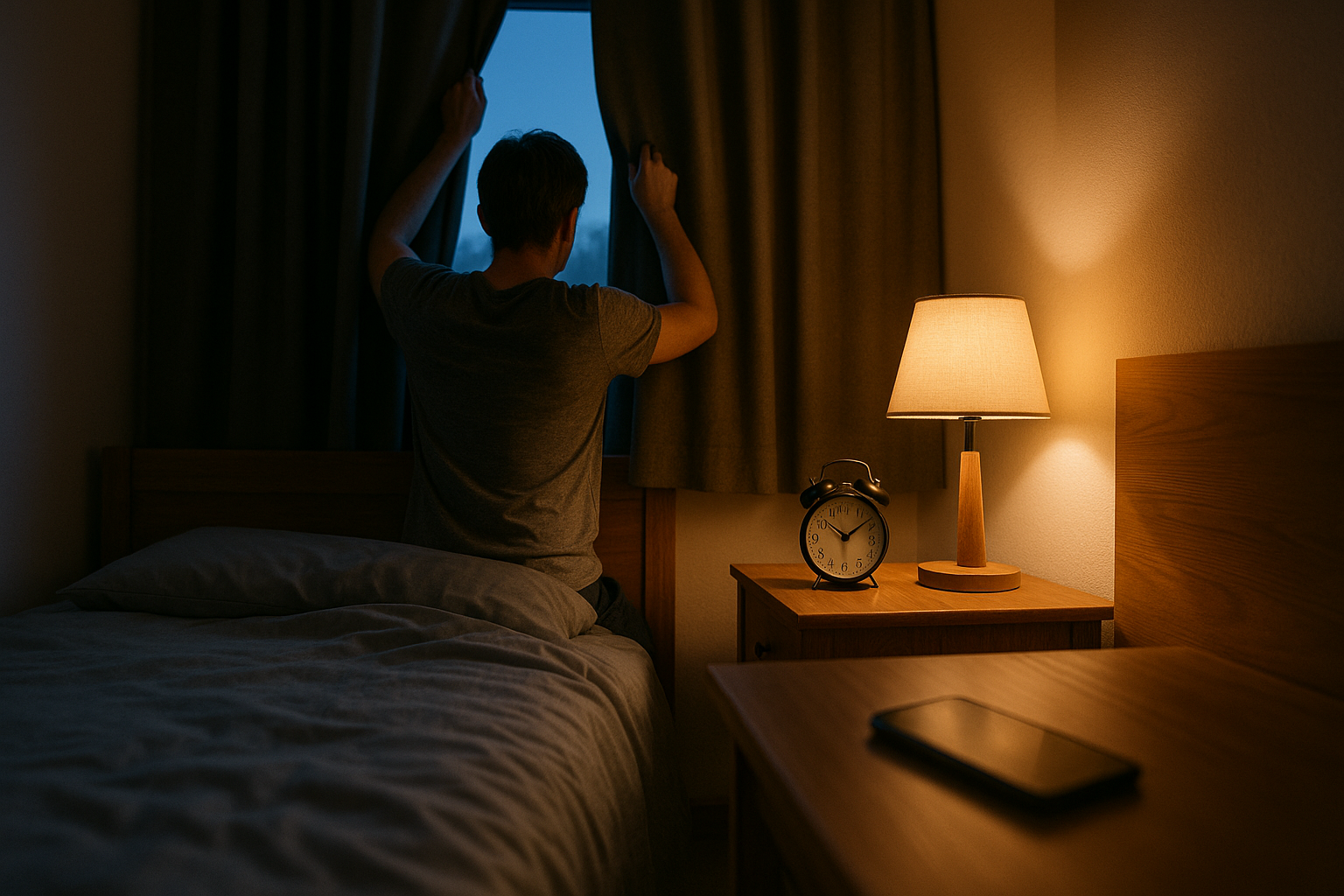
- Put the alarm across the room; turn on bright lights immediately.
- Get daylight (or bright light) within an hour of waking.
Bottom line: Make wake-up time the schedule you protect first; everything else is easier once the anchor holds.
2. Back-Calculate Bedtime to Guarantee Enough Sleep
Start from your fixed wake-up and work backward to ensure a sleep opportunity of 7–9 hours. Add 45–60 minutes before lights-out for a wind-down (reading, breathing, stretching) so you’re not racing the clock. If 7–9 hours seems unrealistic at first, use progressive improvement: extend your sleep window by 15 minutes every few nights until you consistently wake refreshed without an alarm. Prioritize time in bed over “catching up” later; sleep is not a bank you can reliably repay with weekend oversleep without consequences. The goal here isn’t a perfect bedtime; it’s a consistent one that leaves room for real-world life.
2.1 How to do it
- Fix wake-up (e.g., 6:30 a.m.), then set lights-out to deliver 7.5–8 hours in bed (e.g., 10:15–10:30 p.m.).
- Add 45 minutes of wind-down (screen-free) before lights-out.
- If you’re wide awake at target bedtime, keep the same wake time anyway; sleep pressure will build the next night.
2.2 Numbers & guardrails
- Adults: 7+ hours nightly; many do best at 7–9 hours.
- Teens: 8–10 hours (if you’re supporting a teen at home).
Mini-case: If you must be out the door by 8:00 a.m., choose a 6:30 a.m. wake-up, target 10:30 p.m. lights-out, and a 9:45 p.m. wind-down.
Bottom line: A guaranteed window beats a guessed bedtime; plan the math, then protect it.
3. Shift Your Schedule Gradually—15 to 30 Minutes at a Time
If your current schedule is far from your target, don’t make a two-hour jump overnight. Shift in 15–30 minute steps every day or two until you land on your anchor times. Pair each advance with morning bright light and consistent wake-up to speed adaptation. If a clinician recommends melatonin, timing is everything: small doses (≈0.5–1 mg) taken in the late afternoon/early evening (several hours before natural melatonin rise) can help advance the clock; taken late at night or near wake time, melatonin can delay it. (Always confirm dosing/timing with a professional and note that products vary.)
3.1 Tools & timing
- Advance bedtime/wake-up by 15–30 minutes per day; hold for 2–3 days; repeat.
- Add 30–60 minutes of morning outdoor light or a clinical-grade light box upon waking.
- Consider low-dose melatonin only under guidance; timing relative to your circadian phase is critical.
3.2 Common mistakes
- Big jumps that backfire and cause 2 a.m. wakefulness.
- Taking melatonin at bedtime as a “sedative” rather than timing it for phase-shifting.
- Skipping morning light, the strongest natural signal to your clock. NIGMS
Bottom line: Small, steady shifts plus morning light beat heroic one-night resets every time.
4. Use Light (and Darkness) Like a Dial to Set Your Clock
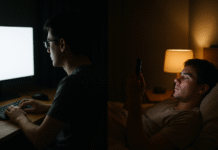
Light is the master “zeitgeber” (time cue) for human circadian rhythms. Bright light soon after waking reinforces an earlier biological day; dim, warm light in the evening tells your brain it’s night. Evening exposure to blue-enriched light—such as reading on a backlit e-reader—delays your clock, suppresses melatonin, and reduces next-morning alertness. Indoors is typically far dimmer than daylight, so prioritize outdoor light for the biggest effect. At night, aim for a cave-like bedroom: blackout curtains or an eye mask, and minimal screens. If you must use devices, enable night mode and keep them far from your eyes. Harvard Health
4.1 How to do it
- Get 30–60 minutes of outdoor light within the first hour of waking (walk, balcony, commute).
- Keep indoor evenings dim; switch to warm (≤3000 K) bulbs two hours before bed.
- Avoid bright screens for 60 minutes pre-bed; if used, lower brightness and enable blue-light filters.
4.2 Numbers & guardrails
- Morning light: earlier and brighter = stronger advance.
- Evening e-reader use delays melatonin and increases time to fall asleep.
Mini-checklist: Morning light, evening dimness, dark bedroom. Treat light as medicine—with timing and dose.
Bottom line: Daylight early, darkness late: the simplest way to lock your sleep schedule.
5. Build a 45-Minute Wind-Down That Cues Sleep
Your brain lands smoother when you give it a clear pre-sleep ritual. A 45-minute wind-down—same steps, same order—acts like a runway that lowers arousal, slows breathing, and tells your body it’s safe to sleep. Think of it as “closing tasks” for your nervous system: reduce light, do one relaxing activity, prep the room, and climb into bed only when sleepy, not just when the clock says so. This routine helps especially on nights with racing thoughts; by repeating it, you create a strong association between bedtime actions and sleepiness (a core idea behind evidence-based insomnia therapy).
5.1 How to do it
- Choose 2–3 calming steps (stretching, brief journaling, a warm shower, paper book).
- Keep lights dim and warm; avoid stimulating media/conversations.
- Park worries: write a next-day to-do list to “off-load” working memory.
5.2 Mini-checklist
- T-45: Devices away, lights dim.
- T-30: Hygiene and light stretching/breathing.
- T-10: In bed, eyes closed when sleepy (not before).
Bottom line: Same steps, same order—your nightly cue stack that tells the brain, “sleep next.”
6. Time Stimulants, Meals, and Alcohol Wisely
When you consume caffeine, nicotine, heavy meals, and alcohol matters as much as how much. A controlled study showed caffeine taken even 6 hours before bedtime measurably reduces total sleep time; many people benefit from an 8–10 hour caffeine cutoff. Alcohol can help you doze off, but it fragments sleep later, suppresses REM, and worsens breathing; stop drinking 3–4 hours before bed and keep amounts modest. Finish large or spicy meals 2–3 hours before lights-out to prevent reflux and temperature-related arousal. These timing tweaks protect both schedule and sleep quality. NIAAANational Sleep Foundation
6.1 Guardrails
- Caffeine: last cup ≥6 hours pre-bed (longer if sensitive).
- Alcohol: avoid close to bedtime; limit quantity; hydrate early.
- Meals: finish big meals ≥2–3 hours pre-bed; keep late snacks light.
6.2 Region-specific note
In cultures with late dinners or evening tea/coffee, move stimulants earlier in the day and shift the largest meal to midday when possible.
Bottom line: The clock on your cup, plate, and glass is part of your sleep schedule. Time them right. PubMed
7. Make Your Bedroom a Sleep-First Environment
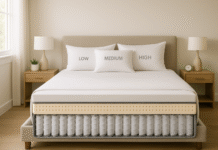
A cool, dark, quiet room helps your body maintain consolidated, high-quality sleep at your target times. Aim for a night-time thermostat around 18–20 °C (65–68 °F); your core temperature drops as you fall asleep, and a cooler room supports that process. Block light with blackout curtains or a good eye mask; tame noise with earplugs or a fan/white-noise app. Keep the bed for sleep and intimacy only; bring TVs and work out of the bedroom to protect the bed-sleep association. The goal is to make your schedule feel easy because your environment is doing half the work for you.
7.1 Tools/Examples
- Darkness: blackout curtains, eye mask, dim night lights for safety.
- Sound: white-noise machine, fan, or earplugs to buffer traffic/household noise.
- Comfort: breathable bedding; declutter distractions.
7.2 Mini-checklist
- Temperature set 65–68 °F.
- Lights off or minimal amber night light.
- No work devices in bed.
Bottom line: Engineer your bedroom so your chosen schedule is the most comfortable option.
8. Nap Smart and Tame the Weekend “Social Jetlag”
Naps can be helpful or harmful depending on timing and length. A brief 10–20 minute “power nap” early in the day can restore alertness without stealing sleep pressure from the night. But long, late naps—especially after 3 p.m.—can push bedtime later and destabilize your schedule. On weekends, large shifts in sleep timing (“social jetlag”) are associated with higher odds of obesity and metabolic disruption; try to keep weekend wake-up within an hour of weekdays. If you’re battling insomnia, most clinicians advise avoiding naps until your night sleep is solid again.
8.1 How to do it
- If needed, nap before 2–3 p.m. and set a 20-minute alarm.
- Keep weekend variations to ≤1 hour; plan morning light and activity on days off.
- If you struggle to fall/stay asleep at night, skip naps temporarily.
8.2 Common pitfalls
- “Crash naps” at 6 p.m. that ruin bedtime.
- Weekend sleep-ins that add 2–3 hours of delay—Monday mornings feel like jetlag.
Bottom line: Short, early naps plus small weekend shifts keep your schedule—and health—on track.
9. Handle Night Awakenings with Stimulus Control
Waking at night is normal; staying in bed frustrated for an hour is what teaches your brain that bed = wakefulness. Use stimulus control, a cornerstone of cognitive behavioral therapy for insomnia (CBT-I): if you can’t sleep after about 15–20 minutes (estimate—don’t clock-watch), get out of bed and do a calm, dim-light activity until drowsy, then return to bed. Reserve the bed for sleep and intimacy; keep a consistent wake time; and avoid long daytime naps. CBT-I is recommended as first-line treatment for chronic insomnia; if sleeplessness persists, ask your clinician about formal CBT-I or a reputable digital program.
9.1 Mini-checklist
- If awake and frustrated, leave bed; do something quiet in dim light.
- Return to bed only when sleepy, not just when it’s “time.”
- Keep wake-up fixed the next morning, even after a bad night.
9.2 Why it protects your schedule
Stimulus control rebuilds the bed-sleep link and prevents the spiral of late sleep-ins and bedtime drift after a rough night.
Bottom line: Don’t train your brain that bed = worry. Get up, reset, and keep your morning anchor.
10. Plan for Disruptions: Travel, Shift Work, and Clock Changes
Life will challenge your schedule—holidays, travel, deadlines, and daylight saving time (DST). For eastbound travel, start shifting your schedule 30–60 minutes earlier for several days; use strong morning light at destination and dim evenings. For westbound, shift later and use evening light. If a clinician advises melatonin for jet lag, follow evidence-based timing (low doses taken well before bedtime can help advance the clock). Shift workers can cluster sleep in two blocks, use bright light during night work, and wear dark sunglasses on the commute home to protect daytime sleep. Many sleep experts support permanent standard time to align clocks with biology, but while DST persists, adjust your schedule in small steps the week before the change. PMC
10.1 Travel playbook (example)
- 3–5 days pre-trip: shift bedtime/wake-up 30–45 minutes per day toward destination time.
- In destination mornings: outdoor light promptly after waking.
- Evenings: dim light; avoid heavy meals and alcohol close to bed.
- Optional (with clinician guidance): targeted low-dose melatonin.
10.2 Shift work notes
- Strategic bright light during shifts; dark commute home; cool, dark bedroom.
- Keep consistent sleep blocks on work and off days where possible.
Bottom line: Expect disruptions and pre-plan light, sleep windows, and (if appropriate) melatonin timing to keep your schedule resilient. PMC
FAQs
1) What exactly counts as a “consistent sleep schedule”?
Going to bed and waking up at roughly the same times every day, within ±30–60 minutes, and giving yourself 7+ hours in bed most nights. The tightness of your window matters less than repeating it; regularity is the goal.
2) How long will it take before I feel different?
Many people notice steadier energy within 7–14 days if they hold a fixed wake time and get morning light. If you’re shifting several hours, expect 2–3 weeks of gradual adjustments. Persistent insomnia, loud snoring, or very early awakenings warrant a check-in with a clinician.
3) Is it okay to sleep in on weekends?
A small extension (≤1 hour) is usually fine, but big shifts create “social jetlag,” tied to higher obesity and metabolic risk. If you stay out late, protect your wake-up anchor and catch a short, early nap instead of sleeping until noon. Cell
4) I can’t fall asleep at my target time—should I move bedtime later?
Keep your wake time fixed and tighten daytime behaviors (morning light, exercise, caffeine cutoff). At night, use stimulus control: leave bed if you’re awake and frustrated, and return when sleepy. This teaches your brain to link bed with sleep again. PubMed
5) Do chronotypes (night owls vs. early birds) matter?
Yes, but habits still help. Owls can shift earlier using morning light and gradual schedule advances; larks benefit from consistent wind-downs and limiting very early wake-ups. Align as best you can with obligations; perfection isn’t required to see benefits.
6) Are naps “bad” for a consistent schedule?
Short, early-day naps (10–20 minutes) can help without hurting nighttime sleep. Long or late naps drain sleep pressure, delay bedtime, and destabilize timing—especially in insomnia. If nights are fragile, skip naps until they’re solid. PMC
7) What about screens at night if I use night mode or blue-blocking glasses?
Night modes and blue-blocking lenses reduce but don’t eliminate circadian impact; bright screens near your eyes still delay melatonin and sleep onset. When possible, go screen-free for the hour before bed and keep room lighting dim. Harvard Health
8) How should I use melatonin without messing things up?
Think of melatonin as a clock-shifter, not a sedative. If a clinician recommends it, low doses (~0.5–1 mg) several hours before your natural melatonin rise can advance timing; taken late, it can delay you. Product quality varies, so use reputable sources.
9) Does a cool bedroom really matter?
Yes. A cooler room (65–68 °F / 18–20 °C) supports the body’s natural temperature drop at sleep onset and is associated with better sleep continuity. Combine with darkness and quiet for best results.
10) I work rotating shifts—what can I do?
Use bright light during night work, darkness on the commute home, and a cool, dark room for daytime sleep. Keep sleep blocks consistent across work/off days where you can. Some clinicians use carefully timed melatonin for phase shifting; always get guidance first.
Conclusion
Consistency is a skill, not a personality trait. When you anchor wake-up, back-calculate bedtime for enough sleep, and control the big inputs—light, wind-down, stimulants, environment—you make the desired schedule the easy schedule. Small moves compound: a 15-minute shift held for a week, caffeine moved to morning, a daily dose of outdoor light, and a cool, dark bedroom each night. Over a few weeks, your circadian system stabilizes, daytime energy evens out, and you stop needing willpower to go to bed because your body is ready on its own. Expect detours (travel, deadlines, events), and plan for them with gradual shifts, strategic light, and smart guardrails. Most importantly, protect the anchor—your wake-up time—and let the rest follow.
Ready to start? Pick your wake-up, set tonight’s wind-down, and step outside for morning light tomorrow.
References
- About Sleep — Centers for Disease Control and Prevention (CDC). May 15, 2024. CDC
- Recommended Amount of Sleep for a Healthy Adult: A Joint Consensus Statement of the AASM and SRS — Sleep. 2015. (Open access summary) ; (PDF) PMCAASM
- FastStats: Sleep in Adults — CDC. May 15, 2024. CDC
- Evening Use of Light-Emitting eReaders Negatively Affects Sleep, Circadian Timing, and Next-Morning Alertness — PNAS. 2015. PNAS
- Irregular Sleep/Wake Patterns Are Associated with Poorer Academic Performance and Delayed Circadian and Sleep/Wake Timing — Scientific Reports. 2017. Nature
- Sleep Irregularity and Risk of Cardiovascular Events — Journal of the American College of Cardiology (JACC). 2020. jacc.org
- Caffeine Effects on Sleep Taken 0, 3, or 6 Hours before Going to Bed — Journal of Clinical Sleep Medicine. 2013. PMC
- Circadian Rhythms — National Heart, Lung, and Blood Institute (NHLBI), NIH. Mar 24, 2022. NHLBI, NIH
- A Systematic Review of the Amount and Timing of Light in Association with Objective Sleep in Community-Dwelling Adults — Sleep Health. 2018. PMC
- Melatonin: What You Need to Know — National Center for Complementary and Integrative Health (NCCIH), NIH. 2025. NCCIH
- Human Phase Response Curves to Three Days of Daily Melatonin (0.5 mg vs. 3.0 mg) — Journal of Clinical Endocrinology & Metabolism. 2010. Oxford Academic
- Best Temperature for Sleep — National Sleep Foundation. Jul 11, 2025. Sleep Foundation
- Brief Behavioral Treatment for Insomnia (BBTI) – Provider Factsheet — American Academy of Sleep Medicine. 2022. AASM
- ACP Recommends Cognitive Behavioral Therapy as Initial Treatment for Chronic Insomnia Disorder — Annals of Internal Medicine/American College of Physicians. 2016. ACP Journals
- Permanent Standard Time Is the Optimal Choice for Health and Safety — American Academy of Sleep Medicine (Position Statement). May 1, 2025. AASM