

























Quick answer
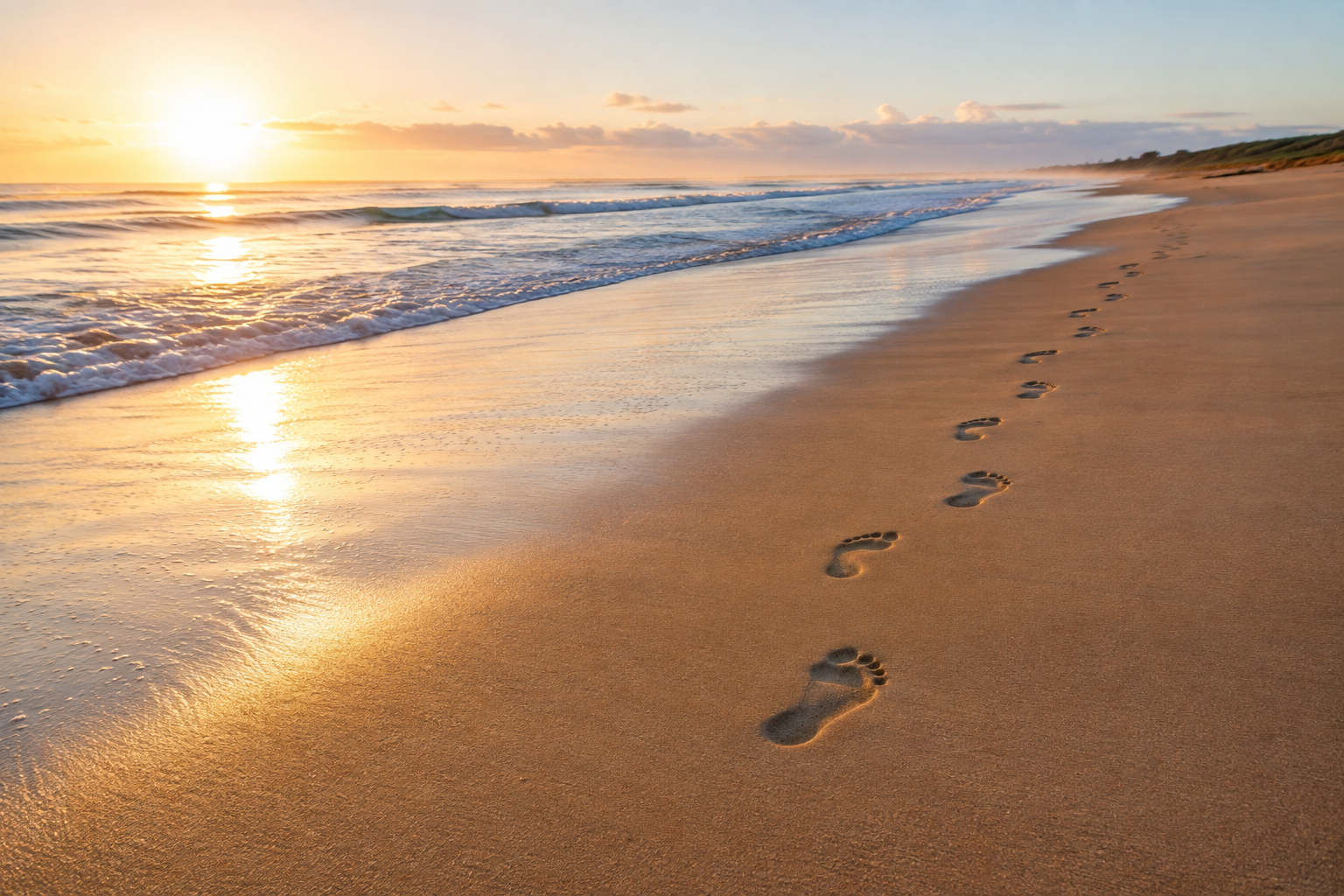
Training on dry, soft beach sand raises the metabolic cost of movement and lowers the impact forces travelling through the joints compared with running or drilling on grass or pavement, which is why it is a popular low-impact conditioning tool. The tradeoff is that the same soft, uneven surface asks more of the calf muscles and Achilles tendon and challenges ankle stability, so people who add sand sessions too quickly are more likely to develop calf strains, Achilles soreness, or a rolled ankle. A gradual, planned introduction with adequate footwear judgment and recovery keeps the benefits while limiting the risks.
By Olivia Bennett
Who This Matters Most For
This explainer is written for recreational runners, beach volleyball and soccer players, triathletes doing off-season conditioning, and anyone who has noticed a stretch of soft sand nearby and wondered whether walking or running on it would be a good addition to a routine. It is also written for people who already spend time on the beach and want to understand why a short barefoot jog in soft sand can leave the calves sorer than a much longer run on the road.
It matters most for two groups at opposite ends of the experience spectrum: complete beginners to unstable-surface training who tend to overdo the first session, and returning athletes with a prior Achilles tendon issue, chronic ankle instability, or a recent calf strain who need a slower, more deliberate reintroduction. If you fall into either group, the progression plan and checklist further down are written specifically with you in mind.
The Biomechanics of Sand Training
Soft, dry sand behaves nothing like a firm running surface. Every time a foot lands, the granules compress and shift underneath it, which absorbs some of the collision energy but also means the foot sinks slightly before it can push off again. That single mechanical fact explains almost everything about why sand training feels different, costs more energy, and stresses different tissues than running on grass, a track, or a road.
Energy cost: sand simply asks for more
The most frequently cited research on this question comes from Pinnington and Dawson, who published a controlled comparison of running on grass versus soft dry beach sand in the Journal of Science and Medicine in Sport in 2001. Twelve recreational runners ran at matched speeds on both surfaces while their aerobic and anaerobic energy costs were measured. At a jogging pace of 8 km/h, the net aerobic energy cost of running on sand was about 1.5 to 1.6 times higher than on grass, whether the runners were barefoot or wearing shoes, and the net anaerobic energy cost was roughly 2.5 to 3.7 times higher. Across every speed the researchers tested, sand running remained significantly more metabolically demanding than grass running. Their conclusion was that sand running offers a low-impact but high-energy-cost training stimulus, which is a useful way to think about the whole surface.
That extra cost is not a flaw of sand, it is the point. It means a given training session on sand produces a larger cardiovascular and metabolic load at a lower running speed than the same session would on a firm surface, which is part of why sand conditioning shows up so often in team-sport preseason programs.
Reduced impact forces
The compressible surface that raises the energy cost is the same feature that lowers peak impact forces at the foot, ankle, and knee compared with concrete, asphalt, or even grass over a firm base. A 2014 review in the Journal of Sports Sciences by Binnie and colleagues, which summarized the existing sand-training literature for team-sport applications, describes sand as offering a training surface with significant physiological and biomechanical differences from grass, including impact forces low enough to limit muscle damage, soreness, and the performance decrements that often follow hard training blocks on firm ground. That combination, a genuine training stimulus with reduced landing loads, is the central biomechanical argument for using sand strategically rather than as a wholesale replacement for regular training surfaces.
Different muscle activation patterns
Because the sand yields underfoot, the lower leg cannot rely on the same rigid push-off it gets from pavement. The foot and ankle musculature, particularly the calf complex, has to work harder to stabilize the ankle and generate propulsion through a shifting surface. A 2025 study in the Journal of NeuroEngineering and Rehabilitation by Kurtoğlu and colleagues measured gastrocnemius muscle activation with surface electromyography in young athletes before and after a four-week program performed on sand versus a tartan track. Activation increased on both surfaces, though the pattern of change differed between the two groups and the authors were careful to note that individual responses varied considerably rather than following one uniform trend. Separately, research on postural control on unstable surfaces, including a 2026 study in Frontiers in Sports and Active Living by Shen and colleagues, has shown that an unstable or compliant surface increases both postural sway and the sensorimotor demand of simply balancing, especially in people with a history of ankle instability. Sand is not identical to a laboratory foam pad, but the underlying principle, that a soft or uneven base recruits more stabilizing muscle activity than a firm one, applies directly to beach training.
Figures summarized from Pinnington & Dawson (2001), Binnie et al. (2014), and Yan et al. (2026); see References.
Genuine Benefits of Sand Training
Beyond the biomechanics, there are practical reasons athletes and coaches keep coming back to sand as a training tool.
- Lower joint impact for a given effort. Because the surface absorbs some of the landing force, sand sessions can provide a cardiovascular and muscular training stimulus with less pounding on the knees, hips, and lower back than the same duration of running on pavement, which is useful during a return from a lower-body injury or during a high-volume training phase when joints need a break from repeated hard-surface loading.
- Greater muscular demand at lower speeds. The 2001 Pinnington and Dawson data show that a modest jogging pace on sand produces an energy cost similar to a much faster pace on grass, so shorter sand sessions can deliver a comparable conditioning effect to longer firm-surface sessions.
- Performance transfer for team-sport athletes. The 2014 review by Binnie and colleagues and the 2026 randomized trial by Yan and colleagues in the Journal of Sports Science & Medicine both report that structured sand-based training, done alongside normal team training rather than instead of it, produced improvements in jump performance and repeated-sprint power that were comparable to or, in some measures, greater than the same volume of grass-based training in soccer players.
- Reduced muscle damage and soreness after hard efforts. The lower impact loading associated with sand appears to limit the muscle damage and next-day soreness that often follow intense running sessions on firm ground, according to the mechanisms summarized in the Binnie review, which can help athletes absorb more total training load across a week without accumulating the same wear and tear.
- Added proprioceptive and stabilizer challenge. The uneven, shifting nature of sand recruits the small stabilizing muscles of the foot and ankle more than a flat, firm surface does, which can be a useful adjunct to balance and ankle-strengthening work when introduced carefully.
Injury Risks and How to Reduce Them
The same features that make sand training valuable also make it a common place for people to get hurt, almost always because they treated it like a firm-surface workout rather than a distinct stimulus that needs its own dosing.
Achilles tendon and calf strain
The calf muscles and Achilles tendon do extra eccentric and stabilizing work on sand because the ankle has to control a foot that sinks and shifts with every step, rather than landing on a fixed, predictable surface. For someone whose lower legs are not conditioned to that demand, an unaccustomed sand session, especially barefoot, at speed, or on a slope, can produce a level of loading the calf and Achilles are not ready to absorb. A qualitative study of twenty expert sports clinicians published in Sports Medicine – Open in 2022 by Green and colleagues, focused specifically on calf muscle strain injuries, found that ongoing monitoring of an athlete’s calf capacity and their response to loading exposure gives the most accurate picture of injury risk, and that there is no single universal prevention program, because individual load tolerance and prior injury history vary so much. That is a useful frame for sand training specifically: the injury risk comes from a sudden mismatch between load and tolerance, not from sand itself.
Ankle instability on soft, uneven sand
Dry, loose sand, wet firm sand near the waterline, small dips, shell debris, and slopes toward the water all change the surface from stride to stride. Anyone with a history of ankle sprains or chronic ankle instability is working with a nervous system that already struggles more on unpredictable ground. The 2026 Frontiers in Sports and Active Living study by Shen and colleagues found that people with chronic ankle instability showed larger postural sway and higher sensorimotor cortical activation than uninjured people specifically when standing on an unstable surface, not on a stable one, which lines up with what many clinicians see in practice: it is the uneven ground, not flat ground, that exposes a previously injured ankle.
How to mitigate these risks
- Start with walking, not running, and keep the first few sessions short, on the order of ten to fifteen minutes.
- Choose firmer, wetter sand near the waterline for early sessions rather than soft, dry, loose sand further up the beach, since it moves less under the foot while you adapt.
- Keep shoes on for the first sessions if you have any Achilles or calf history, and only progress to barefoot work gradually once the calf complex has adapted, since barefoot sand running showed the highest anaerobic energy cost in the Pinnington and Dawson data.
- Avoid stacking a new sand session on top of an already heavy training week, since the injury risk comes from the total load exceeding the tissue’s current capacity, not from sand alone.
- If you have a history of ankle sprains, add specific balance and ankle-stability work before and alongside sand sessions rather than relying on the sand itself to provide that training.
Benefits vs. Risks at a Glance
Benefits
- Lower joint impact per session
- Higher energy cost at an easy pace
- Less post-session muscle soreness
- Extra calf and stabilizer engagement
- Useful cross-training during return from a hard-surface overuse injury
Risks
- Calf and Achilles strain from unaccustomed eccentric load
- Ankle rolls on uneven, loose, or sloped sand
- Overuse from underestimating the true metabolic load
- Greater risk for those with prior Achilles or ankle injury
- Fatigue-driven form breakdown late in a session
Sand vs. Firm-Surface Training
A Sensible Progression for Beginners
The research consistently points in the same direction: sand training works well when it is added gradually and specifically, not when it replaces a chunk of normal training overnight. A simple, conservative four-week on-ramp looks like this.
Checklist: Starting Sand Training Safely
- ☐ Begin with walking before jogging or running on sand
- ☐ Choose firmer, wetter sand near the waterline for early sessions
- ☐ Keep the first sessions to 10 to 15 minutes total
- ☐ Keep shoes on until the calves and Achilles have adapted over two to three weeks
- ☐ Add no more than one or two sand sessions per week at first
- ☐ Reduce other lower-leg-intensive training in the same week you introduce sand
- ☐ Warm up the calves and ankles with mobility and activation work before each session
- ☐ Stop a session if you feel sharp pain, not just fatigue, in the calf or Achilles
- ☐ If you have a history of Achilles tendon issues or ankle sprains, get individualized guidance from a physical therapist before starting
- ☐ Track soreness for 48 hours after each early session before adding more volume
Worked Example: Adding Sand Sessions to a Running Routine
Consider a recreational runner training four days a week for a fall 10K, with no prior ankle or Achilles issues, who lives a short drive from a beach and wants to use it for easy-effort days instead of pounding pavement every session.
In week one, she replaces one easy run with a 15 minute walk on firm, wet sand near the waterline, keeping her regular running shoes on. Her calves feel mildly worked afterward, similar to a light calf-raise session, which is expected given the added stabilizing demand described in the surface-comparison research above. In week two, she extends that session to 20 minutes and adds a few short, relaxed jogging segments, still on the firmer sand and still in shoes. She keeps her other three weekly runs unchanged on pavement so her total lower-leg load does not spike all at once.
By week three, one full easy run each week happens on the beach instead of the road, at roughly 25 minutes, mostly on firm sand with occasional stretches on softer sand. She notices her easy pace feels slower for the same perceived effort, which matches the higher energy cost documented in the Pinnington and Dawson research, so she stops comparing sand-session pace to her road pace and instead tracks effort and time on feet. By week four, she has one dedicated sand run each week as a permanent low-impact addition to her routine, and she has not experienced any calf, Achilles, or ankle symptoms because the load increased gradually and never stacked on top of an already hard training week.
This is a realistic, conservative approach. A more aggressive version, jumping straight into a 40 minute barefoot beach run because it “sounds fun,” is the pattern most likely to produce the calf strains and Achilles soreness described earlier.
Common Mistakes
What Sports Medicine Researchers Say
Researchers who study surface effects consistently frame sand as a distinct training tool with its own dosing requirements rather than a simple substitute for firm-ground work. Binnie and colleagues, writing the 2014 review in the Journal of Sports Sciences, note that while sand exercise carries significant physiological and biomechanical differences compared with grass, evidence also suggests that training adaptations unique to sand can positively influence firm-ground performance, and that using sand strategically may allow athletes to achieve greater training adaptation while reducing the injuries that often accompany heavy training blocks on firm surfaces. They are careful to add that further research is still needed across a wider range of training types and outcomes.
On the injury-management side, the clinicians interviewed in the 2022 Sports Medicine – Open study by Green and colleagues emphasize that calf muscle strain injuries are unique compared with other muscle strains, and that ongoing monitoring of an athlete’s calf capacity and their response to loading, rather than a fixed set of rules, gives the most accurate read on risk. Applied to sand training, that supports an individualized approach: someone with a strong, well-conditioned calf complex can likely progress faster than someone returning from a prior strain, and neither should follow a generic program built for the other.
On performance, the most recent controlled trial in this area, published in the Journal of Sports Science & Medicine in 2026 by Yan and colleagues, found that collegiate soccer players who added sand-based repeated-sprint training alongside their normal team sessions for six weeks showed greater improvements in jump performance and sprint fatigue resistance than a comparable grass-based group, while aerobic adaptations were similar between surfaces. The consistent thread across this research is that sand training earns its benefits when it is added deliberately, in a measured dose, alongside rather than instead of a broader training plan.
Scope note: This article provides general educational information about sand and beach surface training and is not medical advice. Anyone with a history of Achilles tendon issues, ankle instability, or another lower-leg injury should introduce sand training gradually and consult a physical therapist if unsure how to proceed.
Key Takeaways
- Running on soft sand costs roughly 1.4 to 1.6 times more aerobic energy than running at the same pace on grass, and lowers peak impact forces at the same time.
- The extra calf and ankle stabilizer demand that makes sand valuable is also what makes it risky for Achilles strain, calf strain, and rolled ankles when introduced too quickly.
- A gradual four-week progression, starting with walking on firm wet sand in shoes, is a sensible way to adapt before adding running or barefoot work.
- Controlled research in soccer players shows structured sand sessions added alongside normal training can improve jump and sprint-power measures over a matter of weeks.
- Anyone with a history of Achilles tendon problems or ankle instability should progress more conservatively and consider guidance from a physical therapist.
- Train by effort and time on sand rather than comparing pace directly to firm-surface pace.
Frequently Asked Questions
Is running on sand actually harder than running on the road?
Yes, in terms of energy cost. Research comparing running on grass and soft dry beach sand found the aerobic energy cost on sand was roughly 1.4 to 1.6 times higher than on grass at the same pace, so an easy jog on sand can feel like a much bigger effort than the pace would suggest.
Why do my calves get so sore after a short beach run?
Soft sand shifts underfoot with every step, so the calf and Achilles have to do extra stabilizing and propulsive work compared with a firm, predictable surface. That added demand is well documented in surface-comparison research and is a normal response, though it means calf soreness after sand sessions should be treated as a sign to progress gradually rather than ignored.
Should beginners run barefoot on sand?
Not right away. Barefoot sand running showed the highest anaerobic energy cost of any condition tested in the Pinnington and Dawson research, and going barefoot before the calf and foot muscles have adapted increases the chance of overuse soreness or strain. Shoes are the safer starting point for the first several weeks.
Is sand training good for someone recovering from a running injury?
It can be a useful low-impact option because peak forces at the foot, ankle, and knee tend to be lower on sand than on firm surfaces, but the added calf and ankle demand means it is not automatically “safe” for every injury. Anyone recovering from an Achilles, calf, or ankle injury should get individualized guidance from a physical therapist before adding sand work.
How often per week should someone train on sand?
There is no single fixed number, since individual tolerance and training history vary. A conservative starting point is one to two sessions per week, added in place of an existing session rather than stacked on top of a full training week, with soreness monitored for 48 hours after each early session.
What part of the beach is safest to start on?
Firmer, wetter sand near the waterline moves less underfoot than soft, dry sand higher up the beach, which makes it a more predictable and gentler surface for early sessions. Softer, looser sand can be introduced gradually once the calves and ankles have adapted.
Does sand training actually improve performance on firm ground?
Some controlled research suggests it can. A 2026 randomized trial in collegiate soccer players found that adding sand-based repeated-sprint training alongside normal team training produced greater improvements in jump performance and sprint fatigue resistance than an equivalent amount of grass-based training, while aerobic gains were similar between the two surfaces.
I have chronic ankle instability. Should I avoid sand entirely?
Not necessarily, but caution is warranted. Research on unstable surfaces has found that people with chronic ankle instability show greater postural sway and higher demand on unstable ground compared with people without that history, which suggests a much slower, supervised introduction, ideally with input from a physical therapist, rather than avoidance or an unguided jump straight into regular sand sessions.
References
- Binnie MJ, Dawson B, Pinnington H, Landers G, Peeling P. “Sand training: a review of current research and practical applications.” Journal of Sports Sciences, 2014;32(1):8-15. https://doi.org/10.1080/02640414.2013.805239
- Pinnington HC, Dawson B. “The energy cost of running on grass compared to soft dry beach sand.” Journal of Science and Medicine in Sport, 2001;4(4):416-430. https://doi.org/10.1016/S1440-2440(01)80051-7
- Kurtoğlu A, Çar B, Çiftçi R, et al. “The effect of a combined exercise program on different surfaces on gastrocnemius muscle activation in young athletes.” Journal of NeuroEngineering and Rehabilitation, 2025. https://doi.org/10.1186/s12984-025-01774-x
- Shen Y, Liu M, Lai T, Zhang J, Yang C, Zheng L. “Effects of different support surfaces on postural stability and sensorimotor cortex activation among individuals with chronic ankle instability.” Frontiers in Sports and Active Living, 2026. https://doi.org/10.3389/fspor.2026.1754699
- Yan H, Zhai H, Wang T, Wang D, Wei H. “Comparative Effects of Sand- and Grass-Based Repeated-Sprint Training on Aerobic and Anaerobic Performance in Soccer Players.” Journal of Sports Science & Medicine, 2026;25(2):327-338. https://doi.org/10.52082/jssm.2026.327
- Green B, McClelland JA, Semciw AI, Schache AG, McCall A, Pizzari T. “The Assessment, Management and Prevention of Calf Muscle Strain Injuries: A Qualitative Study of the Practices and Perspectives of 20 Expert Sports Clinicians.” Sports Medicine – Open, 2022. https://doi.org/10.1186/s40798-021-00364-0