



















By Laila Qureshi
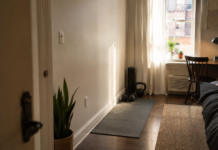
You don’t need a spare room, a rack of dumbbells, or a gym membership to build real strength. A doorway and a stretch of open wall are two of the most underrated pieces of “equipment” in any home, and if you live in a studio apartment, a dorm room, or a small city flat, they may be the only consistent workout space you have. This guide walks through exactly how to use both safely and effectively, with a full routine you can do in the time it takes to boil an egg.
The exercises below rely on your body weight, a doorframe, and a flat wall. Nothing here requires drilling holes, buying a pull-up bar, or rearranging furniture. That said, some moves (like doorway rows using a towel) involve load on your joints and tendons, so form matters more than intensity. If you’re new to exercise, pregnant, recovering from an injury, or managing a heart or blood pressure condition, check with a doctor or physical therapist before starting a new strength routine, especially one that includes isometric holds like wall sits, which can temporarily raise blood pressure during the hold.
Why a Doorway and a Wall Are Enough
Public health guidance doesn’t ask for a home gym. The Centers for Disease Control and Prevention recommends adults get at least 150 minutes of moderate-intensity aerobic activity a week, or 75 minutes of vigorous activity, plus muscle-strengthening work on at least two days a week that hits the major muscle groups: legs, hips, back, abdomen, chest, shoulders, and arms. Nothing in that recommendation specifies a gym. A doorway and a wall can cover the strengthening side of that equation on their own.
The scale of the problem is worth naming. The World Health Organization estimates that 31% of adults worldwide, roughly 1.8 billion people, don’t meet the recommended activity levels, and inactivity is linked to a meaningfully higher risk of early death (WHO cites a 20-30% lower mortality risk for people who are sufficiently active compared with those who aren’t). Small-space living is one of the practical reasons people cite for falling short. Removing the “no equipment, no room” excuse is a genuinely useful intervention.
Mayo Clinic’s strength training guidance backs this up directly: pushups, pullups, planks, lunges, and squats are called out by name as effective options that need “little or no equipment.” A doorway extends what’s possible (rows, assisted pull-ups, stretches) and a wall adds isometric and balance work that’s hard to replicate any other way in a tight space.
“You can do many exercises with little or no equipment. Try pushups, pullups, planks, lunges and squats.” — Mayo Clinic, Strength Training: Get Stronger, Leaner, Healthier
Setting Up Your Space Safely
Before you start, spend two minutes checking the space itself. This matters more for doorway work than almost anything else in a bodyweight routine, because you’re relying on the structural integrity of a door frame rather than purpose-built equipment.
- Check the frame. Use a doorway with a solid wood or metal frame, not a hollow decorative arch or a frame with visible cracks, loose molding, or a load-bearing question mark. Avoid interior doors with thin, hollow trim.
- Clear the swing path. Remove the door if it swings into your space, or work in a doorway without a door. You need a few feet of clearance in front of and behind the frame.
- Test the wall. For wall sits, wall push-ups, and wall walks, pick a flat, unbroken section without outlets, light switches, or wall-mounted decor at the height you’ll be using.
- Footing first. Bare feet or flat-soled shoes on a non-slip floor. Skip this on hardwood in socks.
- Give yourself room to fall safely. For any move where you lean or hang, make sure there’s nothing breakable within arm’s reach.
Doorway Exercises
1. Doorway Chest and Shoulder Stretch
Stand in the doorway, raise one arm to shoulder height, and place your forearm flat against the frame with your elbow bent at roughly 90 degrees. Gently step forward through the doorway until you feel a stretch across the front of your chest and shoulder. Hold for 20-30 seconds, then switch arms. This is a static stretch commonly used in shoulder conditioning and post-desk-work routines to counteract the rounded-forward posture that comes from sitting at a laptop all day.
2. Doorway Towel Row
Loop a sturdy towel, resistance band, or belt around the open doorknob or hinge-side edge of the frame (make sure it’s anchored low and secure). Hold both ends, walk your feet back until your arms are extended and your body is at an angle, feet flat, core braced. Pull your chest toward the frame by driving your elbows back, squeezing your shoulder blades together, then extend back out with control. This mimics an inverted row and is one of the only doorway moves that meaningfully trains your back and biceps, a muscle group that’s genuinely difficult to hit without equipment.
3. Doorway Assisted Squats or Pistol Squat Progressions
Stand facing into the doorway and hold both sides of the frame at chest height for light support. Lower into a squat, using your arms only for balance, not to bear weight. As you get stronger, use less hand support and eventually let go entirely, or use the frame to build toward single-leg squat variations by holding on lightly while you work one leg at a time.
4. Doorway Calf Raise with Support
Stand in the doorway, one or both hands lightly resting on the frame for balance, and rise onto the balls of your feet, hold briefly, then lower with control. The NHS strength exercise guidance includes calf raises as a core lower-leg move, typically done in sets of around 5 reps to start, building up gradually over time as strength improves.
5. Doorway Lunge with Frame-Assisted Balance
Standing just outside the doorway, step one foot through the frame into a forward lunge, using a light hand touch on the frame if needed for balance. This is useful in tight apartments because the doorway naturally limits how far you need to step, so you don’t need a long runway of open floor.
Doorway Safety Checklist
| ✔ | Frame is solid wood or metal, no visible cracks |
| ✔ | Door removed or swung fully open and secured |
| ✔ | Anchor point for towel/band rows is low and tested with light tension first |
| ✔ | Floor is dry, non-slip, clear of cords or rugs that bunch |
| ✔ | Nothing fragile within arm’s reach on either side |
Wall Exercises
1. Wall Sit
Press your back flat against the wall, walk your feet forward, and lower until your knees are bent around 90 degrees, like sitting in an invisible chair. Hold. This is a classic isometric exercise, meaning your muscles are working hard without the joint actually moving. Isometric holds like this are well known for building muscular endurance in the quads and glutes without any impact on the knees, which makes them a reasonable option for people easing back into exercise. One caveat worth taking seriously: isometric holds, including wall sits, can cause a temporary spike in blood pressure during the hold itself, so anyone with hypertension or a cardiac condition should get individual guidance from a doctor before making these a regular habit, and should never hold their breath during the exercise.
2. Wall Push-Up
Stand an arm’s length from the wall, place your palms flat against it at shoulder height and slightly wider than your shoulders, and lower your chest toward the wall by bending your elbows, then push back. This is the NHS-recommended entry point into pushing-strength work, and it’s listed in official strength-exercise guidance at three sets of 5 to 10 repetitions as a realistic starting target, with instructions to keep your back straight and avoid tilting or arching through the movement.
3. Wall Angels
Stand with your back, head, and arms against the wall, elbows bent at 90 degrees like a goalpost shape. Slowly slide your arms up overhead and back down, keeping as much contact with the wall as you can the whole time. This targets the upper back and shoulder mobility that gets stiff from long stretches sitting at a desk, and it doubles as a posture check: if your lower back or arms keep popping off the wall, that’s useful feedback about where you’re tight.
4. Wall Walk-Out (Plank to Incline)
Start in a plank position with your feet against the base of the wall. Walk your feet up the wall a short distance while walking your hands back to keep the incline manageable, hold briefly, then reverse. Even a modest incline shifts real load onto your shoulders and core and is a natural small-space substitute for handstand progressions, which need more open wall space than most apartments have to spare anyway.
5. Single-Leg Wall Balance
Stand facing the wall with fingertips lightly touching for balance, lift one knee to hip height, and hold. Progress by closing your eyes briefly (once you’re confident) or reducing how much you rely on the wall for support. Balance work is often the most neglected part of a home routine, but it matters across the lifespan, and a wall is the safest possible spot to practice it since a stumble means a light touch of support, not a fall.
6. Wall-Supported Calf Raise and Ankle Series
With both palms on the wall for light support, rise onto your toes for a calf raise, then rock back onto your heels and lift your toes off the floor for a tibialis raise. Alternating these two movements for a minute or two is a quick way to work both sides of the lower leg, which is often ignored in bodyweight routines that focus mainly on squats and lunges.
Doorway vs. Wall: What Each One Trains Best
| Goal | Best Zone | Why |
|---|---|---|
| Back and pulling strength | Doorway | Only spot with an anchor point for rows |
| Leg endurance (isometric) | Wall | Flat vertical surface needed for a sit hold |
| Chest/shoulder mobility | Doorway | Frame edge lets you open the chest passively |
| Posture and upper back | Wall | Full-body contact gives instant form feedback |
| Balance | Wall | Light-touch support without full weight-bearing |
| Assisted squats/lunges | Doorway | Two-sided frame gives symmetrical hand support |
A 20-Minute Doorway-and-Wall Routine
This sequence covers pushing, pulling, legs, core, and balance in about 20 minutes, and it fits inside a space roughly the size of a hallway. Do it two to three times a week, on non-consecutive days, which lines up with the CDC’s minimum recommendation for muscle-strengthening frequency and with Mayo Clinic’s guidance to rest a full day between sessions targeting the same muscle groups.
Step-by-Step Routine
- Warm-up (3 minutes): March in place, arm circles, and a few slow doorway chest stretches (15 seconds each side).
- Wall push-ups: 3 sets of 8-12 reps, resting 45-60 seconds between sets.
- Doorway towel rows: 3 sets of 8-12 reps, same rest period.
- Doorway assisted squats: 3 sets of 10-15 reps.
- Wall sit: 3 rounds, holding as long as good form allows (start around 15-20 seconds and build up), resting a full minute between rounds.
- Wall angels: 2 sets of 10 slow reps.
- Single-leg wall balance: 30 seconds per side, 2 rounds.
- Cool-down (3 minutes): Repeat the doorway chest stretch and add a calf stretch against the wall, holding each for 20-30 seconds.
Progressing Without More Space
The ceiling on bodyweight training isn’t as low as people assume, but progress does eventually require a variable to change. In a doorway or against a wall, you have four honest levers:
- Time under tension. Slow the lowering phase of a wall push-up to three or four seconds instead of one.
- Hold duration. Add 5-10 seconds to your wall sit each week rather than jumping straight to a minute.
- Range of motion. Elevate your feet slightly for wall push-ups to increase the load on your shoulders and chest.
- Unilateral loading. Shift from two-leg to one-leg variations, like single-leg wall-supported squats, once the two-leg version feels easy.
Mayo Clinic frames this as progressive overload: once an exercise becomes easy at your current rep count, that’s the signal to add difficulty rather than repeat the same stimulus indefinitely.
Adapting the Routine to Your Fitness Level
The same doorway-and-wall framework can flex up or down depending on where you’re starting from, and that flexibility is one of its biggest advantages over a fixed gym program.
If You’re Just Getting Started
Cut the routine roughly in half on your first two weeks: one set instead of three, shorter wall sit holds (even 10 seconds is a legitimate starting point), and more reliance on hand support during doorway squats and lunges. The goal in this phase isn’t fatigue, it’s learning what good form feels like in each movement so that later, heavier effort doesn’t come with sloppy technique. NHS guidance for beginner strength work is intentionally gentle for this reason, often starting people at five repetitions and building gradually rather than front-loading volume.
If You’ve Been Training for a While
Add a fourth set to each exercise, slow the tempo (a four-count lowering phase on wall push-ups is noticeably harder than a one-count), or superset moves back to back with minimal rest, doorway rows straight into wall sits, for example, to raise the conditioning demand. Single-leg variations of the squat, calf raise, and balance work also become more useful once the two-legged versions stop being challenging.
If You’re Working Around an Injury or Chronic Condition
Doorway and wall exercises are often used in physical therapy settings precisely because they’re low-impact and easy to scale in small increments, but “low-impact” doesn’t mean “risk-free” for every condition. Reduce range of motion, hold light support throughout, and treat any sharp or radiating pain as a stop signal rather than something to push through. A physical therapist can help tailor angles and hold times to a specific joint or injury history in a way general guidance can’t.
Building a Sustainable Weekly Rhythm
A single good workout matters less than what you repeat over a month. For a small-space routine like this one, consistency tends to hinge on removing friction rather than finding extra motivation, since the whole point is that the “equipment” is already built into your home.
A workable weekly rhythm might look like this: strength-focused doorway and wall sessions on Monday, Wednesday, and Friday, with lighter mobility work (the doorway chest stretch, wall angels, and a few calf stretches) on the days in between. This lines up with the CDC’s twice-weekly minimum for muscle-strengthening activity while leaving room for the aerobic side of the guidelines, a brisk walk, stairs, or any moderate-intensity activity that gets your heart rate up for some portion of the recommended 150 minutes a week.
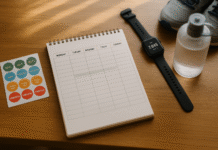
Tracking matters more in a small space than people expect, mostly because there’s no equipment stack to visually remind you of progress. A simple note of hold times, rep counts, or which variation you used (two-hand support versus one-hand versus none) turns a repetitive-feeling routine into something with a visible trend line. Small increases, five more seconds on a wall sit, one more rep on a doorway row, compound over weeks in a way that’s easy to underestimate day to day.
Common Mistakes to Avoid
Rushing the Doorway Row Setup
A towel that isn’t properly anchored, or a doorknob that isn’t rated to hold body weight, is the single biggest doorway safety issue. Test with light body weight before committing to a full rep, and if anything feels like it’s slipping or bending, stop immediately.
Locking the Knees in a Wall Sit
Letting your knees track past 90 degrees or drift inward puts unnecessary strain on the joint. Keep knees stacked over ankles, and if you feel sharp pain (not muscular fatigue, actual joint pain) come out of the hold.
Flaring Elbows on Wall Push-Ups
Letting the elbows wing straight out to the sides shifts stress toward the shoulder joint. A roughly 45-degree elbow angle relative to your torso is a safer default for most people.
Holding Your Breath
It’s common to hold your breath during isometric moves like wall sits, but breathing steadily throughout is safer, especially given the blood-pressure response isometric holds can trigger. Exhale on exertion, inhale on release, and keep breathing continuous rather than held.
Frequently Asked Questions
Is a doorway pull-up bar necessary, or can I get similar results without one?
A pull-up bar gives you a wider range of pulling exercises, but a doorway towel row trains much of the same musculature (back, biceps, rear shoulders) without hardware. If you eventually want to add a bar, choose a model rated for your body weight and installed according to the manufacturer’s instructions, since a poorly mounted bar is a real injury risk.
How long should I hold a wall sit as a beginner?
Start with something you can hold with good form, often 15-20 seconds, rather than chasing a specific number. Add small amounts of time as it gets easier. Because isometric holds can raise blood pressure temporarily during the hold, anyone with a heart condition or hypertension should talk to a doctor before making wall sits a regular part of their routine.
Can these exercises actually build muscle, or are they just maintenance?
Bodyweight exercises like push-ups, rows, and squats can build meaningful strength, particularly for beginners and intermediate exercisers. Mayo Clinic notes that a single set of 12-15 repetitions performed with proper form can build muscle efficiently for most people, and the same principle of progressive overload (adding reps, slowing tempo, or moving to single-limb variations) applies whether you’re using a wall or a rack of dumbbells.
How often should I do a doorway and wall routine?
The CDC recommends muscle-strengthening activity on at least two days a week covering the major muscle groups, and Mayo Clinic’s general guidance is roughly 20-30 minutes per session, resting a full day before training the same muscle group again. Two to three sessions a week, on non-consecutive days, is a reasonable starting cadence.
Is it safe to do doorway stretches if I have shoulder pain?
Gentle stretching can help with tightness, but persistent or sharp shoulder pain deserves a proper assessment before you stretch into it. Stop any doorway stretch that increases pain rather than easing tension, and check with a doctor or physical therapist if pain doesn’t improve within a couple of weeks.
What if my apartment doesn’t have a solid interior doorway to use?
Skip the doorway-dependent moves (towel rows especially) and lean on the wall exercises plus doorway-free bodyweight staples like squats, lunges, planks, and push-ups on the floor, all of which Mayo Clinic lists as effective options requiring little or no equipment or space.
References
- Centers for Disease Control and Prevention, Physical Activity Guidelines for Adults
- World Health Organization, Physical Activity Fact Sheet
- NHS, Strength Exercises
- Mayo Clinic, Strength Training: Get Stronger, Leaner, Healthier