















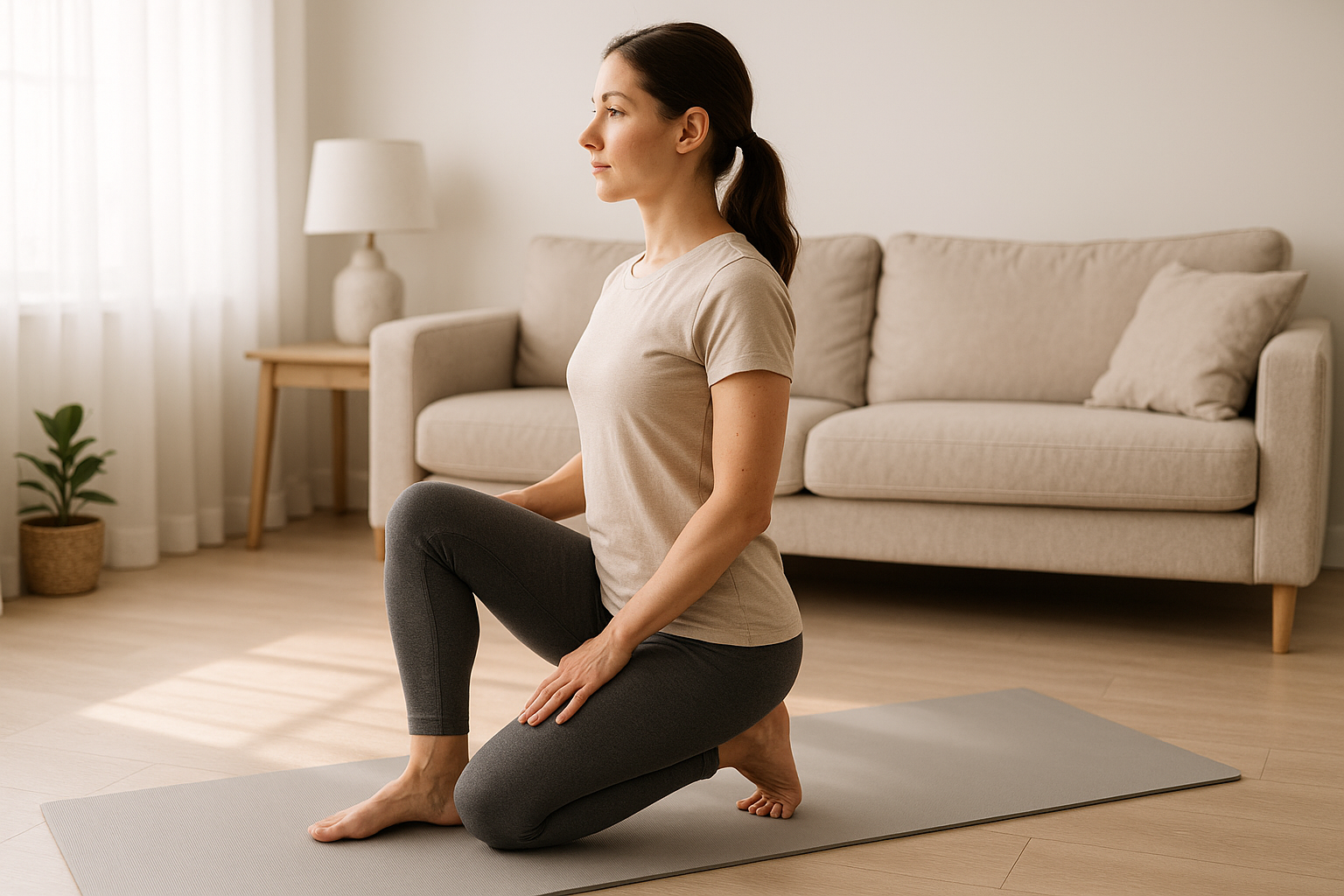
A good flexibility routine shouldn’t be confusing or time-consuming. This beginner-friendly plan shows you exactly how to loosen tight areas from neck to ankles in about 15 minutes while keeping things safe and simple. In short: warm up lightly, then perform each stretch for 30–45 seconds, repeat once to total roughly 60 seconds per area, breathe steadily, and stop at tension—not pain. Evidence-based guidelines recommend accumulating about 60 seconds per stretch and doing flexibility work at least 2–3 days per week.
Quick start: Do 3–5 minutes of light movement (e.g., marching in place) to warm tissues, then work through the 10 moves below from top to bottom. A brief warm-up before stretching improves comfort and effectiveness.
Safety note: This is general education, not medical advice. If you have pain, recent injury, or a medical condition, consult a qualified professional before starting.
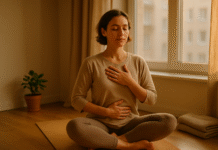
1. Warm-Up & Diaphragmatic Breathing (3–5 Minutes)
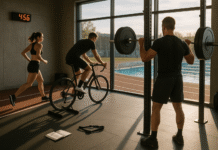
A short warm-up raises muscle temperature and primes your nervous system so stretching feels better and safer. Start with easy cardio (marching in place, gentle steps, or a casual walk) and layer in diaphragmatic breathing to calm the rib cage and set your posture. In the first minute, you should feel warmer but able to converse; by minute three, your shoulders and hips usually move more freely. This preparatory window is especially helpful if you sit a lot or live in a hot climate—keep the intensity low to avoid overheating while still warming tissues. The goal here isn’t to break a sweat; it’s to make the next nine moves smoother and more effective.
How to do it
- March in place or walk around your room for 3–5 minutes at an easy pace.
- Add diaphragmatic breathing: inhale through your nose for 4 seconds, feel the belly and lower ribs expand; exhale for 6–8 seconds, ribs soften down.
- Keep shoulders relaxed, jaw unclenched, and arms gently swinging.
Numbers & guardrails
- Intensity: “Easy”—you should be able to talk in full sentences.
- If your area is very warm (common in summer), shorten the warm-up to 2–3 minutes and hydrate.
- Move on only when you feel slightly warmer and looser.
A short general warm-up before mobility or stretching is widely recommended by public health services.
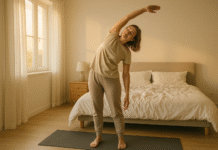
2. Neck Release & Upper Traps (Side Bend + Gentle Rotation)
This move reduces neck stiffness from screens and driving. You’ll gently lengthen the upper trapezius and side neck muscles without cranking on the head. The first 1–2 sessions may feel subtly stretchy rather than dramatic; that’s expected. Focus on long exhales and a tall posture—ribs stacked over pelvis—so you’re truly stretching the neck, not collapsing through the spine. Done consistently, this releases day-to-day tension and makes overhead reaching and checking blind spots more comfortable.
How to do it
- Sit or stand tall; imagine a string lifting the crown of your head.
- Side bend: bring right ear toward right shoulder; left shoulder stays heavy. Hold 30–45s, breathe.
- Add rotation: from the side bend, turn nose slightly down toward your armpit for 15–30s.
- Repeat on the other side.
- Optional: lightly rest the same-side fingertips near the temple (no pulling) to cue direction.
Mini-checklist
- Shoulders down; no shrugging.
- Keep the motion gentle—no bouncing.
- Stop at tension, not pain or tingling.
Finish by looking left and right slowly 5–6 times. Gentle static holds should be smooth—avoid bouncing—to reduce strain risk.
3. Thoracic Spine “Open Book” Rotation
Most of us are stiff through the mid-back, which limits shoulder movement and can make the lower back compensate. This “open book” pattern restores rotation in the thoracic spine so reaching, twisting, and breathing feel easier. It’s particularly helpful before any shoulder or chest stretch because better thoracic rotation improves how those tissues lengthen. Even if you’ve never done mobility work, this will feel intuitive after a few slow reps.
How to do it
- Lie on your side, hips and knees bent ~90°, arms straight in front with palms together.
- Keep knees touching as you open the top arm like a book, rotating your rib cage to follow; let eyes track the hand.
- Pause briefly at your comfortable end range, then return.
- Do 6–10 slow reps each side, breathing out as you open.
Why it matters
- Restores rotation where it should happen (mid-back) so the low back doesn’t crank.
- Pairs well with chest/shoulder stretches to reduce “rounded shoulders.”
- Great desk-break drill: two sets take under three minutes.
Close with one 30–45 second hold in your easiest open position, breathing slowly. Static stretching is typically held for multiple tens of seconds; keep it gentle and don’t bounce.
4. Doorway Chest Stretch (Pecs) for Rounded Shoulders
Tight pectoral muscles pull shoulders forward; opening them improves posture and takes pressure off the neck and upper back. The doorway stretch is simple, scalable, and effective when you cue ribs down and chin slightly tucked. You’ll feel a broad, front-of-chest stretch—never a pinch in the shoulder joint. Keep your lower ribs from flaring so you stretch the pecs, not your lower back.
How to do it
- Stand in a doorway; forearms on the frame, elbows at shoulder height.
- Step one foot forward and gently lean your body through the frame until you feel a chest stretch.
- Hold 30–45s, breathe; repeat 1–2 times.
- To bias lower pecs, set elbows slightly lower; for upper pecs, set them slightly higher.
Common mistakes
- Arching the lower back—keep ribs softly down.
- Letting the shoulder blades hike up—keep them low and wide.
- Pushing too far too fast—ease in over a few breaths.
Accumulate about 60 seconds total time under stretch per muscle for best effect over time.
5. Lat & Side-Body Stretch (Child’s Pose with Reach)
The latissimus and side body can feel glued down from sitting and pull-ups alike. Lengthening this tissue frees overhead motion so reaching shelves or pressing weight feels smoother. This version uses a floor position that supports the back and lets you control intensity with your breath.
How to do it
- Start in child’s pose (hips toward heels, arms long).
- Walk both hands to the right 6–10 inches; sink the left hip slightly back until you feel the stretch along the left side.
- Hold 30–45s, breathing into the left ribs.
- Switch sides.
- Optional: place a cushion between calves and hamstrings if knees are sensitive.
Numbers & guardrails
- Total hold per side: ~60s accumulated.
- If kneeling is uncomfortable, do this standing with hands on a wall and hips pushed away.
- Keep neck long; avoid collapsing through the shoulders.
As with other static holds, smooth breathing and no bouncing are key.
6. Wrist & Forearm Reset (Flexors/Extensors)
Keyboards and handlebars tighten the forearms. A short sequence for wrist flexors and extensors reduces stiffness and can make push-ups or planks feel better. Because wrist joints are small, less is more—gentle angles and steady breathing work better than cranking into the end range.
How to do it
- Flexor stretch: arm straight, palm up; gently extend the wrist with the other hand (fingers point back) until you feel a forearm stretch. Hold 30–45s.
- Extensor stretch: arm straight, palm down; gently flex the wrist (fingers toward you). Hold 30–45s.
- Repeat each 1–2 times per side.
Mini-checklist
- Elbow straight; shoulders relaxed.
- Keep pressure light to moderate; never force the joint.
- Shake out the hands after each hold.
Finish with 10 slow wrist circles each direction. Aim for smooth, controlled motion—static holds plus gentle mobility tend to feel best.
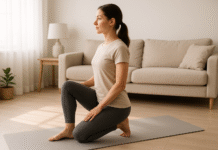
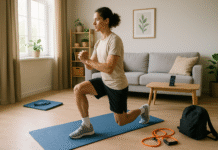
7. Half-Kneeling Hip Flexor Stretch (Front of Hip)
If your hips feel tight after sitting, this is the move. The hip flexors (especially psoas and rectus femoris) shorten with prolonged sitting and can tug on the lower back. The half-kneeling setup keeps the pelvis neutral and lets you bias the front-of-hip length without stressing the spine. A small posterior pelvic tilt (“tuck your tail”) turns a vague stretch into a precise one.
How to do it
- Assume a lunge position with the back knee down (pad it with a towel).
- Stack ribs over pelvis. Gently tuck the tailbone (posterior pelvic tilt) and squeeze the glute on the back leg.
- Shift your hips forward an inch or two—enough to feel a front-of-hip stretch, not a back arch.
- Hold 30–45s, breathe; switch sides and repeat.
Numbers & guardrails
- Accumulate ~60s per side.
- If kneeling is uncomfortable, try the couch stretch (back knee placed on a cushion against a wall).
- Keep the low ribs down; the stretch should live in the front of the hip, not the low back.
Static holds of ~30 seconds repeated to reach about a minute total are broadly recommended across major health organizations for flexibility work.
8. Hamstring Hinge (Supine Strap or Standing)
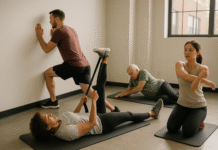
Tight hamstrings limit hip hinge patterns and can contribute to a tugging sensation behind the knee. This safe beginner version teaches you to hinge from the hip while keeping the back long. Choose supine with a strap (gentler) or standing (more functional). Expect a diffuse stretch through the back of the thigh—back off if you feel nerve-like zings.
How to do it (supine)
- Lie on your back; loop a strap/towel around the mid-foot.
- Keep the other knee bent and spine long.
- Slowly straighten the strapped leg until you feel a back-of-thigh stretch.
- Hold 30–45s; repeat 1–2 times per side.
How to do it (standing)
- Place one heel on a low step; hinge at the hips with a neutral back until you feel a stretch.
- Keep the toes pointing up, knee softly straight.
- Hold 30–45s; switch sides.
Guardrails
- No bouncing; move into position smoothly and breathe.
- If you feel tingling behind the knee/foot, back off the angle.
Major clinics advise warm up first and holding gentle hamstring stretches around 30 seconds, repeating 2–4 times. Mayo Clinic
9. Seated Figure-4 (Glute/Piriformis)
The piriformis and deep glutes can clamp down from sitting and running. Opening them often eases buttock tightness and can reduce “pinchy” hips. The seated figure-4 is accessible at a desk or on a mat and gives you fine control over intensity. Keep your spine long and hinge forward from the hips so the stretch targets the glutes rather than rounding your back.
How to do it
- Sit tall on a sturdy chair or the edge of a bench.
- Cross your right ankle over the left knee (figure-4).
- Gently hinge forward until you feel a stretch in the right buttock.
- Hold 30–45s; switch sides and repeat 1–2 times.
Mini-checklist
- Keep the long leg’s foot planted; knee tracks over toes.
- Keep chest open and neck long.
- If you feel tingling or sharp pain, ease up.
Targeted glute and piriformis stretching is a standard conservative strategy when these tissues are irritated; always stop with pain or paresthesia. Cleveland Clinic
10. Calf & Ankle Duo (Gastrocnemius/Soleus)
Flexible ankles improve squats, walking comfort, and balance. This two-for-one wall stretch hits both calf layers: straight-knee for gastrocnemius and bent-knee for soleus. Work each for about 30–45 seconds, repeat once, and notice how the ankle “glides” better afterward. If a wall isn’t handy, you can use a step to drop the heel.
How to do it
- Face a wall; step the left foot back.
- Straight-knee calf stretch: heel down, knee straight, lean toward the wall until you feel a stretch in the upper calf. Hold 30–45s.
- Bent-knee calf stretch: bend the back knee slightly to bias lower calf/Achilles. Hold 30–45s.
- Switch legs and repeat.
Numbers & guardrails
- Accumulate ~60s per variation per side.
- Keep the back heel down and foot aligned straight.
- If you feel Achilles tenderness, keep angles smaller and holds shorter.
Gentle post-exercise cool-down stretches commonly include the calves; use smooth holds rather than bouncing.
FAQs
1) How often should beginners do this routine?
Aim for 2–3 days per week to start, accumulating about 60 seconds per stretch (e.g., 2 × 30s). As your schedule allows, you can sprinkle a move or two daily as “movement snacks.” Over a few weeks, you should notice easier reaching, squatting, and turning. Health organizations and position stands generally suggest flexibility work at least twice weekly for adults.
2) Should I stretch before or after workouts?
Do a short dynamic warm-up first and save longer static holds for after your workout or a separate session. Static stretching immediately before explosive efforts can temporarily reduce power in trained settings, while dynamic moves tend to better prep performance. For general fitness, warm up, then stretch as you prefer—just keep holds gentle.
3) How long should I hold each stretch?
For beginners, 30–45 seconds per hold works well; repeat once to accumulate roughly 60 seconds total per muscle. If a position feels intense at first, start with 15–20 seconds and build up. The key is steady breathing, no bouncing, and stopping at tension—not pain.
4) Can stretching prevent injuries?
Stretching supports comfortable range of motion and movement quality, which may help some people feel and move better. However, stretching alone isn’t a guarantee against injuries; overall load management, strength, and skill matter. Consider pairing this routine with light strength work and walking for broad benefits.
5) What if my knees or wrists are sensitive?
Use props: a folded towel under the knee for the half-kneeling hip flexor stretch, a couch or wall for support, and gentle angles for wrists. Substitutions are noted in each section. If pain persists, see a clinician—stretches should feel relieving, not provocative.
6) Is it okay to stretch on rest days?
Yes. Flexibility work creates little fatigue when done gently, making it ideal for off-days or evenings. Many beginners find a quick session before bed helps them unwind—just keep the intensity low and focus on slow exhales.
7) How do I breathe during stretches?
Inhale through the nose and lengthen the exhale. Longer exhales nudge your nervous system toward relaxation and often let muscles release gradually. If you catch yourself holding your breath, reduce the stretch angle and reset your breathing pattern.
8) I’m very stiff—where should I start?
Do the warm-up and pick 3–4 moves that target your tightest zones (often hips, hamstrings, and chest). Consistency beats intensity. As those areas loosen, add more moves or a second round of holds to build toward the full routine.
9) How quickly will I notice results?
Many people feel easier movement immediately after a session. Lasting changes come from regular practice over 3–6 weeks, especially when you accumulate about 60 seconds of stretching per area and use gentle progressions. Pairing with light strength helps the new range “stick” during daily tasks.
10) What if stretching makes me feel worse?
Stop and reassess your position, angle, and breathing. Work just to mild tension and shorten holds. Persistent pain, tingling, or joint locking warrants a check-in with a health professional to rule out other issues (e.g., nerve irritation) before continuing.
Conclusion
A beginner routine only works if it’s easy to follow and quick to complete. The sequence you just learned warms tissues, releases the most commonly tight regions, and builds the habit of moving smoothly—without requiring special gear or long sessions. Start with a gentle 3–5 minute warm-up, then work through the 10 essential moves, holding each for 30–45 seconds and repeating once to reach about a minute of total time per area. That simple math keeps your session near 15 minutes, but the benefits compound over weeks: freer shoulders and hips, easier squats and hinges, and less day-to-day tightness. For best results, practice 2–3 days per week, breathe slowly, and progress patiently by adding a little time or a second round for your tightest spots. When you’re ready, combine this with light strength and walking to lock in your new range and feel better in everything you do.
Ready to move better? Roll out a mat, set a 15-minute timer, and start with Move #1 today.
References
- American College of Sports Medicine Position Stand: “Quantity and quality of exercise for developing and maintaining cardiorespiratory, musculoskeletal, and neuromotor fitness in apparently healthy adults,” Medicine & Science in Sports & Exercise, July 2011. PubMed
- “The ideal stretching routine,” Harvard Health Publishing, January 9, 2025. Harvard Health
- “How to warm up before exercising,” NHS (UK), page last reviewed 2022 (current page shows routine guidance). nhs.uk
- “How to stretch after exercising,” NHS (UK), guidance page. nhs.uk
- “Stretching safely: Focus on flexibility,” Mayo Clinic, guidance page (updated content includes hold times and safety cues). Mayo Clinic
- Behm, D. G., & Chaouachi, A., “A review of the acute effects of static and dynamic stretching on performance,” European Journal of Applied Physiology, 2011. PubMed
- Chaabene, H., et al., “Acute Effects of Static Stretching on Muscle Strength and Power,” Frontiers in Physiology, 2019. PMC
- “Physical Activity Guidelines—Flexibility and general recommendations,” American College of Sports Medicine. ACSM
- “Piriformis Syndrome: Symptoms, Causes and Treatment,” Cleveland Clinic, updated reference page. Cleveland Clinic
- “Flexibility—Exercise & Physical Activity,” National Institute on Aging, January 14, 2025. nia.nih.gov