

















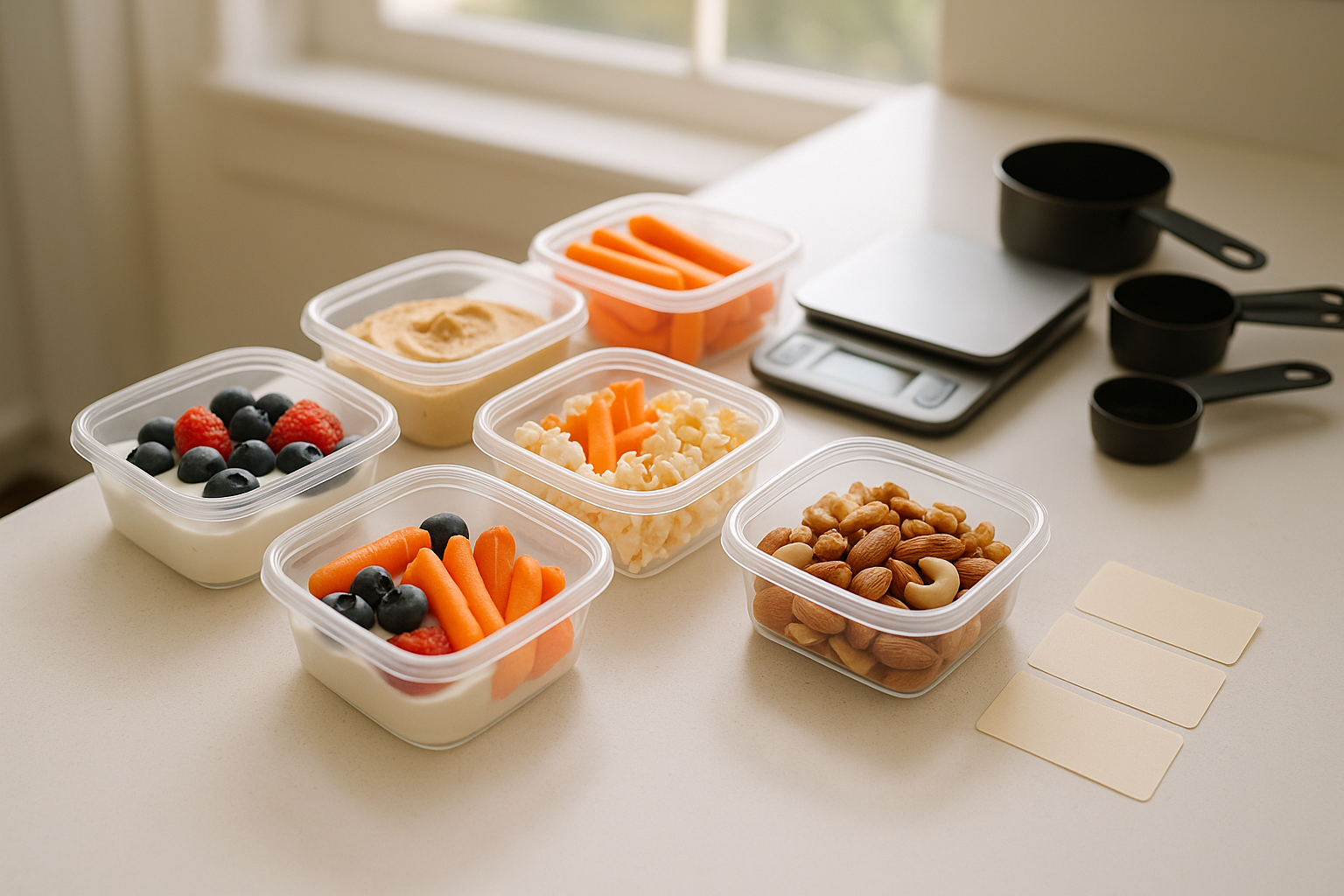
Snacks should take the edge off hunger—not turn into a day-long graze that leaves you hungrier and puzzled about where the calories went. “Portioned snacks” simply means pre-measured foods (or combos) that fit within your daily plan and actually satisfy. In practice, that means aiming for a consistent calorie range and building each snack with protein and fiber so you stay full. A serving size on a label tells you what’s typical for that food; your portion is what you actually eat, which can be more or less. Using portioned snacks bridges that gap by matching a smart serving to your hunger and goals. Below you’ll learn exactly how to set your ranges, prep in minutes, and design an environment that makes the better choice the easy one.
Quick-start (5 steps): 1) Pick a daily snack “budget.” 2) Pre-portion trigger foods. 3) Build P-F-F (protein + fiber + fat). 4) Put snack stations where you actually need them. 5) Label, rotate, and review weekly.
1. Set a Daily Snack Budget You’ll Actually Follow
Start by deciding how many snacks you want in a typical day and how big each can be. A practical target for most adults is one to two snacks at ~150–250 kcal each, emphasizing protein (10–20 g), fiber (3–6 g), and minimal added sugar. This keeps snacks supportive rather than competitive with meals. The idea isn’t to diet by math; it’s to create guardrails so you’re not negotiating with yourself at 4 p.m. Align this with your overall energy needs from a tool like MyPlate or similar national guidance, and adjust up or down based on activity and hunger patterns. Remember, serving size on a label reflects what people typically consume, not a recommendation, so choose portions that match your plan. Building in a small buffer (±50 kcal) helps you stay flexible without “breaking the rules.” When life changes—training days, travel, holidays—recalibrate, don’t abandon the framework.
Numbers & guardrails
- 1 snack/day on light-activity days; 2 snacks/day on long or high-stress days.
- 150–250 kcal/snack; protein 10–20 g; fiber 3–6 g; added sugar ideally ≤6–8 g.
- If you routinely eat late at night, shift one snack to 60–90 minutes after dinner.
How to do it
- Use a weekly template: e.g., M/W/F = 1 snack, T/Th/Sa = 2 snacks, Su = flexible.
- Cross-check with your daily targets from a government guideline tool (age/sex/activity-based).
Bottom line: A clear budget flips snacking from reactive to intentional.
2. Pre-Portion High-Risk Foods the Moment They Enter Your Kitchen
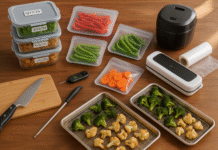
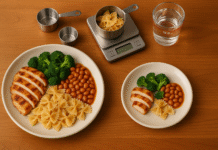
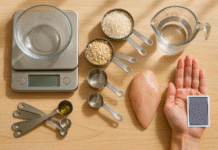
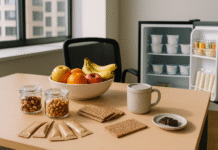
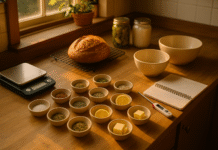
The simplest way to avoid the “never-ending bag” is to remove the bag from the equation. As soon as you unpack groceries, decant chips, nuts, trail mix, crackers, or sweets into small containers or zip bags that match your calorie budget. Measure once with a digital kitchen scale (grams are king for accuracy) or measuring cups, and label the container with grams + calories + protein. When hunger hits, you grab one unit—decision done. This is not about deprivation; it’s about packaging the right amount so a treat stays a treat. Evidence shows that larger packages and dishware drive higher intake, and pre-portioning is a practical antidote to the portion-size effect. Keep a “refill box” so restocking takes two minutes, not twenty.
Mini-checklist
- Buy family sizes for value; immediately pre-portion into single-serve units.
- Label each container (e.g., “30 g almonds • 180 kcal • 6 g protein”).
- Store everyday snacks at eye level; store treats one shelf down or in opaque bins.
Tools & examples
- 1/4-cup scoop for nuts (~30 g), 3-cup containers for air-popped popcorn (~12 g), and snack-size 8–10 oz deli cups for yogurts + toppings.
- Stickers or painter’s tape + sharpie for quick labels.
Bottom line: If it’s portioned in advance, it’s easier to stop at “enough.”
3. Build Every Snack with P-F-F: Protein + Fiber + (a Little) Fat
Snacks that actually satisfy pair protein for satiety, fiber for volume and steady energy, and a little fat to improve mouthfeel and slow digestion. Think Greek yogurt with berries and chia; hummus with carrots and a few whole-grain crackers; cottage cheese with sliced pear and cinnamon; edamame plus an orange. This isn’t macro-counting homework—it’s a simple formula that keeps you from chasing another snack 30 minutes later. As a rule, pick one protein anchor (10–20 g), add one high-fiber plant (3–6 g), and finish with a small fat (5–10 g). This composition aligns with broad healthy-eating guidance and supports weight and blood sugar management without extremes. CDC
P-F-F quick picks
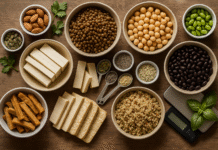
- Protein anchors: Greek yogurt, cottage cheese, edamame, eggs, tuna, jerky.
- Fiber partners: Berries, apples, carrots, snap peas, popcorn, whole-grain crackers.
- Fats (small): Nuts, nut butter (1 tbsp), olives, avocado slice.
Numbers & guardrails
- Aim 150–250 kcal, protein ≥10 g, fiber ≥3 g; keep added sugar modest.
- If the snack is all fruit, add 1 tbsp nut butter or a cheese stick to balance.
Bottom line: The P-F-F trio turns “snack” into “mini-meal” that sticks with you.
4. Use Visual Cues When You Don’t Have a Scale (Handy, Not Perfect)
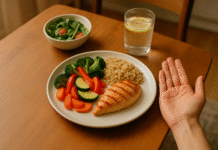
You won’t always have a scale. That’s fine—visual cues keep you close. A thumb of nut butter is ~1 tbsp; a cupped hand of nuts is ~30 g; a palm of jerky is ~1 oz; a tennis ball of grapes is ~1 cup. For dips and dressings, think ping-pong ball (~2 tbsp). Remember the difference between serving size (on the label) and your portion (what you actually eat). Use label “servings per container” to avoid eating a whole “share bag” that is actually two or three servings. Visual cues are imperfect, but they’re fast, and fast beats nothing when you’re hungry. Combine them with your P-F-F framework and you’ll stay within range more often than not.
Common mistakes
- Confusing “low-fat” with “low-calorie” and doubling the portion.
- Assuming tiny candies are low-calorie—multiple small pieces still add up.
- Treating a bottle as one portion without checking servings per container.
Mini case
- You buy a “share” trail mix. Label says 1/4 cup (30 g) per serving; bag has 8 servings. Pre-portion into 8 bags; each ~170–190 kcal depending on mix.
Bottom line: Visuals keep you honest until you can measure.
5. Leverage Energy Density: Get More Food for Fewer Calories
People tend to eat a consistent weight/volume of food. If that food is lower in energy density (fewer calories per gram), you feel full on fewer calories—handy for snacks. Build snacks with water-rich, fiber-rich foods (fruit, veg, broth-based soups) and you naturally create larger, more satisfying portions within your budget. Pair them with a protein anchor and a small fat to avoid a quick crash. Example: a 3-cup bowl of air-popped popcorn (~90–110 kcal) plus string cheese (80 kcal) feels generous and hits protein; cucumber rounds with ¼ cup hummus (~100 kcal) plus a few olives. This “volumetrics” approach has strong evidence across ages and body sizes.
How to do it
- Start with the low-ED base (veggies, fruit, popcorn), then add protein, then season (spices, vinegar, lemon) instead of heavy sauces.
- Keep pre-cut veg and fruit at eye level; keep “crumbly” calories (chips, candy) one shelf lower.
Numbers & guardrails
- Popcorn: 3 cups air-popped ≈ 90–110 kcal.
- Veg + dip: 1 cup cucumbers + ¼ cup hummus ≈ 120–140 kcal total.
Bottom line: Volume satisfies your eyes and stomach so one snack actually feels like “enough.” PubMed
6. Downsize the Containers You Eat From (and Hide the Refills)
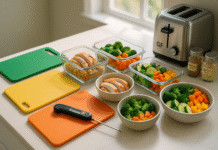
The portion-size effect is real: larger plates, bowls, packages, and serving utensils push us to eat more without noticing. Counter it deliberately. Use smaller bowls (10–12 oz) and snack plates (6–7 in) for ready-to-eat items; opaque bins for sweets; and keep refills out of sight. Serve a portion to your plate, return the package to the pantry, and sit somewhere away from the source (not next to the chip bowl). If you share a home or office, place “green-light” snacks (fruit, yogurt cups, veg boxes) front and center and relegates the rest to a closed cabinet. It’s not willpower; it’s design. The literature shows that simply reducing package/tableware size reduces intake—use that in your favor.
Environment moves
- Use clear containers for produce; opaque for candy/chips.
- Place a single-serve container on a plate (looks more substantial).
- Keep serving dishes off the table to reduce seconds. CDC
Mini-checklist
- 6–7 in plates, 10–12 oz bowls, 1/4-cup scoop for nuts, small tongs for veg.
- “Snack spot” away from screens to prevent mindless overeating.
Bottom line: Shrink the vessels, shrink the intake—no willpower required.
7. Time-Box Snacks: Planned Windows Beat All-Day Grazing
All-day nibbling blurs hunger signals and makes portion control impossible. Instead, time-box snacks: pick specific windows (e.g., 10:30–11:00 a.m. and 3:30–4:30 p.m.) and eat a full, portioned snack then, not “just a bite” every hour. This helps you arrive at meals comfortably hungry rather than famished, reducing overeating later. If your schedule is variable, use trigger events rather than clock time: after your commute, between meetings, post-workout. Pair the snack with water or unsweetened tea/coffee—thirst often masquerades as hunger. If you’re truly hungry outside your windows, choose a protein + fiber mini-snack (~100–150 kcal) and reflect on why—light lunch, harder training, poor sleep. Then adjust tomorrow’s plan.
Why it matters
- Time-boxing reduces decision fatigue and snacking driven by boredom/stress.
- Regular patterns stabilize energy and help you budget calories better.
Mini-checklist
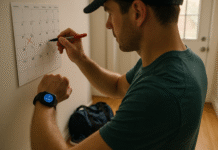
- Put snack times on your calendar.
- Keep one emergency snack in your bag (jerky, roasted chickpeas, nut pack).
- If you miss a window, skip rather than stacking snacks together.
Bottom line: Defined windows keep snacks purposeful and prevent the day-long graze.
8. Create “Snack Stations” Where You Actually Get Hungry
Your kitchen is not the only place snacking happens. Build micro snack stations where you need them: desk drawer, gym bag, car, kids’ activity tote. Stock shelf-stable P-F-F options like tuna packets, jerky, roasted chickpeas or edamame, fruit cups (in juice/water), whole-grain crackers, and a few single-serve nut packs. Add a refill reminder (weekly calendar ping), a trash bag (to avoid clutter), and a hand sanitizing wipe. For shared spaces, put green-light items at eye level and treat-tier items lower and opaque. In hot climates, use an insulated pouch; in cold weather, rotate items so they don’t go stale. This is environment design: you eat what’s easy and present.
Stocking list (3–7 items per station)
- Protein: jerky, tuna packet, shelf-stable milk, roasted beans.
- Fiber: fruit cup in juice, small apple, whole-grain crackers, popcorn bag.
- Flavor boosters: mini spice shaker (everything seasoning), lemon packets.
Region note
- Label laws differ by country: servings per container and gram sizes vary—always check the label and portion accordingly.
Bottom line: Put the right foods in the right places and the “good choice” becomes the default.
9. Label and Track Lightly (Then Review Weekly)
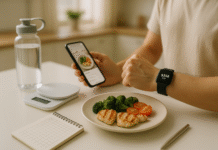
A simple labeling system prevents portion creep. Write grams + calories + protein on every pre-portioned container. If you prefer digital tracking, log only new snacks for a week to learn the numbers, then rely on your labels. If tracking feels burdensome, switch to a visual ledger: keep an index card on the fridge with your daily snack budget boxes (□ □). When you eat a snack, tick a box and jot the choice. At week’s end, review patterns: which snacks keep you full the longest? Which ones trigger seconds? Tighten the rotation around winners. This light-touch approach delivers the benefits of data without the drag of full-time tracking.
Tools
- Apps: Cronometer, MyFitnessPal, or your phone’s Notes app.
- Analog: index card + pen on the fridge; painter’s tape labels on containers.
Mini case
- You notice that 200 kcal nuts-only leaves you hungry, but 200 kcal yogurt + berries + granola holds you 3 hours. Adjust roster accordingly.
Bottom line: Label for accuracy, track just enough to learn, review to improve.
10. Shop and Portion for On-the-Go: Read Labels Like a Pro
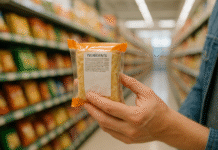
When you’re traveling or grabbing something quick, scan the label in this order: servings per container → calories per serving → protein → fiber → added sugars. A bottle or bag that looks single-serve might actually be two or more servings. Choose items that land in your snack budget and hit the P-F-F marks. Good travel pairs: string cheese + fruit, yogurt cup + nuts, whole-grain crackers + tuna. If you buy a multi-serve bag (chips, trail mix), portion immediately—don’t “hold the bag” while working. The FDA clarifies that serving size is based on what people typically eat, not what they should eat, so your planned portion can be smaller than the serving size on the label.
Travel mini-checklist
- Pack a folding spoon and two snack bags in your laptop sleeve.
- Choose protein ≥10 g and fiber ≥3 g when possible.
- If you only find sweets, pair with a protein (e.g., small chocolate + jerky).
Bottom line: Labels reveal the truth; portion on the spot to stay on plan.
11. Hydrate and Pause Before You Snack
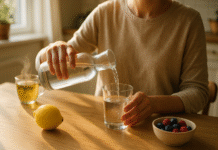
Mild dehydration can feel like hunger. Before opening a snack, drink a glass of water and do a quick body check: Am I bored? Stressed? Actually hungry? Then decide. If you proceed, plate the portion and step away from the source. Pairing snacks with unsweetened tea or coffee can increase satisfaction without many calories, but be mindful of late-day caffeine. If you’re still hungry after finishing, wait 10 minutes; if hunger persists, add a protein-forward mini-portion (e.g., half a yogurt or an egg). This pause is not about restriction; it’s about giving your satiety signals time to register.
Why it matters
- Fluids, fiber, and protein work together; skipping water can undermine the best-built snack.
- A brief pause reduces mindless refills and teaches your personal “enough.”
Mini-checklist
- Keep a water bottle where you snack most.
- Add citrus slices or mint to make water more appealing.
- If evenings are snack-heavy, front-load fluids earlier in the day.
Bottom line: Sip, pause, portion—then proceed.
12. Manage Treats with a Plan (and Get Help if Snacks Feel Compulsive)
Treats fit; surprise binges don’t. Allocate a treat budget within your snack plan (e.g., 1–2 treats/week, 150–250 kcal each) and pre-portion them like everything else. Choose the treat you genuinely want, sit to enjoy it, and move on. If a certain food is a “can’t stop” trigger, buy single-serve only or enjoy it out of the house. Remember the portion-size effect—larger packages lead to larger intakes—and use small dishware and distance. If snacking ever feels compulsive, secretive, or distressing, consider speaking with a registered dietitian or clinician. You deserve support; snacks should be simple, not stressful.
Treat tactics
- Decide the when and what in advance; avoid “I’ll see what I feel like.”
- Use single-serve for trigger foods; don’t store family-size at eye level.
- Pair sweets with protein (e.g., chocolate + yogurt) to boost satisfaction.
Bottom line: Planned treats prevent spirals; help is a strength, not a failure.
FAQs
1) What exactly counts as a “Portioned Snack”?
A portioned snack is a pre-measured food or combo that fits your planned snack budget—typically ~150–250 kcal with 10–20 g protein and 3–6 g fiber. It could be a labeled single-serve (like a yogurt cup) or a DIY pack you measured once with a scale. The point is to eat one unit, feel satisfied, and carry on—no bottomless bags or mystery handfuls.
2) How many snacks should I have per day?
Most people do well with one to two snacks, but it depends on your meals, activity, and hunger patterns. Use a government guideline tool (e.g., MyPlate) to estimate daily needs, then allocate snack calories accordingly. If you’re training more or recovering from illness, you may temporarily add a snack; on quieter days, drop to one.
3) Are 100-calorie snack packs a good idea?
They can help with portion control and calorie awareness, but P-F-F balance matters more than a round number. Many 100-calorie packs are low in protein and fiber, leaving you hungry. If you use them, pair with a protein (string cheese, Greek yogurt) or a fiber-rich fruit/veg to improve satiety.
4) What’s the difference between serving size and portion?
Serving size on the Nutrition Facts label is based on what people typically eat for that food; it’s not a recommendation. Your portion is what you choose to eat. Sometimes your portion is smaller than the serving (e.g., chips); sometimes it’s larger (e.g., cucumbers). This distinction is crucial for avoiding accidental overeating.
5) Is air-popped popcorn a good portioned snack?
Yes. Popcorn is low energy density, so 3 cups feels generous for ~90–110 kcal. Add a protein (e.g., a cheese stick) and a sprinkle of seasoning for taste. Avoid heavy oils and butter if you’re budgeting calories; a light oil spray plus spices often does the trick.
6) How do I portion nuts without overeating?
Nuts are nutrient-dense and calorie-dense. Pre-portion 30 g (about a cupped hand) into small bags or cups, label them, and store out of reach. Pair with fruit or yogurt to boost volume and fiber. This preserves nuts as a satisfying snack rather than a runaway graze.
7) Are fruit-only snacks okay?
Fruit is great, but fruit-only snacks can leave you hungry if you’re very active or going long stretches between meals. Add protein and a little fat—an apple with 1 tbsp peanut butter or berries with Greek yogurt—to stretch satiety and keep energy steady. Guidance consistently encourages fruit and veg as part of healthy patterns; balance is the key. Dietary Guidelines
8) How do I stop late-night snacking?
First, ensure dinner contains protein, fiber, and adequate volume. Next, time-box a small evening snack (e.g., yogurt + berries) within your budget and shut the kitchen after. Keep only single-serve treats at home and store them out of sight. If snacking feels emotional or compulsive, talk with a professional for strategies that fit your context.
9) Can intermittent fasting and portioned snacks coexist?
Yes—if your eating window includes one planned snack that supports your meals. The same P-F-F principles apply. If fasting shortens your window so much that you cram in random snacks, consider widening the window or merging the snack into a slightly larger, balanced meal.
10) Do kids need different snack portions?
Yes—needs vary by age, growth stage, and activity. As a rule, kids do well with regular meals and planned snacks 1–2 hours before meals, focusing on fruit, veg, dairy, and whole grains. Avoid grazing all afternoon; portion into small cups/containers and sit to eat when possible. Consult pediatric guidance or a pediatric RD for specifics. Tennessee State Government
11) What if I travel a lot or live out of my car between commitments?
Build snack stations: glove box, gym bag, desk. Stock shelf-stable P-F-F items and include a folding spoon and zip bags to portion on the spot. Use labels to spot servings per container, especially with drinks and snack mixes that masquerade as single-serve.
12) Is there science behind “smaller bowls mean less eating”?
Yes. Research shows people consume more when offered larger portions, packages, or tableware, often without noticing. Downsizing dishware and pre-portioning counters this bias and is an easy, low-effort win.
Conclusion
The cure for the never-ending snack trap isn’t superhuman willpower; it’s simple systems that make the right amount the easiest amount. Start with a clear snack budget that fits your day. Pre-portion the foods that tend to run away from you. Build each snack on protein + fiber + a little fat, and leverage energy density to make snacks look and feel substantial. Time-box when you snack, and place snack stations where you actually get hungry. Labels and light tracking give you feedback without taking over your life, and a treat plan keeps pleasure in the picture while preventing spirals. Choose one or two habits from this list to implement this week, then layer in more as they turn automatic.
Your next move: Set your snack budget (how many, how big), portion three go-to snacks for the week, and put them where you’ll actually reach them.
References
- Dietary Guidelines for Americans, 2020–2025 (9th ed.), U.S. Department of Agriculture & U.S. Department of Health and Human Services, 2020. https://www.dietaryguidelines.gov/sites/default/files/2020-12/Dietary_Guidelines_for_Americans_2020-2025.pdf
- How to Understand and Use the Nutrition Facts Label, U.S. Food & Drug Administration, Mar 5, 2024. https://www.fda.gov/food/nutrition-facts-label/how-understand-and-use-nutrition-facts-label
- Serving Size on the Nutrition Facts Label, U.S. Food & Drug Administration, Mar 5, 2024. https://www.fda.gov/food/nutrition-facts-label/serving-size-nutrition-facts-label
- Hollands GJ, et al. Portion, package or tableware size for changing selection and consumption of food, alcohol and tobacco, Cochrane Review (2015); PLOS Medicine open-access version. https://pmc.ncbi.nlm.nih.gov/articles/PMC4579823/
- Rolls BJ. The relationship between dietary energy density and energy intake, Am J Clin Nutr, 2009. https://pmc.ncbi.nlm.nih.gov/articles/PMC4182946/
- The Science of Snacking, Harvard T.H. Chan School of Public Health, updated 2020. https://nutritionsource.hsph.harvard.edu/snacking/
- Healthy Eating Plate, Harvard T.H. Chan School of Public Health, 2011–present (page updated periodically). https://nutritionsource.hsph.harvard.edu/healthy-eating-plate/
- How to Have Healthier Meals and Snacks, Centers for Disease Control and Prevention, 2023. https://www.cdc.gov/healthy-weight-growth/healthy-eating/meals-snacks.html
- Nutrition Facts Label and Your Health, Centers for Disease Control and Prevention, Dec 13, 2023. https://www.cdc.gov/healthy-weight-growth/healthy-eating/nutrition-label.html
- Healthy diet (Fact sheet), World Health Organization, Apr 29, 2020. https://www.who.int/news-room/fact-sheets/detail/healthy-diet