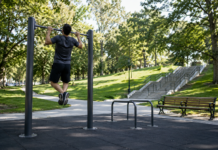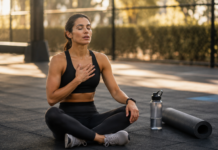









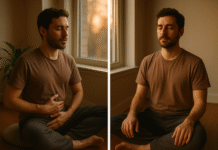












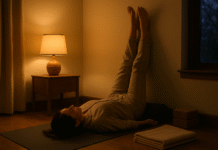




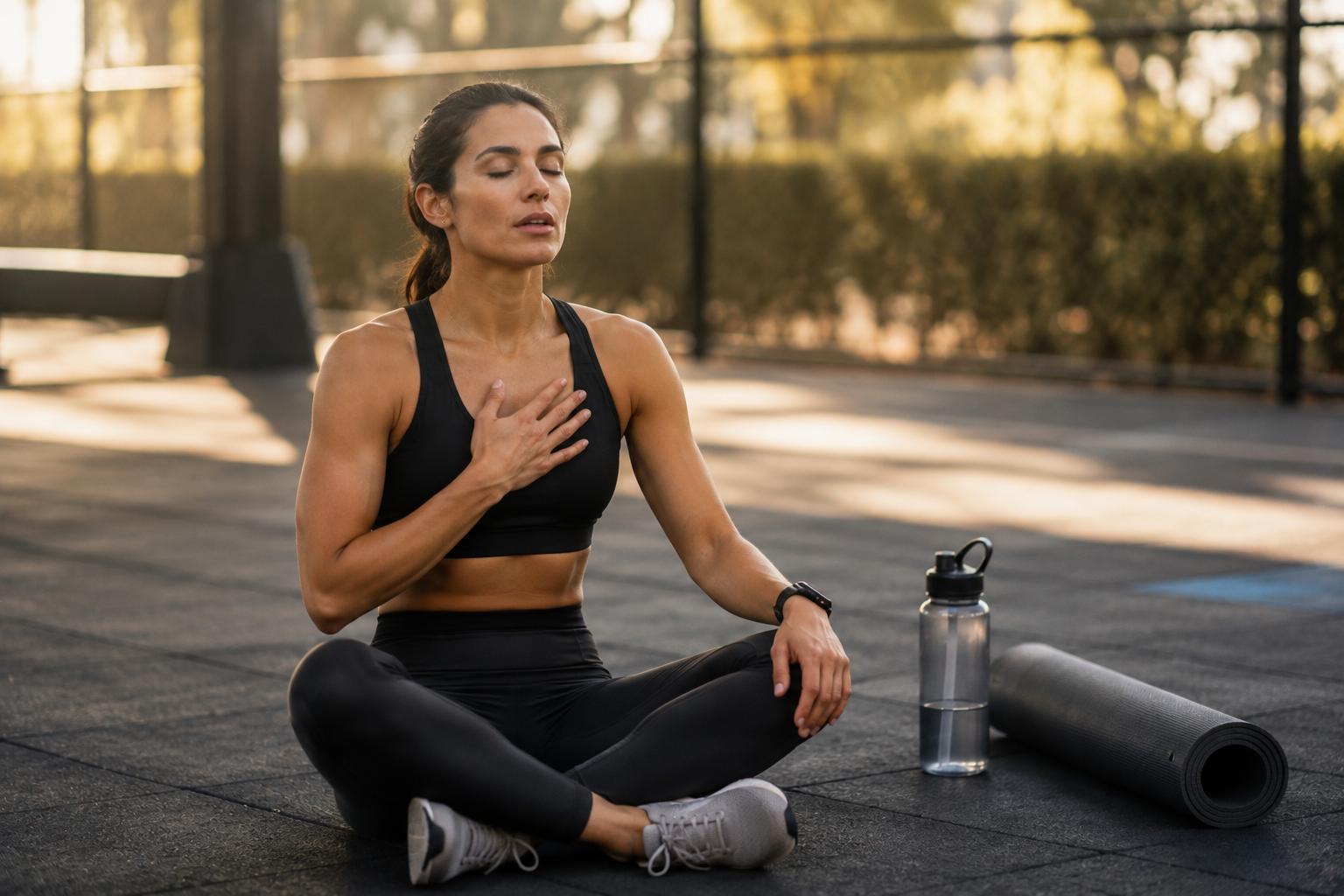
You’ve racked the weights, finished the last interval, or stretched out after a long run, but your heart is still pounding, your hands feel jittery, and your mind is still somewhere back in the last set. That gap between “workout is over” and “I actually feel done” is real, it’s measurable, and it has a name: downregulation. Your breath happens to be one of the few dials you can turn on purpose to help close that gap faster, and understanding why it works can make the difference between a technique you try once and one you actually keep using.
This piece is a technique-focused companion to our broader guide on deciding between active recovery and full rest. Here, we’re zooming in on one specific, low-cost recovery tool: the handful of breathing methods with real research behind them for shifting your nervous system out of “go” mode and into “rest and digest” mode after a hard training session.
Why Your Body Doesn’t Just “Turn Off” After a Workout
During intense exercise, your sympathetic nervous system, the branch responsible for the fight-or-flight response, takes the wheel. It raises heart rate, redirects blood flow to working muscles, dilates airways, and dumps adrenaline and cortisol into your bloodstream so you can keep moving. That’s exactly what you want mid-set or mid-sprint. The problem is that this system doesn’t have an off switch that flips the instant you stop moving. It was built to keep you mobilized until a perceived threat has clearly passed, and your brain doesn’t automatically know the difference between a genuine threat and a hard interval session.
Coming back down requires your parasympathetic nervous system, often summarized through its main nerve, the vagus, to reassert control. This is the branch that slows heart rate, supports digestion, and lets your body shift resources toward repair. Researchers can track this handoff using heart rate variability (HRV), a measure of the tiny fluctuations in time between heartbeats. Higher HRV generally reflects more parasympathetic influence; lower, more suppressed HRV reflects a nervous system still running on sympathetic drive. This is why HRV, rather than heart rate alone, has become the preferred lens for studying recovery in exercise physiology labs.
A 2018 study published in Frontiers in Neuroscience tracked 38 participants through a 25-minute bout of moderately hard cycling and measured HRV and heart rate at baseline and again at 5, 15, 30, 45, and 60 minutes afterward. The researchers found that heart rate was still elevated roughly eight percent above baseline a full hour later, and time-domain and frequency-domain HRV markers had not returned to pre-exercise levels either. The authors described the autonomic recovery as “uncompleted” after 60 minutes of passive rest (Spring et al., 2018). In plain terms: sitting quietly for an hour is often not enough on its own. This is where deliberate breathing comes in, not as a replacement for time, but as a way to help nudge that transition along a little faster.
How Downregulation Actually Feels
Before getting into technique, it helps to know what you’re actually feeling for. “Downregulating” isn’t a single dramatic event; it’s a gradual shift you can notice in real time if you pay attention to a few specific signals.
Still Sympathetic-Dominant
- Heart rate staying elevated even at rest
- Breath feels shallow, high in the chest, or slightly rushed
- Hands or feet feel cool or clammy
- Mind still racing over the workout, the day, or what’s next
- Jaw, shoulders, or brow held tight without noticing
- Mild jitteriness or a “wired but tired” feeling
Shifting Toward Parasympathetic
- Heart rate settling into a slower, steadier rhythm
- Breath naturally lengthens and drops into the belly
- Hands and face feel warmer as blood flow redistributes
- Attention softens; thoughts slow down or feel less urgent
- Shoulders drop, jaw unclenches without effort
- A heavier, settled sensation in the limbs
You don’t need a chest strap or a wearable to use this comparison, though if you do track HRV or resting heart rate, watching the number stabilize is a useful confirmation that what you’re feeling subjectively matches what’s happening physiologically underneath.
How Long Does Downregulation Actually Take?
The honest answer is that it depends heavily on session intensity, your fitness level, heat, hydration, and sleep debt going in. The Frontiers in Neuroscience data above suggests that after a genuinely hard 25-minute effort, a full hour of quiet sitting still wasn’t enough for complete autonomic recovery. Other research on heart rate recovery, meaning the drop in heart rate in the first one to two minutes after stopping exercise, suggests that early, faster-dropping recovery is a good sign for cardiovascular fitness, but a fast early drop doesn’t mean the deeper autonomic rebalancing is finished. Fitness level also matters quite a bit here: well-trained individuals tend to show both a faster initial heart rate drop and a quicker return of HRV markers than less-conditioned individuals doing the same relative effort.
This is precisely the gap that structured breathing appears able to help close faster than passive rest alone. A 2026 randomized controlled trial in Medicine and Science in Sports and Exercise assigned 62 military cadets to box breathing, cyclic sighing, or spontaneous (unstructured) breathing immediately after a maximal graded exercise test, then measured high-frequency HRV and heart rate recovery at two post-exercise windows (1 to 3 minutes and 4 to 6 minutes). Both structured breathing groups showed significantly greater increases in high-frequency HRV between those two windows compared to the spontaneous-breathing group (p = 0.001), with a significant group effect (p < 0.001) and a significant time-by-group interaction (p = 0.009). The researchers interpreted this as structured breathwork meaningfully accelerating parasympathetic reactivation compared to just breathing normally and waiting it out (Jones et al., 2026).
So: downregulation is not instant, and it is not the same for everyone or every session. But the data suggests you can measurably speed up the early minutes of the process with the right breathing pattern.
Four Breathing Techniques Worth Using After Training
These four methods differ in mechanism, difficulty, and how much research backs them specifically in a post-exercise context. None require equipment, and each can be done in the time it takes to towel off.
1. Extended Exhale Breathing
The exhale is where the parasympathetic system does most of its work. Every time you breathe out, vagal (parasympathetic) tone naturally increases slightly; every time you breathe in, it dips. Making the exhale noticeably longer than the inhale, rather than keeping them equal as in typical box breathing, biases each full breath cycle toward more parasympathetic time overall. This is the simplest possible technique to layer on immediately after you rack the weights or cross the finish line, before your breathing rate has even settled, and it requires no counting equipment beyond your own hand on your belly.
4 counts
7–8 counts
- Sit or stand tall, shoulders relaxed, one hand resting lightly on your belly.
- Inhale gently through your nose for a count of 4 — don’t force a big breath, just a normal-depth one.
- Exhale slowly for a count of 7 to 8, longer than the inhale, through pursed lips or your nose.
- Let the exhale feel unforced; if 7–8 counts feels strained early on, start at a 4-in/6-out ratio and extend gradually.
- Repeat for 8 to 10 rounds, roughly 2 to 3 minutes total.
2. Box Breathing
Box breathing, four equal phases of inhale, hold, exhale, hold, is popular with tactical and military communities for its structure and mental focus. It’s genuinely useful for building breath control and giving your mind a concrete task to lock onto instead of replaying the workout. That said, the post-exercise evidence on it is mixed and worth knowing about before you lean on it exclusively as your first move after a hard session.
4 counts
4 counts
4 counts
4 counts
- Sit comfortably with your spine upright and shoulders down.
- Inhale through your nose for 4 counts.
- Hold the breath gently (no straining) for 4 counts.
- Exhale through your nose or mouth for 4 counts.
- Hold empty for 4 counts, then repeat for 6 to 8 rounds.
3. The Physiological Sigh
The physiological sigh is a double inhale through the nose followed by one long, extended exhale through the mouth, a pattern your body already does spontaneously during sleep and stress to re-inflate collapsed air sacs in the lungs and offload carbon dioxide efficiently. It’s the fastest-acting technique of the four, and it has the most direct controlled-trial evidence of the group behind it.
- Take a normal inhale through your nose until your lungs feel comfortably full.
- Without exhaling, take a second, shorter “sip” of air through your nose to top off your lungs further.
- Exhale slowly and completely through your mouth, longer than both inhales combined.
- Pause briefly at the bottom, then repeat for 1 to 3 cycles.
- Use it as a spot-check any time you notice your chest feels tight or your mind is racing during the cooldown.
4. Nasal Breathing Basics
Nasal breathing isn’t a discrete “technique” you do for two minutes so much as a default worth returning to throughout your cooldown and the rest of your day. Breathing through the nose filters and humidifies air, increases nitric oxide delivery to the lungs, and tends to naturally slow breathing rate compared to mouth breathing, which supports the same parasympathetic shift the other techniques are aiming for.
- After your last set or interval, keep moving at an easy walking pace instead of stopping abruptly.
- Close your mouth and breathe only through your nose, in and out, for the entire walk.
- If you find yourself gasping for mouth breath, slow your walking pace until nasal breathing feels sustainable again.
- Let your exhale be slightly longer than your inhale as your breathing rate comes down naturally.
- Continue for 5 to 10 minutes, or until your breathing feels unhurried at rest.
What the Evidence Shows About HRV and Recovery, In Context
It’s worth being precise about what this research does and doesn’t claim. None of these studies show that breathwork erases the physical cost of a hard session or substitutes for sleep, hydration, or adequate rest between sessions. What the stronger studies show is narrower and still useful: structured breathing performed in the minutes after exercise appears to speed up the return of high-frequency HRV, a marker of vagal, parasympathetic activity, compared to breathing however you normally would while sitting still.
The tactical-athlete trial is the most directly relevant piece of evidence here because it tested breathing immediately post-exercise rather than as a general daily stress practice, and it used a real physiological outcome (HRV) rather than only a self-reported mood scale. The effect sizes reported were moderate to large by conventional statistical standards, which is notable for a single low-cost intervention with no side effects (Jones et al., 2026).
At the same time, the box breathing versus 6-breaths-per-minute comparison is a useful reminder that not every calming-sounding technique behaves identically in every context. Breath-holds that feel meditative in a quiet room may interact differently with a body still clearing lactate and catecholamines from an all-out interval session. If your goal is the fastest possible early-window downregulation after very hard efforts, the extended exhale or physiological sigh currently has a more direct evidence base than box breathing for that specific moment. Box breathing still has a place, just perhaps a few minutes later once your breathing has already begun to settle on its own.
Building a Simple Post-Workout Breathing Routine
You don’t need to run through all four techniques after every session. A practical sequence, built from the evidence above, might look like this:
| Timing | What to do | Why |
|---|---|---|
| 0–1 minute after finishing | 1–3 rounds of the physiological sigh | Fastest-acting reset for an obviously racing chest or mind |
| 1–5 minutes | Nasal-only easy walking or standing, extended exhale breathing | Sustains the shift while your heart rate naturally drops |
| 5–10 minutes | Box breathing, seated, while stretching or journaling | Useful once you’re already calmer, for focus and a structured wind-down |
| 10+ minutes | Return to normal breathing, hydrate, eat | Autonomic recovery continues over the following 30–60+ minutes regardless |
Consistency matters more than perfection. Even the Cell Reports Medicine trial’s biggest mood benefits came from a simple five-minute daily practice sustained over a month, not from any single “perfect” session (Balban et al., 2023). Treat your post-workout breathing as a repeatable habit you attach to the end of every session, right after the last rep and before you check your phone, rather than something you only remember on your hardest days.
It’s also worth adjusting the routine to the type of session you just finished. A heavy strength session that ends with a slow last set doesn’t leave you in the same state as an all-out interval workout or a competitive match, so the intensity and length of your breathing practice can flex accordingly. After lighter sessions, a single round of the physiological sigh plus a couple of minutes of nasal breathing while you pack up your gear is usually enough. After the hardest sessions of your week, plan on the full sequence, and don’t be surprised if your body still needs another 20 to 30 minutes before it fully settles, in line with the autonomic recovery timelines described earlier.
A Note on Medical Care
Breathwork is a supportive recovery tool, not a treatment for clinical anxiety, panic disorder, or other diagnosed mental health or cardiovascular conditions. If you experience chest pain, fainting, severe shortness of breath, or panic symptoms that don’t ease with slower breathing, seek medical attention rather than relying on breathing techniques alone. Anyone with a diagnosed anxiety or panic disorder, respiratory condition, or heart condition should check with a physician before adopting a new breathing practice, particularly ones involving breath-holds like box breathing.
Frequently Asked Questions
How soon after a workout should I start breathwork downregulation?
As soon as you finish your last set or interval, ideally within the first minute or two. The tactical-athlete trial measured HRV changes as early as one to three minutes post-exercise, and the physiological sigh in particular is designed for immediate, in-the-moment use rather than a delayed session (Jones et al., 2026).
Can breathwork replace a cool-down or stretching?
No. Breathwork addresses your nervous system state; a physical cool-down addresses blood pooling, gradual heart rate reduction through movement, and muscle length. They work well combined, for example nasal-only breathing during an easy cooldown walk, rather than as substitutes for each other.
Is box breathing actually bad for post-workout recovery?
Not bad, but possibly not optimal in the first minute or two after very high-intensity efforts. The PLOS ONE trial found box breathing linked to a higher heart rate and perceived exertion than a slower, hold-free breathing pattern immediately after HIIT cycling, though total recovery time wasn’t significantly different (Kasap & Aydin, 2025). It remains a reasonable choice once your breathing has already begun to settle, or after lower-intensity training.
How many rounds of physiological sigh should I do after training?
One to three cycles is typically enough to notice a shift, and you can repeat it every few minutes if you still feel wound up. The original controlled trial used five minutes of cyclic sighing as a daily practice, but the sigh itself is designed as a quick, repeatable spot-check rather than a long session (Balban et al., 2023).
Does nasal breathing during a cooldown walk really make a measurable difference?
In a 2025 crossover study, nasal breathing during recovery from anaerobic cycling was associated with faster and greater muscle recovery, lower perceived exertion, and better post-exercise vascular function compared to mouth breathing, with no cost to power output during the exercise itself (Lafère et al., 2025). It’s a low-effort default worth adopting for cooldowns even outside formal breathing drills.
What if breathing techniques don’t calm me down after intense training?
Some post-exercise jitteriness is normal and typically fades within 30 to 60 minutes even without any intervention, based on autonomic recovery timelines observed in exercise physiology research (Spring et al., 2018). If breathing techniques consistently fail to help, or if you experience symptoms of panic, chest pain, or persistent anxiety unrelated to normal exercise arousal, talk to a physician rather than treating breathwork as a fix on its own.
References
- Balban, M. Y., Neri, E., Kogon, M. M., Weed, L., Nouriani, B., Jo, B., Holl, G., Zeitzer, J. M., Spiegel, D., & Huberman, A. D. (2023). Brief structured respiration practices enhance mood and reduce physiological arousal. Cell Reports Medicine, 4(1), 100895. https://doi.org/10.1016/j.xcrm.2022.100895
- Jones, M. E., Smith, G., Acevedo, A., & Melton, B. (2026). Effectiveness of structured breathwork interventions on heart rate variability and heart rate recovery following maximal exertion in tactical athletes. Medicine and Science in Sports and Exercise, 58(7), 1524–1533. https://doi.org/10.1249/MSS.0000000000003972
- Kasap, M., & Aydin, G. R. (2025). Box breathing or six breaths per minute: Which strategy improves athletes post-HIIT cardiovascular recovery? PLOS ONE, 20(11), e0336615. https://doi.org/10.1371/journal.pone.0336615
- Lafère, P., et al. (2025). Effect of oral versus nasal breathing on muscular performance, muscle oxygenation, and post-exercise recovery. Sports, 13(10), 368. https://doi.org/10.3390/sports13100368
- Meehan, Z. M., & Shaffer, F. (2024). Do longer exhalations increase HRV during slow-paced breathing? Applied Psychophysiology and Biofeedback, 49(3), 407–417. https://doi.org/10.1007/s10484-024-09637-2
- Spring, S., et al. (2018). Resting EEG microstates and autonomic heart rate variability do not return to baseline one hour after a submaximal exercise. Frontiers in Neuroscience. https://doi.org/10.3389/fnins.2018.00460