


























By Sophie Taylor
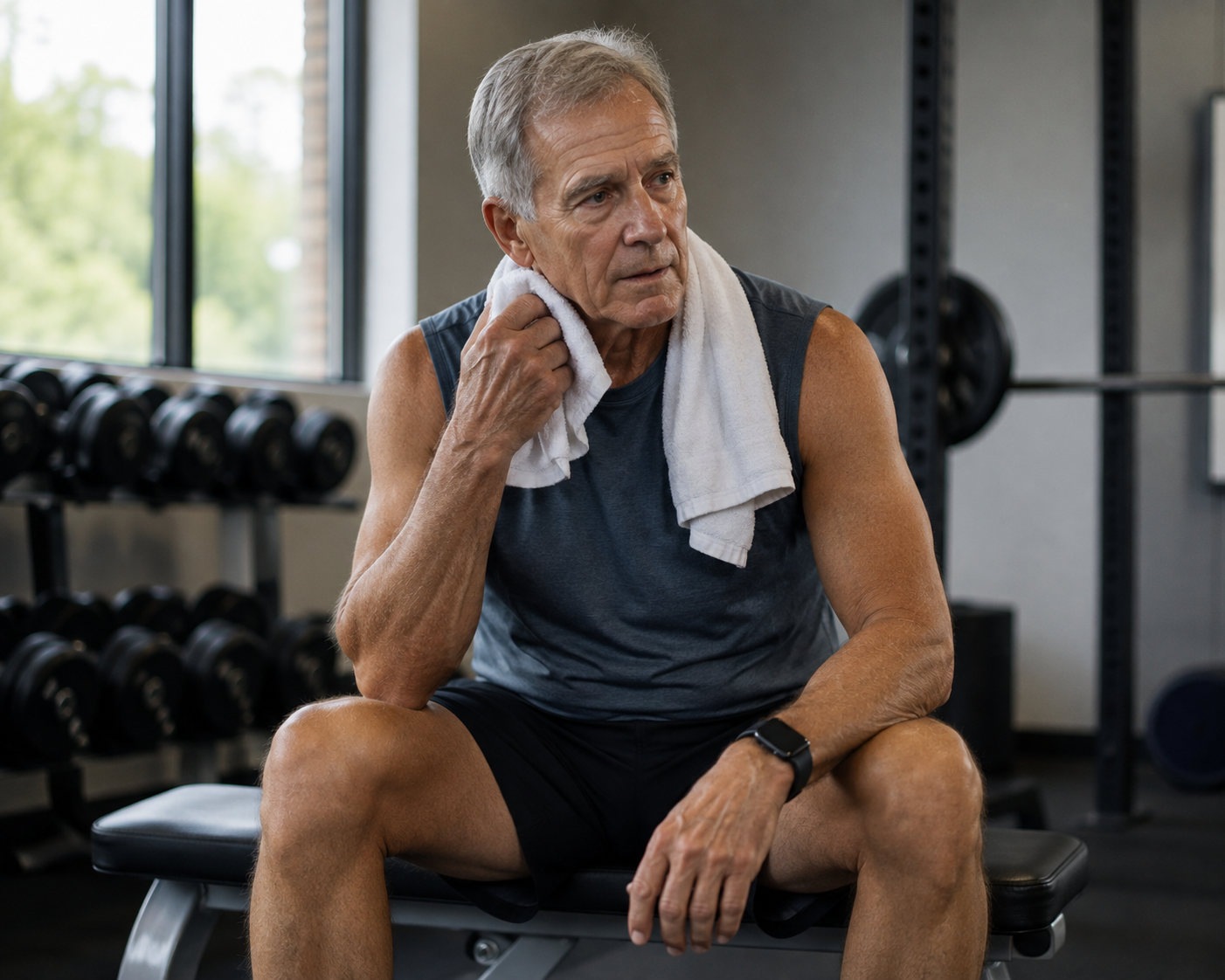
A 68-year-old client once described it to me this way: “I used to bounce back by Tuesday. Now I’m still flat by Thursday, and I can’t tell if that’s normal or a warning sign.” That question sits at the center of this guide. Recovery genuinely changes after 60, but the line between “this is just how recovery works now” and “this needs a doctor’s attention” is not always obvious from the inside. This guide walks through the physiology behind slower recovery in older adults, the warning signs that look different than they do in younger athletes, a practical step-by-step self-check you can run after any workout, and clear guidance on when fatigue, soreness, or mood changes warrant a medical conversation rather than a training adjustment.
Why Recovery Physiology Changes After 60
Under-recovery is not simply “being more tired.” It is a measurable physiological state where the body has not fully repaired and adapted before the next round of training stress. In younger adults, this state usually resolves within a day or two of easier training. In older adults, several biological systems shift in ways that slow the entire repair process, which changes both how under-recovery shows up and how long it takes to resolve.
Reduced and Delayed Muscle Protein Synthesis
Skeletal muscle repair depends on muscle protein synthesis (MPS), the process that rebuilds muscle fibers after exercise-induced damage. A 2026 systematic review and meta-analysis in Frontiers in Physiology, covering 46 studies and 1,280 participants, found that older adults had significantly lower resting (post-absorptive) MPS than younger adults, and an even more pronounced reduction in the MPS response after eating (post-prandial anabolic resistance). Interestingly, the same review found that post-exercise MPS response was often preserved in older adults when the exercise stimulus was adequate, meaning training itself is not the enemy of recovery capacity. The gap shows up most in the body’s baseline repair rate and its response to nutrition, not necessarily in its response to a well-dosed workout.
Slower, More Prolonged Inflammatory Repair
A 2024 review in Cells on age-associated recovery from exercise-induced muscle damage found that older muscle mounts an adequate initial inflammatory response after damaging exercise, but the cleanup phase runs behind schedule. Monocyte chemoattractant protein-1, a signal that recruits repair cells to damaged tissue, peaked around 24 hours post-exercise in older adults compared to about 3 hours in younger adults, and macrophage presence (the repair cells themselves) stayed elevated for 4 to 7 days in older muscle after younger muscle had already returned to baseline. In practical terms, the repair crew arrives later and stays longer, which stretches out the entire recovery window.
Longer Strength and Soreness Recovery Windows
A systematic scoping review published in Sports Medicine – Open examined recovery from resistance exercise specifically in older adults. It found that strength deficits after damaging exercise commonly required more than 72 hours to resolve, with some studies unable to document full recovery within their observation window at all. Soreness itself tended to peak at 24 to 48 hours and was largely resolved by 3 to 5 days, though the review also noted that some older women recovered strength more slowly than younger comparison groups even after soreness had faded. That distinction matters: soreness disappearing does not always mean the muscle has finished repairing.
Reduced Glycogen Replenishment and Cardiorespiratory Buffer
According to continuing education material from the American Council on Exercise on aging and training recovery, older adults experience decreased muscle glycogen replenishment after exercise, which slows the return of usable energy stores. The same material notes that individuals with higher cardiorespiratory fitness recover more quickly regardless of age, and it specifically flags that recovery strategies are often under-used by older exercisers, who may assume that pushing through fatigue is simply part of getting older rather than a sign that recovery needs active management.
“The gap between older and younger recovery is not that older muscle can’t repair itself. It’s that the repair timeline is longer, the signals arrive later, and the margin for error is smaller.”
Age-Related Recovery Differences: A Side-by-Side Comparison
The table below summarizes how the same recovery markers tend to behave differently in adults under 40 compared with adults 60 and older, based on the research above. Use it as a general reference point, not a personal diagnosis; individual health status, medications, and training history all shift these numbers.
Warning Signs That Look Different in Older Adults
Overtraining and under-recovery content aimed at younger athletes tends to focus on performance metrics: dropping race times, plateaued lifts, elevated training-day heart rate. Those signals still apply after 60, but three signs tend to show up earlier, more strongly, or in a different shape in older adults, and they are easy to misread as “just getting older.”
Disproportionate Fatigue
This is fatigue that does not match the workout that produced it. A moderate 30-minute walk or a light resistance session that would barely register in a training log leaves you needing a nap, or leaves you drained for the rest of the day rather than the rest of the hour. Because baseline energy already shifts with age, this sign is frequently dismissed as normal aging rather than flagged as a recovery deficit. The distinguishing feature is disproportion: the fatigue is out of scale with the effort, not simply present after effort.
Mood Changes and Motivation Loss
According to Cleveland Clinic’s clinical overview of overtraining syndrome, mood-related symptoms such as irritability, agitation, restlessness, and eventually a flattened or depressed mood are hallmark features that intensify as under-recovery progresses through its stages. In older adults, these mood shifts are especially easy to attribute to unrelated life stress, medication changes, or “just a bad week,” which can delay recognizing them as a training-load problem.
Sleep Disruption That Doesn’t Match Effort
Poor sleep quality appears as an early-stage marker of overtraining, and sleep and recovery reinforce each other. Older adults already tend to have lighter, more fragmented sleep architecture for reasons unrelated to training, which makes exercise-driven sleep disruption harder to isolate. A useful marker is a new or worsening pattern, such as trouble falling asleep specifically on training days, or waking up multiple times the night after a harder session, that was not present before the current training block.
Joint Pain That Lingers Beyond the Expected Window
Some post-exercise joint discomfort is expected, particularly when starting or increasing an activity; the CDC notes that joints commonly need 6 to 8 weeks to adapt to a new activity level, and that some soreness and stiffness during that adjustment period is normal. What is not normal is pain that persists longer than about two hours after exercise ends, pain sharp or severe enough to change your gait, or swelling and warmth around a joint. That combination points toward joint tissue that is not tolerating the current load, or toward a separate issue such as arthritis flare or injury, rather than ordinary under-recovery.
Why this matters: in younger adults, ignoring these signs for a week or two usually just delays progress. In older adults, unresolved under-recovery compounds faster and can overlap with early signs of conditions such as anemia, thyroid dysfunction, cardiovascular strain, or medication side effects, which is exactly why the self-check below ends with a clear decision point rather than a training tweak.
The Self-Check Process: A Step-by-Step Walkthrough
This process is designed to take five to ten minutes a day over a short observation window, using information you can gather without any special equipment beyond a watch and a notebook or notes app. The goal is not to self-diagnose a medical condition. The goal is to gather enough consistent information that you and your physician, if needed, can have a specific, useful conversation instead of a vague one.
Step 1: Establish a 3-to-5-day observation window
Pick a stretch of three to five days that includes at least one training day and one rest day. Trying to judge recovery from a single day rarely works, since normal day-to-day variation can look identical to genuine under-recovery.
Step 2: Rate perceived exertion the next morning, not just after the workout
Immediately after training, rate effort on a 1-10 scale as usual. Then, the following morning before any coffee or activity, rate how recovered you feel on the same scale, where 10 is fully recovered. A same-day effort of 6 followed by a next-morning recovery rating below 5, repeated across two or more sessions, suggests the recovery gap is not closing on its own.
Step 3: Track resting heart rate at the same time each morning
Take your pulse, or use a wearable if you have one, at the same time each morning before getting out of bed. A resting heart rate that stays 5 or more beats per minute above your personal baseline for several consecutive mornings is a recognized marker of incomplete recovery, and a resting rate climbing above 100 beats per minute alongside other symptoms is one of the specific markers Cleveland Clinic associates with more advanced overtraining.
Step 4: Log soreness by location, intensity, and duration, not just presence
Instead of noting “sore” or “not sore,” record which muscle or joint, how intense on a 1-10 scale, and importantly, how many hours it lasted. Muscle soreness that resolves within the expected 3-to-5-day window is consistent with normal age-adjusted recovery. Joint pain specifically that outlasts two hours after exercise, per CDC guidance for people managing joint conditions, gets flagged separately rather than lumped in with muscle soreness.
Step 5: Note sleep quality and any new pattern
Each morning, record whether the previous night’s sleep felt disrupted, and whether that disruption followed a training day. Look specifically for new patterns over the observation window rather than comparing to a “perfect” night, since baseline sleep quality already varies with age.
Step 6: Check mood and motivation against your normal baseline
Rate irritability, restlessness, and motivation to train on a simple 1-5 scale each day. A short-term dip after one hard session is expected. A downward trend across the full observation window, especially combined with any of the physical markers above, is the pattern worth acting on.
Step 7: Total the pattern and decide on next steps
Review the window as a whole. If two or more markers (disproportionate next-morning fatigue, elevated resting heart rate, soreness or joint pain outlasting the expected window, disrupted sleep, or a mood/motivation dip) show up together across multiple days, scale training back and prioritize rest, protein intake, and sleep for the following week. If the pattern includes a joint pain lasting more than two hours, a resting heart rate spike alongside chest symptoms or breathlessness, unexplained weight change, fever, or symptoms that don’t improve with a week of reduced training, move to a physician visit rather than another week of self-monitoring.
“A single rough morning is data. A week of rough mornings is a pattern. The self-check exists to tell you, honestly, which one you’re looking at.”
Self-Check Symptom Checklist
Use this checklist alongside the step-by-step process above. Check off anything that has applied to you over the past week.
- ☐ Next-morning fatigue that feels out of proportion to the previous day’s workout
- ☐ Resting heart rate running 5+ bpm above your personal baseline for 3 or more mornings
- ☐ Muscle soreness lasting noticeably longer than 5 days
- ☐ Joint pain or swelling persisting more than 2 hours after exercise ends
- ☐ New or worsening trouble falling asleep or staying asleep, tied to training days
- ☐ Increased irritability, restlessness, or agitation compared to your normal mood
- ☐ Declining motivation or dread around workouts you normally enjoy
- ☐ Minor illnesses (colds, infections) happening more often than usual
- ☐ Unexplained weight change over the past 2-3 weeks
- ☐ Performance dropping on tasks that were previously easy, even with adequate rest
Scoring guide: 0-1 checked, likely normal age-adjusted recovery. 2-3 checked, scale back training intensity and reassess in a week. 4 or more checked, or any single item combined with joint pain past 2 hours or a racing/irregular heartbeat, schedule a physician visit before continuing your current training plan.
When to Talk to Your Physician
Under-recovery and early medical problems can look nearly identical from the inside: both produce fatigue, both can disrupt sleep, both can flatten mood and motivation. That overlap is exactly why self-assessment has limits, and why this guide is not a substitute for medical evaluation. Cleveland Clinic notes that clinicians confirm overtraining syndrome partly by ruling out other explanations, using blood tests, urinalysis, and cardiac assessment, precisely because the symptom picture is not unique to overtraining on its own.
Talk to your doctor if you notice any of the following:
- Joint pain, swelling, or warmth that lasts more than 2 hours after exercise, or that wakes you at night
- Resting heart rate above 100 bpm, or a heart rate that feels irregular, pounding, or accompanied by chest discomfort or breathlessness
- Fatigue severe enough to interfere with daily tasks unrelated to exercise, lasting more than a week
- Unexplained weight loss or gain over 2-3 weeks
- New depression, persistent low mood, or loss of interest that extends beyond training motivation
- Frequent minor illnesses or infections that seem to track with your training load
- Any symptom that does not improve after a full week of reduced training and prioritized rest
This is especially important because several conditions common after 60, including anemia, hypothyroidism, cardiovascular disease, and side effects from common medications such as statins or beta-blockers, can produce fatigue, muscle aches, or reduced exercise tolerance that closely resembles under-recovery. Assuming symptoms are simply training-related and pushing through them, rather than getting them checked, is the primary risk this guide is written to help you avoid.
Practical Steps to Support Recovery
Once medical causes have been reasonably ruled out or addressed, several evidence-informed adjustments can help close the recovery gap described earlier in this guide.
Space out high-intensity sessions
ACE’s continuing education material on aging and training recovery points to roughly 5 days of recovery between high-intensity interval sessions for older adults, compared to shorter windows commonly tolerated by younger exercisers. This does not mean daily movement should stop; it means the hardest efforts need more spacing.
Prioritize protein intake around training
Because post-meal muscle protein synthesis is blunted with age, according to the 2026 Frontiers in Physiology meta-analysis, spreading adequate protein across meals, rather than concentrating it in one sitting, gives the body more consistent raw material for repair.
Build in true rest days, not just easy days
An easy day still involves movement stress. A true rest day allows the slower inflammatory cleanup phase described earlier, which runs several days longer in older muscle, to catch up without a new stimulus layered on top.
Treat sleep as part of the training plan
Because sleep disruption is both an early warning sign and a factor that slows recovery further, protecting a consistent sleep schedule, particularly after harder training days, is one of the more direct levers available.
Reassess load after any illness, travel, or medication change
Recovery capacity is not static. A period of poor sleep, a new prescription, or a minor illness can temporarily change how much training load the body can absorb, so it is worth repeating the self-check process after any such disruption rather than assuming the previous baseline still applies.
Frequently Asked Questions
How is under-recovery different in older adults compared to younger athletes?
The underlying symptoms overlap, but the timeline and intensity differ. Research on exercise-induced muscle damage shows the inflammatory repair phase in older adults starts later and runs 4 to 7 days longer than in younger adults, and strength deficits often take more than 72 hours to resolve rather than the 24 to 48 hours common in younger populations. Practically, this means older adults need longer observation windows to judge whether they are actually recovering or simply accumulating fatigue.
How long should muscle soreness last after exercise once you’re over 60?
Based on the scoping review of resistance exercise recovery in older adults, soreness typically peaks 24 to 48 hours after a challenging session and is largely resolved within 3 to 5 days. Soreness that consistently extends well beyond 5 days, or that shows up after routine sessions rather than only after unusually hard ones, is worth flagging in your self-check log.
Can under-recovery mimic a medical condition?
Yes, and this overlap is one of the main reasons to involve a physician rather than guess. Fatigue, mood changes, and reduced exercise tolerance can stem from under-recovery, but they can also stem from anemia, thyroid disorders, cardiovascular issues, or medication side effects. Clinical guidance on overtraining syndrome specifically describes ruling out these alternatives through blood work and cardiac evaluation before confirming an overtraining diagnosis.
What’s a normal versus a concerning increase in resting heart rate after exercise?
A small, temporary rise the morning after a hard session is expected. A resting heart rate that stays 5 or more beats per minute above your personal baseline for several consecutive mornings suggests recovery is lagging, and a sustained resting rate above 100 beats per minute, particularly alongside other symptoms, is flagged in clinical descriptions of overtraining as warranting medical evaluation.
How often should older adults schedule full rest days?
There is no single number that fits everyone, since it depends on training intensity, health status, and how quickly your own markers recover. As a starting reference, guidance on aging and training recovery points to roughly 5 days between high-intensity sessions, with true rest or low-intensity days filling the gaps, and adjustment based on how your self-check markers respond.
Is it normal to feel more fatigued the day after moderate exercise as you age?
Some increase in next-day fatigue is expected, since baseline recovery speed slows with age even in healthy adults. What is not typical is fatigue that is disproportionate to the workout that caused it, or that fails to improve with a few easier days. That disproportion, more than fatigue itself, is the signal worth tracking.
References
- Age-related anabolic resistance and post-absorptive muscle protein synthesis: integrative evidence from a systematic review and meta-analysis. Frontiers in Physiology, 2026. DOI: 10.3389/fphys.2026.1740284
- Age-Associated Differences in Recovery from Exercise-Induced Muscle Damage. Cells, 2024. DOI: 10.3390/cells13030255
- Recovery from Resistance Exercise in Older Adults: A Systematic Scoping Review. Sports Medicine – Open, 2023. DOI: 10.1186/s40798-023-00597-1
- Aging and Training Recovery: What Health and Exercise Professionals Need to Know. American Council on Exercise. acefitness.org
- Overtraining Syndrome. Cleveland Clinic. my.clevelandclinic.org
- Exercising With Chronic Conditions. National Institute on Aging. nia.nih.gov
- What Do I Do if I Have Pain During or After Exercise? Centers for Disease Control and Prevention, Arthritis Program. archive.cdc.gov
This article is for general educational purposes and does not replace individualized medical advice. Speak with your physician before starting or significantly changing an exercise program, particularly if you have an existing health condition.