























By Mateo Rivera
Most recovery advice fails for a boring reason: it asks for more time than anyone actually has left over in a week. Foam roll for fifteen minutes. Stretch for twenty. Walk for thirty. Breathe for ten. Added up, that is more than an hour of “extra” work stacked on top of training, sleep, meals, and everything else life requires, so it quietly gets skipped week after week until it disappears from the calendar entirely.
This guide takes a different approach. Instead of four separate habits competing for four separate pockets of time, it combines the four recovery elements with the best evidence behind them, light mobility work, brief self-myofascial release, a short walk, and paced breathing, into a single twenty-minute block you do once a week, on a fixed day, with no equipment beyond a mat and something round to roll on. The goal is not the most sophisticated recovery protocol available. It is the one you will still be doing in October.
Why a Once-a-Week, Twenty-Minute Session Beats a Routine You Never Start
The core problem with most recovery plans is not the exercise science. It is behavior. A landmark study by researcher Phillippa Lally and colleagues at University College London tracked 96 people trying to build a new daily health habit over twelve weeks and found it took an average of 66 days for the behavior to become automatic, with individual results ranging from 18 days to 254 days depending on the person and the behavior (Lally, van Jaarsveld, Potts, and Wardle, 2010, see References). That is the finding most people quote. The part that gets left out is what predicted success in the first place: consistency of repetition, not motivation, willpower, or the complexity of the plan.
A more recent randomized controlled trial tested whether it mattered more to cue a new habit to a specific clock time (“at 7:00 a.m.”) or to an existing routine (“right after I brush my teeth”). Neither approach won. Both groups showed similar increases in automaticity, and among participants who successfully built the habit, the median time to reach peak automaticity was 59 days. The strongest predictor of success in both groups was simply how consistently people carried out the planned action in response to their chosen cue (Keller, Kwasnicka, Klaiber, Sichert, Lally, and Fleig, 2021, see References).
Put those two findings together and the design brief for a recovery routine writes itself. It needs to be short enough to repeat without negotiation, tied to a fixed slot in the week so the cue never has to be reinvented, and simple enough that “I don’t have my gear” is never a valid excuse. Twenty minutes, one day a week, no equipment, is built around exactly that brief.
“The behavior that predicts whether a habit sticks is not how good the plan is. It is whether you do the same thing, in response to the same cue, often enough for your brain to stop treating it as a decision.”
What Is Actually in This Routine, and Why These Four Elements
Recovery science covers a wide range of tools, from compression garments to cold plunges to massage guns. Four elements were chosen for this routine because each has real supporting research, each takes only a few minutes to matter, and none require anything beyond a floor, a roller, and your own breath.
Light Mobility Work Wakes Up the Joints
A short flow through the major joints, ankles, hips, thoracic spine, and shoulders, restores range of motion that gets locked down by hours of sitting or repetitive training patterns. Mobility drills are low intensity by design; the point is not to build flexibility in a single session but to remind your nervous system what full range feels like on a regular basis, so it does not quietly shrink week over week.
Self-Myofascial Release Targets Tight Tissue
A 2024 systematic review of self-myofascial release (SMR) research, covering foam rolling and roller-massager studies in athletic populations, found consistent short-term improvements in range of motion, with 13 of 20 reviewed studies reporting significant gains, along with improved recovery perception and reduced delayed-onset muscle soreness after exercise. The review noted that longer contact time, around two minutes per muscle group with firmer pressure, tended to outperform quick passes, though most protocols in the literature used roughly 90 seconds per area (González-Fernández, Martínez-Aranda, Sanz-Matesanz, and García-Mantilla, 2024, see References). Strength and power effects were inconsistent across studies, so SMR is included here for tissue comfort and perceived recovery, not as a performance enhancer.
A Short Walk Keeps Blood Moving Without Adding Fatigue
A 2022 systematic review in the Strength and Conditioning Journal examined active recovery protocols, including walking, light jogging, and low-intensity movement, for managing symptoms of exercise-induced muscle damage. It found that active recovery approaches, as a category, helped manage soreness and supported the recovery process better than complete rest in a majority of the reviewed trials (Strength and Conditioning Journal, 2022, see References). A brisk seven-minute walk is enough to raise circulation and mood without adding meaningful fatigue on top of a week of training.
Paced Breathing Shifts the Body Toward Rest
Slowing your breathing to roughly six breaths per minute, sometimes called the “resonance frequency” for heart rate variability, has been shown to increase measures of parasympathetic activity more than resting quietly without a breathing pattern. A 2021 study in Frontiers in Psychology compared paced breathing at six breaths per minute against a soothing-rhythm technique and a control condition, finding that the six-breaths-per-minute pattern produced the strongest improvements in heart rate variability measures, even though most participants naturally drifted toward roughly twice that rate, around 12 breaths per minute, without active pacing (Steffen, Bartlett, Channell, Jackman, Cressman, Bills, and Pescatello, 2021, see References). Ending the session on paced breathing gives your nervous system a clear, repeatable signal that the work is finished and it is time to downshift.
No Equipment Needed: What to Have Within Reach
- ✔ A yoga mat, towel, or any patch of floor with a bit of cushioning
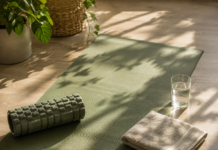
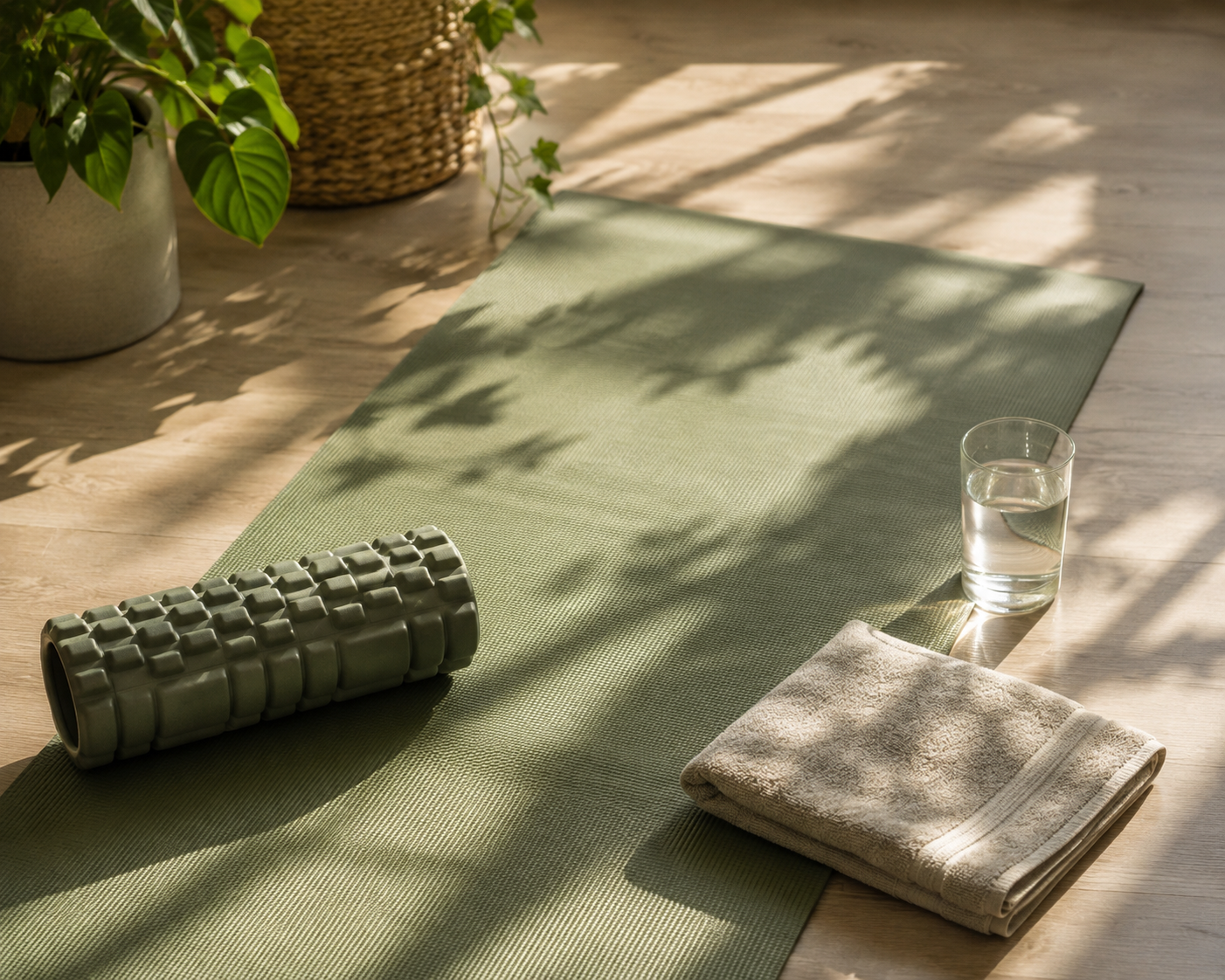
- ✔ A foam roller, tennis ball, or lacrosse ball (a rolled-up towel works if you have neither)
- ✔ Comfortable clothes you can move in
- ✔ A safe indoor hallway, staircase landing, or a short outdoor loop for the walking segment
- ✔ A watch, phone timer, or clock you can glance at
- ✔ Twenty uninterrupted minutes, once a week, on a day you have already picked
The Twenty-Minute Recovery Routine, Step by Step
Below is the full sequence in order. Each step lists the target time window so you can follow along without overthinking the pacing. The whole thing is designed to flow directly from one segment into the next with no rest breaks between them, other than the brief transitions of moving from the floor to standing to walking.
Minute-by-Minute Timeline
| Time | Segment | Focus |
| 0:00 – 5:00 | Mobility Flow | Ankles, hips, spine, shoulders |
| 5:00 – 10:00 | Self-Myofascial Release | Calves, quads, upper back |
| 10:00 – 17:00 | Recovery Walk | Brisk pace, easy breathing |
| 17:00 – 20:00 | Paced Breathing | Six breaths per minute, seated or lying down |
Step 1: Mobility Flow (0:00 to 5:00)
Move continuously through this sequence, spending roughly one minute on each drill. None of these should feel like stretching to the point of strain; the target is smooth, pain-free range of motion.
- Ankle circles and rocks (1:00): Standing or seated, circle each ankle ten times in both directions, then do ten slow ankle rocks shifting weight forward onto the toes and back onto the heels.
- World’s greatest stretch (1:00): Step into a long lunge, drop the back knee lightly to the floor, place both hands inside the front foot, and rotate the torso open toward the front-leg side, alternating sides every few reps.
- Cat-cow spinal waves (1:00): On hands and knees, alternate arching and rounding the spine slowly, syncing the movement with your breath.
- Thoracic rotations (1:00): From the same hands-and-knees position, thread one arm underneath your body and rotate it back up toward the ceiling, alternating sides.
- Arm circles and shoulder rolls (1:00): Standing, circle both arms forward and backward, then roll the shoulders slowly to finish loosening the upper body.
Step 2: Self-Myofascial Release (5:00 to 10:00)
Using a foam roller, ball, or rolled towel, spend roughly 90 seconds to two minutes per area, rolling slowly and pausing on any tender spot for a few slow breaths rather than rolling quickly back and forth.
- Calves (1:30): Seated with the roller under one calf at a time, roll from ankle to just below the knee.
- Quads and front of the hip (2:00): Face down, roll from just above the knee to the top of the thigh, alternating legs.
- Upper back (1:30): Lying on your back with knees bent and the roller under the shoulder blades, roll gently from mid-back to upper back, supporting your head with your hands.
Step 3: Recovery Walk (10:00 to 17:00)
Head outside if you can, or use a hallway, staircase landing, or treadmill if the weather or your schedule does not allow it. Walk at a brisk but conversational pace for the full seven minutes. Let your arms swing naturally and keep your breathing easy throughout; this segment should feel refreshing, not like a cardio session.
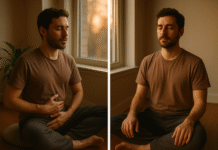
Step 4: Paced Breathing Downregulation (17:00 to 20:00)
Sit or lie down somewhere quiet. Breathe in for about five seconds and out for about five seconds, aiming for roughly six full breaths per minute. If counting feels awkward at first, simply slow your breathing down until it feels noticeably calmer than normal, then hold that pace for the remaining three minutes. Let this be the clear signal that the session, and the week’s dedicated recovery time, is complete.
“You are not trying to build the perfect recovery protocol. You are trying to build the one you will actually repeat fifty-two times this year.”
Picking Your Fixed Day and Time
Choose one day of the week and one approximate time block, and treat it the same way you would treat a standing appointment. Sunday evening, Wednesday lunch break, and Saturday morning are common choices because they tend to sit slightly apart from the busiest training and work days. The research above showed no meaningful advantage of anchoring the habit to a clock time versus anchoring it to an existing routine, such as “right after my last workout of the week” or “right before I make dinner on Sundays.” What matters is picking one option and sticking with the same cue every week rather than deciding fresh each time whether and when to fit it in.
Write the chosen slot down somewhere you will actually see it, a recurring calendar entry, a sticky note on the mirror, or a reminder tied to another habit you never skip. The habit-tracker box below gives you a simple way to mark off each week and watch the streak build toward the roughly two-month mark where the routine tends to stop feeling like an extra task and starts feeling automatic.
Twelve-Week Habit Tracker
Mark an X in the box each week you complete the full twenty-minute session. Somewhere between week 8 and week 9 is roughly where the median participant in habit-formation research reaches peak automaticity for a new weekly behavior.
| 1 | 2 | 3 | 4 | 5 | 6 |
| 7 | 8 | 9 | 10 | 11 | 12 |
Fixed day: ______________ | Fixed time: ______________ | Cue: ______________
Common Mistakes That Derail a Twenty-Minute Routine
- Treating it as optional when the week gets busy. The whole design exists because twenty minutes should survive a busy week. If it consistently gets bumped, the slot you picked is competing with something fixed, and it needs to move to a quieter part of your schedule.
- Rolling too hard, too fast. Aggressive, fast rolling on already-sore tissue can leave you more tender the next day. Slow, sustained pressure on tender spots does more for perceived recovery than speed.
- Turning the walk into a workout. If your heart rate climbs and you finish out of breath, the walk has become another training session rather than active recovery. Keep the pace conversational.
- Skipping the breathing segment because it “isn’t exercise.” The breathing minutes are what mark the session as finished and give your nervous system a clear downshift cue. Cutting it short removes the part most tied to feeling recovered afterward.
- Changing the day every week. A moving cue is a weaker cue. Even an imperfect fixed slot beats a perfect slot that changes constantly, because repetition against the same cue is what research consistently links to automaticity.
Adjusting the Routine as It Becomes a Habit
Once the twenty-minute session has run for a few consecutive weeks without being skipped, you can start to personalize it without breaking the structure that made it stick in the first place. A few adjustments that keep the core intact:
- Swap specific mobility drills for ones targeting whatever feels tightest that week, keeping the same five-minute allotment.
- Add a second, shorter session later in the week once the first has become automatic, rather than lengthening the original block.
- Extend the walk by a few minutes on weeks when the weather or your schedule allows it, borrowing time from elsewhere in your day rather than from the other three segments.
- Bring a partner, roommate, or training buddy into the same fixed slot. Shared cues tend to be harder to skip than solo ones.
What should not change is the total time commitment or the fixed day. The routine works because it asks for very little and delivers on that promise every single week, not because it grows into something bigger. If you want more recovery work, treat it as a separate, additional habit with its own cue rather than folding it into this one.
Why Combine Four Elements Into One Session Instead of Spreading Them Out
It would be reasonable to ask why mobility work, tissue release, walking, and breathing are bundled into a single twenty-minute block rather than spread across the week as four separate five-minute habits. The answer comes back to the same behavioral evidence that shaped the rest of this guide. Every additional cue you ask your brain to track is another decision point where the habit can quietly get skipped. Four separate habits mean four separate reminders, four separate moments of “should I do this now,” and four separate chances for life to intervene. One habit, anchored to one cue, on one day, removes three of those four decision points before the week even starts.
There is also a practical sequencing advantage to doing the four elements back to back. Mobility work primes the joints so the self-myofascial release segment that follows is more comfortable, since tissue tends to respond better once it has already moved through a light range-of-motion warm-up. The walk that comes after tissue work gives the body a chance to move through that newly restored range under light load, reinforcing rather than undoing the previous ten minutes. Finishing on paced breathing closes the loop by shifting the body from the mildly activating effect of walking into a calmer state, so the session ends on a note of recovery rather than stimulation. Doing these four things in a different order, or on four different days, would not break the science behind any individual piece, but it would lose this built-in progression from activation to release to movement to calm.
Who This Routine Is Built For
This session was designed with a fairly wide range of people in mind. Someone training three to five times a week who wants a dedicated recovery day without adding another complicated program to their calendar is an obvious fit. So is someone returning to exercise after a break, who needs a low-barrier way to rebuild consistency before adding intensity back in. Desk-based workers who spend most of the week sitting often notice the mobility segment matters more to them than the walk, since hip and thoracic stiffness tend to build up fastest from long stretches of sitting rather than from training itself.
The routine is intentionally light enough that it does not require a rest day of its own to recover from. That is a deliberate design choice, not an oversight. A recovery routine that leaves you needing to recover from it defeats its own purpose. If any segment consistently leaves you more fatigued or sore the next day, that is a signal to ease off the intensity of that segment specifically, whether that means lighter pressure during self-myofascial release, a shorter or flatter walking route, or gentler mobility drills, rather than a signal to abandon the routine altogether.
People managing an existing injury or a diagnosed medical condition should treat this article as a general framework rather than individualized guidance, and check with a physical therapist or physician before adding new movement patterns, particularly around the self-myofascial release and mobility segments. Nothing here is intended to replace professional care for a specific injury.
Frequently Asked Questions
Do I need a foam roller specifically, or will a ball work?
A tennis ball, lacrosse ball, or even a tightly rolled towel can substitute for a foam roller for the self-myofascial release segment. A ball allows more targeted pressure on smaller areas like the calves, while a roller covers larger areas like the quads more evenly. Either option is consistent with the equipment-light design of this routine.
Can I do this routine on a rest day instead of after training?
Yes. Many people find a fixed rest day works well because there is no competition with a workout for time or energy. The routine was designed to be low intensity enough to fit on either a training day or a full rest day without adding meaningful fatigue.
What if I only have ten minutes some weeks?
A shortened version, roughly two and a half minutes of mobility, two and a half minutes of self-myofascial release, three minutes of walking, and two minutes of breathing, is far better than skipping the week entirely. Protecting the habit and the cue matters more on a busy week than protecting the full twenty minutes.
Is once a week actually enough for recovery?
This routine is designed as a consistent floor, not a ceiling. It is not a replacement for daily basics like sleep and adequate protein, but a dedicated weekly block combining mobility, tissue work, light movement, and downregulation gives your body a repeatable structured input that ad hoc, whenever-you-remember recovery habits usually fail to deliver.
Why is the breathing segment paced at six breaths per minute specifically?
Research on slow-paced breathing has found that a rate near six breaths per minute tends to produce the strongest measurable increases in heart rate variability, a marker linked to parasympathetic, “rest and digest,” nervous system activity, compared with faster or unpaced breathing. You do not need to hit that number exactly; simply breathing noticeably slower than normal for a few minutes captures most of the benefit.
How long before this actually feels automatic?
Habit-formation research on a range of health behaviors puts the average around 66 days, with a wide range depending on the person and behavior, while a more recent trial on weekly-style habits found a median of around 59 days to reach peak automaticity among people who stuck with it. In practice, most people notice the routine start to feel like “just what I do” somewhere around the two-month mark, provided the day and time stay fixed.
References
- Lally, P., van Jaarsveld, C. H. M., Potts, H. W. W., and Wardle, J. (2010). How are habits formed: Modelling habit formation in the real world. European Journal of Social Psychology, 40(6), 998 to 1009. https://doi.org/10.1002/ejsp.674
- Keller, J., Kwasnicka, D., Klaiber, P., Sichert, L., Lally, P., and Fleig, L. (2021). Habit formation following routine-based versus time-based cue planning: A randomized controlled trial. British Journal of Health Psychology, 26(3), 807 to 824. https://doi.org/10.1111/bjhp.12504
- González-Fernández, F. T., Martínez-Aranda, L. M., Sanz-Matesanz, M., and García-Mantilla, E. D. (2024). Effects of self-myofascial release on athletes’ physical performance: A systematic review. Journal of Functional Morphology and Kinesiology, 9(1), 20. https://doi.org/10.3390/jfmk9010020
- Steffen, P. R., Bartlett, D., Channell, R. M., Jackman, K., Cressman, M., Bills, J., and Pescatello, M. (2021). Integrating breathing techniques into psychotherapy to improve HRV: Which approach is best? Frontiers in Psychology, 12, 624254. https://doi.org/10.3389/fpsyg.2021.624254
- Effect of active recovery protocols on the management of symptoms related to exercise-induced muscle damage: A systematic review. (2022). Strength and Conditioning Journal, 44, 57 to 70. https://doi.org/10.1519/ssc.0000000000000654