




























By Ellie Brooks
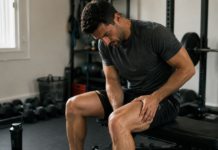
The muscle pulls tight, there’s a sharp little tug behind the thigh, and for a second you’re not sure whether to keep going or stop. That moment, deciding what to do in the next five minutes and then the next five days, is where most minor strains either heal cleanly or turn into a nagging, repeat-injury cycle that drags on for months.
A grade I muscle strain, the mildest tier of the three-grade injury scale used in sports medicine, involves only a small number of stretched or micro-torn fibers. Strength and range of motion are largely intact, and pain is usually mild to moderate rather than severe (Physiopedia, Muscle Strain). Most of these injuries heal in a matter of weeks. But “minor” only stays minor if the return to activity is handled correctly, loaded early enough to keep tissue healthy, but not so aggressively that the healing fibers tear again.
This guide walks through a graded, pain-guided return-to-activity progression for a clearly minor (grade I) strain, the specific milestones to hit before ramping intensity back up, and the red flags that mean what you’re dealing with is not actually minor and needs a professional look.
This article is not a diagnostic tool.
It describes general return-to-activity principles for injuries that are clearly mild. It cannot tell you which grade of strain you actually have. If you are unsure how serious your injury is, or if any of the red flags listed further down apply to you, see a doctor or physical therapist before starting any progression.
Why “Just Rest It” Went Out of Style
For decades the standard advice after any soft-tissue injury was RICE: Rest, Ice, Compression, Elevation. The idea was simple, keep the area still and cold, let inflammation settle, and time will do the rest. The problem is that complete rest for days on end can lead to deconditioning, delayed fluid drainage, and a slower return of normal movement patterns.
In 2012, sports medicine researchers Bleakley, Glasgow, and MacAuley published an editorial in the British Journal of Sports Medicine arguing that the “R” in RICE needed to change. Their proposed framework, POLICE, replaced blanket Rest with Optimal Loading (Bleakley et al., 2012, Br J Sports Med):
- P: Protection. Guard the area from further damage in the first day or two (this might mean a brace, crutches, or simply avoiding the specific movement that caused the injury), without necessarily stopping all movement.
- O: Optimal Loading. Introduce controlled, pain-free movement and light mechanical stress as early as tolerated, because tendon, muscle, and connective tissue all need some loading to remodel and heal well.
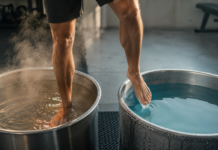
- I: Ice. Apply cold for short periods to help manage pain and swelling in the acute phase.
- C: Compression. Use an elastic wrap to limit swelling.
- E: Elevation. Raise the limb above heart level when possible to encourage fluid drainage.
The framework has continued to evolve. In 2020, Dubois and Esculier proposed PEACE and LOVE in the same journal, emphasizing avoiding anti-inflammatory medications and unnecessary imaging in the immediate aftermath, and adding Load, Optimism, Vascularisation, and Exercise as the guiding principles for the days and weeks that follow (Dubois and Esculier, 2020, Br J Sports Med, summarized on Physiopedia). The throughline across both frameworks is the same: protect the tissue briefly, then load it, on a schedule set by pain and function rather than the calendar.
“Complete rest is rarely the fastest way back. The muscle that heals well is the one that gets to practice being a muscle again, just at a load it can actually handle.”
What’s Actually Happening in the Muscle While It Heals
It helps to understand, in plain terms, why early controlled movement matters instead of just taking it on faith. When a muscle fiber tears, even a handful of fibers in a mild strain, the body runs through an inflammatory phase first. Blood flow increases to the area, immune cells clear away damaged tissue, and the groundwork for repair gets laid down. This is the swelling and tenderness you feel in the first day or two.
After that comes a repair and remodeling phase, where new collagen fibers are laid down to patch the injured area. This is the part where loading matters most. New collagen tends to form in a somewhat disorganized pattern at first. Gentle, progressive tension on the healing tissue helps align those new fibers along the direction the muscle actually needs to pull, so the repaired area ends up functionally similar to the surrounding healthy tissue rather than a stiffer, less elastic patch. Complete immobilization during this window can leave the new tissue poorly organized and more prone to tearing again under the same load that caused the original injury.
That’s the biological argument behind optimal loading. It isn’t about pushing through pain for its own sake. It’s about giving the muscle the right amount of mechanical signal, at the right time, so it rebuilds itself to handle the demands you’re going to place on it later.
Red Flags: When This Is Not a Minor Strain
Before any progression plan makes sense, it has to be clear that what happened is actually a grade I strain and not something more serious. Grade II strains involve a partial tear through roughly half the muscle fibers, with more significant pain, swelling, and measurable strength loss. Grade III strains are a complete rupture of the muscle or its tendon, with a total loss of function (Physiopedia, Muscle Strain) and (Cleveland Clinic, Muscle Strains).
See a doctor or physical therapist before attempting any return-to-activity progression if you notice any of the following
- You cannot bear weight on the leg, or cannot use the affected arm for basic tasks, at all
- You heard or felt a distinct pop, snap, or tearing sensation at the moment of injury
- Significant swelling or bruising develops quickly, or spreads well beyond the immediate injury site
- You can feel or see a visible gap, dent, or bulge in the muscle
- Pain is severe (well above a 6 or 7 out of 10) and does not ease with rest
- You have numbness, tingling, or weakness that suggests nerve involvement
- Symptoms are not improving, or are getting worse, after about a week of home care
- You have had repeated strains in the same spot, which can signal incomplete healing from a prior injury
- You have a condition such as diabetes or a circulation disorder that can slow healing or mask complications
These signs point toward a grade II or III injury, or another condition entirely, and they call for a professional evaluation rather than a home progression plan (ICGI, When Should You See a Doctor About a Pulled Muscle) and (Cleveland Clinic, Muscle Strains). A physical therapist or sports medicine doctor can confirm the grade, rule out a tendon or bone injury, and build a supervised plan if the strain turns out to be more than minor.
The Pain-Guided Rule: Forget the Calendar
One of the most common mistakes in returning from a strain is picking a date, “two weeks and I’ll be back to normal training”, and sticking to it regardless of how the tissue actually feels. Healing timelines vary by person, injury location, blood supply to that muscle, age, and overall conditioning. A pain-guided approach uses the tissue’s own feedback instead of a fixed schedule.
Simple pain-scale guidance for each step of the progression
| Pain level (0–10) | What it means for training |
|---|---|
| 0–2 | Safe to proceed at the current or next activity level. |
| 3–4 | Acceptable during the activity as long as it settles back to baseline within roughly 24 hours and doesn’t worsen the next day. |
| 5 or higher | Stop the activity, back off to the previous phase, and give the tissue extra recovery time before trying again. |
A useful check: pain during or immediately after activity that is mild and fades quickly is generally tolerable. Pain that lingers into the next morning, or that changes your walking or movement pattern, is a signal to step back a phase rather than push through it.
The Graded Return-to-Activity Progression
The table below outlines a general four-phase framework. Move to the next phase only when you comfortably meet the criteria of the current one, and expect the total timeline for a true grade I strain to run anywhere from roughly one to four weeks, depending on the muscle involved and how it responds (Cleveland Clinic, Muscle Strains).
| Phase | Criteria to enter this phase | Typical activities |
|---|---|---|
| 1. Protection & gentle movement Days 0–3 | Injury is confirmed as clearly minor (no red flags); pain is mild to moderate at rest. | Short walking or gentle pain-free range-of-motion within a comfortable arc; brief icing; light compression; avoiding the specific movement that caused the strain. |
| 2. Restoring range of motion Roughly days 3–10 | Resting pain is mild (0–2/10); swelling is stable or reducing; walking is normal and pain-free. | Gentle active stretching, bodyweight mobility drills, stationary cycling or pool walking at low intensity, light isometric holds. |
| 3. Progressive strengthening Roughly week 2–3 | Full, pain-free active range of motion; no swelling; strength feels close to the uninjured side. | Light resistance exercises targeting the strained muscle, controlled eccentric loading (for example, slow lowering phases), low-impact cardio, technique-focused movement drills. |
| 4. Sport & full-intensity return Roughly week 3–4+ | Strength is at or above about 90 percent of the uninjured side; no pain with jumping, sprinting drills, or heavy loading; confidence in the movement is back. | Gradual reintroduction of sprinting, cutting, jumping, or full training load, building volume and intensity across multiple sessions rather than in one jump. |
That 90 percent bilateral strength benchmark, along with full pain-free range of motion, is a commonly cited threshold in physical therapy literature before returning to full sport-level loading (Spark Physical Therapy, Managing Muscle Strains). It isn’t a magic number, but it’s a useful, checkable goal instead of a guess.
Step-by-Step Walkthrough
Here is a practical, day-by-day way to apply the phases above to a typical lower-body strain (for example, a mild hamstring or calf strain). Adjust the pacing to your own pain response, not the numbers below.
- Step 1: Confirm it’s actually minor. Check your symptoms against the red-flag list above. Can you bear weight? Is the pain moderate rather than severe? Is there no visible deformity? If yes to all, proceed cautiously. If unsure, treat it as unconfirmed and get it checked before doing anything else.
- Step 2: Protect it for 24 to 72 hours. Avoid the specific motion that caused the strain. Use brief periods of ice for comfort and light compression if it helps with swelling. Keep gently moving the area within a pain-free range rather than immobilizing it completely.
- Step 3: Reintroduce range of motion. Once resting pain drops to roughly 0 to 2 out of 10 and walking feels normal, begin gentle stretching and bodyweight mobility work. Stop any movement that pushes pain past a 3 or 4.
- Step 4: Add light isometric and resistance work. Introduce static holds (for example, gently pressing against resistance without moving the joint) and light resistance band or bodyweight exercises. Track next-day soreness, not just soreness during the exercise.
- Step 5: Progress to dynamic strengthening. Add controlled eccentric loading and low-impact cardio (cycling, swimming, or brisk walking). This is where most of the tissue’s resilience is rebuilt.
- Step 6: Test higher-demand movement. Try light jogging, controlled jumping, or sport-specific drills at moderate effort. Any sharp pain, limping, or pain above 3 to 4 that lingers into the next day means dropping back a step.
- Step 7: Return to full intensity gradually. Once strength feels roughly equal to the uninjured side and higher-demand movement is pain-free, build back to full training volume over multiple sessions rather than in a single workout.
- Step 8: Keep an eye out afterward. A muscle that has recently strained is statistically more likely to strain again in the following weeks, so continue a light maintenance routine (mobility work, gradual load increases) even after you feel fully recovered.
How This Looks in Practice, by Muscle Group
The four-phase framework applies broadly, but the details shift depending on which muscle is involved and what it’s asked to do in daily life or sport.
A mild hamstring strain
Hamstring strains are common in activities involving sprinting or fast deceleration, and they have a well-earned reputation for recurring if rushed. After the initial protection window, focus on pain-free walking before adding gentle hip-hinge stretches. Isometric holds (for example, a gentle bridge hold) tend to be well tolerated early. Because hamstrings are heavily involved in high-speed running, the jump from jogging to sprinting deserves extra caution: build up through controlled strides at increasing percentages of top speed rather than sprinting at full effort the first time you test it.
A mild calf strain
Calf strains often show up during pushing-off movements like sprinting, jumping, or sudden stops. Early on, gentle ankle pumps and pain-free walking are usually tolerated well. As you progress, double-leg calf raises come before single-leg ones, and single-leg raises come before any jumping or hopping. Because the calf absorbs repeated load with every step, watch for pain that creeps in gradually during longer walks or runs, not just sharp pain at push-off.
A mild shoulder or upper-body strain
Upper-body strains, such as a mild strain in the rotator cuff area or upper back, respond to the same logic but with different movements: gentle pendulum swings and pain-free range of motion first, light resistance band work next, then a gradual return to overhead lifting, throwing, or pushing movements. Because shoulder strains can sometimes overlap with tendon irritation, persistent night pain or weakness with overhead reaching is worth mentioning to a physical therapist even if the initial injury seemed minor.
Common Mistakes That Turn a Minor Strain Into a Recurring One
- Returning on a date instead of on function. “It’s been two weeks so I should be fine” ignores what the tissue is actually telling you.
- Skipping the strengthening phase. Range of motion returning to normal does not mean strength has returned to normal; jumping straight from stretching to full sport skips the step that actually protects against re-injury.
- Complete rest for too long. Extended inactivity can leave surrounding tissue deconditioned and slow to adapt once you do return.
- Ignoring next-day pain. Judging a session only by how it felt in the moment, rather than how the area feels 24 hours later, misses the clearest warning sign available.
- Treating one-sided pain relief as “healed.” Feeling fine at rest is not the same as being ready for sprinting, jumping, or heavy loading.
- Chasing intensity across every session. Trying to add more load, speed, or volume every single time you train the area, without ever holding steady for a session or two, doesn’t give the tissue a chance to consolidate the gains it just made.
- Ignoring the rest of the body. A strain in one muscle sometimes reflects a deficit elsewhere, such as limited hip mobility contributing to a hamstring strain, or weak glute strength contributing to a calf overload. A broader assessment can catch that pattern before it causes a repeat injury.
One more point worth flagging clearly: general life stress, sleep quality, and nutrition all influence how quickly soft tissue repairs itself. Someone healing from a minor strain while under-sleeping and under-eating is working with less biological resource for repair than someone getting consistent rest and adequate protein intake. It’s not the flashiest variable in a recovery plan, but it’s a real one.
Frequently Asked Questions
How long does a grade I muscle strain typically take to heal?
Most mild, grade I strains improve significantly within a few weeks, though the exact timeline depends on the muscle involved, blood supply to that area, and how the return-to-activity progression is managed (Cleveland Clinic, Muscle Strains). A pain-guided, phased approach tends to be more reliable than fixating on a specific number of days.
Should I still ice a minor strain if optimal loading is now recommended?
Yes, ice still has a place in the first day or two for comfort and swelling management. The change is that ice and rest are no longer treated as the whole plan; gentle, pain-guided movement is introduced alongside them rather than after weeks of complete stillness (Bleakley et al., 2012).
Is some soreness during exercise normal, or should I stop completely?
Mild discomfort (roughly 3–4 out of 10) that settles within about a day is generally considered acceptable during a graded return. Pain that is sharp, that changes how you move, or that is still elevated the next morning is a sign to scale back to the previous phase.
What is the difference between a grade I and a grade II strain?
A grade I strain involves a small number of stretched or micro-torn fibers with strength and motion largely preserved. A grade II strain is a partial tear affecting a larger share of the muscle, with more pronounced pain, swelling, and a measurable drop in strength (Physiopedia, Muscle Strain). Only a professional exam can reliably tell the two apart when symptoms are ambiguous.
When is it safe to return to running or jumping after a minor strain?
Generally once you have full, pain-free range of motion, strength that feels close to your uninjured side (often cited as roughly 90 percent or more), and no pain during lower-demand movement like brisk walking or light jogging (Spark Physical Therapy). Reintroduce jumping and sprinting gradually rather than in a single session.
Do I need to see a physical therapist for a minor strain, or can I manage it myself?
A clearly mild strain with none of the red-flag signs listed earlier can often be managed with a sensible home progression. That said, a physical therapist can confirm the injury grade, correct movement patterns that may have contributed to it, and build an individualized plan, which is especially useful if you’ve strained the same area more than once.
The Bottom Line
A minor strain stays minor when it’s protected briefly, loaded early, and progressed according to what the tissue can actually tolerate rather than a fixed number of days on a calendar. Watch resting pain, next-day soreness, and functional milestones like full range of motion and near-equal strength before pushing toward full intensity. And if the injury doesn’t fit the “minor” description, if there’s a pop, an inability to bear weight, significant swelling or bruising, or pain that isn’t easing, treat that as the signal it is and get a professional evaluation rather than guessing.
References
- Bleakley CM, Glasgow P, MacAuley DC. PRICE needs updating, should we call the POLICE? British Journal of Sports Medicine. 2012;46(4):220-221. https://pubmed.ncbi.nlm.nih.gov/21903616/
- Dubois B, Esculier JF. Soft-tissue injuries simply need PEACE and LOVE. British Journal of Sports Medicine. 2020;54:72-73, summarized at https://www.physio-pedia.com/Peace_and_Love_Principle
- Physiopedia. POLICE Principle. https://www.physio-pedia.com/POLICE_Principle
- Physiopedia. Muscle Strain. https://www.physio-pedia.com/Muscle_Strain
- Cleveland Clinic. Muscle Strains. https://my.clevelandclinic.org/health/diseases/22336-muscle-strains
- Intercoastal Consultants and Gastroenterology (ICGI). When Should You See a Doctor About a Pulled Muscle? https://www.icgi.org/when-should-you-see-a-doctor-about-a-pulled-muscle/
- Spark Physical Therapy. Managing Muscle Strains: A Sports Physical Therapy Guide. https://sparkptnc.com/managing-muscle-strains-a-sports-physical-therapy-guide/
This article is for general educational purposes and does not replace personalized medical advice. If you are unsure about the severity of an injury, consult a doctor or physical therapist.