






















The soreness that shows up a day or two after leg day is one of the most universally recognized sensations in fitness, and also one of the most misunderstood. Gym folklore is full of confident fixes: stretch before you lift, drink a “detox” shake, or just push through it. Most of that advice does not hold up against the research. This article walks through what delayed onset muscle soreness (DOMS) actually is, what the evidence says genuinely shortens its duration and severity, what popular remedies do not do much of anything, and how to tell ordinary soreness apart from a much rarer but serious condition, rhabdomyolysis.
What DOMS Actually Is
Delayed onset muscle soreness is the dull, stiff, tender feeling that develops in the 12 to 24 hours after unfamiliar or unusually demanding exercise, typically peaking between 24 and 72 hours and fading out within about a week. It is not the “burn” felt during a set, and it is not lactic acid lingering in the tissue, a myth that has been retired in exercise physiology for decades. Lactate clears from the bloodstream within roughly an hour of finishing exercise, long before soreness even begins.
DOMS is most closely associated with eccentric loading, the lengthening phase of a muscle contraction, such as the lowering portion of a squat, the downward phase of a bicep curl, or the braking action of the quadriceps while walking downhill. Eccentric actions recruit fewer motor units than concentric (shortening) contractions to produce the same force, which concentrates mechanical stress on a smaller number of muscle fibers. Physiopedia’s review of the condition describes this as producing greater structural disruption per fiber than concentric work, which is part of why a hard downhill run or a first return-to-lifting session after a long break produces soreness that a familiar, moderate workout usually does not.
At the microscopic level, that disruption shows up as small-scale damage to myofibrils, the repeating contractile units that make up a muscle fiber, along with disturbances to the surrounding connective tissue and cell membrane. This is often summarized as “micro-tears,” though the damage is more accurately described as disorganization and partial disruption of the sarcomere structure rather than a tear in the everyday sense of the word. That disruption triggers an inflammatory response: immune cells migrate into the area, remove damaged cellular debris, and release signaling compounds that sensitize local nerve endings, which is a large part of why the muscle feels tender to the touch and stiff with movement.
Newer research has complicated the classic “damage causes soreness” story in an interesting way. A study published in The Journal of Physiological Sciences found that muscle damage is sufficient but not strictly necessary to produce the pain response of DOMS, and that neurotrophic signaling pathways, specifically bradykinin receptor and nerve growth factor signaling, along with a COX-2 and glial cell line-derived neurotrophic factor pathway, sensitize sensory nerve fibers in the muscle independent of visible tissue damage. In plain terms: DOMS looks less like a straightforward injury response and more like a temporary recalibration of how sensitive the muscle’s nerves are to mechanical pressure, driven partly by inflammation and partly by direct chemical signaling to nerve endings.
The DOMS Timeline: Onset, Peak, and Resolution
One of the more reassuring facts about ordinary muscle soreness is how predictable its timeline is. Knowing the expected pattern is also one of the simplest tools for telling normal DOMS apart from something that needs medical attention, since real DOMS should not blow past this window or come with the red-flag symptoms covered later in this article.
Quiet period
Little to no soreness yet. Some acute fatigue and pump, but the delayed pain has not set in.
Onset
Stiffness and tenderness begin, usually first noticed with movement or pressure on the muscle.
Peak soreness
Soreness is typically most intense in this window; strength and range of motion are temporarily reduced.
Resolution
Soreness gradually fades. Most cases resolve fully within about a week without any specific treatment.
If soreness is still worsening well past 72 hours, has not meaningfully improved after a week, or is accompanied by dark urine, severe swelling, or an inability to move a joint, it is no longer behaving like typical DOMS, and that shift matters. That distinction is covered in detail later in this article.
What Actually Shortens DOMS
The honest answer is that no intervention makes soreness disappear overnight, and the research on DOMS “cures” is generally modest: most effective strategies shave a fraction off peak soreness or speed the return of normal muscle function by a matter of hours to a day or two, rather than eliminating the process. A few approaches, though, are backed by a meaningful body of evidence.
Light active movement
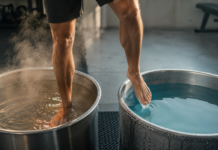
Low-intensity movement of the sore muscle, easy walking, light cycling, or a gentle bodyweight circuit, is one of the more consistently supported strategies. A 2018 systematic review and meta-analysis in Frontiers in Physiology examining post-exercise recovery techniques found that active recovery produced small but statistically significant reductions in perceived soreness, with the effect most noticeable in the first 24 to 48 hours after exercise. The likely mechanism is increased local blood flow, which may help clear metabolic byproducts and deliver nutrients to the repairing tissue faster than complete rest does. The same review found massage produced a larger effect on perceived soreness across the 24 to 96 hour window, and that compression garments and cold water immersion at or below about 15°C offered moderate benefit as well. Importantly, the review also noted that these techniques reduce how sore a person feels without necessarily lowering blood markers of muscle damage such as creatine kinase, a reminder that “less soreness” and “less muscle damage” are not the same outcome.
Gradual training progression (the repeated bout effect)
The single most reliable way to reduce DOMS severity is simply not new: it is progressive, familiar loading. Exercise physiologists call this the repeated bout effect, the well-documented phenomenon in which a single bout of eccentric exercise produces a rapid protective adaptation, so that a second similar bout performed days to weeks later causes substantially less muscle damage and soreness than the first. This is the physiological reason “the second time is never as bad” after starting a new program, returning from a layoff, or trying a new type of training. Applying that principle proactively, by increasing training volume, load, or novelty gradually rather than in large jumps, is consistent with the progression guidance long recommended by the American College of Sports Medicine’s position stand on resistance training for healthy adults, which emphasizes systematic, incremental increases in training stress rather than abrupt changes. In practice, that means easing into a new exercise, movement pattern, or big jump in eccentric volume (like a first downhill trail run of the season) rather than going all-in on day one.
Adequate sleep
Sleep is not a passive backdrop to recovery, it appears to actively influence how sore people feel. A study published in Sleep Medicine and reported under the title “Sleep deprivation increases pain sensitivity following acute muscle soreness” found that inadequate sleep amplified pain sensitivity in muscles that were already sore, meaning a poor night’s sleep does not just leave someone tired, it can make existing soreness feel worse the next day. A related line of research published in the Journal of Sleep Research examined psychophysical changes after total sleep deprivation combined with experimentally induced muscle pain and reported similar sensitization effects. Separately, animal research published in a muscle-injury model found that sleep deprivation slowed the physiological recovery of muscle tissue after high-intensity exercise. Prioritizing consistent, adequate sleep in the days following a hard training session is one of the more evidence-supported, low-cost strategies available, even though it will not eliminate soreness entirely.
Protein intake: a more nuanced picture
Protein is frequently marketed as a soreness cure, and the actual evidence is more mixed than the marketing suggests. A systematic review with meta-analysis published in the European Journal of Clinical Nutrition, covering 29 studies and 763 participants, found that peri-exercise protein supplementation meaningfully preserved muscle strength after damaging exercise and produced large reductions in blood creatine kinase, a marker of muscle fiber damage, at 48 and 72 hours post-exercise. But on the specific question of perceived soreness, the review’s own language is direct: protein supplementation had no meaningful effect on muscle soreness compared with control conditions, with only small, largely negligible differences observed across time points. A separate randomized, placebo-controlled trial in Nutrients that tested protein supplementation around prolonged walking exercise in older adults similarly examined muscle damage, soreness, and fatigue as outcomes. The takeaway is that adequate protein intake supports the underlying muscle repair process, strength recovery, and reduction of damage markers, which matters for how quickly a muscle returns to full function, but it should not be marketed as something that will make soreness itself feel noticeably better in the short term.
What Doesn’t Work, Despite Popular Belief
Static stretching before exercise
Pre-workout static stretching, holding a stretch at a fixed length before lifting or running, remains a gym ritual, but it has not held up as a way to prevent or reduce DOMS. The Frontiers in Physiology systematic review noted above found that stretching provided no meaningful benefit for post-exercise soreness and, in some analyses, was associated with slightly worse soreness in the short term rather than better. This lines up with a broader body of older research questioning the “stretching prevents soreness” assumption; the connective tissue and neural mechanisms that produce DOMS are not meaningfully altered by a few minutes of static stretching beforehand. Dynamic warm-ups that raise tissue temperature and rehearse the movement pattern are a separate matter and are generally considered useful for performance and injury-prevention purposes, but that is a different question from whether they blunt next-day soreness.
“Detox” claims
Products and routines marketed around “flushing toxins” or “detoxing” sore muscles rest on a premise that does not match the physiology described earlier: DOMS is not caused by trapped waste products sitting in the muscle. Lactate, the substance most often blamed, clears from the blood within roughly an hour of exercise ending, well before soreness even begins, and the liver and kidneys handle ordinary metabolic byproducts continuously without help from a supplement, tea, or wrap. No juice cleanse, detox tea, or “toxin-releasing” massage tool has credible evidence of shortening DOMS, because there is no batch of toxins for them to remove. Anything that reduces perceived soreness through these products is more plausibly explained by the same mild circulatory or comfort effects seen with ordinary massage or gentle movement, not detoxification.
What Helps vs. What Doesn’t: A Quick Reference
| Strategy | Verdict | What the evidence shows |
|---|---|---|
| Light active movement / active recovery | Helps | Small but consistent reductions in perceived soreness, most notable in the first 24–48 hours. |
| Massage | Helps | One of the more consistently supported interventions for reducing perceived soreness through 96 hours. |
| Gradual training progression (repeated bout effect) | Helps | Familiar, progressively increased loading produces markedly less soreness on repeat exposure to the same movement. |
| Adequate sleep | Helps | Sleep deprivation measurably increases pain sensitivity in already-sore muscle; consistent sleep supports recovery. |
| Compression garments / cold water immersion | Modest help | Moderate reductions in perceived soreness, with cold water immersion most studied at or below about 15°C. |
| Protein intake | Mixed | Supports strength recovery and lowers muscle-damage blood markers, but shows little to no effect on perceived soreness itself. |
| Static stretching before exercise | Doesn’t help | No meaningful reduction in DOMS; some data suggests slightly worse short-term soreness. |
| “Detox” teas, juices, or wraps | Doesn’t help | Rests on a physiological premise (trapped toxins) that does not match how DOMS actually develops. |
| Regular high-dose NSAIDs for routine soreness | Use with caution | May blunt the inflammatory signaling involved in muscle adaptation when used routinely; discuss regular use with a clinician. |
When Soreness Might Actually Be Something Else: Rhabdomyolysis
Ordinary DOMS, however uncomfortable, is self-limited: it peaks within a few days and resolves within about a week, and it does not come with dark urine, dramatic swelling, or the inability to move a joint. Rhabdomyolysis is a different and far more serious condition in which muscle tissue breaks down rapidly and releases its contents, including a protein called myoglobin, into the bloodstream. In severe cases this can overwhelm the kidneys and lead to acute kidney injury. It is uncommon, but it is a recognized risk after extremely intense, unaccustomed exercise, particularly high-volume eccentric training, exercising in extreme heat, or pushing far beyond one’s conditioning level, especially in group fitness or “boot camp” style settings where participants are encouraged to work to exhaustion.
- Dark, tea- or cola-colored urine. This is one of the most recognizable warning signs, caused by myoglobin being filtered into the urine.
- Muscle pain, cramping, or tenderness that is far more severe than the workout would explain, especially if it is disproportionate, one-sided, or concentrated intensely in one muscle group.
- Severe swelling in the affected limb or muscle, particularly if the area feels unusually tight, hard, or hot.
- Inability to move a joint or limb normally, or profound weakness that goes well beyond ordinary post-workout fatigue.
- Little or no urine output, which can signal that the kidneys are under strain.
- Symptoms that appear or worsen days after exercise rather than following the typical DOMS onset-and-fade pattern; the CDC notes that rhabdomyolysis symptoms can take hours to days to appear after the triggering activity.
When to Seek Medical Care
This article cannot and does not diagnose anyone’s individual symptoms, and the guidance below is general information, not a substitute for a clinical evaluation. That said, the pattern recognized by public health and clinical sources is consistent: if muscle pain is accompanied by dark urine, severe or rapidly worsening swelling, or an inability to move a joint or limb, that combination warrants prompt medical attention rather than a wait-and-see approach. The CDC’s occupational health guidance on rhabdomyolysis is unambiguous on this point, stating that these symptoms should not be ignored and that medical treatment should be sought right away, because rhabdomyolysis is diagnosed with blood testing, specifically measuring creatine kinase levels, and cannot be reliably self-diagnosed from symptoms alone. Dehydration and ordinary muscle strain can produce some overlapping symptoms, which is exactly why a lab test, not a guess, is the appropriate next step. Anyone who is unsure whether their soreness is typical DOMS or something more serious should treat that uncertainty itself as a reason to check in with a healthcare provider or urgent care clinic rather than pushing through another workout.
Putting It Together: A Practical Approach
For most people, most of the time, ordinary post-workout soreness needs very little active management. The realistic, evidence-aligned approach looks like this: ease into new exercises or big jumps in training volume gradually rather than all at once, keep moving lightly in the day or two afterward rather than resting completely, protect sleep in the days following a hard session, and eat enough protein to support the broader repair and strength-recovery process even if it will not make the soreness itself vanish faster. Massage, compression, and cool water immersion are reasonable optional add-ons for anyone who finds them helpful and has access to them, though they are not required for recovery to happen normally. Pre-workout static stretching and detox products can be set aside as far as soreness management goes; they are simply not doing what they are commonly credited with. Most importantly, learning the ordinary DOMS timeline, and the much smaller list of red-flag symptoms that fall outside it, means most people can train with confidence and know exactly when a symptom is worth a phone call rather than a foam roller.
Frequently Asked Questions
Is DOMS a sign that a workout was effective?
Not necessarily. Soreness reflects unfamiliar or unusually high eccentric loading, not the quality of a workout or how much muscle was built. A well-designed, familiar training session can produce excellent results with minimal soreness, especially once the repeated bout effect has taken hold, while a sloppy but novel workout can leave someone very sore without being especially productive.
Should I train again if I’m still sore from the last session?
Light to moderate training is usually fine and can even help, since gentle movement is one of the few things with real evidence for easing soreness. The exception is very heavy, high-intensity training on the same movement pattern while soreness and strength deficits are still significant, which increases injury risk. Training a different muscle group or reducing intensity while sore is a reasonable middle ground.
Does DOMS mean I built more muscle than usual?
Not reliably. Soreness and muscle growth are driven by overlapping but distinct processes, and research has not established a strong direct link between how sore someone feels and how much muscle they ultimately gain. Chasing maximum soreness as a training goal is not well supported and can simply mean repeatedly under-recovering.
How is DOMS different from an actual muscle strain or tear?
DOMS is generally diffuse, affects a whole muscle group evenly, follows the predictable 12-to-72-hour onset-and-peak pattern, and improves steadily after that. A strain or tear more often causes sharp, localized pain at the moment of injury, may include bruising or a visible or palpable defect in the muscle, and does not follow the same gradual-onset, gradual-resolution pattern. Any sharp pain felt during the activity itself, as opposed to soreness that shows up later, deserves separate evaluation.
Are foam rolling and massage guns backed by evidence for DOMS?
Self-massage tools have a smaller but growing body of research behind them, generally consistent with the broader finding that massage-type interventions produce modest reductions in perceived soreness. They appear to be reasonable, low-risk options for anyone who finds them comfortable, though they should be viewed as a comfort measure rather than a way to prevent soreness altogether.
Can I prevent DOMS completely by warming up properly?
Not completely. A good dynamic warm-up supports performance and may modestly reduce injury risk, but it does not reliably prevent the muscle-level and neural sensitization processes behind DOMS, especially after genuinely unfamiliar or high-volume eccentric work. Gradual progression over multiple sessions remains the most effective way to blunt future soreness, rather than anything done in the ten minutes before a single workout.
References
- Fukushima, N. et al. “Delayed onset muscle soreness: Involvement of neurotrophic factors.” The Journal of Physiological Sciences. Available via PMC: https://pmc.ncbi.nlm.nih.gov/articles/PMC10716961/
- Dupuy, O. et al. “An Evidence-Based Approach for Choosing Post-exercise Recovery Techniques to Reduce Markers of Muscle Damage, Soreness, Fatigue, and Inflammation: A Systematic Review With Meta-Analysis.” Frontiers in Physiology, 2018. https://www.frontiersin.org/articles/10.3389/fphys.2018.00403/full
- Davies, R.W. et al. “The impact of dietary protein supplementation on recovery from resistance exercise-induced muscle damage: A systematic review with meta-analysis.” European Journal of Clinical Nutrition. https://www.nature.com/articles/s41430-022-01250-y
- Randomized double-blind placebo-controlled trial on protein supplementation and exercise-induced muscle damage in older adults following prolonged walking exercise. Nutrients, 12(6):1806. https://www.mdpi.com/2072-6643/12/6/1806
- “Sleep deprivation increases pain sensitivity following acute muscle soreness.” Sleep Medicine. https://pubmed.ncbi.nlm.nih.gov/37423022/
- Hertel, A. et al. “Psychophysical changes after total sleep deprivation and experimental muscle pain.” Journal of Sleep Research, 2025. https://onlinelibrary.wiley.com/doi/10.1111/jsr.14329
- “Delayed Onset Muscle Soreness.” Physiopedia. https://www.physio-pedia.com/Delayed_Onset_Muscle_Soreness
- American College of Sports Medicine. “Progression Models in Resistance Training for Healthy Adults” (position stand). https://tourniquets.org/wp-content/uploads/PDFs/ACSM-Progression-models-in-resistance-training-for-healthy-adults-2009.pdf
- Centers for Disease Control and Prevention, NIOSH. “Signs and Symptoms of Rhabdomyolysis.” https://www.cdc.gov/niosh/rhabdo/signs-symptoms/index.html