
























By Mateo Rivera
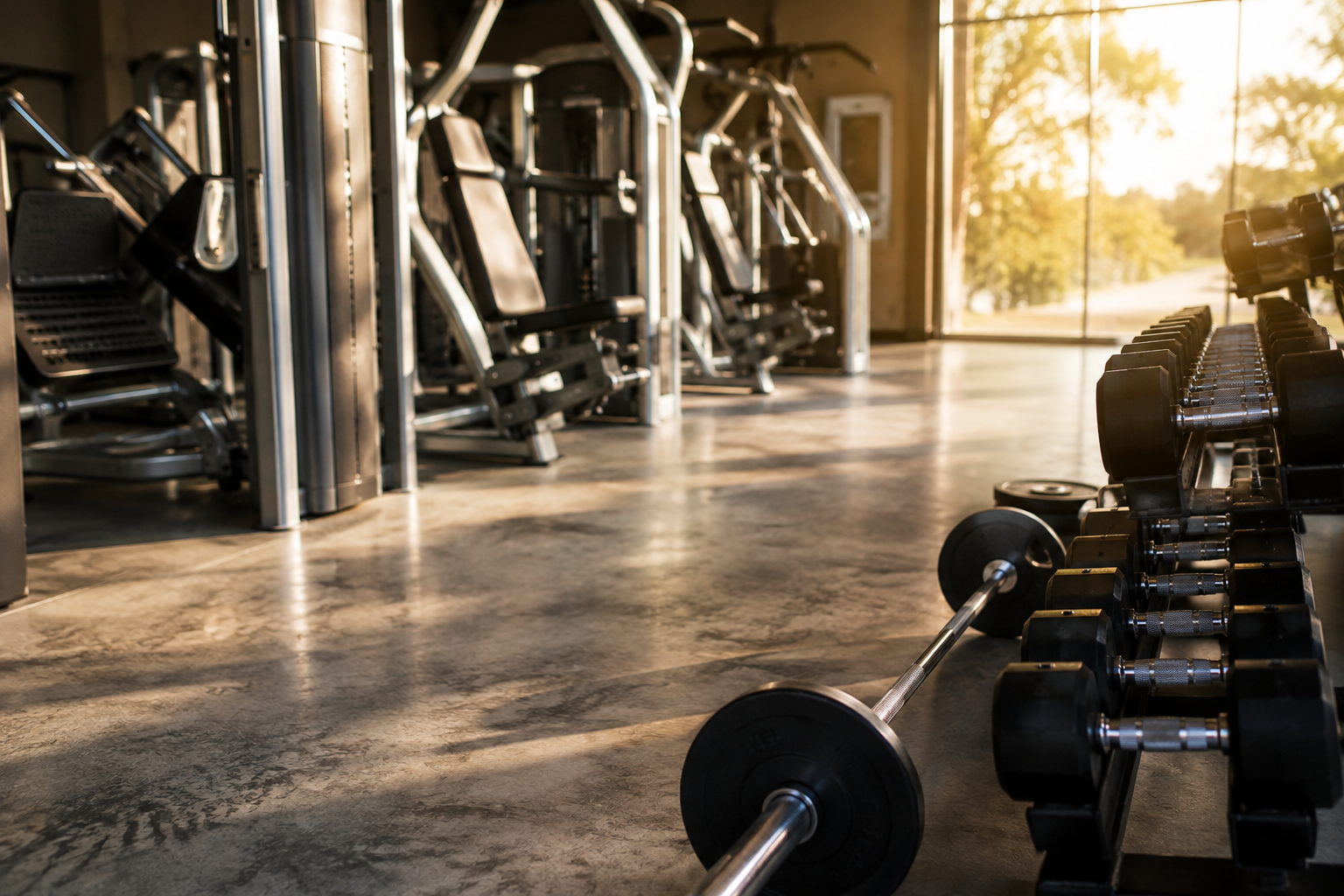
Walk into almost any gym and you’ll find the same quiet standoff: a row of chrome-and-vinyl machines lined up along one wall, a forest of dumbbells and barbells filling the other. New lifters often freeze at the invisible border between them, unsure which side actually builds the body they want. Veteran lifters have opinions too, usually strong ones, and usually inherited rather than tested.
The honest answer is less dramatic than either camp wants to admit. Machines and free weights are tools built for overlapping but distinct jobs, and the research on hypertrophy and strength backs that up more than it backs up either side’s bragging rights. This guide walks through what the evidence actually shows, where each tool pulls ahead, and how to combine them so your training time counts for something.
What “Machines” and “Free Weights” Actually Mean
Before comparing anything, it helps to define the categories clearly, because the line is blurrier than it looks.
Free weights include barbells, dumbbells, kettlebells, and anything else that moves independently of a fixed track. The lifter, not the equipment, controls the bar path, balance, and stabilization at every point in the range of motion.
Machines include selectorized equipment (leg press, chest press, lat pulldown), plate-loaded machines (hack squat, pendulum squat), and cable stacks. Most guide the load along a fixed or semi-fixed path and often support part of your body weight or trunk position, reducing the balance and coordination demand.
Cables sit in an interesting middle zone. They resist you through a mechanical pulley system like a machine, but the range of motion and stabilization demand can be closer to free weights depending on the exercise. For simplicity, this guide groups cable work with machines since the resistance path is externally guided.
“The exercise that builds the most muscle is the one you can perform consistently, with good form, and progressively overload over months and years. Equipment choice is a distant second consideration next to that.”
What the Research Actually Says About Muscle Growth
This is the part most gym debates skip entirely, so it’s worth sitting with the actual data rather than the folklore.
A 2023 meta-analysis by Haugen and colleagues pooled 13 studies comparing free-weight and machine-based resistance training, mixing trained and untrained participants. The finding that surprises most lifters: no significant difference emerged between the two modalities for muscle growth (fat-free mass gains were comparable across groups). This challenges the long-standing assumption that free weights build more muscle because they recruit more stabilizer and synergist muscles.
A separate, smaller study using ultrasound imaging tracked eight untrained women doing either machine leg press or free-weight lunges three times a week for nine weeks. Muscle thickness in the quadriceps (measured at the rectus femoris and vastus lateralis) increased comparably in both groups. Neither method pulled ahead for hypertrophy in that sample.
More recent work published on regional hypertrophy of the knee extensors using a randomized within-subject design found broadly comparable growth across the muscle when comparing machine and free-weight training approaches, reinforcing the pattern from the earlier meta-analysis rather than overturning it.
None of this means equipment is irrelevant. It means the mechanism that drives growth (mechanical tension applied across a full range of motion, taken close enough to fatigue, repeated consistently) doesn’t particularly care whether a cam or your own stabilizing muscles are managing the bar path. What matters more is whether you’re actually progressing the load or reps over time.
Where Strength Gains Diverge: Specificity Matters
Muscle size and strength are related but not identical. Strength is partly a skill, and skills are specific to the movement pattern you practice.
The same 2023 meta-analysis found a clear pattern here: groups training with free weights showed significantly greater strength gains on free-weight lifts (like a barbell squat or bench press), while machine-trained groups showed the same pattern on machine-based tests, though that machine-side effect didn’t always reach statistical significance. In tests of general or isometric strength that weren’t tied to a specific implement, the two groups performed similarly.
In plain terms: if your goal is to get better at squatting a barbell, you need to squat a barbell. If your goal is a stronger leg press number, machine leg press training gets you there faster. Strength transfers best to the exact pattern you train, a principle sports scientists call specificity of training.
One additional wrinkle: free weights showed a modest edge for improving countermovement jump height, a common marker of explosive power, in the sensitivity analysis from the same review. That tracks with what coaches have long suspected, since jumping is itself an unstable, whole-body, free-moving pattern that rewards the coordination free weights demand.
Quick Takeaway Box
- Muscle growth: roughly equivalent between machines and free weights when effort and progression match.
- Strength gains: specific to what you practice; free weights build free-weight strength, machines build machine strength.
- Explosive power: slight edge to free weights, likely from the coordination and balance demands.
- Safety and learning curve: generally easier to start on machines; free weights take longer to groove properly.
Head-to-Head: A Practical Comparison Table
The Case for Machines
Machines get an unfair reputation as the training-wheels option, but for several situations they’re genuinely the better tool, not just the easier one.
Lower Technical Demand
A leg press machine removes the need to simultaneously manage a bar path, foot position, spinal bracing, and balance the way a back squat does. For someone new to resistance training, that means less time troubleshooting form and more time actually training the target muscle near fatigue, which is where growth signals come from.
Precise, Consistent Loading
Weight stacks and pin selections make it simple to repeat the exact same load week over week, which matters when you’re trying to track progress methodically. There’s less room for a slightly-off setup to change the effective resistance the way an uneven barbell load or a shifted dumbbell grip might.
Useful for Isolation and Injury Management
Fixed-path equipment lets you target a single muscle group with a supported trunk and joint position, which is part of why physical therapists and rehab specialists lean on machines during recovery. If a shoulder or lower back issue makes free-weight loading risky, a supported machine variation can keep training productive without adding load through vulnerable positions. Always follow guidance from a physical therapist or physician when training around an injury.
Fatigue-Resistant Safety Margin
Near the end of a hard set, form on a barbell or dumbbell lift can drift in ways that raise injury risk, particularly on unsupervised sets taken close to failure. A machine’s fixed path limits how far that drift can go, which is one reason many coaches program machine work for the last, most fatigued sets of a session.
The Case for Free Weights
Free weights earn their reputation too, and for good reason once you look past the gym-bro mythology around them.
Functional Carryover
Picking a suitcase off the floor, catching your balance on uneven ground, or lifting a toddler onto your hip all demand the kind of multi-joint stabilization that free weights train directly. Machines rarely replicate that demand because they remove exactly the balance component that everyday movement requires.
More Muscle Recruited Per Exercise
Because there’s no external structure holding you steady, a barbell squat or dumbbell row recruits a wider net of stabilizer and synergist muscles than the machine equivalent, even when the target muscle sees comparable growth. That broader recruitment is part of why compound free-weight lifts feel more demanding for the same working muscle.
Skill and Power Development
Explosive, athletic movement (jumping, sprinting, changing direction) depends on coordinating multiple joints and muscle groups under load, which is closer to what free weights ask of you than what a guided machine path does. That likely explains the modest edge free weights showed for countermovement jump improvements in the research above.
Equipment Flexibility and Cost
A pair of adjustable dumbbells and a barbell with plates can replace an entire room of machines for a fraction of the cost and space. For home gyms or minimalist setups, free weights simply do more with less.
Timeline: How a Beginner Might Progress From Machines to Free Weights
- Weeks 1-4: Learn machine versions of the main patterns (leg press, chest press, lat pulldown, seated row) to build a base of strength and comfort with effort levels.
- Weeks 5-8: Introduce light dumbbell versions of the same patterns (goblet squat, dumbbell bench press, single-arm row) at low loads, prioritizing form over weight.
- Weeks 9-14: Add barbell basics (goblet squat progressing to barbell squat, deadlift pattern with kettlebell or trap bar) under supervision or with instructional video review.
- Ongoing: Blend both. Use free weights for your primary compound lifts and machines for isolation work, higher-fatigue accessory sets, or when training around minor aches.
Safety Considerations Worth Taking Seriously
Neither tool is inherently dangerous, but each carries specific risks worth planning around.
With free weights, the biggest risk factors are unfamiliar loading, fatigue-driven form breakdown, and training alone near failure without a spotter on lifts like the bench press. Starting with lighter loads, filming your sets for form checks, and using safety mechanisms like squat rack pins or safety bars reduces most of that risk.
With machines, the risks tend to be more about improper seat or lever adjustment (which can put joints in awkward positions), moving too quickly through a fixed range of motion, and a false sense of security that leads to skipping a proper warm-up. Machines aren’t automatically injury-proof simply because they feel more controlled.
Anyone with an existing joint issue, recent surgery, cardiovascular condition, or chronic pain should get individualized guidance from a physician or physical therapist before starting a new strength program, regardless of which equipment they plan to use. General wellness advice can’t substitute for care tailored to a specific medical history.
On the population level, both the CDC and the NHS recommend that adults do muscle-strengthening activities that work all major muscle groups at least two days a week, alongside aerobic activity guidelines. Neither health authority prescribes machines over free weights or the reverse. The recommendation is about frequency and muscle group coverage, not equipment choice, which underscores how much of this debate is really about preference and context rather than a right answer.
Building a Program That Uses Both
Most well-designed strength programs, and most experienced coaches, don’t pick a side. They sequence machines and free weights based on what each does best within a session.
Sample Weekly Split (3 Days)
Day 1 — Lower Body
Barbell squat or trap bar deadlift (free weight, primary lift) → Leg press (machine, volume accessory) → Leg curl and leg extension (machine, isolation) → Standing calf raise (free weight or machine)
Day 2 — Upper Body Push/Pull
Dumbbell or barbell bench press (free weight, primary lift) → Lat pulldown (machine) → Seated cable row (machine) → Dumbbell shoulder press (free weight) → Cable tricep pushdown and bicep curl (machine/cable, isolation)
Day 3 — Full Body / Accessory
Kettlebell or dumbbell deadlift variation (free weight) → Chest-supported machine row → Hip thrust or glute bridge (free weight or machine) → Core and stability work
This kind of split leans on free weights for the compound lifts where coordination and functional carryover matter most, then uses machines to accumulate extra volume on target muscles without adding the fatigue cost of stabilizing an unsupported load. It’s a common structure in strength and conditioning programming precisely because it plays to each tool’s strength rather than forcing an either-or choice.
Who Should Lean Toward Which Tool
Lean Toward Machines If You…
- Are brand new to resistance training and want to build a base with lower technical risk
- Are returning from injury or working with a physical therapist on a rehab plan
- Train alone and often push sets close to fatigue without a spotter
- Want to isolate a specific muscle for aesthetic or physique goals
- Have limited time and want efficient, low-setup sessions
Lean Toward Free Weights If You…
- Want strength and coordination that carries over to daily activities or sport
- Are training for a specific barbell-based goal (powerlifting, general strength benchmarks)
- Have access to limited equipment or prefer training at home
- Want to develop balance, core stability, and total-body coordination alongside strength
- Have already built comfortable technique and want more room to progress loads finely
Common Mistakes on Both Sides
On the free-weight side, the most common mistake is ego lifting: adding weight before technique is solid, which compounds risk without adding real strength. Close behind that is skipping a proper warm-up set or two before jumping straight to working weight.
On the machine side, the common mistake is treating every machine as interchangeable rather than adjusting seat height, lever arm, and range of motion to fit your body. A poorly adjusted leg press or lat pulldown can place unnecessary stress on the knees or shoulders even though the equipment feels stable. The other frequent error is moving through the machine’s range of motion too fast, using momentum instead of controlled tension, which reduces the actual training stimulus even though the weight stack says otherwise.
Across both, the mistake that matters most is inconsistency. A program with mediocre exercise selection performed for a year beats a perfect program abandoned after three weeks. Pick tools you’ll actually keep showing up to use.
A related trap is chasing variety for its own sake. Some lifters swap exercises every session because a new machine or a new dumbbell movement feels productive, but muscles respond to repeated exposure over weeks, not to novelty. Sticking with a core set of machine and free-weight exercises for six to eight weeks, then adjusting sets, reps, or load, tends to produce steadier progress than constantly reinventing the workout. Tracking your numbers, even in a basic notes app, makes it far easier to tell whether you’re actually progressing or just staying busy in the gym.
Frequently Asked Questions
Do machines build less muscle than free weights?
Not according to the current evidence. A 2023 meta-analysis of 13 studies and smaller trials using ultrasound imaging both found comparable muscle growth between machine and free-weight training when volume and effort were similar. The muscle doesn’t know or care what shape the resistance came in; it responds to tension, range of motion, and how close to fatigue you train.
Are free weights more dangerous than machines?
Free weights generally carry a higher technical demand, which raises the room for form to break down under fatigue, especially without supervision or spotting. Machines have their own risks, mainly from poor adjustment or moving too fast through the range of motion. Neither is inherently unsafe when used with reasonable loads, proper setup, and attention to form.
Should complete beginners start with machines?
Starting with machines is a reasonable, low-risk way to build initial strength and get comfortable with training intensity before adding the coordination demands of free weights. It’s not required, though. A beginner who receives good coaching on free-weight technique from day one can progress safely too. The key is starting with manageable loads and prioritizing form regardless of equipment.
Can I get strong using only machines?
You can build meaningful strength and muscle with machines alone, particularly general and isometric strength. But if your specific goal is a strong barbell squat, bench press, or deadlift number, you need to practice those exact lifts, since strength transfers most directly to the movement pattern you train.
What’s the best split between machines and free weights in a program?
There’s no single right ratio, but a common and effective approach uses free weights for primary compound lifts early in a session (when you’re freshest and coordination matters most) and machines for accessory or isolation work later in the session, when fatigue makes a guided path safer and more efficient.
Do I need to choose one and stick with it?
No. Most well-designed programs use both, and switching between them periodically can also help you avoid plateaus and keep training engaging. The research doesn’t support treating this as a permanent, exclusive choice.
The Bottom Line
Machines and free weights aren’t rivals so much as two different tools solving overlapping problems. The evidence on muscle growth says they’re closer to equal than gym folklore suggests; the evidence on strength says specificity rules, so train the way you want to get strong. Everyday lifters, not just competitive athletes, benefit from using both: machines for controlled volume and isolation, free weights for coordination and carryover to real life. Pick based on your goals, your access to equipment, and honestly, what you’ll actually do consistently for the next year. That last part decides more outcomes than any equipment debate ever will.
References
- Haugen, M.E., et al. (2023). Meta-analysis comparing free-weight and machine-based resistance training on muscle hypertrophy and strength outcomes, as summarized in Stronger by Science: “Are free weights better than machines for strength and size?”
- T3: “Machines vs free weights: is one better for muscle growth? A new study confirms” — summary of ultrasound-based hypertrophy study published in the Journal of Bodywork and Movement Therapies.
- ScienceDirect: “Comparable regional hypertrophy of the knee extensor muscles in response to resistance training with machines versus free weights: a randomized within-subject approach”
- CDC: Physical Activity Guidelines for Adults
- NHS: Strength Exercises
- NHS: Physical Activity Guidelines for Adults Aged 19 to 64