

















By Charlotte Evans
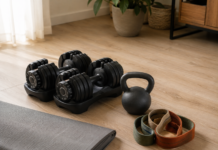
Every training plan eventually runs into the same marketing aisle: cold plunge tubs, percussive massage guns, compression boots, infrared saunas, foam rollers that vibrate. Each promises to help you bounce back faster. Some of them genuinely help a little. None of them come close to what a well-timed, sufficiently long night of sleep does for the body of someone who trains regularly. That is not a motivational slogan; it is what the research on recovery interventions keeps showing when you line the options up side by side. Sleep is the intervention with the broadest physiological reach, the deepest evidence base, and the largest downside when it is skipped.
This piece makes that case directly, then gets specific about what “using sleep deliberately” actually looks like for someone who lifts, runs, rides, or plays a sport several times a week. It is not a generic sleep-hygiene checklist. It is built around the physiology of a body that is trying to repair muscle tissue, restock glycogen, regulate the hormones that drive adaptation, and consolidate motor learning, all on a schedule that also has to include the rest of a normal life.
Recovery Tools Ranked by Evidence Strength
A rough ordering of common post-workout recovery tools by how much high-quality evidence supports a meaningful effect on actual recovery (not just how good a tool feels). Sleep sits alone at the top because it affects every recovery pathway at once, rather than one narrow symptom.
| Rank | Tool | What it mainly affects | Evidence strength |
|---|---|---|---|
| 1 | Sleep (duration + quality) | Muscle repair, hormone regulation, glycogen restoration, immune function, reaction time, injury risk, mood | Strong, whole-system |
| 2 | Nutrition timing & protein intake | Muscle protein synthesis, glycogen resynthesis | Strong, targeted |
| 3 | Cold water immersion | Perceived soreness, short-term inflammation markers | Moderate for soreness, weak for adaptation; may blunt hypertrophy signaling if used right after strength work |
| 4 | Foam rolling / self-myofascial release | Perceived muscle stiffness and soreness | Moderate, short-lived |
| 5 | Percussive massage guns | Local muscle tone, subjective soreness | Modest; less effective than foam rolling in head-to-head comparisons for soreness relief |
| 6 | Compression garments | Perceived soreness, swelling | Weak to moderate, inconsistent across studies |
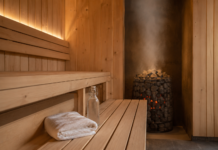
| 7 | Sauna / heat exposure | Relaxation, circulation, some cardiovascular adaptation over time | Weak for acute recovery, more relevant for long-term cardiovascular training effects |
This site’s other Recovery Science pieces cover cold plunges, sauna protocols, compression gear, and massage guns individually in more depth. This table exists to put those tools in proportion, not to replace that detail.
Why Sleep Outperforms Every Other Recovery Tool
The honest answer to “why is sleep the highest-return recovery tool” is that sleep is not one intervention competing with cold plunges and massage guns for the same narrow job. It is the biological process during which the jobs those tools claim to help with actually get done. A review of sleep and athletic performance by Bird (2013) in the Strength & Conditioning Journal lays out the basic case: sleep is when growth hormone secretion peaks, when the nervous system consolidates motor skills learned during training, and when the body performs the bulk of tissue repair that training damage requires. Cold water immersion, by contrast, mostly acts on how sore a muscle feels in the following 24 to 72 hours, and a systematic review by Gálvez-Rodríguez and colleagues (2024) on cold water immersion and post-exertional recovery found effects concentrated in short-term markers like heart rate variability and perceived soreness rather than in the underlying repair process itself.
Charest and Grandner’s 2022 review in Sleep Medicine Clinics widens the lens further. Their synthesis of the sleep and performance literature ties short or disrupted sleep to slower reaction time, reduced accuracy in skill-based tasks, impaired glucose regulation, and altered secretion of cortisol and testosterone, the two hormones most directly tied to how well the body balances training stress against training adaptation. None of the compression, percussion, or cold-exposure tools on the market touch that hormonal axis in any meaningful way. They were never designed to.
“Sleep loss does not just make you tired. It changes the hormonal and neurological environment your training results depend on.”
The Physiological Reason Sleep Wins
Three things happen during sleep that no external recovery tool can substitute for.
Hormonal regulation. The largest daily pulse of growth hormone release happens shortly after sleep onset, concentrated in slow-wave sleep. Testosterone, similarly, follows a sleep-dependent rhythm; truncated sleep compresses the window in which these hormones are produced. Edwards and Waterhouse, writing in the Encyclopedia of Sleep (2013), describe how sleep loss disturbs this endocrine rhythm in ways that directly affect an athlete’s capacity to recover between sessions.
Tissue repair and glycogen restocking. Muscle protein synthesis and glycogen resynthesis both continue during sleep, supported by the relatively low metabolic demand and stable hormonal state of that period. Interrupt or shorten sleep and you interrupt the window during which those processes are allowed to run uncontested by daytime activity, digestion, and stress hormones.
Central nervous system recovery. Training is not just a muscular stressor, it is a neurological one. Erlacher and Ehrlenspiel’s chapter on sleep and athletic performance (2017) discusses how sleep supports the consolidation of motor patterns practiced during training and restores the central nervous system’s capacity for the reaction time, coordination, and decision-making that both sport performance and injury avoidance depend on.
Put those three together and you have a tool that touches the muscular, hormonal, metabolic, and neurological systems simultaneously. A percussion massage gun touches local muscle tone for a few minutes. That is the entire size difference in a sentence.
What the Comparison Actually Looks Like in Practice
None of this means cold plunges, compression boots, or massage guns are useless. A 2025 comparison of foam rolling and percussive massage for delayed-onset muscle soreness (DOMS) published in the Journal of Functional Morphology and Kinesiology found foam rolling meaningfully reduced muscle tone and stiffness, while percussive massage performed less well for pain relief than passive rest alone in some comparisons. That is a useful, specific, modest finding. It is also a finding about how sore a muscle feels the next day, not about whether the muscle actually repaired and adapted faster. Sleep is one of the few interventions with evidence connecting it to the underlying repair process itself, not just the sensation layered on top of it.
The practical takeaway for an exerciser with limited time and attention: spend the bulk of your recovery effort protecting sleep duration and quality first. Layer in foam rolling, a sauna session, or a cold plunge only after that foundation is secure, and treat them as comfort and soreness-management tools rather than as substitutes for rest.
How Much Sleep Do Exercisers Actually Need
The National Sleep Foundation’s consensus panel, reported by Hirshkowitz and colleagues (2015) in Sleep Health, recommends 7 to 9 hours of sleep per night for most adults aged 18 to 64, with a broader acceptable range of 6 to 10 hours depending on individual variation. That baseline recommendation was not written specifically for people who train hard, and there is an important nuance for exercisers: training itself adds a recovery demand on top of the demand that ordinary daily life already places on the sleep system.
In practice, this means people training at moderate-to-high volume, several sessions a week of resistance training, endurance work, or competitive sport, are better served aiming for the upper half of that 7-to-9-hour range, and treating anything under 7 hours on a training day as a deficit that has to be paid back, not shrugged off. A ten-year systematic review of the National Sleep Foundation’s duration guidance by Dzierzewski and colleagues (2026) reaffirmed that the original age-based ranges have held up well over a decade of subsequent research, which is a useful reminder that this is not a fad number, it reflects a large and repeatedly re-checked evidence base.
Sleep debt does not average out cleanly. Sleeping 5 hours on Tuesday and 10 hours on Saturday is not equivalent to two nights of 7.5 hours for someone whose Wednesday and Thursday training sessions depend on the recovery that Tuesday night was supposed to provide. If your schedule makes consistent 7 to 9 hour nights genuinely impossible on certain days, the next best strategy is a short, well-timed nap (20 to 30 minutes, ideally early afternoon) rather than trying to bank hours in advance or repay them all at once days later.
Sleep Architecture and Why Deep Sleep Matters for Recovery
Not all sleep does the same job. A full night moves through repeating cycles of light sleep, slow-wave sleep (also called deep sleep), and REM sleep, each roughly 90 minutes long. Slow-wave sleep is concentrated in the first half of the night and is the stage most closely tied to physical restoration: this is when growth hormone release peaks and when the body does the largest share of its tissue repair work. REM sleep, more concentrated in the second half of the night, is tied more closely to memory consolidation, motor learning, and emotional regulation, all of which matter for skill acquisition in sport and for managing the mental fatigue that accumulates across a hard training block.
This is the physiological reason that cutting a night short from the back end, going to bed on time but waking up early, has a different cost than cutting it short from the front end. Losing the last two hours of a night disproportionately cuts into REM sleep, while a late bedtime after an evening workout can compress the slow-wave sleep concentrated earlier in the night. Neither is free, but understanding which stage you are sacrificing helps explain why two nights of “6 hours of sleep” can leave you feeling differently depending on when the shortened hours occurred.
Key Term: Sleep Latency
Sleep latency is the amount of time it takes to fall asleep after getting into bed with the intention of sleeping. A latency of roughly 10 to 20 minutes is considered typical and healthy. Consistently falling asleep in under 5 minutes can be a sign of significant sleep debt, while consistently taking more than 30 minutes can point to poor pre-bed wind-down habits, training too close to bedtime, or an overstimulated nervous system that has not been given a chance to downshift.
Sleep Hygiene Fundamentals for People Who Train
Sleep hygiene refers to the set of daily habits and environmental conditions that make consistent, good-quality sleep more likely. The fundamentals are the same for everyone, but a few of them carry extra weight for people whose bodies are also managing training stress.
- Keep a fixed wake time, seven days a week. Your wake time anchors your entire sleep rhythm more strongly than your bedtime does. A consistent wake time, even on weekends, keeps your body’s internal clock stable, which is especially useful when training schedules vary day to day.
- Get outside light exposure early in the day. Morning light exposure helps set the circadian rhythm that governs when your body naturally wants to release melatonin at night. Athletes and exercisers who train outdoors in the morning get this benefit built into their routine already.
- Limit caffeine after early afternoon. Caffeine has a half-life of roughly 5 to 6 hours in most adults, so a mid-afternoon pre-workout drink can still be measurably active in your system at bedtime, extending sleep latency even if you do not consciously feel “wired.”
- Cap naps at 20 to 30 minutes, and keep them before mid-afternoon. Longer or later naps can reduce the drive to fall asleep at night, called sleep pressure, which is exactly what you need built up by bedtime.
- Reserve the bed for sleep. Working, scrolling, or eating in bed weakens the mental association between “being in bed” and “being asleep,” which can lengthen sleep latency over time.
- If you’re not asleep after roughly 20 minutes, get up. Lying in bed frustrated trains your brain to associate the bed with wakefulness. Get up, do something calm and low-light, and return when you feel sleepy again.
These fundamentals come from the Sleep Foundation’s general sleep hygiene guidance, which recommends budgeting roughly 30 minutes to wind down before bed and treating a 30-to-60-minute device-free buffer before sleep as a baseline habit rather than an occasional indulgence.
The Post-Workout Wind-Down Routine
Training, especially in the evening, leaves the body in a physiological state that is the opposite of what falling asleep requires: elevated core temperature, elevated heart rate, elevated cortisol and adrenaline, and a nervous system still running in a sympathetic, “go” mode. A wind-down routine tailored to that state needs to do more work than a generic bedtime routine built for someone who spent the evening on the couch. The timeline below is built around a workout that ends 2 to 3 hours before your target bedtime, which is the buffer most sleep and exercise reviews point to as sufficient for the nervous system and core temperature to settle.
Wind-Down Timeline for a Post-Workout Night
Immediately after training (0 min): Rehydrate and get a protein-containing snack or meal in within the first hour or two. This is about supporting the recovery processes that will run overnight, not about the meal itself affecting sleep directly.
60 to 90 minutes post-workout: Take a lukewarm to cool shower. This helps bring core body temperature down from its post-exercise elevation, which supports the natural temperature drop your body needs to initiate sleep. Avoid very hot showers or hot tubs in this window, they push core temperature the wrong direction right before you need it falling.
2 hours before bed: Finish eating your last substantial meal. Digestion raises metabolic activity and core temperature, working against the cool-down your body is trying to accomplish.
60 minutes before bed: Start dimming household lights and stop screen use, or switch devices to night mode with reduced brightness. This is the point where light exposure has the most influence on melatonin release.
30 minutes before bed: Do something calm and low-stimulation: light stretching, reading, journaling about the training day, or slow paced breathing. This is also a good window for a brief mental download of tomorrow’s plan, so training logistics don’t surface as intrusive thoughts once you’re lying down.
Lights out: Bedroom dark, cool, and quiet. If sleep hasn’t come within about 20 minutes, get up briefly rather than lying there frustrated.
The core idea behind this sequence is temperature. Core body temperature needs to drop by roughly 1 to 2 degrees Fahrenheit to initiate sleep onset, and a hard training session leaves you starting from an elevated baseline. Everything in the timeline above, the cool shower, the earlier cutoff for food, the dim lighting, is aimed at making that temperature drop happen on schedule instead of being delayed by an hour or two of residual post-workout heat and stimulation.
Optimizing Your Sleep Environment for Recovery
Environment does a surprising amount of the work that people otherwise try to solve with supplements or gadgets. Three variables matter most: temperature, light, and timing relative to training.
Temperature
The Sleep Foundation’s guidance points to roughly 65 degrees Fahrenheit as a comfortable bedroom temperature for most people, cool enough to support the natural core-temperature drop that initiates and maintains sleep. For someone who trains in the evening and is starting from an elevated body temperature, a slightly cooler room than that general recommendation, paired with breathable bedding, can help close the gap faster.
Light
Light is the single strongest external signal your circadian rhythm responds to. Bright or blue-toned light in the hour before bed suppresses melatonin release and delays sleep onset. Blackout curtains or an eye mask address the other half of the equation, keeping early morning light or streetlight from cutting sleep short or fragmenting it before your full sleep need has been met.
Timing Relative to Evening Training
The general guidance to leave 2 to 3 hours between the end of a workout and bedtime exists because that window covers both the physiological cool-down period and the time it takes cortisol and adrenaline to return toward baseline. High-intensity interval work, heavy lifting sessions taken close to failure, and competitive team practices tend to need the longer end of that window; a moderate-intensity steady session or a mobility-focused workout may need less. If your only available training slot is genuinely close to bedtime, the wind-down timeline above becomes more important, not less, since you are compressing physiological processes that would otherwise have more room to unfold naturally.
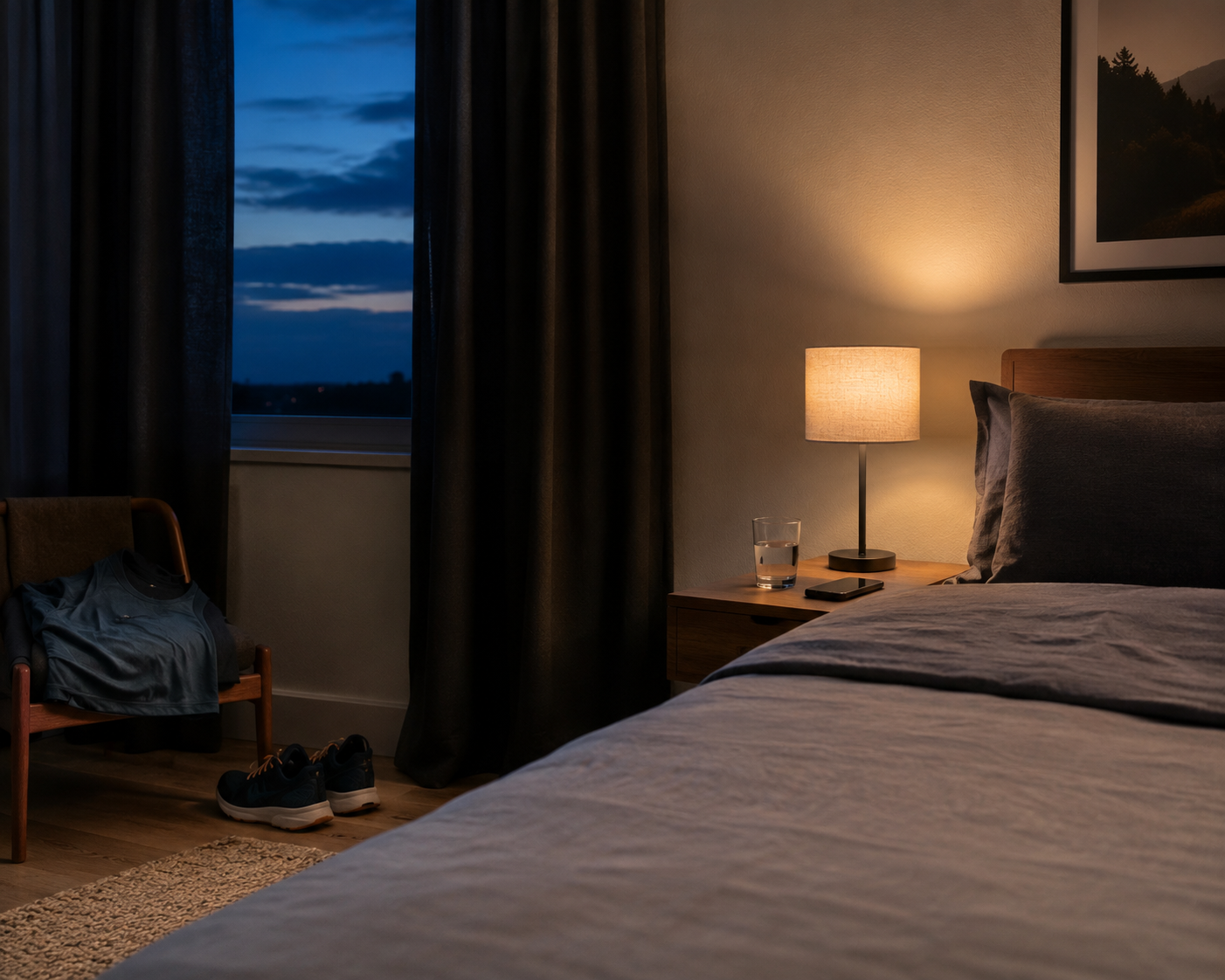
Sleep Environment Checklist
- Bedroom temperature around 65°F, cooler if training ends within 2 hours of bedtime
- Blackout curtains or an eye mask to block outside light
- Devices out of arm’s reach, or on night mode with reduced brightness, at least 60 minutes before sleep
- White noise machine or earplugs if household or street noise is a factor
- Comfortable, breathable bedding suited to your typical post-workout body temperature
- Water within reach, especially after an evening training session, without needing to get up
- No training gear, phones, or laptops stored or charged directly on the nightstand where they invite late checking
- A consistent, fixed wake-up alarm, even on rest days
“A cold plunge can take five minutes out of your evening. A poorly timed one can also take an hour off your sleep if it’s used right before bed and leaves you too alert to wind down.”
Putting It Together: A Deliberate, Not Passive, Approach to Sleep
Treating sleep as the centerpiece of a recovery plan means giving it the same deliberate structure that a training program gets. That means protecting a consistent wake time the way you would protect a scheduled training session, building a wind-down routine specific to how training leaves your body (elevated temperature, elevated stress hormones, an alert nervous system), and controlling the handful of environmental variables, temperature, light, timing, that are proven to matter. It also means being honest about trade-offs: an extra 30 minutes of scrolling after a late workout is not a neutral choice, it is very often a direct swap against the slow-wave sleep your muscles are waiting on.
None of this requires abandoning cold plunges, massage guns, or compression gear if you enjoy them or find them useful for managing soreness. It requires putting them in their correct place in the hierarchy: comfort and symptom-management tools that sit well below the one recovery intervention with evidence reaching into muscle repair, hormone regulation, glycogen restocking, and nervous system recovery all at once.
Frequently Asked Questions
How many hours of sleep do I need if I train hard several times a week?
Most adults need 7 to 9 hours per night according to National Sleep Foundation guidance, and people training at moderate-to-high volume are generally better served aiming for the upper part of that range rather than the lower part, since training adds its own recovery demand on top of everyday sleep needs.
Is it really true that sleep beats cold plunges and massage guns for recovery?
For the underlying repair process, yes. Cold water immersion and percussive massage have moderate evidence for reducing perceived soreness in the short term, but sleep is one of the few interventions with evidence tied to the actual physiological repair, hormone regulation, and glycogen restocking that recovery depends on. They are not solving the same problem at the same scale.
What is the ideal bedroom temperature for sleep after a workout?
Around 65 degrees Fahrenheit is a commonly cited comfortable baseline. If your workout ends within roughly two hours of bedtime, a slightly cooler room can help offset the elevated core temperature training leaves you with.
How close to bedtime can I train and still sleep well?
A buffer of 2 to 3 hours between the end of a workout and bedtime gives your core temperature and stress hormones time to settle. Higher-intensity sessions generally need the longer end of that window; lighter sessions may need less.
What is sleep latency, and why does it matter for exercisers?
Sleep latency is how long it takes to fall asleep after getting into bed. A typical, healthy range is roughly 10 to 20 minutes. For exercisers, unusually long sleep latency on training nights often points to a workout, meal, or screen use scheduled too close to bedtime, rather than a general sleep disorder.
Can I make up for short sleep on training days by sleeping in on weekends?
Not fully. Sleep debt does not average out cleanly across the week, and irregular sleep timing itself can disrupt your circadian rhythm. A short, early-afternoon nap on a short-sleep day is a better strategy than trying to bank or repay hours in large, irregular chunks.
References
- Bird SP. Sleep, Recovery, and Athletic Performance: A Brief Review and Recommendations. Strength & Conditioning Journal. 2013. DOI: 10.1519/ssc.0b013e3182a62e2f
- Charest J, Grandner MA. Sleep and Athletic Performance. Sleep Medicine Clinics. 2022. DOI: 10.1016/j.jsmc.2022.03.006
- Erlacher D, Ehrlenspiel F. Sleep, Dreams, and Athletic Performance. In: Sport, Recovery, and Performance. 2017. DOI: 10.4324/9781315268149-12
- Edwards BJ, Waterhouse J. Athletic Performance; Effects of Sleep Loss. Encyclopedia of Sleep. 2013. DOI: 10.1016/b978-0-12-378610-4.00071-1
- Hirshkowitz M, Whiton K, Albert SM, et al. National Sleep Foundation’s Sleep Time Duration Recommendations: Methodology and Results Summary. Sleep Health. 2015;1(1):40-43. DOI: 10.1016/j.sleh.2014.12.010
- Hirshkowitz M, Whiton K, Albert SM, et al. National Sleep Foundation’s Updated Sleep Duration Recommendations: Final Report. Sleep Health. 2015;1(4):233-243. DOI: 10.1016/j.sleh.2015.10.004
- Dzierzewski JM, Hirshkowitz M, Dautovich ND, et al. How Much Sleep Do You Need: A 10-Year Systematic Review of National Sleep Foundation’s Sleep Duration Recommendations and Examination of Sex Differences. Sleep Health. 2026;12(4):599-611. DOI: 10.1016/j.sleh.2026.05.011
- Gálvez-Rodríguez C, Valenzuela-Reyes P, Espinoza-Salinas A, Farias-Valenzuela C. Effects of Cold Water Immersion on Post-Exertional Recovery Measured with Heart Rate Variability: A Systematic Review. INPLASY. 2024. DOI: 10.37766/inplasy2024.6.0117
- Szajkowski S, Pasek J, Cieślar G. Foam Rolling or Percussive Massage for Muscle Recovery: Insights into Delayed-Onset Muscle Soreness (DOMS). Journal of Functional Morphology and Kinesiology. 2025. DOI: 10.3390/jfmk10030249
- Sleep Foundation. Sleep Hygiene. sleepfoundation.org/sleep-hygiene