


























By Noah Sato
You don’t need ninety minutes at the gym to get stronger. You need thirty minutes, a plan, and the discipline to stop scrolling between sets. That’s not a slogan — it’s how strength training actually works once you strip away the parts that don’t move the needle: the wandering warm-ups, the redundant isolation exercises, the long chats by the water fountain.
The Centers for Disease Control and Prevention recommends that adults do muscle-strengthening activity that works all major muscle groups — legs, hips, back, abdomen, chest, shoulders, and arms — on two or more days a week. Mayo Clinic notes that people can build measurably stronger muscles with sessions of roughly 20 to 30 minutes at that frequency. None of the major public health guidelines demand an hour-long gym session. They ask for consistency and coverage of the whole body, which is exactly what a well-built 30-minute program delivers.
This guide walks through how to design a 30-minute strength program from scratch: which exercises earn a spot on your short list, how to structure the session so nothing gets wasted, how many days a week to train, and how to keep progressing for months without adding a single extra minute to your schedule. It also includes a sample program you can start today, a weekly timeline you can follow set by set, and answers to the questions that come up most often from people trying to make this work around a packed calendar.
Why Thirty Minutes Is Enough, According to the Research and the Guidelines
Public health bodies have been consistent on this point for years. The World Health Organization reports that roughly 31 percent of adults worldwide, or about 1.8 billion people, don’t meet the recommended baseline of physical activity, and that gap is projected to grow to 35 percent by 2030 if current trends hold. The barrier most people report isn’t lack of knowledge. It’s lack of time, or at least the perception that meaningful training requires a large block of it.
That perception doesn’t match the guidance. The CDC’s framework for muscle-strengthening activity calls for two or more sessions a week that hit every major muscle group. It does not specify a minimum session length, a maximum number of exercises, or a required visit count to a commercial gym. The NHS gives similar direction: strength exercises “at least twice a week,” built around a manageable list of movements that can be progressed over time. Mayo Clinic goes a step further and states plainly that a single set of 12 to 15 repetitions, performed with a challenging enough load, is “enough for health and fitness benefits” for most people. Add up the actual time required to do a handful of compound lifts for one or two sets each, with brief rests between them, and thirty minutes is generous, not restrictive.
The tradeoff is that a 30-minute program has almost no room for waste. Every exercise you choose needs to justify its place. That’s the actual design problem this article solves.
“Do strength training exercises for all major muscle groups at least two times a week… one set of each exercise is enough for health and fitness benefits.” — Mayo Clinic, on strength training guidance for general fitness
The Science of Doing Less, But Doing It Well
A short strength session isn’t a compromise if it’s built around the right priorities. Three ideas carry most of the weight (literally):
1. Compound movements over isolation work
A squat trains your quadriceps, glutes, hamstrings, and core simultaneously. A leg extension trains your quadriceps and little else. When time is the constraint, compound, multi-joint lifts (squats, hinges, presses, rows, carries) give you far more muscle recruitment per minute spent than single-joint accessory moves like curls or lateral raises. That doesn’t mean isolation work is useless. It means it’s the first thing to cut when the clock is the limiting factor.
2. Fewer, harder sets instead of more, easier ones
Mayo Clinic’s guidance that a single well-executed set can deliver meaningful benefit reflects a broader shift in how sports science treats training volume: intensity and effort per set matter more than piling on additional sets that are stopped well short of muscular fatigue. For a 30-minute session, this means one or two focused sets per exercise, taken close to the point where good form starts to break down, rather than three or four sets performed at a lighter, more comfortable effort.
3. Supersetting and circuit structure to eliminate dead time
Traditional gym sessions lose enormous amounts of time to rest periods spent doing nothing. Pairing two non-competing exercises (say, a lower-body push and an upper-body pull) so you do one while your muscles recover from the other collapses that dead time without shortchanging recovery for either muscle group. This single structural choice is often the difference between a 55-minute session and a 30-minute one covering the same total work.
The Six Movement Patterns Worth Your Thirty Minutes
Rather than thinking in terms of “exercises for chest” or “exercises for legs,” it helps to think in movement patterns. Cover these and you’ve trained essentially every major muscle group the CDC guidance references, usually with far fewer total exercises.
The Six Patterns, Ranked by How Much They Cover
- Squat (goblet squat, split squat, chair squat) — quads, glutes, core
- Hinge (deadlift variation, hip thrust, glute bridge) — hamstrings, glutes, low back
- Push (push-up, dumbbell press, overhead press) — chest, shoulders, triceps
- Pull (row, band pull-apart, assisted pull-up) — back, biceps, rear shoulders
- Carry / core (farmer’s carry, plank, dead bug) — trunk stability, grip
- Single-leg or rotational (lunge, step-up, chop) — balance, hips, coordination
A 30-minute session rarely has room for all six every time. Instead, alternate emphasis across the week: one day leans squat and push, the next leans hinge and pull, with carry or core work slotted into whichever day has a bit of extra room. Over two or three sessions a week, every pattern gets trained without any single day running long.
Step-by-Step: Building Your Own 30-Minute Strength Program
Here is the actual process, in order, for putting a session together from a blank page.
Step 1: Set your weekly frequency first
Decide before anything else whether you’re training two, three, or four days a week. Two focused full-body sessions a week satisfies the baseline public health guideline. Three sessions gives more room for progression and a touch more volume per muscle group. Four is workable if you split emphasis (say, lower-body focus twice, upper-body focus twice) but for most people starting out, two to three full-body days is the sweet spot for a 30-minute format.
Step 2: Choose four to six exercises per session
Pick one squat pattern, one hinge pattern, one push, one pull, and, if time allows, one carry or core move. That’s four to five total exercises. Resist the urge to add more; a sixth or seventh exercise usually means cutting your working sets short elsewhere, which defeats the purpose.
Step 3: Pair exercises into supersets
Group a lower-body move with an upper-body move (for example, goblet squat paired with dumbbell row) so you can move between them with minimal rest, since they don’t compete for the same recovering muscles. This is the single biggest time-saver in the entire program.
Step 4: Set your rep range and load
For general strength and muscle maintenance, a range of 8 to 15 reps per set, taken close to the point where the next rep would break form, works well and lines up with the “12 to 15 rep” benchmark Mayo Clinic cites for general fitness benefit. If you’re newer to lifting, err toward the higher end of that range with lighter load while you build technique; add weight once the top of the rep range starts to feel manageable.
Step 5: Keep rest periods short but purposeful
Within a superset pair, move from one exercise to the other with 15-30 seconds of transition time. Between full rounds of the pair, rest 60-90 seconds. This is what makes four to five exercises fit comfortably inside thirty minutes without turning the session into a rushed, sloppy version of a normal workout.
Step 6: Bookend the session with a real (short) warm-up and cool-down
Spend three to five minutes on light movement (a brisk walk, bodyweight squats, arm circles) before loading any weight. Harvard Health notes that stretching cold muscle can do more harm than good, and that a short bout of light activity before stretching or lifting prepares the tissue properly. Save any static stretching for after the session, since that’s when muscles are already warm.
30-Minute Session Timeline
| 0:00-4:00 | Warm-up: brisk walk or light cardio, arm circles, bodyweight squats |
| 4:00-12:00 | Superset 1: squat pattern + pull pattern, 2 rounds |
| 12:00-20:00 | Superset 2: hinge pattern + push pattern, 2 rounds |
| 20:00-26:00 | Core/carry finisher: plank or farmer’s carry, 2 rounds |
| 26:00-30:00 | Cool-down: 30-second stretches for the muscles worked |
A Sample Two-Day-a-Week Program to Start With
This is deliberately simple so you can start this week without shopping for equipment beyond a pair of adjustable dumbbells or a kettlebell.
Day A
- Goblet squat + bent-over row (superset, 2 rounds of 10-12 reps each)
- Romanian deadlift + push-up or dumbbell floor press (superset, 2 rounds of 8-12 reps each)
- Plank, 2 rounds of 30-45 seconds
Day B
- Reverse lunge + single-arm dumbbell row (superset, 2 rounds of 8-10 reps per side)
- Hip thrust + overhead dumbbell press (superset, 2 rounds of 10-12 reps each)
- Farmer’s carry, 2 rounds of 30-40 steps
Run Day A and Day B once each per week to meet the twice-weekly baseline, or repeat one of them a third time in a week if you want a bit more frequency without adding new exercises to learn.
Progression: How to Keep Getting Stronger Without Adding Time
The program above will stop being challenging within a few weeks if nothing changes. Progression inside a fixed time budget comes from a short list of levers, and you generally only need to pull one at a time:
- Add load. Once you can complete the top of your rep range on every set with a rep or two left in reserve, add weight at the next session.
- Add a rep before adding weight. If a jump in load feels too large, add one or two reps first, then increase load once you’re back at the top of the range.
- Tighten rest periods. Shaving 10-15 seconds off your transition time increases density without changing the exercises at all.
- Swap in a harder variation. Move from a goblet squat to a front-loaded squat, or from a knee push-up to a standard push-up, once the current version stops feeling like enough of a challenge.
Track what you did last session, even in a basic notes app: exercise, weight, reps. Without that record, it’s easy to repeat the same session indefinitely and wonder why progress stalls.
Common Mistakes That Waste the Thirty Minutes You Have
Turning it into cardio
Circuit-style training with very short rest can feel like a great workout because your heart rate climbs, but if the load is too light to challenge your muscles, you’re doing conditioning work, not strength work. Both have value, but they’re not interchangeable, and a program meant to build strength needs load that’s genuinely demanding by the last few reps of each set.
Chasing variety over consistency
A new set of exercises every session feels engaging but makes it hard to know whether you’re actually getting stronger, since you’re never repeating the same lift long enough to track a trend. Stick with a small core of exercises for at least four to six weeks before rotating them.
Skipping the warm-up to “save time”
Cutting the three to five minute warm-up rarely saves meaningful time and increases the odds of a nagging strain that costs you far more training days than it saved in minutes.
Under-loading out of caution
A common pattern, especially for people newer to lifting, is choosing a weight so light that the last rep of a set feels no different from the first. Some initial caution while learning form is reasonable, but once technique is solid, the working sets need to feel genuinely effortful for the program to keep producing results.
Fitting This Around a Packed Schedule
The people who stick with a 30-minute program long-term tend to treat the time slot as fixed, the same way a work meeting is fixed, rather than something to negotiate with each morning. A few practical habits make that easier:
- Pick a slot and defend it. Early morning, a lunch break, or right after work all function equally well as long as the same window is protected most weeks. Training that floats to “whenever there’s time” tends to disappear first when a week gets busy.
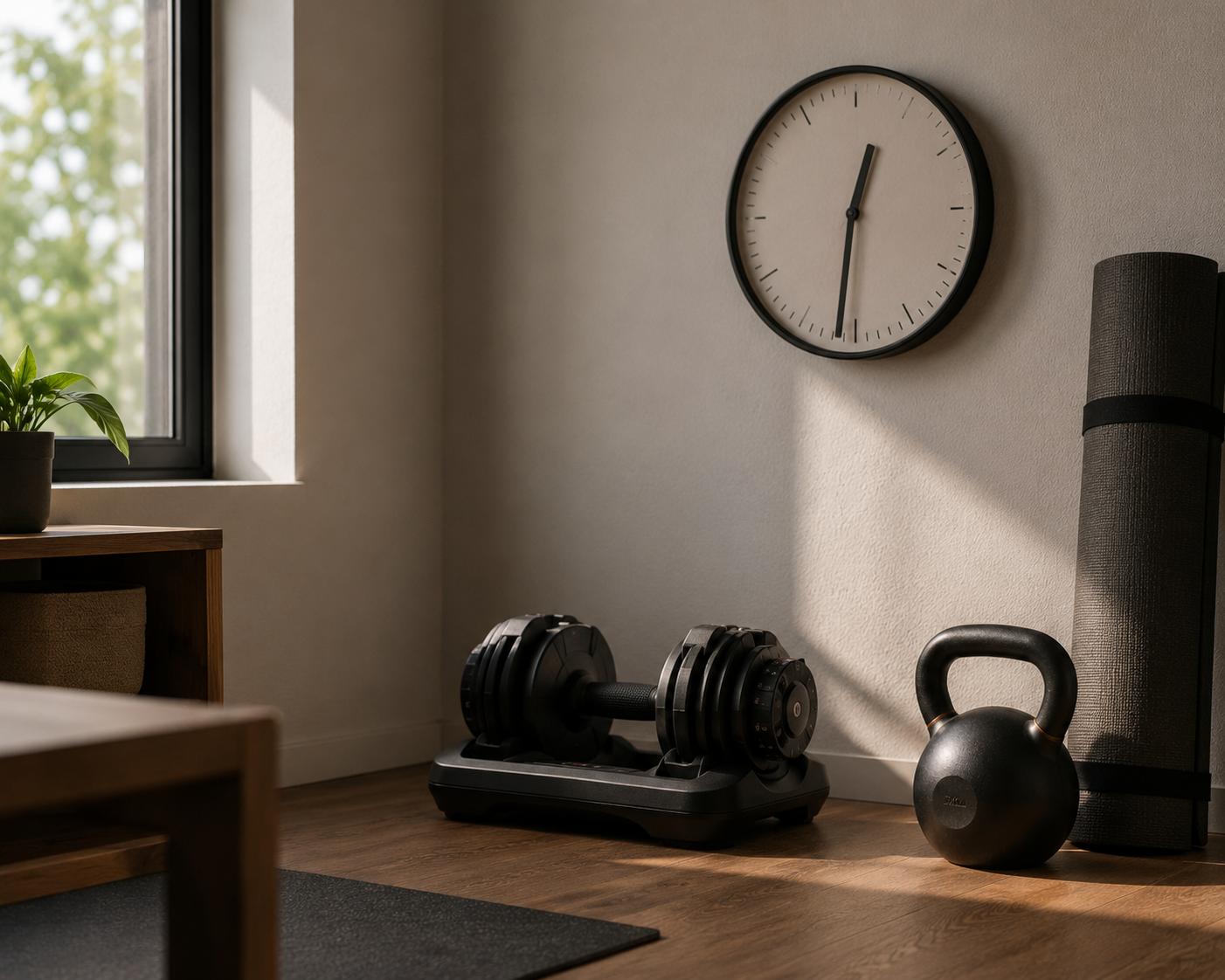
- Lay out equipment the night before. A dumbbell or kettlebell left by the door removes the small friction that turns a planned session into a skipped one.
- Write the session down before you start. Deciding exercises and loads on the spot burns minutes you don’t have. A simple note with the day’s four or five exercises, sets, and reps means you walk in and start moving immediately.
- Treat two sessions a week as the real baseline. A third or fourth session is a bonus, not a requirement. Missing a single day shouldn’t derail the week if the baseline two sessions still happen.
Recovery matters here too, even on a tight schedule. Muscles adapt and rebuild in the hours after a session, not during it, so basic sleep and rest habits between sessions influence how much a given 30-minute block actually delivers. That doesn’t require anything elaborate: consistent sleep timing and at least one rest day between sessions targeting the same muscle groups, in line with Mayo Clinic’s suggestion to rest a full day before retraining the same area, is enough for most people training two to three days a week.
Equipment Worth Owning If You Train This Way
None of this requires a home gym. That said, a small amount of equipment expands what’s possible inside thirty minutes considerably:
- One adjustable dumbbell set (or a pair of fixed dumbbells) per hand. This alone covers presses, rows, squats, lunges, and carries.
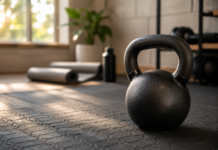
- A single kettlebell. Useful for hinge patterns, carries, and goblet squats, and easy to store.
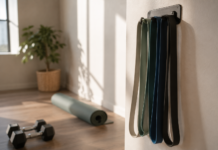
- A resistance band or two. A low-cost substitute for cable rows and pull-aparts, especially useful for the pull pattern where bodyweight options are limited without a pull-up bar.
- A timer. A phone timer keeps transition time and rest periods honest, which matters more in a 30-minute format than in a longer session where a slow transition barely registers.
Bodyweight-only training remains entirely workable with the substitutions described in the equipment FAQ further down this guide. The list above simply removes ceilings as you get stronger and bodyweight versions stop being challenging.
Safety Notes Before You Start
Strength training is well-supported by public health guidance as a safe, beneficial activity for most adults, but a few caveats matter. If you’re new to exercise, pregnant, managing a chronic health condition, recovering from an injury, or over 65 and not currently active, check with a doctor or physical therapist before starting a new resistance training program, and consider a session or two with a qualified trainer to check your form on unfamiliar lifts. Mayo Clinic’s guidance is direct on this point: if an exercise causes pain, stop it. Discomfort from effort is expected; sharp or joint pain is not, and it’s a signal to modify the movement or scale back the load rather than push through it.
Frequently Asked Questions
Is 30 minutes really enough to build noticeable strength?
Yes, for most people, especially when the session is built around compound lifts and minimal rest. Mayo Clinic states that people typically notice stronger muscles within a few weeks of consistent strength training sessions in the 20-30 minute range, done at least twice weekly. Consistency across weeks matters more than the length of any individual session.
How many days a week should I do this?
Two days a week meets the baseline recommendation from the CDC and NHS for muscle-strengthening activity covering all major muscle groups. Three days gives a bit more room for progression. More than four full-body strength sessions a week generally requires more recovery planning than a simple two-workout rotation provides.
What if I don’t have any equipment at home?
Bodyweight variations work for every movement pattern in this guide: bodyweight squats or split squats for the squat pattern, glute bridges for the hinge pattern, push-ups for the push pattern, and inverted rows using a sturdy table or resistance bands for the pull pattern. As bodyweight versions become easy, a single adjustable dumbbell or a couple of resistance bands extends the program considerably before you’d need a full gym.
Should I do the same 30-minute workout every time?
Keep your core exercises stable for four to six weeks so you can track real progress, but it’s fine, and often useful, to alternate which movement pattern gets top billing each session (for example, alternating a squat-focused day with a hinge-focused day), as shown in the two-day sample program above.
Is it better to do fewer sets with heavier weight, or more sets with lighter weight?
Within a 30-minute budget, fewer sets taken close to genuine effort tend to be more time-efficient than many sets at an easy weight. Mayo Clinic’s own guidance notes that a single well-executed set can be enough for general fitness benefit, which is part of why this approach fits a short session so well. If your goal shifts toward more advanced strength or physique goals down the line, you may eventually want more total sets, which would mean either adding a day or slightly extending session length.
What should I do if a lift causes joint pain?
Stop the exercise. Mild muscle fatigue or a burning sensation in the muscle during the last few reps is a normal part of effective strength training; sharp, sudden, or joint-level pain is not. Scale back the load, check your form (ideally with a trainer or physical therapist), or substitute a different exercise for that movement pattern. If pain persists after rest, consult a doctor before continuing that exercise.
References
- Centers for Disease Control and Prevention. Physical Activity Guidelines for Adults
- NHS. Strength Exercises
- Mayo Clinic. Strength Training: Get Stronger, Leaner, Healthier
- Harvard Health Publishing. The Importance of Stretching
- World Health Organization. Physical Activity Fact Sheet
This article is for general educational purposes and is not a substitute for personalized medical or professional fitness advice. Consult a doctor before starting a new exercise program, especially if you have an existing health condition, are pregnant, or are returning to activity after an injury.