

























By Sophie Taylor
The moment that sticks with most outdoor exercisers is rarely the big, dramatic one. It’s the smaller jolt: a rattling sound from the brush just off the trail, a car passing closer than it should on a shoulderless road, an ankle that rolls on a root you didn’t quite see in time. None of these moments require panic. What they require is a plan you built before you needed it.
Outdoor exercise carries real, well-documented risks that fall into three overlapping categories: wildlife encounters, traffic exposure for runners and cyclists sharing roads with vehicles, and terrain hazards like loose rock, stream crossings, and exposed roots. Each domain has its own body of research and its own set of field-tested habits, and this guide walks through all three with practical, source-backed steps you can use on your very next outing. This is not a guide to trail difficulty ratings or winter ice traction; it’s a broader risk-awareness framework for the everyday hazards that show up across nearly every outdoor workout, in every season.
Why Risk Awareness Belongs in Your Training Plan
Most runners, hikers, and cyclists think about pace, mileage, or elevation gain long before they think about risk management. That ordering makes sense until something goes wrong, and then it becomes clear that a few minutes of preparation would have changed the outcome. The National Park Service, the Centers for Disease Control and Prevention, the National Highway Traffic Safety Administration, and the League of American Bicyclists all publish guidance on exactly these hazards because they are common enough, and serious enough, to warrant formal public safety campaigns.
Treating wildlife awareness, traffic visibility, and terrain judgment as a normal part of training, the same way you’d treat hydration or a warm-up, is the single biggest shift that reduces incidents. The sections below break down what the evidence actually says for each domain.
Wildlife Risk Box: The Core Rules
- Bears: Make noise on blind curves, hike in groups, keep your pack on, carry EPA-registered bear spray, and never run.
- Snakes: Stay on cleared trail sections, avoid thick brush, and freeze, locate, then retreat slowly if you hear a rattle.
- Ticks: Treat clothing with permethrin, do a full-body check within two hours of finishing, and remove ticks promptly.
- Dogs: Stand sideways, avoid direct eye contact, and use a firm, low voice rather than running or screaming.
Wildlife Encounters: Reading Signs and Reacting Right
Wildlife encounters make up some of the most anxiety-inducing moments in outdoor exercise, largely because they feel unpredictable. In practice, most wildlife safety guidance boils down to a small number of repeatable behaviors that reduce both the odds of an encounter and the odds it goes badly.
Bears: Space, Noise, and Staying Calm
The National Park Service’s bear safety guidance centers on a few consistent principles. Groups are safer than solo travel because “groups of people are usually noisier and smellier than a single person,” which means bears often notice a group and move off long before a close encounter happens, according to the National Park Service’s bear safety page. That’s a strong argument for running or hiking with a partner on any trail with known bear activity, particularly near berry patches or other food sources where bears may be feeding.
If you do encounter a bear at close range, the NPS is specific about what not to do: don’t run. Bears “can run as fast as a racehorse both uphill and down,” so outrunning one is not realistic, and running can trigger a chase response. Instead, the guidance is to talk in a calm voice so the bear identifies you as human, stand your ground, and if you need to move, back away slowly and at an angle so you can watch the bear without tripping. Screaming or high-pitched sounds should be avoided because they can be mistaken for prey noises.
Keep your pack on during any encounter. It offers a layer of physical protection and, just as important, food inside a pack should never be surrendered to a bear, since a bear that gets a food reward will keep approaching people, which “will only encourage the bear and make the problem worse for others,” per the NPS.
Bear spray is worth carrying in bear country, but only EPA-registered products designed for defensive use against aggressive or charging bears. It’s meant as a last line of defense, not a repellent to spray on gear or skin ahead of time.
Snakes: Where They Bask and How to Back Away
Snake safety follows a similar three-step pattern in most professional guidance. According to the Washington Trails Association’s guide to hiking in rattlesnake country, snakes commonly bask on rocks and ledges and hide in thick brush, so staying on cleared, open sections of trail measurably reduces your odds of a surprise encounter. Long, loose pants and high-top boots add a meaningful layer of protection in snake habitat.
If you see or hear a snake, the recommended sequence is: freeze first, locate the snake before doing anything else, then retreat slowly without sudden movements. A trekking pole held between you and the snake adds distance and a buffer if it’s within striking range.
If a bite does occur, current first-aid guidance is more conservative than older folk remedies. Do not apply ice, do not attempt to cut or suck out venom, and do not elevate the limb. Keep the person calm and still, since exertion speeds circulation and, with it, venom spread; remove rings, watches, or anything constrictive near the bite; wash the wound with soap and water; apply a clean, loose dressing; and call for emergency medical transport immediately. This is not a situation to treat in the field and continue exercising through.
Ticks and Lyme Disease: The Numbers That Matter
Tick-borne illness is arguably the wildlife risk most exercisers underestimate, mainly because it’s not dramatic in the moment. The CDC’s guidance on how Lyme disease spreads gives a specific and genuinely useful number: “in most cases, a tick must be attached for more than 24 hours before the Lyme disease bacterium can be transmitted.” That window is exactly why a same-day check matters so much. A tick found and removed within a few hours of a run or hike carries a much lower transmission risk than one left attached overnight.
For prevention, the CDC’s tick bite prevention page recommends EPA-registered repellents containing DEET, picaridin, IR3535, oil of lemon eucalyptus, PMD, or 2-undecanone, and treating clothing and gear with products containing 0.5 percent permethrin, which remain protective through several washes. Ticks are most active from April through September in much of the country, which lines up with peak outdoor training season for a lot of runners and hikers.
Two habits do the most work after time outdoors. First, tumble-dry your clothes on high heat for ten minutes; this reliably kills ticks that clothing treatment or repellent missed. Second, shower within two hours of coming inside. The CDC notes this habit “has been shown to reduce your risk of getting Lyme disease,” and a shower also happens to be the easiest moment to do a full-body check, since you’re already undressed and can see or feel more of your skin.
The CDC recommends checking your body, clothing, gear, and pets for ticks during and after being outdoors, and several public health and clinical sources point to the same higher-risk areas ticks tend to migrate toward. Use the checklist below as a standard post-run or post-hike routine, not a one-time event after a single bad experience.
Post-Outdoor Tick-Check Checklist
Do this within two hours of finishing any run, hike, or ride through grass, brush, or wooded trail.
Found one attached? Remove it promptly with fine-tipped tweezers, grasping close to the skin and pulling straight up with steady pressure. Do not wait, and do not use heat, petroleum jelly, or nail polish to try to make it detach on its own; the CDC is explicit that delaying removal raises Lyme disease risk.
Dogs: Off-Leash Encounters on Shared Trails
Not every wildlife-adjacent risk is wild. Off-leash dogs on multi-use trails are common enough that they deserve their own protocol. The CDC’s guidance on dog safety recommends staying still, staying calm, and avoiding direct eye contact if approached by an aggressive dog. Saying “no” or “go home” in a firm, deep voice while standing with the side of your body facing the dog, rather than facing it head-on, reduces how threatening you appear while still holding your ground. Slowly raising your hands toward your neck with elbows tucked in protects your torso and face without triggering a chase response the way running would.
Critically, the CDC’s advice for humans mirrors the bear guidance almost exactly on one point: never run from a dog, and never panic or make loud, sudden noises. If you are knocked down, curl into a ball and protect your head and neck until the situation resolves. Afterward, wash any bite or scratch thoroughly with soap and water, seek medical care for anything beyond a superficial mark, and report the incident so animal control can follow up, particularly if the dog’s owner or vaccination status is unknown.
Traffic Safety for Road Runners and Cyclists
Traffic is the risk domain outdoor exercisers encounter most frequently, and it’s backed by sobering national data. NHTSA reports that in a recent year, 7,080 pedestrians were killed in traffic crashes in the United States, with more than 71,000 injured, which works out to roughly one pedestrian death every 74 minutes, according to NHTSA’s pedestrian safety guidance. Runners and walkers are pedestrians under the law in every state, and the same visibility and positioning principles apply whether you’re commuting on foot or logging tempo miles.
Road Position: Facing Traffic Changes the Math
NHTSA’s core positional guidance is direct: “if there is no sidewalk, walk facing traffic and as far from traffic as possible.” This single habit matters more than most runners realize. Running with traffic means any approaching vehicle is behind you and outside your field of view; running against traffic means you can see a vehicle drifting toward the shoulder and react, whether that means stepping farther off the road or simply making eye contact with a driver so you know you’ve been seen.
When a sidewalk is available, NHTSA recommends using it. When you do need to cross, cross at crosswalks or intersections rather than mid-block, and in poorly lit areas without formal crossings, choose the best-lit spot with a clear view of oncoming traffic in both directions.
Cyclists operate under a different, opposite rule: ride with traffic, in the same direction as cars, not against it. The League of American Bicyclists’ Ride Better Tips recommend riding “in the right third of the right-most lane that goes in the direction you are going,” moving toward the center of the lane on narrow roads or when riding at the speed of traffic, and always riding outside the “door zone” next to parked cars so a suddenly opened door doesn’t cause a crash. Predictability is the underlying theme: ride in a straight line, signal turns and stops well in advance using the standard hand signals, and avoid weaving between parked vehicles, since drivers can’t react to movements they don’t expect.
Traffic Risk Box: Position and Predictability
- Runners and walkers: face traffic, use sidewalks when available, cross at intersections.
- Cyclists: ride with traffic, hold the right third of the lane, avoid the door zone near parked cars.
- Everyone: assume you have not been seen until you’ve confirmed eye contact or a driver’s yield.
- Multi-use paths: announce a pass verbally or with a bell before overtaking pedestrians.
Visibility Gear That Actually Works
Being on the correct side of the road only helps if drivers can see you in time to react. NHTSA’s guidance stresses “extra caution at nighttime or in bad weather, since pedestrians can be harder to see and may appear suddenly,” which is really a way of saying that low-light visibility is the single biggest lever most exercisers can pull to reduce their own risk. Different types of visibility gear work differently, and mixing categories, rather than relying on just one, tends to produce the best real-world results.
High-Visibility Gear Comparison
| Gear Type | Best For | Limitations |
|---|---|---|
| Reflective vest or sash | Vehicle headlights at night; bounces light directly back to the driver | Only works when a light source hits it; useless in ambient daylight glare |
| Blinking LED clip or armband | Dawn, dusk, and low-light conditions; motion draws the eye | Battery-dependent; needs to face oncoming traffic to be effective |
| Bright fluorescent clothing | Daytime visibility against green or gray backdrops | Minimal benefit after dark without reflective elements added |
| Reflective ankle or shoe bands | Runners and cyclists; leg motion is highly noticeable to drivers | Covers a small surface area; best paired with a vest or light |
Practical takeaway: combine at least one reflective item with one active light source for any low-light run, walk, or ride. Redundancy is the point, since a single failed battery or an angle that misses headlights shouldn’t be the only thing standing between you and being seen.
Sharing Multi-Use Paths
Shared paths introduce their own etiquette problems: cyclists moving faster than walkers, dogs on long leashes stretched across the path, and joggers weaving to pass. The safest approach mirrors the road rules already covered: stay predictable, keep to one side consistently, and announce a pass verbally (“on your left”) or with a bell before overtaking someone from behind. Pedestrians and runners should treat cyclists’ announced passes the way they’d treat a car’s turn signal, as useful information, not as an instruction to change direction suddenly.
Terrain Hazards: Footing, Water, and Exposure
Terrain-related injuries, from rolled ankles to falls at stream crossings, are often the most preventable category of outdoor exercise risk because they respond directly to slowing down and changing technique in specific, well-documented situations.
Loose Rock and Scree
Scree and talus slopes, loose, fist-to-boulder-sized rock on a slope, demand a different gait than a packed dirt trail. Guidance on hiking scree recommends going slowly, placing each foot deliberately, and looking for more stable ground rather than trusting the first surface you see; staying on the established path where prior hikers have compacted the rock into a firmer line also helps. On steep sections, traversing across the slope in a switchback pattern is safer than climbing straight up or down.
Group spacing matters as much as footwork. Hikers should avoid standing in the “rock shadow,” the zone directly below anyone else on the slope, since a dislodged rock can travel with real force. If you kick a rock loose, shout “Rock!” immediately; anyone who hears that warning should crouch and cover their head rather than look up to locate the sound. Descending scree carries more injury risk than climbing it, because the force of each step is greater going downhill, and wet, icy, or rain-slicked scree should be avoided entirely rather than managed carefully, since traction on loose rock in those conditions is unreliable at any speed.
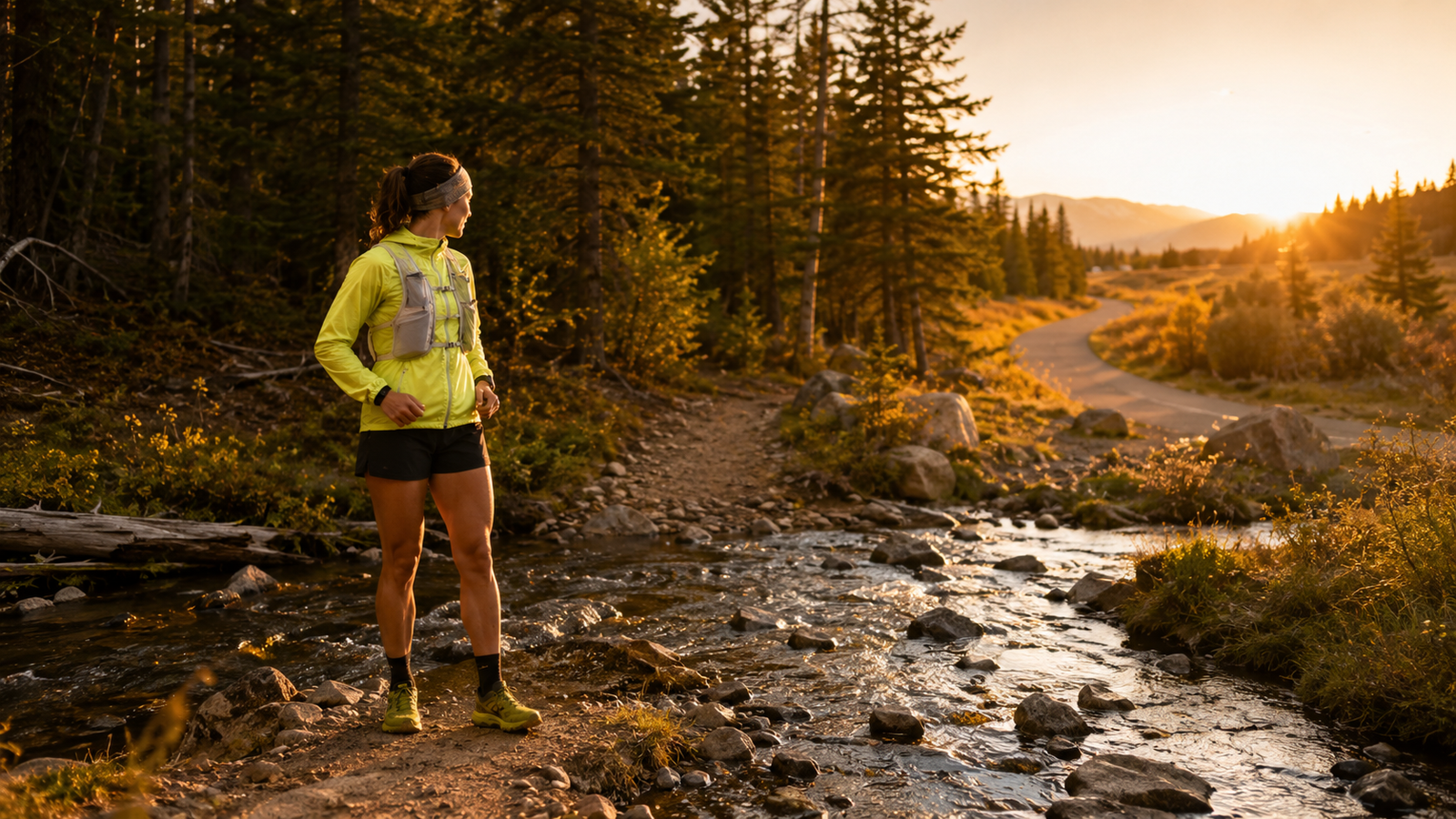
Stream Crossings
Moving water is consistently underestimated. According to the American Hiking Society’s guide to crossing a stream, water “often appears less powerful than it actually is,” so the safe default is to assume any crossing is both faster and deeper than it looks from the bank.
Before stepping in, unbuckle your pack’s sternum strap and hip belt. That single adjustment lets you shed the pack quickly if the current pulls you off balance and you end up in the water, rather than being dragged down by its weight. Trekking poles add a third and fourth point of contact for stability. While crossing, look up and focus on a fixed point on the far bank rather than down at the moving water; watching the current itself is disorienting and can trigger a false sense of falling even when you’re stable. Swap boots and socks for water shoes or sturdy sandals if you have them, and avoid crossing barefoot; if there’s no alternative footwear, boots without socks are an acceptable compromise. Long pants are worth removing too, since loose fabric catches the current and can throw off your balance.
Most importantly: turning back is always an acceptable outcome. No summit, loop, or training run is worth forcing a crossing that feels wrong once you’re at the water’s edge.
Cliff Edges, Exposure, and Uneven Ground
Exposed sections of trail, where a misstep has a serious consequence because of a drop-off or steep slope, call for a simple behavioral shift: slow your pace, stay on the established tread, and resist the urge to step off-trail for a photo or a wider view. Exposed tree roots and uneven ground cause a large share of everyday trail falls precisely because they show up on otherwise easy terrain, where attention naturally drops. Scanning two or three steps ahead rather than fixating on your feet, and slowing through root systems, rocky patches, and shaded areas where footing is harder to judge, addresses most of this risk without requiring specialized gear.
Terrain Risk Box: Slow Down Where It Counts
- Scree and loose rock: deliberate footing, switchback on steep sections, avoid the rock shadow below other hikers.
- Stream crossings: unbuckle pack straps, use poles, look at the far bank, turn back if it feels wrong.
- Cliff edges and exposure: stay on established tread, resist off-trail detours for views.
- Roots and uneven ground: scan ahead, slow through shaded or root-heavy sections.
When a Wildlife Encounter or Injury Needs Urgent Attention
Most outdoor risk management is about prevention, but knowing when to escalate matters just as much. Seek immediate medical care, calling 911 or getting to an emergency department directly, for any snake bite, regardless of how minor it seems at first; for any animal bite that breaks the skin, especially from an unfamiliar or wild animal, due to rabies and infection risk; for a deep laceration or a fall involving a suspected head injury, loss of consciousness, or a limb that looks visibly deformed; and for any injury near a cliff edge or exposed section where the person cannot be safely moved without help.
Contact park rangers or local wildlife authorities, even for encounters that end without physical injury, if a bear or other large animal displayed unusually bold or non-defensive behavior around people, if you spot fresh signs of concentrated wildlife activity near a popular trailhead, or if an off-leash dog with no visible owner behaves aggressively toward multiple trail users. This isn’t diagnosing a medical condition; it’s flagging a pattern that rangers use to post warnings or adjust trail access before the next person has a worse encounter than you did.
If you’ve been bitten by a tick and later develop a fever, fatigue, joint pain, or an expanding rash, particularly in the weeks following a hike or run through tick habitat, contact a healthcare provider rather than waiting to see if symptoms resolve on their own. Early evaluation and, when appropriate, prompt antibiotic treatment are the standard of care for suspected Lyme disease, and a clinician is the right person to make that call, not a symptom checklist read on a trail.
Frequently Asked Questions
Do I need bear spray on every trail, or just in known bear country?
Bear spray is specifically recommended for areas with documented bear activity, not as a universal carry item. Check trailhead postings or park websites before you go; many parks note recent sightings, and that’s the clearest signal for whether to carry it.
How long can I safely leave a tick attached before it’s a problem?
The CDC notes that in most cases a tick needs to be attached for more than 24 hours before Lyme disease bacteria can transmit, which is why a same-day check and prompt removal meaningfully lower risk. Don’t wait for a doctor’s visit to remove an attached tick; delaying removal raises the risk.
Should runners face traffic or run with it?
Face traffic when there’s no sidewalk. NHTSA’s guidance is explicit on this point, and it gives you the chance to see and react to a vehicle drifting toward the shoulder rather than being approached from behind without warning.
Is one reflective item enough for a low-light run?
Treat it as a starting point, not a complete solution. Reflective gear only works when it catches a light source directly, so pairing a reflective vest or bands with an active light, like a blinking LED clip, covers more angles and more conditions than either alone.
What’s the single biggest mistake people make at stream crossings?
Keeping pack straps buckled. If you end up in the water, a buckled pack can pull you down and slow your ability to get free. Unbuckling the sternum strap and hip belt before you step in takes a few seconds and meaningfully changes the outcome if you lose your footing.
What should I actually do if a dog runs at me on a trail?
Stop moving, stay calm, and avoid staring directly at the dog. Turn your side toward it rather than facing it head-on, use a firm, low voice, and never run or scream, since sudden movement and noise are more likely to escalate a chase than de-escalate one.
Building the Habit, Not Just the Knowledge
None of this guidance is complicated on its own. The harder part is doing it consistently: treating clothing before tick season starts rather than after a bite, packing a reflective vest even for a run you expect to finish before dark, checking a stream’s flow before committing to the first step. Outdoor exercise carries risk in the same way driving does, manageable, well-studied, and largely within your control once you know where to put your attention. The goal isn’t to move through trails and roads anxious about every rustle in the brush or every passing car. It’s to build a small set of habits solid enough that when something does happen, you already know exactly what to do next.
References
- National Park Service, Staying Safe Around Bears (nps.gov/subjects/bears/safety.htm)
- Washington Trails Association, How to Hike in Rattlesnake Country (wta.org/go-outside/trail-smarts/how-to/how-to-hike-in-rattlesnake-country)
- CDC, Preventing Tick Bites (cdc.gov/ticks/prevention/index.html)
- CDC, How Lyme Disease Spreads (cdc.gov/lyme/causes/index.html)
- CDC, Preventing Lyme Disease (cdc.gov/lyme/prevention/index.html)
- CDC, Dogs: Healthy Pets, Healthy People (cdc.gov/healthy-pets/about/dogs.html)
- NHTSA, Pedestrian Safety (nhtsa.gov/road-safety/pedestrian-safety)
- League of American Bicyclists, Ride Better Tips (bikeleague.org/ridesmart/ride-better-tips)
- League of American Bicyclists, Model Safe Passing Law (bikeleague.org/bike-laws/model-legislation/model-safe-passing-law)
- American Hiking Society, Crossing a Stream (americanhiking.org/crossing-a-stream)