


















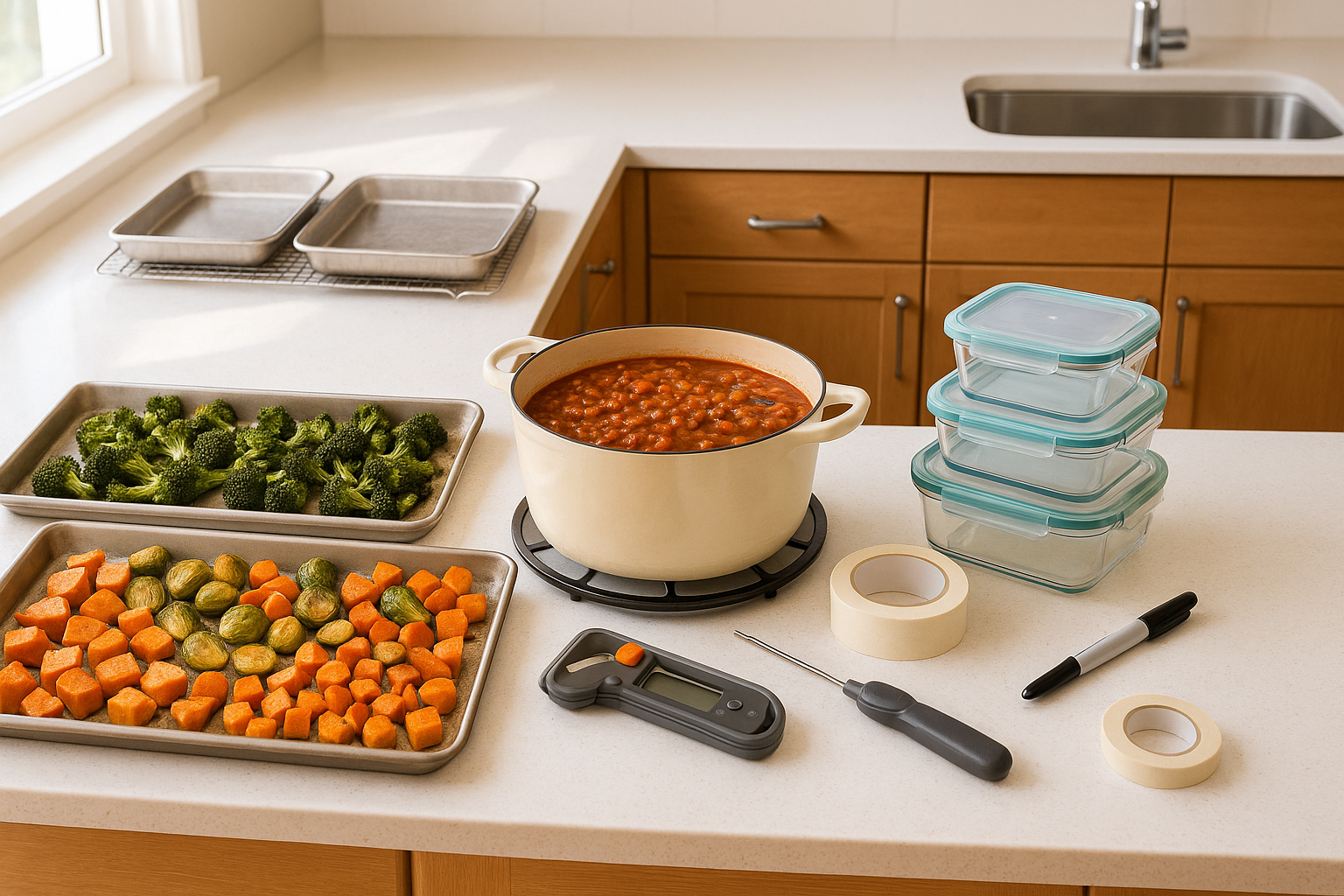
Batch cooking is a simple system: you cook larger amounts, store them safely, and assemble fast meals all week. It shines for busy households, budget-conscious planners, and anyone who wants better food with less daily effort. In practice, it means choosing a cooking “cadence,” standardizing base components (proteins, grains, vegetables, sauces), and organizing your kitchen so you can move quickly from prep to storage. Quick definition: Batch cooking is planning and preparing multiple meals or components in one session, then cooling, portioning, and safely storing them for the days ahead. For safety, keep your fridge at or below 40°F (4°C) and your freezer at 0°F (–18°C).
Fast start steps (skim):
- Pick 3–5 dishes that share ingredients.
- Shop with a batch-friendly list (bulk grains, proteins, veg).
- Set up stations and preheat equipment.
- Cook items that take longest first.
- Cool fast in shallow containers.
- Label, date, and store.
- Reheat to 165°F (74°C) and finish with fresh add-ons.
Quick safety note: Guidance here is general; always follow local food safety rules and check official advice if you’re cooking for infants, older adults, or anyone with a compromised immune system.
1. Choose a Weekly Cadence and Menu That Actually Fits Your Life
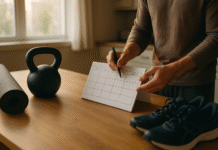
The fastest way to win with batch cooking is to pick a realistic schedule and a focused menu. Decide when you’ll cook (e.g., Sunday afternoons) and how many meals you want covered (e.g., four dinners, three lunches). Start small: plan 8–10 total servings split across 3–4 recipes that share ingredients (like roasted chicken, a pot of beans, and a tray of vegetables). This gives flexibility without overwhelming your fridge. If your weeks vary, rotate between a “components week” (cook staples like rice, lentils, roasted veg) and a “complete dishes week” (chili, baked pasta, curry). As of August 2025, many home cooks find a single 2–3 hour block works; if that’s tight, split into two 90-minute sessions. Build menus that remix well—think grain bowls, tacos, soups, and pastas—and include one freezer-friendly dish for longer coverage.
1.1 How to do it
- Pick a theme to reuse purchases: Tex-Mex bowls, Mediterranean mezze, curry week.
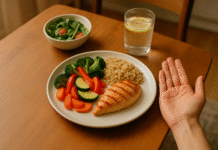
- Balance components: 1 protein, 1 grain/starch, 2 veggies, 1 sauce.
- Plan finishing touches (herbs, pickles, toasted nuts) for freshness.
- Match cook times: start long-simmers first; bake/roast while grains cook.
- Schedule a 10-minute cleanup midway to reset surfaces and tools.
1.2 Numbers & guardrails
- Aim for 8–14 portions total when starting out.
- Choose recipes with overlapping ingredients to cut shopping time by 20–30% (typical for consolidated lists).
- Budget 15–20 minutes for labeling, cooling, and storage at the end.
Close with focus: a realistic cadence and consolidated menu are what turn “good idea” into a weekly habit.
2. Estimate Yields and Portion Sizes Before You Shop
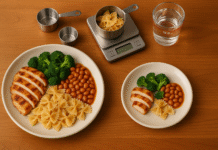
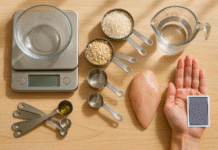
Batch cooking rewards basic math. Decide your target portions and work backward from raw weights and cooked yields. As a rule of thumb: 1 pound (450 g) raw boneless chicken yields ~2.5–3 cooked portions; 1 cup dry rice (185 g) yields ~3 cups cooked (4–6 portions as a side); 1 pound (450 g) dry beans makes ~6 cups cooked. For vegetables, expect ~20–30% shrinkage when roasting. Translate these to containers you actually own (e.g., 1-cup/250 ml sauce cups; 2-cup/500 ml meal prep boxes). Knowing your serving sizes prevents both over-buying and under-prepping, and aligns your cooking vessels (sheet pans, Dutch oven, stock pot) with the menu.
2.1 Mini example
You want four lunches and three dinners (7 meals). Each meal uses: 120–150 g cooked protein, 1 cup cooked grain, and 1–1½ cups veg. Buy: 1.2–1.4 kg boneless chicken (or 900 g tofu + 500 g chickpeas), 2 cups dry rice (370 g), and ~1.5–2 kg mixed veg. This maps cleanly to common pan sizes and a single oven cycle.
2.2 Checklist
- List meals × portions × components.
- Convert to raw weights and dry measures.
- Match to container sizes and labels.
- Confirm you have enough fridge/freezer space.
- Add one “wildcard” item (e.g., eggs, tortillas) for flexibility.
Wrap-up: clear yield math prevents mid-cook surprises and keeps portions consistent across the week.
3. Shop Like a Pro: Bulk Smarts, Unit Prices, and Substitutions
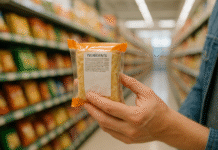
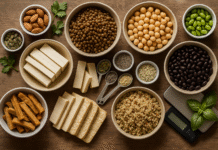
A batch-savvy grocery list groups items by department and favors versatile, long-lasting staples. Compare unit prices (per 100 g or per ounce) to spot real bulk savings; sometimes smaller sizes win. Choose flexible proteins (chicken thighs, beans, eggs), durable veg (carrots, cabbage, broccoli), and grains that store well (brown rice, farro, oats). For flavor, stock concentrated add-ons: tomato paste, soy sauce, curry pastes, chili crisp, and canned chiles. If budget is tight, shop sales first, then build the menu around those deals (e.g., discounted root vegetables → roast a big tray and blend some into soup). U.S. MyPlate guidance also suggests prepping grains, veg, and beans on weekends to ease weekday meals, which pairs perfectly with batch cooking.
3.1 How to do it
- Use a list grouped by produce, center aisles, dairy/eggs, meat, frozen.
- Compare unit prices and generics; buy bulk only if you’ll use it.
- Prioritize ingredients that can star in multiple dishes.
- Grab freezer-friendly backups (peas, spinach, berries).
- Check storage life with the Cold Food Storage Chart when planning.
3.2 Region notes
Hot climates and long commutes? Bring an insulated bag and cold packs so perishables stay ≤40°F (4°C) door-to-door.
Bottom line: smart shopping is where batch cooking saves money before you even light a burner.
4. Set Up Stations: Mise en Place and Parallel Workflows
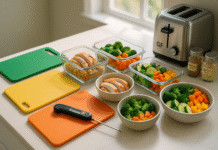
Your kitchen layout either slows you down or lets you fly. A five-minute station setup—wash area, knife board, trash bowl/compost, spice/condiment cluster, and a “hot zone” (stovetop/oven)—pays off with fewer steps and less cross-traffic. Preheat the oven, clear counters, and put out sheet pans, mixing bowls, cutting boards, and measuring tools. Start long-lead items first (beans, braises), then slot in roasts and grains, leaving quick-cook veg last. While the Dutch oven simmers, you can salt cabbage for slaw, whisk a vinaigrette, and portion snacks. This parallel workflow is the heart of efficient batching.
4.1 Tools & examples
- Two half-sheet pans + wire racks for air circulation.
- A 6–8 qt (5.5–7.5 L) Dutch oven for chilis and stews.
- An instant-read thermometer for doneness and reheating checks.Food Safety and Inspection Service
- A timer for staggered cook cycles (set multiples).
4.2 Mini-checklist
- Clear counters and group ingredients by recipe.
- Preheat oven and boil water early.
- Label containers before you start cooking.
- Keep a soapy sink or bin for immediate tool drop-offs.
Wrap-up: organization turns a 3-hour slog into a fast, calm 90–120 minutes.
5. Cook Proteins Efficiently—and Safely
Pick protein methods that scale: roasting sheet-pan chicken thighs, braising chuck roast, poaching then shredding chicken, pressure-cooking beans, or simmering a big pot of lentils. Season boldly with salt, pepper, and one “identity” spice mix per recipe. For food safety, verify doneness with a thermometer. Cook poultry to a safe internal temperature of 165°F (74°C). Casseroles and leftovers should also reach 165°F (74°C) when reheated. Ground meats are generally safe at 160°F (71°C); whole muscle beef/ lamb/pork at 145°F (63°C) with a 3-minute rest. These are reliable guardrails for big batches and reheats.
5.1 How to batch proteins
- Roast 1.5–2 kg chicken thighs on two pans; cool on racks.
- Poach 1–1.3 kg boneless chicken; shred for tacos, soups, salads.
- Pressure-cook 500 g dry beans with aromatics; portion with cooking liquid.
- Sear-then-braise tough cuts until fork-tender; chill overnight for easy slicing.
5.2 Numbers & guardrails
- Pull sheet-pan chicken at 165°F (74°C); rest 5–10 minutes.
- Lentils: 1 cup dry (200 g) → ~2½–3 cups cooked.
- Beans: 1 lb/450 g dry → ~6 cups cooked; freeze in 1–2 cup portions.
Synthesis: efficient methods plus thermometer-verified temperatures deliver juicy proteins you can trust.
6. Master Big-Batch Grains and Starches (Without Clumping)
Cook grains in wide pots so they simmer evenly. Salt the water, then let rice or quinoa steam off heat to finish. Spread hot grains on a sheet pan to cool quickly and prevent clumping, then pack into shallow containers. Be extra cautious with rice: cool it promptly and refrigerate fast to avoid Bacillus cereus growth. In hot rooms (≥32°C/90°F), move rice to the fridge within 1 hour; in normal conditions, within 2 hours. Reheat rice thoroughly before serving and avoid multiple reheat cycles.
6.1 How to do it
- Cook 2–3 cups (370–555 g) dry rice in batches if your pot is small.
- Fluff, then spread on a lined sheet pan for 10–15 minutes.
- Portion 1-cup (250 ml) servings into containers or zip bags.
- Label with date; use within 3–4 days or freeze up to several months.
6.2 Region note
Rice safety guidance is consistent globally: chill quickly, store cold, and reheat hot. UK and international agencies echo the same caution about rapid cooling and single reheats.World Health Organization
Takeaway: cooling method matters as much as your cooking method for grain quality and safety.
7. Build Flavor Bases: Sauces, Dressings, and Concentrates
Sauces are batch cooking’s secret weapon. Make a concentrated tomato sauce, a tahini-lemon dressing, a ginger-garlic scallion oil, or a freezer-friendly pesto (with nuts/seeds) to transform simple components into new meals. Portion into 2–4 tablespoon cubes using ice trays or small cups; freeze and pop out as needed. This approach lets you repeat proteins and grains while keeping meals varied. Balance acidity (vinegar, citrus) and salt to keep flavors bright after refrigeration.
7.1 Tools/Examples
- Small blender or stick blender for quick emulsions.
- Ice cube trays or mini silicone cups for portioning.
- Concentrates: tomato paste “coins,” miso butter, herb-garlic oil.
7.2 Mini case
One batch of roasted veg + chicken + rice becomes:
- Bowl 1: add chimichurri and pickled onions.
- Bowl 2: toss with tahini-lemon dressing and toasted seeds.
- Bowl 3: warm with tomato-garlic sauce and fresh basil.
Summary: flavor bases are low-effort, high-impact multipliers for all the components you cooked.
8. Cool Fast, Store Smart: The Safety-First Workflow
Food safety is non-negotiable in batch cooking. Divide hot food into shallow containers so it cools quickly, and get leftovers into the fridge within 2 hours (1 hour if room temps are above 90°F/32°C). Keep your refrigerator at or below 40°F (4°C) and your freezer at 0°F (–18°C). For thick soups, use an ice bath or stir with a few ice cubes to drop the temperature rapidly. Avoid over-crowding the fridge; cold air needs to circulate. Store ready-to-eat items up high and raw meats at the bottom to avoid drips. Follow reliable storage windows: most cooked leftovers keep 3–4 days in the refrigerator; freeze for longer quality.
8.1 Numbers & guardrails
- Two-stage cooling (caterer standard): from 135°F to 70°F within 2 hours, then to 41°F within 4 hours. Home cooks can use the same principle to stay safe.
- Use appliance thermometers to confirm fridge/freezer temps.
8.2 Mini-checklist
- Shallow containers (≤2 in / 5 cm deep).
- Ice bath for soups and stews; stir to dissipate heat.
- Label and date every container.
- Don’t store perishable foods in the warm fridge door.
Bottom line: fast cooling and correct temperatures are the backbone of safe batching.
9. Portion, Package, Label: Make Future You’s Life Easy
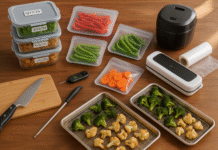
Portioning is where batch cooking pays off every single day. Standardize by meal: 1–1½ cups (250–375 ml) of cooked veg, 1 cup (250 ml) of grain, and 120–180 g of cooked protein. Use clear, stackable containers for fridge items and freezer-grade bags or vacuum-sealed pouches for the deep freeze. Press out excess air to prevent freezer burn; freeze flat for fast thawing and neat storage. Label with dish name, date, and “reheat target: 165°F (74°C)” to keep safety top-of-mind at a glance. Keep a simple “freezer map” on your phone or a sticky note to maintain a first-in, first-out rotation.
9.1 Tools
- Painter’s tape + marker (easy to read, peels clean).
- 1-cup/2-cup containers for modular portions.
- Vacuum sealer or quality zip bags for longer storage.
9.2 Mini example
Freeze chili in 1-cup bricks. On a busy night, thaw two bricks (microwave or overnight in the fridge), add a splash of stock, and finish with lime and chopped onions—dinner in 8 minutes, zero guesswork.
Synthesis: a few labeling habits turn your freezer into a reliable menu, not a mystery chest.
10. Freeze, Thaw, and (If Needed) Refreeze—Safely
Freezing locks in quality; correct thawing preserves safety. Thaw in the fridge, in cold water (change water every 30 minutes), or in the microwave; never thaw on the counter. If you thaw in the fridge and don’t use it, it’s generally safe to refreeze cooked food (quality may drop slightly). When in doubt, portion smaller and freeze more, not less. For best texture, freeze sauces and broths separately from grains and vegetables, and leave delicate garnishes (herbs, nuts) for serving day. Label everything and use freezer-safe containers to avoid leaks and off-flavors.
10.1 Quick tips
- Freeze flat for rapid chilling and tidy storage.
- Leave headspace for liquids to expand.
- Use within 2–6 months for peak quality (most items).
- Keep a running list to avoid forgotten items.
10.2 Guardrails
- Freezer at 0°F (–18°C) or below; foods kept continuously frozen are safe indefinitely (quality is the limiter).
- After microwave or cold-water thawing, cook immediately.
Finish: smart freezing and thawing extend your batch’s reach while keeping you safely out of the “danger zone.”
11. Reheat Like a Chef: Texture, Timing, and Targets
Reheat leftovers to an internal temperature of 165°F (74°C). Use an instant-read thermometer to verify, especially for dense casseroles or reheats from frozen. For best texture, reheat moister dishes (curries, chilis) covered on the stovetop; re-crisp roasted foods in a hot oven or air fryer. Microwave gently in short bursts, stirring for even heat. Add a splash of water or stock to revive grains and sauces; add fresh elements—lemon, herbs, crunchy toppings—right before serving for lift. Avoid repeated reheating cycles; warm only what you’ll eat.
11.1 How to do it
- Stovetop: low-medium heat, add liquid, stir often.
- Oven/air fryer: 350–400°F (175–200°C) for 5–15 minutes to re-crisp.
- Microwave: cover loosely, stir midway, check 165°F (74°C).
- Grains: splash of water, cover to steam back.
- Proteins: slice or shred for faster, gentler reheats.
11.2 Mini-checklist
- Confirm temperature with a thermometer.
- Add final acids (vinegar, citrus) off heat.
- Finish with fresh herbs, pickles, or toasted seeds.
Summary: safe temperatures plus finishing touches bring back day-one flavor and snap.
12. Keep a Rotation System and a Simple “Batch Log”
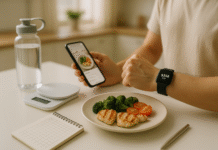
Sustainable batch cooking is a loop: plan → cook → store → measure → refine. Keep a short “batch log” (notes app or notebook) with three columns: what you made, how many portions, and what ran out first. Track the dates you cooked, what you froze, and what you tossed. This helps right-size future batches, tighten budgets, and eliminate waste. Use a freezer list, apply first-in-first-out, and schedule a light “maintenance cook” midweek (e.g., roast another tray of veg or cook a pot of rice). Over 3–4 weeks, you’ll dial in the exact cadence and quantities that match your household.
12.1 How to do it
- Log: recipe, yield, date, and feedback (too salty? not enough veg?).
- Set calendar reminders for “use or freeze” checkpoints at 3–4 days.
- Keep back-pocket meals (eggs, quesadillas, tuna-bean salads) for nights when the plan shifts.
12.2 Mini case
Week 1 you made chili (10 cups) and it lingered; week 2 you portion 1-cup bricks and freeze half day-of. Result: zero waste, same flavor, faster weeknights.
Takeaway: a 60-second log and FIFO rotation keep your system humming—and your fridge uncluttered.
FAQs
1) What exactly counts as “batch cooking”?
Cooking larger quantities of complete dishes or meal components in one session, then cooling, portioning, and storing them for future meals. The goal is to reduce daily cooking time while improving consistency and cost control.
2) How long can I keep cooked food in the fridge?
Most cooked leftovers are best used within 3–4 days; after that, quality and safety decline. Freeze portions you won’t eat by day three or four. Reference a reputable cold storage chart when in doubt.
3) What temperatures should my fridge and freezer be?
Keep the refrigerator at or below 40°F (4°C) and the freezer at 0°F (–18°C). Use appliance thermometers if your units don’t show actual temps; this is especially helpful in hot climates or during load-shedding.
4) How do I cool big pots of soup or stew quickly?
Divide into shallow containers (≤5 cm/2 in deep) and place in the fridge, or use an ice bath and stir to speed heat loss. Don’t leave food at room temperature longer than 2 hours (1 hour if above 32°C/90°F).
5) Is it safe to put hot food straight into the fridge?
Yes—prompt refrigeration reduces time in the “danger zone.” Use shallow containers and avoid over-crowding so the fridge can cool items efficiently.
6) What’s the safest way to thaw frozen meals?
Thaw in the refrigerator for best control. Cold-water and microwave thawing are safe too, but cook immediately afterward. Never thaw on the counter.
7) Can I refreeze thawed food?
If you thawed cooked food in the refrigerator and kept it cold, you may refreeze it; expect some quality loss. When in doubt, portion smaller before freezing.Food Safety and Inspection ServiceAsk USDA
8) How hot should reheated food be?
Reheat leftovers to 165°F (74°C). Verify with an instant-read thermometer, especially for dense dishes and when reheating from frozen.FoodSafety.gov
9) Any special rules for rice and other grains?
Yes—cool rice quickly and refrigerate promptly to prevent Bacillus cereus growth; reheat thoroughly and avoid multiple reheat cycles.
10) How do I keep batch cooking from getting boring?
Cook neutral bases and change the “top notes”: sauces, dressings, herbs, pickles, crunchy toppings. A few 2-tablespoon sauce cubes can make the same protein taste brand-new.
Conclusion
Batch cooking isn’t just “cooking more food.” It’s a repeatable system that trades a little weekend focus for a lot of weekday freedom. The 12 strategies above walk you from planning to plating: pick a cadence that fits your life, estimate yields so you buy and prep the right amounts, and set up stations that keep you moving. Cook proteins and grains with methods that scale, then cool quickly, portion smartly, and label for clarity. Treat your fridge and freezer like tools: know the temperatures, the storage windows, and the best thawing methods. Finally, build flavor bases and keep a simple rotation log so your batches stay interesting, safe, and waste-free. Start with three dishes this week, label everything, and enjoy the compounding benefits next week and beyond. Ready to try? Pick your cooking block, write a quick list, and batch your first 8–10 portions this weekend.
References
- Leftovers and Food Safety, USDA FSIS, July 31, 2020 — https://www.fsis.usda.gov/food-safety/safe-food-handling-and-preparation/food-safety-basics/leftovers-and-food-safety
- Refrigeration & Food Safety, USDA FSIS, March 23, 2015 — https://www.fsis.usda.gov/food-safety/safe-food-handling-and-preparation/food-safety-basics/refrigeration
- Safe Minimum Internal Temperature Chart, USDA FSIS, n.d. — https://www.fsis.usda.gov/food-safety/safe-food-handling-and-preparation/food-safety-basics/safe-temperature-chart
- About Four Steps to Food Safety, CDC, April 29, 2024 — https://www.cdc.gov/food-safety/prevention/index.html
- FDA Food Code 2022 (Full Text), U.S. FDA, 2022 — https://www.fda.gov/media/164194/download
- Cooling Cooked Time/Temperature Control for Safety Food (Guidance), U.S. FDA, 2024 — https://www.fda.gov/media/181882/download
- Cold Food Storage Charts, foodsafety.gov (USDA/FDA partnership), September 19, 2023 — https://www.foodsafety.gov/food-safety-charts/cold-food-storage-charts
- Home Food Fact Checker: Rice Safety, UK Food Standards Agency, June 2, 2020 — https://www.food.gov.uk/safety-hygiene/home-food-fact-checker
- Healthy Eating Plate, Harvard T.H. Chan School of Public Health, n.d. — https://nutritionsource.hsph.harvard.edu/healthy-eating-plate/
- Safe Food Handling (Leftovers, Cooling, Thawing), U.S. FDA, March 5, 2024 — https://www.fda.gov/food/buy-store-serve-safe-food/safe-food-handling
- Appliance Thermometers, USDA FSIS, August 8, 2013 — https://www.fsis.usda.gov/food-safety/safe-food-handling-and-preparation/food-safety-basics/appliance-thermometers
- Meal Planning Tips, USDA MyPlate, n.d. — https://www.myplate.gov/tip-sheet/meal-planning