



























By Ellie Brooks
Somewhere between the hundredth push-up and the first time you rack a barbell, a specific kind of confusion sets in. You’ve built real capacity with squats, lunges, planks, and push-ups. Your body moves better than it did six months ago. Yet the leap to loading a bar with actual plates feels bigger than it should, less like a next step and more like a different sport entirely. That gap is real, but it’s also narrower and more crossable than most beginners assume, provided you build the bridge in the right order.
This guide lays out a twelve-week plan for moving from bodyweight training into barbell work, built for people who have never touched a squat rack and want a structured, low-drama way to get there. It draws on established public health guidance on strength training frequency, foundational progression concepts used in beginner barbell programming, and general exercise science on how novice lifters adapt to load. Nothing here replaces guidance from a doctor, physical therapist, or certified coach who can assess your individual situation, especially if you have an existing injury, joint condition, or chronic illness. If you’re new to structured exercise or returning after a long break, a conversation with your physician before you start is a reasonable and recommended step.
Why Bodyweight Training Alone Has a Ceiling
Bodyweight training earns its popularity honestly. Push-ups, squats, lunges, planks, and rows against furniture or bands develop real strength, coordination, and joint control with zero equipment cost and minimal injury risk while you’re learning. Research summarized in general exercise science literature credits bodyweight training with improving strength, power, endurance, speed, flexibility, coordination, and balance simultaneously, and notes that because the exercises scale naturally to a person’s limb length and body proportions, they tend to fit a wide range of ages and starting abilities. For older adults specifically, bodyweight-based training programs have been associated with improved posture, bone density, and flexibility.
The catch is progression. Once your push-up form is clean and you can do sets of twenty or thirty with control, the exercise stops asking much of your muscles. You can slow the tempo, raise your feet onto a step, or move to single-arm variations, but each of those modifications asks for more skill and balance rather than more raw strength. A barbell, by contrast, lets you add small, measured amounts of resistance almost indefinitely. That’s the entire logic behind a training principle called progressive overload: gradually increasing the demand placed on your muscles and nervous system over time, whether through added weight, added reps, added sets, or less rest between sets. External load is simply the most precise and scalable tool for applying that principle once bodyweight variations run out of room.
None of this makes bodyweight training a lesser method. It makes it a different tool, one that’s ideal for building the movement literacy, joint tolerance, and body awareness that make barbell training safer and more productive once you start. That’s exactly what the first weeks of this plan are designed to do.
“Beginning strength-trainers are, in large part, training their nervous system’s capacity to recruit muscle near its maximum potential, before significant muscle growth even occurs.” That’s why early progress on a barbell often outpaces what your muscle size alone would predict, and why consistency in the first weeks matters more than the weight on the bar.
What the Guidelines and Research Actually Say
Public health bodies are consistent on the basics. The CDC recommends that adults do muscle-strengthening activity involving all major muscle groups, legs, hips, back, abdomen, chest, shoulders, and arms, on two or more days a week, alongside 150 minutes of moderate-intensity aerobic activity (or 75 minutes of vigorous activity) weekly. The NHS gives essentially the same recommendation for adults aged 19 to 64: strengthening work covering all major muscle groups at least two days a week, spread across a broader pattern of activity most days of the week. Both agencies also point out that gradually increasing the weight and repetitions used in strengthening activities produces additional benefit regardless of age, which is the entire premise behind a structured bridge program rather than repeating the same routine indefinitely.
The health case for getting there is not trivial. The CDC has noted that adults meeting both the aerobic and muscle-strengthening guidelines were about half as likely to die from flu and pneumonia compared with adults meeting neither. Broader research on resistance training has associated it with a reduction of roughly 10 to 17 percent in all-cause mortality risk, alongside improvements in bone density, blood pressure, body composition, and functional independence, particularly as people age. None of that means lifting a barbell is a medical intervention, but it’s a meaningful reason to treat strength training as a long-term habit worth building carefully rather than rushing.
On the technical side, general strength training guidance breaks resistance work into three broad load zones depending on your goal: heavy loads at 80 to 100 percent of a one-rep max for 1 to 5 repetitions tend to build maximal strength, moderate loads at 60 to 80 percent for 8 to 12 repetitions taken close to failure tend to build muscle size, and lighter loads under 60 percent for 15 or more repetitions build muscular endurance. For beginners specifically, training a lift twice a week has shown better results than once a week for building size and strength, though the added benefit of a third weekly session is less clearly established in the evidence. Rest between sets matters too: more experienced lifters chasing maximal strength benefit from resting 3 to 5 minutes between heavy sets, though beginners working with lighter, more moderate loads generally don’t need rest periods that long.
Are You Ready to Add a Barbell? Check These Benchmarks First
There’s no single test that certifies readiness, but a handful of bodyweight benchmarks give a reasonable signal that your joints, coordination, and baseline strength can handle external load without you having to guess.
Signs You’re Ready to Start Loading a Bar
- You can perform a bodyweight squat below parallel with your heels flat, chest upright, and knees tracking over your toes for 15 to 20 clean repetitions.
- You can hold a plank with a neutral spine (no sagging hips or piked back) for at least 45 to 60 seconds.
- You can do a set of 10 to 15 standard push-ups with full range of motion and no lower-back arching.
- You can perform a supported single-leg deadlift pattern (hinging at the hips, not the low back) with control on both sides.
- You’ve been training bodyweight movements consistently for at least four to six weeks with no unresolved joint pain.
If most of those feel out of reach right now, that’s not a failure, it just means the first weeks of this plan (which are built around exactly those movement patterns) will do their job before you touch a bar. If you already meet all five, you can compress the first phase and move into loaded work sooner, as noted in the modification guidance below.
The Twelve-Week Bridge: Structure Overview
The plan is organized into three four-week blocks. Each block has a distinct job: first, cleaning up movement patterns and building general work capacity; second, introducing the empty barbell and an assisted or lightly loaded pattern for each major lift; third, applying small, steady load increases while you get comfortable with actual training weight. Two to three total-body sessions per week is the target throughout, which lines up with the two-or-more-days-a-week frequency that both the CDC and NHS recommend for strengthening work, while leaving recovery days between sessions since you’re training the same major movement patterns each time.
Block 1 · Weeks 1-4
Movement Literacy and Base Building
Bodyweight squats, push-ups, planks, glute bridges, band or furniture-assisted rows, and hip-hinge drills. Two to three sessions a week, focused on full range of motion and control rather than volume records.
Block 2 · Weeks 5-8
Meeting the Bar
Introduce the empty barbell (or a light training bar) for squat, deadlift, overhead press, and bench press patterns. Focus shifts to bar path, bracing, and setup, with weight added only once form is consistent across two straight sessions.
Block 3 · Weeks 9-12
Structured Loading
Small, session-to-session weight increases on the four main lifts, following a simple linear progression model, with accessory bodyweight work retained for balance and joint health.
Block 1 (Weeks 1-4): Movement Literacy and Base Building
The goal in these four weeks is not fatigue, it’s competence. You’re teaching your body the movement patterns that the barbell lifts are built on: the squat pattern, the hip hinge, a pressing pattern, and a pulling pattern. Every barbell lift in Block 2 is really just a bodyweight pattern with resistance added, so the cleaner these patterns get now, the shorter and safer Block 2 becomes.
A sample Block 1 session (repeat 2-3 times weekly, with a rest day between sessions)
- Bodyweight squat: 3 sets of 12-15, pausing briefly at the bottom
- Push-ups (full or knee-supported): 3 sets of 8-15
- Glute bridge or hip thrust: 3 sets of 12-15
- Band or table-supported row: 3 sets of 10-15
- Front or side plank: 3 sets, holding 20-45 seconds
- Romanian deadlift pattern using a light object or just bodyweight (hip hinge drill): 3 sets of 10
Add a rep or a few seconds of hold each week rather than trying to progress everything at once. By week four, most beginners can comfortably hit the readiness benchmarks described earlier. If you started this plan already meeting most of those benchmarks, it’s reasonable to shorten this block to two or three weeks and move into Block 2 sooner. That said, resist the urge to skip this phase entirely: the coordination you build here is what keeps the empty bar from feeling foreign in Block 2.
Block 2 (Weeks 5-8): Meeting the Bar
This is where the actual barbell enters the picture, but weight is not yet the point. A standard barbell weighs roughly 20 kilograms (about 45 pounds); many gyms also stock lighter training bars around 10 to 15 kilograms, which are a reasonable starting point if the standard bar feels unmanageable at first. The job in these four weeks is to learn the setup, the bracing, and the bar path for each of the four foundational lifts before adding a single plate.
A sensible way to spend these four weeks: two or three sessions a week, each covering all four lifts with just the empty bar (or a light training bar) for 3 sets of 5 reps, plus the plank and row work from Block 1 kept in as accessories. Film your sets from the side if you can. Bar path issues, like a squat bar drifting forward or a bench press bar wandering toward the neck, are much easier to see on video than to feel in the moment. Only move to Block 3’s loading once your form has looked consistent for two sessions in a row, not just one good set.
Block 3 (Weeks 9-12): Structured Loading
With movement patterns established, this final block applies a simple linear progression: small, fixed weight increases added at every session (or every other session, depending on the lift and how your body responds), while rep and set targets stay the same. This is the mechanism behind the progressive overload principle described earlier, and applying it in small, predictable increments is what makes early barbell training both productive and safe.
A Reasonable Starting Structure for Block 3
- Frequency: Two to three total-body sessions weekly, at least one rest day between sessions covering the same lift
- Sets and reps: 3 sets of 5 reps for squat, deadlift (often 1 top set for deadlift is enough), bench press, and overhead press
- Load increases: Small, consistent jumps between sessions for the upper-body lifts (bench, press), slightly larger jumps for squat and deadlift, since the legs and hips typically adapt to load faster than the shoulders and arms
- Rest between working sets: Roughly 2-3 minutes at these lighter beginner loads, longer if a set felt genuinely difficult
- Accessories: Keep one or two bodyweight or band movements (planks, rows, glute bridges) to round out muscles the four main lifts don’t emphasize
Expect this straightforward week-to-week progression to work reliably for a while, often well beyond the twelve weeks covered here. When a lift stalls for two or three sessions in a row despite consistent effort, sleep, and food, that’s the normal signal to slow the rate of increase, add an extra recovery day, or bring in more experienced coaching eyes on your technique, not a sign that something has gone wrong with your body.
Programming Principles Worth Understanding, Not Just Following
You don’t need a kinesiology degree to lift a barbell well, but a few underlying ideas make the twelve-week structure make sense rather than feeling arbitrary.
Progressive overload is the whole engine
Every method of getting stronger, more reps, more weight, more sets, less rest, is really just a different way of applying the same principle: give the body a slightly bigger demand than it’s adapted to, then let it recover and adapt again. A barbell is useful precisely because it lets you apply this in small, exact increments (a kilogram or two at a time) rather than the bigger jumps that bodyweight progressions often require.
Early strength gains come from your nervous system, not new muscle
In the first weeks of any resistance program, most of the improvement in how much weight you can move comes from your nervous system getting better at recruiting the muscle you already have, not from new muscle tissue. That’s a genuinely encouraging fact for beginners: it means real, measurable strength gains show up fast, often within the first few weeks of consistent training, well before visible physical changes appear.
Frequency matters more than any single workout
Both the CDC and NHS frame their recommendation around at least two days a week of strengthening work covering major muscle groups, and general resistance training research has found that training a muscle group twice weekly tends to outperform training it once weekly for beginners. Two or three well-executed, moderate sessions most weeks will outperform one heroic session followed by a week off.
Safety, Recovery, and Common Mistakes
Barbell training carries real injury risk when form breaks down under load, in the same way any strength-based physical activity does. Poor technique, particularly a rounded lower back under a loaded bar, can lead to strains, and rushing weight increases before technique is solid raises that risk further. A few practical habits reduce it substantially.
Common Beginner Mistakes to Avoid
- Adding weight to the bar before two consecutive sessions of clean form
- Skipping warm-up sets with the empty bar to “save time”
- Comparing your bar weight to someone else’s, instead of your own prior session
- Training through sharp or joint-level pain rather than dull muscle fatigue
- Cutting rest days short because a session felt easy
- Ignoring sleep and food, which drive most of the recovery between sessions
If you experience sharp pain, joint instability, dizziness, chest pain, or any symptom that feels outside normal muscular fatigue, stop the session and check with a doctor before continuing the program. This is especially relevant if you’re returning from injury, managing a chronic condition, are pregnant, or are new to structured exercise after a long period of inactivity. A qualified strength coach or physical therapist can also review your form in person, which catches issues that are genuinely hard to self-diagnose from a phone video, particularly around bar path and bracing.
Recovery outside the gym carries roughly equal weight to the training itself. Consistent sleep, adequate protein and overall food intake, and hydration all support the adaptation process that turns a training session into an actual strength gain. None of that needs to be complicated or restrictive; it mostly needs to be consistent.
Modifying the Plan for Your Situation
Twelve weeks is a template, not a rulebook. A few common adjustments:
- Already comfortable with bodyweight basics: Compress Block 1 to two or three weeks and move into the empty bar sooner, as mentioned earlier.
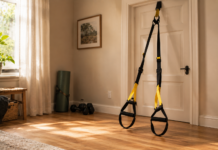
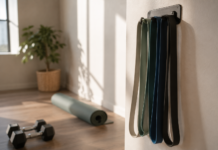
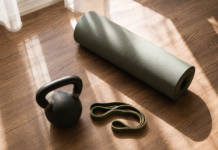
- No gym access yet: Stay in Block 1 longer and use resistance bands or a single adjustable dumbbell to bridge the intensity gap before your first gym session.
- Returning after an injury: Get clearance from your doctor or physical therapist first, then plan on a slower loading pace in Block 3 than the general structure above suggests.
- Limited time (one session a week): One well-executed full-body session is still valuable, but expect progress at roughly half the pace of a twice- or three-times-weekly schedule, in line with the frequency research described above.
Frequently Asked Questions
Do I need to master bodyweight training completely before touching a barbell?
Not completely, but you should be comfortable with the core patterns first: a controlled squat, a stable plank, a clean push-up, and a pain-free hip hinge. These are the same patterns the barbell lifts are built on, so time spent here shortens and safens the transition rather than delaying it unnecessarily.
How much weight should I add to the bar each week?
Small, steady increments work better than big jumps, particularly for upper-body lifts like the bench press and overhead press, which tend to progress more slowly than the squat and deadlift. If a lift stalls for two or three sessions despite good sleep and consistent effort, that’s the normal cue to slow the rate of increase rather than push through.
Is it normal to feel weaker on the barbell than I expected, given how strong I felt with bodyweight work?
Yes. Barbell lifts recruit stabilizing muscles and require bracing and bar-path coordination that bodyweight training doesn’t demand in the same way, so an initial adjustment period is completely normal and not a sign that your bodyweight training “didn’t count.”
How many days a week should I actually train during this twelve-week plan?
Two to three total-body sessions a week works well and lines up with the frequency that health guidelines from the CDC and NHS recommend for muscle-strengthening activity. More isn’t automatically better for a beginner, since recovery between sessions is where the actual adaptation happens.
What if I don’t have access to a barbell yet?
Stay in the bodyweight and band-based work from Block 1 longer, and consider a single adjustable dumbbell as an intermediate step. The movement patterns and progressive overload principle transfer directly once you do get access to a bar.
Should I hire a coach for this transition?
It’s not mandatory, but even a single in-person session with a certified strength coach to check your squat, deadlift, bench, and press setup can catch technique issues that are difficult to see in your own mirror or phone video, and it can meaningfully reduce your injury risk during Block 2 and Block 3.
References
- Centers for Disease Control and Prevention, Physical Activity Guidelines for Adults
- Centers for Disease Control and Prevention, Benefits of Physical Activity
- NHS, Physical Activity Guidelines for Adults Aged 19 to 64
- Wikipedia, Strength Training
- Wikipedia, Progressive Overload
- Wikipedia, Bodyweight Exercise