
























By Olivia Bennett
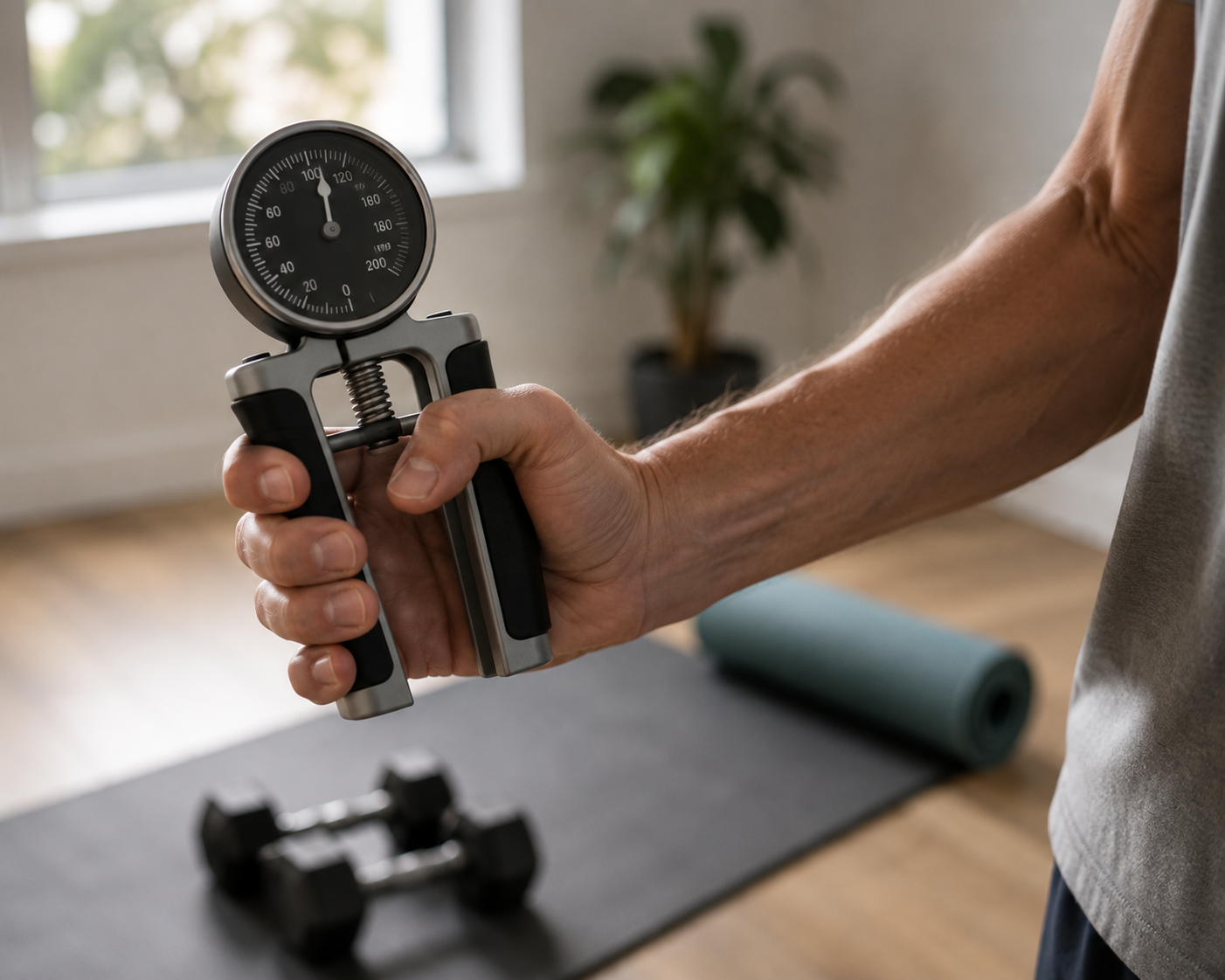
Squeeze a jar lid that won’t budge, or shake hands with someone whose grip feels like a soft handshake, and you’re getting a small readout on something researchers now take quite seriously: how strong your hands and forearms are. That single number, measured in kilograms or pounds on a simple handheld device called a dynamometer, has turned out to correlate with far more than arm-wrestling potential. Large population studies have linked it to cardiovascular health, metabolic function, and how well people function as they age.
This guide walks through what grip strength actually measures, why it has earned a place alongside blood pressure and cholesterol as a screening tool researchers pay attention to, how to test it yourself with equipment you can buy or borrow, and a practical, sustainable plan to build it if your number comes back lower than you’d like.
What Grip Strength Actually Measures
Grip strength is the maximum force your hand and forearm muscles can generate during a single, brief squeeze. It draws on more than 30 muscles that run from the fingers through the palm and up the forearm, coordinated by nerves that fire in a tight burst when you clench a dynamometer handle or a jar lid. The test itself is simple, but the muscles behind it are anything but isolated: flexor and extensor tendons in the forearm connect to a nervous system that also controls balance, coordination, and reaction time.
That’s part of why grip strength turns out to be a useful proxy. It’s not that strong hands directly cause a longer life. Rather, grip strength tends to track overall muscle mass, neuromuscular function, and general physical condition, all of which decline together as health deteriorates from aging, illness, or inactivity. A simple, cheap, thirty-second test ends up reflecting a much bigger picture.
Why Researchers Treat It as a Health Marker
The evidence base here is larger than a single study. One of the most cited pieces of research tracked 502,293 adults aged 40 to 69 enrolled in the UK Biobank, following them for a mean of 7.1 years. For every 5-kilogram decrease in grip strength, the risk of all-cause mortality rose by about 20% in women and 16% in men. Cardiovascular mortality risk climbed by roughly 19% to 22%, respiratory disease mortality by 24% to 31%, and cancer mortality by 10% to 17% per 5-kilogram decrease. Adding grip strength to a standard risk model built from age, sex, smoking status, blood pressure, diabetes status, and BMI measurably improved how well that model predicted death from any cause and from cardiovascular disease.
Interestingly, the same research found the association was somewhat stronger in younger participants than older ones, suggesting grip strength might carry the most predictive punch well before old age, not just after it.
Longer-term work points in a similar direction. Research led by Taina Rantanen and colleagues, tracking midlife adults over multiple decades, found that grip strength measured in a person’s 40s and 50s predicted disability risk many years later. More recent reviews, including work by physical therapy researcher Richard Bohannon, have positioned grip strength as a practical biomarker of aging: a number clinicians can gather in the time it takes to check blood pressure, without a lab, a needle, or a wait for results.
The World Health Organization has also flagged grip strength as an indicator of vitality in aging populations, and it shows up as one of the strength criteria in sarcopenia, the age-related loss of muscle mass and function. Sarcopenia affects an estimated 5% to 13% of adults in their 60s and 70s, and 11% to 50% of adults over 80, depending on the population and diagnostic criteria used. Globally, sarcopenia already affects more than 50 million people, with projections suggesting that figure could exceed 200 million within the next few decades as populations age.
None of this means a single weak handshake is a diagnosis of anything. Grip strength is a screening signal, not a verdict. If your number is unexpectedly low, or you’re concerned about strength loss alongside other symptoms like unintentional weight loss or fatigue, that’s a conversation for a doctor, not a search engine.
How to Test Your Grip Strength at Home
You don’t need a hospital lab to get a reasonably accurate reading. Handheld dynamometers, the same type of device used in clinical research, are sold online for home use, typically in the $25 to $60 range. Here’s how the options stack up.
If you’re using an actual dynamometer, the standard research protocol (recommended by groups such as the European Working Group on Sarcopenia in Older People) is straightforward:
Step-by-Step Testing Protocol
- Sit upright in a chair with no armrests, feet flat on the floor.
- Keep your elbow bent at 90 degrees, upper arm relaxed against your side (not braced on a table).
- Hold the dynamometer in a neutral grip, wrist straight, not bent up or down.
- Squeeze as hard as you can for about 3 to 5 seconds, exhaling as you squeeze rather than holding your breath.
- Rest for at least 30 to 60 seconds, then repeat two more times on the same hand.
- Test the other hand using the same steps.
- Record your best single reading for each hand, not the average. Most researchers use the maximum of three trials.
Test at roughly the same time of day when you retest, since grip strength can vary a bit with fatigue, hydration, and how recently you’ve trained your arms.
Making Sense of Your Number
Grip strength varies substantially by sex, age, height, and overall body size, so a single “good” number doesn’t exist for everyone. In general population data, men tend to score noticeably higher than women. One commonly cited comparison notes that around 95% of men have grip strength greater than 90% of women, reflecting real differences in average muscle mass rather than a training gap alone. Grip strength also tends to peak in the late 20s to mid-30s and gradually declines from there, with the rate of decline picking up after age 50 or so.
Rather than chasing an arbitrary “ideal” number, it’s more useful to think in terms of functional thresholds. Research on older adults performing physically demanding daily tasks (carrying groceries, opening jars, pushing up from a chair) has identified rough grip-strength floors below which those tasks become noticeably harder: around 28.5 kilograms (63 pounds) for men and 18.5 kilograms (41 pounds) for women. Falling well below these levels, especially alongside slower walking speed or difficulty rising from a chair, is one of the signals clinicians use when screening for sarcopenia or general frailty.
The more useful number for most people isn’t a single test result measured against a population chart. It’s the trend on your own graph over months and years. A gradual, unexplained decline in your own grip strength, tracked consistently with the same device and protocol, is a more meaningful signal than how you compare to a stranger’s average.
What a Low Reading Might Signal (and What It Doesn’t)
A below-average grip strength reading is not a diagnosis. It can reflect something as simple as being new to strength training, having smaller hands, or testing right after a long day of typing. That said, research has associated persistently low grip strength with several patterns worth knowing about:
- Sarcopenia and general frailty, particularly in adults over 60, where low grip strength is one of several markers used alongside muscle mass and walking speed.
- Higher cardiometabolic risk, including associations with future diabetes risk noted in population research.
- Reduced functional independence in daily tasks like carrying groceries, opening containers, or getting up from the floor.
- General deconditioning, which often accompanies extended illness, low activity levels, or extended bed rest.
If a grip test (yours or a family member’s) comes back surprisingly low, especially alongside other changes like unintended weight loss, persistent fatigue, or difficulty with everyday tasks, that’s worth raising with a doctor rather than trying to self-diagnose. Grip strength is one input among many a clinician would consider, not a stand-alone test for any specific disease.
How to Improve Grip Strength
Grip strength responds to training the same way any other muscle group does: progressive overload, consistency, and recovery. You don’t need specialized equipment to start, though a few inexpensive tools help.
Core Training Methods
Dead hangs. Hang from a pull-up bar with an overhand grip, feet off the floor, for as long as you can hold good form. This builds grip endurance and decompresses the spine as a side benefit. Start with short sets and build duration gradually.
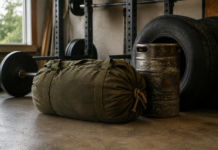
Farmer’s carries. Pick up a heavy dumbbell, kettlebell, or loaded bag in each hand and walk a set distance (20 to 40 meters is a common starting point) while keeping your shoulders back and core braced. This is one of the most efficient full-forearm exercises available because it combines grip, forearm, shoulder, and core stability work in one movement.
Plate pinches. Pinch a weight plate (smooth side out) between your thumb and fingers and hold it for time. This targets the thumb and finger flexors differently than a closed-fist grip does, which matters because grip strength isn’t a single muscle action, it’s several distinct movement patterns.
Grippers. Adjustable or spring-loaded hand grippers let you train closing strength directly, with an easy way to track progress by resistance level or repetitions.
Wrist curls and reverse wrist curls. Using a light dumbbell or barbell, curl the wrist up and down through its range of motion. This strengthens the forearm muscles that stabilize grip during heavier lifts.
Towel-grip pull-ups or rows. Draping a towel over a bar or handle and gripping the towel instead of the bar increases grip demand substantially during a familiar movement.
Sample 8-Week Grip Strength Protocol
- Weeks 1–2: Dead hangs, 3 sets to near-failure (rest 90 seconds); farmer’s carries, 3 sets of 20 meters with a moderate load.
- Weeks 3–4: Add plate pinches, 3 sets of 15–20 seconds per hand; increase carry distance to 30 meters.
- Weeks 5–6: Introduce grippers, 3 sets of 6–10 reps per hand; increase carry load by 5–10%.
- Weeks 7–8: Combine all movements into a single circuit, 2–3 rounds, and retest your dynamometer reading using the same protocol as your baseline.
This general training frequency lines up with broader public health guidance. Both the CDC and NHS recommend muscle-strengthening activity covering all major muscle groups at least twice a week for general adult health, alongside 150 minutes of moderate aerobic activity (or 75 minutes of vigorous activity) weekly. Grip work fits naturally into that framework rather than requiring an entirely separate routine.
Everyday Habits That Help
- Carry groceries in your hands instead of relying on a cart whenever it’s practical and safe to do so.
- Use a thicker towel or grip-training implement occasionally during regular strength workouts to add incidental grip demand.
- Do simple daily tasks, like opening jars or twisting off bottle caps, with deliberate effort rather than reaching for a jar-opening tool every time.
- Include some unilateral (single-arm or single-hand) work in your training, since grip fatigue often shows up before the target muscle does in exercises like rows and pull-ups.
Safety Notes Before You Start
Grip and forearm training is generally low-risk for most healthy adults, but a few precautions matter. If you have arthritis, carpal tunnel syndrome, a recent hand or wrist injury, or a diagnosed cardiovascular condition, talk with a doctor or physical therapist before starting an aggressive grip protocol, particularly anything involving heavy dead hangs or forceful pinch grips. People with uncontrolled high blood pressure should also be cautious with maximal isometric squeezing, since brief, intense grip efforts can cause a short spike in blood pressure. As with any new exercise program, easing in gradually and paying attention to joint pain (as opposed to normal muscle fatigue) is the safest approach.
Grip Strength Across Different Life Stages
The reasons grip strength matters shift somewhat depending on where you are in life, even though the underlying test stays the same.
In your 20s and 30s, grip strength is typically near its lifetime peak. A low reading at this stage usually points to limited strength training exposure rather than any underlying health concern, and it tends to respond quickly to a few weeks of consistent work. This is also a good time to establish a personal baseline, since you’ll have a meaningful number to compare against decades later.
In your 40s and 50s, the research from Rantanen and colleagues becomes especially relevant: grip strength measured during this window has been linked to disability risk much later in life. This is roughly the stretch where muscle mass loss (sometimes called age-related sarcopenia when it becomes significant) tends to begin outpacing muscle gain if training isn’t part of the routine, so it’s a sensible point to start paying closer attention to strength maintenance, not just cardio.
In your 60s and beyond, grip strength becomes one of the more practical everyday-function indicators available. Carrying groceries, opening jars, using a cane or walker correctly, and catching yourself during a stumble all draw on hand and forearm strength. Clinicians working with older adults often use grip strength alongside walking speed and chair-rise time as a quick, low-burden way to flag people who might benefit from a closer look at muscle mass and fall risk. For this age group specifically, working with a physical therapist or physician before starting a new strength program is a reasonable precaution, particularly for anyone managing osteoporosis, arthritis, or a recent injury.
For athletes and people in physically demanding jobs, grip strength often functions less as a health marker and more as a direct performance variable. Climbers, combat-sport athletes, manual laborers, and strength athletes frequently train grip deliberately because it becomes the limiting factor in other lifts and tasks long before the target muscle group gives out. A deadlift, for example, is often capped by how long someone can hold the bar rather than by back or leg strength alone.
Equipment Worth Considering
If you decide to invest in home equipment beyond a basic dynamometer, a few inexpensive options cover most of the training methods described above. A pair of adjustable hand grippers lets you progress resistance gradually instead of buying a new fixed-resistance gripper every few months. A pull-up bar, whether doorway-mounted or freestanding, opens up dead hangs and towel-grip variations. A couple of thick-handled dumbbells or simple grip trainers add variety to farmer’s carries without requiring a full home gym. None of this needs to be expensive: a resistance band, a couple of hand towels, and a pair of dumbbells you likely already own are enough to run the entire 8-week protocol described earlier.
Tracking Progress the Right Way
Retest under the same conditions every 4 to 8 weeks: same time of day, same hand order, same number of trials, same device if possible. Write down your best reading for each hand rather than relying on memory. Small week-to-week fluctuations are normal and don’t mean training isn’t working. What matters is the trend across two or three retests, not any single session.
Frequently Asked Questions
Is grip strength the same as forearm size?
Not exactly. Grip strength depends on muscle fiber recruitment and nervous system efficiency as much as raw muscle size. Two people with similar forearm circumference can have noticeably different grip strength depending on training history and how well their nervous system activates those muscles.
How often should I test my grip strength?
Every 4 to 8 weeks is a reasonable interval for tracking training progress. Testing more frequently than that mostly captures day-to-day noise (hydration, fatigue, recent activity) rather than real change.
Can grip strength improve at any age?
Research on resistance training in older adults, including those in their 70s and 80s, generally shows meaningful strength gains are still possible with consistent training, though the rate of improvement and the ceiling may differ from someone in their 20s. Starting later still tends to beat not starting at all.
Does grip strength decline naturally as I age even if I keep exercising?
Some decline with age is typical, tied to gradual muscle fiber loss, but consistent resistance training, including grip-specific work, has been shown to slow that decline meaningfully compared with inactivity. Staying consistent matters more than any single exercise choice.
Is a home dynamometer accurate enough to trust?
A reasonably priced hydraulic or spring dynamometer, used with a consistent protocol, gives you a reliable way to track your own trend over time. It may not perfectly match a calibrated clinical device down to the decimal point, but for personal tracking purposes, consistency matters more than laboratory-grade precision.
What’s a normal grip strength decline to expect with age?
Population studies generally show grip strength peaking in the late 20s to mid-30s, then declining gradually, with the pace of decline increasing after age 50. Individual results vary widely based on activity level, so population averages are a rough reference point rather than a personal target.
The Takeaway
Grip strength earns its reputation as a health marker because it’s cheap, fast, and reflects a genuinely useful cross-section of muscle mass, nervous system function, and general conditioning. A low reading isn’t a diagnosis on its own, and a high one isn’t a guarantee of good health either. Still, testing it every couple of months, tracking the trend, and training it deliberately with a handful of simple exercises (dead hangs, carries, pinches, grippers) is a low-cost way to support both daily function and the broader picture of physical health as you age. If a reading concerns you, or you notice a sudden or unexplained drop, bring it up with a doctor rather than trying to interpret it alone.
References
- Celis-Morales, C. A., et al. “Associations of grip strength with cardiovascular, respiratory, and cancer outcomes and all cause mortality: prospective cohort study of half a million UK Biobank participants.” The BMJ, 2018. bmj.com/content/361/bmj.k1651
- Wikipedia contributors. “Grip strength.” Wikipedia. en.wikipedia.org/wiki/Grip_strength
- Wikipedia contributors. “Sarcopenia.” Wikipedia. en.wikipedia.org/wiki/Sarcopenia
- Cruz-Jentoft, A. J., et al. “Sarcopenia: revised European consensus on definition and diagnosis (EWGSOP2).” Age and Ageing, 2019. academic.oup.com/ageing/article/48/1/16/5292623
- Centers for Disease Control and Prevention. “Physical Activity Guidelines for Adults.” cdc.gov/physical-activity-basics/guidelines/adults.html
- NHS. “Strength exercises.” nhs.uk/live-well/exercise/strength-exercises