

























If you’ve ever pictured a conversation going well, walked through a presentation in your mind, or rehearsed a free throw without a ball, you’ve used visualization. In plain terms, visualization is the deliberate use of mental imagery and inner rehearsal to guide attention, emotion, and action toward a desired outcome. Done consistently and paired with smart plans, it can sharpen skills, reduce stress, and help you follow through. (This article is educational and not medical advice.) A large body of research shows mental practice can improve performance and recruit many of the same brain systems as physical practice—especially when you visualize the process, plan for obstacles, and tie images to concrete “if–then” actions.
Quick-start steps (skim-friendly):
- Pick one specific goal and name the “scene” you’re trying to create.
- Visualize the process (steps) before the finish line.
- Contrast your desired future with the real obstacles, then create if–then plans (WOOP/MCII).
- Engage multiple senses and emotions.
- Rehearse daily in short sessions and link imagery to tiny actions.
- Track vividness and adjust—there’s no one “right” mind’s eye.
1. Define the Target Scene With Specifics
A strong visualization starts with a crystal-clear scene and purpose. State exactly what “better” looks like (e.g., “deliver a 10-minute update calmly, hit my three key points, and finish with one ask”). Then choose the moment you’ll rehearse—walking to the front, greeting the room, or handling a tough question. Framing the scene matters because your brain encodes context along with content; when the real situation resembles your imagined one, recall and execution are easier. This is also where you make the goal measurable so you can later test whether the imagery helped (time, accuracy, reps, or a simple 1–10 confidence rating). Finally, set expectations: imagery isn’t magic; it’s a way to prime attention, emotion, and action so your next step is easier.
- Mini-checklist (scene builder):
- What will I see/hear/feel in the scene?
- Where does this begin and end?
- What’s my first physical cue to start?
- What single behavior defines success?
- What obstacle might pop up in this scene?
1.1 Why it matters
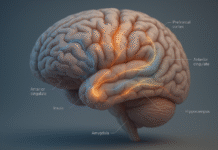
Motor and cognitive rehearsal can recruit overlapping brain networks with real performance effects. Put differently: the more precisely you define the target situation, the more your mental practice maps onto what your body and brain will later do.
1.2 Numbers & guardrails
Start with 60–90 seconds per scene and build to 3–5 minutes, once or twice daily, for one to two weeks per scenario. Keep the scene consistent for a few days before tweaking it; change too much too often and you dilute learning.
Close by writing one line that captures the scene (e.g., “Calm 10-minute update: greet, three points, one ask”). That anchors your practice and keeps later sections grounded.
2. Visualize the Process Before the Outcome
The fastest way to stall progress is to imagine the shiny result without walking through the steps. Process imagery—mentally running the actions you’ll take—beats outcome-only imagery for planning, effort, and results. In a classic study with college students, those who visualized study actions (process) studied more hours and performed better than those who pictured only getting a high grade (outcome). The same pattern appears in consumer and health contexts: process-focused simulation boosts intentions and behavior when arguments or reasons are strong. ScienceDirect
- Try this 5-part process reel:
- See yourself starting (opening the doc, lacing shoes, dialing the number).
- Picture doing the core behavior in small loops (25 minutes writing; 10 calls).
- Insert micro-obstacles (notification pops up; you feel bored) and your response.
- End on a realistic checkpoint (draft saved; miles logged; notes sent).
- Feel the emotion of completion (satisfaction, not fireworks).
2.1 Common mistakes
Ending every visualization with the trophy shot makes the brain feel “done” too early. Over-glossing obstacles also backfires; your first real snag then feels like failure. Keep the outcome cameo, but give 80–90% of your mental airtime to the doing.
2.2 Mini case
For a midterm exam in one week, run a daily 2-minute reel: open notes, outline two chapters, close distractions, test yourself with five questions, pack flashcards for the bus. Outcome shots (the A) get 10 seconds; actions get the rest. Your to-do list now has a mental GPS directing each step.
3. Use WOOP/MCII to Turn Images Into Action
Visualization sticks when it’s welded to reality checks and concrete plans. WOOP (Wish, Outcome, Obstacle, Plan) and MCII (Mental Contrasting with Implementation Intentions) combine a vivid desired future with the most likely obstacle for you, then add an if–then plan that triggers automatically (“If it’s 7:00 a.m., then I sit and open the spreadsheet”). Reviews show MCII outperforms either positive imagery or planning alone because contrasting highlights what could go wrong and if–then plans create cue-based habits. Meta-analytic and narrative reviews across health and achievement domains support these effects.
- WOOP on one card:
- Wish: “Run 5 km continuously.”
- Outcome: “Feel steady and proud afterward.”
- Obstacle: “Rainy mornings kill my motivation.”
- Plan: “If it’s raining at 7 a.m., then I put on the cap and do my treadmill 5k.”
3.1 Tools/Examples
Use a notes app or sticky note. Say the if–then aloud three times; the phrasing matters. Keep plans specific to the cue (time, place, feeling).
3.2 Numbers & guardrails
Limit to 1–2 obstacles at a time. Stack new if–thens only after a week of consistency; otherwise you’ll create competing cues. Tie each plan to your visualization scene so the cue becomes part of the mental film.
4. Engage Multiple Senses and Emotional Tags
Your brain encodes more robust memories when scenes include sights, sounds, tactile sensations, and emotion. Instead of just seeing a finish line, hear your shoes on the track, feel your breath pattern, and let a calm, purposeful mood ride alongside. Not everyone’s images look like 4K video; some people primarily feel or know. That’s fine—multisensory and embodied detail is the goal. If imagery feels faint, strengthen anchors (music cue, scent, a certain jacket) to bridge into the scene.
- Mini-checklist:
- Add one sound, one tactile cue, and one emotional note.
- Zoom in on hands, feet, or breath to ground the image.
- Use a “scene starter” (song, timer, or aroma) to drop in faster.
- Rate vividness 0–10 right after each session.
4.1 Measure vividness
Try the Vividness of Visual Imagery Questionnaire (VVIQ) or VVIQ-2 to gauge your baseline and track change over time; researchers have used these tools for decades. Knowing your style keeps you from chasing unrealistic imagery standards. papersurvey.io
4.2 Synthesis
More senses plus a named feeling create stickier mental cues—and that makes your scene easier to recall under pressure.
5. Rehearse Briefly, Often, and On Schedule
Consistency beats marathon sessions. Aim for 1–2 short practices daily (2–5 minutes each) linked to existing routines: after brushing teeth, before opening email, or right after warm-ups. Use spaced repetition: rehearse today, tomorrow, two days later, then weekly. Keep a tiny log (date, scene, 0–10 vividness, quick note on what improved). This rhythm prevents imagery from becoming another task you “save” for later.
- Practice plan (example week):
- Mon–Tue: 2 minutes, “presentation opening” scene.
- Wed: 3 minutes, add Q&A coping images.
- Thu: 2 minutes, compress and speed-run.
- Fri: 2 minutes midday check-in; 1 minute pre-event.
5.1 Common pitfalls
Skipping days, switching scenes too soon, and visualizing only when you feel inspired. Put sessions on the calendar and treat them like appointments—your future self will thank you.
5.2 Synthesis
Short, scheduled rehearsals keep neural traces fresh and translate more reliably into behavior.
6. Script “If–Then” Bridges From Image to Action
A beautiful mental movie is useless if it doesn’t change what you do at 3:00 p.m. on a busy Wednesday. Implementation intentions (“If situation X, then I will do Y”) transform your images into automatic actions. A meta-analysis across dozens of studies found that implementation intentions reliably improve goal attainment by creating cue-response links that need less willpower in the moment. Build your if–thens right into the scene: see the 3:00 p.m. calendar ping and watch yourself open the slide deck—not Instagram. ScienceDirect
- If–then templates to steal:
- If I finish lunch, then I walk for 10 minutes.
- If I feel the urge to check my phone, then I breathe out slowly and write one sentence.
- If the gym is crowded, then I switch to my body-weight routine.
6.1 Numbers & guardrails
Cap yourself at three active if–thens per goal to avoid interference. When a plan fails twice in a row, revise the cue, not your character; make the trigger earlier or more concrete. Cancer Control
6.2 Synthesis
Implementation intentions make your visualization actionable—images become instructions your body follows on cue.
7. Rehearse Obstacles and Coping Responses
Don’t skip the messy parts. Include likely snags—sleepy mornings, social pressure, technical glitches—and mentally practice skillful responses. This is coping imagery: the stressor appears, you notice the urge to quit, then you switch to your pre-chosen if–then. When your visualization predicts friction, surprises feel smaller and motivation lasts longer. Mental contrasting (Section 3) is your base; coping imagery is the play-by-play on top of it.
- Common obstacles to rehearse:
- Fatigue: See yourself lowering the bar—“just the first rep/minute”—then momentum.
- Social pull: See yourself kindly declining and switching environments.
- Tech fail: Picture opening your offline backup plan without drama.
- Negative self-talk: Hear a brief counter-script, then re-focus on the next action.
7.1 Mini case
Before a sales call, you picture a pricing objection and practice saying, “Great question—here’s how we calculate ROI,” then pulling up a specific case slide. When it happens live, your voice is steadier because you’ve been here before. That’s the point.
7.2 Synthesis
You won’t avoid obstacles; you’ll navigate them faster because you rehearsed the route.
8. Use Motor Imagery to Boost Skill and Strength
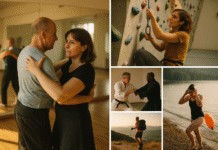
For physical skills, motor imagery—feeling yourself move—activates many of the same neural circuits as real movement and can measurably improve performance. Research shows mental training alone can increase voluntary strength and modulate motor-region efficiency, and brain-imaging studies find overlapping activation during imagined and executed actions. For complex skills (tennis serve, piano sequence), combining mental and physical practice is especially potent.
- How to do motor imagery well:
- Visualize from the internal perspective (through your eyes) for fine control; use external (watching yourself) to refine form.
- Match tempo to reality; slow down only to clean up technique.
- Pair with immediate physical reps when possible (3 mental, 1 physical).
8.1 Numbers & guardrails
Start with 10–15 trials of a short movement (e.g., serve toss and hit), rest 30–60 seconds as you would between sets, and log errors you noticed mentally so you can test them physically. Even without equipment, athletes and musicians can keep improving in downtime with structured motor imagery. PMC
8.2 Synthesis
When you can’t practice physically—or want extra reps without fatigue—motor imagery lets you keep learning with your mind engaged and your body fresh. Frontiers
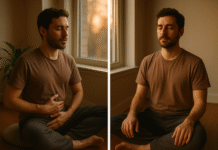
9. Use Guided Imagery to Reduce Stress and Improve Sleep
Imagery also helps with stress regulation and sleep quality. Guided imagery—listening to scripts that lead you through calming scenes or adaptive responses—can lower subjective stress, and a specific form called Imagery Rehearsal Therapy (IRT) reduces nightmare frequency and improves sleep in trauma-related cases. If sleep or anxiety are your targets, pair brief daily sessions with a consistent wind-down routine and, where indicated, seek professional support.
- Bedtime routine (10–12 minutes):
- 2 minutes breath focus, 5–7 minute guided scene (beach, forest, safe room), 1 minute gratitude scan.
- For recurrent nightmares, write a new, safer ending and rehearse it daily for 5–20 minutes before bed (the core of IRT).
9.1 Guardrails
Guided imagery is generally safe but not a cure-all; evidence quality varies by condition. If symptoms are severe or persistent, consult a clinician.
9.2 Synthesis
When stress is high or sleep fractured, imagery offers structure and agency—small daily windows where your nervous system practices calm.
10. Measure Your Vividness and Personalize (Including Aphantasia)
People vary widely in how they “see” inside. Some have movie-like images; others have faint shapes or mostly inner speech; a minority (aphantasia) report little to no visual imagery. This doesn’t block progress—you can lean on nonvisual senses, scripts, and if–then plans. Start by measuring your vividness (VVIQ or VVIQ-2), then adapt techniques: emphasize kinesthetic (how your body feels), auditory cues (self-talk, sounds), and conceptual rehearsal (bullet-point scripts). If your mind’s eye is dim, you’re not broken; you just have a different starting point.
- Alternatives to visual images:
- Sensory swaps: focus on breath tempo, foot pressure, or keystroke rhythm.
- Verbal scripts: narrate the steps you’re taking in a calm, present tense.
- Environment cues: arrange physical triggers (post-it, laid-out clothes) to carry the load.
10.1 Synthesis
Visualization is broader than pictures; it’s about rehearsing future you in a way your brain can encode and retrieve under real-world conditions.
11. Keep It Evidence-Based—Avoid Magical Thinking
It’s tempting to believe that “thinking it makes it so.” In reality, visualization works best as part of a behavior change system: process imagery + mental contrasting + if–then plans + consistent action. The science supports benefits in performance, self-regulation, and stress/sleep—yet it also shows limits. For some conditions, results are mixed, and imagery doesn’t cancel external constraints or structural factors. Keep your claims modest, measure your progress, and use professional care for clinical concerns.
- Checklist (reality anchors):
- Did I define the behavior I’ll do next?
- Have I named the main obstacle and a matching if–then?
- Am I tracking a simple metric?
- Do I know when to escalate to expert help?
11.1 Synthesis
Images don’t replace effort; they align it—so you spend energy where it counts and recover faster when you wobble.
12. Build a Practice You Can Maintain
Sustainability beats intensity. Bundle imagery with existing routines (commute, cool-down, pre-meeting pause), rotate scenes monthly, and keep sessions brief. Use a one-page tracker for scenes, cues, and if–thens. Refresh scripts after milestones and celebrate tiny wins. Finally, revisit your why each week to keep the practice emotionally relevant—imagery strengthens when tethered to values and identity.
- Weekly review (10 minutes):
- What scene did I practice? (Y/N each day)
- What cue worked? What failed?
- One obstacle I’ll rehearse next week.
- One if–then to keep; one to revise.
12.1 Synthesis
You don’t need hours or special gear—just a few minutes, most days, guided by scenes that lead naturally to action.
FAQs
1) What exactly is visualization in psychology?
It’s deliberate mental rehearsal—using images, sensations, and scripts to simulate a future situation so your attention, emotion, and behavior are primed when it arrives. It often co-activates brain networks used during real performance, especially for movement and goal-directed tasks, which explains its practical benefits.
2) How long should a session take, and how often?
Most people do well with 2–5 minutes, once or twice daily. Consistency beats length. Short sessions linked to cues (after coffee; before opening email) are easier to maintain and translate into action better than occasional long sessions.
3) Is visualizing the result enough?
Outcome images can motivate, but process imagery—mentally walking through the steps—produces better planning and performance. Use the “80/20 rule”: ~80% process, 20% outcome.
4) What’s WOOP/MCII, and why does it help?
WOOP (Wish–Outcome–Obstacle–Plan) and MCII (Mental Contrasting with Implementation Intentions) combine positive imagery with a reality check and a specific if–then plan. This combo strengthens follow-through because it anticipates friction and automates the first response.
5) Does visualization really change the brain or body?
Studies show overlapping brain activation during imagined and executed movements, and some experiments report strength gains from mental training alone—though combining mental with physical practice is best for most skills.
6) Can visualization help with stress or sleep problems?
Guided imagery can reduce perceived stress for many people, and Imagery Rehearsal Therapy can cut nightmare frequency and improve sleep in trauma-related cases. For persistent or severe symptoms, consult a clinician. PubMed
7) What if I can’t “see” images (aphantasia)?
You can still benefit by emphasizing kinesthetic (body feel), auditory (self-talk), and conceptual (step scripts) modalities. Tools like the VVIQ can help you understand your style and adjust.
8) Are there risks or side effects?
Visualization is generally low-risk, but for some mental health conditions, evidence is mixed and techniques may need tailoring by a professional. Avoid using imagery to avoid real problems; use it to prepare for realistic actions. NCCIH
9) Which tools or apps help?
Any timer and notes app will do. For guided scripts, reputable health organizations provide resources; athletes often record their own scene scripts to match technique cues. The key isn’t the app—it’s the routine you’ll keep.
10) How do I know it’s working?
Track one metric (minutes practiced, reps, accuracy, sleep quality) and a simple vividness/confidence score (0–10) after each session. Look for trends over 2–4 weeks. If nothing moves, adjust the scene, add an if–then, or reduce scope.
Conclusion
Visualization isn’t about wishing outcomes into existence—it’s about rehearsing specific behaviors in specific contexts so your next action becomes easier, faster, and calmer. When you define the scene, favor process over finish-line fantasies, contrast with reality, and attach if–then plans, your imagery stops being daydreaming and becomes a practical tool for performance, learning, and well-being. Short, frequent sessions linked to everyday cues are enough to build momentum, and you can tailor the method to your sensory strengths—even if you don’t “see” images vividly. The science is clear on the direction of travel: mental rehearsal prepares your nervous system and attention so the real moment feels familiar. Start with one scene today, and let the practice compound.
CTA: Take 3 minutes now—name your scene, pick one obstacle, and write the if–then you’ll visualize tonight.
References
- Tóth, A. J., et al. “Does mental practice still enhance performance? A 24-year follow-up meta-analysis.” Acta Psychologica, 2020. ScienceDirect
- Batula, A. M., et al. “Comparison of Brain Activation during Motor Imagery and Motor Execution.” Frontiers in Human Neuroscience, 2017. PMC
- Pham, L. B., & Taylor, S. E. “From Thought to Action: Effects of Process-Versus Outcome-Based Mental Simulations on Performance.” Personality and Social Psychology Bulletin, 1999. SAGE Journals
- Duckworth, A. L., et al. “Mental Contrasting with Implementation Intentions (MCII).” Social and Personality Psychology Compass, 2013. PMC
- Ort, A., Wieber, F., et al. “Mental Contrasting with Implementation Intentions as a Behavior Change Strategy.” Health Psychology Review, 2022. Taylor & Francis Online
- Gollwitzer, P. M., & Sheeran, P. “Implementation Intentions and Goal Achievement: A Meta-analysis.” Advances in Experimental Social Psychology, 2006. BPB
- Ranganathan, V. K., et al. “From mental power to muscle power—gaining strength by using the mind.” Neuropsychologia, 2004. PubMed
- National Center for Complementary and Integrative Health (NCCIH). “Relaxation Techniques: What You Need to Know.” 2021. NCCIH
- Krakow, B., et al. “Imagery rehearsal therapy for chronic nightmares in sexual assault survivors with PTSD.” JAMA, 2001. JAMA Network
- Schacter, D. L., et al. “Episodic Future Thinking: Mechanisms and Functions.” Current Opinion in Behavioral Sciences, 2017. PMC
- Marks, D. F. “Vividness of Visual Imagery Questionnaire (VVIQ-2 overview).” 2023. Curious About Behaviour
- Zeman, A., Dewar, M., & Della Sala, S. “Lives Without Imagery—Congenital Aphantasia.” Cortex, 2015. PubMed