

















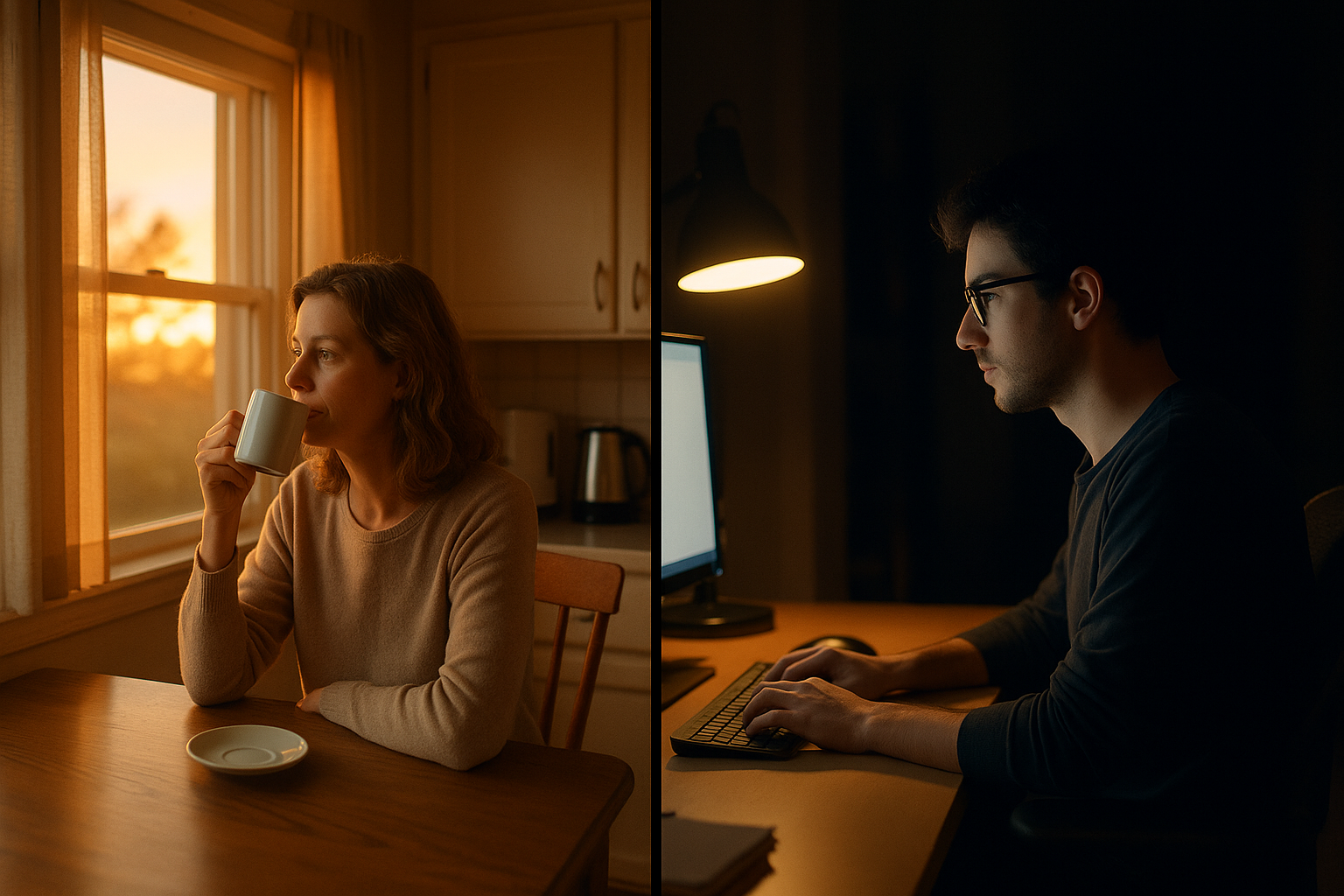
Chronotypes are your built-in timing preferences—being a “morning lark,” “night owl,” or somewhere between—driven by your circadian clock and shaped by genetics, age, and light. Understanding your chronotype helps you protect sleep, schedule demanding work when you’re naturally sharp, and reduce mismatches between your body and social clocks. In short: you’ll sleep better, think clearer, and feel steadier when your day respects your biology. This guide is educational and not medical advice; if sleep timing or daytime sleepiness harms your health, safety, or mood, speak with a qualified clinician.
Within the first minute of reading, here’s the crisp answer many people search for: “Morning larks” naturally feel sleepy and alert earlier; “night owls” naturally drift later. Both are normal variations of human biology. Problems tend to arise when life obligations force you to live against your clock (think early bells for late-type teens or 7 a.m. shifts for extreme owls).
1. Chronotype is real biology—not a character flaw
Chronotype differences stem from the circadian system in your brain and throughout your body, nudged by genes, light exposure, and age. That’s why two equally disciplined people can thrive at opposite hours. Large genetic studies (and twin research) show meaningful heritability for morningness-eveningness, and molecular clock variants (for example in CRY1) can push sleep timing later. The point is simple: if you’re a night owl, it’s not laziness; if you’re a lark, it’s not virtue—it’s timing. Recognizing this reduces self-blame and reframes the task from “forcing yourself” to “engineering your day” so sleep and performance align with your internal clock.
Why it matters. Seeing chronotype as biology changes your approach. You’ll prioritize light management over sheer willpower, optimize key tasks for your alertness window, and advocate for schedule tweaks (when feasible) at work or school. You’ll also be more cautious about comparing yourself to others with different clocks.
Numbers & guardrails.
- Heritability estimates for diurnal preference commonly fall around 40–54% in twin cohorts.
- A 2019 genome-wide analysis (≈700k people) linked 351 genetic loci to morningness and showed consistent shifts in objective sleep timing.
- Specific variants—like CRY1 Δ11—are associated with delayed sleep phase in families.
- Chronotype assessment tools (see Truth 2) are the practical gateway; lab markers like DLMO are the precise (but specialized) option.
Mini-checklist.
- Stop moralizing sleep timing.
- Think “fit,” not “fight”—align tasks to alertness.
- Use light, activity, and routine as your main levers (Truth 8).
Bottom line: treat chronotype as a trait to work with, not a habit to fix.
2. You can identify your chronotype with simple tools (and, if needed, lab markers)
The fastest way to identify your chronotype is to track how you sleep when you’re free of alarms and obligations. Standard questionnaires—the Morningness-Eveningness Questionnaire (MEQ) and the Munich Chronotype Questionnaire (MCTQ)—translate your everyday timing into a reliable score, and MCTQ pinpoints your “mid-sleep on free days,” a useful practical marker. For clinical precision, specialists sometimes measure dim-light melatonin onset (DLMO) from evening saliva samples under low light to read your internal phase.
How to do it.
- Try MEQ or MCTQ. They’re validated, quick, and grounded in real-world timing.
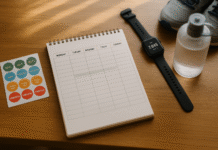
- Keep a 2-week sleep diary (or a wearable) to see your natural sleep window on non-work days.
- Note social jetlag (difference between workday and free-day mid-sleep). Bigger gaps mean more misalignment.
- Consider DLMO only if you’re troubleshooting a stubborn circadian issue with a clinician.
Tools & examples.
- MEQ: Classifies you broadly as morning, intermediate, or evening type.
- MCTQ: Separates work-day and free-day patterns; its “MSF” value is often used as a chronotype proxy.
- Actigraphy/wearables: Helpful for patterns across weeks; pair with a diary to interpret context.
Mini-case. A designer wakes naturally at 9:00 on weekends, with mid-sleep around 5:30. MEQ/MCTQ both land them in “late-intermediate.” They shift creative work to late morning–afternoon, block blue light after 10 p.m., and stop battling 5 a.m. gym plans that never stick. Sleep stabilizes; output improves.
Takeaway: you don’t need a lab to know your clock—questionnaires plus honest tracking will get you 90% there.
3. Chronotype shifts across the lifespan (and differs by sex across adulthood)
Chronotype isn’t static. Children tend to be earlier, adolescents shift later (peaking in lateness around the late teens to early 20s), then adults trend earlier again with age. Across much of adulthood, males average slightly later than females, a difference that diminishes in later life. These patterns are not just cultural—they reflect developmental biology of the circadian system and its interaction with light, hormones, and social timing.
Why it matters. Expect your clock to move over time, especially during puberty and mid-life. Parents of teens shouldn’t mistake late sleep timing for defiance; older adults shouldn’t panic when they feel sleepy earlier. Planning around these shifts protects sleep and reduces friction at home and school.
Numbers & guardrails.
- Large population data show peak lateness near ~19–21 years, earlier thereafter.
- Sex differences: men are typically later before ~40, then the gap narrows.
- The pandemic natural experiment showed younger adults (and evening types) gained the most when schedules loosened, highlighting the role of social timing.
Mini-checklist.
- For teens: prioritize consistent light (bright mornings, dim late evenings) and advocate for later school starts when possible.
- For mid-life adults: watch creeping earlyness; keep evening light gentle and meal/caffeine timing steady.
- For older adults: maintain morning light exposure and activity to stabilize earlier tendencies.
Synthesis: anticipating age-related shifts lets families, teachers, and workplaces design routines that match biology—not fight it.
4. Social jetlag is the hidden tax of living against your clock
Social jetlag is the chronic gap between your internal time and your social schedule (e.g., early alarms for a late-type person). It feels like flying east every weekday and “flying back” each weekend. Over time, this misalignment links to higher sleepiness, impaired performance, and markers of metabolic strain. The bigger your weekday–weekend swing, the steeper the tax.
Why it matters. Even if you clock seven hours nightly, timing mismatch can make those hours less restorative and your daytime less efficient. Aligning schedules—by minutes or hours—can shrink social jetlag and improve mood and cognition.
How to measure it.
- Calculate mid-sleep on free days vs mid-sleep on work days; the difference approximates social jetlag.
- Track your “Monday hangover” after weekend sleep-ins—classic evidence of a big gap.
- Notice when you regularly nap or crash; these often map to misaligned windows.
Common mistakes.
- Oversleeping on weekends by >2 hours, amplifying Monday pain.
- Treating late-night screens as “relaxing” despite strong alerting light.
- Swinging wake times by several hours between weekdays and weekends.
Mini-checklist.
- Keep weekend wake times within ~1 hour of weekdays.
- Front-load bright light and movement shortly after waking; dim, warm light in the last 90 minutes before bed.
- Plan big cognitive tasks in your chronotype-preferred window (more in Truth 6).
Bottom line: reduce the weekday–weekend swing and your whole week feels less like jet lag.
5. Health links exist—especially for metabolic and mental health—but context matters
Evening chronotype and larger social jetlag are associated, on average, with unhealthier lifestyle patterns (e.g., later eating, less activity) and higher risks for outcomes like type 2 diabetes in epidemiologic studies. Importantly, when researchers adjust for lifestyle factors, risks drop but often do not disappear. Separately, late types show higher rates of some mood and psychiatric symptoms in observational data. These are population averages, not destiny—and they’re actionable.
What the evidence shows (big picture).
- A large cohort of U.S. nurses found evening types had higher diabetes risk, with part of the risk explained by lifestyle; healthier behavior attenuated but did not erase the association.
- Reviews link circadian misalignment/social jetlag with cardiometabolic risk factors.
- Narrative and empirical work connects chronotype and psychiatric profiles (e.g., depression, anxiety), likely via sleep disruption, light timing, and social schedules.
Guardrails & actions.
- Focus on modifiable levers: regular activity (ideally near your alertness peak), consistent meal timing, morning light, and high-quality sleep duration.
- If shifting earlier, do it gradually (Truth 8), and avoid large weekend sleep swings (Truth 4).
- Seek clinical help for persistent insomnia, extreme late/early timing, or significant daytime impairment.
Mini-checklist.
- Anchor wake time first; add consistent morning light.
- Align exercise and meals with your day’s stable window.
- Audit evening light (screens, overhead LEDs) and reduce intensity/blue content late.
Synthesis: chronotype itself isn’t a verdict—misalignment is the risk; alignment strategies are the remedy.
6. Your peak thinking and physical performance follow the “synchrony effect”
People perform better when tasks happen at their chronotype-matched time—the “synchrony effect.” Morning types generally hit cognitive and physical peaks earlier; evening types peak later. Studies show measurable differences in attention, executive function, and athletic output based on time-of-day and chronotype interaction.
How to use it.
- Schedule deep work (analysis, strategy, writing) for your personal peak window.
- Time workouts for your alert phase (owls often do better late afternoon/evening; larks earlier).
- For high-stakes tasks, add redundancies: rehearse in your off-peak, but execute in your peak when possible.
Numbers & examples.
- Experimental work finds evening types underperform notably in early mornings compared to their later tests, while larks show the opposite pattern.
- Athletic research highlights meaningful diurnal performance differences aligned with chronotype; the best predictor is often time since natural awakening, not wall-clock time.
Mini-checklist.
- Tag your calendar with “brain-high” hours for the next two weeks and defend them.
- Push routine email/admin to off-peak times.
- If you must perform off-peak, simulate your event time in practice and use alerting cues (bright light, movement, social engagement).
Takeaway: doing the right work at the right internal time is free performance.
7. Schools, shifts, and workplaces can (and should) acknowledge chronotype
Early bells and fixed early starts collide with adolescent biology, which naturally runs late. Policy bodies recommend later school start times for teens to improve sleep and learning. In adults, shift work amplifies misalignment risk; considering chronotype when assigning shifts and using light management at work can blunt harm. Employers that offer flex windows often see better sleep and steadier output with minimal cost.
Why it matters.
- Aligning institutional schedules—or offering flexibility—reduces social jetlag, sleep debt, and associated errors.
- For essential early starts, structured countermeasures (timed light, breaks, nap opportunities) protect safety and cognition.
How to apply it (practical tiers).
- Tier 1: Flex where possible. Offer arrival windows (e.g., 7:30–10:00) and output-based evaluation.
- Tier 2: Smarter scheduling. Late types on later or rotating late shifts; early types on consistent early shifts.
- Tier 3: Circadian hygiene at work. Bright, blue-enriched light in morning zones; warmer, dimmer light toward end of shifts; nap-friendly spaces where safety-critical.
For families & schools.
- If district policy allows, advocate for start times no earlier than 8:30 a.m. for teens.
- Coach teens on light hygiene, consistent wake times, and realistic evening wind-downs.
Synthesis: small structural changes (or flexibility) yield big returns in sleep, safety, and learning.
8. Light, melatonin, and behavior can shift timing—safely and gradually
If you need to move your sleep earlier or later, the most powerful lever is light timing. Morning bright light advances your clock (earlier), evening bright light delays it (later). Melatonin, when correctly timed and dosed, can assist phase shifts, especially for delayed sleep-wake phase. Behavior (consistent wake time, exercise timing, meal timing) reinforces the change. The safest approach is gradual: 15–30 minutes earlier (or later) every few days, anchored by the new wake time and morning light.
How to do it (phase-advance example for night owls).
- Fix a consistent wake time, even on weekends.
- Get bright outdoor light shortly after waking (20–30 minutes).
- Dim screens/overheads 90 minutes before target bedtime; use warmer light.
- Discuss melatonin timing with a clinician; low doses earlier in the evening are often used for delayed timing.
- Add afternoon exercise and avoid late-night heavy meals.
Numbers & guardrails (as of August 2025).
- Clinical guidance supports timed light and properly timed melatonin for circadian phase shifting (especially DSWPD).
- Lab-grade approaches use phase response curves and, when needed, DLMO to time interventions precisely.
- Start low and go slow with melatonin; products vary widely—professional guidance is prudent, particularly for youth, pregnancy, and polypharmacy.
Mini-checklist.
- Advance = AM light / PM dim; Delay = PM light / AM dim.
- Change by 15–30 min every few days; hold gains for a week before the next move.
- Protect the anchor: wake time rules all.
Bottom line: light leads, melatonin assists, behavior locks it in.
9. A chronotype-aware day multiplies energy without adding hours
Designing your day around your clock boosts output with less strain. Treat your peak as prime creative/analytical time, your shoulders for collaboration and routine, and your trough for admin or recovery. Layer in food, caffeine, and workouts to reinforce—not fight—your rhythm.
How to build it.
- Map your day: Peak (deep work), Shoulder (meetings), Trough (admin).
- Place workouts where they feel easiest to start and finish.
- Time caffeine: within the first 60–90 minutes after waking (not immediately) and avoid 6–8 hours before bed.
- Eat consistently (regular daytime meals), keeping late-night heavy eating rare.
Mini-checklist.
- Larks: Deep work 8–11 a.m.; workouts late morning; dim lights earlier in the evening.
- Owls: Deep work late morning–afternoon or early evening; workouts mid- to late-afternoon; delay caffeine until mid-morning; strict evening light hygiene.
- Intermediates: Split deep work into a late-morning and mid-afternoon block; protect a steady bedtime.
Synthesis: align tasks, light, movement, food, and caffeine with your clock, and you’ll feel like you gained an hour you didn’t have.
FAQs
1) What exactly is a chronotype, and how is it different from “circadian rhythm”?
Chronotype is your preferred timing—when you naturally sleep and perform best—whereas circadian rhythm is the 24-hour biological process setting those preferences. Think of circadian rhythm as the orchestra and chronotype as your particular section’s sheet music. You can’t rewrite the score overnight, but with light, melatonin, and routine you can nudge the timing sustainably.
2) Can I change my chronotype from night owl to morning lark?
You can shift your schedule meaningfully, but you probably won’t convert an extreme owl into a true lark. The most successful shifts use morning light, steady wake times, reduced late-evening light, and cautious melatonin timing under guidance. Aim for gradual moves (15–30 minutes) and protect the anchor wake time—including weekends—for stability.
3) Is being a night owl unhealthy?
Being an owl isn’t unhealthy by itself; misalignment is the issue. Observational studies link eveningness and social jetlag to metabolic and mood risks, but much of the risk is tied to lifestyle and timing. When owls align schedules, get adequate sleep, and manage light, the gap narrows substantially.
4) How do MEQ and MCTQ differ—and which should I use?
MEQ categorizes your morningness/eveningness preference with a single score. MCTQ separates work-day and free-day sleep to capture real-world timing and computes a mid-sleep value (MSF). If you want a quick label, use MEQ; if you want a practical, behavior-anchored view (including social jetlag), try MCTQ.
5) What’s DLMO and when would I need it?
Dim-light melatonin onset (DLMO) is a lab test that tracks the evening rise of melatonin to read your internal phase precisely. It’s used when timing matters for treatment (e.g., stubborn delayed sleep-wake phase) or research. Most people do fine with questionnaires and diaries; DLMO is for cases where precision drives therapy.
6) What’s the best time to exercise for larks vs owls?
Exercise where it fits consistently and supports your timing. Larks often like morning sessions; owls favor late afternoon/evening. If you’re advancing your schedule, finish vigorous exercise at least 3–4 hours before bedtime to avoid alerting spillover, and pair morning light with your training.
7) Does meal timing influence chronotype or health?
While your brain clock follows light, peripheral clocks in metabolic tissues respond to feeding. Regular daytime meals that end earlier in the evening tend to support earlier, more stable sleep timing and better metabolic markers. Very late, heavy meals can delay sleep and worsen reflux or glycemic control, especially in owls.
8) How long does it take to shift earlier by one hour?
With consistent morning light, steady wake time, and evening light reduction, many people shift ~1 hour in 3–7 days. The more extreme your starting point (and the more weekend drift), the longer it takes. Move gradually, hold each gain for several days, and avoid big weekend sleep-ins.
9) What about caffeine timing—any universal rules?
Delay the first dose 60–90 minutes after waking (to avoid colliding with the natural cortisol rise), and stop 6–8 hours before bedtime. Owls who are advancing schedules should be especially strict about the afternoon cutoff while changes consolidate.
10) Which jobs suit larks vs owls?
Patterns matter more than labels. Larks commonly thrive in earlier shifts, customer-facing mornings, and roles with early decision windows. Owls gravitate to creative/analytical roles with late-day deliverables or flexible schedules. Wherever you land, ask for flexibility and use light hygiene to protect sleep.
Conclusion
Chronotypes explain why one person glides at dawn while another hits stride at dusk. The through-line across the science is not that one type is better, but that alignment beats resistance. When your schedule harmonizes with your clock—even by an hour—sleep gets deeper, you think more clearly, and your mood steadies. The levers are clear: identify your type (MEQ/MCTQ), shrink social jetlag, schedule deep work in your peak, and engineer light, melatonin (if appropriate), and behavior to support your target window. For teens and shift workers, structural flexibility multiplies these gains; for everyone else, small, consistent changes compound into big improvements. Start with one lever (wake time + morning light), defend it for a week, then layer the next.
CTA: Pick a wake time you can protect for the next 14 days, get outside within 30 minutes of waking, and watch the rest of your day fall into place.
References
- Roenneberg T. Chronotype and Social Jetlag: A (Self-)Critical Review. Clocks & Sleep / NCBI PMC. 2019. https://pmc.ncbi.nlm.nih.gov/articles/PMC6784249/
- Wittmann M, et al. Social jetlag: misalignment of biological and social time. Chronobiology International. 2006. https://pubmed.ncbi.nlm.nih.gov/16687322/
- Auger RR, et al. Clinical Practice Guideline for the Treatment of Intrinsic Circadian Rhythm Sleep-Wake Disorders. Journal of Clinical Sleep Medicine / AASM. 2015. https://pmc.ncbi.nlm.nih.gov/articles/PMC4582061/
- Kennaway DJ. Dim light melatonin onset across ages, methodologies, and approaches. Sleep. 2023. https://academic.oup.com/sleep/article/46/5/zsad033/7044190
- Pandi-Perumal SR, et al. DLMO: a tool for analysis of circadian phase. Journal of Biological Rhythms. 2007. https://pubmed.ncbi.nlm.nih.gov/16884842/
- Jones SE, et al. Genome-wide association analyses of chronotype in 697,828 individuals. Nature Communications. 2019. https://www.nature.com/articles/s41467-018-08259-7
- Patke A, et al. Mutation of the human circadian clock gene CRY1 in familial delayed sleep phase disorder. Cell / NCBI PMC. 2017. https://pmc.ncbi.nlm.nih.gov/articles/PMC5479574/
- Fischer D, et al. Chronotypes in the US—Influence of age and sex. PLOS ONE. 2017. https://journals.plos.org/plosone/article
- Kianersi S, et al. Chronotype, Unhealthy Lifestyle, and Diabetes Risk in Middle-Aged U.S. Women: A Prospective Cohort Study. Annals of Internal Medicine. 2023. https://www.acpjournals.org/doi/10.7326/M23-0728
- Facer-Childs ER, et al. Time of day, chronotype, and cognitive/physical performance in healthy volunteers. Sports Medicine – Open / NCBI PMC. 2018. https://pmc.ncbi.nlm.nih.gov/articles/PMC6200828/
- American Academy of Pediatrics. School Start Times for Adolescents. Pediatrics (Policy Statement). 2014. https://publications.aap.org/pediatrics/article/134/3/642/74175/School-Start-Times-for-Adolescents
- Sun SY, et al. Treatment of Circadian Rhythm Sleep–Wake Disorders: An Updated Review. Sleep Medicine Research / NCBI PMC. 2022. https://pmc.ncbi.nlm.nih.gov/articles/PMC9886819/