


























Watching the number on a scale go up or down can feel satisfying, but it’s an incomplete picture of your health and fitness. Real progress shows up in measurements, performance, energy, sleep, and everyday life wins. This guide gives you 10 practical, evidence-informed ways for tracking progress beyond the scale. It’s for anyone who wants a fuller view—athletes, beginners, weight-loss seekers, strength chasers, and people improving overall well-being. Quick definition: tracking progress beyond the scale means using multiple indicators (measurements, performance, health markers, behaviors, and quality of life) to evaluate change, not just body weight. For quick wins, start with two: a weekly tape-measure session and a daily step target. This article is informational and not medical advice; talk to your clinician about any metrics that affect treatment.
1. Tape Measurements & Waist-to-Height Ratio (WHtR)
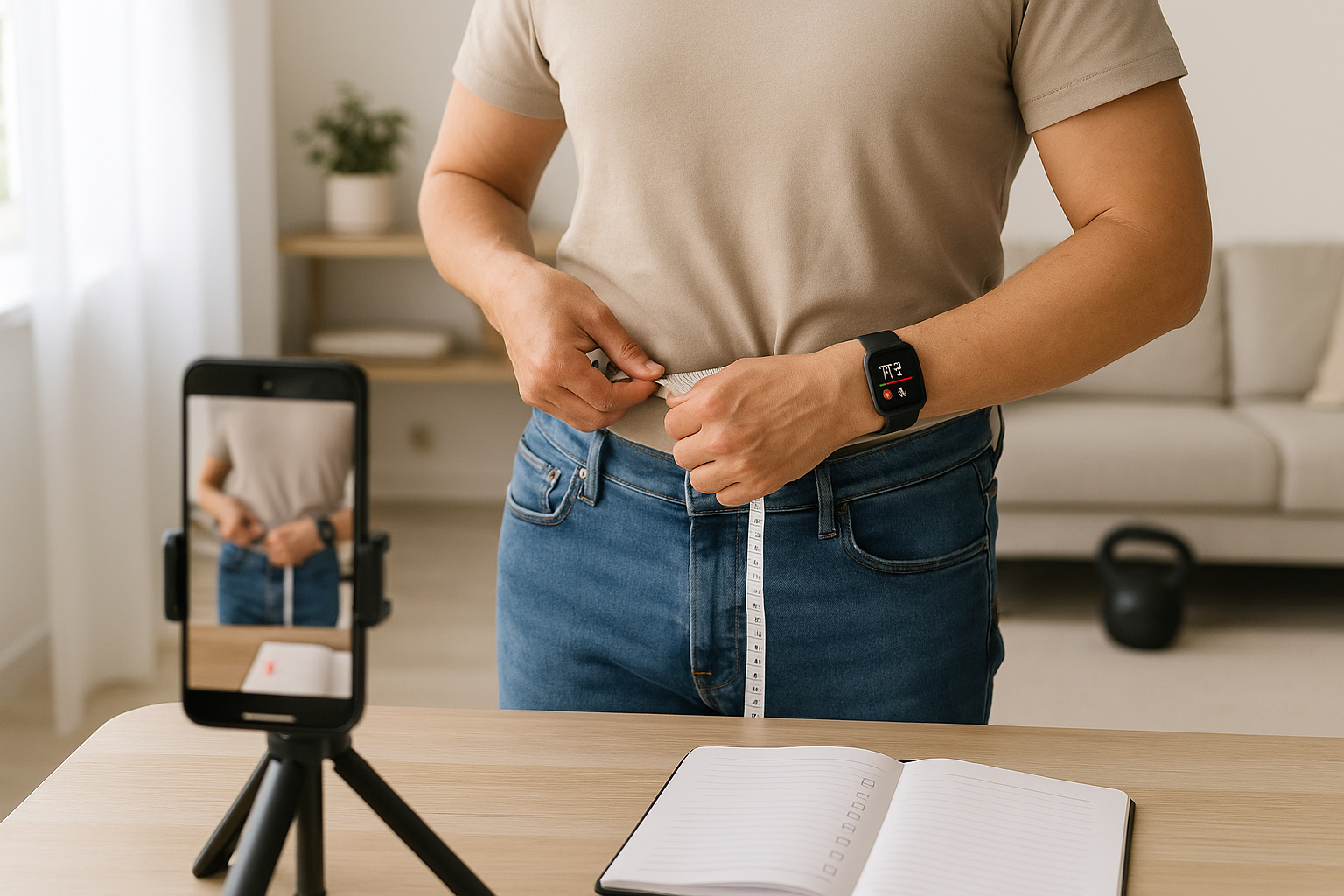
Circumference measurements show fat loss and body-shape changes earlier than a scale—especially if you’re building muscle. Because tape measures capture where fat is lost (e.g., waist), they’re better at revealing changes in visceral fat and cardiometabolic risk. Start with waist, hips, chest, thigh, and upper arm. Among these, waist is the MVP because central fat correlates with risk. A simple yardstick for health risk is waist-to-height ratio (WHtR): keep your waist under half your height. This single measure is easy to track at home, works across sexes and ethnicities, and is more robust than BMI for many risks. Pair WHtR with other measurements for a richer weekly snapshot.
1.1 How to do it
- Measure waist standing, tape parallel to the floor, just above the top of your hip bones; measure after a relaxed exhale.
- Measure hips at the widest point; chest at nipple line; thigh midway between hip and knee; upper arm midway between shoulder and elbow.
- Log values weekly at the same time (e.g., mornings, once bowel/bladder empty).
- Compute WHtR = waist (cm) ÷ height (cm).
- Track on a simple spreadsheet or notes app; graph monthly trends.
1.2 Numbers & guardrails
- WHtR: aim for <0.5 (waist less than half your height); it’s a widely used cut-point linked to lower cardiometabolic risk.
- Expect tape variance of ±0.5–1.0 cm due to breathing and tape tension—focus on 4-week trends, not single readings.
- If numbers change quickly (>3–4 cm in a week) without an obvious cause, re-measure and discuss with a clinician if it persists. Wiley Online Library
Bottom line: routine tape work plus WHtR gives you a precise, low-cost view of fat distribution that a scale misses.
2. Progress Photos (Same Place, Same Light, Same Poses)
Photos reveal visual changes—posture, muscle definition, shape—that tape and scales can’t. Taken consistently, they help you see slow body recomposition that might otherwise feel invisible. Standardize everything: background, lighting, distance, poses, and time of day. This reduces “noise” from shadows and angles. Weekly or biweekly is plenty; daily is unnecessary and can fuel hyper-focus. Over time, a 3-up collage (front, side, back) becomes an objective narrative of where you’re tightening up or building muscle. Photos complement but don’t replace measurements; they’re qualitative evidence that supports the quantitative story.
2.1 Setup checklist
- Neutral wall; camera at chest height, 3–4 meters away; timer or remote; tripod if possible.
- Morning, fasted or before breakfast; same underwear/sportswear; hair tied back.
- Poses: relaxed front, side (arms slightly out), back. Optional: flexed front/back for lifters.
- Keep a “before” reference; create comparison collages every 4 weeks.
- Store in a private, secure folder or app; avoid social posting if it triggers comparison.
2.2 Tips for honest visuals
- Use diffuse natural light to avoid harsh shadows.
- Stand on a marked spot; tape on the floor to fix distance.
- Don’t tilt the camera; use gridlines to keep horizons level.
- If you’re uncomfortable seeing yourself in photos, zoom out and gradually zoom in over time.
Bottom line: consistent photos make gradual body-shape changes obvious—especially when the scale is quiet.
3. Clothing Fit & Comfort (The “Belt-Hole” Index)
How your clothes fit is a no-BS progress bar. Jeans sliding on easier, a belt notch tighter, or a fitted shirt moving better across the shoulders signals real change. Clothing integrates multiple body areas—waist, hips, thighs, chest—into a single, lived experience metric. It’s also emotionally meaningful: less pinching, more comfort, greater confidence. Build a small “fit kit” (one pair of jeans, one shirt, one belt) and try them weekly under the same conditions. Keep a simple log: date, item, note (e.g., “belt moved to hole 3; jeans looser at thighs”).
3.1 Mini-checklist
- Choose non-stretch denim and a fitted, non-elastic shirt for consistency.
- Try on at the same time of day; after using the restroom.
- Note where the change occurs (waist vs. thighs vs. chest).
- Pair with tape data: if waist is down and belt notch moves, you can trust the trend.
3.2 Using it well
- Expect day-to-day fluctuations (bloating, hydration).
- Don’t over-interpret laundry differences—dryers can alter fit.
- Treat discomfort areas as clues for training (e.g., tight thighs? prioritize mobility).
Bottom line: fit-feedback translates numbers into daily-life wins that matter.
4. Performance Benchmarks (Strength, Endurance, Work Capacity)
Strength and endurance often improve before weight changes, especially when recomposition is happening. Choose 3–5 benchmarks that fit your goals and equipment: a 5-rep max squat or deadlift, a 1-mile or 1.5-mile time trial, a 500-m row, or a 3-minute AMRAP (as many reps as possible) of two movements. Re-test every 4–6 weeks using the same warm-up and conditions. Track perceived exertion with the Borg RPE scale (6–20): most training should feel like 12–14 (“moderate to somewhat hard”) with peaks for testing. Improvements in time, reps, or weight signal better fitness regardless of the scale.
4.1 How to do it
- Pick your tests: 2 strength, 1 endurance, 1 mixed (e.g., 3-round circuit).
- Standardize: same shoes/surface, similar sleep/food, same rest between efforts.
- Record: weight/reps/time + RPE and any notes (heat, illness, etc.).
- Program: train weaknesses twice weekly; re-test every 4–6 weeks.
4.2 Numbers & guardrails
- Expect newbie gains to improve 5–10% in 4–8 weeks; intermediates 1–3%.
- If RPE is rising but performance is flat, check recovery (sleep, food, stress).
- Use activity guidelines (e.g., 150–300 min/week moderate or 75–150 min vigorous activity plus 2 strength days) to anchor training volume.
Bottom line: better times, reps, and weights are scale-independent proof you’re getting fitter.
5. Body Fat %: DEXA, BIA, and Calipers (Choose What Fits Your Context)
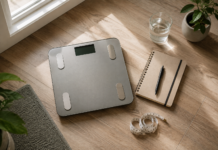
Body fat percentage is useful, but how you measure it matters. DEXA scans are considered a clinical reference for many research settings and tend to be more accurate but cost more and expose you to minimal radiation. Bioelectrical Impedance Analysis (BIA) devices are affordable and convenient; multi-frequency, multi-electrode models perform better than basic scales but can still misestimate fat mass, especially outside “average” BMI ranges. Skinfold calipers can be reasonably consistent in trained hands. More important than the exact number is method consistency—use the same device, at the same time of day, with standardized hydration. ScienceDirect
5.1 How to do it
- If accessible and budget allows, get a baseline DEXA; repeat every 3–6 months.
- Otherwise, pick a quality BIA or a professional who does 7-site calipers; measure weekly under the same conditions.
- Hydrate similarly, measure after using the restroom, and avoid readings post-workout or post-sauna.
5.2 Expectations & caveats
- For many adults, healthy ranges are broad; focus on directional change.
- BIA may underestimate fat mass by ~2–6 kg and overestimate fat-free mass compared with DEXA in typical BMI ranges—use trends, not absolutes.
- If %BF stalls but waist and performance improve, you’re likely recomposing (losing fat, gaining muscle).
Bottom line: pick one method, standardize it, and track trends, not single readings.
6. Health Markers You Can Track at Home (RHR, BP, Glucose—With Clinical Oversight)
Home metrics provide early hints that your program is helping. Resting heart rate (RHR) often drops as fitness improves; blood pressure (BP) and blood glucose patterns can improve with training, nutrition, and sleep. Use clinically recognized categories to frame changes and always share concerning patterns with your clinician. As of August 2025, the American Heart Association BP categories remain: Normal (<120/<80), Elevated (120–129 and <80), Stage 1 (130–139 or 80–89), Stage 2 (≥140 or ≥90), with hypertensive urgency/emergency thresholds at higher levels; confirm diagnosis and management with your doctor. Many healthy, relaxed adults have RHR well below 90 bpm; endurance-trained people can be in the 40s–50s. Harvard Health
6.1 How to do it
- RHR: measure on waking before getting out of bed; average 3 days/week.
- BP: use an upper-arm cuff; sit quietly 5 minutes; feet flat; arm at heart level; take 2–3 readings and average.
- Glucose: if recommended by your clinician, use fasting readings or CGM trends; log with context (meals, activity, stress).
6.2 Numbers & guardrails
- Track weekly averages; bring your log to checkups.
- Elevated BP or persistent high readings warrant medical follow-up; diagnosis requires clinical confirmation.
- For diabetes and prediabetes screening/diagnosis, clinicians use A1C and plasma glucose criteria—don’t self-diagnose off a single home reading.
Bottom line: home vitals enrich your progress picture—but interpretation and treatment belong with your clinician.
7. Mobility & Movement Quality (Chair Stand, Knee-to-Wall, Overhead Squat)
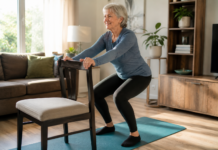
Mobility and movement control unlock performance and comfort in daily life. Three simple assessments cover a lot: the 30-second Chair Stand (leg strength/endurance), the Knee-to-Wall test (ankle dorsiflexion), and an Overhead Squat screen (global movement quality). Improved scores here often precede faster runs, better lifts, fewer aches, and safer mechanics. Re-test every 4–6 weeks with identical setup. These tests are inexpensive, easy to learn, and well documented in clinical/fitness resources, making them ideal for at-home progress tracking.
7.1 How to do it
- Chair Stand: sit in a 17-inch chair, arms crossed; stand/sit as many times as possible in 30 seconds; count good reps.
- Knee-to-Wall: face a wall; keep heel down and drive knee to touch the wall; inch foot back to find max distance you can still touch; record the centimeters.
- Overhead Squat: feet hip-width, arms overhead; perform 5 controlled squats while you or a partner note heel lift, knee cave, torso fall. Physiopedia
7.2 Numbers & notes
- Chair Stand is standardized and simple; track reps over time.
- Knee-to-Wall is reliable and sensitive to change; differences side-to-side can flag ankle/hip limitations that affect squats and running gait.
- Use findings to target mobility (e.g., calves/hip flexors) and technique work; improvements signal better movement capacity.
Bottom line: better movement is progress—even before the mirror notices.
8. Sleep, Energy, and Mood (WHO-5 + Sleep Duration)
Your recovery drives results. Two high-impact levers: sleep and subjective well-being. Most adults do best with 7+ hours per night; chronically short sleep is linked to worse weight and cardiometabolic outcomes. Track sleep duration and consistency, then add a monthly WHO-5 Well-Being Index (five quick items scored 0–100). Rising WHO-5 scores alongside steadier sleep suggest your plan is sustainable; dips flag stress, under-recovery, or life load that may call for lighter training or more support. This pair captures how your plan feels and functions—not just how it looks. World Health Organization
8.1 How to do it
- Sleep: aim for 7–9 hours (adults); keep a fixed wake time; dim lights and screens 60 minutes pre-bed.
- WHO-5: complete monthly; target steady upward movement rather than perfection; share concerning low scores with a professional.
- Note days with unusually low energy or irritability; correlate with training load and nutrition. AASM
8.2 Numbers & guardrails
- A WHO-5 score <50 indicates low well-being and is a prompt to check in on stress, recovery, and mental health support.
- If sleep is <6 hours for several nights, reduce training intensity/volume by 20–40% and prioritize recovery practices that week. Medscape Reference
Bottom line: sleeping more and feeling better is meaningful progress that compounds everything else.
9. Habit Adherence & Leading Indicators (The Weekly Scorecard)
Behaviors drive outcomes. Track inputs you control—training sessions completed, daily steps, protein servings, vegetable portions, water intake, alcohol units, bedtime. A simple weekly scorecard turns these into a percentage (e.g., 18/21 targets hit = 86%). Consistency predicts results better than willpower, and building habits takes time: research suggests new habits become more automatic over weeks to months (often quoted average ~66 days; the range is wide). Use your score to adjust the plan: if adherence is 50–60%, shrink goals; if it’s 85–90%, consider progressive overload.
9.1 How to do it
- Define 3–5 non-negotiables (e.g., 8,000 steps, 2 palm-size protein servings, lights-out by 11 pm, 2 strength days).
- Track daily in any notes app or habit tracker; total each Sunday.
- Review friction points; change the environment (prep meals, lay out gym clothes, set reminders).
- Adjust goals to be achievable during busy weeks; increase when life allows.
9.2 Numbers & guardrails
- 70–85% weekly adherence typically produces steady, not extreme, progress.
- If adherence is low across weeks, your plan may be too ambitious—make it easier to win.
- Celebrate “non-scale victories” (NSVs) each week to reinforce momentum.
Bottom line: consistent behaviors are the engine; outcomes follow.
10. Daily-Life Capacity & Step Count (NSVs You Can Feel)
Your ability to do more—climb stairs without stopping, carry groceries in one trip, keep up on hikes—is real, livable progress. A straightforward daily metric is step count. Studies associate ~7,000 steps/day with lower mortality risk in middle-aged adults, and stepping more is generally better up to a point. Combine steps with NSVs that matter to you: fewer breaks on your usual route, faster school-run walk, or longer play with kids without back pain. Capture these wins weekly—they’re powerful indicators that your fitness translates to life.
10.1 How to do it
- Set a baseline from a typical week, then add +1,000–2,000 steps/day over 2–3 weeks.
- Add “incidental movement” (walk calls, stairs, short errands).
- Log weekly NSVs (“3 flights without pause,” “20-minute brisk walk felt easier”).
- Revisit goals every 4 weeks; add one mini-challenge (e.g., hit 8k steps on 4 days/week).
10.2 Numbers & guardrails
- Use a wrist tracker or phone; track 7-day averages to smooth out variability.
- If pushing steps worsens pain/fatigue, hold steady for 1–2 weeks and layer in mobility/strength.
- Combine steps with the WHO/heart-health guideline of 150–300 min moderate activity/week + 2 strength days for broader benefits. www.heart.org
Bottom line: moving more and doing life more easily is progress you can feel every day.
FAQs
1) What’s the single best metric if I only track one?
Waist-to-height ratio (WHtR) is hard to beat for simplicity and health relevance: keep waist under half your height. It captures central fat, is easy to measure at home, and is strongly associated with cardiometabolic risk across sexes and ethnicities. If you want a tie for first place, pair WHtR with step count to reflect both body composition and activity.
2) How often should I measure and test?
Weekly for tape measurements and photos; daily or weekly averages for steps and RHR; monthly for WHO-5; every 4–6 weeks for performance and mobility tests. The key is consistency: same day/time, similar conditions, and standard methods to reduce noise. If you’re unwell, skip testing that week and resume once recovered.
3) My scale is up but waist and performance are better—what’s happening?
This often indicates recomposition (fat down, muscle up). Glycogen and water shifts can also nudge weight temporarily. Trust multi-metric trends: if your waist is shrinking, lifts are stronger, and conditioning is up, you’re on track even if weight stalls.
4) Are consumer body-fat scales accurate?
They’re fine for trends but imperfect for absolute numbers. Multi-frequency, multi-electrode BIA is better than basic models, yet can still underestimate fat mass compared with DEXA. Use the same device under the same conditions, and interpret changes over 4–8 weeks, not day-to-day blips.
5) What resting heart rate (RHR) should I aim for?
There’s no single “right” number. Many healthy adults sit between ~55–85 bpm at rest; endurance-trained people can be lower. Focus on directional change (e.g., a 5–10 bpm drop across months) alongside better BP and fitness. If RHR is unusually high or low with symptoms (dizziness, fatigue), consult your clinician.
6) Which performance tests are best for beginners?
Pick low-skill, repeatable options: a 1-mile walk test, 500-m row, push-up test to comfortable form failure, wall sit time, and the 30-second Chair Stand. Keep warm-ups identical and re-test every 4–6 weeks to see clear trends.
7) How much should I sleep for better results?
Most adults benefit from 7–9 hours per night. Sleep supports appetite regulation, training recovery, and mood. If you’re training hard on <6 hours, reduce intensity/volume until sleep improves—progress and injury risk both hinge on recovery. PMC
8) What’s a good weekly adherence target?
Aiming for 70–85% on your key habits is realistic and productive. If you’re consistently below that, simplify goals; if you’re consistently above 90% without strain, consider progressive overload or a new challenge. Habit formation takes weeks to months—stick with it. Wiley Online Library
9) How do I track mobility gains meaningfully?
Use simple, repeatable tests: Knee-to-Wall distance (record in cm), Chair Stand reps, and qualitative notes from an Overhead Squat. Re-test every 4–6 weeks, and pair results with reduced discomfort during daily tasks (stairs, getting off the floor). PMC
10) Are step counts really that important?
Yes—they’re a powerful proxy for overall daily movement. Evidence links ~7,000 steps/day with lower mortality in middle-aged adults. Use steps to anchor daily activity, then layer structured training to build strength and cardio.
Conclusion
When you zoom out from the scale, progress becomes richer and more motivating. Circumference measurements—especially waist and WHtR—show you where you’re losing fat. Performance tests prove you’re stronger and fitter; mobility screens reveal how smoothly you move. Health markers like RHR and BP highlight deeper changes, while sleep and WHO-5 connect your plan to how you feel and function. Habit scorecards and step counts keep you honest about the daily inputs that compound over time. You don’t need to track everything forever—choose two or three anchors and add more only if they’ll change your decisions. In four to six weeks, you’ll have a multi-angle story far more compelling than a single number. Start today with a waist measurement and a step target—then build your scorecard and watch the wins stack up.
Call to action: Pick any two methods from this list, set a 4-week re-test date, and log your first entries tonight.
References
- Calculate your waist to height ratio, NHS, March 2025, nhs.uk
- Ashwell M, Gibson S. Waist-to-height ratio is a better screening tool than waist circumference and BMI for adult cardiometabolic risk factors: systematic review and meta-analysis, Obesity Reviews, 2012, PubMed
- Healthy Weight – How to measure your waist correctly, CDC, accessed Aug 2025, CDC
- 30-Second Chair Stand Assessment (STEADI), CDC, Nov 2024, CDC
- Understanding Blood Pressure Readings / Blood Pressure Categories (Rainbow Chart), American Heart Association, Aug 2025, and https://www.heart.org/en/health-topics/high-blood-pressure/understanding-blood-pressure-readings www.heart.org
- What your heart rate is telling you, Harvard Health Publishing, June 2023, Harvard Health
- Achamrah N, et al. Comparison of body composition assessment by DXA and BIA, Nutrients, 2018, PMC
- Cleveland Clinic. Rate of Perceived Exertion (Borg RPE Scale), reviewed 2021, Cleveland Clinic
- Paluch AE, et al. Steps per Day and All-Cause Mortality in Middle-Aged Adults, JAMA Network Open, 2021, PMC
- World Health Organization. Guidelines on Physical Activity and Sedentary Behaviour, 2020, and fact sheet June 2024, PubMedWorld Health Organization
- American Diabetes Association. Diabetes Diagnosis & Tests, updated 2024–2025, American Diabetes Association
- Chisholm MD, et al. Reliability and Validity of a Weight-Bearing Measure of Ankle Dorsiflexion, J Can Chiropr Assoc, 2012, PMC