
















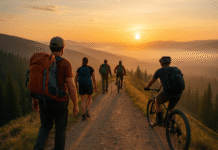




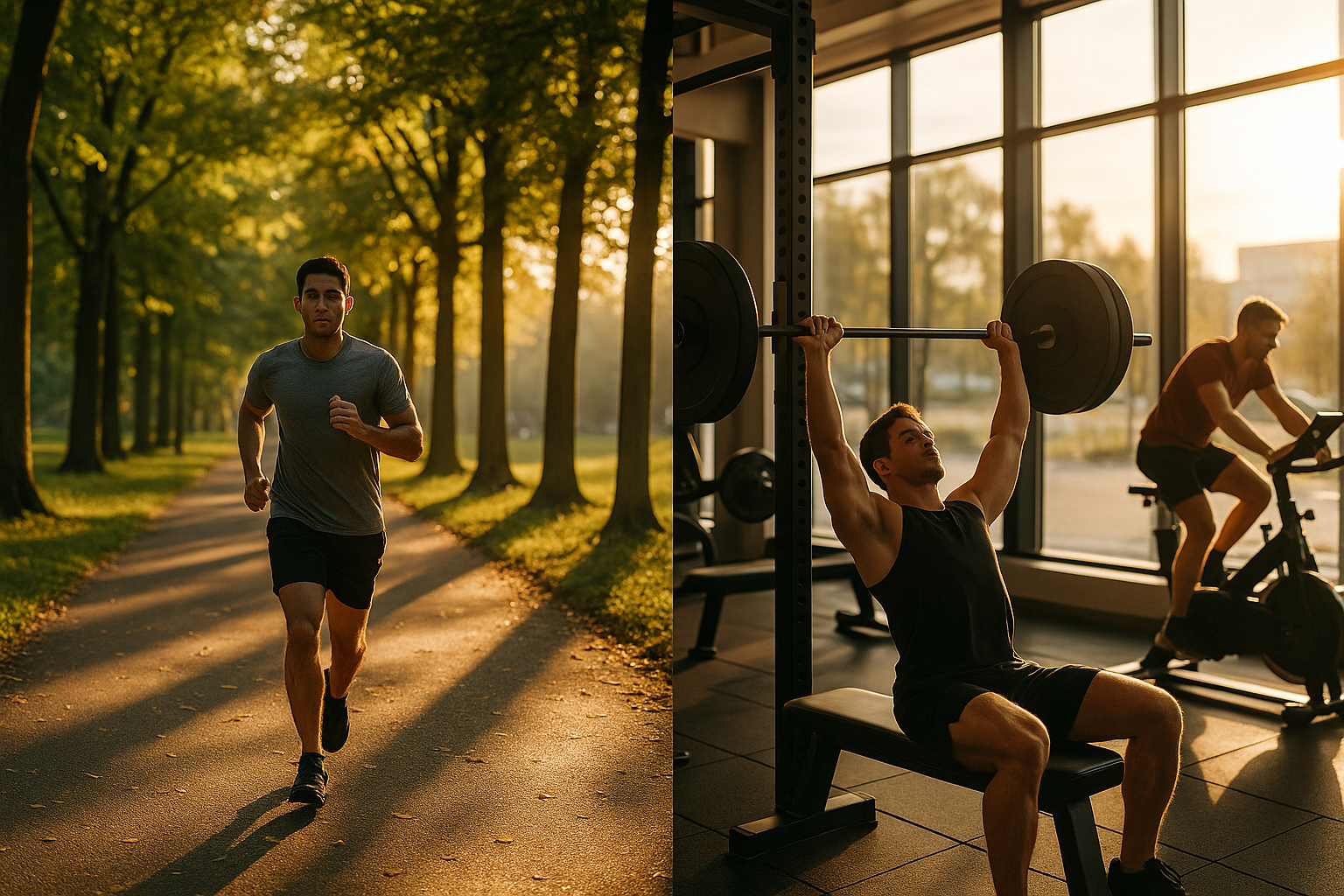
The best place to work out is the one that helps you move more, feel better, and keep showing up. This guide compares the real, evidence-backed benefits of exercising outdoors vs indoors so you can choose confidently for your goals, schedule, weather, and health. You’ll learn where each setting shines—mood, sleep, air quality, safety, performance, and more—plus practical guardrails for different seasons and environments. In short: outdoors often wins for mood, daylight, variety, and connection to nature; indoors wins for climate control, safety, and precise training. Most people get the best results by mixing both.
Quick note: This article is general information, not medical advice. If you have a health condition, injury, or are new to exercise, speak with a qualified clinician or coach before changing your routine.
1. Natural Environments Often Lift Mood and Reduce Stress
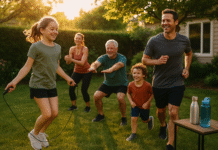
Outdoor exercise usually provides a measurable boost in mood and stress relief compared with the same session indoors. The greenery, sky, and open space add a restorative layer many people feel immediately, while perceived exertion can be lower at a given workload—so the workout feels easier and more enjoyable even when your body is doing the same amount of work. Reviews comparing outdoor and indoor settings consistently find small-to-moderate psychological benefits outdoors, especially for affect, enjoyment, and vitality. That enjoyment matters: it’s a strong predictor of whether you’ll keep exercising week after week. While physiological gains (like heart rate or VO₂ changes) are generally similar between settings, the extra mental lift outdoors can be the tiebreaker for consistency. If you’ve ever finished a park run feeling calmer than a treadmill run, that’s not just in your head—nature helps.
1.1 Why it matters
- Enjoyment → adherence: The more you like a workout, the more likely you are to repeat it.
- Stress buffering: Trees, water, and sky views are linked to reductions in stress markers and negative affect.
- Lower perceived effort: Outdoor scenery and novelty can reduce the “this is hard” feeling at the same intensity.
1.2 How to do it
- Aim for green or blue spaces (trees, parks, waterfronts) for walks, runs, circuits, or bodyweight sessions.
- Use route variety (loops, out-and-backs) to keep novelty high without complicating your plan.
- If you train indoors most days, schedule one outdoor session weekly to harvest the mood benefits.
Bottom line: For headspace and enjoyment, outdoors generally wins—making it a powerful lever for consistency.
2. Daylight Exposure Supports Circadian Rhythm and Better Sleep
Exercising outside gives you daylight, which anchors your body clock and can improve sleep quality and daytime alertness. Sunlight is your strongest “zeitgeber” (time cue), and pairing it with movement amplifies the signal. Morning or midday outdoor sessions can help you fall asleep faster and wake up more refreshed; late-evening bright light, on the other hand, may push your sleep time later. Exercise alone (indoors or out) also benefits sleep, but daylight plus exercise is a potent combo for aligning circadian rhythm, especially if you feel groggy in the morning or wired at night. As of August 2025, research continues to show exercise timing matters; for most people, earlier is better for sleep, while late-night high-intensity sessions can be too stimulating.
Numbers & guardrails
- AM daylight: Even 10–30 minutes outside most days helps anchor your rhythm.
- Timing: If sleep is a struggle, finish hard sessions ≥3 hours before bedtime.
- Shift work: Strategically timed exercise and light exposure can help re-entrain your clock across shifts.
Mini-checklist
- Get outdoors before noon when possible.
- On dark or ultra-hot days, train indoors but open blinds or use bright indoor lighting earlier in the day.
- Track your sleep onset and energy for 1–2 weeks when you move more sessions outdoors.
Bottom line: Daylight plus movement is a sleep supercharger. Outdoor morning or midday training generally outperforms indoor evening sessions for sleep.
3. Breathing Better: Air Quality Can Favor Either Setting (Choose Wisely)
“Outdoor air is always cleaner” and “indoor air is safer” are both myths—it depends on the day, the building, and your city. Many buildings accumulate indoor pollutants (cleaning products, cooking, off-gassing), while high-traffic corridors and wildfire smoke can make outdoor air worse. During exercise you breathe deeper and faster, so air quality matters more. On days with good AQI, outdoor training is excellent; in heavy pollution or high-ozone afternoons, a well-ventilated indoor space with filtration is safer. The World Health Organization’s guideline for annual PM2.5 is 5 µg/m³, far below typical urban levels; large parts of South Asia regularly exceed this, so time of day and location (parks away from roads) become crucial.
3.1 How to pick your setting (5-step flow)
- Check AQI before each workout (apps or national services).
- If AQI “Good–Moderate”, prefer outside (especially mornings when ozone is lower).
- If AQI “Unhealthy for Sensitive Groups” or worse, choose indoors with HEPA filtration or reduce intensity/duration.
- Avoid high-traffic routes; pick green corridors set back from roads.
- For allergies, watch pollen counts; consider indoor training or a post-run rinse to remove pollen.
Region-specific note (South & Central Asia)
- During dust events or seasonal smog, schedule shorter, easier indoor sessions and reserve outdoor long runs for clearer days.
Bottom line: Let AQI and pollen decide the venue. Outdoors is great on clear days; indoors protects you when air is poor.
4. Temperature & Weather: Indoors Wins for Safety in Heat and Cold
Extreme heat, humidity, or cold can make outdoor sessions risky and degrade performance. In hot conditions, your cardiovascular system diverts blood to the skin for cooling, raising heart rate and perceived exertion; in the cold, vasoconstriction and icy surfaces increase injury risk. Climate-controlled indoor spaces let you train at target intensities year-round without heat illness or frostbite hazards. This is especially relevant for beginners, older adults, and anyone returning from illness or injury. Indoors also makes hydration and cooling strategies easier to control (fans, towels, ice), and avoids lightning, storms, and slippery surfaces.
4.1 Heat & cold guardrails
- Heat: Favor indoor training when heat index is high; shorten intervals and increase water/electrolytes.
- Cold: Layer up, protect extremities, and avoid icy routes; move indoors if wind chills are severe.
- Acclimation: Build up exposure gradually over 7–14 days if you must train in heat.
4.2 Practical tips (hot climates)
- Train early morning or indoors during peak heat months.
- Use fans for indoor cardio to mimic airflow and lower perceived exertion.
- Keep cooling packs or cold towels for high-intensity sessions.
Bottom line: For environmental safety and quality control in tough weather, indoors wins—no contest.
5. Sharper Thinking: Outdoor Sessions May Boost Cognitive Function
Exercising in natural settings is linked with improved attention, working memory, and inhibitory control compared with the same effort indoors. Nature’s “soft fascination” restores directed attention, while novel terrain provides a mild cognitive load (navigation, foot placement) that sharpens focus without overwhelming you. Recent controlled studies report superior cognitive benefits after outdoor activity, and broader evidence shows green/blue-space activity reduces negative affect and mental fatigue. For students, knowledge workers, and anyone doing cognitive-heavy tasks, a short outdoor workout or walk can prime the brain for focused work—especially in the late morning slump.
5.1 Tools/Examples
- Focus walks: 15–25 minutes in a park before deep work blocks.
- Trail intervals: Short, attentive efforts (e.g., 6×1-minute) on safe paths.
- “Blue dose”: When possible, choose routes by rivers, lakes, or the ocean.
5.2 Mini-checklist
- Keep phones on silent to maximize cognitive recovery.
- If safety or air quality force you indoors, add plants or window views near your workout area.
- Track post-workout concentration (1–10 scale) to see what works best.
Bottom line: For a mental performance bump, outdoors typically wins—especially in green or blue spaces.
6. Precision, Progression, and Testing: Indoors Gives You Lab-Like Control
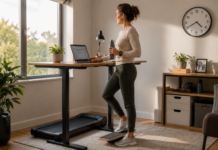
When you need exact speeds, gradients, power, or cadence, indoor equipment (treadmills, bikes, rowers) offers repeatability you can’t guarantee outside. No stoplights, no wind gusts, no potholes—just clean intervals at precise targets. This control is ideal for VO₂max work, threshold intervals, and rehabilitation progressions where dosing matters. Importantly, under matched speed conditions, treadmill and overground mechanics are broadly comparable, especially for walking and moderate running; you can test and train indoors without compromising specificity for many goals. Recording devices (power meters, heart rate, GPS-equivalents) also read cleaner indoors, which improves tracking over time.
6.1 How to use indoor control
- Program structured intervals (e.g., 5×3:00 at 95–100% of target speed/power).
- Use 1% treadmill incline as a starting proxy for outdoor air resistance in easy–moderate runs.
- Standardize fan placement and room temperature during tests.
6.2 Common mistakes
- Copying outdoor paces indoors without airflow—you’ll overheat and drift slower.
- Ignoring calibration (bike trainer power, treadmill speed) and comparing apples to oranges.
Bottom line: For precision training, progression, and testing, indoors wins—reliably.
7. Movement Variety and Stability: Outdoor Terrain Trains More Than Your Heart
Uneven surfaces, gentle hills, and frequent micro-adjustments outdoors challenge your neuromuscular system in ways the flat belt of a treadmill can’t. Trail and park paths increase ankle–hip stabilization demands and can improve proprioception and balance. Studies in novices show trail-running programs enhance neuromuscular measures and aerobic fitness; biomechanics research confirms that uneven terrain changes energy cost and joint work patterns in useful ways when introduced progressively. Even on sidewalks, small grade changes and turns build foot and hip strength that may reduce overuse patterns from highly repetitive, fixed-path movement.
7.1 How to add variety safely
- Start with soft surfaces (packed dirt, groomed trails) 1–2×/week.
- Keep eyes 3–5 meters ahead; shorten stride on technical sections.
- Progress volume and technicality slowly to avoid sprains.
7.2 Mini-checklist
- Shoes with adequate grip and a stable platform for trails.
- Strength staples: calf raises, single-leg RDLs, lateral lunges 2×/week.
- If balance is a concern, use parks and cinder tracks before technical trails.
Bottom line: For movement richness and joint-by-joint stability, outdoors (especially trails) often delivers extra benefits.
8. Safety, Traffic, and Rehab Constraints: Indoors Lowers Specific Risks
If your routes involve heavy traffic, poor lighting, stray animals, or uneven sidewalks, indoors is safer. For beginners, those returning from injury, or anyone with fall risk, treadmills and indoor bikes remove hazards like potholes and unpredictable drivers. Cold injuries, heat illness, and slippery surfaces are environmental risks you can bypass entirely indoors. Biomechanically, treadmills and indoor devices can also help clinicians control gait variables during rehab, reducing variability and allowing graded exposure. That control can be the difference between a productive session and a setback.
8.1 Safer-by-design tactics
- Prefer indoor intervals when outdoor conditions are dark, icy, or stormy.
- Use handrails only for balance during startup; avoid leaning for long durations.
- Keep lighting bright and floors clear in home gyms to prevent trips.
8.2 When to switch inside (checklist)
- Severe weather alerts (lightning, extreme heat/cold).
- AQI “Unhealthy” or worse.
- Pain flare-ups that need controlled dosing and surface.
Bottom line: Indoors minimizes environmental and traffic risks and is often the best place to rebuild safely.
9. Sunlight and Vitamin D: Outdoor Advantage (With Skin-Safe Limits)
Sun exposure during outdoor sessions can help your body produce vitamin D, which supports bone health and immune function. Your skin makes vitamin D in response to UVB—but production varies by latitude, season, skin tone, age, time of day, cloud cover, and pollution. It’s also true that too much sun raises skin cancer risk, so “sensible exposure” matters. For many people, short exposures to midday sun on arms and legs can contribute meaningfully to vitamin D status, especially in spring and summer; in winter or high pollution, dietary intake and supplements may carry the load.
9.1 Sensible-sun checklist
- Favor short, regular exposures; avoid burning.
- Remember: sun through windows does not produce vitamin D.
- Consider diet/supplements if labs show insufficiency; follow clinician guidance.
9.2 Region-specific note
- In places with high smog or long winters, natural synthesis may be unpredictable; don’t rely solely on sunlight.
Bottom line: Outdoors can help vitamin D status, but protect your skin and use diet/supplements as needed.
10. Consistency and Motivation: Enjoyment Outdoors, Convenience Indoors
Sticking to exercise beats any single “best” setting. Many people enjoy outdoor sessions more and rate them as less effortful, which supports long-term adherence. Others rely on the convenience of indoor spaces—24/7 access, childcare, showers, and classes—to keep appointments with themselves. Motivation is personal, but evidence is clear: enjoyment and a supportive environment predict whether you keep going. If you dread commuting to a gym, build an at-home corner. If you feel flat on solo runs, join a group class or community run. Use the setting that lets you show up most often.
10.1 Practical levers
- Schedule a weekly “joy session” outdoors to refuel motivation.
- Use indoor habit anchors (same time, same station, familiar playlist).
- Pair workouts with social accountability (class signups, running clubs).
10.2 Mini-checklist
- Track session enjoyment (1–10) and RPE for two weeks.
- Keep a backup plan (indoor alternative) for bad weather or smog.
- Don’t chase perfect—protect consistency.
Bottom line: The “best” setting is the one that keeps you consistent. Mix joy (outdoors) with convenience (indoors).
11. Access, Equipment, and Skill Specificity: Indoors Expands Your Toolkit
Indoor facilities unlock specialized equipment—barbells, machines, cable stacks, rowers, ski ergs, power-based bikes—that accelerate strength and energy-system development. If your goals include maximal strength, Olympic lifts, or bike power targets, you’ll progress faster with the right tools and micro-loading options. Sport-specific drills also become safer and more controllable indoors (e.g., running gait tweaks on a treadmill, technique sets on a rowing erg). Outdoors still shines for bodyweight circuits, hills for resistance, and real-world movement—but when you need progressive overload, indoor equipment makes it simple.
11.1 Tools/Examples
- Strength: Squat, deadlift, press variations with 2.5 kg load steps.
- Cardio: Calibrated power or pace intervals on bikes/treadmills.
- Mobility/Rehab: Cable/resistance work that’s hard to replicate outside.
11.2 Common pitfalls
- Letting machines replace full-range free-weight patterns long term.
- Ignoring technique coaching for complex lifts—record video or get help.
Bottom line: For targeted strength and precision conditioning, indoors provides tools you can’t easily match outdoors.
12. A Smarter Hybrid: Use Each Setting When It Wins
You don’t have to choose a side. The most resilient programs blend both, assigning sessions to the setting that best fits the goal, weather, air, and schedule. Let outside handle mood, daylight, variety, and low-to-moderate aerobic work; let inside handle high-precision intervals, heavy lifting, and safety during heat, cold, storms, or poor AQI. This hybrid approach also reduces monotony, which protects motivation and overuse-prone tissues. Think seasonally and weekly, switching the mix as conditions change and as your training cycle peaks or deloads.
12.1 Weekly template (example)
- Mon: Indoor strength (full-body).
- Tue: Outdoor easy run or brisk walk in a green space.
- Wed: Indoor intervals (bike/treadmill) + mobility.
- Thu: Outdoor circuits (hills, stairs, playground).
- Sat: Long outdoor session if AQI/heat allow (else indoor alternative).
- Sun: Optional recovery walk outdoors.
12.2 Decision rules
- Air & weather decide first, then goal specificity.
- Use backup indoor plans when conditions flip.
- Review sleep, mood, and adherence monthly and tweak the mix.
Bottom line: A flexible indoor–outdoor blend delivers the broadest health and performance benefits with fewer interruptions.
FAQs
1) Is outdoor exercise always better than indoor?
No. Outdoors often wins for mood, daylight, and variety; indoors wins for safety, climate control, and precise dosing. Physiological adaptations are broadly similar when intensity and volume are matched, so choose based on goals, conditions, and what keeps you consistent.
2) What’s the best time of day to train outside for sleep and mood?
Morning to midday generally supports circadian alignment and alertness. Late-night hard sessions can delay sleep. If evenings are your only option, go easier, dim screens afterward, and keep your bedroom cool and dark.
3) How do I decide whether air quality is safe for an outdoor workout?
Check your local AQI. “Good–Moderate” is fine for most people, especially away from traffic. If “Unhealthy for Sensitive Groups” or worse, choose an indoor session with good ventilation and filtration, shorten or lower intensity, and avoid high-ozone afternoons.
4) Do treadmills and indoor bikes give the same training effect as outdoor sessions?
For many goals, yes—especially when you control speed, incline, or power. Treadmill/overground mechanics and physiological responses are generally comparable at matched speeds, and indoor tools add repeatability for intervals and testing.
5) Will I get more fit running trails than running on a treadmill?
Trails add neuromuscular and balance challenges that can complement fitness, but they also raise ankle/foot demands. Most runners benefit from a mix: trails for variety and stability, treadmill/roads for precision pacing and safety in bad conditions.
6) How much sun is enough for vitamin D during workouts?
It varies by skin tone, season, latitude, pollution, and cloud cover. Short, regular exposures without burning can help. Since sun through windows doesn’t produce vitamin D and excess UV is risky, use diet or supplements if needed per clinician guidance.
7) What’s safer in extreme heat or cold—outdoor or indoor training?
Indoors. Heat and cold both increase risk (heat illness, frostbite, slips). In harsh weather, move inside, shorten sessions, hydrate, and use fans or layers. Acclimate gradually if you must train outdoors.
8) Can outdoor workouts improve my focus for work or study?
Yes. Natural settings are linked to improved attention and mood. A 15–30 minute outdoor walk before deep work can be a highly effective priming ritual.
9) I only have a home gym. How can I get the benefits of outside?
Open blinds for daylight, add plants, put a fan near your cardio station, and schedule one outdoor walk most days—even 10 minutes helps mood and sleep timing.
10) Which setting is better for injury rehab?
Often indoors at first, because clinicians can control surfaces, speeds, and rest. As symptoms improve, introduce easy outdoor sessions on predictable surfaces to rebuild confidence and variability.
11) Does outdoor exercise burn more calories because of wind and terrain?
Sometimes, but differences vary. Wind, small hills, and surface changes can raise energy cost slightly. That said, overall fitness gains depend more on consistent volume and effort than tiny environmental differences.
12) What’s the simplest way to blend both each week?
Lift inside 2–3 days, do 1–2 structured indoor interval sessions, and schedule 2–4 outdoor aerobic or circuit sessions around weather and AQI. Keep an indoor “plan B” ready for bad days.
Conclusion
You don’t have to pick sides. Outdoor training shines for mood, sleep-friendly daylight, and movement variety; indoor training shines for safety, climate control, and precision. Physiologically, both can build endurance, strength, and power—what matters most is how consistently you train and how well the setting fits your goal and circumstances. Use AQI and weather to choose the venue, goal specificity to assign the workout type, and your enjoyment to protect adherence. Over a year, a flexible plan that mixes outdoor walks, runs, or circuits with indoor lifting and intervals will deliver the broadest health and performance benefits with fewer stops and starts. Start this week: pick one session to take outside for mood and one to bring inside for precision—then keep iterating.
Ready to build your hybrid week? Block two outdoor sessions and two indoor sessions on your calendar now.
References
- Noseworthy, M., et al. “The Effects of Outdoor versus Indoor Exercise on Psychological Health, Physical Health, and Physical Activity Behaviour: A Systematic Review.” International Journal of Environmental Research and Public Health, 2023. https://pmc.ncbi.nlm.nih.gov/articles/PMC9914639/
- Peddie, L., et al. “Acute Effects of Outdoor versus Indoor Exercise.” Health Psychology Review, 2024. https://www.tandfonline.com/doi/full/10.1080/17437199.2024.2383758
- Wicks, C., et al. “Psychological Benefits of Outdoor Physical Activity in Green and Blue Space: A Systematic Review.” International Journal of Environmental Research and Public Health, 2022. https://pmc.ncbi.nlm.nih.gov/articles/PMC9544808/
- Walters, G., et al. “Outdoor Physical Activity is More Beneficial than Indoor for Cognitive Functions.” Physiology & Behavior, 2025. https://www.sciencedirect.com/science/article/pii/S0031938425000897
- Shen, B., et al. “Effects of Exercise on Circadian Rhythms in Humans.” Frontiers in Neuroscience, 2023. https://pmc.ncbi.nlm.nih.gov/articles/PMC10598774/
- Schamilow, S., et al. “Time Spent Outdoors and Associations with Sleep and Mental Health.” Clocks & Sleep, 2023. https://pmc.ncbi.nlm.nih.gov/articles/PMC10366917/
- Korkutata, A., et al. “The Impact of Exercise on Sleep and Sleep Disorders.” Nature Reviews Bioengineering, 2025. https://www.nature.com/articles/s44323-024-00018-w
- U.S. Environmental Protection Agency. “Indoor Air Quality.” Updated June 17, 2025. https://www.epa.gov/report-environment/indoor-air-quality
- World Health Organization. WHO Global Air Quality Guidelines: PM2.5, PM10, Ozone, NO2, SO2, CO. 22 September 2021. https://www.who.int/publications/i/item/9789240034228
- American College of Sports Medicine. “Exercising in Hot and Cold Environments.” February 2025. https://acsm.org/wp-content/uploads/2025/02/Exercising-in-hot-and-cold-environments.pdf
- Drum, S. N., et al. “Effects of Trail Running versus Road Running on Neuromuscular and Endurance Performance.” International Journal of Environmental Research and Public Health, 2023. https://pmc.ncbi.nlm.nih.gov/articles/PMC10002259/
- Office of Dietary Supplements, National Institutes of Health. “Vitamin D—Health Professional Fact Sheet.” Accessed August 2025. https://ods.od.nih.gov/factsheets/VitaminD-HealthProfessional/